February 12th, 2025 · Comments Off on NEWS: Feeding our neighbours (Jan. 2025)
Avenue Road Food Bank fills the gap in affluent neighbourhood
Volunteers sort donated and purchased food for neighbours in need. PHOTO BY STEFANIE CEPUCH, CHURCH OF THE MESSIAH
By Courtney Jung
Just north of where Yorkville meets the Annex, at the edge of Summerhill, the Avenue Road Food Bank, at 240 Avenue Road, provides groceries for about 700 people each week. In mid-November, the numbers jumped to 950. Outside The Church of the Messiah, people start to line up at about 1 p.m. on Wednesdays, even though the doors don’t open until 3 p.m. A lot of people are going hungry in this affluent part of Toronto.
Most of the guests who use the food bank live in our neighborhood. Others work here, and some are students; you would recognize them. Some clients have been coming since the food bank opened in 2018. Long-term clients are more likely to use food banks because they rely on disability, or another type of social assistance, as their main source of income. Disability support tops out at $1368 a month, or $16,416 annually. In Toronto, the poverty line is $24,720, and the deep poverty line is $18,540. For people who rely on benefits that keep them well below the poverty line, food banks are a long-term reality.
Most of the people who use the food bank, however, are employed. Maria Fernanda and her husband owned a successful bar in Mexico, but things got dangerous. She avoids giving me the details. Along with their two young children, they entered Canada as refugees three years ago. Her husband works in construction, but it’s seasonal. When work gets scarce in the winter months, that’s when she turns to the food bank.
According to StatsCan, food prices have risen 21.4 per cent in the past three years. What the food bank offers is meant as a supplement; it’s not enough to live on. You can have either one bag of pasta or one bag of rice, as well as four apples, two oranges, and half a dozen eggs. Each person takes home about $50 worth of groceries.
Daniela and her husband have been in Canada for two years. They only started using the food bank four months ago. They never wanted to ask for help. She tells me they “wanted to do things the right way.” Working 40 hours a week in a warehouse, at the minimum wage of $17.20 per hour, her husband makes $2044 a month after taxes. Their rent is $1400. Daniela used to work too, in a restaurant, but she quit when their baby was born. “It would be very, very hard without the food bank,” Daniela said softly. What she really wants to talk about, though, is how much she loves Canada. We’re outside on a cold day, and she mentions how much she loves this weather. Mostly, though, she feels safe here.
About 60 per cent of the food at the food bank comes from Daily Bread and Second Harvest. They are funded by private donations and corporate partnerships. Daily Bread gets donations from food manufacturers, and they partner with Ontario farmers to take produce that would otherwise be discarded. Second Harvest rescues and redistributes surplus food to reduce food waste. They provide some fresh produce, but there are also random donations—one week it was 500 boxes of microwaveable macaroni and cheese.
Both trucks show up at about 8:30 a.m. on Wednesday mornings with pallets and boxes of food. Volunteers move quickly to get the food off the trucks and into the church hall before settling into the longer job of sorting and organizing that will turn the sanctuary into a temporary supermarket. Folding tables are set up in a U shape. Down the left side of the room are non-perishables: pasta and rice, canned fruits and vegetables, breakfast cereal, and a shelf-stable protein like tuna or peanut butter. Next is milk, yogurt, cheese, and chicken or beef. Along the right is the fresh produce: potatoes, onions, carrots, tomatoes, sometimes cauliflower or squash, apples, oranges or melons, and, once, raspberries. Eggs and bread are at the end. People go through the room in a line, and gloved volunteers hand them a set number of each item. What people receive is consistent week to week; they can count on it. But the experience is almost nothing like going to a grocery store.
The food bank purchases the remaining 40 per cent of their food with donations.
In July, the food bank spent $12,000 on items such as beef, chicken, cheese, eggs, milk, and bread. By October, the bill was $16,000. The food bank relies on donations. Money donations go the furthest because food can be purchased in bulk and on sale, but food donations are of course helpful as well.
February 10th, 2025 · Comments Off on EDITORIAL: An election designed to distract voters (Jan. 2025)
Doug Ford is adamant that he is not rushing an election 18 months ahead of schedule to get ahead of an anticipated federal election this spring. He insists he needs a “mandate from the people” to face off against U.S. President Donald Trump in a trade war. This is both unnecessary and delusional.
The PCs have a healthy majority with 79 seats including the Speaker. The New Democrats have 28 seats, the Liberals nine. There are six Independents and two Greens in the 124- seat legislature. According to provincial law, the next election should be in June 2026. This is when Ford’s “mandate” should expire and is then retested at the polls. This election will cost Ontario taxpayers an estimated $150 million.
In respect to the fight against U.S. tariffs, there is nothing for the electorate to choose; there are no competing views between the parties. There is already a consensus that some combination of diplomacy, education, retaliation, and support to Ontarians who are harmed in a trade war is necessary; it is impractical to expect voters to define the specifics of the strategy.
Could it be there are other elephants in the room that Ford would like to distract the voters from?
The pending federal election should give him pause. If the polls are right, and Conservative leader Pierre Poilievre is elected, it would likely harm Ford’s chances of being reelected, hence the need to beat Poilievre to the polls. Ontarians tend to opt for different parties in office, provincially and federally, at the same time. According to Underhill’s balance theory this has been the case for 71 of the past 82 years, or 88 per cent of the time. This would explain why the federal Conservative leader has recently been in a frenzied panic to have a snap election of his own.
Then there is the ongoing criminal investigation by the RCMP’s elite “O” division into the $8.28 billion land swap for portions of the Greenbelt. The premier’s inner sanctum was deeply involved in the smelly deals. The extent of Ford’s personal involvement or benefit is unknown. It is known that Ford’s promise in the last election to not develop any part of the Greenbelt was a mandate he was ready to renege on. So much for mandates.
According to the RCMP’s 2021 annual report the average length of police investigations of this type is 1.6 years. If that timeline applies here, expect that investigation to conclude by March of this year. How curious is it that the premier choose Feb. 27 as an early election date?
The threat of a trade war is a perfect opportunity for Ford to talk about something other than his provincial responsibilities to build affordable homes, ensure enough doctors and nurses, and fix schools that are crumbling.
It is naïve to believe that Ford will be sitting across the table from Donald Trump anytime soon negotiating a trade deal; that’s the job of the prime minister. If he is reelected with 10 more seats in the legislature, it is doubtful the Americans would even notice or care. Trade agreements or wars are negotiated or fought by sovereign nations, not provinces.
The premier seems to have a hard time sticking to his knitting. Very recently he thought it would be a good idea to enact province-wide legislation to remove Bloor Street bikes lanes, a municipal responsibility. He’s mused about buying Alaska. He has plans, without a mandate, to build a tunnel under highway 401 at an estimated cost of $50 billion. The people of Ontario never endorsed any of this.
The looming trade war between Canada and the U.S. is a golden opportunity for Ford to distract voters. His track record, parts of which are under criminal investigation, will not be scrutinized if this election is about a trade war. He wants four more years in power and does not want his performance in the last three to be talked about. Let’s hear what Ford has to say about truly provincial responsibilities.
Comments Off on EDITORIAL: An election designed to distract voters (Jan. 2025)Tags:Annex · Editorial · Opinion
February 10th, 2025 · Comments Off on FORUM: A busy beginning to 2025 (Jan. 2025)
Affordable housing and development files rank high
By Dianne Saxe
Happy new year and best wishes for a fresh start to 2025! Good to see so many of you when door knocking, at food banks, and at end-of-year celebrations. Thank you for every good cause you support and every act of kindness.
311: I am making progress getting the busiest city divisions (solid waste, transportation, water, municipal licensing and standards, urban forestry) to provide proficient responses to the hundreds of 311 complaints we file for you. Staff say I am the only councillor insisting on seeing how our complaints are resolved. We will keep following up and keep you informed.
Community and housing improvements: I continue to put dormant Section 37 money to good use.
Seventy-eight units of supportive housing have just broken ground at 35 Bellevue Avenue. Two years ago, at the request of groups like the Kensington Market Community Land Trust, I pledged all Ward 11’s Section 37 affordable-housing funds for this project. This pledge attracted enough municipal and (eventually) federal funds to make the project a reality. Vulnerable residents should be able to move in next year.
Thank you to the ABC Residents’ Association and the Greater Yorkville Residents’ Association for supporting upgrades to the Toronto Public Library’s oldest branch, Yorkville. Renovations planned for 2025-2030 will improve safety and accessibility. With the extra million dollars that I have provided in Section 37 funds, renovations to the branch will include preserving heritage aspects of the branch, upgrading the main door, and improving the outdoor lighting and landscaping.
At the TTC, tiles are being upgraded at Dupont station and progress has also been made in creating an Indigenous mural that will brighten the Spadina station tunnel.
Congestion: Evidence about the true causes of traffic congestion keeps piling up (spoiler alert: it’s not bike lanes). Higher road encroachment fees for developers (coming soon) should help. Plus there is Uber; over 80,000 often-empty vehicles create 14 per cent of downtown traffic while the drivers struggle on less than $6 per hour. The mayor promises to do something about Uber, but action has again been deferred.
Double-dipping: To the understandable fury of many, our ward is Toronto’s hotspot for developer double-dipping. Developers obtain zoning for a particular building, often by settling with the community, then get more from a committee of adjustment after a cursory hearing.
This doesn’t have to keep happening. Toronto should require double-dippers to either honour their deals or come back to council and the community. A year ago, I persuaded council to consider doing something about it, at least for requests to add height to high-rises after agreeing not to. Unfortunately, the planning and housing committee prefers to keep allowing the practice.
Parks: Thank you to everyone who attended the community meeting concerning Christie Pits. Glad that parks, forest and recreation (PFR) has promised to improve the kids’ baseball diamond and accessibility. Staff have also promised to improve noise and off-leash dog enforcement, especially if residents file a 311 complaint every time. To influence how PFR balances neighbours’ desires for quiet use of the park with permitting those across the city to gather there for large or noisy events, please fill out the online Christie Pits survey and encourage your neighbours to do the same.
December council: The most controversial item on the agenda was how much to relax zoning rules against nonresidential land uses in residential neighbourhoods. Lots of people would like more neighbourhood corner stores, but not if they sell alcohol or cannabis. At the request of many residents’ associations, council sent this to our new chief planner for further consultation.
Other challenging items included: the building of more private rental homes; excess heat limits for tenants; the balance between the right to protest and the right of Jewish community members and other minorities not to be harassed; the exploitation of Uber drivers and the congestion that they cause; the infuriating collapse of the Metrolinx deal for SmartTrack; the pressure on our shelter system that forces people into homeless encampments; the rejected Ombudsman’s report; the protection of bird habitat on the Toronto Islands; the possible declaration of economic and social rights for low-income residents.
Thank you to the students at Palmerston Avenue Junior Public School for visiting me at council and for speaking up for our bike lanes. School groups of any age: you are invited too!
Dianne Saxe is city councillor for Ward 11, University-Rosedale.
Comments Off on FORUM: A busy beginning to 2025 (Jan. 2025)Tags:Annex · Opinion
February 10th, 2025 · Comments Off on FORUM: Auditor General exposes government shortfalls (Jan. 2025)
Ford government guilty of a litany of shortcomings
By Jessica Bell
The auditor general’s office has huge latitude to investigate the workings of government agencies, departments, and government-funded or regulated institutions to see if they are working as they should. Here’s the lowdown on the office’s latest annual report.
The government has a flawed opioid strategy
Ontario has an opioid crisis. Over the last decade, opioid-related deaths and emergency department visits increased by almost 300 per cent, with an average of seven people a day dying from opioid-related causes.
Access to addiction-treatment and harm-reduction services is limited. Few hospitals and primary care providers offer addiction-treatment services, and very few emergency departments and family health teams have addiction specialists.
The ministry is not tracking the effectiveness of its work, or the issue in general; for example, the ministry doesn’t track people who become addicted after being prescribed opioids.
The government provided no evidence to justify the closure of Consumption and Treatment Sites (CTS) that provided harm-reduction services like needle exchange and a room for people to use drugs with a health-care worker present in case of an overdose.
The Ontario Place development is flawed and costly
The selection process to choose Austrian spa company Therme to redevelop Ontario Place into a luxury spa was not fair, transparent, or accountable.
The cost has ballooned to $2.2 billion (an increase of $1.8 billion), with the procurement process deemed “highly irregular” by the auditor general. The amount Therme is investing is much lower than publicly reported: $350 million instead of $750 million.
Therme is also broke. The company doesn’t have enough equity to purchase a nice condo in Toronto, let alone construct a major spa. Massive public investment was necessary to make this project viable.
The government is giving out MZOs like candies
Ministerial Zoning Orders (MZOs) are orders issued by the Ministry of Municipal Affairs and Housing that dictate what can and cannot be built on a property.
There is no protocol and no rationale for the way the government distributes MZOs—even after the Greenbelt scandal. The ministry doesn’t assess whether the MZO is needed, or even if it is near services and infrastructure, like roads.
Ministry staff, even the premier, are implicated with handing out MZOs to developers who donate to the Conservative party. Typically, if a developer receives an MZO their land value goes up because the MZO gives the developer permission to build housing or buildings.
The Toronto District School Board is not always safe
Violent incidents at the Toronto District School Board (TDSB) have increased 67 per cent since 2017-2018—the highest increase on record.
Mental health and wellness staffing has not kept pace with demand. Referrals for services have increased 71 per cent since 2017-18, while staffing has only increased by 42 per cent.
The TDSB has been unable to provide qualified supply teachers for about 20 per cent of absences.
TDSB school buildings are in the worst shape of any school board in the province. The TDSB has a repair backlog of $4.1 billion.
The Ontario Lands Tribunal is not independent or accessible
The Ontario Lands Tribunal (OLT) is an extraordinarily powerful appeal body that rules on land use decisions, such as condominiums, quarries, and municipal official plans.
The OLT is not able to provide evidence to prove its adjudicators are qualified and is not meeting its target of hearing cases in a timely manner.
The average time for a case to make its way through the OLT process, from intake to ruling, has increased from 420 days to 553 days over the past three years.
The government’s changes to the OLT (restricting environmental and residents’ groups from challenging developments) and the high cost of appealing a decision, are limiting the ability of individuals, non-profits and small municipalities from accessing the tribunal.
In 2023-2024, the OLT allowed about 90 per cent of the 116 developments that appealed to it, giving the impression that it sided with developers over municipalities, public interest groups, and residents.
Government advertising is up
Government advertising spending was the highest ever recorded, totaling $103.5 million this year, which is triple the amount from last fiscal year.
About 62 per cent of the funding was for campaigns that would have been considered “too partisan” to qualify for public spending under government advertising rules prior to 2015.
The primary purpose of the partisan ads was to create a favourable impression—and sometimes a misleading impression—of the governing party, as opposed to giving specific information, like reminding people to be screened for cervical cancer.
For instance, the “funding in schools” ad—which the government spent $3 million on—presented Ontario’s schools as heavily funded and well-staffed. Yet, funding in schools per student, when inflation is factored in, has dropped by $776 per student over the past six years.
Jessica Bell is the MPP for University-Rosedale and the Official Opposition’s Housing Critic. She can be reached at jbell@ndp.on.ca or 416-535-7206.
Comments Off on FORUM: Auditor General exposes government shortfalls (Jan. 2025)Tags:Annex · Columns · Opinion
December 16th, 2024 · Comments Off on ON THE COVER: More ghost bikes to come? (Dec. 2024)
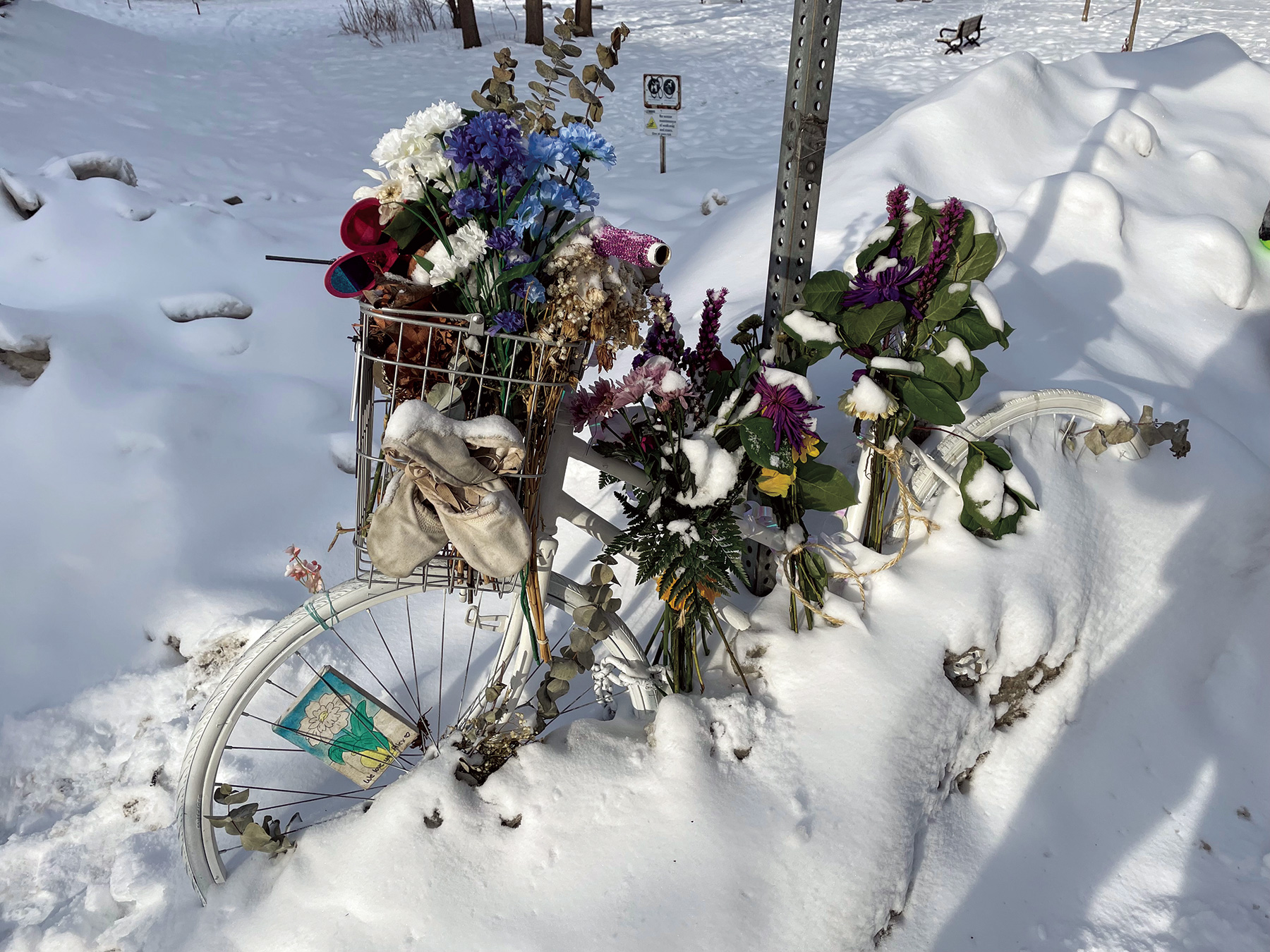
This year’s December cover is a photo courtesy of cycling advocate Jun Nogami.
Jun Nogami has been a bicycle advocate since moving back to Toronto in 2004. He documents the activities of ARC (Advocacy for Respect for Cyclists) when they install ghost bikes in the GTA. His photo shows a ghost bike at Dufferin Grove, installed in memory of 23-year-old Alex Amaro, who was killed in December 2020. This is actually the second ghost bike in her memory. Someone set fire to the first one in December 2021, and this replacement was installed close by in February 2022.
One thing is clear is that the bicycle lanes on Bloor Street have drastically improved road safety for all users and that removing them creates a real danger to cyclist safety. Ghost bikes are a somber reminder of the duty we have to one another, especially to vulnerable road users, and the very real risk of tragedy.
December 16th, 2024 · Comments Off on NEWS: Ford government is intent on removing bike lanes in Toronto (Dec. 2024)
Bloor Street tops the list in the “Get You Home Faster Act”
Bike lanes on Bloor have become part of the fabric of the street. BRIAN BURCHELL/GLEANER NEWS
By Ammara Khan
In a move to “combat congestion,” the Ford government has set out to reduce the number of bike lanes starting with the removal of lanes on Bloor Street, Yonge Street, and University Avenue.
“We need to and will remove and replace existing bike lanes on primary roads that are bringing traffic in our cities to a standstill,” said Ford, according to Global News.
This province-wide legislation is aimed at the areas where Premier Ford lives, in Etobicoke, and where he works, at Queen’s Park. It has been speculated that the first bike lanes to be targeted will be those that impact his regular commute to work. The premier’s office did not respond to the Annex Gleaner’s interview request.
Bill 212, Reducing Gridlock, Saving You Time Act, was introduced by Transportation Minister Prabmeet Sarkaria on Oct. 2, and it initially aimed to regulate the construction of new bike lanes and require justification for old ones.
On Oct. 31, the Ontario government proposed an addition, requiring the City of Toronto to support the province in removing the bike lanes on Bloor Street, University Avenue, and Yonge Street.
Transportation Minister Prabmeet Sarkaria posted on X on Nov. 7 that “Poorly installed bike lanes have only worsened Toronto’s record-breaking gridlock, making us the worst city in North America.” Bike lanes are likely to be pushed onto the side streets, he said.
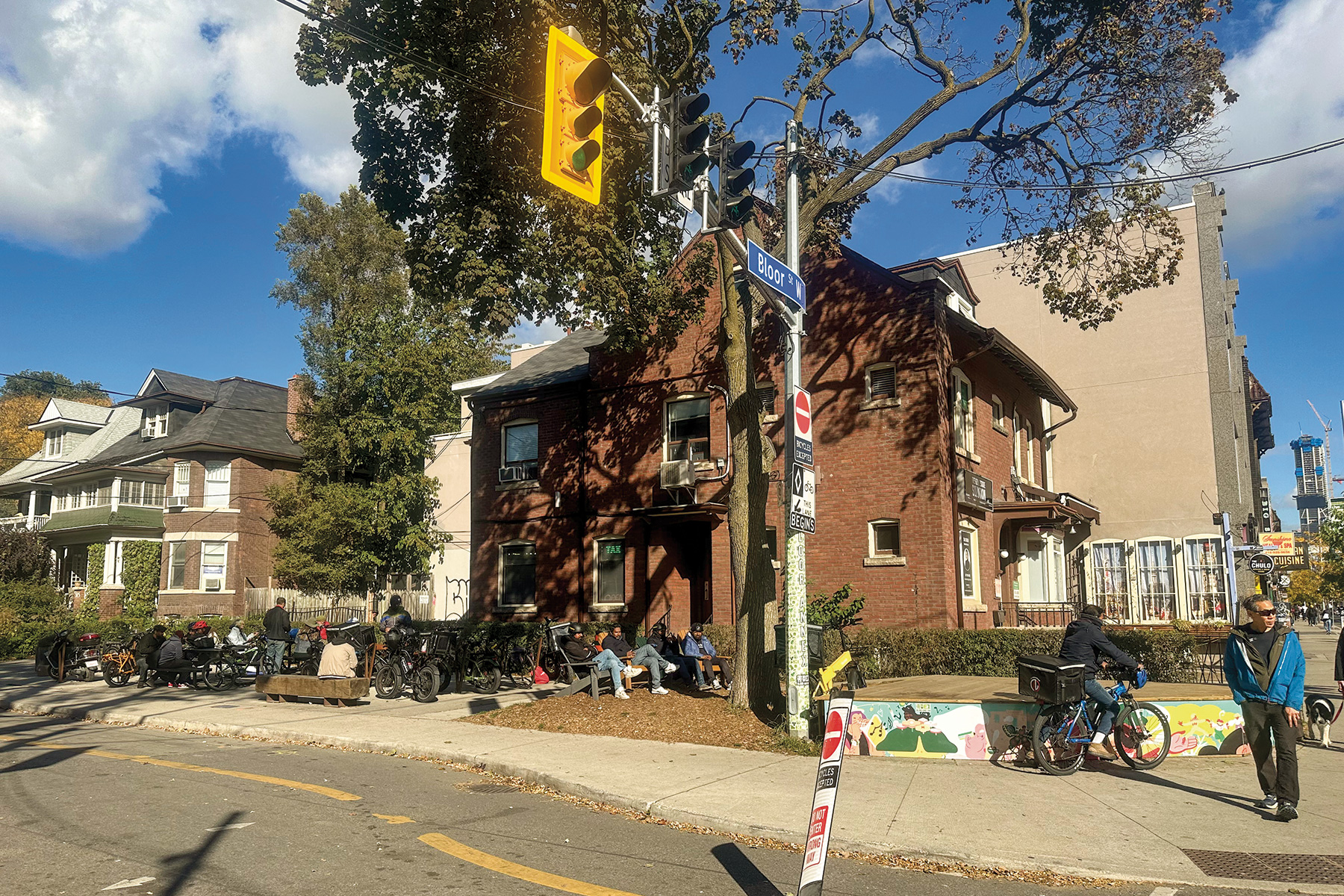
Food delivery bikes congregate midday at Bloor and Brunswick awaiting their next orders from Bloor Street businesses. BRIAN BURCHELL/GLEANER NEWS
In an email, Dakota Brasier, director of media relations for the transportation minister’s office, said that the city’s approach to battling congestion is not working, and they need to listen to “the thousands of common-sense drivers to help clear our major roads and get people out of traffic.”
She reiterated the government’s argument that “less than one per cent of people shouldn’t be making decisions for the majority of people who travel on our busiest roads and sit in gridlock every day.” (Data from Statistics Canada from 2011, before the bike lanes.)
Citing the City of Toronto’s supplemental report on the impact of Bill 212, Brasier said that the “average daily cycling volume on the Bloor, University, and Yonge lanes makes up between 0.005 percent (low estimate) and 0.019 per cent (high estimate) of the Toronto region’s population.”
These percentages skew the perception of the number of cyclists on the three targeted streets because Brasier compares the number of cyclists on three bicycle lanes to the population of the entire Toronto region.
Re-calculating the data provided in the report shows that a low estimate of 2.9 per cent and a high estimate of 11.9 per cent of the Bloor Street, University Avenue, and Yonge Street populations use their bicycle lanes.
“We know the numbers are wrong,” said Albert Koehl, author of Wheeling Through Toronto: A History of the Bicycle and its Riders. “It’s embarrassing for the minister of transportation.”
Micheal Longfield, executive director of Cycle Toronto said, “I think it’s pretty disappointing that those are the numbers that are being publicly used by the province when their own studies show that those numbers are much higher.”
In an episode of TVO’s Political Blind Date series in 2017, where Ford was cycling around Toronto with the NDP’s Jagmeet Singh, Ford stated in regard to bike safety, “We have to do everything we can to make sure there isn’t a death in the city; one death is way too many.” This episode has since been taken down.
One death used to be considered too many, according to Ford, but now the safety of a so-called one per cent does not need to be considered.
According to a study conducted at the Toronto Metropolitan University, there were 2.57 times more cyclists after the installation of bike lanes. Collision rates have also dropped 38 per cent on bike lanes.
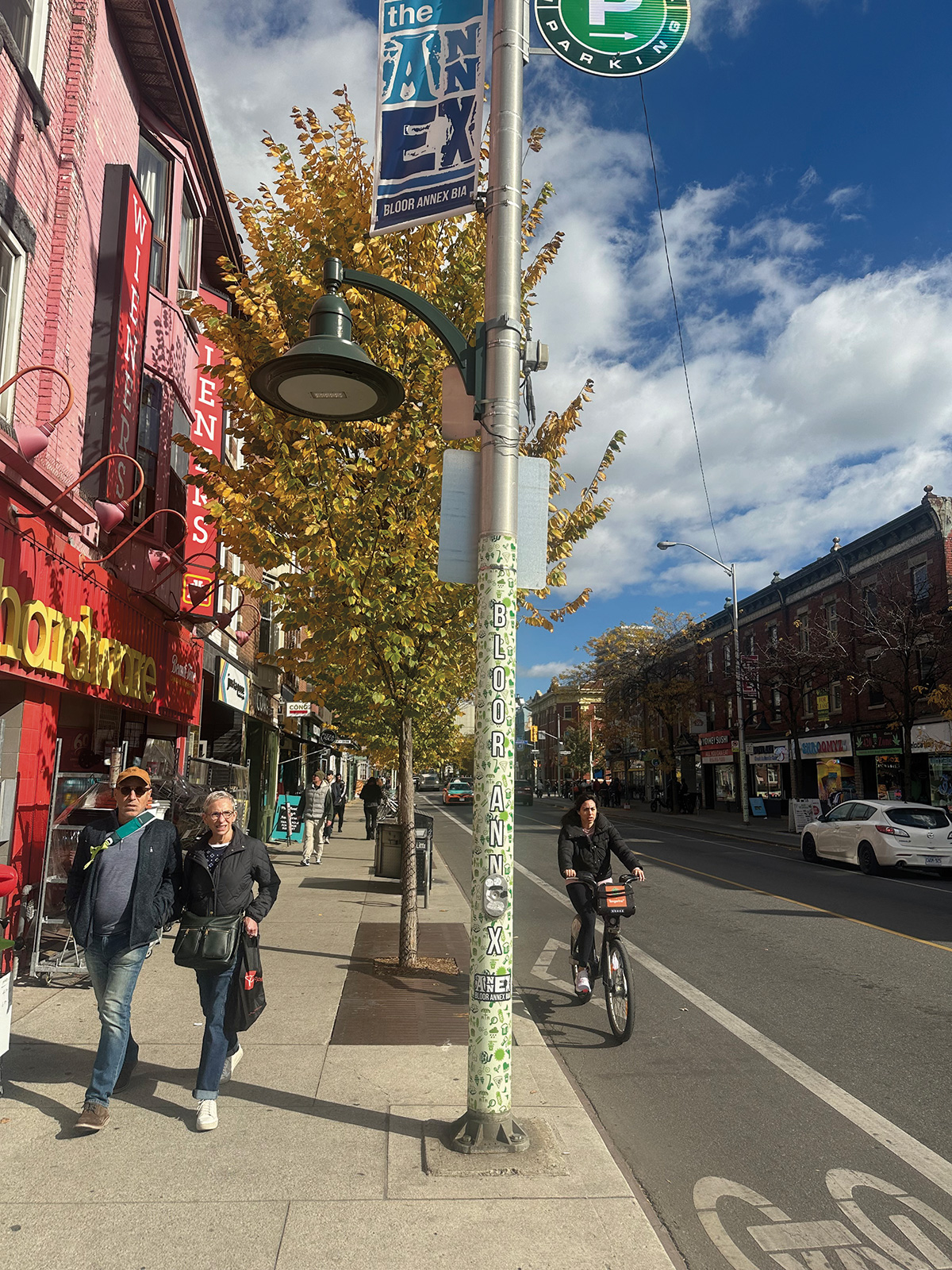
These proposed, anti-biking solutions to congestion have met with heavy opposition from cyclists, residents, and business representatives in the Annex, where bicycling makes up an integral part of the community.
On Oct. 23, the Bloor-Annex Business Improvement Area (BIA) did a media release response to the transportation legislation with data showcasing the numerous benefits of the bike lanes in the area.
Bike lanes have increased the number of monthly customers, and monthly spending in the Annex and the number of retail vacancies has not changed in the 8 years since they were installed. Toronto paramedics and Toronto fire chiefs have also stated that there is no evidence bike lanes have increased emergency response times.
Bike lanes have been a part of the Annex for nine years, and an estimated 8,000 cyclists use these assets every day. Road safety has also increased since the addition of bike lanes for all road users.
Cycle Toronto created a petition called I Love Bike Lanes after hearing rumours about the proposed legislation in September. The petition has now surpassed 23,000 signatures.
Longfield said in a Cycle Toronto media release that “It’s not just about road safety and enforcement. It’s about public health. And the discussions of where bike lanes do or do not make sense are best handled at a municipal level.”
Harry Xu, a student at the University of Toronto and regular cyclist, feels the removal of bike lanes could pose a threat to their safety when using the roads. Not only would Xu’s rides now be more dangerous, they would also be a lot less time efficient.
“Ford’s lack of consideration as someone who lives distant from the downtown core where we have at least one million residents is ridiculous,” expressed Xu.
This new legislation caused Xu to reflect on representation issues. “It makes me feel like I’m not at all represented at the provincial level,” they said. “If the provincial government is interfering with cities’ bike lanes, I highly doubt their inclusivity in legislation.”
Bill 212 also fails to account for the environmental impacts of motorized transportation. In Toronto, transportation makes up 36 per cent of emissions.
The proposed bill’s negative impacts will be seen very soon. Removing bike lanes from Bloor, Yonge, and University will undo the $27 million that has already been invested. The removal of the lanes and the installation of motor vehicle lanes is estimated to cost over $48 million. This comes at the cost of the taxpayer.
Additionally, the reconstruction would also cause a significant increase in congestion. The city’s report estimates four months of single lane traffic between Spadina Avenue and Avenue road, four months of only one vehicle lane in one direction, and four weeks of full intersection closure at St. George Street.
“There is no major study around the world that says bikeways are a significant contribution to traffic,” said Longfield. “The city’s own data actually said that a lot of the traffic issues that the City of Toronto is dealing with right now is actually related to construction.” He said that the construction is good since it is building housing and transit.
“I think if the minister’s comments about dealing with tackling traffic and congestion had been focused more on committing to an opening date for the Eglinton Crosstown, which is now in its 14th year of being constructed, or the Finch LRT…I think those are real tangible things the province could have done to help give people more transportation options and get more cars off the roads,” said Longfield.
The creation of more motorized vehicle lanes might even cause more congestion down the line. The promise of less congestion and more car lanes might create an induced demand, urging more people to take their cars due to a lack of other options.
Koehl said that despite the removal of bike lanes, many people might continue to cycle. “It’s an affordable way to get around. They’ll continue to ride, but they won’t be safe as they are today. As I like to put it, removing bike lanes does not remove cyclists from the road, it simply deprives them of their safety.”
“No one is fooled by this bill,” he said. Ford’s new bill is “intended to distract attention from his failures, and that being, the Green Belt scandal, homelessness, the lack of housing starts, the problems with health care and education, all of these things.”
“This is just a distraction, and it’s really a shameless distraction, because nobody who understands congestion is suggesting that this is the way to deal with congestion,” said Koehl.
Koehl says that congestion is a result of cars on the road. The solutions would be to invest in transit, invest in walking and cycling, and encourage people to leave their cars at home.
“The irony is Doug Ford’s government has reduced the cost of driving,” said Koehl. “In other words, encouraging people to drive.”
“And of course, if you widen roads by taking out bike lanes, he’s going to induce more driving. And we know where that leads,” said Koehl.
The Ford government’s arguments of congestion and a lack of cyclists all fall apart when closely examined. Bike lanes, say opponents to the bill, are an integral part of the city and a solution to the issue of congestion.
December 16th, 2024 · Comments Off on LETTERS: An open letter to the Minister of Transportation (Dec. 2024)
My family [and I] are longtime downtown residents and homeowners. We own a car and we also cycle daily to run errands, particularly on the Bloor shopping strip.
If you enact this bill we will simply stop shopping on the local Bloor strip. We will get in our car and drive somewhere else. So much for lowering congestion.
Your war against bike lanes will hurt me and my family. It will put us in danger.
And if my health and safety does not matter to you – as it obviously doesn’t seem to! – you don’t even seem to care that [it] will hurt downtown businesses.
You are perfectly willing to use an electoral wedge issue to put me and my family in danger, and hurt downtown businesses.
Your government must be very worried indeed about what the Greenbelt RCMP probe is going to uncover. What’s a few more dead cyclists when you can stay in power? And you are going to hurt our neighborhood businesses and waste more of MY tax dollars to do it.
—Sincerely, Shaw Street resident
Comments Off on LETTERS: An open letter to the Minister of Transportation (Dec. 2024)Tags:Annex · Opinion
December 16th, 2024 · Comments Off on FOCUS: TSP and BIA work together to bring a new mural to Bloor (Dec. 2024)
Renowned Indigenous artist brings another masterpiece to the Annex
By Rose Haberer
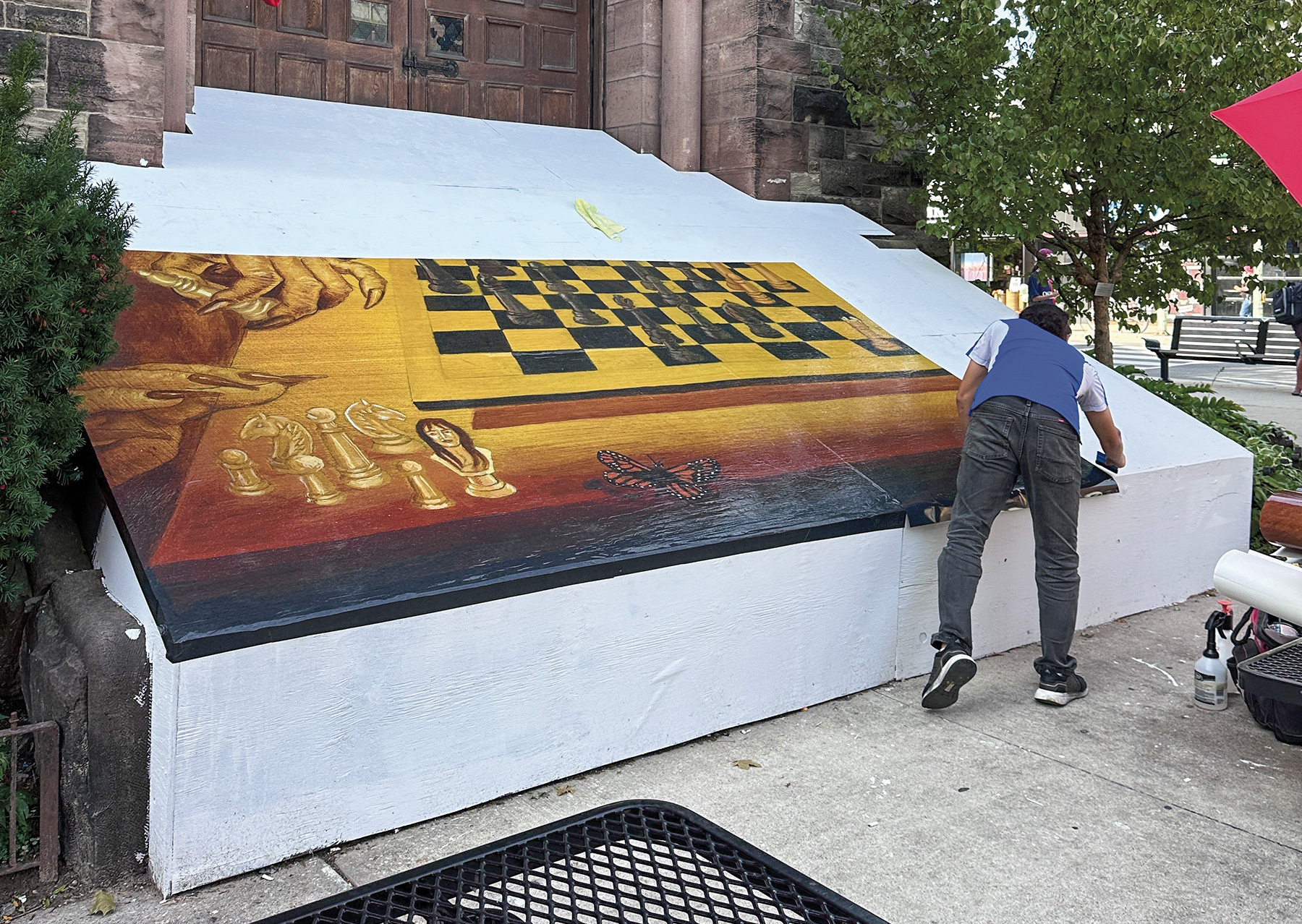
Technicians apply the vinyl composition of Joseph Sagaj’s artwork titled Checkmate. BRIAN BURCHELL/GLEANER NEWS
Mural maestro Joseph Sagaj strikes the Annex community again with the powerful blow of his allegorical art. The mural, with all its vibrancy, sits atop the eroding steps of Trinity-St. Paul’s United Church and Centre for Faith, Justice and the Arts.
The weathered steps on the east side of Trinity-St-Paul’s needed urgent repairs and had become a safety hazard, said church general manager Aaron Dawson. However, repairing the stairs was complicated because of the offices beneath them, meaning the church would have to go through the ordeal of digging up the foundation. “Since we couldn’t just do a quick repair of the stairs, we decided it would be better, until we can raise enough money to repair the stairs and hopefully put a ramp in, to cover the stairs and protect them from the elements.” This resulted in a partnership between the Toronto United Church Council, which provided partial funding, and the BIA, who built the wood structure to protect the stairs from further erosion and provide a canvas for the mural. Together, they decided to cover the steps, not with plain plywood, but with colourful art.
In the early days of the pandemic, the BIA took over some space on Robert Street near the crumbling stairs to put in dining tables for public outdoor eating. They continued to develop the space, adding flowers and brightening the area.
Melanie Ramsey, the BIA project lead for Joseph’s mural, described how the mural came into being: “The steps were crumbling at the church, and they didn’t have the budget for repairs. Working with Trinity St. Paul’s, we tried to find a solution. So, the BIA built the infrastructure over the stairs, and then Trinity St. Paul’s, with some grant money, decided they would do a mural. The BIA has lots of experience doing murals, so we helped find an artist, and Joseph was a great fit. So, Joseph painted a small painting, and then we digitized it, blew it up, and wrapped the stairs in a vinyl wrap. The mural ties in with our commitment to beautifying the commercial areas and working with the community.”
Sitting in the Annex’s Future Bistro on a sunny day, Joseph gave the artist’s digest of his new work as well as the inspirations and stories behind it:
Joseph’s, who is Anishinaabe, path to artistry stemmed from his harrowing experiences at the residential school in Fort Frances. “We would take turns cleaning up the supervisor’s room. I remember looking at the drawings that were pinned up on his mirror and on his walls, and I used to think, oh my god, I wish I could draw like that. I would dream about it. When I went back to my reserve, everybody had skills. Some knew how to hunt, some knew how to make snowshoes or go fishing, that kind of thing. So I learned how to draw. And that’s how I started.”
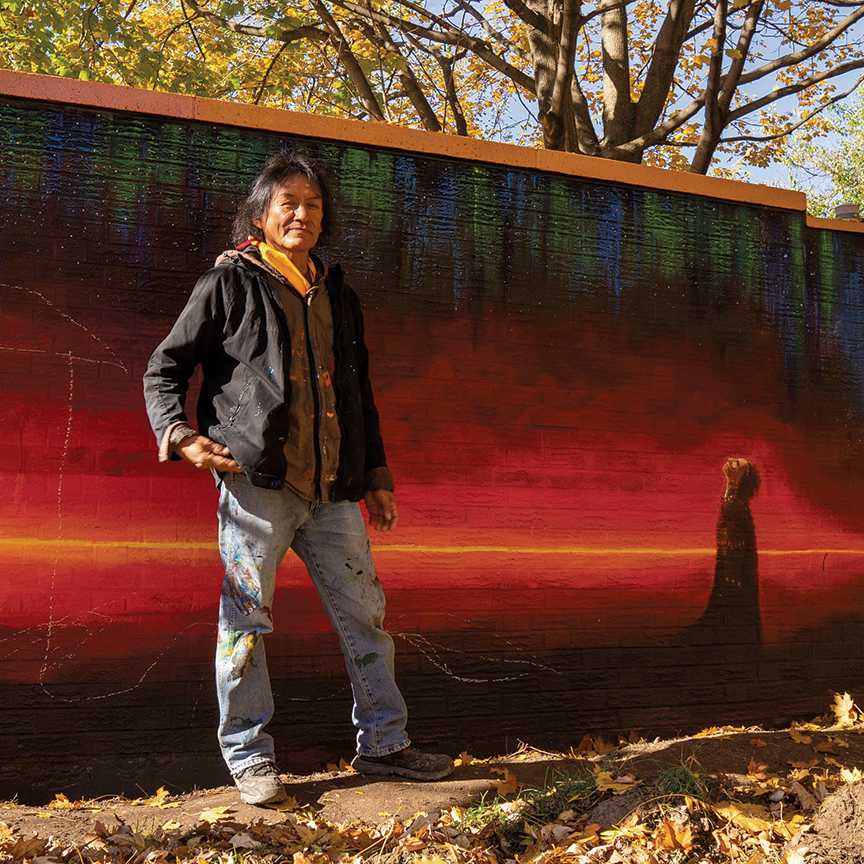
Joseph Sagaj in front of one of the panels of Interconnections in Paul Martel Park. NEILAND BRISSENDEN/GLEANER NEWS
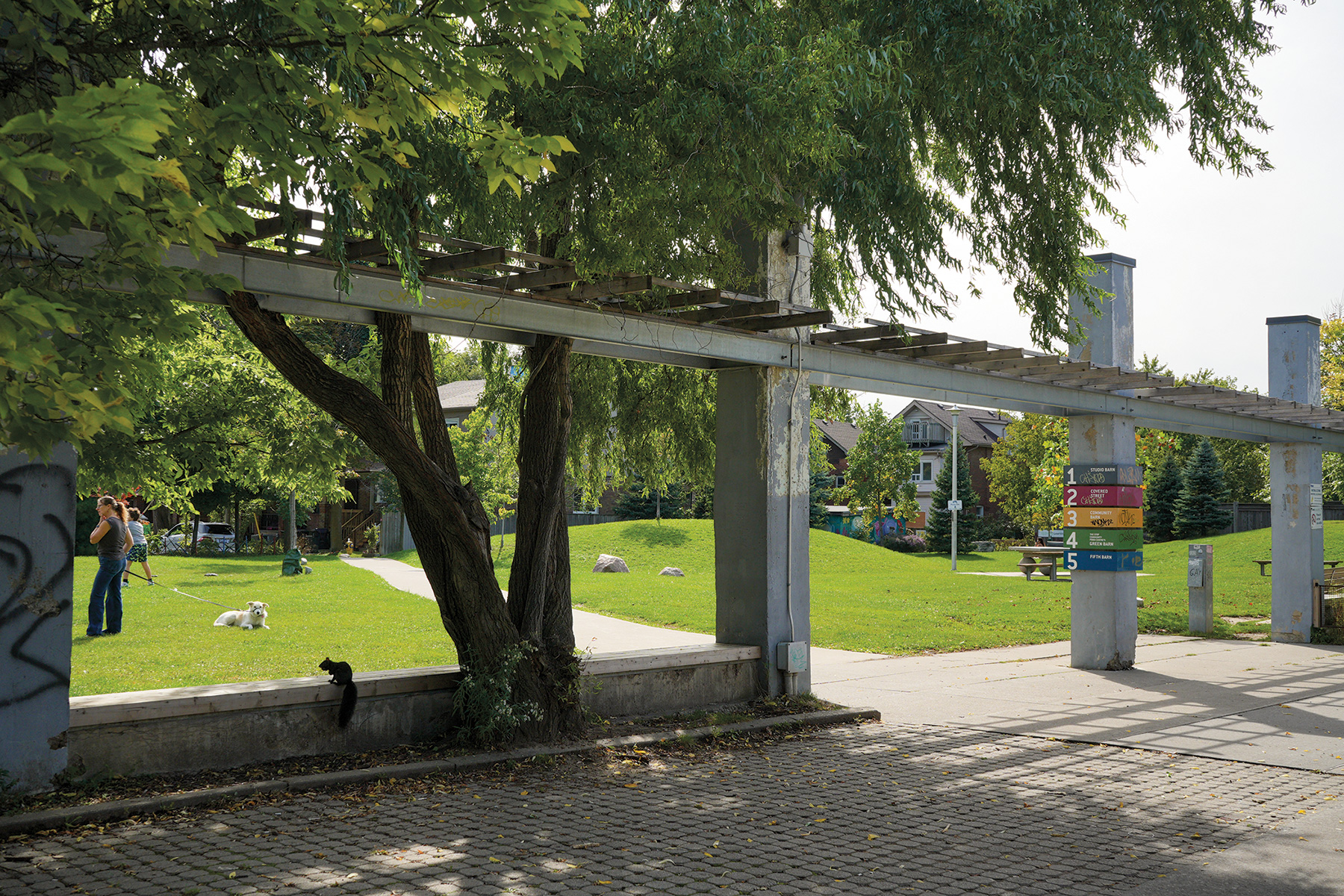
Joseph’s dedication to preserving the stories of his cultural roots and making sure that they are heard, is showcased by the odes to Indigenous tales that he places around the city. An example of this is the 86-foot mural in Paul Martel Park called Interconnected. The mural, like an ancient scroll, wraps around the park. It consists of seven different segments that shapeshift together as one narrative. But how does his new piece take inspiration from Indigenous storytelling?
Sagaj tells me how the storytelling in all of his pieces reflects how stories were told to him. “The way they were told to us was more metaphoric, so we really had to pay attention. The elder would come with his pipe, loading it and smoking it, and then he would start off very calmly. Silence is a tool for attention. That’s how he strategized his storytelling. Sometimes there would be a dozen of us just waiting and waiting. There were no movies or devices. Adults had those but not us kids. We relied on storytelling.”
Finally, Sagaj gave me the brushstroke breakdown on his new piece outside Trinity St. Paul’s Church.
Initially, he presented three options to the BIA and the United Church. Both parties, as well as Joseph, found the first one too graphic. “I wanted to put the truth on the table. Sometimes the truth is hard to swallow, ” Joseph added. The second option was a softer attempt. Finally, the third option, which Joseph based on a piece called Checkmate, by German artist Mordes Wrecks, was selected.
The tale behind Joseph Sagaj’s piece is like a matryoshka doll of stories. Hanging in the Louvre, Checkmate was originally thought to represent the moment of defeat, symbolized by a man being put into checkmate by his opponent. It was thought to portray humanity being lost to destruction, and the man’s opponent symbolizes Satan; however, Joseph explained that this interpretation is false.
Joseph Sagaj’s original art for the mural. COURTESY JOSEPH SAGAJ
“There’s this man from a tour group staring at the painting. And he said, ‘You know, I’ve been looking at this painting. I’ve been studying it, and I’m a champion chess player. You either change the name of the painting or you replace the painting, because I’ve studied the game and the positioning of these players, and the king has one more move.’”
Joseph, using the same positionings of the original chess pieces, adorned the mural with fragments of his culture and identity.
“The gentleman on the left is what appears to be a devil. He’s ready to claim the soul of his opponent, who has no more moves. But that’s just what it appears to be,”
Joseph explained. In his rendition of the painting, the losing player holds in his hands a tangible piece of hope and a powerful symbol of Indigenous culture: a tobacco tie.
“A tobacco tie is a reference to offering a prayer to the Creator. That’s the way we interpret that. We interpret it also as an acknowledgement and thanksgiving for life. So that’s what the man on the right is holding, this prayer that he gets out of the situation. So, there’s divine intervention. He’s losing hope that he can get out of this situation, because the devil appears to be claiming his last move, right?”
He connects back to the original painting, and how he added to the story.
“There’s a bee or fly on the edge of the table, but I replaced it with a butterfly. The butterfly symbolizes a metamorphosis, so I painted a young woman, floating above the chess board implying that this woman has evolved from this situation, by way of divine intervention. She’s ascending away from this, from this circumstance. She’s transformed.”
Joseph morphs metaphors on a whim, taking every object in the original painting and giving it his own new meaning, even the chessboard that the players are sparring on. “The chessboard is already symbolic. It’s floating off the table. It’s an illusion that the devil’s creating, saying ‘I claim you.’”
Joseph connects his work to Truth and Reconciliation and how there is a great lack of it. He points out that there are 94 Truth and Reconciliation calls to action but only 11 have been implemented.
“I was trying to portray this systematic positioning of the game. When the government and church gathered, just imagine what they were talking about. What are we going to do about these Indian people? They’re savages. They’re uncivilized. Well, we gotta turn them into white people, We gotta kill the Indian. That’s the expression: kill the Indian. And this is what we have to educate the public about by sharing our stories and the truth.”
When asked about how he connects personally with his piece, he discussed how he overcame the struggles of being a residential school survivor and the painting’s message of rising above and transforming.
“I was a residential school victim so I have had some terrible experiences. Some people didn’t make it, you know. And many that did, couldn’t carry this load, this heavy load, this heavy burden that they experience. I’m lucky. I survived somehow, maybe through divine intervention.”
December 16th, 2024 · Comments Off on GRADING OUR GREENSPACE: Annex parks’ report card (Dec. 2024)
Our fourth and final instalment of the review of area parks for 2024
Compiled by Ammara Khan
Each year the Annex Gleaner reviews the many parks and parkettes in our coverage area using a variety of criteria.
While there is no decisive “winner” of the grading, letter grades are assigned to convey the quality of the parks, considering aspects such as upkeep, design, and amenities. The reviews accompanying the grades also let the reader know what makes each space unique. This is the fourth and final instalment of reviews for 2024.
Taddle Creek Park
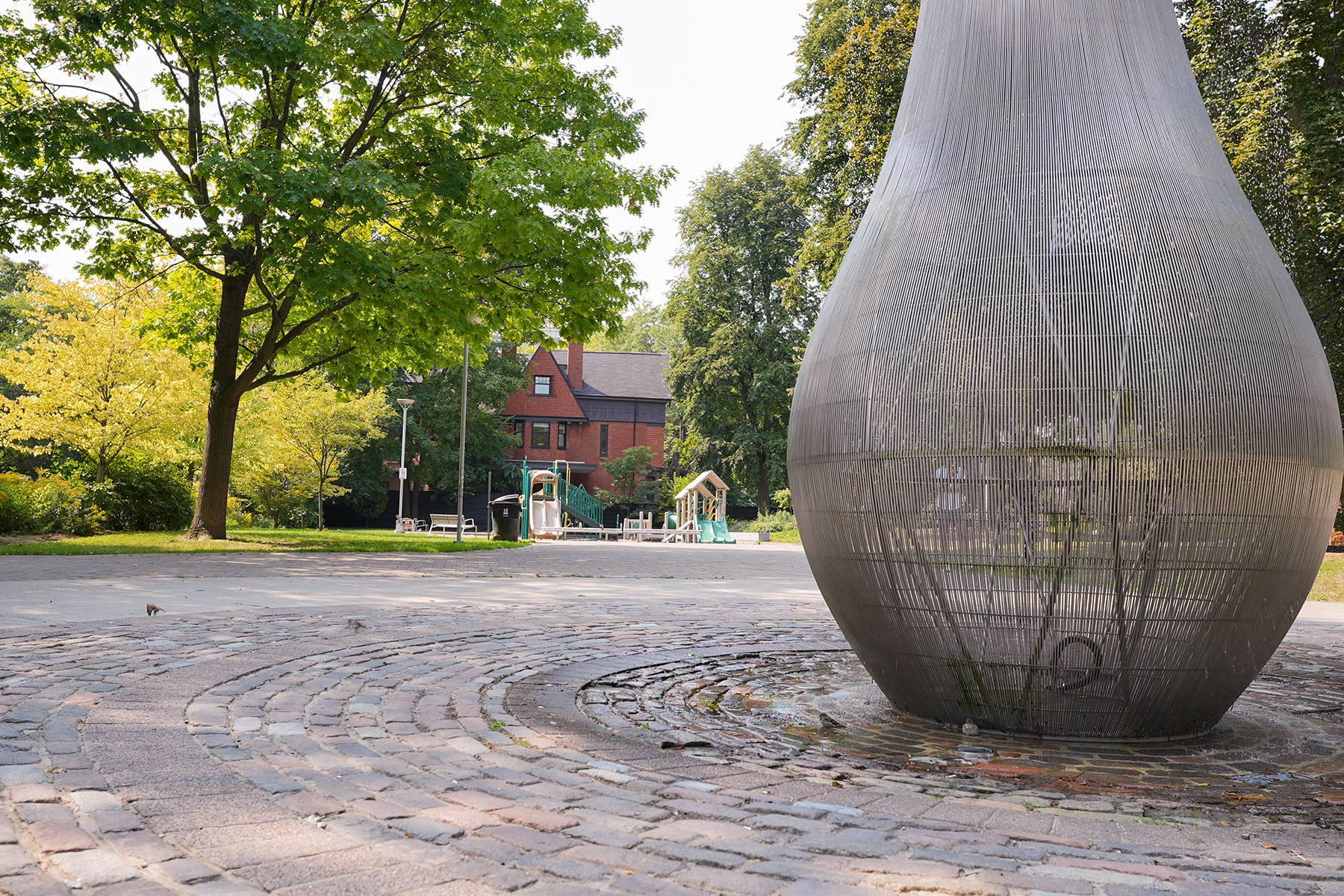
Sir Frederick Banting lived right by Taddle Creek park at 46 Bedford Rd. AMMARA KHAN/GLEANER NEWS
Grade: A Last year’s grade: A Time: 1:40 p.m. Location: 40 Bedford Rd. Overheard: A group of friends laughing. Raindrops consistently hitting the ground at the foot of the giant fountain which is a sculpture of a pitcher. Reasons to go: Upon entering the park, I was greeted by a squirrel sprawled out on its belly, arms stretched fully out by its sides. I needed to walk past it to enter the park, which deeply disturbed it. It got up, its back to me, threw an unhappy (I assume) glance my way and bolted away. I did not let this altercation deter me, and I moved on. On one side of the park there’s a playground for kids, and on the other side of the park there’s a sitting area surrounding a large sculpture of a pitcher with water dripping down the edges. I sat at the benches surrounding this fountain. Water falls from the top and hits the bottom forming little puddles. Little birds, (I counted six of them) use this puddle to cool down and take baths. They fly back and forth between the puddle and a bush, and it seems like such a great time. There is a Bike Share rack here too. There is a lot of foot traffic. People use this park to cut across the corner of the street. Some choose to sit for a little bit and enjoy the sounds of the birds having a blast and the water droplets hitting the ground.
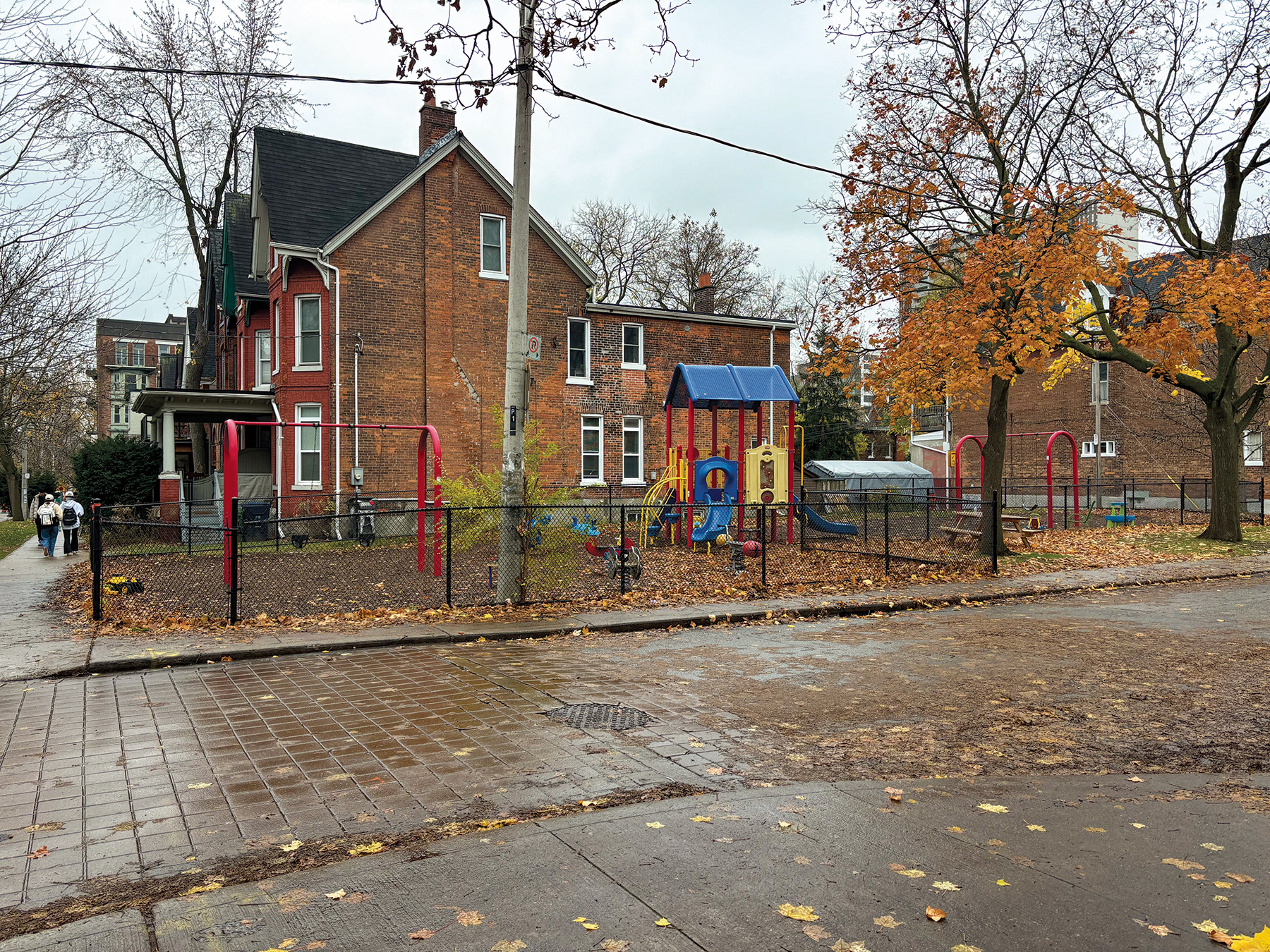
Temporarily re-located Huron Washington Parkette provides a safe space for little ones. NIMRAH KHAN/GLEANER NEWS
Time: 2:07 p.m. Grade: B+ Last year’s grade: B+ Location: 420 Huron St. Overheard: A Canada Postworker tugging at the locked front driver seat door of the Canada Post truck while simultaneously talking on the phone. Did you know: The Huron Washington Parkette sign is not in front of the park. It is rather on the other side of the street, facing the park. Very confusing… Reasons to go: Based on what the playground has to offer, one can conclude that the park’s target market is a younger age group. This little parkette is completely fenced off, with only one entrance. It provides a sense of safety. I imagine parents must be relieved to know that their children are at less of a risk of running into oncoming traffic (not that there is much traffic). Cars do not drive by very often, but you can still hear motor vehicles from streets away. I actually quite like the size of this park and the fact that it is fully enclosed. The small size creates a more intimate environment that feels like it could foster more interaction. The rusty red brick walls of the neighboring buildings also add to the feeling of closeness. Also, despite its humble size, it hosts so many fun elements that children can interact with. The yellow/red/blue color theme is very on-brand for children’s parks, and it creates an almost nostalgic vibe. Right outside the enclosure, there is a picnic table. It is close enough that parents can keep a careful eye on the playground, and their voices can still be heard by the children playing. It’s a perfect spot for lunch or a place to sit and rest under the shade of the trees.
Village of Yorkville Park
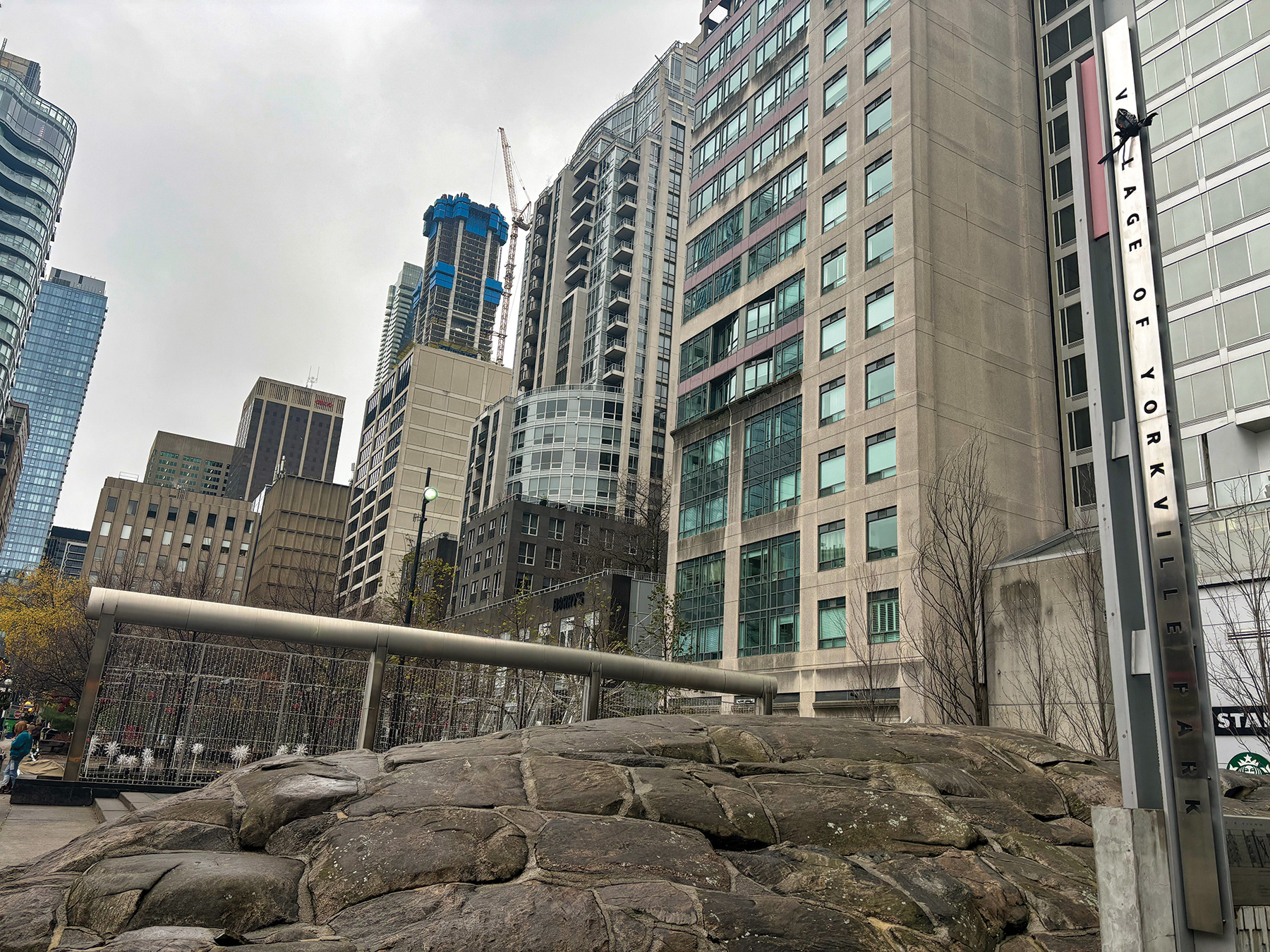
The Village of Yorkville park is heavily used and has many “activations.” It’s somewhat “overstimulating” according to the review but deserves a nighttime visit. NIMRAH KHAN/GLEANER NEWS
Grade: B Last year’s grade: A+ Time: 5:00 p.m. Location: 115 Cumberland St. Overheard: Eye of the Tiger by Survivor and I was not entirely sure where it was coming from. Reasons to go: This park is really bustling and full of energy on a Sunday afternoon. There are many different kinds of people walking in so many different directions. There are lots of stones in this park. Large stone bricks are stacked on top of each other to make some sitting areas, and one very large rock attracts many people who climb to the top of it. There are trees, metal chairs, and tables. And lots of pigeons. The table I sat at was decorated with some fresh cigarette ash paired with fresh pigeon poop. The demographic here feels older and busier. I sat through two and a half songs (still unsure where it was coming from) and had to leave, feeling a little overstimulated. It felt a little more like a mall food court than a park. I would, however, return. I believe it would be very beautiful at night. I noticed spotlights on the ground, and I think they light up during the nighttime. Did you know? Yorkville has an amazing coffee shop, Delysées at 161 Yorkville Ave., where a sweet treat will not disappoint.
Walmer Road Parkette
The built form of the surrounding townhouses of this park create a rather loud atmosphere. NIMRAH KHAN/GLEANER NEWS
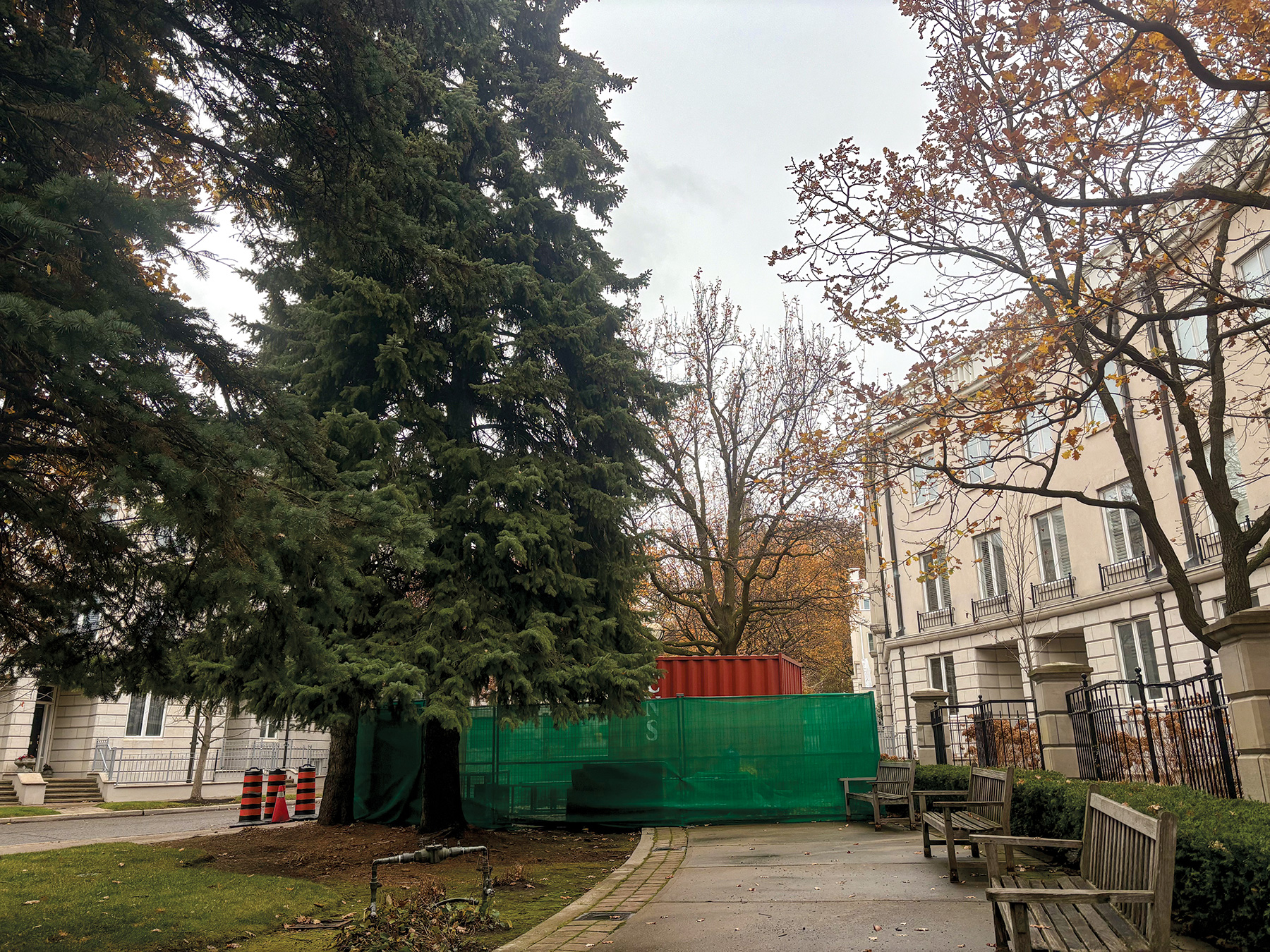
Grade: C+ Last year’s grade: (not found) Time: 2:07 pm Location: 227 Walmer Rd Overheard: “I have to make a resume, a cover letter…All that bullsh*t” Reasons to go: This parkette is located on a little patch of grass surrounded by townhouses. It looks like it should be quiet, but it is not. There is the loud buzz of construction nearby. Two benches away from me there are three loud and angry college boys complaining about professors and cover letters. A bird behind me is shouting very loudly. I can hear a leaf blower not far away. Noise aside, the benches are comfortable. The benches (all four of them) form a semi-circle around a couple of trees and some flowers that are dying. The trees are tall and provide comfortable shade. Amid the trees there is a tall pillar. It looks like a tree trunk at the bottom, but the top is shaped like a roman pillar. The townhouses surrounding the park are all identical and it feels like the set of a movie. Did you know? Applying mulch around your flowers during the fall can prevent them from dying too early.
Wychwood Park
A dog eyes a squirrel in lovely Wychwood Park, contemplating perhaps an attack. NIMRAH KHAN/GLEANER NEWS
Grade: A Last year’s grade: (n/a) Time: 2:48 p.m. Location: 76 Wychwood Ave. Overheard: Someone walking past playing Water by Tyla on a Bluetooth speaker. Reasons to go: This park is really great for children. The playgrounds look like so much fun. I imagine daycare owners around the area feel very lucky. I’m not overly fond of parks with sand coverings but I think I’ll accept it here because all the children here seem to be having an incredible time. I am a little worried though as the playground offers the children little to no shade. The squirrels at this park look busy, busy to the extent that they do not pay people any mind. I walked very close to one that was digging a hole with so much passion that I could not help but simply observe in admiration of its hard work. In the large field across from the playground, a group of children are playing baseball. There is enough room on benches for parents to observe their children in the shade. Did you know? Squirrels dig holes here to bury nuts in preparation for winter. Will they ever find them?
Hillcrest Park
Hillcrest Park is truly a family-friendly destination with lots to do—very welcoming. NIMRAH KHAN/GLEANER NEWS
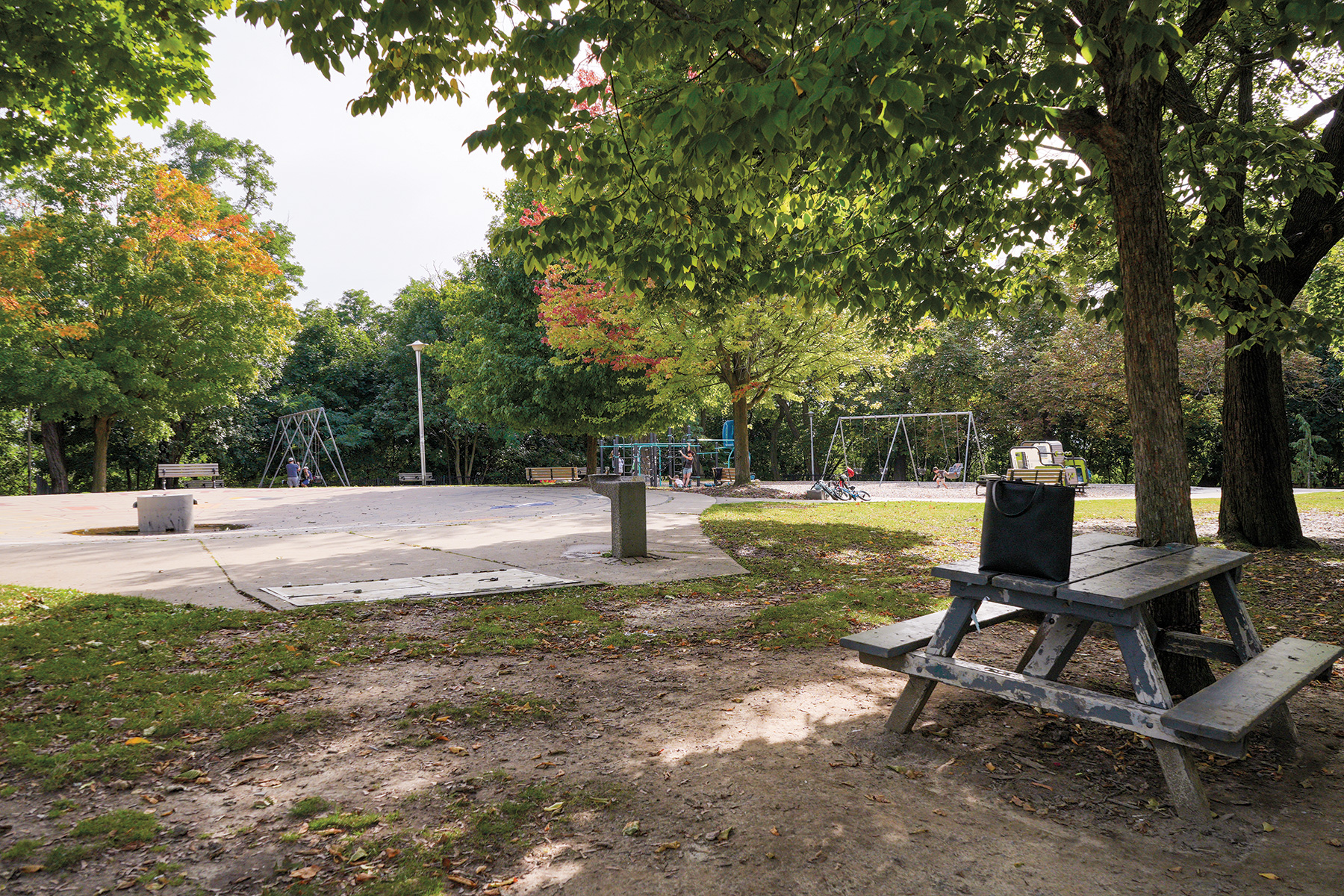
Grade: A+ Last year’s grade: (n/a) Time: 3:18 p.m. Location: 950 Davenport Overheard: A child said, “Momma, look!” and then swung her arms around in circles. I believe she was attempting to twirl. Reasons to go: I sat on a picnic table that people had painted many times, drawn on, and carved into. It is sitting under a tall tree. It’s honestly a relic, and I hope they never paint over it. From where I sat, I could see a playground, a tennis court, a table tennis area, and a huge maze! There are so many amenities. There is a basketball court, a dog area, and a path that encircles the park where children enjoy bicycling. The water fountain is child-friendly as it has a built-in stool for children to stand on. I think this park would be great for families with older children or for groups of kids who are old enough to visit parks without parental supervision. If you bring your own gear, there are a few sports you can play here with your friends and family and later have lunch on the beautifully defaced picnic table. Did you know? On the maze, it says: “TSI TKARONTO.” In Mohawk, Tsi means a place where things are permanently situated, while tkaronto means a place where there are trees in the water.
St. Alban’s Square
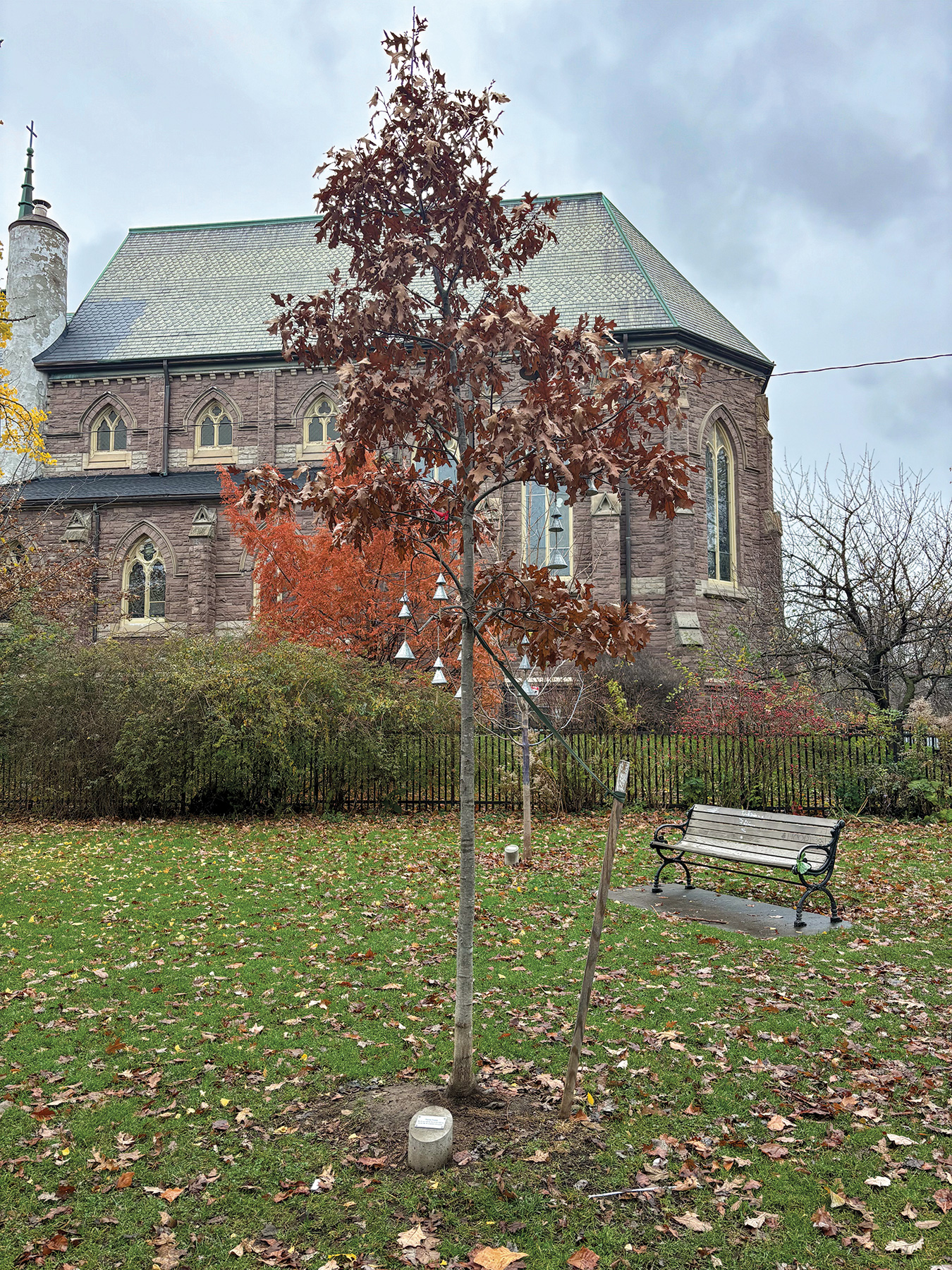
A new tree has been planted here, a tribute to Thomas Swales. A quotation under the name reads: “We are such stuff as dreams are made on, and our little life is rounded with a sleep.” NIMRAH KHAN/GLEANER NEWS
Grade: A+ Last year’s grade: (n/a) Time: 4:19 p.m. Location: 90 Howland Ave Overheard: A helicopter. Reasons to go: There are about seven benches in this charming park, surrounded by tall, mature trees. The main path runs through the middle. This park is really beautiful to walk through or to take a portrait photo. There is a water fountain and a Bike Share rack. I love the ambiance, and it’s surprisingly quiet despite being next to the street. The grass is well-kept, making it an inviting spot to relax. There are a few stacked construction cones that honestly really didn’t bother me at all. One highlight is a young tree decorated with unique metallic ornaments dedicated to Thomas Swales which adds a touch of whimsy. The quotation under the name reads: “We are such stuff as dreams are made on, and our little life is rounded with a sleep.” It’s a peaceful place with just a few visitors, like a woman playing fetch with her dog. It is ideal for anyone looking to unwind or enjoy a quiet moment in nature. Did you know? The quotation under the tree is from The Tempest by Shakespeare.
December 16th, 2024 · Comments Off on FOCUS: Community Safety Scholarship awarded to Sean Chen (Dec. 2024)
Chen has made an impact at Harbord Collegiate
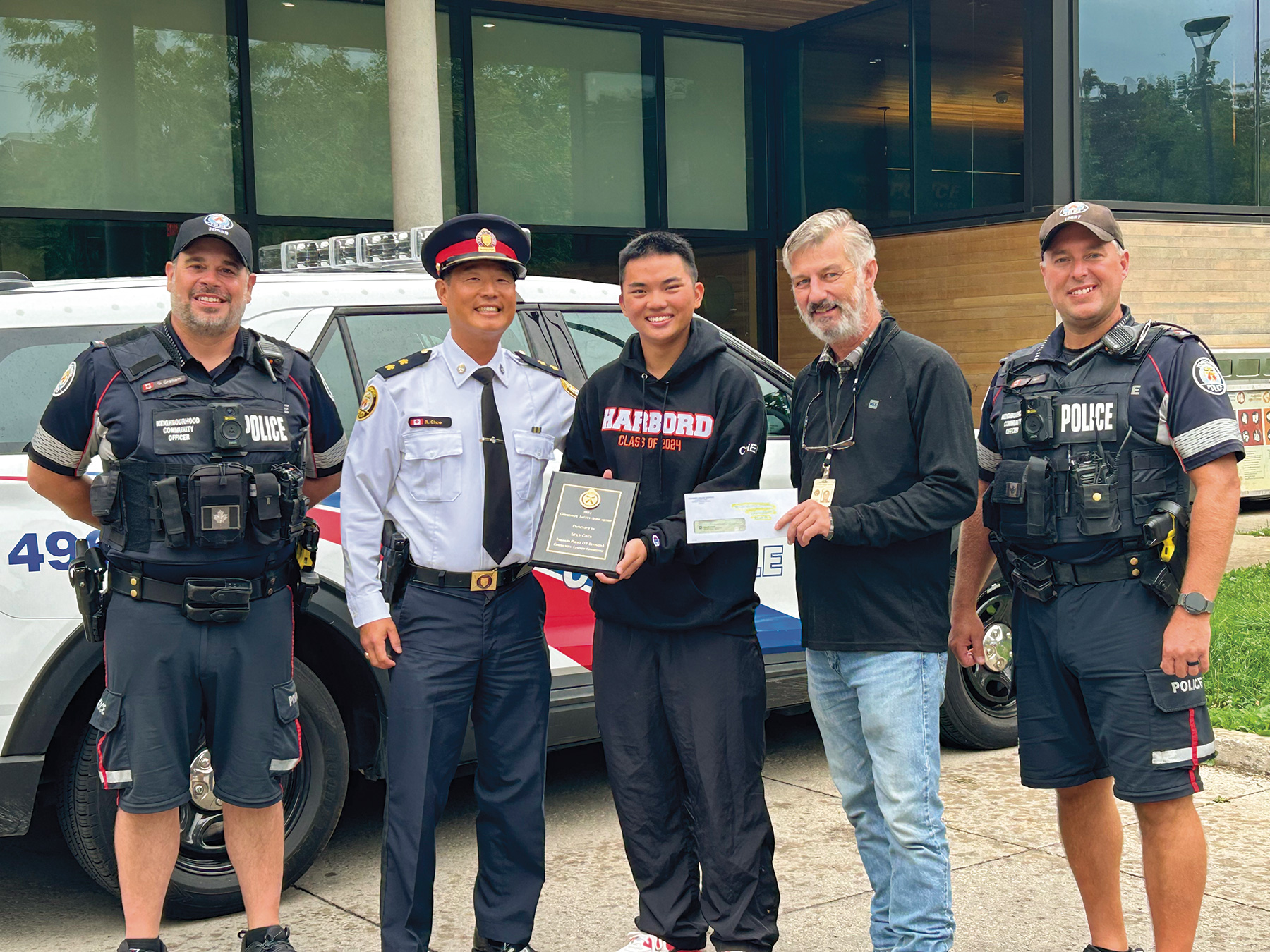
From left, P.C. Geoff Graham, Inspector Robert Choe, scholarship winner Sean Chen, Scholarship Coordinator Brian Burchell, and P.C. Jamie Breau at Toronto Police Service’s 14 Division. COURTESY TORONTO POLICE SERVICE
By Ammara Khan
In a world where community connections can feel fleeting, 18-year-old Sean Chen proves that one passionate and dedicated individual can make strong and lasting impacts. Prior to starting his first year at Toronto Metropolitan University in business management, Chen’s efforts were recognized and rewarded with the Toronto Police Service 14 Division’s 2024 Community Safety Scholarship. The scholarship, established in 2011, awards $4000 to individuals 25 and under who reside or attend school in the 14 division.
According to Brian Burchell, Community Safety Scholarship coordinator (and publisher of the Gleaner), the scholarship “recognizes youth who have made their communities safer and helps them realize their potential with financial support for post-secondary education.”
Chen began making an impact in the community during his time at Harbord Collegiate Institute. “To be honest,” said Burchell, “the worlds he has touched in a brief span of three years are too numerous to list.”
To list a few, Chen was a member of the RCMP’s National Youth Advisory, a captain with the Reel Asian International Film Festival, a member of Toronto’s Youth Cabinet Urban Health Working Group, a member of his school’s Caring & Safe Schools committee, and the president of his Student Activity Council. He also started a club, the Harbord Response Team.
Chen often thinks about how he can give back to his community. He is unsure what his driving factor is. “It’s hard to say where it comes from when you have passion,” he said.
Chen felt that winning the scholarship was “definitely affirming.” He said, “it points to a greater cause that I’m trying to achieve.”
“I’m not sure what the cause is, to be honest,” he continued, “but it is affirming in the sense that it shows you’re going in the right direction.”
One of his many notable feats is the Toronto Police vs Student Dodgeball game, which hosted three games in a span of four years. It is a community relations event that Chen organized to bring students and 14 division police officers together.
This is one of the ways that Chen helps encourage a safer community—through building lasting connections.
“I think community safety is an ongoing initiative that requires collaboration from both the community, especially the youth,” said Chen. “We have to realize that community safety is a shared responsibility. It’s not just the police.”
“I first met him through an email when he wanted to do dodgeball,” said Staff Sergeant Israel Bernardo, police officer and member of the scholarship adjudication committee, “and I was confusing the [school] principal for him. The email was so professional,” expressed Bernardo. They set up the date for the event, and Bernardo went on thinking Chen was a staff member. “We go down there, and he’s just a kid!”
“He’s very mature, centred, and deliberate in conversation,” said Bernardo. “He can roll with the punches. He’s good in a room. He’s sharp.”
Bernardo says that Chen’s initiatives benefit community safety because they benefit many members of the youth. “Giving your time is the most valuable thing you can do,” he said. “Giving your time for the benefit of others.”
Bernardo says that fostering a relationship between the police and the community also creates a safer environment. Cooperation between the community and police could lead to less violence.
Bernardo hopes this opportunity can give the youth “hope.” He hopes it “takes some of the burden away.” He wants it to act as one less excuse to hold the youth back from achieving their goals.
“This is available,” said Bernardo about the scholarship, “and it’s attainable.”
“I’m hoping that we can get more community partners,” said Bernardo, “to continue to contribute.” Bernardo hopes that the scholarship can expand to provide opportunities to more members of the youth in the community.
“It’s supporting your community because some of the things that Sean’s doing is impacting dozens of students,” said Bernardo.
“Safer communities,” said Burchell, “are our mutual goal.”