April 16th, 2025 · Comments Off on GREENINGS: Ford listens selectively (Apr. 2025)
From Science Centre to bike lanes, expert advice is ignored or twisted
By Terri Chu
The premier who abruptly shut down the Ontario Science Centre based on an intentionally misinterpreted engineering report, is now threatening to take away the Bloor Street bike lanes; this time, there’s not even a report to base his decision on, just his gut feelings and his promises to planet-hating constituents, and of course, big oil.
The engineering report regarding the Science Centre roof said that a mere 6 per cent of the roof panels were at risk of failure. The estimated cost to replace the entire roof for the three buildings was between $22 and $40 million, or about $1 million for an immediate fix. However, instead of fixing it, the big, business-friendly government immediately closed the facility and announced plans to move the Science Centre to Ontario Place at a cost of approximately ten times the cost of fixing the entire existing roof. That way, the taxpayers can foot the bill for the parking lot at Ontario Place which will benefit the new luxury spa Ford’s friends are building there.
Obviously, having these reports in public view does not help the premier. For bike lanes, Ford is not even pretending to solicit more expert views. Existing reports don’t support his cause, and he dare not get more.
Businesses along Bloor want the bike lanes to stay because cyclists support local stores.
Big box stores like Loblaw obviously benefit less from bike lanes because they need their customers to get into big SUVs so they can haul their excess goods home. Toronto is caught between urbanists who want the future to have some semblance of liveability and sustainability and those who represent the petrostate past who are becoming increasingly frustrated with the pesky youth who reject traditional values.
The province doesn’t pretend to care about the annoying sustainability types who lower oil profit margins. They don’t even pretend to care about our lives as we get bulldozed by increasingly large SUVs that feed the oil profit machine, the same machine that openly spreads anti-science propaganda and funds conservative candidates. We are collateral damage as millions are spent to dismantle bike lanes, not out of efficiency, but purely out of spite. Unlike healthcare and infrastructure, no price is too high for political spite.
Through all this, I have a glimmer of good news for cyclists. At Albany and Dupont, there is a fancy new bike corral, the first of its kind on a residential street. The bike corral is between the stop sign and the road, approved by transportation, doesn’t block pedestrians or wheelchair users, and only reduces on- street parking by about a foot. People who live in densely packed homes can now seriously think about buying cargo bikes, e-bikes, or other alternatives to cars.
Without on-street parking options, residents were limited to what they could physically haul up the porch steps or fit in the often-narrow passageways between their homes. Bike corrals on residential streets makes it possible for people who live in smaller spaces to have a place to park their alternative vehicles.
This is a huge victory for the biking community. Having these bike corrals on more residentials streets will lower the barrier for many people to get cycling by giving them an on-street storage solution. This is also an issue of fairness. If a resident wants to buy a car, for a song, they could get an on-street parking pass, but no such option existed for cargo bikes—until now.
Despite the province wanting to kill us by taking away bike lanes, us cyclists are thankful for the city and Councillor Dianne Saxe for working as hard as she did to get that first bike corral in place. May every residential street see one of their own soon. Having more bikes isn’t just good for cyclists, motorists also benefit by having less competition for the huge amount of road space that each car takes up. Every cyclist in a bike lane means one fewer car on the road. This is good for delivery drivers, commuters, and even pedestrians. Parking spaces will be easier to come by too.
Ask your city councillor how to get one on your street. Create these spaces for cyclists. It is time we took some of the public space that has been the privilege of oil-burning mobile murder machines.
Our next challenge will be to protect those bike lanes from the man who sold out our green belt and the Science Centre. It won’t be an easy task, but we need to unite. We need to let this government know that there are more of us who want bike lanes rather than a spa.
April 16th, 2025 · Comments Off on LIFE: The crème de la crème (Apr. 2025)
The Gleaner went on a mission to find the best hot chocolate on Bloor
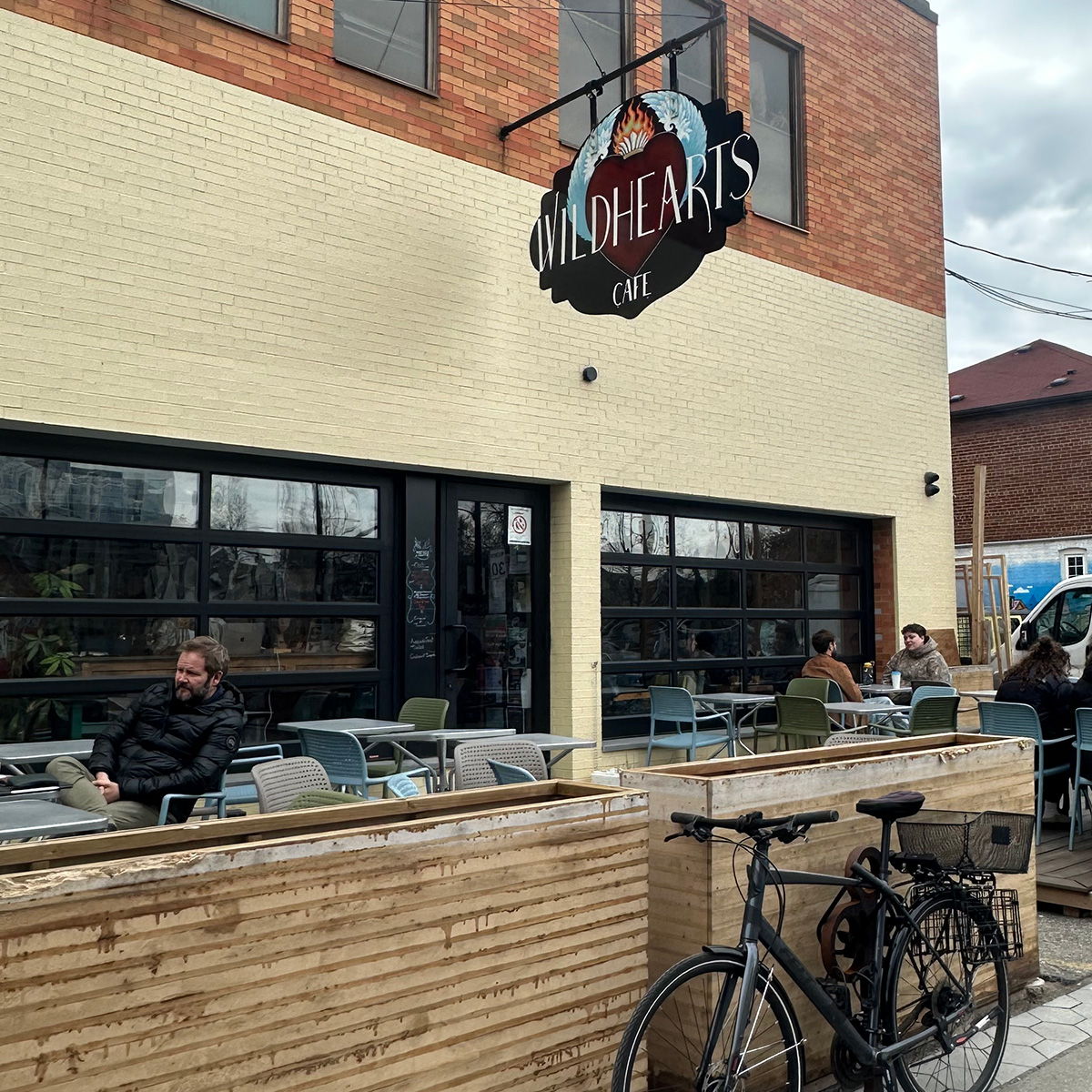
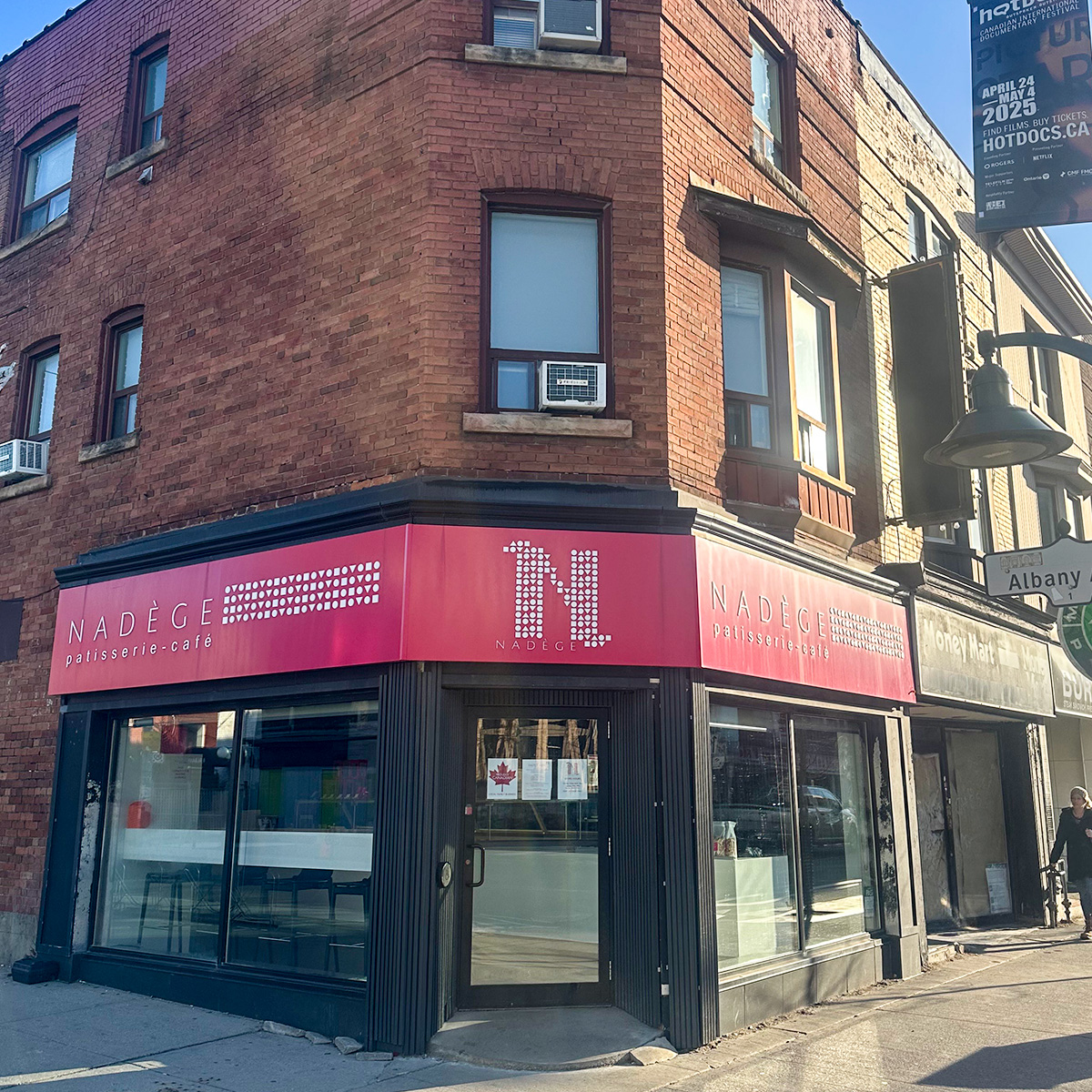
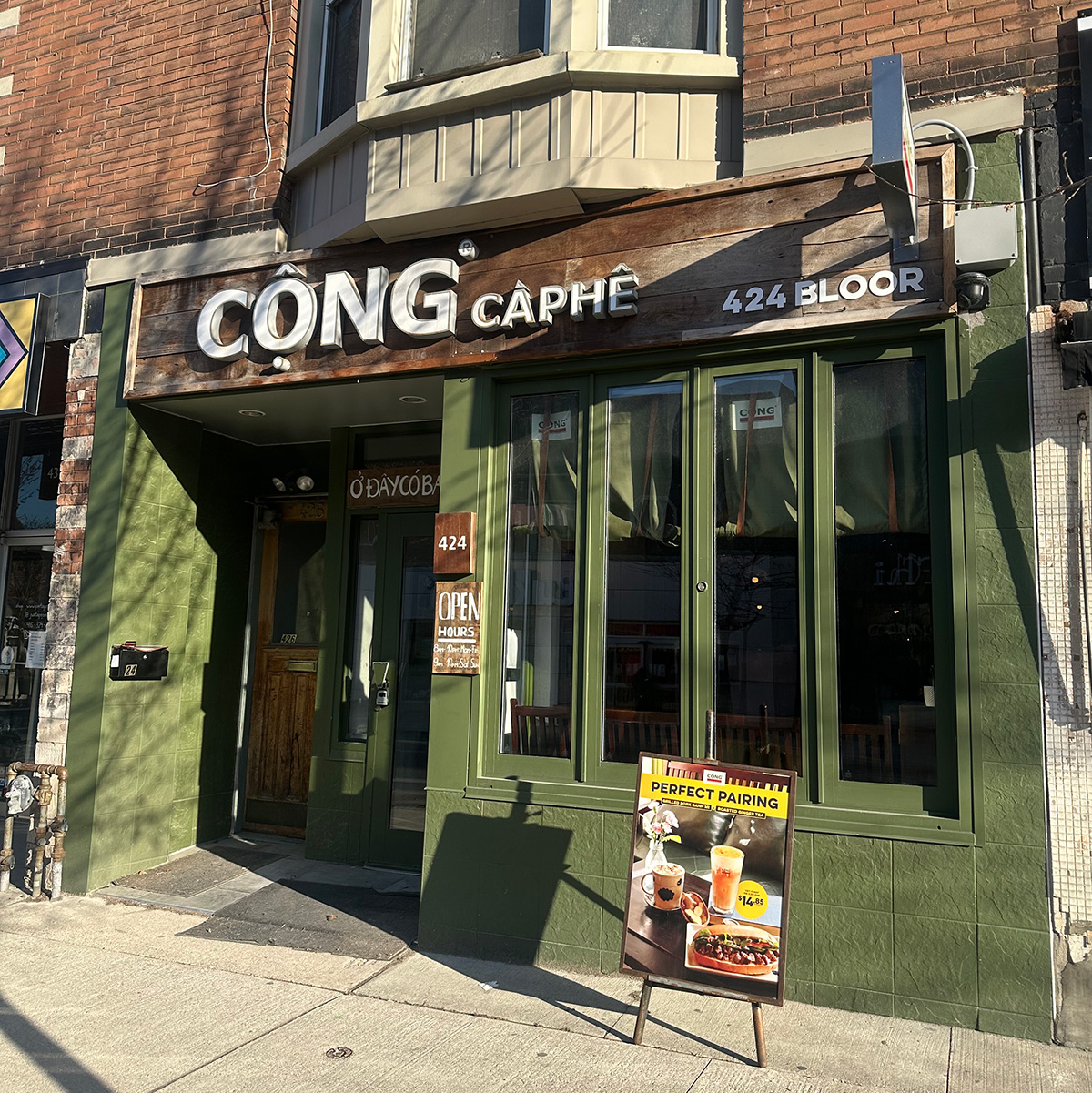
Wildhearts Cafe, 509 Bloor St. W.Nadège Patisserie, 494 Bloor St. W.Công Càphê, 424 Bloor St. W.
By Rose Harbener
The Gleaner set out on a seasonal mission to taste every hot chocolate offered by the cafes on Bloor Street with the aim of ranking the top three. Each cup was evaluated for flavour, texture, and the right balance of sweetness. After braving the snow and after much deliberation, we have crowned three cups of cocoa perfection the winners.
Wildhearts Cafe, 509 Bloor St. W.
If you’re craving a hot chocolate that perfectly captures the cozy feeling of having just built a snowman, look no further than Wildhearts. They’ve truly perfected this delightful winter treat. The drink’s perfectly balanced sweetness makes it the ultimate comfort in a cup. Besides the creamy sweet deliciousness of their hot chocolate, Wildhearts also offers a wide selection of drinks and pastries. The interior boasts a cozy, laptop-friendly atmosphere for patrons, and the disco ball spinning on the ceiling lights up the space with a unique charm. The walls are a vibrant canvas, always adorned with artwork from local artists that changes periodically, ensuring there’s always something new to see. The owner, Sean Lacey, opened Wildhearts in early 2022 and has made it their mission to create a welcoming space that blends community, creativity, and delectable drinks.
Nadège Patisserie, 494 Bloor St. W.
Nadège Patisserie is a renowned French pastry shop in Toronto founded in 2009 by Chef Nadège Nourian and partner Morgan McHugh. Nadège offers authentic French pastries and drinks and their gourmet hot chocolate embodies the Parisian elegance of their store. At five dollars a cup, the luscious consistency is rich, but not overly thick. It is crafted with chocolate from the high-end French brand Valrhona, which has made it their mission to become masters of taste and chocolatey goodness. Nourian, a fourth-generation pastry chef, honed her skills in France and decided to put them to use when she opened the first Nadège location on Queen Street. She went on to open the Annex location in May, 2022. Nadège is celebrated for its innovative and artistic approach to traditional French pastries and drinks.
Công Càphê, 424 Bloor St. W.
Công Càphê, a delightful Vietnamese-based cafe, opened its first North American location in the Annex in November 2023. Công offers an enchanting experience with their silky, dark hot chocolate sprinkled with a dusting of cinnamon to elevate its rich velvety flavour. In 2007, Công was born in the heart of Hanoi, Vietnam. Founded by the visionary Ling Dung, this vibrant cafe captures the essence of traditional Vietnamese flavours. Công reflects Dung’s treasured childhood recollections of Hanoi between 1976–1986 and represents a new vintage café design trend that encapsulates Vietnam’s rich cultural legacy.
Comments Off on LIFE: The crème de la crème (Apr. 2025)Tags:Annex · Life
April 16th, 2025 · Comments Off on ON THE COVER: Reviving Retro: Pinball makes a comeback in the Annex (Mar. 2025)
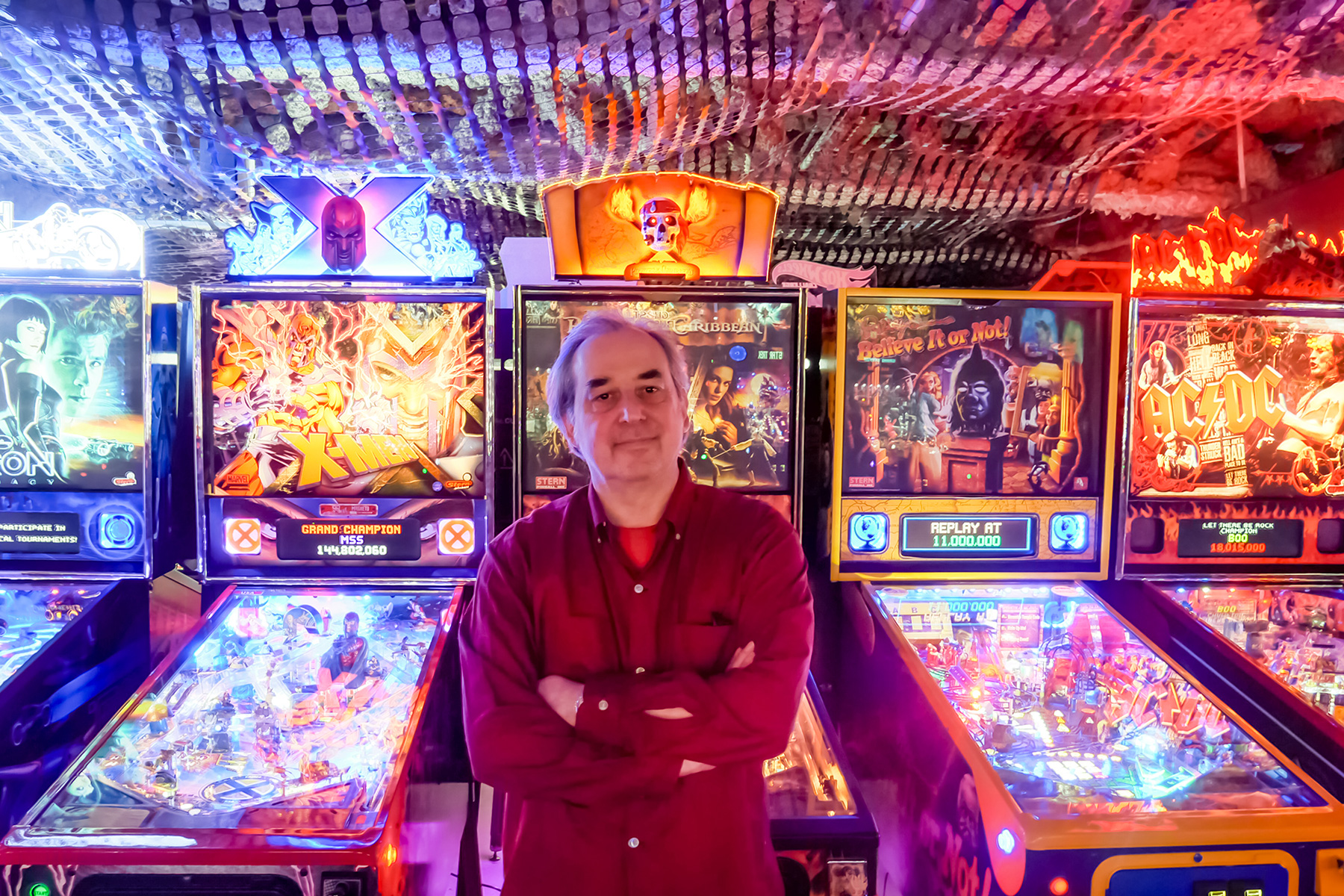
Howard Pressburger, professional pinball player, in his zone and determined to reach a new high score at the Antisocial Pinball Lounge now located at 570 Bloor Street West. BEN HOHENER/GLEANER NEWS
The Antisocial Pinball Lounge at 570 Bloor St. W. has recently opened its doors to raving reviews. Boasting the largest collection of publicly accessible pinballs and pairs of flippers in Canada, with 72 playable machines and more on the way, the new arcade is unlike anything you’ll find anywhere else in the city.
“The amount of machines and the quality of the machines are second to none in the city. There are good pinball places in the city, but none of them carry this high level of machine. Certainly the largest (pinball arcade) I’ve ever been to,” said Howard Pressburger, a patron, manager at the Wiener’s Home Hardware, and professional pinball player and aficionado. “Unlike other places in the city that have more of a party atmosphere, Antisocial is more of a place where you can go to play some excellent pinball,” he added.
Pinball is long past its heyday, but that doesn’t mean it’s a dead game by any means. Within the city, the Annex, and specifically in the basement of Antisocial, pinball is experiencing a cult resurgence with demand for the vibrant-neon, lively plinks of steel against glowing bumpers. Despite the activity having its peak player base in the 80s, there has been a cultural shift in recent years, what Steve, owner and curator of Antisocial, calls a “retro movement.”
“People are looking for something different. This is kind of a whole new form of entertainment. Pinball machines have been perfected now with new technology. The ones that are made now are far more advanced than the ones from 40 years ago. They’ve never been better than they are now. [We are] bringing back that fun experience and reintroducing it to a new generation.”
Antisocial prides itself on quality and quantity. Unlike other arcades, where it may be daunting to spend money on a game you could very well lose, and your cash too, Antisocial has a one-time entrance fee of $20 for a night’s worth of pinball. Play, learn, and win to your heart’s content down at the Antisocial Pinball Lounge on Bloor.
—Ben Hohener/Gleaner News
A look inside the newly-opened Antisocial Pinball Lounge at 570 Bloor St. W. COURTESY THE ANTISOCIAL PINBALL LOUNGE
Comments Off on ON THE COVER: Reviving Retro: Pinball makes a comeback in the Annex (Mar. 2025)Tags:Annex · News · On the cover
April 16th, 2025 · Comments Off on NEWS: Cycle Toronto challenges Bill 212 (Mar. 2025)
Ford appears fully committed to removing bike lanes on Bloor, University, and Yonge
By Ben Hohener
On Oct. 21, 2024, the Ontario government introduced Bill 212, also known as the Reducing Gridlock, Saving Your Time Act to remove bike lanes from Bloor Street, Yonge Street, and University Avenue, some of the busiest streets in the city. Section 195.6 of the Bill states that the city plans to restore the lanes for use by motor vehicles which would restrict cyclists to sharing the street with cars.
The backlash to Bill 212 has been extreme, and as of Dec. 7, 2024, a petition conducted by Cycle Toronto has reached over 25,000 signatures. Besides the danger to cyclists, there is another community that is facing a massive threat from Bill 212: small businesses.
“Ford is ignoring the actual facts, the number of people who use bike lanes and how it has positively affected all of the small independent businesses that make up the Annex,” said Howard Pressburger, retail manager of Weiner’s Home Hardware.
He continued: “He doesn’t care about us. It rubs me the wrong way. You’re living in the largest city in Canada. You live cheek-to-jaw with other people. Everybody needs to be able to work. Everybody needs to be able to safely get from point A to B using the transportation method of their choice. I don’t understand how people can believe it’s bikes that are causing gridlock.”
The Bloor Annex BIA supported an extensive study of the economic impact of bike lanes on its member businesses when the city installed pilot bike lanes. The study found that despite concerns expressed by many member businesses, the bike lanes actually brought in more business, and the dividend was a safer street for all road users.
Now, the fight is being taken to court. Cycle Toronto, an organization dedicated to protecting cyclists, has recently announced their decision to challenge the bill using the Canadian Charter of Rights and Freedoms, Section 7. Section 7 affords the right to life, liberty, and security of the person and the right not to be deprived thereof except in accordance with the principles of fundamental justice.
With the backing of law firm Paliare Roland and environmental law charity Ecojustice, Cycle Toronto seeks to disrupt the fulfillment of Bill 212.
“By removing safe bike lanes that the city installed to give people more mobility options, without any due cause, it is a violation of the Charter of Rights,” said Michael Longfield, executive director of Cycle Toronto. “Yes we have a traffic congestion issue, yes we need to be focusing on moving people throughout our city, but people can see plainly what is in front of their faces and they know bike lanes aren’t the problem. [They are] distracting people with false promises of removing bike lanes to help traffic. They frankly aren’t buying it.”
Central to Cycle Toronto’s argument is a government-commissioned study by construction firm CIMA+ which estimated that removing bike lanes on major roads like Bloor Steet, Yonge Street, and University Avenue could lead to a 56 per cent increase in accidents. The study also noted that bike lane removals would push more cyclists to ride on sidewalks, and that redirecting them to roads isn’t a feasible solution.
In response to this study, the Ontario government has proposed changes to Bill 212 to protect itself from potential lawsuits from injured cyclists on roads where bike lanes have been removed. Progressive Conservative MPPs have offered the provincial government, municipalities, and contractor’s immunity from liability. This only further proves Cycle Toronto’s argument; even government officials recognize the danger, yet they only choose to protect themselves.
The court’s decision on Cycle Toronto’s challenge is about more than just commuting; it is about the government’s responsibility to its citizens when it comes to urban planning and public safety.
April 16th, 2025 · Comments Off on NEWS: St. George development sparks worry for residents (Mar. 2025)
Renovictions, lack of heritage protections at heart of concerns
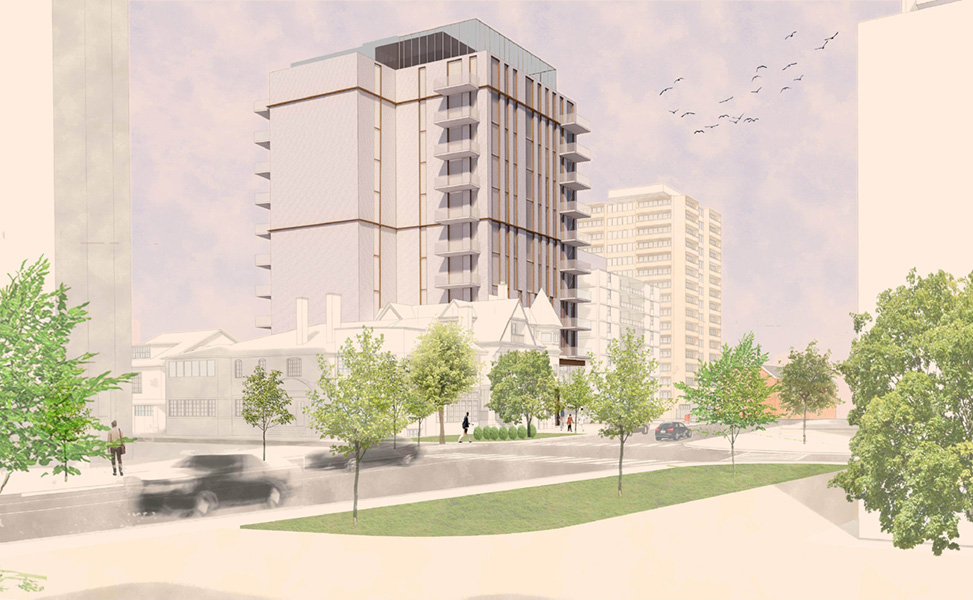
Artist’s rendering of the proposed development at 262 St. George St. COURTESY CITY OF TORONTO PLANNING
By Amna Ahmad
A 12-storey development proposal at 262-266 St. George Street has ignited a heated debate among area residents, with concerns surrounding heritage preservation, tenant displacement, and a lack of community engagement.
JCD Property Ltd, the developer of this project, submitted an application on January 9, 2025 to amend the Official Plan and Zoning By-laws to allow for the construction of the 12-storey residential building, that will have 86 dwelling units. The news of this has left some confused and concerned.
Shane McMaster, a resident of 264 St George Street, has lived in the area for about a year and a half. He, like the other residents received a notice a little while back detailing the proposed development, and it gave them a timeline of approximately two years.
“I don’t like that I have to move, period,” said McMaster.
He expressed his feelings on the situation, saying the prospect of moving, and being uncertain about the future annoyed him. McMaster claimed that the notice provided, wasn’t very clear and that made him all the more annoyed as he was not sure if he even had the two years given.
To the developer, McMaster had only a few words. “Please don’t knock down my apartment.”
Gynger Rego and Andre Pavia are residents of 262 St George Street and have lived there for three years now. Compared to McMaster, neither are too concerned with relocating, as both saw the residence as a temporary home, and had plans to leave soon.
But for Rego, there is some confliction about the construction as, “while it is more housing, it’s also a historic building.” And in terms of the area being partially preserved, Rego has doubts.
“I think regardless, it’s going to be bastardized in some way.”
Pavia is more of the optimist and “hopes they go through with it (historic preservation),” and are able to preserve the historic integrity of the area that many have come to love.
The Gleaner also reached out to Henry Wiercinski, Co-chair of the Annex Residents’ Association (ARA). Wiercinski provided a link to the ARA’s Early Exposure Project Position Statement, which highlights the associations concerns.
One of the key issues highlighted in the statement was the lack of meaningful community engagement in the project. The ARA argues that many stakeholders were neither invited nor informed about discussions, and regarding the community consultation meeting, residents received inadequate notification, limiting their opportunity to participate.
The ARA also questions the project as it harms the current residents. Like McMaster, many residents will be required to find new homes, as the proposed development fails to fully replace the 43 existing rental living spaces. Instead, it offers only 13 larger units, which will likely be more expensive. In a city already grappling with a housing crisis, the ARA argues that this project worsens the problem by further reducing affordable rental options.
Like Rego, the ARA argues against the developers claims of heritage preservation, saying it’s a ‘façade’, and that rather than true adaptive reuse, they say it is like ‘architectural taxidermy’ where only the front of the buildings is retained. And they claim that it undermines the historic integrity of St. George Street.
According to them there are also environmental issues to consider, like the fact that the site relies on a combined storm and sanitary sewer system, which could become overloaded, potentially worsening stormwater management issues and increasing the risk of sewage overflows into Lake Ontario. As well as issues of proper planning in regard to parking, as there is not any dedicated resident parking spaces.
The ARA’s stance is that there is more that could be done regarding this development, and more things need to be taken into account.
James and Jordan Doucette, of JCD Property Ltd, named developers of the property, did not receive a response to requests for comment.
April 14th, 2025 · Comments Off on NEWS: The Annex Singers celebrate 45 years (Mar. 2025)
March 29 event commemorates neighbourhood group
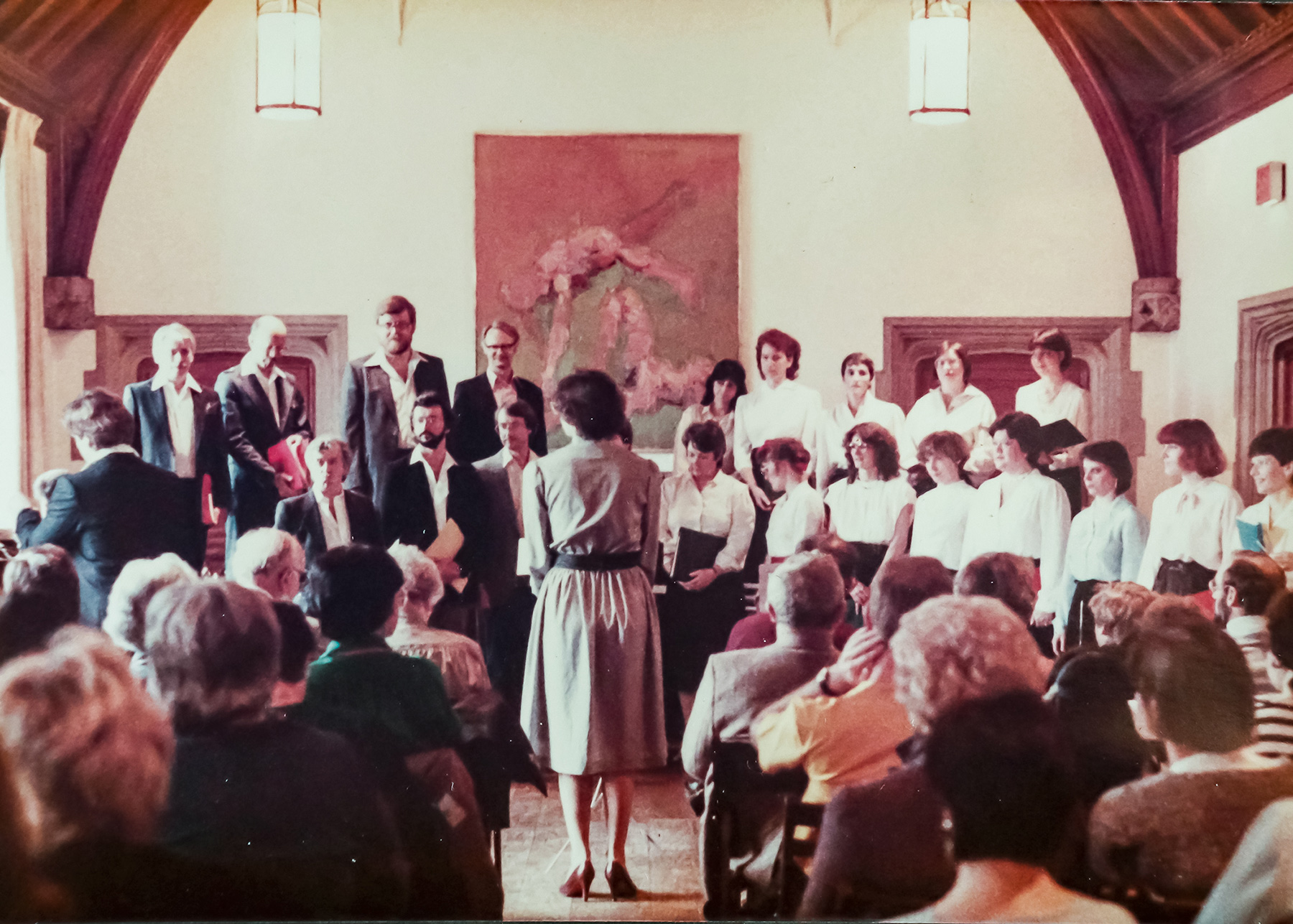
An Annex Singers’ concert in the Hart House Music Room in May 1984, led by Artistic Director Lesia Deacon. COURTESY LESIA DEACON/ANNEX SINGERS
By Victoria Fisher
In the winter of 1979, a small group of friends and Annex residents gathered around a piano to sing carols. They couldn’t have imagined that 45 years later the choir would have blossomed into an accomplished 60-voice ensemble, or that it would still be firmly rooted in the Annex.
When it began, The Annex Singers was a neighbourhood group of enthusiastic amateurs. Among them were Rochdale College “graduates” and young idealists keen to sing Broadway and popular tunes together. Initially assembled by member Anita Steiner, the little choir was led by voice teacher and choral conductor Lesia Deacon. As the singers gained confidence, Deacon stretched the choir’s repertoire with madrigals and Mozart. The choir was also an active social group—at one point, poker threatened to overthrow singing as the activity of choice.
In its tenth year, the choir overcame its first hurdle when it found itself without a director. For a year, a small group of singers kept the music alive, meeting in neighbourhood homes. Salvation came when Brad Ratzlaff, who was for many years the music director at Trinity-St. Paul’s United Church, offered to take the reins. Ratzlaff added cabaret concerts featuring popular selections and these became staples of the choir’s programming. In 1999, under director Ron Cheung, The Annex Singers gave a 20th anniversary concert and welcomed back Deacon and Ratzlaff as guest conductors.
In 2006, the choir was once again searching for an artistic director and found Maria Case, an Annex resident, pianist, vocalist, and now an award-winning composer. In 2025, Case is celebrating her 19th year with the choir and is now the longest-serving director of The Annex Singers. Over the years, the choir has performed her compositions regularly, including one program in 2023 which exclusively featured Case’s music. She inventively set captivating texts to challenging harmonies.
Under Case, the choir has developed and matured. Now with an auditioned membership, the choir offers three concerts a year which also feature the choir’s chamber ensembles. Concerts include a diverse range of music from medieval pieces, to new compositions by Canadian composers, to popular pieces. The May 2025 concert will include pieces ranging from the 12th-century composer Hildegard von Bingen to the Spice Girls.
The Annex Singers collaborate with many local musicians, including pianist Anne Lee, who has been with the choir since 2011, and four inspiring professional section leads—Melanie Conly, Meghan Symon, Joshua Clemenger, and Lutzen Riedstra. Recent guest musicians have included organist Stephen Boda, percussionist Alejandro Céspedes, and fiddler/violinist Anne Lindsay.
Case’s direction has given the choir a signature style—programs that combine music with powerful words to speak to important themes and community issues, bringing vibrancy and relevance to the choir’s concerts. In 2023 the Voices of Earth concert featured music celebrating nature and the environment, including some of Case’s own compositions. In the Margins explored the theme of marginalization, drawing attention to those struggling with poverty or exclusion during the coldest months of the year. Sometimes, these textual flights expand into drama. In 2017, December Diaries married wintry texts and acted scenes with music to tell stories of challenge and camaraderie at Christmastime.
This year, the choir collaborated with local scientists for Stargazers featuring University of Toronto cosmologist Renée Hlozek and members of the Royal Astronomical Society of Canada for an inspiring scientific and musical experience.
Whether bringing in musicians from the community or performing work by Canadian artists and writers, The Annex Singers seek to celebrate the neighbourhood, Toronto, Canada, and the things that bring us together. Itself an unshakeable community, the choir weathered another storm in the form of the pandemic; for almost two years, singers gathered, learned and performed online. Creative concerts were filmed and streamed online, including What Will Remain, a reflective Remembrance Day program with acted portions, and Yes, Virginia, starring the thespian talents of Colin Mochrie and Deb McGrath.
This March 29, The Annex Singers celebrate 45 years since a group of Annex-based friends gathered around a piano—by gathering around two pianos. The drama and bombast of Carl Orff’s Carmina Burana is paired with music celebrating the joy and hope of love and features extraordinary guest pianists and some of Toronto’s top percussionists.
Tickets are available through the choir’s website: annexsingers.com.
Comments Off on NEWS: The Annex Singers celebrate 45 years (Mar. 2025)Tags:Annex · News · Life
April 14th, 2025 · Comments Off on EDITORIAL: Bike lane facts Ford knew (Mar. 2025)
Cycle Toronto sought a court injunction to block the immediate removal of key Toronto bike lanes. Premier Doug Ford won his day in court but was forced to reveal some deeply damning documents containing advice from his own experts about fatal flaws in his plans.
The Reducing Gridlock Saving You Time Act (Bill 212) is now provincial law. Doug has Bloor Street, University Avenue, and Yonge Street bike lanes in his sights. The advocacy group Cycle Toronto is planning to return to court with a Charter challenge against Bill 212 in April.
Unlike a media scrum, where a politician can say what they want, evade questions, answer different ones, or outright lie, courts expect the lawyers standing before them to share all the relevant facts relating to the case at hand, fully and completely, or be at risk of contempt. This was Ford’s Achilles’ heel, as the reports the government lawyers were forced to share (prepared by the government and external experts) showed his plan was wrongheaded on every conceivable metric.
The experts advised that the pending legislation was fraught with risk, contained innumerable downsides, and would not likely reduce congestion or get anyone “home faster,” the bill’s ostensible goal.
An MTO briefing from August, 2024, states that there is a “risk of negative impacts on local businesses. Evidence shows that bike lanes have a positive impact on local businesses.” The report continues: “Cycling has been shown to have a positive impact on congestion in North America; requiring provincial approval may not have the desired goal of reducing congestion; cyclists [will] likely to continue to use key routes; cycling lanes can move 10 times more people than a traffic lane…protected bike lanes reduce collisions and injuries by 30-50 per cent.” The section Impact on Specific Populations: Equity deserving communities, Seniors, and Students (and other categories) has been heavily redacted by the government in the interests of “public interest immunity.” The advice has been almost completely covered with a Sharpie.
The government does not want you to know that it knows that the introduction of bike lanes on Bloor Street, according to a Centre for Active Transportation study, made women, children, and the elderly 50 per cent more likely to bike on Bloor because they felt comfortable and safe.
In a cabinet office briefing dated Sept 24, 2024, under Fiscal Impact/Value for money, ,the entire section has been redacted; we highly doubt they are covering up good news here.
A cabinet office briefing from Oct. 9, 2024, states that the “biking community and environmental advocates may also criticize the initiative due to a lack of evidence that bike lanes substantially increase car congestion or emergency response times, and due to cycling being a zero-emission mode of transportation.”
CIMA, a consultant hired by the province, estimated that “removal of bike lanes on the major routes will increase total collisions (i.e. for all road users not just those involving bikes) by 35-52 per cent.” The Bloor Street bike lane project has already reduced collisions by 44 per cent. The CIMA report advises that many cycling routes in Toronto lack viable secondary road cycle track alternatives which cyclists are unlikely to use anyway, instead opting for the most direct pathways. This puts them in mixed traffic on Bloor and/or biking on the sidewalks.
Of all the studies and briefings given to the government, not one supports the tenants of Bill 212. The reports dispute Ford’s argument that removing bike lanes will solve congestion, and they suggest that his plan will likely increase costs, diminish safety, and increase collisions exponentially. The takeaway is the courts revealed what the government knew, when it knew it, and that it proceeded anyway with reckless abandon. It’s no wonder Ford added the clause to the bill preventing families of anyone killed or injured from suing the province, because they would no doubt have won their cases. Ford’s actions are purely malicious.
April 14th, 2025 · Comments Off on FORUM: Tariffs and election dominate (Mar. 2025)
Parks and affordable housing high on the agenda
By Dianne Saxe
February’s cold and snowy weather has left many of us yearning for spring. While my family is eager for warmer days, we’re still trying to squeeze in one last outing on skis or skates. Snowdrops will emerge soon through the snow drifts, and children are enjoying March break.
New Roles and Cultural Highlights
I’m honoured to have two new roles added to my dance card: trustee of the Art Gallery of Ontario (AGO) and vice chair of The Atmospheric Fund. These globally significant institutions enhance Toronto’s liveability while strengthening our international connections and reputation. Don’t miss the AGO’s exciting hip hop show The Culture: Hip Hop and Contemporary Art in the 21st Century running until April 6. I even took a hip hop class!
2025 City Budget
The 2025 city budget was finalized on Feb. 11. For many Torontonians struggling with affordability, we know that any tax increase is challenging. (If you are a low-income homeowner, apply for tax or rate relief online or contact our office for assistance.) But costs are rising fast for the city too. This budget is a step in the right direction, but our finances remain fundamentally broken. We’re doing our best to meet the needs of our 21st-century city despite wildly unsuitable financing rules set by the Baldwin Act of 1849. The province has us in a stranglehold and refuses to give us any of the tools we need to address our repair backlog, handle the countless responsibilities they’ve downloaded onto our overburdened systems, or provide the services you deserve. Yet, as I told council, people who pay higher taxes expect better services. We continue to work to make the city more efficient, and I was glad to see the budget fund multiple initiatives that Ward 11 cares about including:
TTC fare freeze and service improvements
Affordable housing
Extended hours for parks, libraries, and youth hubs
Infrastructure repairs
Ford, Trump, and Tariffs
Doug Ford’s cynical midwinter election wasted nearly a quarter of a billion dollars ($182 million paid directly by taxpayers plus many millions paid by each campaign to garner votes) without changing much or creating a meaningful plan to defend us against Trump and Musk. The city is preparing for turmoil and uncertainty by maintaining our remaining reserves and focusing on local purchasing. We also stopped allowing new Teslas to qualify for taxi purchasing incentives. No more public money should go to Musk.
Parks and Recreation Updates
I’m excited to announce progress on some important park projects:
Ramsden Park Community Recreation Centre: Join the kickoff meeting on March 24 at 6 p.m. at 55 Belmont St. Our ward is one of the city’s most park-deficient and one of the few without a full recreation centre, but this long-awaited centre went nowhere until I blasted through a standoff with Solid Waste. The six-year delay has doubled costs, but at least consultation and design can now begin. What do you want in our recreation centre?
Pricefield Park: My precedent-setting motion at March council will allow a developer to donate a park design by CCxA, a renowned landscape architecture and design firm which designed beloved parks like Sugar Beach and the Berczy dog fountain. Thank you to the nearby community that kickstarted this redesign in 2023, working with a landscape design class at Toronto Metropolitan University.
Budd Sugerman Park: Work should begin in April on a new habitat for graceful, endangered chimney swifts.
Affordable Housing:
Affordable housing remains a top priority, despite Ford overruling the city and wiping out 5,000 affordable homes. I am working with residents to block the displacement of tenants from affordable rooming houses on St. George Street. Official Plan Amendment 453 gives some protection to rooming house tenants but not enough to keep dozens of our neighbours from losing their homes. I’ll be advocating for better protections for rooming house tenants at council.
For the latest updates and to get involved with Ramsden Park Community Recreation Centre, sign up for my newsletter at: https://diannesaxe.ca/newsletters/
Dianne Saxe is city councillor for Ward 11, University-Rosedale.
April 14th, 2025 · Comments Off on FORUM: What did the election teach us? (Mar. 2025)
University-Rosedale is clearly not on side with Premier Ford
By Jessica Bell
Thank you, University-Rosedale residents, for putting your trust in me to represent you at Queen’s Park as the MPP for University-Rosedale for a third term.
Representing our riding is a privilege, a responsibility, and an honour. I will do my very best to serve all of us well; it doesn’t matter who you voted for.
This election is memorable for me for many reasons.
It’s the first time we’ve had a candidate for premier who is under an active criminal RCMP investigation. What is taking the RCMP so long to release its findings?
It was the first winter election in over one hundred years. We canvassed though knee-deep snow drifts to reach a porch. We drilled into frozen lawns to install signs. We used pencils to take notes as we canvassed because pens don’t work in this cold weather. We missed some signs because they were frozen into the ground or buried in snowbanks.
We have a policy of staying at the door and declining invitations to go into people’s homes for a chat, but given the extreme cold, we accepted many invitations to come inside to have real and honest conversations about what mattered to you.
This is what I learned from residents this election.
We’re feeling a lot of fear and uncertainty about our future. We’re worried about the terrifying spectre of a chaotic and vindictive President Trump threatening Canada’s economy with tariffs and our sovereignty with calls for Canada to become the 51st state.
Many of us understand what the province is responsible for, and we know the government is falling short.
We are educated voters. Health-care workers told me their working conditions were the toughest they’ve experienced in their careers, and they were deciding who to vote for based on each party’s health care platform.
There was real anger toward Ford and his disrespect for Toronto—meddling with our official plan and taking away our bike lanes, yet failing to put forward real solutions to crime and homelessness.
A few tech workers urged us to develop a response to the AI tsunami and its impact on the economy. Many of you called for us to co-ordinate with the Liberals and the Greens and spoke of your deep aspirations for stability and homeownership. The crisis in the Middle East, and the prevalence of anti-Semitism and anti-Palestinian racism in our city was also front and centre for many.
The results are in, and the Conservatives have another majority. At a time when life for many is already difficult, I understand why people tune politics out or vote from a profound sense of fear.
The Ontario NDP returns as the official opposition, and I’m proud of that. We will hold the Conservative government to account and put forward progressive solutions, from ensuring everyone has a family doctor, to improving the quality of our schools, to making housing affordable to rent or own.
Elections involve hundreds of people undertaking a huge amount of work. They are about building power, the power of people working together for a common cause to protect humanity and work to have government be a force for good.
We will need to exercise this power again and again in the months and years ahead, from having tough conversations with people who don’t see eye to eye with us, to writing petitions and letters, to introducing legislation, to holding press conferences, to organizing and attending rallies, events, and townhalls.
My experience as an organizer and politician has taught me that social change comes in waves and troughs. As progressives, we’re in a trough provincially. We’re working hard to move inches and defend what we have, while positioning ourselves to catch that next wave.
That wave is coming. We are organizing now to be ready for it. I am up for the challenge, and I have faith that you are too.
Jessica Bell is the MPP-Elect for University-Rosedale. You can reach her office at jbell-co@ndp.on.ca or 416 535 7206.
April 14th, 2025 · Comments Off on FOCUS: Fix it, don’t ditch it (Mar. 2025)
Learn how to repair your household items at Karma Co-op
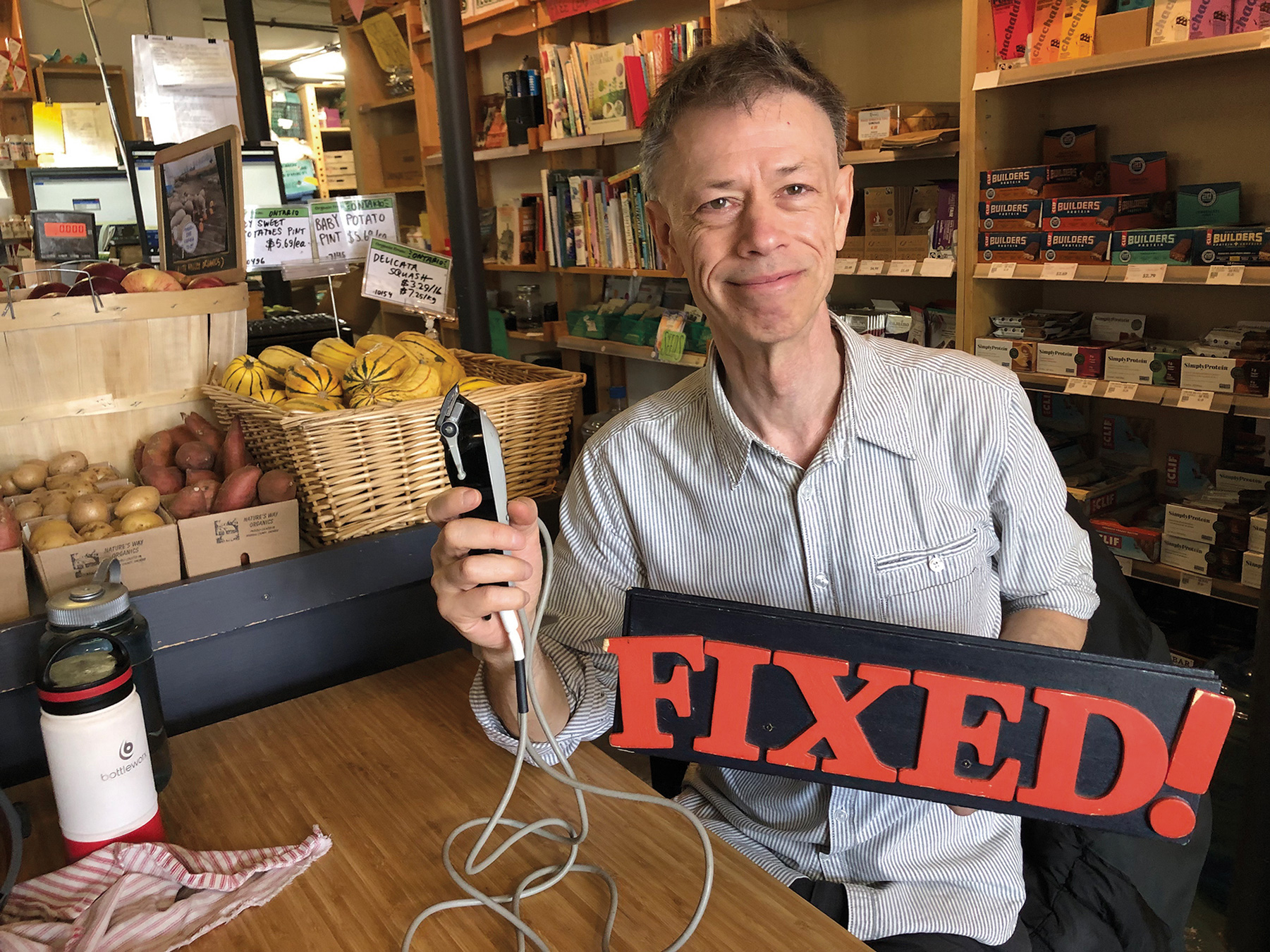
Karma Co-op is offering a series of repair cafes to help residents fix many small household appliances, computers, and fabric. COURTESY KARMA CO-OP
By Terri Chu
Hidden in an alleyway across from Palmerston Junior Public school is a neighbourhood gem that far too many people don’t know about. Karma Co-op is a treasure that has been around for 50 years in the middle of Seaton Village.
Karma made news in Toronto during the nation-wide boycott against Loblaw and their price gouging, but protesting against billionaires is not the only reason to visit the space.
It also offers its members some pretty fantastic events that are open to the community. Recently, Karma members brought in fabrics in need of repair. Volunteers from the repair café set up shop in Karma and were busy keeping repairable clothing out of landfill.
Young people have often been criticized for their inability to repair things, unlike the older generation. The reality is that young people have rarely encountered goods that were designed to be repaired, instead of disposed of.
Planned obsolescence has trashed not only our oceans, but basic repair skills— skills our grandparents had that have been lost to both technology and capitalism.
Repair cafes are an opportunity for young people to learn how to repair things, and this gives them a chance to reframe the disposable mindset they have grown up with. Volunteers show them how to repair broken appliances and ripped seams, all for free.
Karma is not only an ethical grocery store (owned by members, not billionaires), but also a space that empowers one to buy responsibly, support local farmers, and fix what you own rather than buying new—all ways to reduce our environmental footprint.
Co-operatives like Karma are in need of support; they are community spaces that bring people together. When you walk into Karma, there’s no overwhelming sense of needing to shop quickly and get out. Members chat, share, and are reminded that no matter how crazy the world is, there is a place where like-minded individuals can gather (and get groceries), and their money goes towards sustaining the planet and the community.
Upcoming Karma Co-op repair cafés: At 739 Palmerston Ave:
February 21st, 2025 · Comments Off on ON THE COVER: Candidates questioned (Feb. 2025)
Green, Liberal, NDP provincial candidates for University-Rosedale respond to our top 4 issues
Meet the candidates for provincial election on February 27. For the first time in the 30 years of our publica-
tion, the Progressive Conservative Party of Ontario did not reply to our repeated attempts to include them. PHOTOS COURTESY OF THE CANDIDATES
Every election the Gleaner asks the major candidates a common set of questions. We publish their answers tohelp readers make a more informedvoting choice. The provincial election is set for February 27. We have featured this Q & A with candidates for 30 years. For the first time one major party, the governing Progressive Conservatives, did not reply despite repeated attempts by the Gleaner to include them.
1. What would your party do to help fix traffic congestion in the GTA?
Ignacio Mongrell, Green Party – Traffic congestion in the GTA is a result of poor transit investment, inefficient land use, and policies that prioritize cars over people. Instead of spending billions on new highways that fuel urban sprawl, we need real investments in public transit, active transportation, and smart growth policies.
Invest in Public Transit: The Green Party has long advocated for fare integration, and we will continue pushing for policies that make transit the first choice, not the last resort.
Smarter Urban Planning: By legalizing “missing middle” housing, we can build vibrant, walkable communities where people live closer to work, reducing the need for long commutes.
Expand Safe Cycling Infrastructure: More bike lanes mean fewer cars on the road, easing congestion while making commuting safer and more sustainable.
Commercial Parking Levy: Cities like Montreal have successfully reduced congestion and raised transit funding through a commercial parking levy. According to a Metrolinx report, a $2 per day levy on all commercial parking spots would generate $650 million in revenue for the TTC.
With better transit, walkable communities, and protected bike lanes, we can reduce gridlock and build a more efficient, people-first transportation system.
Jessica Bell, NDP – Tackling congestion in our city means funding and fixing public transit. The Ontario NDP will provide provincial funding for half of municipal transit operations, ensuring transit is reliable, convenient, and affordable for riders. As a lifelong transit rider and founder of the advocacy group TTCRiders, I know how much of a difference this investment can make. We’ll also deliver long-delayed GO rail expansions to Kitchener, Niagara, and Bowmanville that will give commuters coming into Toronto more options— not less—and reduce the number of cars on the road.
It’s clear that congestion on the 401 is hurting our economy and making our lives more difficult. To build a tariff-proof Ontario, the Ontario NDP will develop real alternatives for people and goods to get around which don’t look like the wasteful and drawn-out construction of Highway 413, or Ford’s multi-billion dollar tunnel pipe dream without a completion date. We need a GO rail network that connects people and places, transit that we can rely on, and roads that are safe and accessible for all. Fixing congestion is about making sure there are realistic options with or without a car when getting from A to B.
Pam Jeffrey, Liberal Party – We will fix traffic congestion by making transit reliable, available, and safe. For many people today, transit just isn’t an attractive option because the network isn’t wide enough, frequent enough, or safe enough, and only Ontario Liberals have a plan to make public transit work for everybody.
Under the Conservatives, public transit has become more dangerous and less comfortable. Substance abuse and homelessness have risen dramatically under Doug Ford’s watch, and that has spilled over into our transit system. We need more shelters, but the subway shouldn’t be one of them. You and your kids deserve to feel safe wherever it is you’re going, which is why we’ve pledged to introduce Mobile Crisis Support Teams and other safety measures to the TTC.
The Ford Conservatives talk a big game when it comes to transit, but their record is spotty at best. In the last seven years they haven’t opened the Eglinton Crosstown or the Finch West LRT. They haven’t significantly improved GO service, despite their promises to do so. An Ontario Liberal government will actually get transit built without the endless delays we’ve had to deal with under Tory rule.
2. The Ford government has enacted legislation allowing it to remove bike lanes on Bloor Street and elsewhere.
A. Do you support the intrusion of the province into municipal affairs?
Jessica Bell, NDP – No. New Democrats know that municipal governments understand best the unique needs of their local communities. Doug Ford’s interference in municipal planning undermines local democracies and ignores the voices of residents who depend on this infrastructure.
Cities should have the freedom to make their own choices on transport and infrastructure, without interference or political games. It’s time for Doug Ford to get out of the way of local decision makers and allow municipalities to invest in safe and sustainable transit solutions.
Pam Jeffrey, Liberal Party – Every second Doug Ford talks about bike lanes is time he’s using to distract from the criminal investigation for corruption surrounding his Greenbelt giveaway, the hallway health-care crisis he’s done nothing to address, the youth unemployment rate of 17 per cent, and unaffordable housing.
Ontario Liberals believe in meaningful consultation with our municipal partners in all matters, including road infrastructure, but I am not going to spend one second arguing about culture war issues when that’s exactly what Ford wants us to do. He doesn’t want us to talk about the 30,000 people in University-Rosedale who don’t have a family doctor, but you and your family can rest assured that we’re laser-focused on the issues that matter.
Ignacio Mongrell, Green Party – No, I do not support the Ford government’s interference in municipal decision-making. Cities must have the autonomy to design policies that best serve their residents, whether it’s housing, transportation, or environmental initiatives. Ford’s heavy-handed approach—whether by overriding local zoning laws, imposing unwanted highway projects, or forcing the removal of bike lanes—undermines democracy and local governance.
The Green Party is the first party in Ontario to endorse city charters, which would give municipalities the authority and financial tools they need to govern effectively. A city charter, negotiated between a city and a willing provincial government, would define clear areas of municipal control and ensure stable revenue sources. This would prevent future provincial governments from arbitrarily overruling local decisions.
This is not just about bike lanes—it’s about respecting local democracy. Toronto’s city council voted for bike lanes because they improve safety, reduce congestion, and support local businesses. Ford’s interference sets a dangerous precedent that could extend to housing, transit, and environmental protections. A Green government will empower cities, not undermine them.
B. Do you support the removal of the Bike Lanes on Bloor St West in the Annex?
Pam Jeffrey, Liberal Party – See previous answer.
Ignacio Mongrell, Green Party – No. Removing the Bloor Street bike lanes is a step backward for road safety, climate action, and urban mobility. These lanes were implemented after careful study and community consultation, and they have proven benefits:
• Increased Safety: Protected bike lanes have reduced cyclist injuries by over 50 per cent on Bloor Street.
• Better Business Support: A study conducted before the bike lanes were approved showed that only 10 per cent of customers in the area arrived by car, while far more came by bike, and most by transit. The local Business Improvement Area (BIA) cited this study in its opposition to the removal of the lanes, recognizing that they benefit businesses by increasing foot and bike traffic.
• Reduced Congestion: More people on bikes means fewer cars on the road, easing traffic for everyone.
• Climate Action: Encouraging active transportation is critical for reducing emissions and creating a more sustainable city.
Jessica Bell, NDP – No. If Doug Ford was serious about fixing congestion in our city, he would invest in more options to get people from A to B—not less.
People deserve to feel safe on their way to work or to school. When the Conservatives brought forward their legislation to rip out bike lanes, they added in clauses to avoid any responsibility when vulnerable road users get injured or killed on our streets. It’s heartbreaking, because someone will be hurt in the future. I bike, and my kids bike. It’s how we get around the city. I shouldn’t have to worry about them getting home safely every time they go out. People should be able to depend on their loved ones being safe at the end of the day. It’s time we had a government that was committed to making that a reality.
3. Donald Trump has threatened a 25-per-cent tariff on Canadian goods. How should Ontario respond to this threat and help Ontarians affected by the tariffs?
Jessica Bell, NDP – The Ontario NDP has always stood with working people and those struggling to get by. Right now, people are understandably worried about what the future holds. Life has already become so expensive—for almost everyone. We need a government that fights for every job in the province and will get to work building a tariff-proof Ontario that can withstand any crisis.
That means supporting trade-exposed industries by creating new supply chains and finding new export markets for Ontario-made goods. We’ll work with the federal government on an income assistance program to support people whose livelihoods are impacted by tariffs. We can create good, new jobs by investing in the infrastructure our communities need— from schools and hospitals to major transit projects. Finally, we’ll make life more affordable for those who’ve been most affected by inflation with a monthly grocery rebate to bring down the cost of the weekly shop.
Pam Jeffrey, Liberal Party – I love Canada, and so does everybody in Team Bonnie. Canadians have never backed down from a challenge, and we’re not going to start now.
If tariffs hit, we will work side-by-side with the other provinces and our federal government for a coordinated response, and we will provide a targeted tariff relief plan to stop job losses and other impacts on the economy.
We’ll also provide low interest loans with our Fight Tariffs Fund to provide support to our businesses here that are impacted by America’s callous aggression, on top of the baseline small business tax cut we will institute.
We will also need to diversify our economy away from the United States and spur investment from other nations. Doug Ford has had seven years to insulate our economy from Donald Trump, and we have not seen one lick of that. Instead, he has called an election in a cynical ploy to take advantage of this national crisis. His government is not fit to meet the moment on the international level, on the local level, and every level in between.
Ignacio Mongrell, Green Party – Ontario must take a proactive approach to protecting workers and businesses from potential U.S. tariffs. A 25 per cent tariff would harm key industries including manufacturing, steel, and auto production which are critical to Ontario’s economy.
Strengthen Local Supply Chains: Ontario must invest in local production of key goods, including green technology, auto parts, and sustainable materials, reducing reliance on the U.S. market.
Diversify Trade Partners: We need to expand trade relationships with the EU, Asia, and other markets to reduce dependence on U.S. exports.
Support Impacted Workers: We will introduce transition programs, wage subsidies, and training opportunities for workers in industries affected by tariffs, ensuring they have access to stable, well-paying jobs.
Advocate for Fair Trade: The Green Party will push for strong federal leadership in trade negotiations to ensure that Ontario businesses are protected from unfair tariffs.
Instead of reacting to Trump’s threats, Ontario must build a resilient, self-sufficient economy that is less vulnerable to political instability in the U.S.
4. Ontario is experiencing a family doctor shortage. With many existing family doctors expected to retire soon, the problem will only be made worse. If elected, what would your party do to address this crisis in health care?
Pam Jeffrey, Liberal Party – Like I said above, Bonnie and I have our priorities straight: we will make sure every person in this province has a family doctor covered by OHIP. No ifs, ands, or buts. Thirty thousand people in our riding don’t have a family doctor. Doug Ford may think that’s acceptable, but he’s the only one.
We are going to do that by doubling residency spots and hiring 3,100 doctors, as well as streamlining the process for those trained abroad to practice here. We’re also going to reduce the amount of paperwork your family doctor does, because they should be working with patients, not spreadsheets.
We’re also going to invest in paying nurses, PSWs, and other health-care workers what they deserve, and not drive them away like Doug Ford has by capping their wages below inflation.
But this is only going to happen with a change of government. Doug has wrecked our health-care system, and another four years of Conservative rule in Ontario means he will continue his schemes to privatize our health care. Only Bonnie Crombie and the Ontario Liberal team can take him on and fix health care in our province.
Ignacio Mongrell, Green Party – Ontario’s health-care system is in crisis, and the shortage of family doctors is making it worse. The Green Party will take immediate action to expand health-care access and retain medical professionals by:
Fast-Tracking Credential Recognition: Thousands of internationally trained doctors live in Ontario but cannot practice due to bureaucratic barriers. We will streamline the accreditation process so they can help fill urgent gaps in care.
Expanding Primary Care Teams: Instead of relying on a system that overburdens family doctors, we will invest in team-based care where nurse practitioners, physician assistants, and mental health professionals work alongside doctors to serve more patients.
Improve Working Conditions: Many doctors are leaving Ontario due to burnout and administrative overload. We will reduce paperwork burdens, increase clinic funding, and ensure fair compensation for health-care professionals.
Ontario cannot afford to lose more doctors. We need real solutions that support health-care workers, expand access to care, and ensure that every Ontarian has a family doctor.
Jessica Bell, NDP – Everyone in Ontario should be able to access good primary care regardless of their age, their ethnicity, where they live, or their income. The Ontario NDP has a plan to recruit and support 3,500 new doctors, invest in new residency spots, and refresh budgets to resolve the crisis in primary care.
Family health teams, nurse practitioner-led clinics and community health centres are tried and tested models of care—just like Taddle Creek Family Health Team here in University–Rosedale. They’re rooted in their communities and can respond to distinct local health needs. But for years, Liberal and Conservative governments have frozen their budgets, and clinics like Taddle Creek and their patients have been left behind and often left without family doctors.
An Ontario NDP government will establish more community health centres and fund them fairly so they can recruit the medical professionals and care workers families in our community need. We’ll also provide more funding for administrative support which frees up time for medical professionals to spend with patients, instead of on paperwork. Lastly, we’ll simplify the process so that 13,000 internationally-trained doctors currently living in our province can start practicing here.