January 23rd, 2017 · Comments Off on NEWS (JANURY 2017): Open only a month
Landlord shuts Pacifico Life storefront
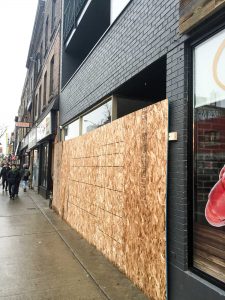
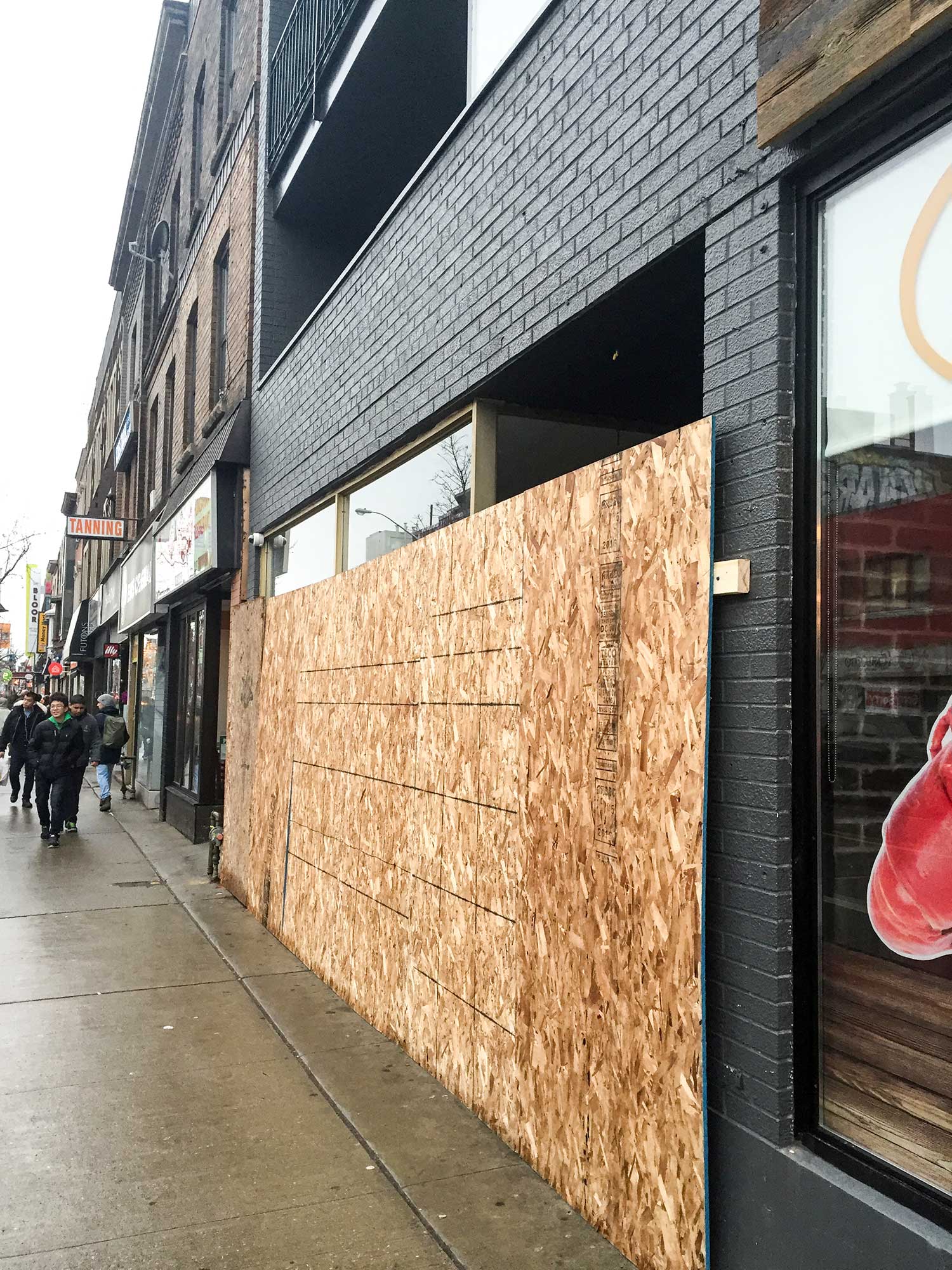
PHOTO BY GEREMY BORDONARO/GLEANER NEWS: Pacifico Life’s Bloor Street West location remains boarded up. Landlord Yong Jo gave Tamara Hirsh three hours to move her marijuana dispensary out of the building shortly before Christmas.
By Geremy Bordonaro
It was 2 p.m. three days before Christmas when she got the telephone call.
Tamara Hirsh was working in the recently opened location of her medical marijuana dispensary when her landlord, Yong Jo, called and told her that the 444 Bloor St. W. storefront had to be vacated by 5 p.m. that afternoon.
It was not unexpected, but it was unwelcome.
“We knew that the landlords in Toronto were getting a letter saying that they were going to receive fines. And we told [the landlord] about that before we took possession and did our renovations,” said Hirsh, owner of Pacifico Life. “However he did not want to let us out of the lease at that point. So he responded to me with a long list of reasons why I wasn’t getting out of the lease. We proceeded to renovate and opened the store and sure enough he got a letter and asked us to close by 5 p.m. that day.”
[pullquote]“I had a lot of upset customers when we closed down”—Tamara Hirsh, owner, Pacifico Life[/pullquote]
What Hirsh hadn’t expected were the police officers the landlord brought in for “peacekeeping” reasons.
“When the landlord came to me to make sure we were leaving, five police officers came as well,” she said, adding “they were very much on side with me. One was very much interested in the product for himself, one was interested in one of my dog treats. [The officers] were really supportive.”
Hirsh said the shutdown of her Toronto storefront means that some of her customers who had found their “tried and true” marijuana product would have to find some place else.
“I had a lot of upset customers when we closed down,” she said. “There were emails asking how they can find tested products like ours…. It let a lot of people down.”
Pacifico was one of a number of dispensaries that have been popping up at an increasing rate in the downtown area of Toronto. And the city is powerless to stop the influx, according to Joe Cressy (Ward 20, Trinity-Spadina).
“Cannabis is governed under the Controlled Drug and Substances Act, a federal statute. The City of Toronto cannot change federal law,” said the councillor. “The question of when the federal government changes the law and what framework they will put in for distribution, we don’t know for sure yet.”
Though dispensaries are still illegal, the move towards legalization has created inconsistencies when it comes to enforcing marijuana laws.
“We are stuck in a vacuum period where the federal government has said ‘Criminalization is bad but we’re going continue to have a criminalized approach until it is no longer the case,’” Cressy said. “In the meantime we’re all stuck in limbo.”
While this limbo exists it has been left to municipalities — and the dispensaries themselves — to help control the influx and quality of medical marijuana.
“It’s self-regulated. That’s why you’re getting everything under the sun,” Hirsh said. “You’re getting clustering in certain areas. Kensington Market, I believe, at one point had 21 dispensaries.”
The Toronto Police Service is called in to deal with them on a case-by-case basis according to Detective Sergeant Brian Kelly of 14 Division, who said investigations are primarily complaint driven.
Hirsh said she thinks some measures need to be taken in the interim.
“It’s going to probably take at least a year until federal legalization happens,” she said. “In the interim there needs to be some kind of regulation.”
The city is looking for ways to manage and contain the dispensaries, but without federal regulation it’s a wild frontier.
“The problem is that the federal government was elected in October of last year. That’s a year and a half ago. We were told that they would table legislation this spring,” Cressy said. “By the time that’s voted on and implemented we’re probably in 2018.”
“A comprehensive legalized framework is good news for public health. But in the meantime cities need the federal government to provide interim measures so we’re not stuck in a position whereby it’s akin to unregulated legalization.”
Hirsh added that it has created a grossly unfair situation where landlords can knowingly rent their spaces for large sums of money to dispensaries, and then evict their tenants after one telephone call from the police. At the end of the day, “There are a lot of people we could help if our doors were open.”
Landlord Yong Jo did not respond to the Gleaner’s requests for an interview.
SEE ALSO:
FOCUS (JANUARY 2017): Should marijuana dispensaries be closed? Bloor Street citizens have their say
READ MORE:
CHATTER: Marijuana dispensary opens (December 2016)
EDITORIAL: Mayo no, marijuana maybe (June 2016)
Tags: Annex · News
January 23rd, 2017 · Comments Off on CHATTER (JANUARY 2017): Doctors’ Parkette close to completion
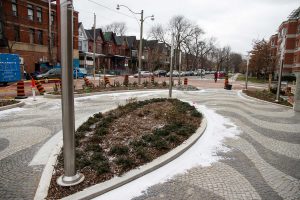
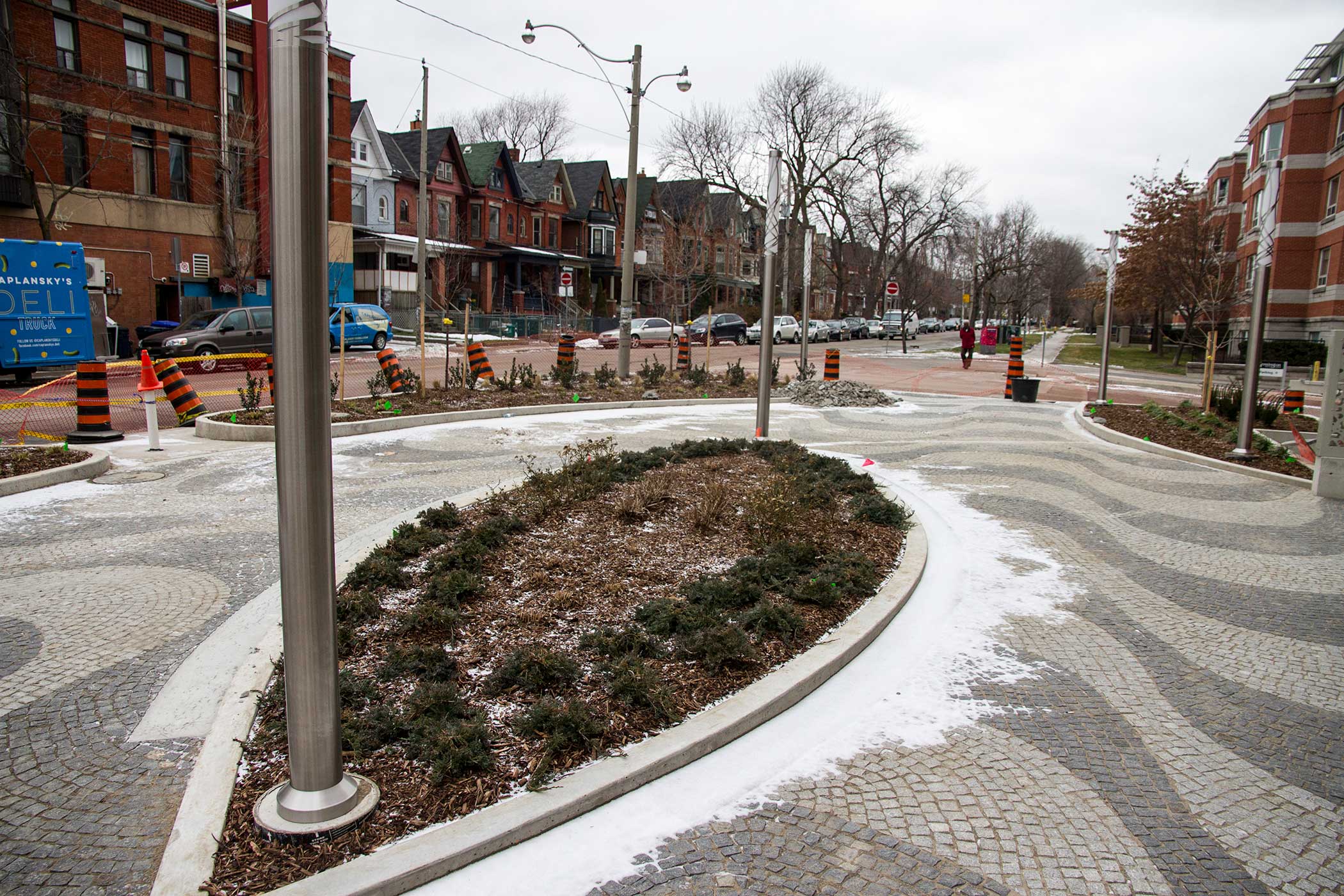
PHOTO BY GEREMY BORDONARO/GLEANER NEWS: The Doctors’ (formerly Brunswick College) Parkette is almost ready for its official unveiling, despite being slightly behind schedule. (It had been targeted for completion in the fall.) The harsh reality of winter has brought the remaining work of clearing the construction equipment and removing the barricade into sharp relief. However, the new sleek, modern park is likely to be open just in time for our annual Grading our Greenspace summer feature.
Tags: Annex · News
January 23rd, 2017 · Comments Off on CHATTER (JANUARY 2017): Bird was the word for giving
Without missing a beat, Freeman Real Estate and Spirit of Math spanned wing-on-wing to make sure one of the area’s holiday traditions would continue to fly. Thanks to their efforts, nearly 500 hundred turkeys flew off a giveaway table set up at 988 Bathurst St. last December.
[pullquote]“Certainly we want to continue doing it next year”—Ted Winick, owner, Spirit of Math[/pullquote]
The businesses were fowl-ing in the steps of Ed Mirvish, who sent turkeys soaring from his store every year. The Mirvish family, whose Honest Ed’s store is now closed, held their final giveaway earlier in the month.
“It went quite well,” reported Spirit of Math owner Ted Winick, who was happy to talk turkey. “We were able to give them all out. People loved it. Certainly we want to continue doing it next year.
“We got a lot of comments from people, not just from the people who picked up the turkeys, who just felt so good that someone took it over.”
For every turkey given away, an additional donation was made to the St. Alban’s Boys and Girls Club. It was a little bit of gravy for the organization, which provides a wide range of programming for parents and children from its main clubhouse on Palmerston Avenue.
—Brian Burchell with files from Geremy Bordonaro/Gleaner News
Tags: Annex · News
January 23rd, 2017 · Comments Off on POLICE BLOTTER (JANUARY 2017): Three men sought in taxi assault and robbery
The Toronto Police Service is looking for three men in connection with an assault and robbery of a taxi driver near Russell and Robert streets on Dec. 18 at approximately 3 a.m.
It is alleged that the three men were picked up by the taxi a short distance away before asking to stop near the intersection. After stopping they reportedly robbed and assaulted the driver before fleeing.
The three suspects are all described as in their early 20s. One suspect is around 5´8? with a small beard and a black coat with a fur-lined hood. Another is described as 5´10? with a heavy build and the third is only identified by his grey coat. Security cameras caught images of two of the three suspects, and anyone with information is urged to contact the police at 416-808-1400 or Crime Stoppers at 416-222-8477.
—Geremy Bordonaro/Gleaner News
Tags: Annex · News
January 23rd, 2017 · Comments Off on Higher crime rates in 14 Division
Rise attributed to Entertainment District
By Geremy Bordonaro
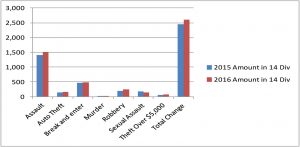
Rapid population growth and the proliferation of night clubs within the ever-expanding Entertainment District appear to have led to an increase in crime last year in 14 Division, but that trend has not migrated to the Annex.
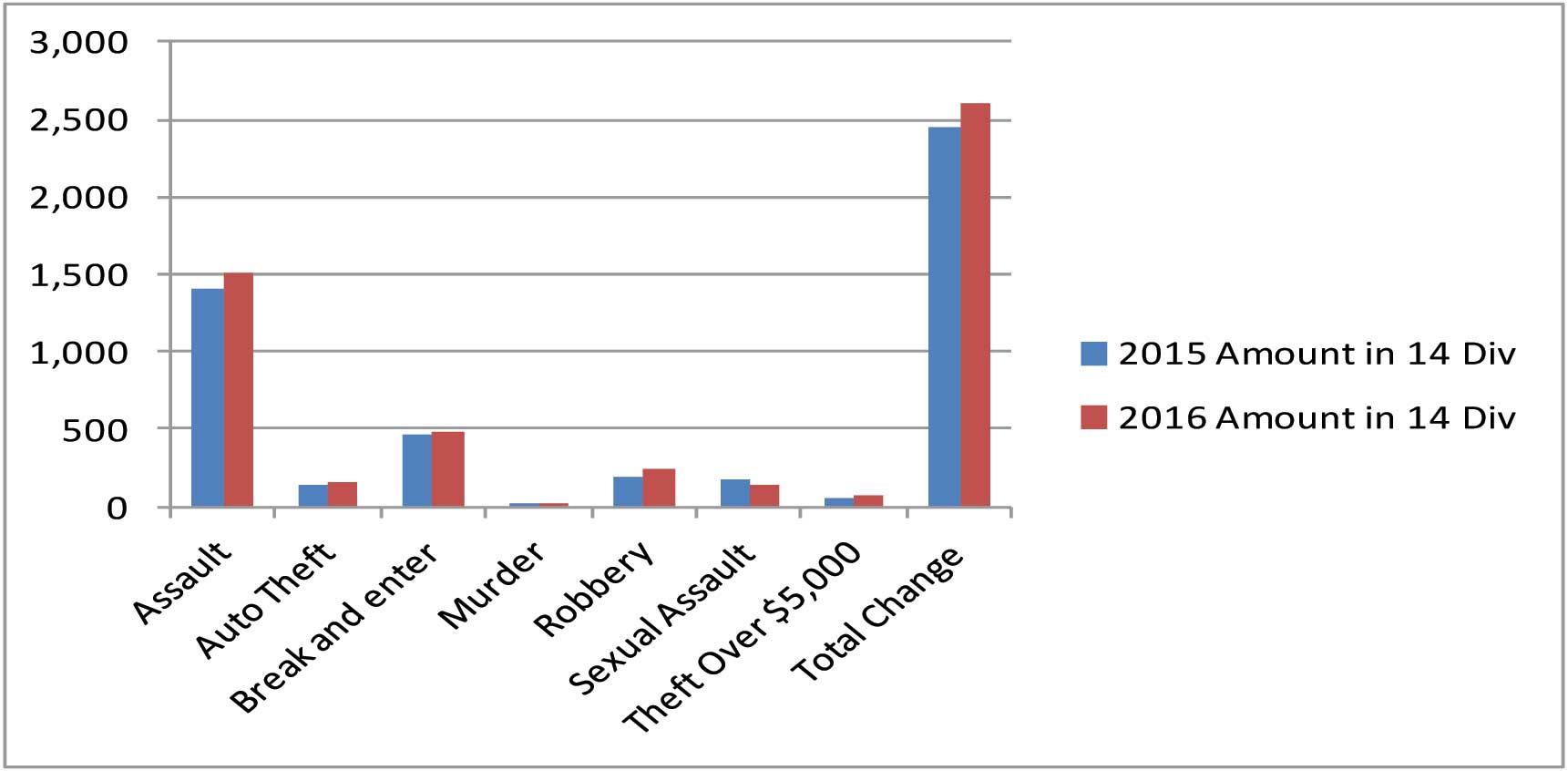
According to the Toronto Police Service’s year-end report, violent crime increased by 7 per cent in 2016 compared to 2015 for the division, which includes the Gleaner’s coverage area and spans from Dupont Street south to the lake and Spadina Avenue west to Dufferin Street. Violent crime — including murders, robberies, and theft over $5,000 — was up by only 1 per cent for the rest of the city. Reports of sexual assaults within the division were the exception, decreasing from 169 to 140 incidents.
“Down in our traditional entertainment district, the King/Spadina area, assaults and violence tend to be linked and fuelled by alcohol consumption,” said Detective Sergeant Brian Kelly. “It’s just the way it is. It’s been that way since alcohol has been in existence.”
He notes that areas like the Annex remain relatively stable.
“The Annex is a safe area to live, work, and play,” Kelly said. “Does crime happen there? Absolutely. But we get on it as fast as we can…. It’s a safe place. There’s no disproportionate rise or decrease in crime in that area.”
Police Constable Iris Fleckeisen, 14 Division’s crime analyst, agrees that this year’s statistics aren’t alarming.
“It’s not just looking at the numbers and comparing them from year to year, but putting them into a context to understand what our standard deviation is and what we as a service accept as awry,” she said. “We’re alarmed when there is a huge increase in numbers. We didn’t see that this year.”
Community members like Gus Sinclair, chair of the Harbord Village Residents’ Association, haven’t noticed much in terms of crime during the last year.
“Typically we don’t get people reporting a lot. I’d say maybe two or three times a year. I don’t think last year was anything special,” Sinclair said. “There’s usually a rash of graffiti and little rushes of bicycles being stolen off of porches. Occasionally you’ll find a couple of [break and enters]. I don’t think we’ve had anything special last year.”
Sinclair thinks that though people sometimes hear about terrible crimes happening, this doesn’t mean that it will happen to them.
“You don’t want to build off a single incident, or two, because it tends to panic people.”
READ MORE:
NEWS: Crime down overall in 14 Division (March 2016)
Tags: Annex · News
January 23rd, 2017 · Comments Off on FOCUS (JANUARY 2017): Local residents’ associations respond to OMB review
Recommendations for mandating community participation
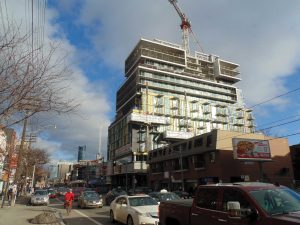
PHOTO CREDIT BY BRIAN BURCHELL/GLEANER NEWS: Planned by the OMB: College Street is rife with developments denied by the city, only to have been approved on appeal by the provincial agency.
By Annemarie Brissenden
Four local residents’ associations, collectively representing the north end of Ward 20, banded together late last month to submit commentary on the province’s review of the Ontario Municipal Board (OMB). In their letter to the Province of Ontario’s planning policy branch, the Annex Residents’ Association (ARA), Harbord Village Residents’ Association, Huron-Sussex Residents’ Organization, and the Seaton Village Residents’ Association determined that neither the City of Toronto nor the OMB have enough resources to manage the overwhelming influx of planning and development applications that are processed on a regular basis. As such, their recommendations are aimed at reducing the number of appeals heard by the provincial body.
“You can’t have a city growing at this pace and not have the [planning resources] to deal with it,” said David Harrison, ARA chair. “It’s all very well to make a blanket condemnation of the OMB, but it’s put in this position because the city doesn’t have the resources to handle [the number of applications].”
[pullquote]“Mediation prevents a win/lose battle”—Paul MacLean, PARA[/pullquote]
The recommendations can be grouped into four categories: strengthening the city’s planning resources and clarifying its jurisdiction on development matters; mandating community participation in the planning process; reforming the OMB itself; and providing a mechanism for appealing OMB decisions.
The residents’ associations highlight the importance of adopting the new Official Plan for Toronto, as well as clarifying which matters are the purview of the Committee of Adjustment, whose decisions will soon be appealed to the newly established Local Appeal Board (LAB). Stressing that LAB decisions should not be subject to appeal at the OMB, they propose increasing the processing timeframe for applications to amend the Official Plan and/or zoning bylaws along with staffing levels in the city’s planning department.
The recommendations include providing the following avenues for engaging the community in the planning process: encouraging all rezoning applications to be subject to community review, making mediation a mandatory first step in the OMB appeals process, and making an appellant pay for the costs associated with granting community organizations status at OMB appeals.
“On balance, mediation was a good experience,” explained Paul MacLean of the Palmerston Area Residents’ Association, whose organization was not a signatory to the letter but is no stranger to development. “Mediation prevents a win/lose battle. Having mediated settlements be more the norm seems to make sense.”
Indeed, hiring professional mediators is another recommendation, along with making the proceedings more transparent, promoting multi-member panel reviews, and opening up the appeals process to other provincial ministries and agencies that may be able to provide expert opinions. The residents’ associations also want to reinstate the mechanism for appealing OMB decisions to a parliament committee that includes the riding’s Member of Provincial Parliament (MPP).
“This review looks at how to give more weight to local communities as well as municipal councils to ensure the local voice is heard when it comes to planning,” said Han Dong (MPP, Trinity-Spadina). “It’s time for a comprehensive review. The process needs to be updated.”
Begun in October, the provincial review of the OMB is aimed at making the land-use planning system more efficient. It held a series of town hall meetings in November and December, canvassing comments on proposed changes that included moving away from “de novo” hearings in which the OMB considers matters as though no previous municipal decision has been made; expanding the authority of local appeal bodies; restricting the appeal of decisions that support provincially-funded transit; and limiting appeals on decisions that are based on extensive study.
“We need to have some sort of appeal mechanism,” said Bill Mauro, the Minister of Municipal Affairs. “We’re not doing anything here that is different, but we are addressing concerns.”
Mauro would not commit to a timeline for when any possible amendments will be announced.
“The current government has been reviewing the OMB since 2003,” laughed Joe Cressy (Ward 20, Trinity-Spadina). “If the province was serious about protecting good planning, smart intensification, and building neighbourhoods rather than just adding density, they should free Toronto from the OMB immediately.”
He’s among the councillors supporting Cheri DiNovo (MPP, Parkdale-High Park), who last November tabled a private member’s bill to Free Toronto from the OMB.
“You don’t need to consult; this is something the government has been hearing for ages,” said DiNovo. “It makes no sense that the entire superstructure [municipal process] can be brushed aside by 25 unelected members.”
Cressy believes there “may be a role for the OMB in other parts of the province, but for a city as large and sophisticated as ours, there is no reason to have this body”.
He’s skeptical that anything substantial will come of the review, noting “the province will come up with an excuse a day for why they refuse to act.
“We’re more than capable of planning a great city. The OMB is not.”
READ MORE:
YEAR IN REVIEW: A focus on livability, grindertude (December 2016)
NEWS: Tall tower before OMB, as city battles back with block study (August 2016)
DEVELOPINGS: Annual review reflects tension between community activism and OMB (March 2016)
NEWS: “Vertical rooming house” rejected (May 2015)
Tags: Annex · News
January 23rd, 2017 · Comments Off on EDITORIAL (JANUARY 2017): Pot a remedy in opioid crises
In December, after just three weeks in business, the Pacifico Life marijuana dispensary at 444 Bloor St. W. was shut down by the building’s landlord. It paid the price for operating outside the current federal law governing the sale of that drug. The government has promised changes to the law including decriminalization, regulation, and retail level access. Meanwhile, not too far away at Bathurst and Queen streets, the City of Toronto awaits federal approval to open a supervised injection drug site, where users like heroin addicts can get help if things go awry with their injection (such as an overdose) and get counselling and treatment. In both cases, it’s a waiting game for the federal government to act.
From the perspective of pain management these two drug issues intertwine. Veteran Affairs Canada has reported a decline in the opioid prescriptions it funds by 17 per cent in the past four years, while reimbursements for veterans’ pot prescriptions have ballooned by comparison. One cause for this shift may be the demonstrated effects of marijuana for dealing with the symptoms of Post-Traumatic Stress Disorder.
[pullquote]“It’s a widely held misconception that overdoses are only linked to the use of illicit opioids like heroin.”[/pullquote]
It’s a widely held misconception that overdoses are only linked to the use of illicit opioids like heroin. Experts say over-prescribing by doctors is the primary reason people are using and becoming addicted to drugs like oxycodone, hydromorphone, and fentanyl — and accidentally or deliberately taking a deadly dose. After their prescriptions run out, many turn to street-laced versions of these products. According to the Ontario Drug Policy Research Network, for the five years ending in 2013, the most recent year for which statistics are available in Ontario, there were 2,879 deaths from opioid overdoses. The study found 638 people died in 2013 from opioid overdoses; a rate of about one death for every 20,000 residents in the province.
The Province of Ontario lags behind other provinces in data collection from overdose deaths, so it is helpful to look at the experiences of provinces like Alberta, whose data is more up to date. In Calgary, for example, the police chief Roger Chaffin urged swift action by government as the current rate of overdose deaths there exceeds those caused by homicides and traffic accidents. The chief says he lacks the resources, and nor is it practical, to deal with these issues on the supply side (the dealers) and that they must be addressed on the demand side (the addiction).
A recent report by the United States National Academies of Sciences, Engineering and Medicine drew one hundred conclusions about the benefits and harms of cannabis on a range of public health issues based on 10,000 studies published since 1999. It stated that marijuana can almost certainly ease chronic pain, but it may also raise the risk of developing schizophrenia. But, the report also concluded that for people with pre-existing schizophrenia it helps mitigate symptoms. The federal panel was comprised of representatives from leading U.S. research universities. The Academies are based in Washington, D.C. and were established by a charter signed by Abraham Lincoln in 1863.
Though the aforementioned report called for more research so that the medical community and policy makers alike can make more informed decisions, an undeniable take away is that cannabis and its derivatives can ease pain like opioids do but without the downside of severe addiction and risk of overdose.
We have a lot to learn from the U.S. experience, because many states of the union have legalized pot, thumbing their noses at U.S. federal law which remains quite restrictive. There are studies from the United States that showed fatal opioid overdoses dropped by 25 per cent in states that have enacted medical pot laws. While these studies have not identified a cause and effect, the correlation of these facts is hard to ignore in an opioid epidemic.
The Canadian government must accelerate its approval processes to help addicts safely cope and get treatment in supervised injection sites and connect the dots with legalized marijuana as an alternate chronic pain reliever.
READ MORE:
CHATTER: Marijuana dispensary opens (December 2016)
NEWS: City approves safe injection sites, as council embraces a public health approach (August 2016)
READ MORE EDITORIALS:
EDITORIAL: Grappling with growth (December 2016)
EDITORIAL: Freeland got it done, with flair (November 2016)
EDITORIAL: Stealth rate hike may work (October 2016)
EDITORIAL: Train derailment changes the conversation (September 2016)
Tags: Annex · Editorial
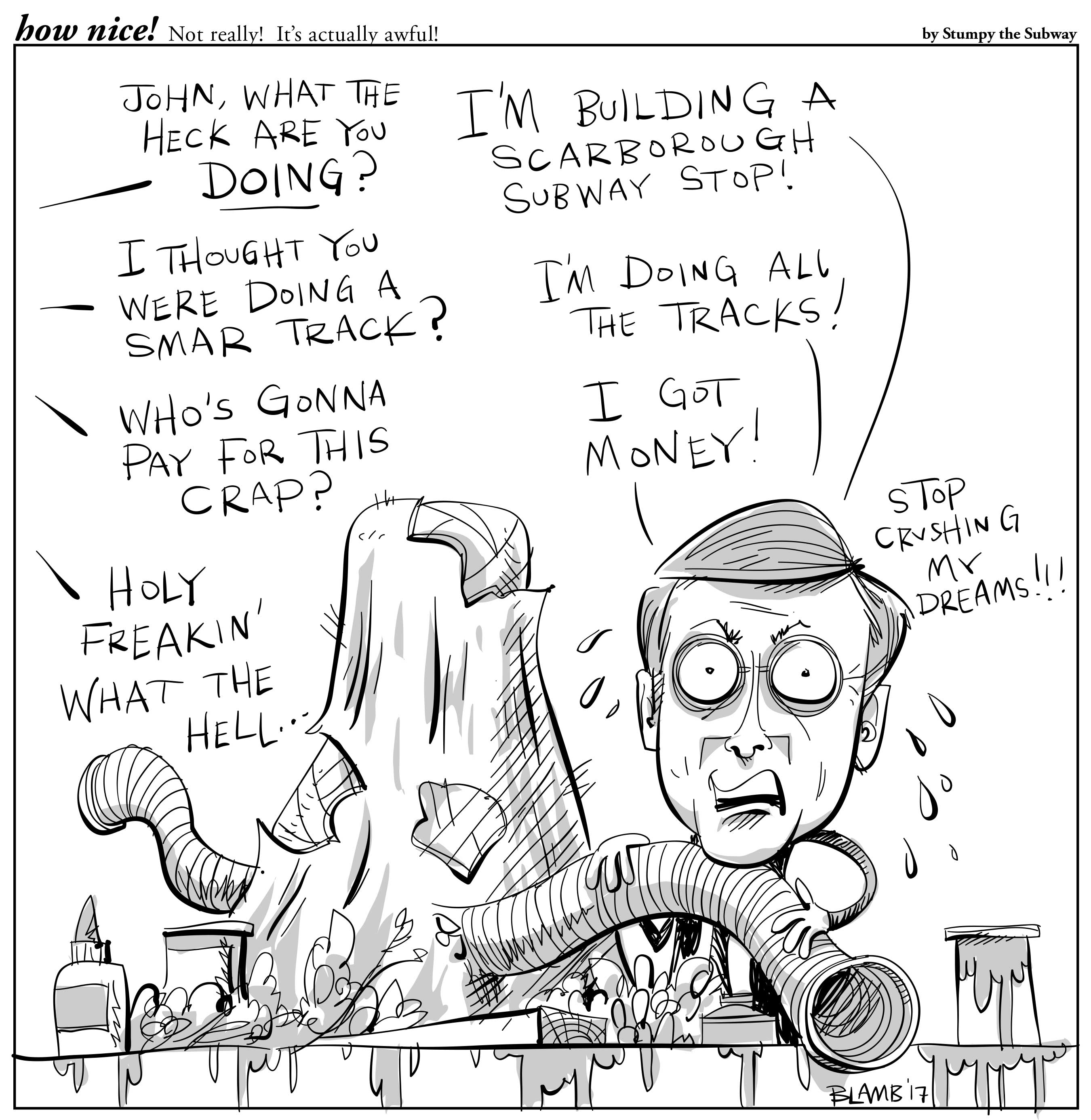
January 23rd, 2017 · Comments Off on EDITORIAL CARTOON (JANUARY 2017): Not really! It’s actually nice! by Stumpy the Subway

More how nice!
The stages of voting reform! by Joe Proportion (December 2016)
Previously rejected police car designs! by Designed Without Public Consultation (November 2016)
The sincerest form of flattery! by Dow Indepols (October 2016)
A warm carbon blanket! By Hock Estique (September 2016)
Tags: Annex · Editorial
January 23rd, 2017 · Comments Off on FORUM (JANUARY 2017): Conserving past to enrich future
Protecting heritage doesn’t mean freezing areas in time
By Joe Cressy
As is often said, Rome wasn’t built in a day. In comparison, Toronto may be a relatively young city, but that doesn’t mean we have no history to speak of — far from it. Preserving our city’s heritage is critical. It tells us something about who we are, who we were, and how we got here.
I’ve said before that our community is home to some of our city’s most vibrant neighbourhoods, neighbourhoods that have built and defined the character of our city for over a hundred years. It is this heritage — bricks and mortar, arts and culture, and so much more — that while it does, and should, continue to grow and change, is worthy of respect and protection.
[pullquote]Together we are finding new and creative ways to protect the buildings that contribute to the fabric of our city, and to conserve and enhance the very uses that make Toronto great.[/pullquote]
There is a reciprocal relationship between people and the places we inhabit. The first step in acknowledging the value of heritage buildings, districts, and landscapes is to recognize that the built environment moves, evolves, and reacts. The city itself is a testament to our collective legacy not just through buildings, beams, and floor boards, but in stories and memory, in habits and patterns of use. How we respond to the complex questions of preserving our shared legacy is as nuanced and layered as it is critical to the development of a livable and sustainable city.
Together we are finding new and creative ways to protect the buildings that contribute to the fabric of our city, and to conserve and enhance the very uses that make Toronto great. We’re working hard to identify buildings for heritage review. But our resources don’t allow us to do this fast enough. One technique is to review entire areas, and a critical tool for protecting and preserving the heritage of our communities is Heritage Conservation Districts (HCD). In King-Spadina, work on finalizing the HCD is almost complete. In Kensington Market, the HCD study, reviewing not only the physical structures but also the intangible cultural value that makes Kensington Kensington, is also underway. And, on Madison Avenue — a critical example of 19th-century architectural style that characterized so much of our city’s past — the HCD was approved in 2015.
Some circumstances require stronger tools to prevent the loss of critical pieces of our past.
One such circumstance is the unprecedented growth and change in King-Spadina over the last 10 years. In December 2016, after over two years of work to build a livable neighbourhood through securing new parkland, building community facilities at 505 Richmond St. W. and CityPlace, new childcare facilities and more, I introduced a motion to freeze all heritage demolitions in the neighbourhood for one year. It’s a significant step in our work to protect our community’s heritage, ensure appropriate development, and build a more livable downtown.
The now-approved Heritage Study Area Bylaw puts a one year freeze on demolition of 303 heritage buildings in King-Spadina. Since work on the HCD plan began, we have lost four contributing buildings in the neighbourhood and we were aware of at least 17 more buildings at risk. Implementing the one year freeze allows for appropriate development while stopping the wild-west demolition practices that we’ve seen recently across our communities.
At the same time, protecting our heritage doesn’t mean freezing an area in time, but must help guide and manage growth. Many heritage buildings are not cherished purely because of what they were, but because of what they have been allowed to become. A cherished example of this is 401 Richmond St. W., a vital part of Toronto, at the heart of the local community, and a hub for artists, creators, educators and entrepreneurs from across the city. Long after the industrial age that saw the growth of such buildings, originally factories, 401 Richmond St. W. has taken on new life as a pillar of the creative industry, home to producers in this age of creativity rather than the tapestries and products of the past. The building’s unique operating model and protection as a heritage resource have allowed a vibrant arts and culture centre to develop in a very building that may not have lasted this long if not for its protection. The recent MPAC re-assessment of the building is a serious and urgent new challenge. We’re working hard at the city to protect 401 Richmond St. W. to ensure we do not lose the vital resources now housed within it. The City of Toronto is advocating to the provincial government for a new way of assessing heritage buildings, to further protect these resources in the future.
Toronto is a young city at a pivotal moment. We can choose to build on our past, to learn and change in a way that respects and protects our city’s character. The golden age of our city’s heritage may be yet to come. As we work together to build livable neighbourhoods that cherish what has come before, this could, in fact, become part of our city’s identity that we continue to work to protect.
Joe Cressy is the councillor for Ward 20, Trinity-Spadina.
READ MORE ABOUT HCDs:
NEWS: Kensington Market to become heritage district (May 2016)
NEWS: Community council approves Madison Avenue HCD (October 2015)
NEWS: Preserving a historic street (May 2015)
READ MORE BY JOE CRESSY:
FORUM: Our dynamic Kensington Market (November 2016)
FORUM: A new central park for Toronto (September 2016)
FORUM: Building a livable city (July 2016)
FORUM: Bike lanes on Bloor Street (May 2016)
Tags: Annex · Opinion
January 23rd, 2017 · Comments Off on NEW IN BUSINESS (JANUARY 2017): Strictly local
Craft beer pint of choice
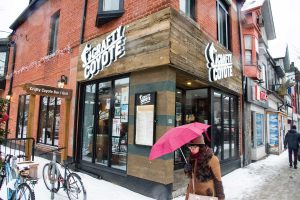
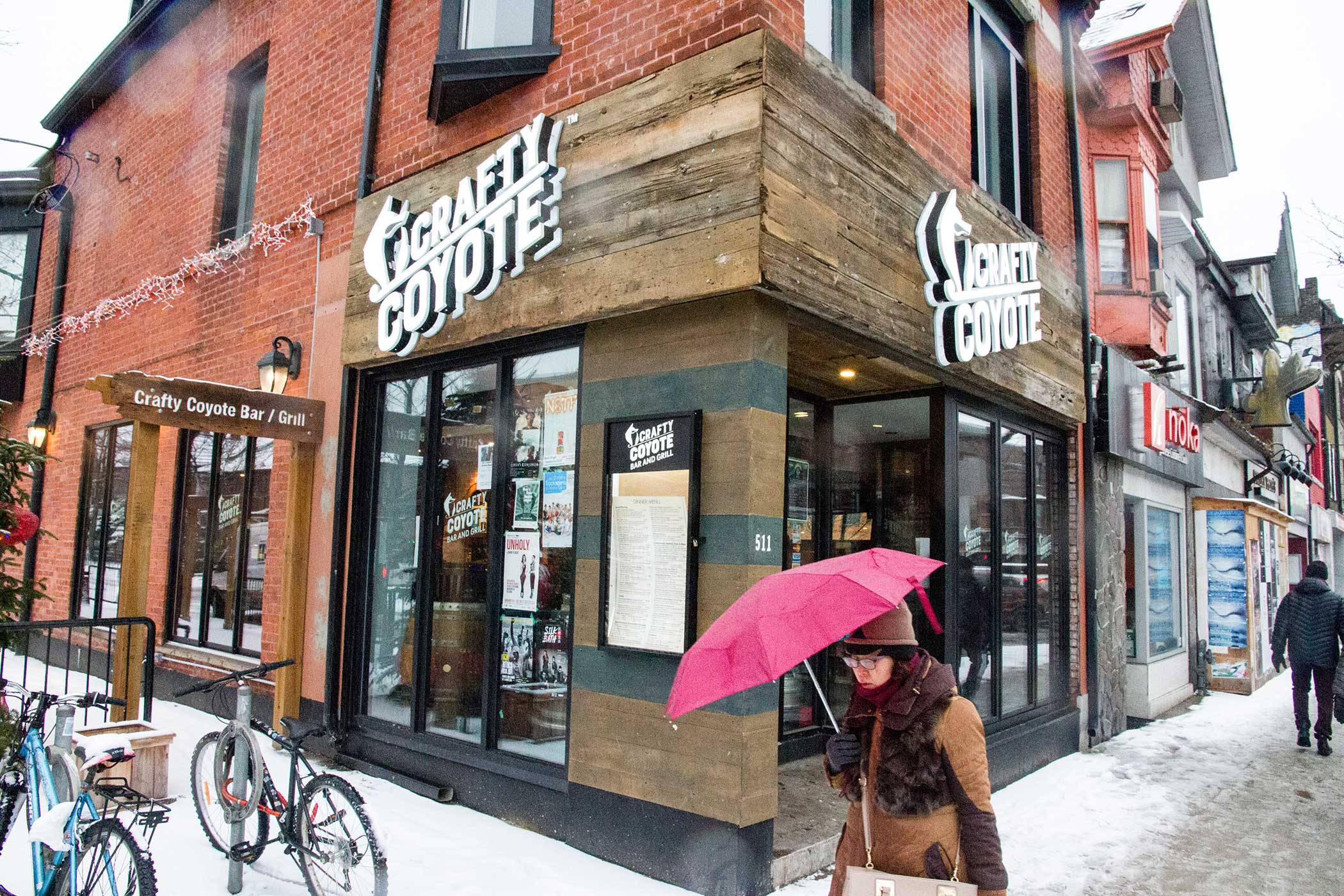
PHOTO BY GEREMY BORDONARO/GLEANER NEWS: Fans of the Victory Café, which will soon close to make way for the Mirvish Village development, need not despair. Owner Nick Ndreka has opened the Crafty Coyote on Bloor Street West. The bar boasts the same selection of craft beer and rustic atmosphere, and emphasizes its location with a sign emblazoned with the words The Annex.
By Geremy Bordonaro
Founded over 15 years ago, The Vic, as the Victory Café is known to its patrons, will soon close. Like all businesses on Markham Street from Lennox to Bloor streets, it is making way for the Mirvish Village redevelopment. But local lovers of craft beer need not despair: owner Nick Ndreka is opening Crafty Coyote, a new bar at 511 Bloor St. W.
The concept is simple. Present a large selection of craft beer and let them stand out.
“We are different from other bars in the area. We’ve got 33 rotating taps, four rotating ciders, and a large selection of Ontario wines,” Ndreka said. “That makes all the difference. We’re different from everybody else.”
[pullquote]“The Annex has a beautiful population. It’s a wealthy neighbourhood in that way. And there’s nothing like us”—Nick Ndreka, owner[/pullquote]
Most craft drinkers look for a different beer every time and a large rotating tap will easily satiate even the most tenured craft beer drinker.
“There’s been a demand. The Ontario craft beer industry has been growing for quite some time now,” he explained. “Every day a new brewery comes along. We don’t know when that’s going to end but so far it has been pretty good.”
As for the neighbourhood, the Annex provides a perfect demographic of patrons for a bar like the Crafty Coyote.
“The Annex has a beautiful population. It’s a wealthy neighbourhood in that way. And there’s nothing like us,” Ndreka said. “When summer comes by perhaps we’ll be getting the patio and operating fully. We add a lot of flavour to the neighbourhood.”
Unfortunately, operations have not been without their twists and turns as the aforementioned patio was previously rejected by the community when the city conducted a poll of neighbouring residents who were concerned that Crafty Coyote’s east face on Borden Street would lead to late night noise during the summer hours.
“Patios are always a thorny thicket. In fact, we have a patio protocol,” said Gus Sinclair, chair of the Harbord Village Residents’ Association. “We try to advise how best to go about it. Almost always it has to involve extra consideration, especially when a flanking patio is concerned.”
Though the patio request was initially denied by the community, Sinclair doesn’t believe that this means that the community will reject it again. He characterizes the community as being involved with the businesses and downtown hustle of the surrounding areas.
“We all live downtown where you can get your food by walking to it. We want to live near restaurants and bookstores. And that’s what makes downtown, downtown,” he said. “If we wanted nothing like that we’d move to the burbs. We value our businesses and want them to prosper. All that we ask is that proper consideration is put in place when you operate within our community.”
This sentiment is echoed by Joe Cressy (Ward 20, Trinity-Spadina), who believes striking the right compromise is key.
“In downtown Toronto we have a vision for mixed-use neighbourhoods. That means it is not only an entertainment zone but also a residential zone. What you need to do is work together to find a balance. So I would encourage the Crafty Coyote to work with the local community.”
Though this hiccup may slow down the Crafty Coyote slightly, Ndreka is still optimistic about the bar’s future.
“At some point we’d like to expand with two more locations within the city of Toronto,” he said. “The city is large enough for us to be there. Just for our name. We’re ‘craft’, we stand up to the big guys. We’re just local, strictly.”
READ MORE:
CHATTER: Dollar deals at Bathurst Station! (November 2016)
Tags: Annex · News
January 23rd, 2017 · Comments Off on FOCUS (JANUARY 2017): Should marijuana dispensaries be closed?
Bloor Street citizens have their say
By Geremy Bordonaro
The December 22 shutdown of Pacifico Life had us wondering: what do people think of having a marijuana dispensary in their neighbourhood? So, we hit Bloor Street on January 12, not too far from where Pacifico Life had been, to find out. We asked people what they thought of the shutdown, and of dispensaries in general. What follows is a round-up of what we learned.
Akwasi, professor: “It didn’t last very long. I’m not surprised. I’m not unhappy to be honest but I’m glad that they are popping up elsewhere. It was a little weird that it popped up on this stretch of Bloor Street…. I think it’s awesome [that marijuana dispensaries are popping up] but we need to wait around until regulations come around about where they are, what proximity they’re allowed to be around children, and things like that.”
Dave, video store clerk: “I don’t mind at all. There could be an issue with people thinking it’s a gateway drug but I don’t mind a place like that in the city.”
Michaela, waitress: “I don’t know about them at all. I haven’t been keeping up with news about the situation. I don’t really have an opinion.”
Baxter, student: “Yes, I’m aware of it closing. It is enforcement of the law while pot is still illegal and eventually when the federal Liberals get their shit together that will no longer be the case. But in the meantime marijuana is still illegal as a part of the criminal code…. It’s a rational response to an anticipated policy change that technically hasn’t materialized yet.”
Howard, manager of Wiener’s Home Hardware: “I kind of expected it to happen because any business that is operating in a grey area, at best, I don’t expect to see hang out too long…. I don’t really have a big opinion on it because people are going to try and make money however they feel they can make money. And then when legislation comes down either they’re all going to get to stay in business or they’re all going to get closed down.”
Paul, freelance cameraman: “I had no idea that it shut down. This place didn’t look so much like a head shop as it looked like a store that talked to people about the advantages of marijuana. I think there are certain positive things that come with marijuana such as [Cannabidiol] which is used to treat various ailments. I don’t know what it was but it would have been nice to have it here a little bit longer so that we could have figured out was it a head shop or was it an alternative healing place.”
Judy, journalist: “I’m not in favour. A lot of damage was done in my family by early pot use at a stage where a young person’s brain was developing. I’m convinced that a lot of mental health issues come from it. So anything that normalizes it I don’t think is the right way to go.”
David, professor: “Yes. Not happy. The dispensaries will be there until they legalize it.”
Roy, retired: “I really don’t like it. Places like that [points to nearby location] deal drugs on the street constantly and never ever get busted. These pot heads and pot shops never get busted. But these dispensaries get busted in an instant…. I don’t object to dispensaries because they’re trying to get something that is a constant product out to the public. Whereas places like that say ‘Oh well this week is garbage. Next week it will probably be better.’ These places are just rip-off joints and they never ever get touched. The head shops are always above the law. But a dispensary? That’s illegal.”
Naomi, administrator for a hospital: “Truthfully, not. I think they serve a purpose but they need to be regulated. It’s no different from a lot of things that [the federal Liberal government] are trying to put in regulation for. So it takes its time.”
READ MORE:
CHATTER: Marijuana dispensary opens (December 2016)
EDITORIAL: Mayo no, marijuana maybe (June 2016)
Tags: Annex · People · Opinion
January 23rd, 2017 · Comments Off on GREENINGS (JANUARY 2017): Feeling the carbon tax crunch?
Embrace the green and lower your footprint
Christmas came a little late for me this year. I woke up on New Year’s Day and looked out of the window at the gas station sign. The ever slightly higher gas price was a pleasant reminder of the new carbon tax that Ontarians are now paying and I couldn’t be happier. Natural gas will be increased by about 7 cents a cubic metre, and gasoline about 4 cents a litre. This is truly a great day for our children. It’s a small but important step in the right direction.
Until we see carbon tax around the $60 to $70 a ton mark, we likely won’t see a big uptake in alternative fuels, particularly in the corporate sector where the bottom line is king and polluting is still too cheap relatively. However, having a tax infrastructure in place is hugely important to getting there.
Price signals are one of the most important things we can do in a capitalist economy. Rather than complaining about the marginal increase in costs, here are a few things we can do to lower our carbon footprint and reduce those pesky taxes we have to pay.
Turn down the thermostat
Homes in the Annex are notoriously not airtight. If you are doing a renovation, make sure you get your home well insulated (spray foam is my preference). Short of that, anything you can do to stop drafts is a good stop-gap until you do decide to renovate. In the meantime, keep the thermostat down and throw on an extra sweater. Ambient room temperatures have steadily risen over the last century as heating became easier, cheaper, and more efficient. We really don’t need to keep it as warm as most of us do. A friend of mine keeps her electrically-heated home at a brisk 14° Celsius. At 7 cents of tax per metre cubed of natural gas, turning down the thermostat will save you in 2017.
Drive slower
If you have a lead foot like I do, you are burning gas unnecessarily. For most cars, fuel efficiency is around 80 kilometres per hour. Taking the 401 at 120 kilometres per hour burns a lot more gas than you really need to. You would do well by accelerating gently and keeping the tire pressure up too. If you can, though, ditching the car altogether is your best bet. We haven’t looked back since doing this nearly nine years ago.
Take shorter showers
Most of us have natural gas for heating domestic hot water. The shower will start to cost a few cents more, so this is the time to implement self-discipline when enjoying the beautiful warmth wash all over us. For anyone doing a major renovation that includes plumbing work, this is a good time to consider heat recovery systems for showering. Rather than going directly out to the sewer, your already warm shower water pre-warms the cold water going up to you so you need less hot water by the time it gets to the mixer.
I wish everyone a happy 2017 and I hope we can all embrace these price signals as opportunities to make greener habits for ourselves. May this be the year we start taking real action to slow down the extinction of the human race.
Terri Chu is an engineer committed to practical environmentalism. This column is dedicated to helping the community reduce energy, and help distinguish environmental truths from myths.
READ MORE GREENINGS BY TERRI CHU
A green, meaningful Christmas (December 2016)
Force the focus (November 2016)
The school of the future (July 2016)
Taking action on climate change (June 2016)
Tags: Annex · Columns