September 13th, 2017 · Comments Off on SPORTS (AUGUST 2017): Leafs fall early this summer
Eliminated from 2017 playoffs after stunning first round defeat

PHOTO BY R.S. KONJEK/GLEANER NEWS: Justin Marra blasts a home run for the Toronto Maple Leafs during a playoff game against the Brantford Red Sox at Christie Pits.
By R.S. Konjek
“Who are these guys anyway?”
It is a question often heard on summer Sunday afternoons at Christie Pits.
Those nine men on the field, the ones in the blue uniforms emblazoned with maple leaf logos, are they professional ballplayers? Amateurs? Part-timers?
Compared to Toronto’s major league franchise, the Maple Leafs’ PR machine is humble and homespun. Fans are offered free programs at every home game and nuggets of information can be found within. Diehard followers who come to most games get to know the players and even forge friendships.
However, it is common for casual observers to drop in on a game, contemplate the players on the field (some young and bursting with athleticism, others older and more rounded than angular in contour), and wonder: “Who are these guys anyway?”
There are several answers to that question. The largest segment of the Maple Leafs’ roster consists of players who are in their early twenties. They play for the Leafs in the summer months, and then head south to college in the States on baseball scholarships. These youngsters take the opportunity to hone their skills while here, hoping to catch the eye of a scout down there.
There have been success stories. Daniel Procopio, who pitched for the Leafs a few years ago, was drafted by the Los Angeles Angels and now plays for one of their minor league clubs. Climbing the ladder and making it to “the show” is a dream that many of these players are actively pursuing.
A second segment of the roster is players in their later twenties or thirties who were drafted and put in some time with a major league organization, but didn’t make it all the way. For them, the Leafs offer an opportunity to continue playing competitive ball.
The third segment is the baseball lifers: players who never progressed higher than the provincial or national levels, but their love for the game keeps them coming back. They found a home with the Leafs and they have been playing at Christie Pits for years.
Apart from a couple of American pitchers and one from the Dominican Republic, most players are local. They live and work around the GTA and come from all walks of life. There’s a high school teacher, a documentary filmmaker, and a landscaper. One works for CN Rail, another works for a tech company. When the season ends, they return to the toil of daily life like the rest of us.
For the 2017 Maple Leafs team, that return was forced upon them with undue speed.
The Leafs were knocked out of the first round of the Intercounty Baseball League playoffs in mid-August, following a thrilling seven-game series against the Brantford Red Sox.
Four of the seven games were played at Christie Pits and there were some classics.
Game one saw the Leafs overcome an eight-run deficit to win 12-11.
Game three was a tight, defensive battle. Leafs’ ace Justin Cicatello pitched a complete game and the team came from behind to win 4-3.
Game five saw catcher Justin Marra hit a tie-breaking home run en route to a 7-1 victory.
The three games played in Brantford were all won by the Red Sox, setting the stage for a deciding seventh game on Sunday, August 13. In a stunning turn of events, Toronto fell victim to a last gasp comeback by the visitors.
The Leafs entered the ninth inning of the deciding game with a 4-1 lead, but momentum fatally shifted against them in a matter of minutes. As they say in France: “Crash, bang, wallop!” Brantford rallied, hit two home runs, and scored four to win the game and the series. With sudden violence and finality, the Leafs’ playoff run was over.
Back to school, back to work, back to real life. It was a cruel finale to the summer, but that’s baseball for you. It disappoints more often than it rewards.
As the long winter season unfolds, thoughts will return to the ballpark and we mortals will look forward to spending some more sunny afternoons sprawled out on Christie’s hillsides. For us, those days to come will be enough reward.
The Toronto Maple Leafs will return in May 2018, when the club will kick off its 50th season of baseball at good old Christie Pits.
READ MORE:
ON THE COVER: Historical homerun (July 2017)
SPORTS: The Maple Leaf(s) Forever (July 2017)
SPORTS: Weather permitting (June 2017)
SPORTS: Leafs return with sights on a title (May 2017)
SPORTS: Late summer blues (September 2016)
Tags: Annex · Sports
August 1st, 2017 · Comments Off on ON THE COVER (JULY 2017): HISTORICAL HOMERUN

PHOTO COURTESY OF THE CITY OF TORONTO ARCHIVES: Steve O’Neill scores a run for the International League Maple Leafs in 1929 at Maple Leaf Stadium, which was at the foot of Bathurst Street, south of Lake Shore Boulevard. The Torontos moved to Maple Leaf Stadium from Hanlan’s Point Stadium in 1926 and stayed there until 1967.
Read more on the history of Toronto’s oldest baseball team.
Tags: General
August 1st, 2017 · 1 Comment
Conserving church a priority
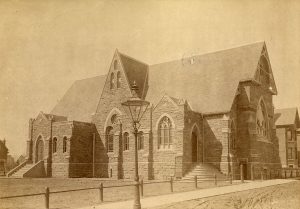
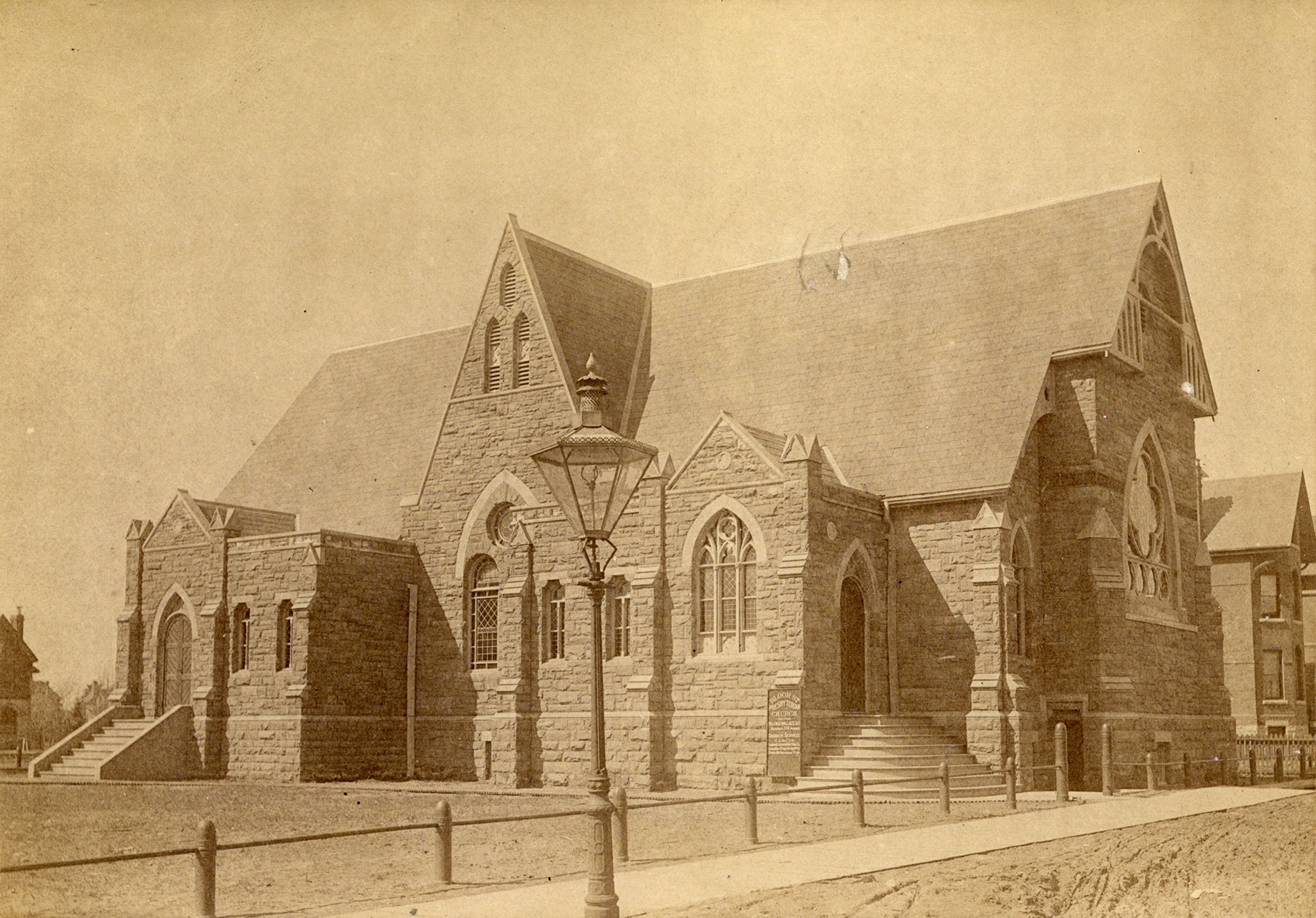
PHOTO COURTESY TORONTO PUBLIC LIBRARY: Bloor Street United Church in 1888. The church lost its steps and main entrance when it was truncated in 1927 to make way for the widening of Bloor Street West.
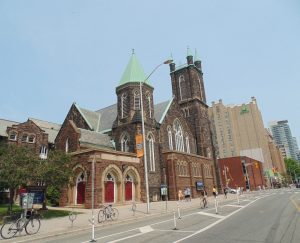
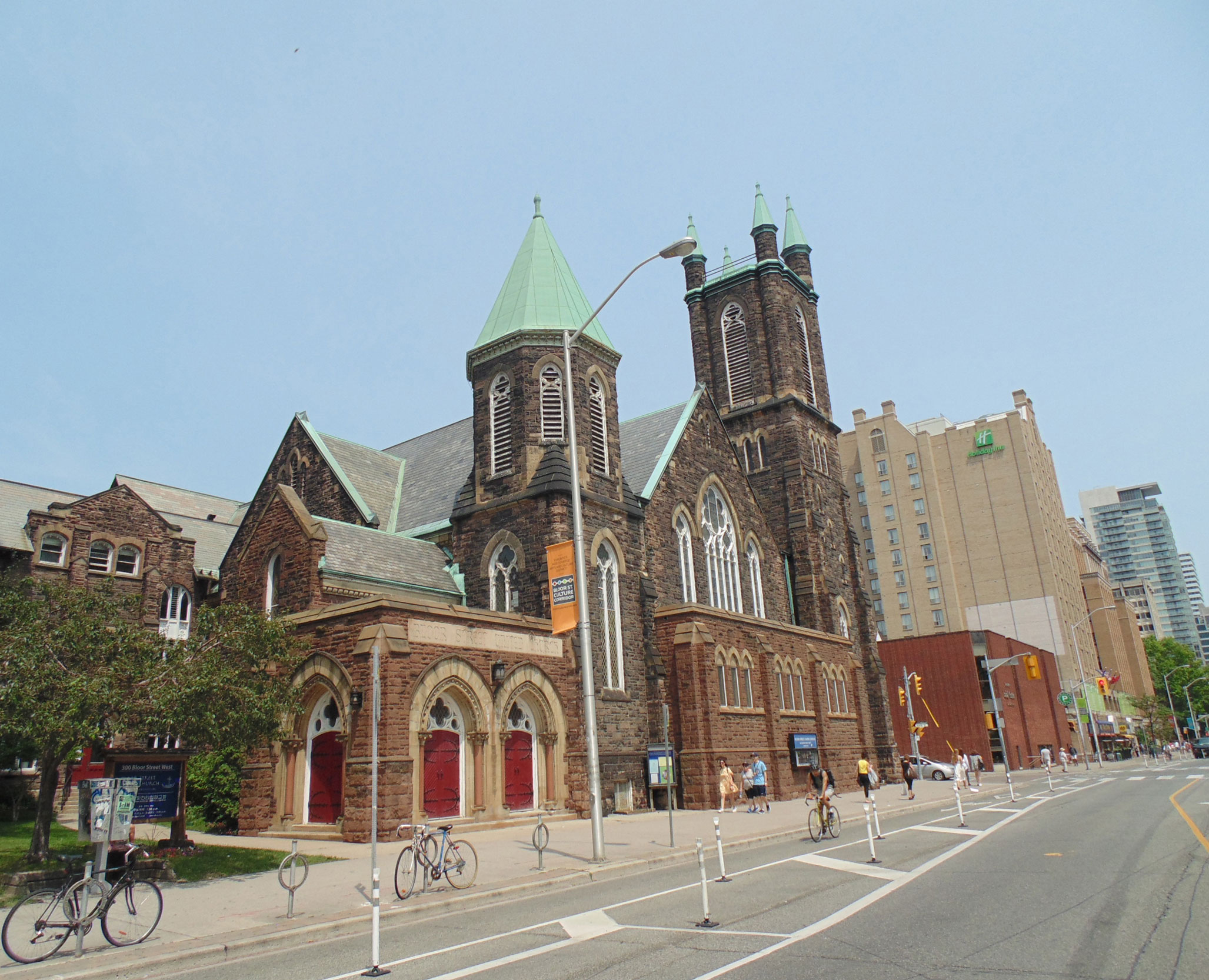
PHOTO BY BRIAN BURCHELL/GLEANER NEWS: Bloor Street United Church as it stands now at the corner of Huron Street. The architects responsible for the church’s restoration say they want to improve the entrance to the church and preserve historical features like the stained glass windows.
By Emilie Jones
After years of rumours and false starts, Bloor Street United Church (BSUC) is set for a makeover, and representatives from Strategy Corporation and KPMB Architects hosted their first community meeting on June 21 to present their plans for revitalizing the space.
Following a model previously set by Westbank Projects Corp., the developers have begun to meet with the community before submitting an application to the city.
[pullquote]“We are telling a story, working with the community and congregation and designers for the best product”—Marianna McKenna, partner, KPMB[/pullquote]
However, it will likely include a free form space, community spaces, and a residential component, as well as offices for both the BSUC and the United Church of Canada. There are also plans to bring the current facilities up to code, something that’s long overdue.
“We like to hear from the community,” said Andrew Dyke, a senior architect with KPMB. “There is a lot of history, and we don’t want to make the wrong steps. We want to look forward.”
It’s a theme that was emphasized throughout the meeting.
“None of us is as smart as all of us. We want to hear from everyone,” noted Marianna McKenna, a partner at KPMB. “We are telling a story, working with the community and congregation and designers for the best product.”
For representatives of the church, it’s an imperative: they want the process to reflect the openness and acceptance that Bloor Street United stands for. But they are realistic: if they are to survive, they need to improve the building.
“[It is a] project born out of a need to sustain our church for a long term. Renewal will offer upgraded facilities, and ensure enhanced accessibility to the church,” said Beverly Stager, chair of the church council and a member of the Annex Residents’ Association (ARA).
Church member Brian Fox acknowledged that the process will be disruptive. “But it has to happen. I can see the need. There is a lot of space not used effectively.”
“I’m looking forward to it,” said Bob Hilliard, who has been a member since 1963 and seemed to represent the general consensus among the church members, local residents, and developers. “The building is old, and the church is large. There’s enough room in the new building for other groups that use it.”
Much like the Annex neighbourhood itself, BSUC is a mixed-use space, and the plan is for that to remain the same after the redevelopment.
“It’s an important part of the neighbourhood,” said McKenna. “It starts with the sacred but is much more. It can be faith-based and an outreach location in the community.”
Joe Cressy (Ward 20, Trinity-Spadina) placed the challenge of meeting the needs of the church and the needs of the city in a similar context.
“[BSUC] provides services that go beyond worship, and this is an important consideration. We can’t treat this as any old redevelopment. [The challenge is], how do you build a building that will build a neighbourhood, not just a tower?”
Although the project’s architects are determined to co-operate with the community, local residents raised several concerns about the height of the new building, fumes from local transit, and how many units the residential component will have. While the architects would not offer a lot of certainty, they did say conserving the church was a priority.
“The intention is to keep the physical church, and build around it,” said McKenna. “We can’t talk about the number of storeys. We don’t want to smother the church. The priority is the church, it is the raison d’être.”
One big focus will be to improve the entrance to the church, which lost its original steps and entrance when Bloor Street was widened in 1927.
“There is a transparency issue. It doesn’t send the right kind of message for how open the church is,” said McKenna.
Dyke agreed.
“There’s been a loss of entry, and we want to resurrect that. The church is about transparency, and right now it is pretty opaque.”
The architects are planning to retain the church’s history and heritage, preserving features like the stained glass windows.
While refusing to commit to anything, McKenna acknowledged that some parts of the building would be removed, but only those that “don’t speak to the spirit of the church”.
“This is the beginning of a conversation. It is a woven process, respectful of the community; they had this long before us. It is a process to honour your voices.”
Ultimately, while church members and residents of the Annex remain skeptical and nervous, everyone seems to agree that something must be done for the church to survive.
“The neighbourhood might need to sacrifice itself to those important obligations of the United Church of Canada,” said a member, who wished to remain anonymous. “We are to understand that this project needs to raise money for compensation and ongoing expenses of the church, so we should support it.”
The next community meeting will be in early fall, and the architects hope to submit a proposal later this year.
Tags: Annex · News
August 1st, 2017 · Comments Off on GRADING OUR GREENSPACE (JULY 2017): Open spaces in the heart of the Annex
Lots of places for ambling with a dog, playing sports, or watching the world go by
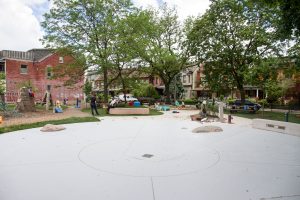
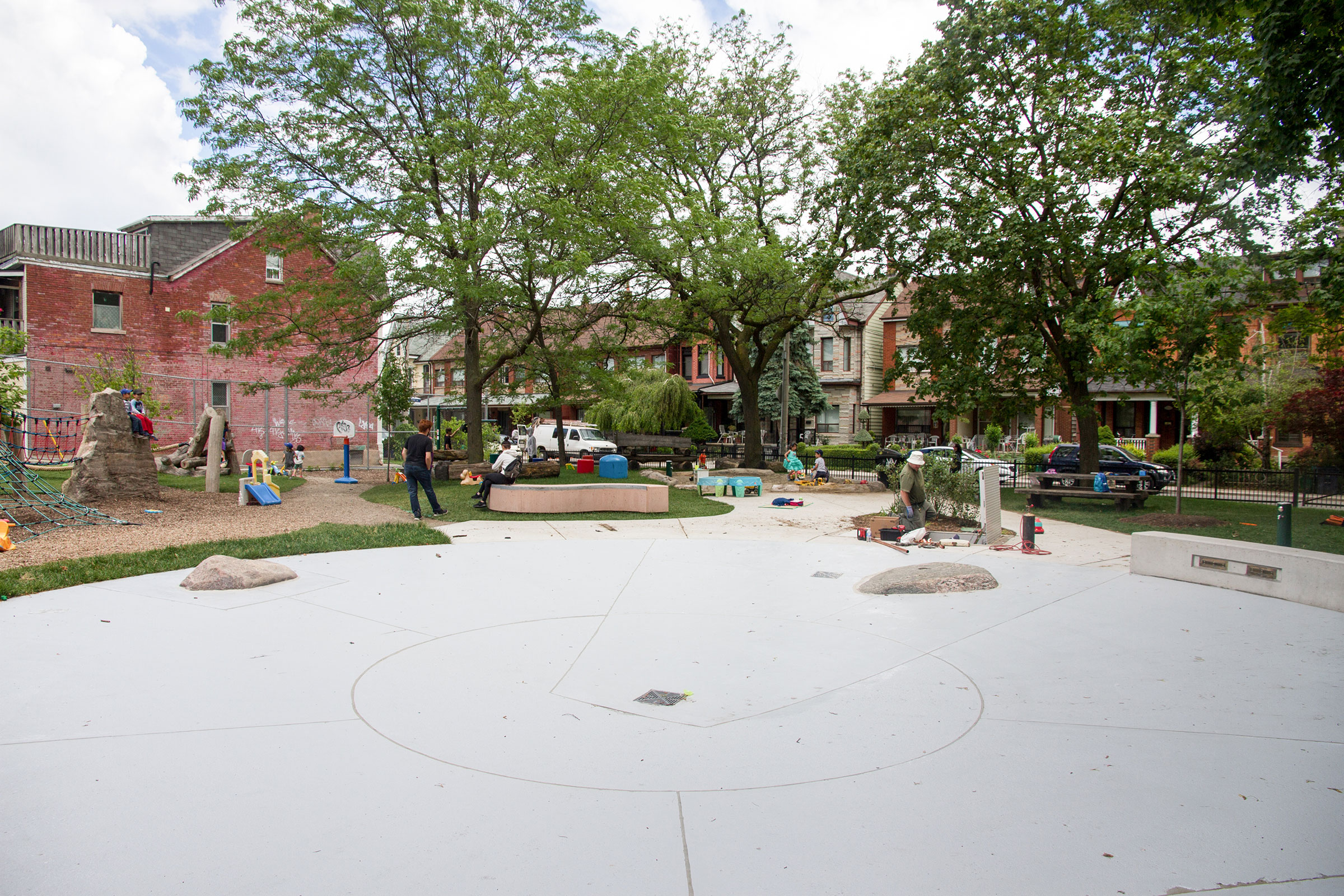
PHOTO BY GEREMY BORDONARO/GLEANER NEWS: There’s lots for kids to do at the recently renovated Margaret Fairley Park, where the installation of a new wading pool and seating area is almost complete. The revitalized park has a determined Muskoka feel to it that might strike some as a bit too sterile.
Where are the best bathrooms, the best spots to laze away a day, or the best place to run a dog? It’s all here in the second instalment of our annual parks review. We’ll run the third and final instalment in August. For this popular feature, we assess many of the parks in and surrounding the Annex considering factors like functionality, safety, cleanliness, seating, and shade.
Compiled by Geremy Bordonaro with files from Emilie Jones & Nathalie Rodriguez
Paul Martel Park
Madison Avenue, north of Bloor Street West
Time: 2:30 p.m.
Grade: D- (Last year N/A)
Reason to go: Paul Martel Park was originally slated to be dismantled for the aborted Spadina expressway, but the Annex Residents’ Association (ARA) took it upon themselves to resurrect the tiny green space for the community to enjoy. Unfortunately, the park has not been treated with care. There are three benches, two of which can no longer be considered benches. Cigarette butts are scattered along a dirt pathway and grass, and it seems as if plans to plant more flowers were abandoned. There were birds chirping and maybe if you closed your eyes you could enjoy the sound of nature, but otherwise the view of the park was unpleasant.
Overheard: A Madison Street resident complaining about the state of the park.
Did you know: It was once named Ecology Park, but was renamed Paul Martel Park in honour of a local architect who made several contributions to the community.
Matt Cohen Park
Spadina Avenue and Bloor Street West
Time: 1:30 p.m.
Grade: C (last year C+)
Reason to go: Matt Cohen Park serves as a reasonable spot to relax at the busy intersection of Bloor?Street and Spadina Avenue. Its location makes for a convenient place for students at the neighbouring University of Toronto Schools to sit, eat lunch, and socialize. Otherwise there isn’t much to this park. Green space is at a minimum and very poorly kept. The little bits of grass that are in the park have either been trampled down or not mowed for ages. Garbage was tossed in large amounts around seating and signage. There are bike racks here but only enough space for about five or six different bikes. Some artistic touches, like the domino seating space and metal leaves adorning the subway grating, help to alleviate the ugliness of this park, but it is still a far cry from being beautiful.
Overheard: “Man, I am suffering from the worst hangover right now.”
Did you know: Matt Cohen, namesake of this park, wrote children’s books under the pseudonym of Teddy Jam.

PHOTO BY GEREMY BORDONARO/GLEANER NEWS: The tennis courts (seen in the background) at Hillcrest Park are in excellent condition, like everything else in this large, well-kept park.
Hillcrest Park
950 Davenport Rd.
Time: 11:00 a.m.
Grade: A+ (last year A)
Reason to go: A well-populated, go-to destination for park lovers, there’s little to complain about at Hillcrest Park. Everything is prim, proper, and well maintained, a huge accomplishment for a park of this size. The tennis courts deserve special mention for being in excellent condition, a rarity in this part of the city. Tennis lovers should definitely come to play a few matches. Hillcrest also has the special distinction of having the cleanest bathrooms of any park we’ve reviewed.
Overheard: “Getting tired? We can go as long as you can!” From a group of teens in a heated game of 3 on 3 basketball.
Did you know: The Wychwood Tennis Club runs out of the tennis courts in Hillcrest Park.
Margaret Fairley Park
100 Brunswick Ave.
Time: 12:30 p.m.
Grade: A (last year A)
Reason to go: Sterile is a great word to describe Margaret Fairley Park. Everything natural seems to be sapped out of the park, which has been carefully trimmed and made artificial. The only natural redeeming feature is a very small patch of non-artificial grass. That said, it is an excellent place for small children. Even at the time at writing there was a huge summer camp taking up residence on the play structures and families around having a grand time. The redesign of the park is very Muskoka-esque with log and various other wooden structures accentuating the “nature” of the park. However this redesign just seems to be a bit much.
Overheard: “All right everyone! We’re leaving to go back to the school in about ten minutes!”
Did you know: Margaret Fairley Park has been undergoing a full redesign over the years. This year marks the final steps of the park’s construction with the installation of a new wading pool and seating area.
Healey Willan Park
504 Euclid Ave.
Time: 12:00 p.m.
Grade: A (last year A)
Reason to go: There is so much to do for kids in this park. There are so many toys and play structures that it’s doubtful any kid would get bored here. Seating is plentiful so parents can just lean back and relax while their young ones have fun in a safe, gated park. The truth is that very little changes about this park over the years. It’s a reliable park for children and families, year in, year out.
Overheard: “Oh my god can I see the pics? So cute!”
Did you know: The local Healey Willan Singers were founded in 2005 on the 125th anniversary of Healey Willan’s birth and perform two chamber music concerts a season.
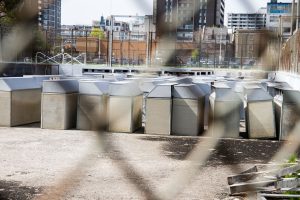
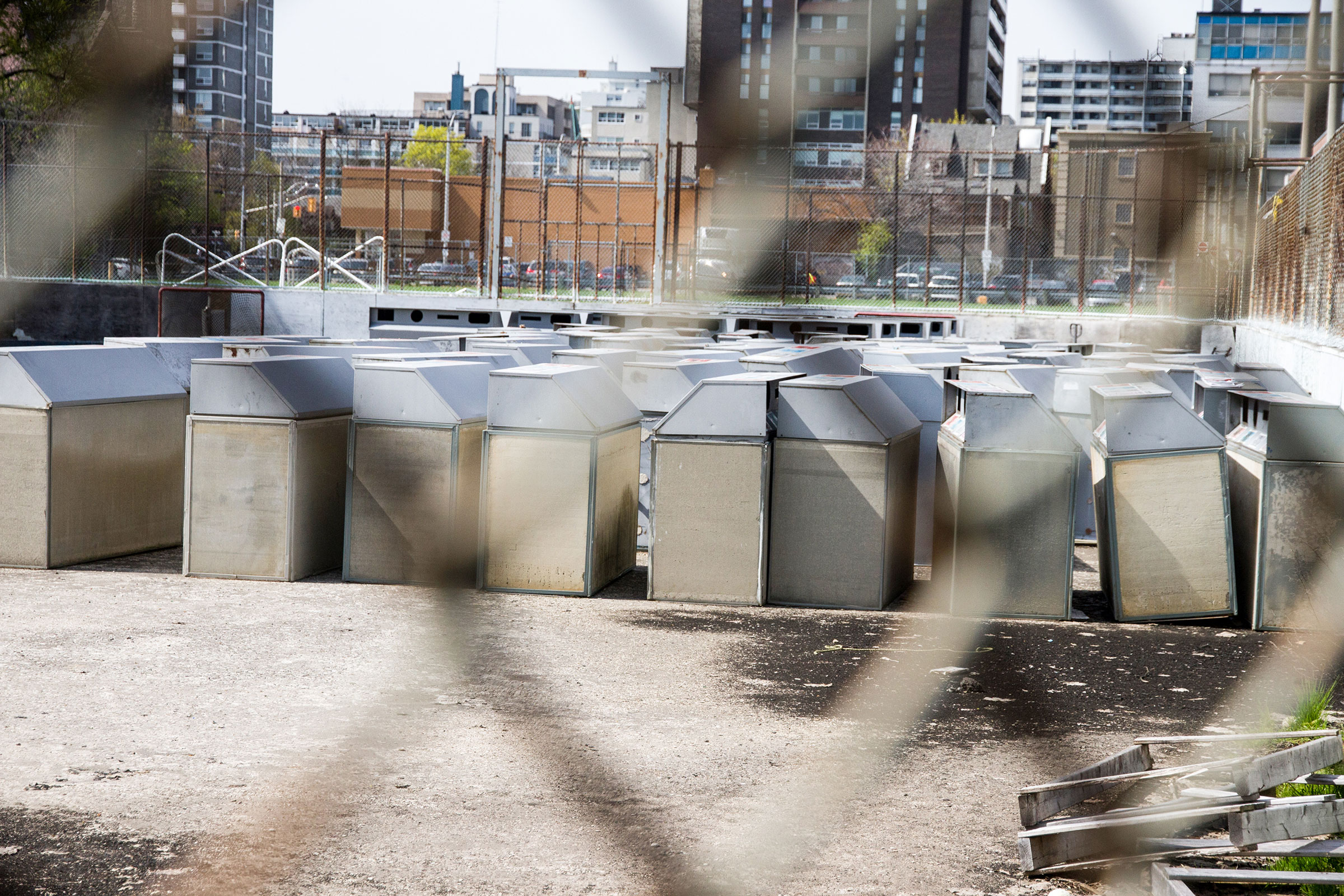
PHOTO BY GEREMY BORDONARO/GLEANER NEWS: Trash receptacles litter the rink at the Robert Street Playground (top), which is largely inaccessible. Healey Willan (right) is a great alternative to Margaret Fairley, and offers lots to occupy the toddler set.
Robert Street Playground/Aura Lee Playground
60 Sussex Ave.
Time: 1:00 p.m.
Grade: F (last year F)
Reason to go: How not to run a park. You don’t lock off every single possible amenity to the community and use them to store broken city equipment. You don’t have the only usable part of the park be a cracked and barely usable concrete tennis court. You don’t put paper signs on the walls of the oppressive brick management building asking people not to touch the broken door locks. And most importantly you don’t let a perfectly fine soccer field be locked off for the general public. At this point picking on this park feels like a pointless task as it is almost guaranteed to get an F every year until the end of time.
Overheard: The quiet sounds of desolation and wasted space.
Did you know: Toronto City Garbage Receptacles (of which there are seemingly dozens stored here) have cigarette butt disposals built into them that can be used instead of planters or the ground.
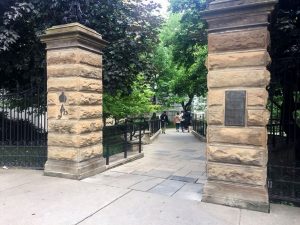
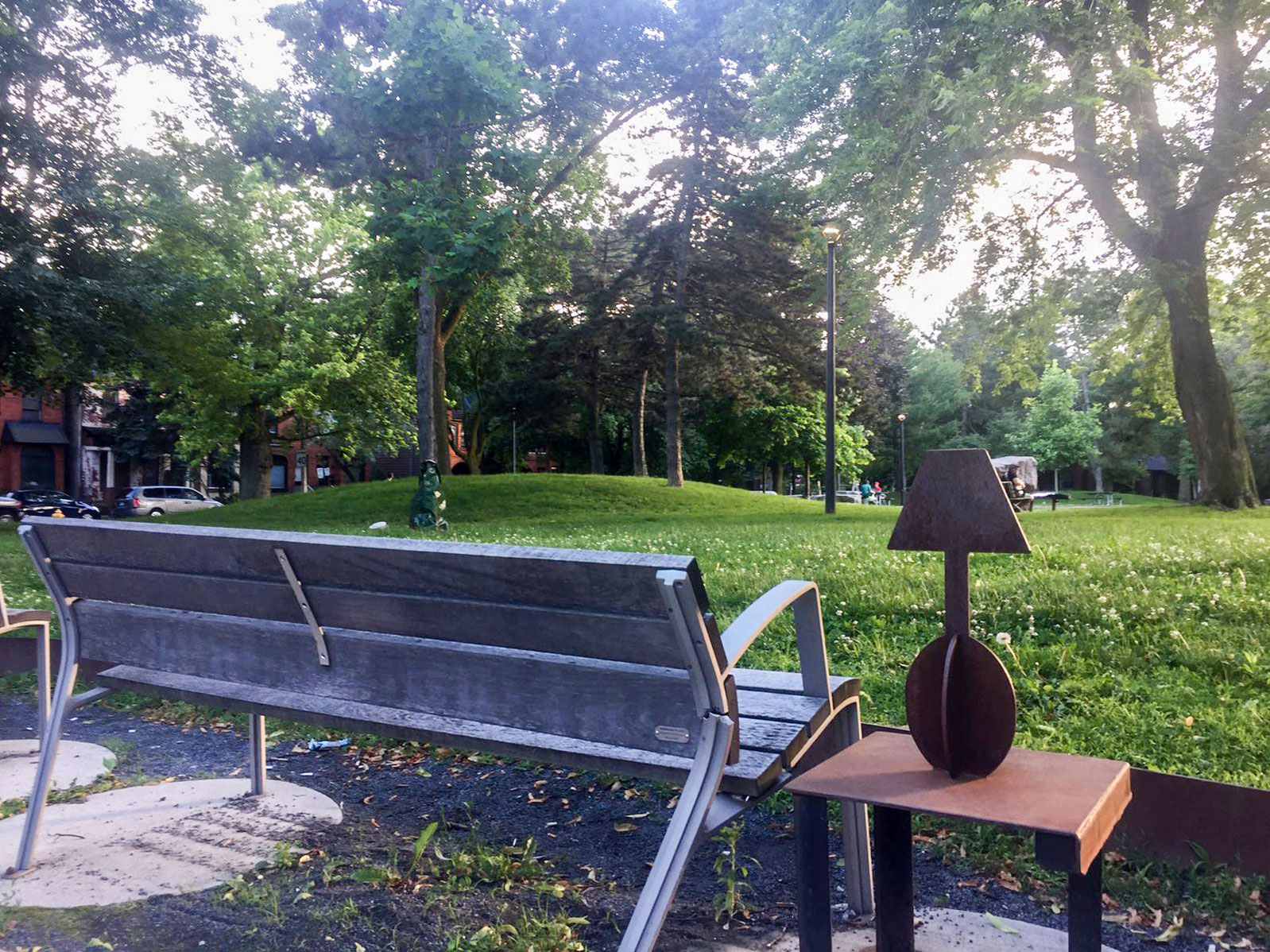
PHOTO BY EMILIE JONES/GLEANER NEWS: Philosopher’s Walk is a welcome breath of nature.
Philosopher’s Walk
78 Queen’s Park Cres. W.
Time: 5:00 p.m.
Grade: A (last year A+)
Reason to go: This walkway definitely beats walking busy concrete streets. Hidden in the middle of University of Toronto, this path is a breath of nature. There are dozens of benches scattered around to sit on while you people-watch. However, if you are looking for a quiet park to read in, this may not be the place for you. During the school year it is full of students bustling by. Don’t worry, although it sees a lot of traffic, the park is incredibly well maintained. Alternatively, since it is a student hub, surfaces within Philosopher’s Walk are occasionally commandeered as a canvas for art, rendering it more interesting than your average park.
Overheard: “Did you know you can send boxes of like 200 ladybugs to people?”, man saying to his girlfriend on a park bench.
Did you know: There are 14 trees planted in honour of the young women who were killed in the Montreal Massacre by Marc Lepine.
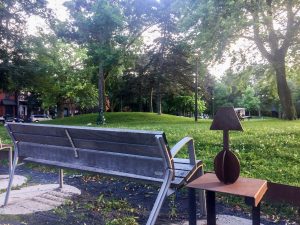
PHOTO BY EMILIE JONES/GLEANER NEWS: Vermont Square is a vast, pleasant green oasis.
Vermont Square Park
819 Palmerston Ave.
Time: 7:00 p.m.
Grade: A (last year: A)
Reason to go: This park has a little bit of everything: lots of open space, outdoor games, shade, and seating. On relaxed days, there are many park benches for a great picnic. For the older crowd, there are gravel lanes to play pétanque, and luckily, the square is located next to the Dennis Lee Playground, so the kids are occupied too. There is a nice mixture of sunny and shady areas, with large abundant trees, and the park is relatively well maintained. It is easy to imagine any group of people spending an entire day here.
Overheard: A man singing and strumming his guitar on a park bench.
Did you know: Vermont Square serves as the main stage area for the Open Tuning Festival every year.
Queen’s Park
47 Queen’s Park Cres.
Time: 3:00 p.m.
Grade: B+ (last year B+)
Reason to go: Queen’s Park is located in a busy part of Toronto, filled with a variety of tourist attractions, including the legislative building itself, but it still manages to be a soothing location with the busy traffic surrounding the space. It can feel like you are in your own little bubble surrounded by the outside world — at least until you are swarmed by flies. As for the grass it could be trimmed and taken care of to avoid dirt patches. As well there are many sculptures for tourists to admire and children are encouraged to engage in the outdoors, but not desecrate a memorial figure with chalk. When we walk by a monument we want to admire the figure, not the chalk drawn over the monument’s historical information. That being said it’s still a beautiful park located in a diverse community, great for newcomers to Canada to learn more about Toronto’s urban parks.
Overheard: “Should we cross the street and walk down the park?”
Did you know: Queen’s Park was opened in 1860 in honour of Queen Victoria, the inspiration behind the park’s name.
Bickford Park
468 Grace St.
Time: 2:00 p.m.
Grade: A (last year A)
Reason to go: Bickford Park has a lovely green space with more than enough room to play a variety of sports including soccer and baseball. The soccer field is under the sun, but there are plenty of trees surrounding the space for people to sit and cool down on hot summer days. Just on the side is a dog park with tons of space, including chairs for owners to sit on while their dogs enjoy their daily run. Exceptionally sanitized restrooms are located right by the dog park. It’s a relief for visitors who want to spend the day outdoors. The benches are in decent condition, some better than others, but they do detract from the park, since the grass can be a much better accommodation to enjoy a summer afternoon. The baseball field is large, but the rusted fences could do with a renewal. Overall it’s one of the most peaceful parks to sit and relax in and possibly have a picnic underneath the trees or to grab a group of friends to play baseball with.
Overheard: Dogs playfully barking.
Did you know: In 2014 local residents submitted a petition to Mike Layton (Ward 19, Trinity-Spadina) asking for park improvements. The park has improved dramatically since then.
Jean Sibelius Square
50 Kendal Ave.
Time: 11:00 a.m.
Grade: B+ (last year A+)
Reason to go: There’s a lot of space to stretch out in Jean Sibelius Square. The huge amount of open space makes the park ideal for pick-up games of soccer or just lying down and relaxing in the shade. There are a wide variety of trees providing more than enough shade. During the middle of the day the park is very well-populated with kids, yogis, and picnickers. The downside is that it seems oddly dirty. There is a lot of graffiti and the grass is pretty patchy in areas. The park shows its age like a badge of honour. There are definitely worse parks to go to but Jean Sibelius needs a bit of clean-up before it can really be one of the best.
Overheard: “Mommy is tired. Come on, let’s get some lunch.”
Did you know: The park reopened with a fresh new look way back in 2012 after four years of planning and construction.
Correction (July 28, 2017): in the print version of this article, some of the descriptions had Facts instead of Did you know.
READ MORE:
GRADING OUR GREENSPACE: Survey reveals significant upgrades (June 2017)
GRADING OUR GREENSPACE: Meet our parks supervisor (August 2016)
Part two of our 2016 parks review (July 2016)
PART ONE: Green sanctuaries in the heart of the city (June 2016)
Grading our Greenspace (2015)
Tags: Annex · Life
August 1st, 2017 · 1 Comment
Central Tech student raced alongside Jesse Owens
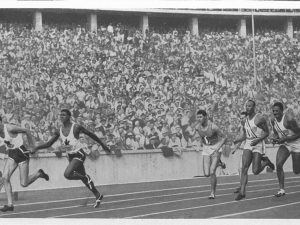
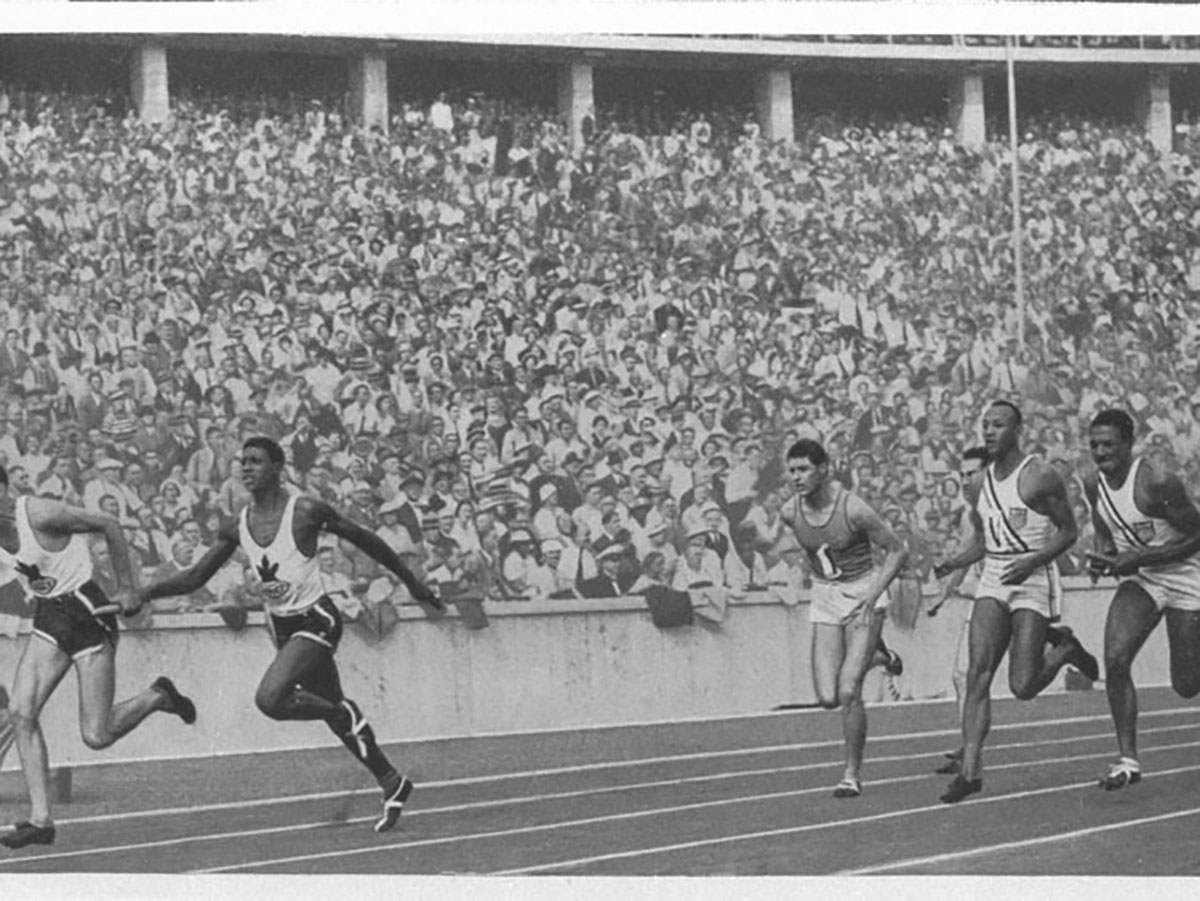
PHOTO COURTESY CENTRAL TECHNICAL SCHOOL ARCHIVES: Sam Richardson passes the baton during the men’s 4×100 relay during the 1936 Summer Olympics in Berlin. Like Jesse Owens, who became a friend, Richardson proudly represented his nation while facing the institutionalized racism of Nazi Germany.
By Justin Viviera
Long before Canadian legend Donovan Bailey took to the track, athlete Samuel “Sam” Richardson realized his own dream when he sprinted on the grandest field of them all at the 1936 Summer Olympics in Berlin, Germany.
Competing against the likes of Jesse Owens (who became a friend), Richardson held his own, coming in fifth as a member of the men’s 4×100 metre relay team, and finished 14th and 20th in the long and triple long jumps. Like Owens, he proudly represented his nation while facing the institutionalized racism of Nazi Germany.
[pullquote]“If he raced alongside Jesse Owens that must have been a very special experience for him”—Ryan, Central Tech student[/pullquote]
“I’ll always remember his grace and the feeling of pride once I found out who he was and what he accomplished,” said his son Stacey Richardson, 47. “When I think about him, I’m always revisited by the gratification I grew up with from my father and his accolades.”
A local boy, Sam Richardson was born on Nov. 18, 1919 to Franklin and Maria of 222 Lippincott St. He went to school at King Edward Public School, then Lord Lansdowne Public School, and finally Central Technical School. It was there that he spent hours training on the track,
“My father used to go out onto the field at Central Tech with a rugby ball, kick it up the length of the field, run the distance and catch the ball himself,” relates Stacey. “Apparently he would do that almost all day long. I was amazed by that story and it was a reminder of how great an athlete my father was.”
At 15, Richardson won the gold medal in long jump in London, England, at the 1934 British Empire Games, now known as the Commonwealth Games.
At that time, he was the youngest competitor to ever win a gold medal in track. A year later, he would set a Canadian record of 25 feet in long jump at the Canadian Track and Field Championships in Winnipeg; a record that wouldn’t be broken for another 25 years. Between London and Berlin, he also represented Canada in France, New Zealand, and Australia.
After his athletic career, Richardson began his service at the CBC in 1955 where he worked as a stagehand crew leader on the hit comedy The Wayne and Shuster Show, which aired the same year he started, as well as the children’s television show Mr. Dressup.
It was thanks to a school project that Stacey got to know more about his dad.
“There was an assignment I was given in school to do some research on a Canadian athlete. My teacher was assigning different athletes and I had mentioned to my teacher that I knew of an athlete that wasn’t mentioned.
“I talked about my father and they allowed me to do my research project on him. It was something I felt proud of doing and that’s when I started to learn more about him. I felt special to be his son.”
Richardson was 51 when his son Stacey was born, and 70 when he passed away in 1989.
Some of the faculty and students at Central Tech, which recently celebrated its 125th anniversary, are aware of the handful of Olympians who got their start at the school: Atlee Mahorn, Carl Folkes, Anthony Wilson, and Keturah Anderson.
“There’s a display case and a Wall of Fame of alumni who’ve made it to the Olympics. I know there’s been quite a few runners that went to school here but I didn’t know he [Richardson] was one of the first,” said Ryan, a Central Tech student. “If he raced alongside Jesse Owens that must have been a very special experience for him.”
The CTS community is planning a tribute in honour of Richardson’s long-lasting legacy. “He was Toronto’s son,” said Stacey. “His unsung stories are a distant memory but will never be forgotten.”
READ MORE
ON OUR COVER: Celebrating the city’s third oldest school (April 2017)
FOCUS ON EDUCATION: A little Oola, a lot of Boola (April 2017)
FROM THE ARCHIVES: Harbord C.I. connects with history (April 2017)
CHATTER: Decade rooms, formal gala, and talent shows to mark Harbord Collegiate’s 125th anniversary (March 2017)
BLACK HISTORY MONTH: A long history of activism (February 2017)
NEWS: Celebrating pink at Harbord Collegiate Institute (May 2016)
Reflections on 32 years of service (August 2014)
Tags: Annex · News
August 1st, 2017 · Comments Off on NEWS (JULY 2017): A passion for caring
Jim Snowdon receives lifetime achievement award

PHOTO BY NEILAND BRISSENDEN/GLEANER NEWS: Jim Snowdon, shown in front of his Bloor Street West pharmacy, is known for patient care.
By Geremy Bordonaro
Dr. James “Jim” Snowdon has been pharmacist to the Annex for 47 years. Serving clients from his eponymous pharmacy with a patient-first, innovative attitude, he’s as likely to be seen chatting and smiling with his customers as he is behind a dispensary.
[pullquote]“I still get up every morning and I want to go and do it one more time”—Jim Snowdon[/pullquote]
It’s a commitment that the Ontario Pharmacists Association has recognized, bestowing Snowdon with its Lifetime Achievement Award last month.
Snowdon has never been in it for the awards, and the recognition is a validation that he has been doing the right thing for all the people he serves.
“It’s all about meeting the people and serving their needs, whatever those needs may be,” Snowdon said. “Sometimes it has nothing to do with pharmacy. Sometimes we’re more like a traffic cop. They ask for an opinion on something and we lead them in the right direction. It’s being that first contact person, being that person that they rely on.”
Snowdon’s family has been in the pharmacy business for over 100 years. This history is easy to see when you enter the pharmacy, where family memorabilia lines the walls. The history of medicine is also on display: a museum near the counter showcases all sorts of old-fashioned medical tools. In the centre, in pride of place, is a pillar with diplomas for himself, his father, and his grandfather.
“I’m very much entrenched in the pharmacy world,” explains Snowdon. “Lots of folks get up in the morning and don’t want to go wherever they’ve got to go. I still get up every morning and I want to go and do it one more time.”
It’s an enthusiasm that doesn’t go unnoticed; in fact, it permeates the space.
Snowdon’s office — in the front of the store — is marked by openness and colourful decorations, so patients are immediately put at ease with a friendly attitude and welcoming spirit.
According to long-time Snowdon staff pharmacist Jelena Sergejev, this attitude is a cornerstone of Snowdon’s ideals.
“This pharmacy is very patient-care oriented,” said Sergejev. “He’s actually the leader of this in the profession. He was my mentor. He’s so focused on providing the patient with care and giving back to the profession.”
She is just one of the many student interns that Snowdon has mentored over the years, igniting in them a passion for patient care and service.
“He’s a boss but he’s not bossy. He’s very gentle. And he brings that to the work place,” Sergejev said. “Whoever works here will end up working here a long time. He brings the best out of us, and out of everybody.”
But it’s not just a kind attitude that Dr. Snowdon brings to the craft; he has led the pharmacy profession throughout his career. He was one of the first pharmacists to start offering flu shots to his customers back in 2010, long before other pharmacies started offering the vaccine.
“He’s been at the beginning of so many things,” said Anneke Medema-Allan, who has been working for Snowdon for nearly thirty years. “He went back to school to get his Pharm D [doctorate in pharmacy]. At the time he said ‘this is where pharmacy is going to be going’. And darned if two years ago the University of Toronto said pharmacists have to have their Pharm D.”
Since Snowdon has been in the pharmacy game for so long it might be expected that he would grow complacent but this is the furthest thing from the truth. He is always looking for a new way to be innovative.
“For us we’ve always tried to drag the ball forward ourselves,” Snowdon said. “I’ve always had that curiosity and desire to stretch the world, to be ahead of the curve, to do something new and good for people.”
Tags: Annex · News
August 1st, 2017 · Comments Off on CHATTER (JULY 2017): Plaque commemorates Canada’s first Black letter carrier
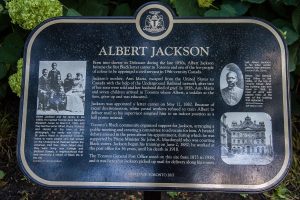
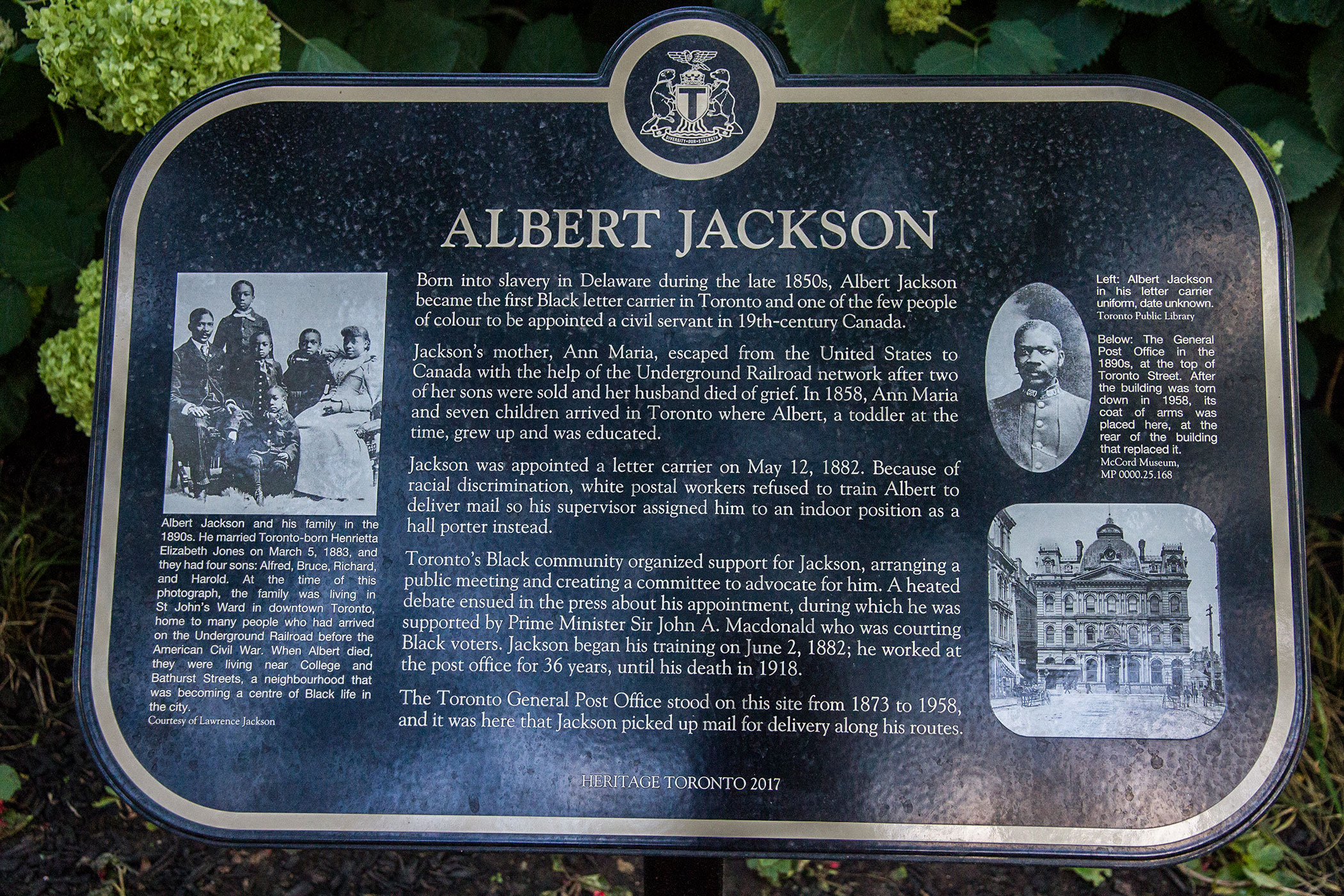
PHOTO BY GEREMY BORDONARO/GLEANER NEWS: Heritage Toronto unveiled a plaque commemorating Albert Jackson, Canada’s first Black letter carrier, on July 21. The plaque is located on Lombard Street, outside the former Toronto General Post Office. Jackson lived and delivered mail in the Annex, and was the subject of The Postman, a play performed on Brunswick Avenue, Palmerston Boulevard, and Major Street in 2015.
READ MORE
BLACK HISTORY MONTH: Moving to the centre (February 2017)
Delivering history in Harbord Village (April 2015)
Tags: Annex · News
August 1st, 2017 · Comments Off on CHATTER (JULY 2017): Public consultation begun on potential Airbnb regulation
As the city struggles with a shortage of affordable rental housing, Toronto City Council’s executive committee has opened up a draft plan to register and license short-term rentals typically offered through Airbnb to public consultation.
Anecdotal evidence suggests that Airbnb has tightened the rental market in Toronto, and that some areas, including Kensington Market, have more than 100 Airbnb listings compared to 12 rental listings. The proposed plan would include changing zoning bylaws to include spaces as “short-term rentals”, licensing home-sharing companies like Airbnb, and starting a registry for anyone who operates one of these rentals.
The plan would also require an owner to reside in the space they wish to offer for short-term rent, which is aimed at preventing vacant properties from being bought and used solely as Airbnb spaces.
—Geremy Bordonaro/Annex Gleaner
Tags: General
August 1st, 2017 · Comments Off on CHATTER (JULY 2017): Larry Sdao receives Community Builder Award
The Harbord Village Residents’ Association (HVRA) has given Larry Sdao its Community Builder Award. Sdao owns 481 Bloor St. W., formerly home to the Brunswick House. HVRA chair Gus Sinclair said that Sdao worked with the community to deal with “an intractable problem that was the Brunswick House business [Sdao’s former tenant]”.
Local residents’ associations said that the pub and bar — known for cheap booze — was partly responsible for the noise, vandalism, brawls, and property damage that frequently occurred when its patrons poured into the neighbourhood after the bar closed early in the morning.
“Sdao worked behind the scenes to mitigate the negative impacts the Brunswick House was having,” said Sinclair. “He even took his own tenant to court and successfully got the lease shortened to five years, without an option to renew. It was a brave thing to do, as the rent was being paid.”
Rexall, a pharmacy drugstore chain, has since taken over the tenancy, renovating the building and preserving its heritage aspects.
“This was a real bonus for us, as we are big on heritage,” Sinclair added. He said that for Sdao “to be aware of, and where you can possibly do it, assist with community building, is for a business guy, impressive”.
—Brian Burchell/Annex Gleaner
READ MORE
NEWS: Restored Brunswick House reopens (May 2017)
NEWS: Rexall replaces Brunswick House (April 2016)
NEWS: Brunswick on the block (December 2015)
Tags: Annex · News
August 1st, 2017 · Comments Off on CHATTER (JULY 2017): Police seek assistance in sexual assault case
The Toronto Police Service’s (TPS) 14 Division is investigating a sexual assault at Bloor Street West and Robert Street.
On July 24, slightly before 6 a.m., a 25-year-old woman was reportedly approached from behind and assaulted by a man in his late-twenties to mid-thirties. The suspect then fled eastward.
The man is described as 5 feet 5 inches with black hair, beard, and a thin build. He was wearing a white sweater, tan pants, and black shoes.
If you have information about this suspect or the incident, please contact TPS at 416-808-1400 or Crimestoppers at 416-222-8477.
—Geremy Bordonaro/Annex Gleaner
Tags: Annex · News
August 1st, 2017 · 1 Comment
Nurturing unexplored and unexpressed talent

PHOTO BY NEILAND BRISSENDEN/GLEANER NEWS: The Women’s Art Association of Canada has called 23 Prince Arthur Ave. home since 1916. A gem in the heart of the Annex, features of the nineteenth-century house include an art-filled president’s room, where founder Mary Dignam’s 1893 Peonies hangs in pride of place above the fireplace.
By Annemarie Brissenden
At a time when women had neither the right to vote nor access to much education, Mary Ella Dignam founded the Women’s Art Association of Canada (WAAC). By all accounts a singular woman with a singular vision, Dignam wanted the association to be a place that nurtured a love of art, promoted Canadian artists at home and abroad, and provided support for artists when they needed it. One hundred and thirty years later, the association remains true to this vision, and is still going strong from its home on Prince Arthur Avenue.
[pullquote]“Mary Dignam saw a role for women in society and wanted to pave the way for that”—Dale Butterill, president, WAAC[/pullquote]
“Dignam really believed that art could be a positive influence on society,” explained president Dale Butterill, adding that the dynamic founder is still very much alive in the organization today. “The association was founded at a time when women didn’t have a lot of options. They weren’t allowed in the Royal Society of Canada or the Arts & Letters Club, so they had to form their own.”

PHOTO BY NEILAND BRISSENDEN/GLEANER NEWS: The library leads to the studios for artists and an apartment.
Within a few years, the association had a thriving membership and a place for what Butterill called the “tremendous amount of unexpressed and unexplored talent”.
Butterill and past president Barbara Mitchell attribute the association’s early success to Dignam’s ability to cultivate relationships with a wide range of people. She had close friendships with the Group of Seven, who included artists from the association in their shows in the 1920s. Emily Carr, who only came to Toronto twice (in 1927 and 1935), visited the association both times.
Dignam also had a close relationship with Lady Aberdeen, who founded the National Council of Women in 1893, and would become the association’s first patron.
“Dignam saw a role for women in society and wanted to pave the way for that,” said Butterill.
In many ways a woman ahead her time, Dignam wasn’t afraid to be different. She had an unconventional marriage, and would frequently leave her husband at home to provide income for her family. She would take young girls from Ontario on a grand tour of Europe, and had friendships with prominent members of Toronto society. Early membership rolls read like a who’s who of Toronto society, and include names like Osler, Eaton, Gooderham, and Austin, many of whom would attend one of the association’s most popular events: the annual garden party.
Butterill pointed out that in the early days, “social life in Toronto was pretty limited. Apparently one garden party went on for three days.”
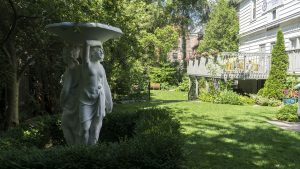
PHOTO BY NEILAND BRISSENDEN/GLEANER NEWS: The association’s annual garden party — once the highlight of Toronto’s social calendar — is held in the backyard.
The annual party is still a highlight of the association’s calendar, with this year’s event — the 101st — celebrating the association’s 130 years.
These days, the association’s mandate remains much as it was: support women in the arts, support students in the arts, and provide public education.
The association hosts regular lectures — its Wednesday night lecture series goes back 120 years — and has a lending library. It provides 14 scholarships at six institutions: OCAD University, Sheridan College Art & Art History, Royal Conservatory of Music – Glenn Gould School, The University of Toronto Faculty of Music, Canada’s National Ballet School, and the George Brown Theatre School. Scholarship recipients receive a one-year membership in the association in conjunction with their award.
Michelle Langille was a George Brown scholarship winner in 2012, and has remained a member ever since.
She said the scholarship gave her some much needed financial freedom, particularly because as a mature student, there were fewer scholarship opportunities open to her.
Langille describes the organization as a pretty interesting one that has been around for a very long time.
“As a feminist and female artist, it’s been great to explore,” said Langille. “I am constantly meeting new people I would never have met in other circumstances. And it’s a space that is continuing to welcome female artists.”
The house on Prince Arthur, which the association has owned since 1916, rents out 12 studios to its members. It also provides gallery space for exhibitions, and has one apartment that it rents out to an artist.

PHOTO BY NEILAND BRISSENDEN/GLEANER NEWS: The building also includes a gallery space for exhibitions.
The association currently has 210 members, ranging in age from adolescence to just shy of 100, and, of late, has focused more on engaging with the community. This year, 800 people toured the space during Doors Open Toronto.
Membership is on the rise — social media has made a big difference, noted Butterill — and new members are finding their way to the association’s door.
The membership is adapting, Butterill said, with a view to surviving for another 130 years. They have a 131 and beyond committee made up of younger women exploring how the club needs to adapt, a group the president described as very dynamic, well organized, and connected.
“We’re very conscious and aware of the need to think about what the future looks like,” said committee member Langille, adding that she’s confident about the association’s prospects.
“We have so much to learn and share. I’m very proud to be a member.”
Tags: Annex · News
August 1st, 2017 · Comments Off on EDITORIAL CARTOON (JULY 2017): how nice! by blamb

More how nice!
EDITORIAL CARTOON: how nice! by blamb (June 2017)
EDITORIAL CARTOON: TCHC (May 2017)
EDITORIAL CARTOON: The Grand Tory (April 2017)
FORUM: Celebrating 20 years of cartoonist Brett Lamb (April 2017)
EDITORIAL CARTOON: A second chance! by Brett Lamb 2037 (February 2017)
EDITORIAL CARTOON: Not really! It’s actually nice! by Stumpy the Subway(January 2017)
Tags: Annex · Editorial