May 9th, 2018 · Comments Off on CHATTER: NAGs Players returns to Tranzac on April 26 (May 2018)
There Goes the Bride opens at the Tranzac stage on April 26 and runs until May 5.
Directed by Martin Edmonds, the play follows Timothy Westerbury in 1970s England, an overworked advertising executive whose daughter is about to be married. Laugh along as the family navigates the stress of a wedding and Westerbury’s controversial marketing ideas. There Goes the Bride is written by Ray Cooney and John Chapman, and the show is produced by special arrangement with Samuel French Inc.
Founded in 1976, the NAGs Players is a non-profit community theatre group based in the Annex. Multiple performances are held throughout the year at the Tranzac stage at 292 Brunswick Ave., just south of Bloor Street West.
For tickets and more information about There Goes the Bride, please visit www.nagsplayers.com.
—Billie Wilner/Gleaner News
Tags: Annex · News
May 9th, 2018 · Comments Off on EDITORIAL CARTOON: How Nice (May 2018)

More how nice!
EDITORIAL CARTOON: How Nice (Spring 2018)
EDITORIAL CARTOON: How Nice (Mar. 2018)
EDITORIAL CARTOON: How Nice (Dec. 2017)
EDITORIAL CARTOON How nice! (August 2017)
EDITORIAL CARTOON How nice! (July 2017)
EDITORIAL CARTOON: how nice! by blamb (June 2017)
EDITORIAL CARTOON: TCHC (May 2017)
EDITORIAL CARTOON: The Grand Tory (April 2017)
FORUM: Celebrating 20 years of cartoonist Brett Lamb (April 2017)
EDITORIAL CARTOON: A second chance! by Brett Lamb 2037 (February 2017)
EDITORIAL CARTOON: Not really! It’s actually nice! by Stumpy the Subway(January 2017)
Tags: Annex · Editorial · Columns
May 9th, 2018 · Comments Off on EDITORIAL: They’re poor, Doug, not dumb (May 2018)
“Folks are working their backs off for minimum wage,” said Progressive Conservative Party of Ontario (PC) leader Doug Ford recently, after announcing he would block a promised minimum wage hike in favour of a tax break. According to Ford, this would give a full-time worker earning $14 per hour about $800 more in net income every year.
Crunch the numbers, however, and you’ll discover that he’s really pitching a lose-lose proposition. Blocking the wage hike will leave the province without about $500 million in tax revenue, something Mr. Ford readily acknowledges. It will also leave minimum wage earners with far less in their pockets than if the plan to increase the rate to $15 per hour minimum were passed as promised next January.
A person who earns $14 an hour and works 40 hours a week has a gross income of $29,120. They’ll have $1,751 of deductions for CPP and EI, leaving $27,369 in pre-tax income. They’ll deduct the $10,354 tax exemption to arrive at taxable income of $17,015. Ford has said that he’ll wave the provincial tax, so they’ll only pay $2,552.25 in federal taxes. After deducting $2,552.25 from $27,369, a person earning $14 an hour will have net income of $24,816.75.
A person who earns $15 an hour and works 40 hours a week has a gross income of $31,200. They’ll have $1,888.49 of deductions for CPP and EI, leaving $29,311.51 in pre-tax income. They’ll deduct the $10,354 tax exemption to arrive at taxable income of $18,957.51. They’ll pay $957.36 in provincial and $2,843.63 in federal taxes. After deducting $957.36 and $2,843.63 from $29,311.51, a person earning $15 an hour will have net income of $25,510.52.
So a person earning $15 an hour, paying both federal and provincial income tax, still nets out ahead of the person earning $14 an hour paying only federal taxes by $693.77.
(We note that if a person is earning either $14 or $15 an hour, they are still living just above the poverty line, which the Canadian Centre for Policy Alternatives defines as annual net income of $20,811.)
We mused here recently that the provincial Liberals acted rashly when they increased the minimum wage from $11.60 to $14 effective Jan. 1, 2018. Though the goals of a liveable wage are laudable, we argued, they are not sustainable if it leads to an economic crisis for employers unable to absorb the increased expense.
But — judging from the many “for hire” signs along Bloor Street — the sky has not fallen as a result. Faced with exorbitant increases in rents and property taxes, a few bucks more to the staff is apparently a drop in the bucket, and has not visibly sunk the ship of any business within our catchment.
We are still cautious about Bill 148, The Fair Workplaces, Better Jobs Act, which passed in Nov. 2017. In addition to increasing the minimum wage to $14 an hour, and promising another increase to $15 hour next year, the bill contained many sweeping reforms that are hard to quantify. It’s hard to know how many workers will take advantage of more paid sick days and paid personal days, for example, and it’s not clear how measures designed to level the pay of full-time, part-time or temporary employees will manifest itself. We can find no analysis of the true cost of this.
What is clear is that the Ford team isn’t spending a lot of time developing a credible platform. Instead they’re focused on a bait and switch, denying an increase only to replace it with a tax break of lesser value. Perhaps they hope voters will think of the tax break as an additional benefit for workers in the lowest tax bracket. In fact, though, it’s a take-away, one that these people can’t afford.
READ MORE EDITORIALS:
EDITORIAL: Lessons to be learned from Excessive Force (Spring 2018)
EDITORIAL: A social contract is a precious thing (March 2018)
EDITORIAL: Intolerance leading to Quebec’s decline (Dec. 2017)
EDITORIAL (Nov. 2017): Student safety suffers as trustees cave
EDITORIAL: Pandering to religious intolerance (October 2017)
EDITORIAL: Bike lanes, good for business (Fall 2017)
EDITORIAL: Don’t sacrifice safety for political gain (August 2017)
EDITORIAL: Thank you Mr. Asti (July 2017)
EDITORIAL: A watershed moment (June 2017)
EDITORIAL: Revoke U of T’s unchecked “licence to build” (May 2017)
EDITORIAL: Westbank’s positive precedent (April 2017)
EDITORIAL: Foreign buyers tax a necessary cliff jump (March 2017)
Tags: Annex · Editorial
Policy would lead to better health and increased revenue
By Daryl Christoff
Ontarians have been very clear — and so have the people of this riding. We don’t just need a new government but a whole new approach to government. The New People’s Choice offers this.
One issue that I am passionate about is the Downtown Toronto Congestion Charge. Traffic congestion is hugely frustrating. It negatively impacts thousands of people in our downtown riding and is completely ignored by the other parties, whose leaders have snubbed residents on this important issue. We know we are dealing with a productivity loss of $10 billion due to traffic congestion and healthcare costs alone.
At the New People’s Choice, our major advocacy push is the Downtown Toronto Congestion Charge (from which downtown residents will be exempt). Residents here pay a premium for living in the downtown core. We pay higher household costs with dramatically less square footage. The New People’s Choice is modelling an urban agenda that’s comparable to London, Stockholm, Singapore, Milan.
Our goal is to incentivize a 25 per cent reduction of vehicles in Ontario’s urban core — downtown Toronto — which would allow for productivity and optimal flow in the transit system.
This policy would have added benefits in terms of the health of the community. Commuting is a major cause of stress, which leads to stroke, heart disease, and other costly chronic illnesses. This policy would lead to fewer roadside fatalities and injuries. Pollution-related deaths killed 25,000 Canadians last year, while 43 pedestrian lives were lost in Toronto because of road fatalities (with 1,600 injured). The positive effects of our policies for the lives for Ontarians can’t be understated. Revenues gleaned from the Congestion Charge coupled with the funds saved in our healthcare system would number in the billions.
Ninety-five per cent of University-Rosedale residents support this policy, yet it continues to be ignored by those who seek to represent us. We need to regain our community voice! It is the people who live in a community who know it best.
I’ve been spending a lot of time talking to people who live here, my neighbours. There are issues most of them agree on, like the Congestion Charge, and then there are more contentious issues where people disagree.
One of those is federal legalization of cannabis. As the federal government has turned the question of distribution over to the province, it’s something your member of provincial parliament will be dealing with.
I’m the only candidate in our riding who can present effective public policy on this issue. Unlike the Liberals, who are stuck with Wynne’s problematic distribution plan, or the Conservatives, who have to pander to their religious base, or the New Democratic Party, who are beholden to the unions who want to ensure that the Canadian Union of Public Employees controls dispensary jobs, the New People’s Choice Party presents a clear-thinking and common-sense alternative.
We would provide some Ontario Cannabis Store locations in highly populated areas, but we support independent distribution and the craft market — with stringent licensing regulations to provide quality to Ontario’s cannabis consumers and protect public safety.
Out of the 75 per cent in tax revenue that the federal government is passing on to the province, we would give 37.5 per cent back to the municipalities, to set licensing and regulations regarding hours, quality, inspections, employees, and other requirements.
The residents of University-Rosedale are tired of politics as usual. I hear it every single day. People have had enough of the antics and corruption of the Wynne government, and they are looking for a better option. Unfortunately, with Ford’s Conservatives and Horwath’s NDP beholden to their respective special interests, voters don’t know where to turn.
Politics is now more akin to theatre than actual policy. Ontarians deserve better and so do the people of this riding, which is why I have decided to run with the New People’s Choice Party. As member of provincial parliament, it would truly be my mission to speak for the people of this riding — and to work for the advancement of good public policy.
Ontarians have been clear. We need a new approach in our government.
People are demanding change, but what kind of change? The choice is ours.
Daryl Christoff is the candidate for the New People’s Choice Party in University-Rosedale.
Tags: Annex · Opinion
May 9th, 2018 · Comments Off on FORUM: What kind of Ontario do we want? (May 2018)
A case for opportunity and partnership
By Gillian Smith
For the last year, I have spent almost every evening and weekend at residents’ doors across University-Rosedale, listening to your views on the future of our province. From Governor’s Bridge to Little Portugal — with the Annex tucked right in the centre — it has been a privilege to learn from you, door-by-door.
Collectively, you have expressed an overwhelming mix of frustration and anger: frustration with the struggle and expense that comes with living in the heart of Toronto, and anger over the cynicism of the current government. In particular, you have told me you resent promises of “free” care measures offered just before an election when these measures — in whole or in part — could have been implemented over the past 15 years.
[pullquote]Ontario, today, is the most indebted sub-national jurisdiction (province/state) in the world.[/pullquote]
These feelings have been echoed in the hundreds of conversations — with teachers and their union leaders, healthcare professionals, arts and culture workers, business leaders and entrepreneurs, not-for-profit leaders, to name just a few groups that I’ve spoken to over the past year.
As a business person, community volunteer, and parent to two school-aged children (and another about to graduate from university), these are concerns I share.
We know our province is on the wrong path. And we understand that Ontario is at a crossroads.
Ontario, today, is the most indebted sub-national jurisdiction (province/state) in the world. This $312 billion debt burden will be carried by our children and grandchildren, potentially thwarting their ability to afford to live in the city we love.
We are all asking how it’s possible that this once prosperous province is now drowning in debt. Why hasn’t this spending resulted in better outcomes for our most vulnerable people? How is it that our infrastructure is crumbling before our eyes when we’re spending more than ever before?
The answer to these questions is as simple as it is disappointing: it’s a direct result of reckless and self-interested policy making.
Fortunately, we have the power to change this senseless fate.
This is a time for every one of us to think seriously about how we deliver care, of all kinds, in this province. It’s time to think about how we invest wisely in our shared future.
This is a moment to unleash the potential of all sectors by giving them the opportunity to build a better Ontario.
For more than 20 years, I have worked in the not-for-profit and private sector, with many roles working in direct partnership with the public sector. I have also devoted considerable time to my community through volunteering with organizations such as the Toronto Public Library Foundation, The Stop Community Food Centre, the Art Gallery of Ontario, and many more.
Through these roles, I have helped to build businesses, I have led and built not-for-profit entities, and I have supported and stewarded charities.
Through this earned experience, I’ve witnessed first-hand the strengths and challenges of all sectors.
Ontario is home to innovative businesses of all sizes, but they operate in a regulatory environment that hasn’t been reviewed in decades.
The burden of outdated rules, as well as rising costs of doing business, weighs heavily on their ability to grow and create secure jobs.
Ontario boasts tens of thousands of charities and not-for-profits.
These organizations provide vital services to Ontarians, yet they are forced to operate with a zero-sum-game mentality when competing for scarce resources. It’s time for government to recognize and value the role of civil society and develop mature, lasting partnerships so these vital organizations get the acknowledgement they deserve.
And Ontario benefits from a strong public sector, with thousands of professionals working tirelessly for the good of our province. Over time, however, relationships across this sector have been strained by overtly political decision-making. As a professional, and as the daughter of a retired federal civil servant, I know the power of relationships built on respect for expertise.
The opportunity for Ontario to thrive is enormous.
No other province has the power of our potential.
Meaningful, lasting, and positive change comes by putting the people of Ontario first, not by shaming and blaming others into action, nor by imposing self-interested policies.
It’s time to build a better Ontario by working together.
It would be my honour to serve you at Queen’s Park, and to contribute to this effort. On June 7, I hope I can count on your support.
Gillian Smith is the provincial Progressive Conservative Party candidate for University-Rosedale.
Tags: Annex · Opinion
May 9th, 2018 · Comments Off on ARTS: New exhibitions and many festivals to herald spring (May 2018)
Nikon ambassadors to offer tips and tricks on May 30
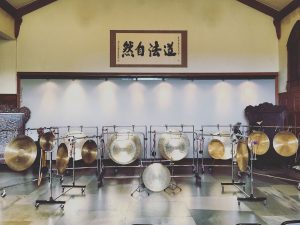
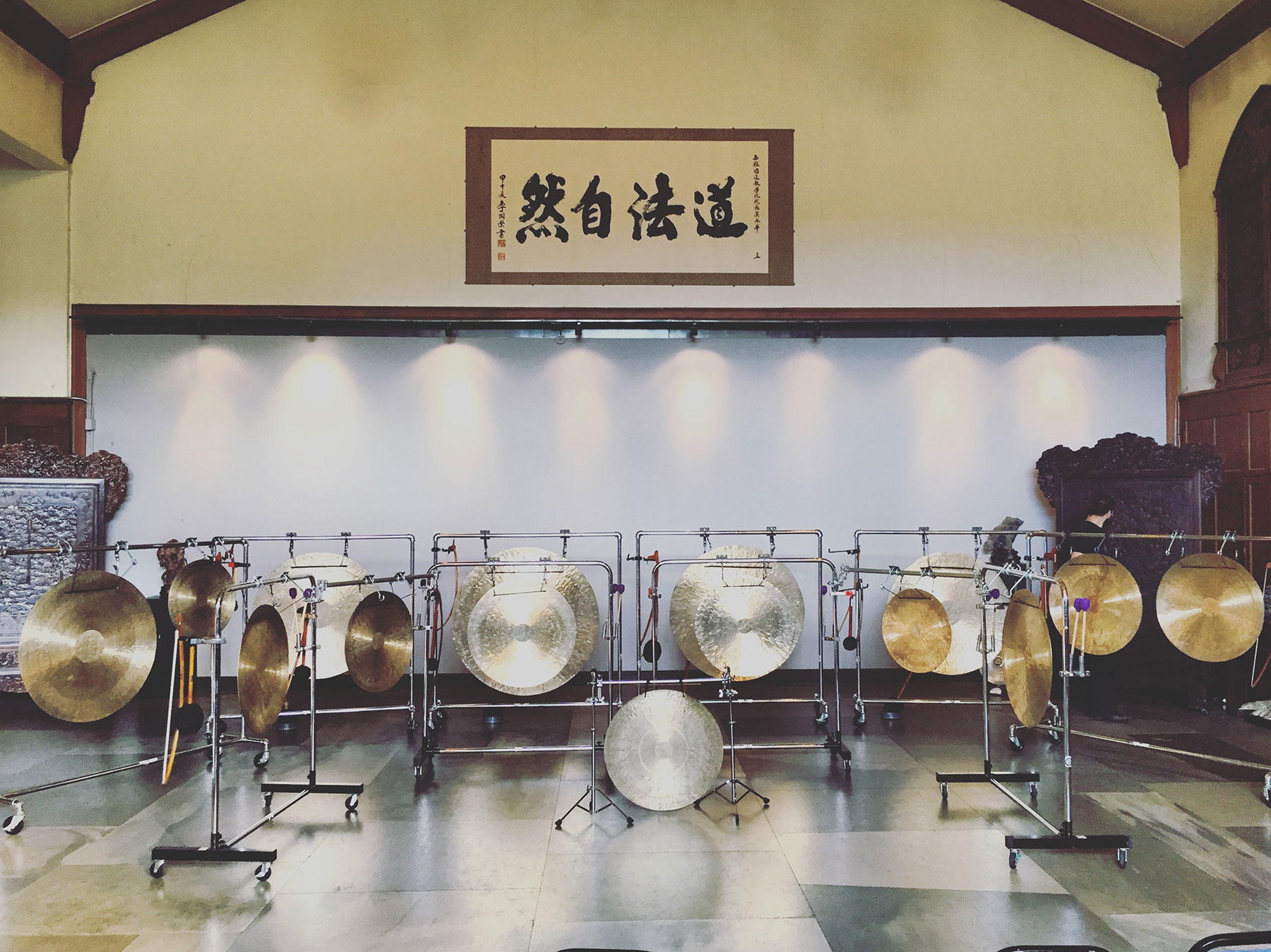
The Tatsuya Nakatani Gong Orchestra, which is touring North America, brings its live sound project to the Music Gallery on May 26 at 8:00 p.m. COURTESY OF THE BLOOR STREET CULTURE CORRIDOR
By Heather Kelly
May is an exciting time as spring starts to arrive and brings new exhibitions and festivals.
NEW EXHIBITIONS OPENING
The Bata Shoe Museum launches Manolo Blahnik: The Art of Shoes on May 16. A celebration of one of the world’s most iconic shoemakers, this is the exhibition’s only North American stop, and will feature a series of tours with fashion industry professionals. Randi Bergman, writer, editor, and host of the podcast Capsule 98, will lead the first Fashion Walk, and focus on Blahnik’s work in the 1990s, when the designer became a household name thanks to Sex and the City.

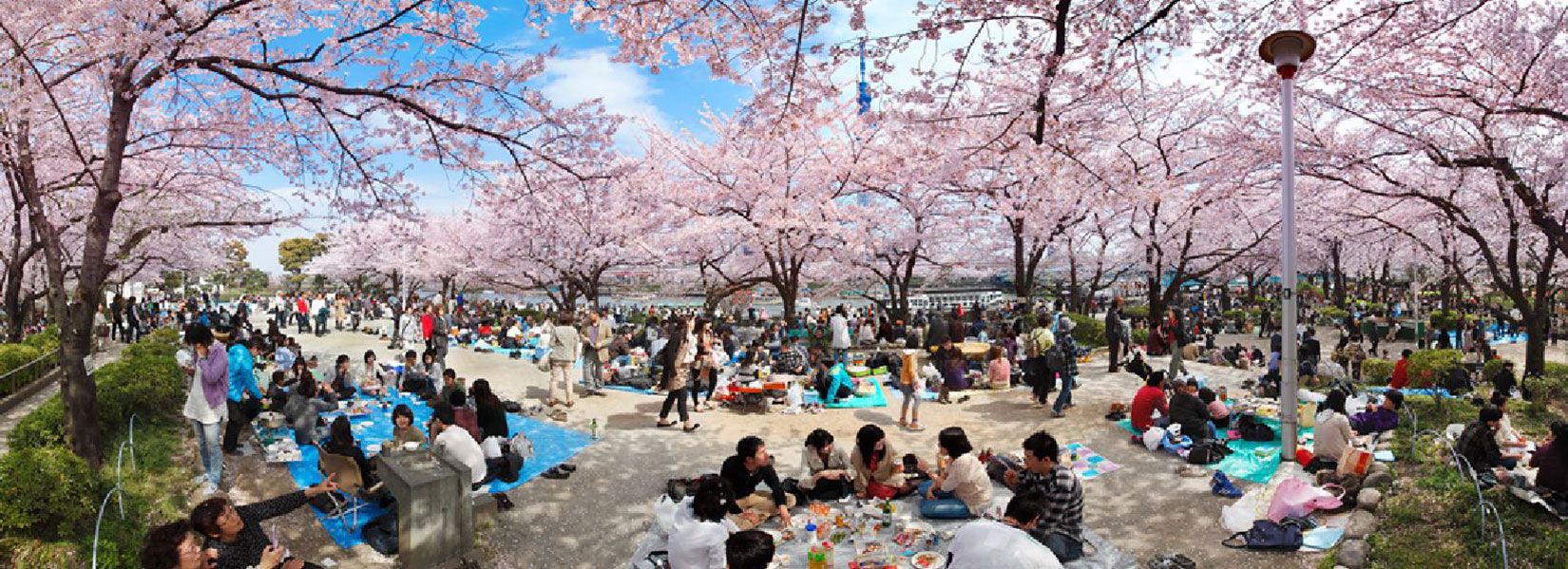
In TOKYO before/after — on at the Japan Foundation Toronto until July 11 — photographs taken in Tokyo in the 1930s and 1940s are contrasted with photos taken in the city after 2010. COURTESY OF THE BLOOR STREET CULTURE CORRIDOR
SCOTIABANK CONTACT PHOTOGRAPHY FESTIVAL
The Scotiabank Contact Photography Festival takes place throughout the city in May, and there is a cluster of photo-based exhibitions to see along the Bloor St. Culture Corridor.
Highlights include Allan Cullen’s Reality, where the photographer and disability activist turns the lens on homelessness, poverty, and disability. Curated by Irene Gotz and Bill Vrantsidis, Reality will be mounted at the Toronto Reference Library’s Hinton Theatre.
At the Gardiner Museum, Ingenuity, Pam Purves’s multimedia series reflects on the ingenious human use of nature and interaction with the basic building blocks of material design: sand, water, and clay.
Two Edges of a Lifespan, curated by Piret Noorhani at the Museum of Estonians Abroad, presents Kristin Dobbin’s nostalgic series on Estonian summer camps, and Toomas Volkmann’s triptychs of Estonian-Canadians born in Estonia from 1918 to 1923, alongside written personal reflections on their lives in two countries.
Julia Nemfield’s Lost and Found at the Alliance Française Gallery explores the projected value assigned to objects through ownership, and the subsequent loss of this value when an item has been separated from its owner.
At the Miles Nadal JCC, Mark L. Freedman’s Safari is a collection of intimate wildlife images captured during several photographic expeditions to East Africa.
The Hot Docs Ted Rogers Cinema hosts a free Nikon Lecture Series & Gallery Night on May 30, when a gallery showing of photographs will be followed by an inspirational hour of photographic stories and tips from Nikon Ambassadors Michelle Valberg and Craig Minielly.
ESTONIAN MUSIC WEEK
Celebrate Estonia’s 100th anniversary by honouring one of the country’s famed composers: Arvo Pärt. The Museum of Estonians Abroad is screening Arvo Pärt — Even if I Lose Everything, a documentary about the composer, on May 9. Then during Estonian Music Week — May 24 to 29 — be sure to check out Introducing internationally renowned composer Arvo Pärt, an exhibition created by the Estonian Theatre and Music Museum. It’s at Koerner Hall for the festival, then at the Museum of Estonians Abroad during the summer. And there’s On Pärt, Photographs by Tõnu Tormis, which features photographs of leading Estonian musicians, on view at the Museum of Estonians Abroad.
Proving the Estonian saying, “Song is food for the soul,” Estonian Music Week opens on May 24 at the Church of the Redeemer with ensemble Avarus, bassoonist Martin Kuuskmann, Montreal electronic artist Kara-Lis Coverdale, and world-jazz group Justin Gray & Synthesis.
At mid-day on May 25, the Museum of Estonians Abroad presents EE Meets CA — Building Bridges in Music, an opportunity for Estonian and Canadian professional music industry members to connect. Later that evening, The Estos Rock at Lee’s Palace starts at 7 p.m.
On May 26, the Grammy Award winning choral ensemble Vox Clamantis performs with electro-acoustic singer-violinist Maarja Nuut and electronic music composer HH (Hendrik Kaljujärv) at Koerner Hall, co-presented with The Royal Conservatory as part of the Conservatory’s 21C Music Festival.
On May 28, a jazz singing workshop with Kadri Voorand at the Museum of Estonians Abroad starts at 12:30 p.m., and in the evening Kristjan Randalu, one of Estonia’s best-known jazz musicians, will be joined by band members and emcee Jaymz Bee of JazzFM91 at The Royal Conservatory’s Mazzoleni Concert Hall.
21C MUSIC FESTIVAL
The 21C Music Festival returns to The Royal Conservatory of Music from May 23 to 27, welcoming musicians and composers who push the boundaries of contemporary music.
The eight concerts over five days will feature five world, 16 Canadian, 12 Ontario, and three Toronto premieres. Highlights include Kronos Quartet with Jherek Bischoff performing premieres of Bischoff’s works at Koerner Hall on May 23, pianist Simone Dinnerstein with A Far Cry juxtaposing works by J.S. Bach and Philip Glass at Koerner Hall on May 25, and Grammy Award-winning vocal ensemble Vox Clamantis, violinist/singer Maarja Nuut, and electronic composer Hendrik Kaljujärv, at Koerner Hall on May 26.
REELABILITIES FILM FESTIVAL
Now in its third year, ReelAbilities Toronto Film Festival, presented by the Miles Nadal Jewish Community Centre, is the largest film festival in Canada dedicated to showcasing deaf and disability cultures. The festival opens on May 29 at the Toronto Reference Library with cocktails and hors d’oeuvres with artists, filmmakers, and activists, and includes a double-bill screening of The Milky Pop Kid and Keep the Change.
Tags: Annex · Arts
May 9th, 2018 · Comments Off on GREENINGS: Reduce, reuse, and then recycle (May 2018)
The energy lost in the pretense of plastic recycling
By Terri Chu
With the celebration of Earth Day behind us and the provincial election before us, it seemed appropriate to rerun Greenings from February 2016. Writing that three Rs are not all equal, Chu is cautious about playing fast and loose with energy generation, and argues that the Wynne government needs to get it right when it comes to all things green.
“Why can’t they take black plastic?” asked my partner, staring at the City of Toronto recycling poster. I didn’t have an answer.
The ad, which helpfully reminds Torontonians what goes in which bin, notes that all black plastics are relegated to municipal solid waste. Turns out, black plastic isn’t very valuable. It isn’t accepted into recycling because it is difficult to sort and once dyed black, it can’t be turned back clear. In short, it would cost the city more to accept black plastics than it would get for them. So black plastics in this city are relegated to the landfill.
Every time I research plastic recycling, I come to suspect that we should rid ourselves of these programs altogether. Perhaps if people weren’t fooled into thinking plastic was “recycled”, consumption of it would actually go down. Make no mistake; the plastic industry spends a lot of money on “recycling” ads for a reason. Not for one minute do they want you to second-guess your purchasing decision.
What still burns me up (no pun intended) is the refusal of both the city and the province to even put recovering energy from waste on the table. After the Oakville fiasco, I fully understand the power of NIMBY-ism but landfilling tons of high energy plastic a year, and, worse, allowing it to eventually make its way into our oceans, is an absolute disgrace.
Few things made me more embarrassed than listening to former Premier Dalton McGuinty stand in front of a microphone and describe the decision to locate the power plant in Oakville a “mistake”. While cheers of joy sounded off in the west end, my ears only heard “politics now trumps science, professional advice, and efficiency”. This was only for a gas plant, a fuel source that is already in virtually every home in Oakville.
Media focused a lot on the political fallout, but few stories have been written about whether or not siting the plant there was the right decision, and it absolutely was from an environmental and efficiency standpoint. Cancelling it was the mistake whose after-effects we will be seeing in the future.
Premier Kathleen Wynne has promised a new era of politics.
Recovering energy from waste will be highly politically unpopular but a necessary part of our waste management strategy.
Europe, Asia, and the Middle East have been recovering energy from waste for decades now. While there are emissions associated with it, long-term, these generate far less pollution than low level smoulders. One landfill fire at a low temperature burn will more than justify recovering the plastic waste. New technologies that allow for very clean and efficient recovery are becoming available all the time. It would mean less natural gas, which is transported at great distance and cost, and it would also mean less plastic finding its way into our oceans.
Over five trillion pieces of plastic are floating somewhere in the oceans. That number is going up every day. Animals often get ensnarled in our plastic waste leading to devastating consequences. The ocean is only so big and can be our waste bin for only so long. Until we get our plastic consumption down to zero, we need to be responsible for breaking it back down into smaller, less harmful parts.
While there are many valid arguments against recovering energy from waste (such as cost, and that it encourages more waste), there are many valid reasons to start using it as part of our overall environmental stewardship solutions. How many more turtles tangled in plastic do we have to see before we accept that sending our “recycled” plastics onto boats bound for China isn’t the greatest of ideas? That’s the reality of what happens to much of what gets thrown in the blue box. Shipping containers are notorious for getting lost at sea. It doesn’t take much of a rogue wave to slosh a few containers overboard. I have very little doubt that some of the plastic waste is what we thought was bound for recycling.
We cannot ignore our environmental responsibilities because they prove politically unpopular. REDUCE, reuse, and then recycle. Until we have the reduce part down, we need a better solution than relying on the latter.
Terri Chu is an engineer committed to practical environmentalism. This column is dedicated to helping the community reduce energy and distinguish environmental truths from myths.
Correction: A previous version of this article misspelled smoulders.
READ MORE BY TERRI CHU:
GREENINGS: Car-free parenting is not rare (Spring 2018)
GREENINGS: The science of board games (Mar. 2018)
GREENINGS: Driving fuelled by unseen subsidies (Jan. 2018)
GREENINGS: No solutions for nobody’s problem (Dec. 2017)
GREENINGS: Celebrate science not milestones (Nov. 2017)
GREENINGS: Down to the data (Oct. 2017)
GREENINGS: Reducing paper waste (Fall 2017)
GREENINGS: Taking tolls to the Gardiner and Don Valley Parkway (July 2017)
GREENINGS: Lessons from Madrid (June 2017)
GREENINGS: Thoughts on hitting the 400 benchmark (May 2017)
GREENINGS: Solving the food waste problem (April 2017)
GREENINGS: Kellie Leitch was right (March 2017)
Tags: Annex
May 9th, 2018 · Comments Off on FOCUS: A glimpse of the future (May 2018)
University of Toronto researchers identify benefits of self-driving cars
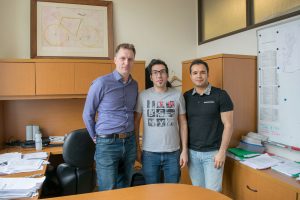
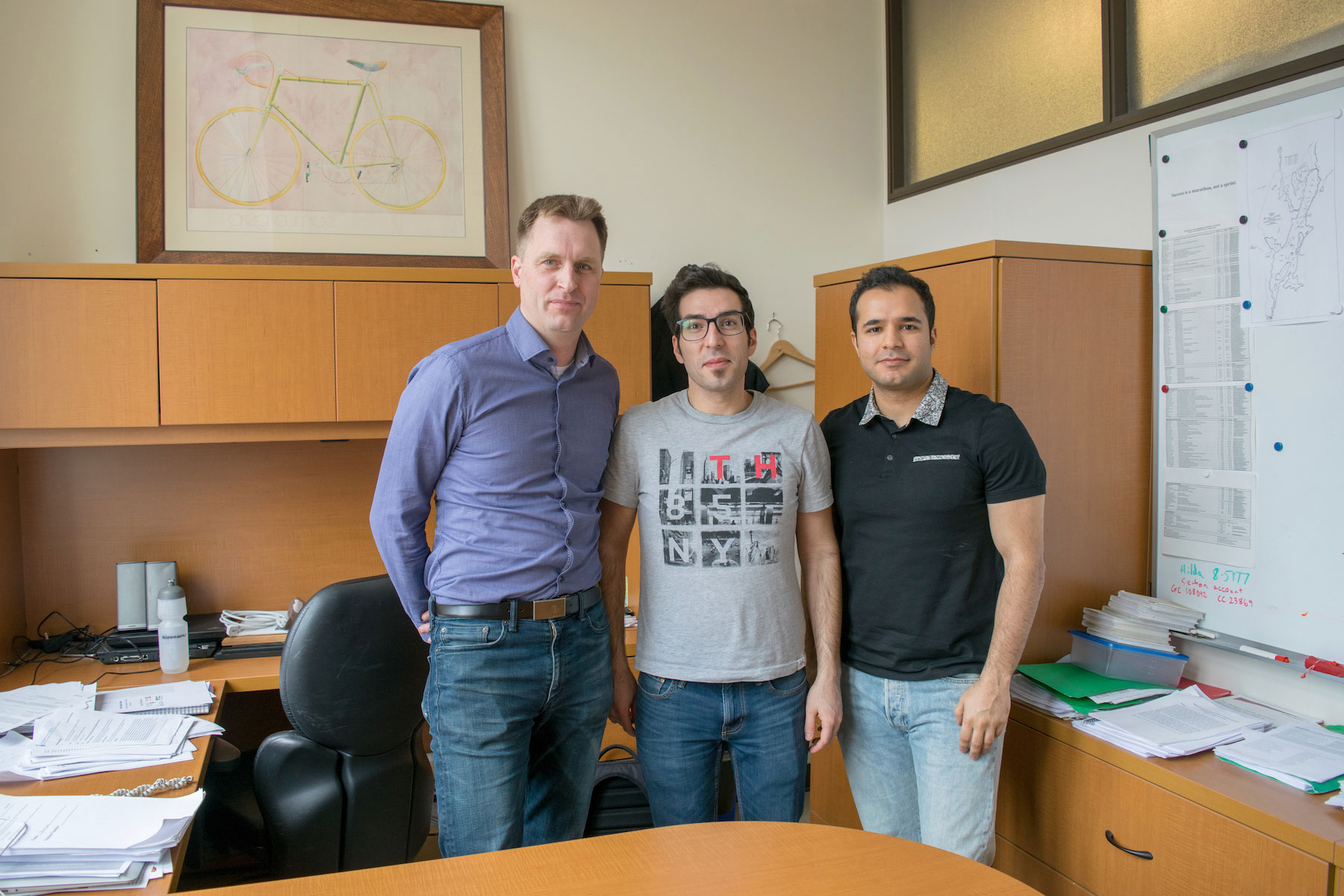
U of T civil engineering professor Matthew Roorda, Ph.D. candidate Sina Bahrami, and Ph.D. graduate Mehdi Nourinejad conducted a study about how self-driving cars can make parking easier for drivers and cities safer. AHMED-ZAKI HAGAR/GLEANER NEWS
By Ahmed-Zaki Hagar
Researchers at the University of Toronto (U of T) have determined that self-driving, or autonomous, cars may be the solution to a common problem of dense urban landscapes: the need for more parking.
Matthew Roorda, a civil engineering professor, Ph.D. student Sina Bahrami, and Ph.D. graduate Mehdi Nourinejad, all at U of T, published a report on a study last month that showed parking lots can accommodate 62 per cent more autonomous cars than cars driven by a person.
“If you sum up all the land that is given to parking in the United States, you have enough land for the state of Connecticut,” Nourinejad said.
The report includes a diagram that compares a conventional parking lot with one designed for self-driving cars.
The conventional lot can hold only four vehicles per row with two cars facing the opposite direction and allowing enough space for drivers to enter and exit.
The autonomous parking lot has six cars per row, however, with three facing the opposite direction, and significantly less space between cars.
The study’s authors believe that conventional parking lots are insufficient compared to automated vehicle parking lots.
“People are not as good at parking as computers,” Roorda said. “You have to allow far more space per car just to allow [for] all the challenges humans have.”
“You cannot block any regular vehicle, because if you park behind another vehicle, at the time that car wants to leave, you have to be in the car to relocate and give some free space for them to leave,” added Bahrami. “But if they are autonomous vehicles, they can move by some communication with each other so that they can be relocated without the driver being there.”
“The better reaction times of self-driving cars over humans should also help curb gridlock,” said Luc Tremblay, an associate professor of kinesiology and physical education who believes autonomous vehicles will have a positive impact on cities like Toronto. “Once a light turns green, a human must detect the change from 0.1 to 0.3 seconds at best, and then move the foot from the brake to the gas pedal in at least another 0.3 to 0.5 seconds.
“In contrast, self-driving cars can detect the change in light faster and immediately accelerate. The human reaction time is compounded such that we sometimes see the light turning green far ahead and know we will not make it through.”
Roorda thinks that self-driving cars would be particularly beneficial to areas like the Annex, because they would provide residents with more transportation options.
“In the Annex, there are choices of getting where you want to go,” he said. “In the Annex and downtown Toronto, most of the things you want to do [are] within walking distance. It is probably likely to first influence people who do a lot of commuting more so than [those who live in] highly-urbanized areas.”
The study also reviewed the City of Toronto’s lack of regulation on automated vehicles.
The authors believe that the city should be preparing to answer big questions about autonomous cars, the technology, and how people interact with them.
“We have to be planning in advance for things like what happens to all of the parking garages that we have,” Roorda said. “If we have vehicle automation, can we take advantage of opportunities to move some of those parking lots from the most valuable land downtown to someplace else?”
“We are still in the testing and piloting phase, we are far behind the U.S. in terms of automation,” added Nourinejad. “The U.S. is starting to move towards policy-making and regulation.”
The researchers can’t predict when fully-automated cars will hit the road here, but noted that “difficult weather” and “complicated driving conditions” are preventing autonomous vehicle tests in Toronto.
“The shortest time period is 10 years up to 40, 50 years,” said Nourinejad.
“And it depends on the kind of automation, we currently have lane assist and adaptive cruise control,” Roorda said. “These are elements of automation we already have on vehicles.
“The removal of the driver from the vehicle is quite a few years away. It takes some time.”
Tags: Annex · Life

Trinity-St. Paul’s United Church marked Palm Sunday with a special children’s pageant. Written and directed by David Craig, a playwright with the Tarragon Theatre, Children at the Gate celebrates the miracles of every day life by following a group of children who ask a rabbi in ancient Rome to perform miracles. Pictured is Colin McElheran as The Roman Soldier, scolding and threatening to capture three children who want to see the rabbi. GEREMY?BORDONARO/GLEANER?NEWS
READ MORE:
ON THE COVER: Artscape Wychwood Barns 10th anniversary (March 2018)
ON THE COVER: Wage protest (Jan. 2018)
ON THE COVER: Snowshoes and a red sweater (Dec. 2017)
ON THE COVER (Nov. 2017): Remembering
ON THE COVER (Oct. 2017): Transitory night
ON THE COVER (AUGUST 2017): Setting up for a new season
Tags: Annex · News
May 1st, 2018 · Comments Off on NEWS: Open to all faiths (Spring 2018)
Synagogue and church share one building
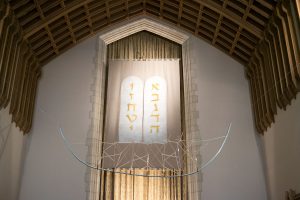
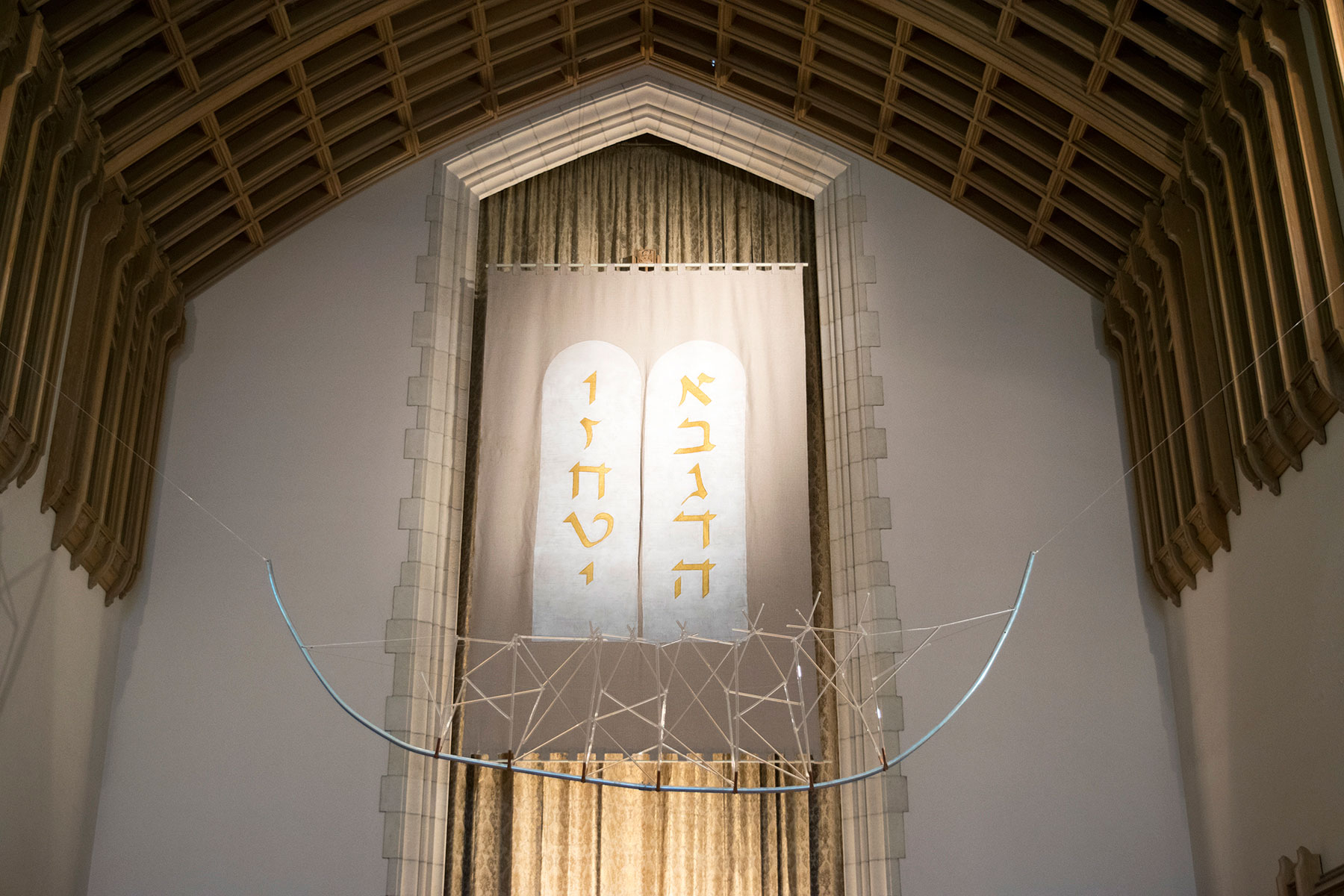
City Shul covers the cross in the Bloor Street United Church sanctuary with a tapestry depicting the Ten Commandments. AHMED-ZAKI HAGAR/GLEANER NEWS
By Ahmed-Zaki Hagar
Every Saturday morning at Bloor Street United Church (BSUC), a tapestry depicting the Ten Commandments is hung in front of the giant cross. It’s a sign that for the morning, the church has been transformed into a synagogue for the hundreds of Jewish congregants who observe Saturday services at the City Shul.
“We had to figure out a way to cover up the cross, which was quite large. We had to find a way to repaint our Jewish identity in a Christian space,” said Rabbi Elyse Goldstein, who founded the Reform synagogue in 2012 at the urging of former students from Kolel Adult Education Centre for Jewish Learning.
The synagogue’s first home was at the Wolfond Centre of Jewish Campus Life at the University of Toronto, but the congregation outgrew the space — which can hold only 60 people — in five years.
“The Wolfond Centre is a student centre, and we thought we were taking up too much of the students’ space,” Goldstein said. “We were using it so often that the students could not even use it. We felt that we had to give it back to them.”
That’s when the BSUC came in. City Shul had been holding its High Holiday services at Trinity-St. Paul’s United Church, but needed an alternative space in 2013, when Trinity-St. Paul’s was undergoing renovations.
“So [City Shul] came to us looking for short-term rental just for a couple of weekends in the fall,” said Reverend Martha ter Kuile of BSUC.
As the relationship grew over the years, ter Kuile said that representatives from the congregations met over several months to consider whether City Shul should make the move permanent.
“We talked to everyone at the church to see whether the adjustments that would need to be made could be made pretty readily,” said ter Kuile. “And everybody said ‘yes’ and everybody was quite enthusiastic.”
“Bloor Street United was very, very open and warm and interested in how they can accommodate us,” added Goldstein.
It’s not the first time that Bloor Street United has shared its space with another congregation. It was initially a Presbyterian congregation that voted to enter the United Church of Canada in 1924. The Alpha Korean United Church was a tenant of BSUC for 50 years until it moved to Willowdale last year, coinciding with City Shul’s relocation in September.
Mary-Louise Work, communications director for BSUC, described having City Shul under the same roof as a “very positive experience”.
“The day that they moved, the whole City Shul congregation marched up Huron Street and came into the building during one of our Sunday services,” she said. “It was one of the most joyous occasions.”
“Co-locating with a Christian church speaks to a certain intention that’s really powerful and important to us,” said a member of City Shul. “We care about pluralism, we care about living in the community. We care about being friends and good neighbours with people of other religious communities.
“We care about being Jewish in the world, as opposed to just being Jewish off by ourselves.”
Both congregations believe in inclusivity, diversity, and plurality. Ter Kuile said that “sincere worshippers should have a place of worship” when describing City Shul’s similarities with her congregation.
“When they put up their tapestry with the commandments on it, those are the same ten commandments that we have,” she said. “We were very open to it, and it has turned out to be working out really well.”
City Shul has moved in just as plans are being made to renovate the church, but Goldstein said that will not have an impact on the congregation. Both City Shul and Bloor Street United will simply move to another location until the construction is complete.
Rabbi Goldstein and Reverend ter Kuile will lead a shared Sabbath dinner at the end of the month with members of their respective congregations to learn from one another’s faith.
“We will explain our traditions through the evening,” she said. “There will be a study portion and discussion portion and just enjoying Sabbath dinner with each other.”
Goldstein believes that BSUC is a perfect match for City Shul. She and ter Kuile want to work together with the community to make the church open to all faiths for the foreseeable future.
“We are discussing with the church ways that physically the church can be more of a dual-purpose building,” Goldstein said. “I think the goal is for us and the church to stay together as a dual-purpose building.
“It is more than just ‘we are just another group renting the church.’ I think that we are in partnership with them to be a multi-faith building that the community can feel very welcome in no matter what faith they are.”
READ MORE:
NEWS: First look at Bloor Street United (Oct. 2017)
NEWS: New vision for Bloor Street United (July 2017)
Tags: Annex · News · Life
May 1st, 2018 · Comments Off on NEWS: New park at Monsignor Fraser (Spring 2018)
Concrete yard to become shared greenspace
By Geremy Bordonaro
A concrete school yard at Monsignor Fraser College is set to be redeveloped into a park that will be shared by the school and community under a 21-year joint use agreement between the City of Toronto and the Toronto Catholic District School Board (TCDSB).
It will be paid for with funds from the city’s parks and recreation budget, and the city will be responsible for maintaining the greenspace once it has been developed.
“We have identified $300,000 through my office to turn it in to a public greenspace,” said Joe Cressy (Ward 20, Trinity-Spadina). “The school will have access to it for use of its students during school hours. Outside of school hours, before and after school and on weekends, it will be a public park.”
The plan dates from 2016 when the TCDSB and the school first had a meeting with the community about greening the space.
“It was all a local and TCDSB initiative for the school. The site used to be an elementary school, St. Peter’s Elementary School, [and] it has now been an alternative high school for some time,” said Jo-Ann Davis, the TCDSB trustee for Ward 9 and a candidate for the provincial Liberal nomination for University-Rosedale. “Given that there was all this space at the south end of the site that wasn’t really being used by the students, the students and the local community wanted to look at what they could do to green it and incorporate school programming.”

The revised plan for redeveloping the large concrete yard at Monsignor Fraser College into a greenspace that will be shared by the school and the community. The plan includes removing the fence and adding community gardens and an outdoor classroom. COURTESY THE CITY OF TORONTO
The school and board initially sought funding from the Ministry of Education, but could not get the money. They also approached the community and tried to find independent sponsors, again to no avail.
“Given that it wasn’t something that we could fund, we initially — the fall before last — had a meeting with the community and said that we really wanted to be doing something with the space and had applied for various grants but weren’t successful,” Davis said. “We told them that this was the kind of thing that we would like to do and asked what their suggestions for potential partners were.”
Davis and representatives spoke to Cressy at that meeting about whether the city could help.
“At that meeting we invited the city and Councillor Cressy to attend. He was excited to hear about the types of things we wanted to do,” Davis said. “We asked him at that meeting about whether or not the city would be able to be a partner. As a result of our invitation the city has since responded and, through parks and recreation, has been able to find funds in order to make this shared-use greenspace a reality.”
It was a natural fit for Cressy, who advocates for the need to have more greenspace in the ward and sees the potential of this type of arrangement.
“This is an exciting project. Here we have, in the heart of Seaton Village, on [Toronto] Catholic District School Board land, a giant piece of concrete. Asphalt that is fenced in,” Cressy said. “It’s not serving the students, the community, or the environment.”
The design was initially chosen in 2016 by stakeholders, the school board, and Cressy, though some updates have been made since then.
“This is just a wonderful example of different public entities working together. Far too often opportunities like these aren’t seized because of finger-pointing over who owns the land,” Cressy said. “At the end of the day it is all public land and I don’t care if it is the city or the school or the province who owns it. It’s public land so we need to do a better job working together to ensure that is used in the public interest.”
“As you know, in downtown Toronto we don’t have a heck of a lot of greenspace so how can we bring in a new space, especially in that part of town,” Davis said. “It’s something that especially the community welcomed with open arms.”
READ MORE:
FOCUS ON EDUCATION: Monsignor Fraser College needs help to go green (Dec. 2016)
NEWS: A $9.4-million school with a view (June 2016)
Tags: Annex · News
May 1st, 2018 · Comments Off on CHATTER: University of Toronto Schools to celebrate Day of Pink (Spring 2018)
Students from the University of Toronto Schools (UTS) will join schools across the city and around the world to mark Day of Pink on April 11. A feature of the celebration will be their annual public event during lunch hour in Matt Cohen Park at Bloor Street West and Spadina Road. It’s the fifth year that the school has marked the day, aimed at ending homophobia, bullying, and discrimination.
This year’s theme explores erasure and how marginalized groups are concealed from society. The students are raising money for the Rainbow Railroad, which helps LGBT people who have faced physical violence or face an imminent threat of violence, imprisonment, or death. For more information about the Day of Pink, please visit dayofpink.org.
—Brian Burchell/Gleaner News
READ MORE:
CHATTER: Pink Day at UTS renews call for tolerance (APRIL 2017)
NEWS: Celebrating pink at Harbord Collegiate Institute (May 2016)
NEWS: Break out the pink on April 13 (April 2016)
UTS goes pink, students unite (April 2015)
Tags: Annex · News