May 24th, 2022 · Comments Off on EDITORIAL: Buck-a-fare just another sound bite (Provincial Election 2022)
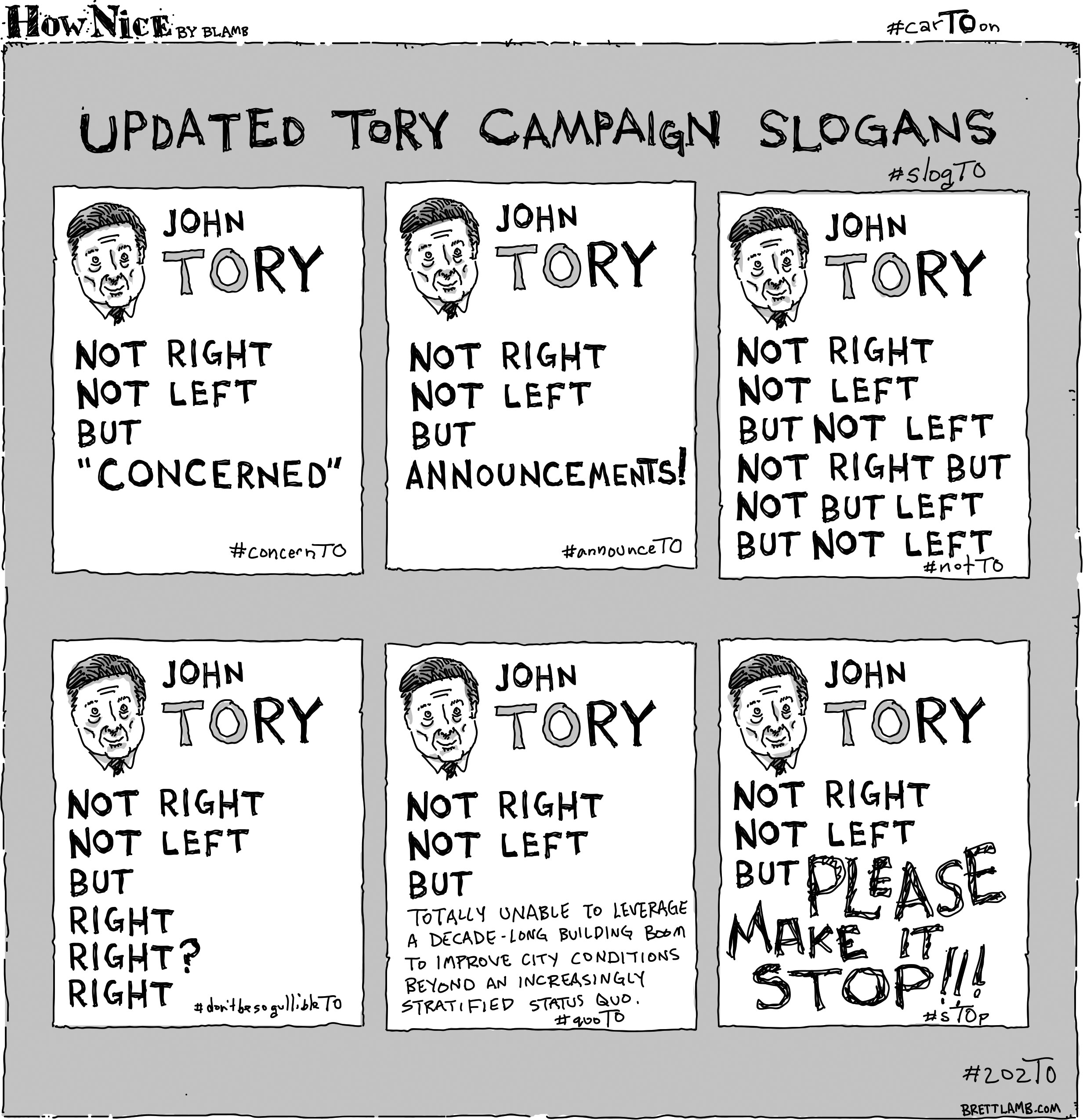
Doug Ford has lowered the discourse for campaign-time politics by sucking another party into a vacuum of sorts. The PCs have given free licence plate renewals and are promising a five-cent drop in the gasoline tax—if reelected.
The Liberals have countered with a buck-a-fare public transit plan. It feels like we are at the CNE with hucksters competing for attention.
Clearly, the Liberals under Steven Del Duca are modelling their buck-a-fare proposal in response to Ford’s ill-fated buck-a-beer promise from 2018. In the Liberal plan, all municipally funded transit agencies, the GO service (both trains and buses), plus the Ontario Northland transit services, would see one-way fares reduced to $1 until 2024.
The PC beer promise, had it come to fruition, would have likely given consumers crappy beer for a loonie. It’s not clear what social or economic benefits that would have brought society, but it’s not a pretty picture. Thankfully, Ford had not bothered consulting with the breweries expected to deliver the price break before he promised it on their behalf. That’s typical Ford behaviour—over promise, under deliver, and fail to consult in the first place.
The Liberal’s buck-a-fare plan hints at serious policy but it’s more of a sexy slogan than a well-conceived plan. Beware of shiny objects.
There are several problems with the Liberal plan. First, it’s essentially what Ford is doing. Ford is writing cheques to drivers, with the elimination of sticker fees, and lowering tolls on provincially controlled highways. Del Duca is writing cheques (through a price reduction) to commuters on transit. They are each buying votes with money from ALL Ontarians.
Second, though the Liberals say it will cost the province only $710 million, it appears it will cost much more based on prepandemic ridership stats published by the TTC. Even if seventy-five per cent of 2019’s ridership returns, the province will be on the hook for $856 million payable to the TTC for their losses in the discount fare program, and that’s just Toronto.
Further, the plan is unfair as it favours those with longer commutes. For example, a Toronto resident riding the TTC every weekday to work would save $1170 a year.
A Kitchener resident commuting 100 km to Toronto, who normally pays $38.80 for their two-way daily commute would now pay just a toonie, and they will save $9568 a year! Not a dime of those savings will go to make transit a better option. It would be a mistake to conclude that the buck-a-ride proposal is about funding transit, it is purely a subsidy to riders.
Perhaps the most damning part of the Liberal plan is the fact that it is so fleeting—until 2024. An 18-month discount period will not likely lead to a meaningful change in behaviour.
In Germany, where fares were severely discounted or eliminated, studies show that new riders tended to be those who would have walked or cycled. People who commute with their cars do so for a variety of complex reasons beyond cost. It’s already much cheaper to take the GO Train than drive from Kitchener to Toronto and back, but thousands still drive.
The buck-a-fare plan, should it come to fruition, will cost taxpayers over $1 billion and will not likely produce a measurable climate benefit. It’s better than Ford’s free licence stickers and lower road tolls, but not by much.
May 24th, 2022 · Comments Off on FORUM: Addressing homelessness and housing challenges in Toronto (Provincial Election 2022)
Province finally steps in with $27 million
By Mike Layton
On any given night in Toronto, close to 10,000 people are experiencing homelessness, and the provincial budget announced on April 28 did nothing to help the problem.
Doug Ford’s election budget offered little to help municipalities address the housing crisis and left them on the hook for operating funds, despite their repeated calls for action and assistance.
The City of Toronto has a homelessness crisis—one that has only worsened over the last two years through the pandemic and is getting worse with the exponentially rising costs of housing in Toronto.
Governments on all levels have failed to invest in creating and operating affordable and supportive housing.
There are 80,000 people on the waiting list for subsidized housing.
Shelters are full every night and encampments have become a widespread reality across Toronto as a preferred method of housing.
Pandemic emergency shelters, intended to be temporary, are being used long-term in the absence of alternatives, and the average number of deaths of people experiencing homelessness increased from 2.8 per week in 2020 to 4.2 in 2021.
Despite all this troubling data, the provincial government released an initial budget on April 28 that failed to provide funding for much-needed housing initiatives and homelessness intervention.
On May 4, with a report set to come before executive committee recommending that council reiterate our request for funding to the province, it was announced that the city had secured $27 million from the province.
This funding is required for the city to move people into the new, supportive, permanent housing we are creating, while maintaining our existing base shelter system for short-term emergency use, including services related to the COVID-19 pandemic.
Toronto is ready and willing to build supportive, affordable housing now.
We have set clear targets and ambitious goals through the HousingTO 2020-2030 Action Plan to increase the supply of affordable rental and supportive housing to help Toronto’s most vulnerable and marginalized residents, and we have made significant progress towards achieving these goals on our own.
Since early 2020, the city has moved more than 10,000 individuals previously experiencing chronic homelessness into permanent housing, opened approximately 770 new supportive homes, and expanded rental support programs like Rent Bank to help keep people in their homes.
We know that providing good quality, safe, affordable housing is the right way to help people out of chronic homelessness.
Not only is it the compassionate, obvious option to improve the health, social, and economic status of an individual, but it is also the most economical solution for the city.
The average cost of operating a single shelter bed is $40,000 a year—and that number has nearly doubled during the pandemic.
Additionally, individuals experiencing homelessness are hospitalized up to five times more often than the general public, and for much longer, with an average monthly cost of more than $12,000 per person. Meanwhile, the cost of providing supportive housing is estimated to be, on average, $2000 per month, per person (or $24,000 annually).
Permanent, affordable, and supportive housing means significant cost savings for all levels of government through reduced use of these services.
While we have made great strides in achieving our housing goals as a city and have more capital funding from federal agreements, we cannot do this on our own.
Addressing the homelessness and housing challenges that Toronto is facing requires significant investment from all levels of government, including operating support from the province, a request that had remained outstanding for years.
The recent funding announcement, while long overdue, is a welcome commitment that will assist us in our goal to house all residents and provide them with the stability they need to improve their lives.
Mike Layton is city councillor for Ward 11, University–Rosedale.
May 24th, 2022 · Comments Off on GREENINGS: Vote this election (Provincial Election 2022)
A vote for the oil men is a vote for genocide; it is actively acknowledging our ambivalence about the suffering of others
By Terri Chu
We live in a sea of green, red, and orange signs here in University-Rosedale, and for all the things we might disagree on, our neighbours agree on a few key points: climate change is real, vaccines work, science can move us forward.
In other ridings across the country, the federal conservatives hold proportionate power. Here in Ontario we see Doug Ford promising to build a new highway, destroying fragile ecosystems, encroaching upon the Greenbelt, and encouraging more fossil fuel consumption; meanwhile, Pierre Poilievre keeps droning on about cryptocurrencies.
In India, people are facing temperatures over 40 C. In this kind of heat, a human being can no longer sweat to cool off, and a healthy adult male will die inside of six hours—never mind what might happen to a child or elderly person.
A vote for the oil men is a vote for genocide; it is actively acknowledging our ambivalence to the death and suffering of others. At this point, we can no longer say that we didn’t know. Historians will rightly remember that we didn’t care. We didn’t care when our fellow humans suffered from horrific heat or starvation—at least not enough to consider systemic changes that might inconvenience our capitalist ideals. Future generations of children will read about us the same way we read about everyday Germans in the 1930s and wonder, “How could they?”
Little will they appreciate that we tried. And every step of the way we failed in the face of a system designed to protect the wealthy. It is a system designed to overwhelm us. Those of you who regularly read my columns might have noticed a darker tone over the last few years. In the early days, I used to work so hard and thought we could do this if we just convinced enough people. Now, less naïve, I see the incredible special interests that would rather see my children die of climate change-induced starvation than have to explain lower quarterly profits. Every night when I tuck my children into bed, I am overwhelmed by the grief that comes with knowing they might not live long enough to see old age—all thanks to a small, but powerful cabal of men whose entire identities are tied to resource exploitation.
A wise professor once told me, “It doesn’t matter that what you do is insignificant, it’s still important that you do it.” I have never forgotten. I must still soldier on and do what I can to stop this climate catastrophe for my children, for your children. We must all soldier on despite the grief.
This election we must do more than vote. We are lucky enough in this riding that we can vote with our conscience. For me, that means supporting Ontario’s former Environmental Commissioner, Dianne Saxe—the one Doug Ford fired almost as soon as he took office.
I don’t think anyone understands the path to decarbonization the way she does. We still have to do more. If you can, find a swing riding and donate to the non-PC candidate. We have to keep doing this every election and at every level of government.
We can no longer allow the pro-genocide cabal to dictate policy at every level. When the Liberals or NDP go back to their old ways and support pipelines in the name of the economy or jobs, we have to remind them that there will be neither if we’re all dead. It is also past time that we changed our first-past-the-post system so the minority can no longer control the fate of the majority.
Treat every election like you’re fighting for life—our children’s lives, Indian lives, African lives. History will judge us harshly if we don’t.
Terri Chu is an engineer committed to practical environmentalism. This column is dedicated to helping the community reduce energy and distinguish environmental truths from myths.
May 17th, 2022 · Comments Off on ON THE COVER: The Birds of Bloor have landed (May 2022)
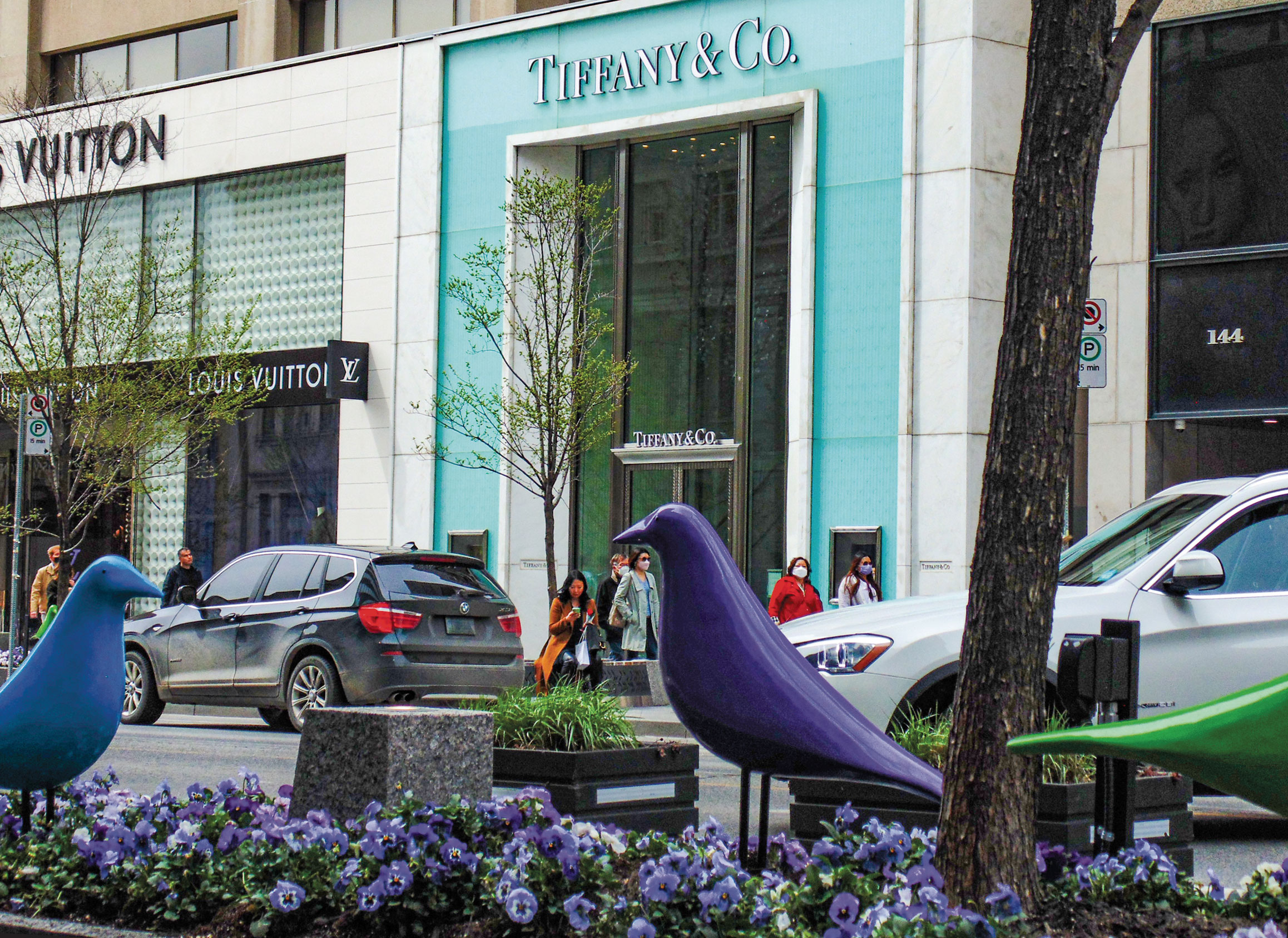
According to Briar De Lange, Executive Director of the Bloor Yorkville BIA, the BIA commissioned this installation as it “wanted to deliver a whimsical, fresh, spring-like display for its sidewalk planting beds.” LISA LOMAX/GLEANER NEWS
Comments Off on ON THE COVER: The Birds of Bloor have landed (May 2022)Tags:Annex · News
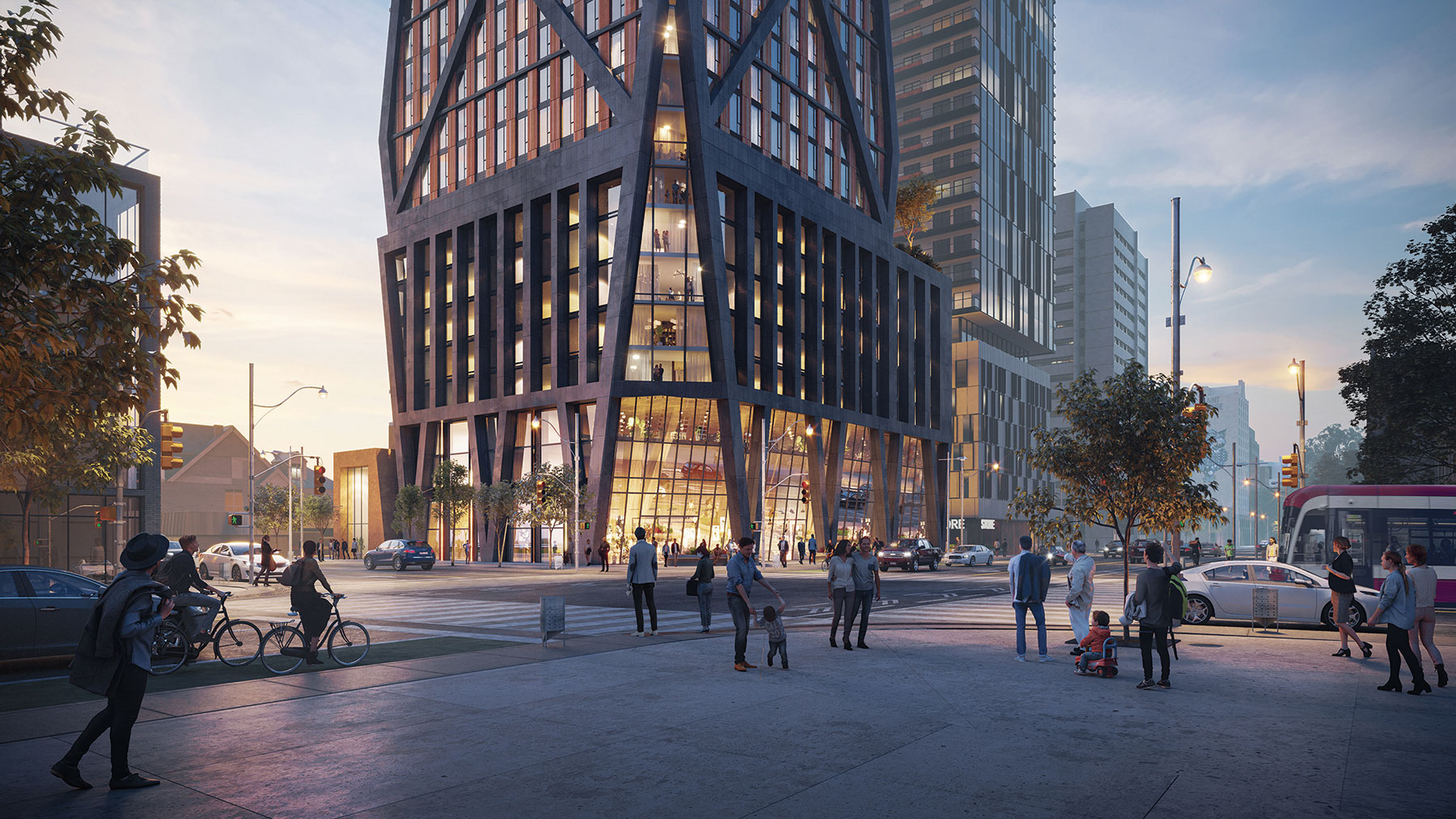
PROPOSED: Developer’s rendering of the tower. COURTESY BDP QUADRANGLE
By Fox Oliver
A proposed 37-storey highrise in the heart of the Annex could drastically alter the Bloor and Spadina intersection. On November 8, 2021, developer First Capital proposed the construction of a building at 320, 328, and 332 Bloor St. W.
Designed by architecture firm BDP Quadrangle, the building will have 628 sq. metres of commercial space, 377 residential units, 61 parking spots and 447 bicycle spaces. There will be a new public green space, as well as a path connecting Bloor St. W. with Paul Martel Park.
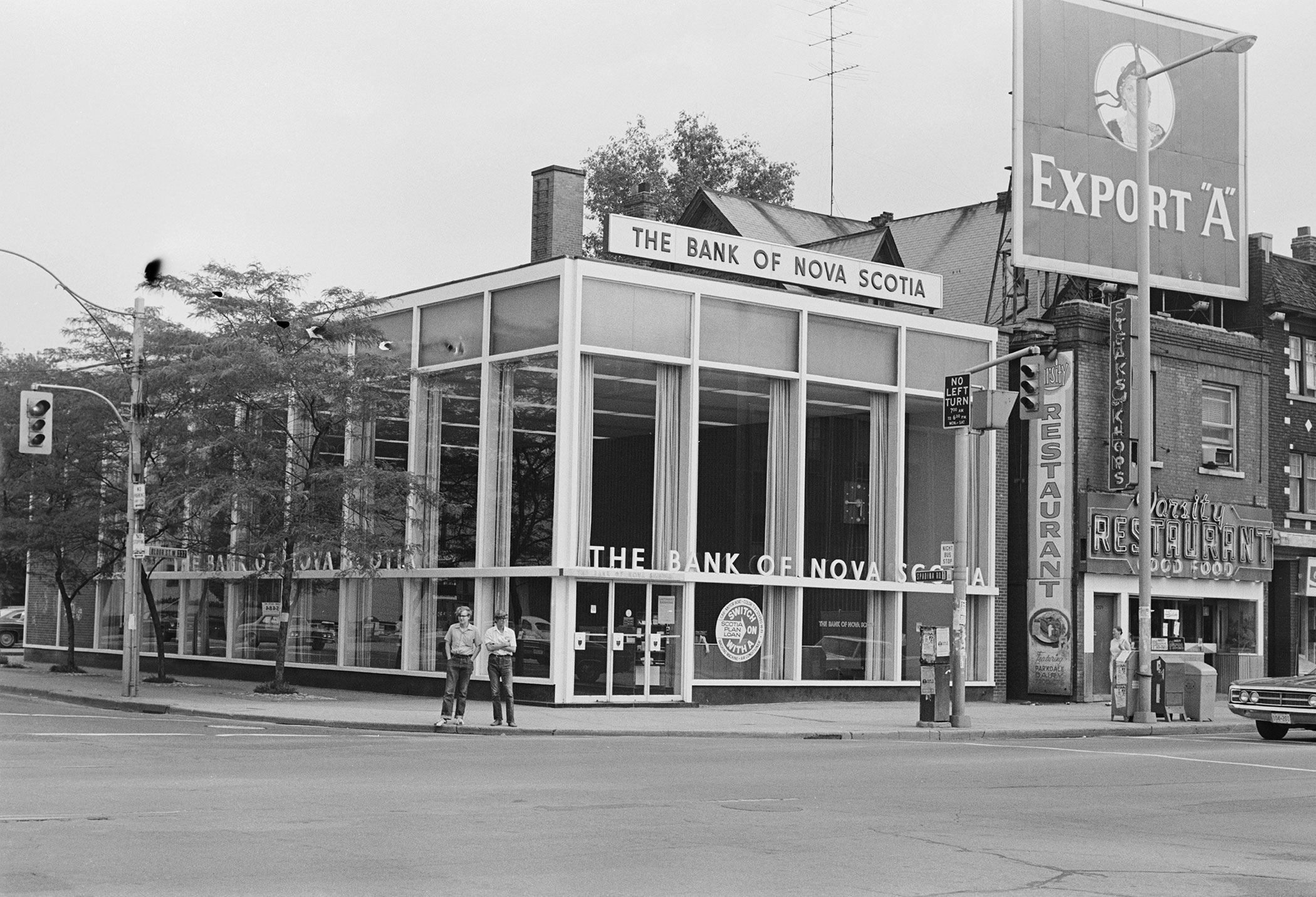
THEN: Scotiabank at the northeast corner of Bloor and Spadina in 1972. Courtesy City of Toronto Archives
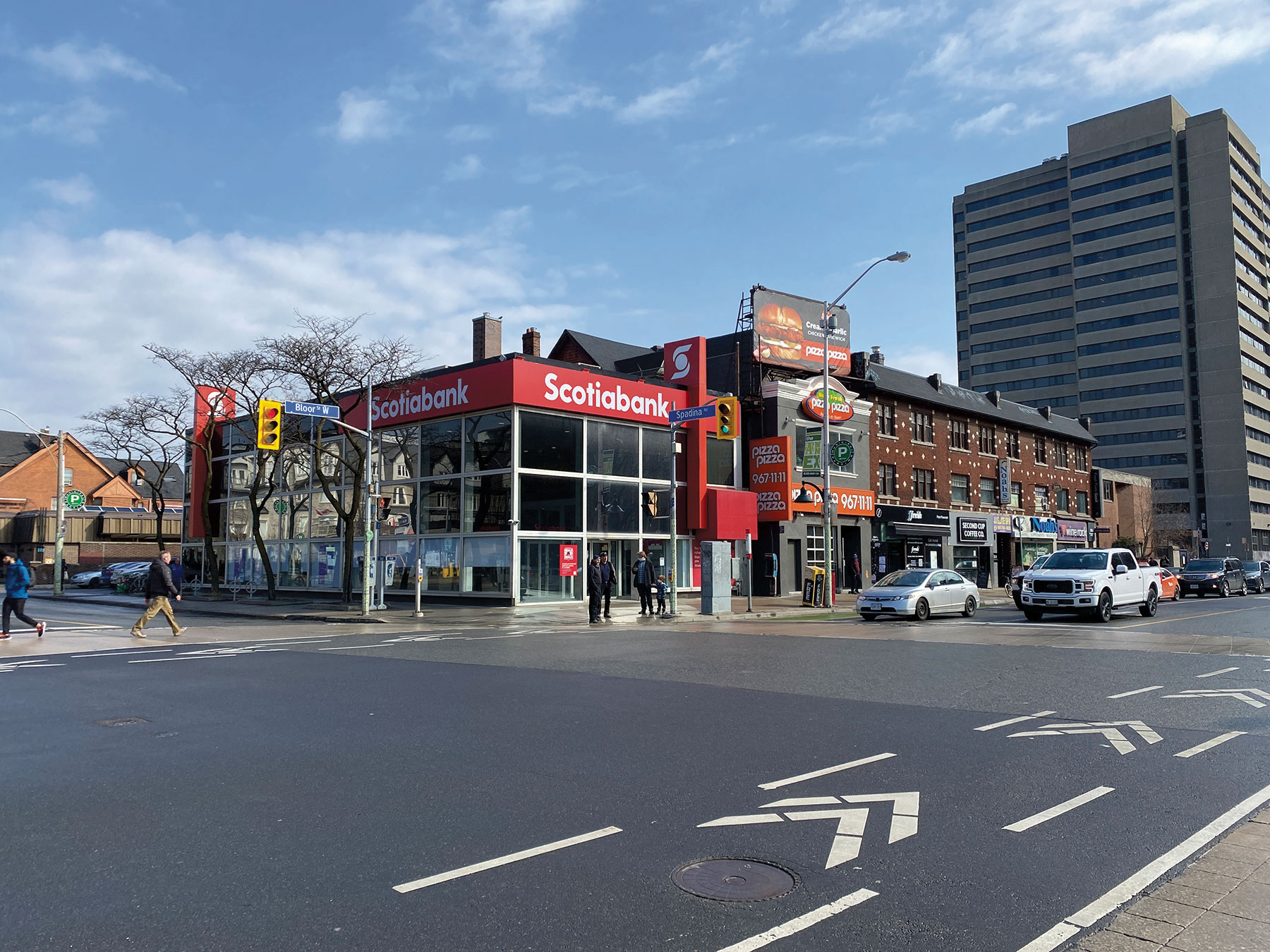
On the proposed site there are currently three mixed-use buildings which house over a dozen businesses and offices. This development will not only displace these businesses, but it will reduce the commercial space from approximately 2000 sq. metres to 628 sq. metres (roughly one third of the size).
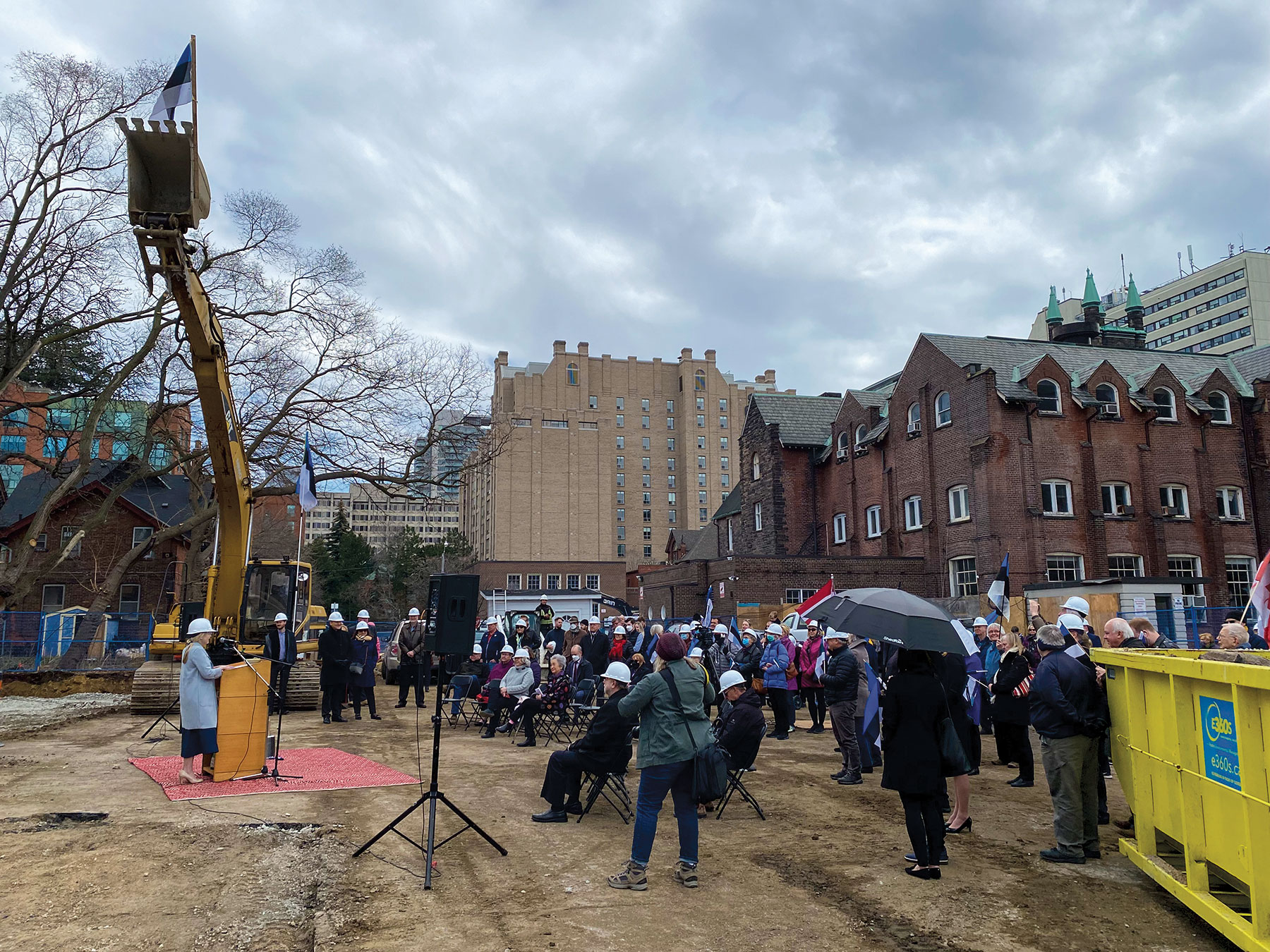
There are seven other developments close to the proposed building at 320 Bloor St. W. At 350, 316, and 300 Bloor St. W., there are four highrises in development, as well as one at 145 St. George St. A 23-storey University of Toronto residence is under construction at 700 Spadina Ave., as is an 11-storey purpose-built rental building at 666 Spadina Ave. The International Estonian Centre, KESKUS, held a groundbreaking ceremony on April 8 at 9 Madison Ave. Greater population density at this intersection will increase the number of pedestrians in the area, including in Spadina Station. Sidewalk crowding, due to more pedestrians, can negatively affect the experience of walking through an area, while simultaneously damaging commerce.
NOW: April 2022, the soon to be demolished retail strip includes Scotiabank, Pizza Pizza, and Fresh. FOX OLIVER/GLEANER NEWS
To many people, replacing these small businesses with highrises feels very damaging to the community. Goodness Me! Natural Food Market (formerly Noah’s Natural Foods) is one of the businesses located on the proposed site. Owner, Sarshad Sahim, is worried that too many towers will damage the unique culture of the Annex. She said that the food market, in operation since 1984, is well “established within the community. People keep coming back because they have history, and their parents went there years before them.”
If the development goes ahead, Sahim would like current businesses to have the option of returning to their original locations. At a community meeting, Chris Atkins of First Capital stated that, “given where we [First Capital] are in the [development] process, there have not been discussions with potential tenants or users of that space.”
In response to questions about the building, Atkins said that the residential units would likely be rental units, as opposed to condo units, although he said this could change as the building plan undergoes further revisions.
According to the City of Toronto affordable housing costs 30 per cent or less of before-tax monthly income. As of 2021, for one-bedroom units (one-person households at or below the 60th percentile income) this value was $1090 per month, compared to the average monthly rent of $1980 for a one-bedroom apartment in the Annex. Although representatives from First Capital said that they would engage in discussions about affordable housing, there is no mention of these units in any of the building application documents.
Councillor Mike Layton (Ward 11, University-Rosedale) stated that while the city will continue to negotiate with the developer for the best possible deal for residents, it “cannot force the developer to provide affordable housing.” After repeated attempts by the Gleaner to contact First Capital regarding their plans for affordable housing, they did not reply.
At a community meeting, Layton said that Toronto is experiencing an affordability housing crisis and that developments are important. He believes, however, that “just adding density for the sake of density will not help.” He stressed the importance of looking at how a new development “interacts with the street, the local amenities” and how it can “reinforce what’s great about our communities.” This process involves appropriate and thoughtful use of the commercial space at ground level.
An interesting city bylaw explains why this development has been capped at 37 storeys. The city’s Official Plan states that views of the spire of the former Knox Church, 1 Spadina Cres., must not be obstructed.
A pedestrian looking north from the College and Spadina intersection must be able to clearly see the spire, as well as have an unobstructed view behind it. This 800 metre long “view corridor” restricts the heights of all buildings within it, limiting changes that can be made to this development.
If this project is approved, it will certainly shape the future of this intersection and the surrounding area. Currently, city planning staff are working with the developer to solve preliminary issues, and they will update the community once these have been resolved.
May 17th, 2022 · Comments Off on NEWS: PCs pick venture capitalist for University-Rosedale (May 2022)
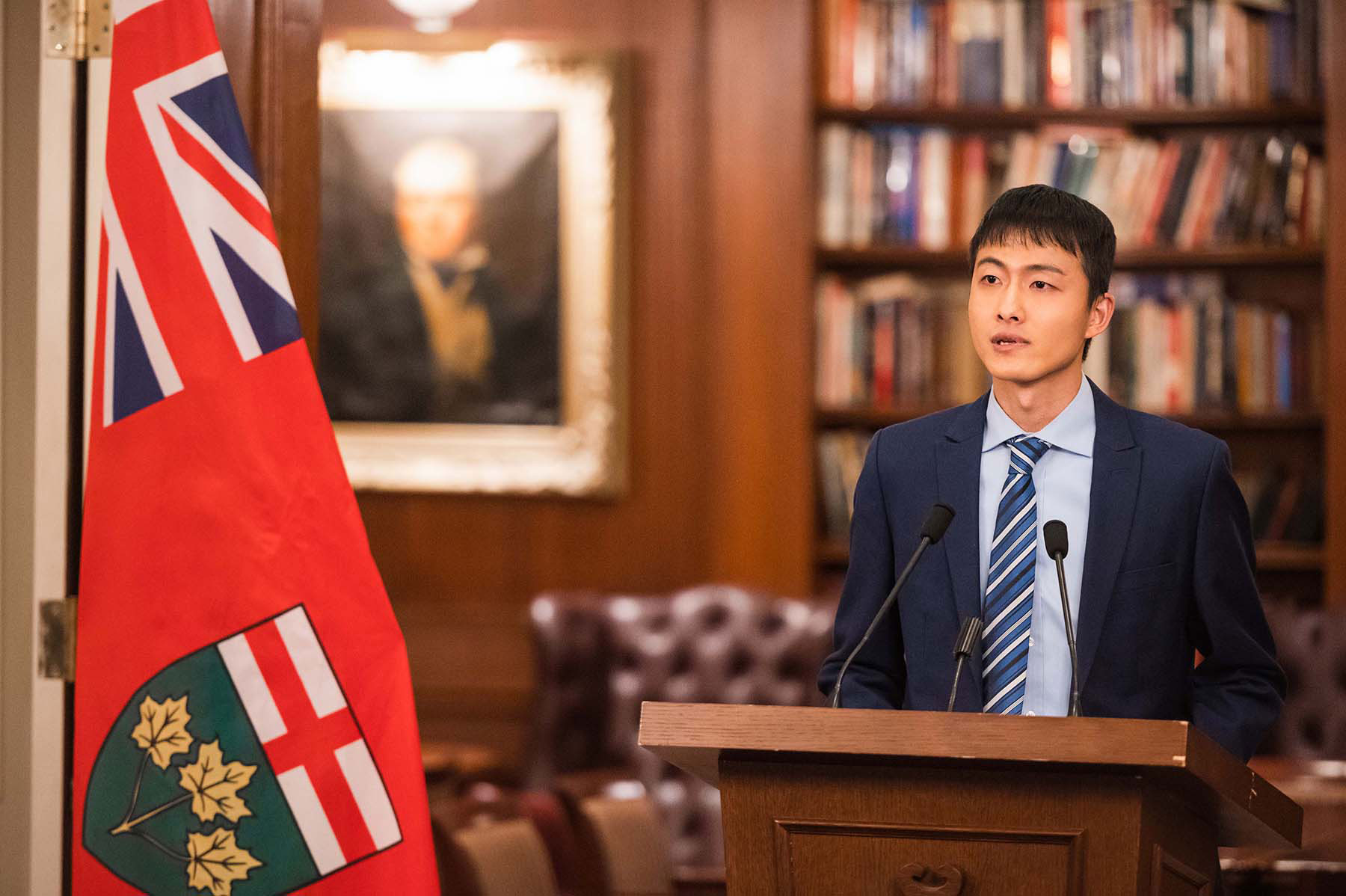
Carl Qiu seeks to attract youth vote
In 2018, Qiu was elected president of Ontario PC youth, a position he held until 2019. COURTESY CARL QIU
By Carly Penrose
The Progressive Conservatives have an uphill battle in University-Rosedale in the upcoming provincial election. The district has been a longtime NDP and Liberal stronghold, but Carl Qiu, a venture capital associate, has decided to take up the fight as a member of Doug Ford’s PCs. Qiu hopes to be the first candidate to turn the riding blue in over twenty years.
Qiu was two years old when his parents immigrated to Canada and settled in University-Rosedale.
He says that his upbringing—his parents’ hard work to make ends meet—taught him the value of a dollar and reinforced the importance of fiscal responsibility.
Qiu’s education and career path reflect those lessons. He studied business at the University of Toronto and then earned an MBA from the York Schulich School of Business. Over the past four years he worked at major financial institutions in downtown Toronto and recently joined a global venture capital firm.
On his campaign site, Qiu says that by working in the finance and investment industry he has developed an important skill set for managing the Ontario economy and supporting businesses.
Qiu’s top priority is fiscal responsibility and he argues that it should be a major concern for all levels of government.
In interviews, he has said that debt and government spending should be kept to a minimum. He has stated his opposition to some government programs because he says that average Canadians will be left paying for those programs with their taxes, which he says is unfair.
Although he has not released specific platform points, Qiu has said in previous interviews that affordability and climate change are also pressing issues.
He feels, however, that solutions to these problems should not burden individuals, which is what he says other parties have done with initiatives like the carbon tax.
While studying for his undergraduate degree, Qiu shared his public sector ambitions in a 2017 interview conducted by the University of Toronto. Soon after, Qiu became an outspoken advocate and member of the Ontario PC party.
In 2018, Qiu was elected president of Ontario PC youth, a position he held until 2019. In this role, Qiu campaigned for federal and provincial PC candidates.
During the 2019 federal election, Qiu was a regular guest on CBC segments about engaging young voters. Qiu hoped for improved turnout and more excitement about civic and political engagement among youth.
Now, as a candidate himself, his campaign strategy reflects his experience reaching out to younger, first-time voters. In addition to conventional campaign strategies like canvassing and events, Qiu uses social media platforms like TikTok, which makes him unique among his opponents.
His focus on youth voter turnout and his knowledge of issues affecting young working professionals could be assets. Qiu is in his late twenties and is the youngest candidate in the University-Rosedale race by approximately a decade.
He is running in a riding where young people 20 to 29 represent over 22 per cent of the population, according to 2021 census data from Statistics Canada.
There is a common belief that PC policies do not connect with young voters, but Qiu is attempting to change that narrative.
The Gleaner reached out to Carl Qiu for an interview but was informed that his campaign only responds to written questions.
Comments Off on NEWS: PCs pick venture capitalist for University-Rosedale (May 2022)Tags:Annex · News
May 17th, 2022 · Comments Off on CHATTER: Annex Residents’ Association AGM covers pressing issues (May 2022)
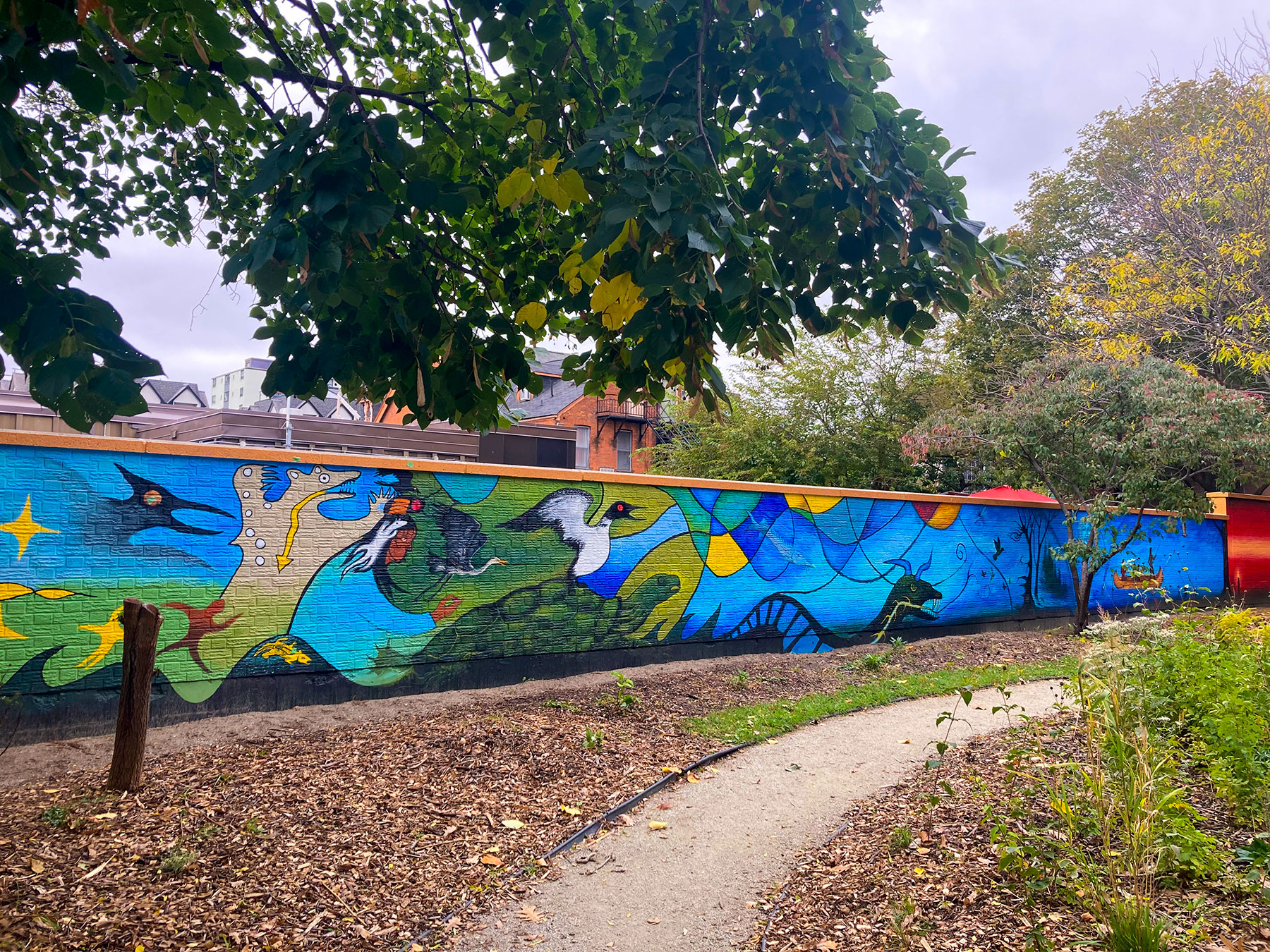
The ecological restoriation of Paul Martel Park (formerly Ecology Park) was one of the agenda items at the ARA’s AGM. The park is now home to a Bloor Annex BIA-sponsored mural created by First Nations artists led by local artist Joseph Sagaj. NEILAND BRISSENDEN/GLEANER NEWS
The Annex Residents’ Association (ARA) held their annual general meeting on April 21 via Zoom. Those in attendance included members of the ARA, residents and representatives from development teams, city council and Toronto Police Service. The most notable discussions were about improving safety on Avenue Road, the West Annex Heritage Project, vandalism at St. Alban’s Square and the restoration of Paul Martel Park.
In response to concerns about safety on Avenue Road, the Avenue Road Safety Coalition (ARSC) has teamed up with Brown + Storey Architects to propose significant changes to this area. The ARSC describes Avenue Road, between St. Clair Avenue and Bloor Street, as “a six-lane, high-speed road that is unsafe to pedestrians and cyclists.” The proposed changes would reduce the number of lanes on Avenue Road from six to four and expand the sidewalks from 1.5 to 8.5 metres. The increased space on either side of the road would make room for a linear park or bike lanes. This proposal has not yet been approved by the city.
Sandra Shaul, co-chair of the ARA heritage committee, described the upcoming West Annex Heritage Project. The ARA and the city have collaborated to identify and assess sites for inclusion in the West Annex Heritage Conservation District. Heritage sites are protected from demolition and renovation if the changes harm the heritage value of the property. Property owners can apply for additional funding if the property is damaged or requires maintenance. Shaul stated that heritage conservation is part of maintaining the public realm, and that there is “great merit in doing more designation [of heritage sites].”
One of the longer discussions concerned the destruction of rose bushes at St. Alban’s Square in February, 2022. A concerned citizen felt that their reports about this vandalism had not been taken seriously. Councillor Mike Layton (Ward 11, University-Rosedale) said that the vandal was apprehended but the Crown did not press charges because the damage occurred on Crown land. The concerned resident, who had also maintained the garden, was not satisfied with this update. Representatives from the Toronto Police Service suggested that residents take photos or videos if they notice vandalism and call 911.
Another topic of discussion was the ecological restoration of Paul Martel Park (formerly Ecology Park). Paul Richard, a retired city gardener, has organized a team of Indigenous gardeners to restore the park. He reported that they have received ten weeks of funding which will cover the planting of grasses, flowers, and shrubbery, as well as the restoration of other park features. Richard expressed his gratitude to the community and received a warm reception from members of the ARA.
May 17th, 2022 · Comments Off on EDITORIAL: Ford’s climate fiction (May 2022)
We are just weeks away from the provincial election and voters are being besieged with election advertising. Every party is making bold claims of course, but the ruling Progressive Conservatives under Doug Ford are touting their environmental credentials, and that is nothing but offensive and absurd.
Ford’s recent love affair with electric vehicles (EV), for example, and the “greening” of steel production should not make us forget his litany of failures on the environment and climate change file that has set this province back decades.
Upon taking office, Ford cancelled the charging stations planned for provincially controlled highway service centres, scrapped EV rebates and dropped a requirement for new homes to feature wiring for potential EV chargers. What followed was a series of attacks on anything green, and a refusal to contemplate solutions to a manmade climate crisis of epic proportions.
The PCs cancelled the previous government’s relatively comprehensive “cap and trade” carbon reduction program, triggering a war with the federal government over their carbon pricing schedule—a war Ontario lost at the Supreme Court of Canada. They tore up 700 renewable energy projects, including ripping down nearly completed windmills which cost taxpayers millions in termination fees.
They pledged to build more highways over environmentally sensitive lands— a move that will no doubt induce more sprawl and rewrite planning rules to favour developers. It’s like it’s 1960 all over again.
In favour of resource development, the current government weakened protections for endangered species, removed the province’s toxic use reduction legislation and took apart the regulatory framework that controls industrial water pollution.
All of this might have caught the attention of then Environmental Commissioner of Ontario, Dianne Saxe. Doug Ford, though, was thinking ahead, so he eliminated that position, thereby denying citizens this vital watchdog. Since the creation of the office in 1994, it held the government, of whatever stripe, to account on environmental files. It reported directly to the Legislature. Given the demonstrated failures of this government, had Saxe been allowed to do her job, we might now be more aware of the damage Doug Ford has inflicted over four years.
The government seems to be operating under the assumption that those concerned about climate change, the environment, or endangered species would not vote for the PCs anyway. In reality, though, even voters in the 905 regions and beyond, may now be a little more conscious of the implications of climate change. His base may be loyal, but they too can read the government’s own expert advice, for example, about Highway 413—it will save them all of 30 seconds on their daily commute. There is also backlash against this government for using Ministerial Zoning Orders to override local governments in Richmond Hill and Markham in favour of developers. He runs roughshod over democracy for breakfast.
Under Doug Ford, the province moved away from evidence-based decision-making. Do we really need any more proof than the government’s chaotic response to COVID-19? In addition to eliminating the Environment Commissioner Dianne Saxe (who by the way is now running for MPP in University-Rosedale for the Green Party), Ford also fired Molly Shoichet, Ontario’s first chief scientist after only six months into her position. He never let’s the facts get in the way of governing.
We have had government policy seemingly driven by connections and whim; he couldn’t care less if in 100 years the planet is uninhabitable. For Ford, “It’s my way or the highway.” Or just maybe it’s both.
May 17th, 2022 · Comments Off on FORUM: A budget for a booming economy (May 2022)
Inflation, housing and a green transition are all key elements
By Chrystia Freeland
On that Thursday in March, just over two years ago—when our travel plans were hastily cancelled, when our children came home from school, and when we rushed to the grocery store to buy toilet paper and hand sanitizer—we knew then that this virus would disrupt our lives.
But few of us realized quite how much or for quite how long.
Yet here we are. We bent, but we did not break. Canadians have done everything that has been asked of them, and more.
And so, to all of them—to all of you in University-Rosedale—I first want to say thank you!
Last month, I tabled Budget 2022—our plan to grow the economy and make life more affordable for Canadians.
When COVID-19 first hit, Canada suffered a tremendous economic blow. Three million Canadians lost their jobs. Our economy contracted by 17 per cent¬¬—the deepest recession since the Great Depression.
But today, the Canadian economy has not just recovered—it is booming.
Our real GDP is more than a full percentage point above where it was at the start of the pandemic. As of March 2022, Canada has recovered 115 per cent of the jobs that were lost during those awful first months. We now have an unemployment rate that sits at just 5.3 per cent—the lowest on record. There are more Canadians employed now than before the pandemic.
This is thanks to the remarkable resilience of Canadians, and to the emergency financial assistance we put in place to protect Canadians and Canadian businesses in their time of need.
But while our economy has come roaring back, that doesn’t mean there aren’t more challenges that we need to tackle.
Inflation—a global phenomenon—is making things more expensive in Canada, too. Snarled supply chains have driven prices higher at the checkout counter. Buying a house is out of reach for far too many Canadians. Russia’s illegal and barbaric invasion of Ukraine is directly contributing to higher food and energy prices—both here at home and around the world.
We need to do better, as a country, at innovating and encouraging small businesses to grow. We need to continue to address the existential threat of climate change.
In response to these challenges, Budget 2022 outlines a plan to build a stronger and more resilient economy based on three pillars: investing in Canadians; investing in economic growth and innovation; and investing in the green transition.
Investing in Canadians: Put simply, Canada does not have enough homes. Anyone in Toronto can tell you what that means for housing prices. Budget 2022’s housing measures will put us on the path to double housing construction over the next decade. It will help Canadians save for and buy their first home, ban foreign investment in Canadian housing and curb the unfair practices that make housing more expensive for Canadians. The budget invests in Canadian workers by ensuring they have the skills they need for the good-paying jobs of today and tomorrow, and it will make it easier for skilled immigrants—people our economy needs!—to make Canada their home. The budget also makes further significant investments in affordable child care, in our public health care system and in advancing reconciliation with Indigenous peoples.
Investing in economic growth and innovation: Our plan includes launching a world-leading Canada Growth Fund that will attract tens of billions of dollars in private investment for Canadian industries and Canadian jobs. A new innovation and investment agency will help Canadian businesses innovate, grow, and create new jobs. The budget also proposes to implement Canada’s first Critical Minerals Strategy—one that will create thousands of good jobs and capitalize on a growing need for the minerals used in everything from phones to electric cars. Other measures include steps to build more resilient supply chains and to cut taxes for our growing small businesses.
Investing in the green transition: the global economy is changing, and Canada can lead the way on the path to net-zero.
The Canada Growth Fund will help bring to Canada some of the trillions of dollars in private capital looking to invest in clean industries and jobs.
In addition to more investments to protect our land, lakes, and oceans, we will also make it more affordable for Canadians to purchase zero-emission vehicles, build and expand a national network of zero-emission vehicle charging stations and make new investments in clean energy.
And to make sure we aren’t leaving our children with bills they won’t be able to pay, we are also continuing to deliver on our fiscal anchor—a declining debt-to-GDP ratio and the unwinding of the COVID-19 deficits we took on to keep Canadians safe. This anchor will ensure our finances remain sustainable for decades to come. Canada has a proud tradition of fiscal responsibility. It is my duty to maintain it—and I will.
Budget 2022 is a responsible plan to grow our economy and make life more affordable for Canadians. It will make it easier for businesses to grow. It will mean more jobs and more prosperity for Canada, and it will mean a better, cleaner economic future for our children.
And it will make sure that Canada remains the best place in the world to live, work, and raise a family.
Chrystia Freeland is Deputy Prime Minister and Minister of Finance and MP for University-Rosedale.
May 17th, 2022 · Comments Off on FORUM: Build it and they will come (May 2022)
Shaw Street, Toronto’s first street with more bikes than cars
By Mike Layton
When we think of ways to improve Toronto’s cycling network, grand projects such as the bike lanes across the city’s core on Bloor Street or Danforth Avenue, typically come to mind.
While some of the smaller, quieter changes also improve road safety for cyclists, they tend to be underrated and under-celebrated.
I want to focus on one such local project that has made a huge impact and is worth celebrating—the Shaw Street Safety Improvements.
New data collected by Transportation Services shows that Shaw Street, the quiet, garden-lined residential street, east of Ossington Avenue, is Toronto’s first street with more bikes than cars.
When the Shaw Street contra-flow lanes were installed in 2013, they quickly became one of the city’s most popular cycling routes.
In 2020, city staff implemented major upgrades to Shaw Street to improve the operation of the street and the safety of pedestrians and cyclists.
These upgrades included a directional change to motor vehicle traffic on Shaw Street and adjacent streets to reduce cut-through traffic, the addition of a cycling-only block on Shaw Street between both Essex Streets and upgrades to the contra-flow bike lane.
The data reveals that the project has accomplished exactly what it set out to do.
Overall, the data shows an increase in cycling on Shaw Street and a decrease in both the speed and number of motor vehicles.
To highlight a few outstanding statistics, between Harbord and Bloor, cycling volumes are up by 205 per cent, compared to car trips which are down by 60 per cent.
At its peak, between September and November 2021, there were 4300 bicycle trips compared to just 1479 car trips.
This trend continues elsewhere on Shaw Street where we see sharp increases in bicycle trips and steady decreases in car trips.
The data also shows a significant reduction in cut-through motor vehicle traffic on adjacent streets. On Barton Street, where traffic has long been a concern for many in the neighbourhood, there were 1060 fewer car trips over a 24-hour period compared to pre-2020 levels.
There is no doubt that these changes have improved traffic safety for the many commuters, families, and residents who travel and live along Shaw Street.
We also know that how safe people feel is a significant factor in whether they decide to adopt cycling, which in turn reduces car dependency and eases motor vehicle traffic.
Installing cycling connections on local roads is key to connecting more bike routes throughout the city and should not be overlooked as a critical piece of the puzzle to complete our cycling network.
It will also play an integral role in cutting emissions and building a greener future for our children.
If you have questions or want more information on this project, or any other, please do not hesitate to contact my office.
You can also visit www.miklayton.to for the latest on this and many other city-related issues.
Mike Layton is city councillor for Ward 11, University–Rosedale.
May 17th, 2022 · Comments Off on FOCUS: Construction begins on Estonian Centre (May 2022)
Ceremony launches ambitious building schedule
Not at all dissuaded by the rain, approximately 100 gathered for the groundbreaking. BRIAN BURCHELL/GLEANER NEWS
By Joshua Snow
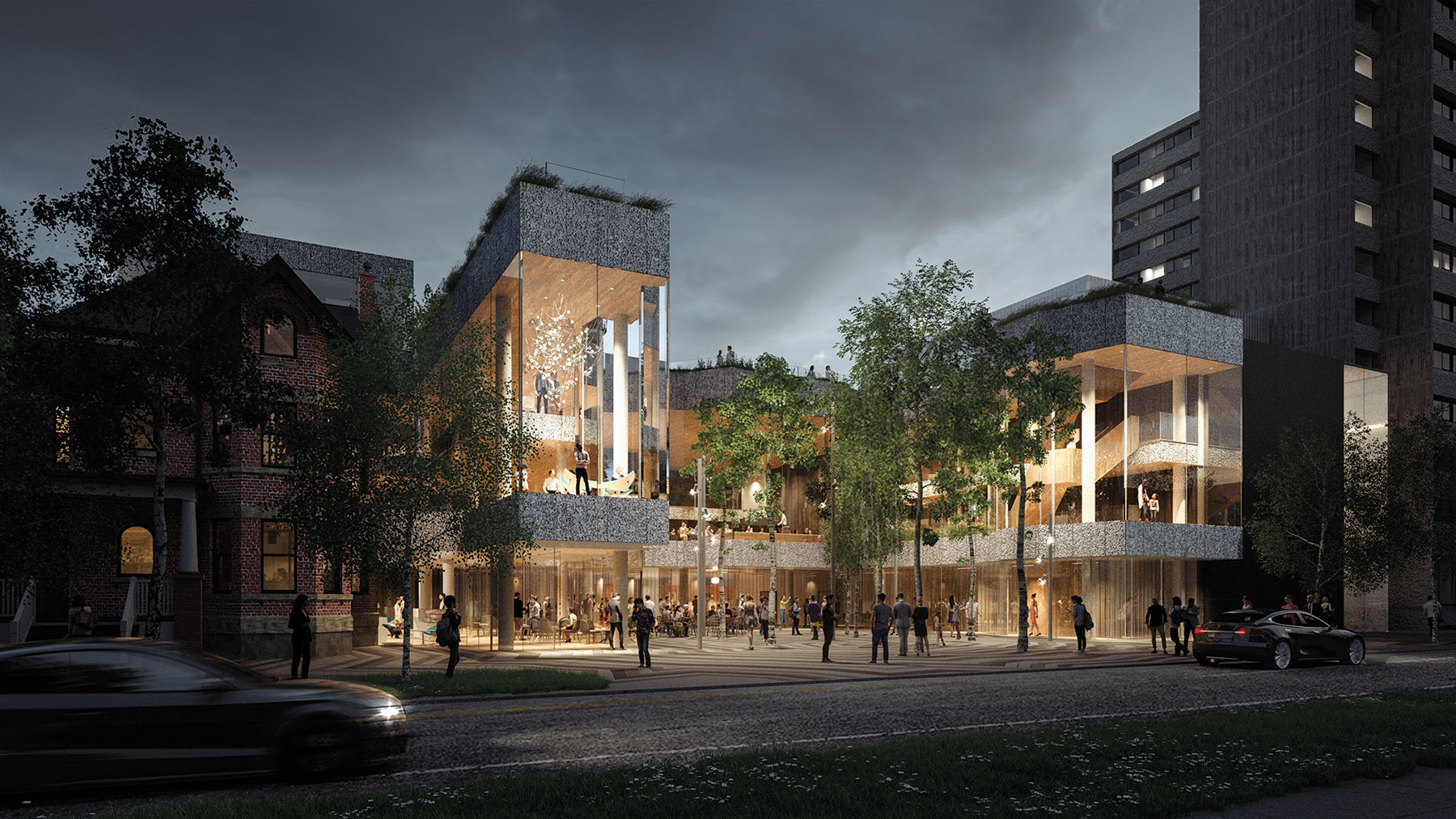
KESKUS International Estonian Centre, located at 9 and 11 Madison Ave., held their official construction launch on April 8. The expected opening date is October 2023.
KESKUS replaces Toronto Estonian House, and it will be a vibrant community hub dedicated to celebrating Estonian heritage and innovation.
A gathering place for Estonians and the public, the venue will include classrooms, a grand hall, and a café.
It will also house the Estonian Credit Union, the Estonian Choir, and Estonian schools.
Construction began in early March, and the groundbreaking marked a milestone for the Estonian community.
“This is finally the historical moment with this monumental project,” said Ellen Valter, a project leader at KESKUS.
At the ceremony, many people flew Estonian and Canadian flags, and former Governor General, Adrienne Clarkson, spoke about the valuable contributions immigrants make to Canada:
View, looking East from Madison Avenue, of the soon to be constructed Estonian Cultural Centre. The proposal has widespread support from the residents’ association and the city alike. COURTESY ALAR KONGATS
“This is the beauty of Canada … We bring our culture and contribute to the fabric of Canada. Don’t ever forget where you come from. We must be united in our stand for freedom, and support countries around the world in their pursuit of independence,” said Clarkson.
The five-day opening ceremonies will celebrate the facility and Estonian culture.
“Estonia is seen as a tiny nation capable of running big ideas. KESKUS brings the vision of a stunning contemporary Estonian cultural centre to life,” said Valter.
“For five days we will make Toronto rock in all harmonies Estonian,” Valter continued.
Estonia’s ambassador to Canada, Toomas Lukk, attended the construction launch and received the first invitation to the opening ceremonies.
“This landmark international centre, to go from dream to reality is a great source of pride for Estonia and for Estonians everywhere,” said Lukk.
KESKUS provided updates about the project through a virtual community engagement webinar on March 24.
“We expect to be done by October 2023, but on time and under budget is seldom the case,” Valter said.
The total project budget is approximately $41 million.
“Leadership donors doubled and tripled their donations to ensure the construction of KESKUS could responsibly begin,” said Liisa Käärid, board chair of the Estonian Arts Centre.
Built by the Estonian community, KESKUS International Estonian Centre is the first of its kind in over half a century.