May 7th, 2024 · Comments Off on FORUM: A busy agenda at city council (Apr. 2024)
Many environmental initiatives getting the green light
By Dianne Saxe
Spring has arrived. Flowers are pushing up and there are so many ways to enjoy beautiful University-Rosedale. This spring we want to highlight great local music venues, festivals, parks, and environmental events. Hot Docs, Fringe, Jazz Fest—these and other Toronto arts organizations need your support if they are to survive.
My team and I have been out in the spring sunshine canvassing Annex residents on their concerns. I was pleased to rally in support of the Science Centre at Christie Pits in April.
I also paid a visit to Innis College for a debate on the future of affordable housing in Canada.
I have positive news on the noise issues many of you have raised: council will improve enforcement of motor vehicle noise, work with residents’ associations (RA) and community groups to monitor it, and report back on whether the new measures adequately protect human health.
Auto thefts have been another top-of-mind issue for ward residents. We had a strong turnout for our town hall on the subject at the beginning of the year. I continue to monitor reports from the Toronto Police Service and city officials, including enforcement actions taken in the city and at Canadian ports.
I was glad to see that city council has endorsed a number of my initiatives this spring.
At the top of this list is news that staff will report back this year on using the Toronto Green Standards (TGS) to ensure that all newly approved buildings will be designed for net-zero operations by 2040.
Also on the environmental front, council has instructed city staff to lobby against the additional fossil fuel subsidies in Doug Ford’s Bill 165. The Bill overrides the Ontario Energy Board and forces existing gas customers to subsidize new gas pipelines outside Toronto. How big are the subsidies that the province forced Toronto taxpayers to give to the billionaire for-profit utility Enbridge Gas? And what can we do about it? Because of my motion, staff will finally tell us.
There are some other improvements to report in and around Ward 11 thanks to motions I have seen through council.
Much-needed upgrades are coming to Paul Martel Park, including possibly renaming it as an Indigenous Botanical Garden.
The city will also get on with building the new Huron Washington playground and new benches and picnic tables in Ramsden Park. Working with the Toronto District School Board, there will also be a new running track at Jesse Ketchum Public School.
I am also pleased to have secured community benefits for heritage plaques to honour noted local architect Uno Prii near 35 Walmer Rd. and social justice advocate and senator, David Croll near 341 Bloor St. W. David Croll was the author of the landmark Report of the Special Senate Committee on Poverty and Canada’s first Jewish senator.
I also let the residents’ associations know that there is a new, streamlined process to request speed humps from the city.
First, consult with other residents affected by the road in question, and then send our office the results through your RA, including detailed drawings.
We must continue to scrutinize whether the city made a good deal for the FIFA World Cup in 2026. But we are also determined to make the best of the exciting opportunities.
Council is working hard to contain the games’ costs and to maximize their community benefits; for example, I successfully moved to use the games to pursue TransformTO’s Climate Strategy, including a high-value RapidTO (bus lane) on Dufferin Street to the CNE.
Annex residents should circle a few days on the calendar this spring. On May 12 from 10 a.m. to 2 p.m. the city will host the first community environment day at Central Technical School. This program helps reduce the amount of reusable or recyclable waste going to landfill and allows for safe disposal of household hazardous waste.
The second will occur on June 23 at Fred Hamilton Park, with the same timings.
Watch my newsletter and social feeds for a spring community event being planned for Christie Pits on May 26.
Watch my newsletter and dianne saxe.ca for other spring events. Remember to subscribe at councillor_saxe@toronto.ca to keep updated on happenings around the ward.
Have a wonderful and prosperous spring!
Dianne Saxe is city councillor for Ward 11, University-Rosedale.
May 7th, 2024 · Comments Off on FORUM: Ford’s gross mismanagement of the land use files (Apr. 2024)
New housing bills encourage sprawl and thwart democracy
By Jessica Bell
The Conservatives have introduced another housing bill and revamped the Provincial Policy Statement which sets planning rules for the province. Here’s what you should know about the Conservatives’ latest moves.
Third-party appeals to the lands tribunal will be banned. Residents will not be able to go to the lands tribunal to contest a development, be it a condo or a quarry. This is concerning.
Municipalities should have official plans that encourage density and ensure we meet our housing targets—which Toronto is doing. The lands tribunal should be a tool of last resort—not first resort—for projects that clearly violate provincial law.
Municipalities will be able to bring in “use-it-or-lose-it” rules to compel a developer to build a development once they’ve been given the approval to do so. We’ve been calling for this change for some time because municipalities approve far more projects than are built.
Developments near transit stations are exempt from meeting parking minimums, although they can build parking if they choose.
In a move we have long called for, the government will bring in standardized pre-approved home designs. This proposal will help Ontario spur the construction of more affordable homes built in factories off-site and then shipped to their final location. To spur good job creation, we’re calling for these homes to be built by unionized workers in Ontario factories.
The government is putting some more transparency on the controversial ministerial zoning orders (MZOs) process, which allows the province to quickly exempt a development from local and provincial planning rules.
This latest rewrite requires the developer to explain why a development needs to be exempt from planning rules and how it meets provincial priorities or local municipal approval.
In a win for residents and municipalities, the government is rolling back some of its drastic cuts to developer fees in previous bills and allocating more funding to municipal infrastructure. Until this announcement, municipalities were hiking property taxes and delaying infrastructure investment to cover the loss of developer fee revenue. This is a good move and a hard-fought victory.
Student housing is now exempt from the Planning Act, which will mean the University of Toronto can build more housing, more quickly. While we certainly need more student housing and rental housing in our riding, we need affordable student housing.
Students at the University of Toronto are spending about $2300 a month to live in a dorm room, and they often must move out after first year.
Student housing is also exempt from the Residential Tenancies Act, which means students don’t have protection from eviction, and they’re not protected by rent control. Students should have the same provincial protections as any other renter.
Like a multi-headed hydra that just keeps coming back, the government is moving ahead, once again, on permitting sprawl.
The new Provincial Policy Statement eliminates firm density requirements for municipalities. Municipalities are now merely encouraged to meet a target of 50 people per hectare which is the density in the Trinity Bellwoods neighbourhood.
The government is also making it easier for municipalities and developers to change urban boundaries and approve sprawl on nearby farmland. Changes to urban boundaries can now be made at any time, not just through a careful five-year review. If a municipality approves a new development, no one can appeal the decision to the lands tribunal, but if a municipality denies the approval, the developer can appeal. So, it’s sprawl either way.
Everyone in Ontario should have a home they can afford to rent or buy. We’ll be calling for improvements in this bill to encourage farmland and Greenbelt preservation, the construction of more homes in towns and cities, especially affordable homes, along with stronger rent control. I welcome your feedback.
Jessica Bell is the MPP for University-Rosedale and the Official Opposition’s Housing Critic. She can be reached at jbell@ndp.on.ca or 416-535-7206.
May 7th, 2024 · Comments Off on SPORTS: A whole new ball game (Apr. 2024)
Club promises new features and new excitement for Leafs baseball
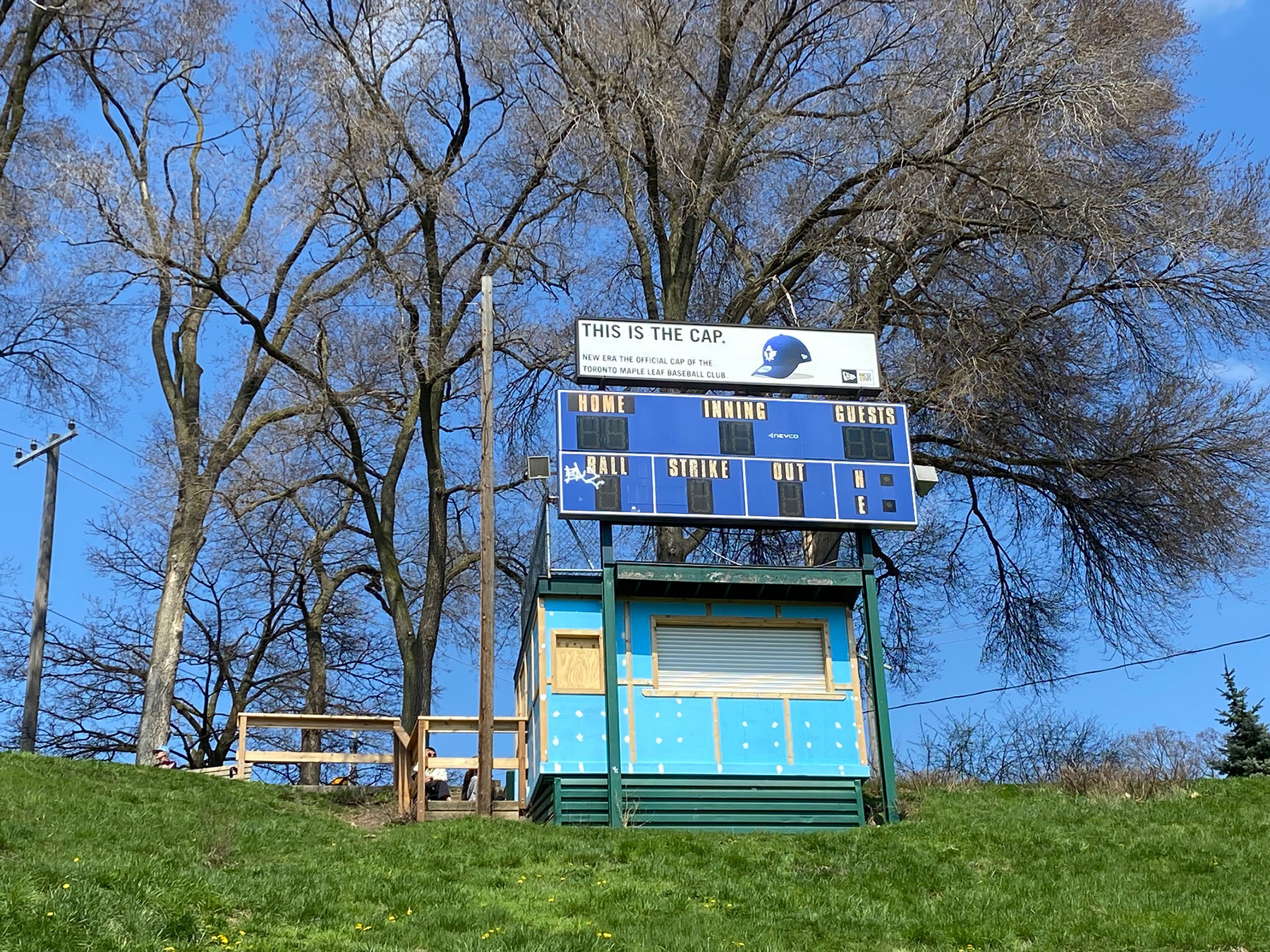
Fresh coats of paint are being applied to the announcer’s booth and concession stand. R.S. KONJEK/GLEANER NEWS
By R.S. Konjek
A new season of Toronto Maple Leafs baseball will soon get underway at Christie Pits.
The familiar sights and sounds of baseball, a staple of summers at the Pits since 1969, will be joined by some new ones.
Over the winter, a group of local investors purchased the club from the estate of former owner, the late Jack Dominico.
Former TSN sportscaster Rod Black is one of the faces of the Leafs’ new ownership group. In December, he and Leafs’ manager Rob Butler hosted a fan gathering at Christie Pits and offered a preview of what to expect in 2024.
Black sees the club having a bigger presence and bigger draw in Toronto’s sporting landscape. He hinted that his vision could include more game-day activities around home ballgames, more promotions and celebrity guests, more excitement, and definitely more kids at the ballpark.
“Parents don’t drive kids to games; kids drive parents to games,” Black said.
Since then, the club has confirmed several new features that will greet fans at the Pits this summer.
They are installing a brand new $30,000 sound system, replacing the crackly, semi-reliable one that was on its last legs.
The announcer’s booth and concession stand are being spruced up with fresh licks of paint.
Food and drink will be made available at the concession stand by new partner Left Field Brewery.
The club is also taking advantage of the City of Toronto’s recent liberalization of beer consumption in certain parks, a move that included Christie Pits. Fans can expect to see vendors roaming the hillsides offering the chance to purchase food and drinks— including beer—while taking in the game below.
Black’s vision of a more exciting and inviting ballpark experience will be unveiled at the Leafs’ home opener on Sunday, May 12. Special guests including hockey Leafs legend Wendel Clark will be present. The hoopla of opening day will include in-game entertainment like hot dog races and a seventh-inning stretch led by sponsorship partner Innovative Fitness.
New Leafs merchandizing will be unveiled in time for the season. Already introduced is a membership program for hardcore fans. Available in two tiers, the purchase of a membership will provide fans with team clothing, souvenirs, discounts, and other goodies.
One of the most striking new sights at the Pits will be redesigned uniforms sported by the home nine. Earlier this spring, the club unveiled three new jerseys on social media: white, royal blue, and powder blue. All three feature the word “Leafs” in bold script across the chest.
The uniforms will be new, but many of the players wearing them will be familiar.
Jeff Lounsbury says he was “slightly surprised” when the new owners invited him to return as the club’s general manager: “But I am glad to be back.”
Lounsbury will continue his project of building a championship team while adding young talent to the roster.
Several Toronto-born and -raised players have been signed to play for the Leafs, a deliberate move by Lounsbury to make the team more truly local.
“Sometimes guys have to leave [and play elsewhere],” he said. “But if they want to come home to the Leafs, we will try to find a way.”
Lounsbury’s locals will join a veteran core that is returning for another run at the Intercounty Baseball League title.
Popular third baseman Johnathan Solazzo returns for a ninth season with the Leafs.
He will be reunited with infielders Jordan Castaldo, Dan Marra, Jose Vinicio, Jesse Hodges and Justin Marra. Outfielders Greg Carrington, Ryan Dos Santos, Marcus Knecht and Connor Lewis are back.
On the mound, the trio of Wilgenis Alvarado, Angel Castro and Daniel Procopio will pick up where they left off.
Solazzo says that once the club’s ownership situation was settled, the veteran players confirmed their return, one by one.
“We all know we’re a great baseball team and always there until the last out,” Solazzo said. “That one thing we’re missing is to win a championship with this core. It’ll be the cherry on top for a lot of our careers.”
April 7th, 2024 · Comments Off on ON THE COVER (Mar. 2024)
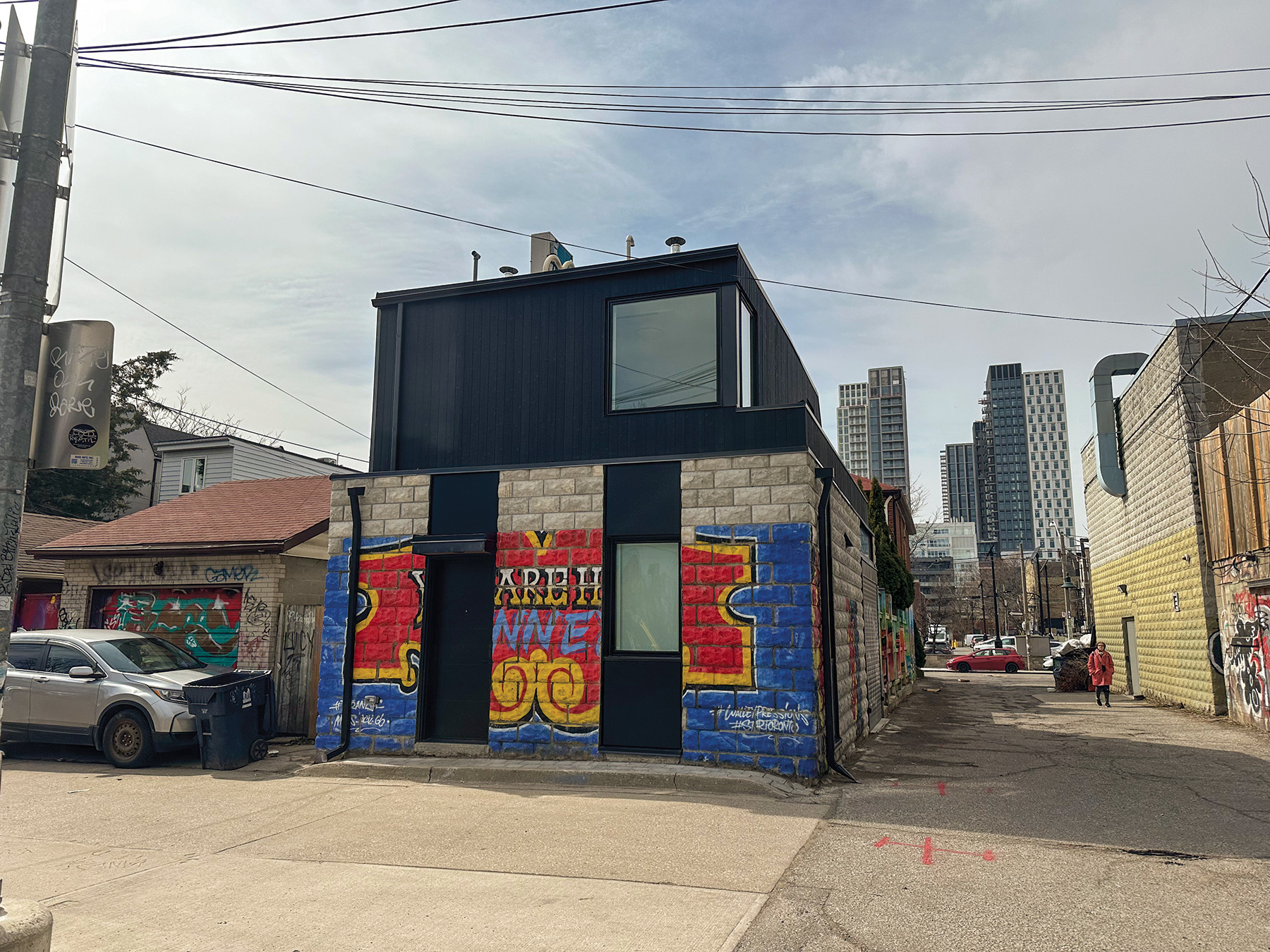
Newly constructed laneway suite near Borden and Bloor underscores the many possibilities for infill housing that are feasible and permissible in older downtown neighbourhoods. READ MORE HERE. BRIAN BURCHELL/GLEANER NEWS
April 7th, 2024 · Comments Off on NEWS: Laneway suites taking hold (Mar. 2024)
How residential properties are evolving
By James Bullanoff
A recent influx of laneway suites has hit the Annex area as homeowners explore alternative housing options for their properties.
According to a map created using open-source data from the City of Toronto, there are 19 legal laneway suites in the Gleaner coverage area. The Gleaner reached out to the builder of a laneway suite just south of Bloor, along with their client. A tour inside revealed how it is possible to add new housing on land that is already occupied by a house.
The City of Toronto has not agreed on the type of language to use when describing this type of housing. Laneway suites are housing units built on the same piece of land as the original property, or a severed piece of land. They are defined as having a laneway that acts as its own separate access point.
Some, like this example, are not actually on a piece of the property that has been legally severed, but the unit is a permissible separate dwelling.
In addition, garden suites are self-contained units that lack their own access point and are on unsevered property. They are typically limited in size.
Igor Skoskiewicz, a retired electrical engineer and the homeowner, spoke to the Gleaner about his passion for building the laneway suite: “Always wanted to do it. When the right to build came out, we just jumped on it immediately.”
Originally, the property near Borden and Bloor streets featured a garage; however, Skoskiewicz decided to build a new house instead as he felt the property could be used better.
The builder is also converting the main home basement into a separate unit. He mentioned the additional housing will be rented at first, but will eventually be for personal use. He did not mention the rental fee.
This laneway suite behind Borden is a two-storey, two-bedroom unit with one bathroom. It features a kitchen and living space on the main floor, with the bedrooms and the bathroom upstairs. While the concept for this type of housing is practical, building it still requires a ton of work.
“Essentially anywhere in the City of Toronto, you can build a house in your backyard, as long as your lot has the proper dimensions and setbacks,” said Kyle Springer, project manager of 2X2 Construction.
He started his family business in early 2019 and now specializes in laneway and garden suites but they “really have a passion for infill development projects.” The company has branded itself as “Toronto’s leading laneway and garden suite builder.” They broke ground on their first house back in 2020, during the start of the global pandemic. They realized that not many builders were in the market for this type of construction.
“We saw an opportunity in the market. We got in early and now we are one of…if not the top builder in Ontario for building these units.”
Laneway suites have been legal since June 28, 2018. Back in February 2022, the City of Toronto greenlit garden suites, properties that are built on the same lot within an enclosed space. These properties are typically smaller and more modest to fit within the scale of the area. While the concept of getting more housing in Toronto sounds appealing, many have not been satisfied with how slow laneway and garden suites have caught on. Recent reports from CityNews have shown that the rise in these alternative housing options has been “lacklustre” leaving many to consider whether this type of housing will be a real solution to Toronto housing.
According to Springer, the builds take, on average, around eight to nine months during the construction phase, and he is currently working on around eight projects. There is also the design aspect before the construction period. “I would say anywhere from one year to one and a half years for a project like this from the initial idea in the customer’s head to actually getting the keys and moving in,” said Springer. 2X2 Construction completed a few other projects in the area, including one near Harbord Street and Euclid Avenue, and one near Clinton and Bloor streets. Springer said they have completed 10 projects and have about four or five currently under construction.
“I think people will jump on it more and more. They’re not cheap. But if folks want to do it, they can do it now. Having two homes on your property, for some people, it might not be a good thing, but for us we like it,” said Skoskiewicz.
April 7th, 2024 · Comments Off on NEWS: U of T builds tower out of structural timber (Mar. 2024)
Resurgence of sustainable wood beams and columns
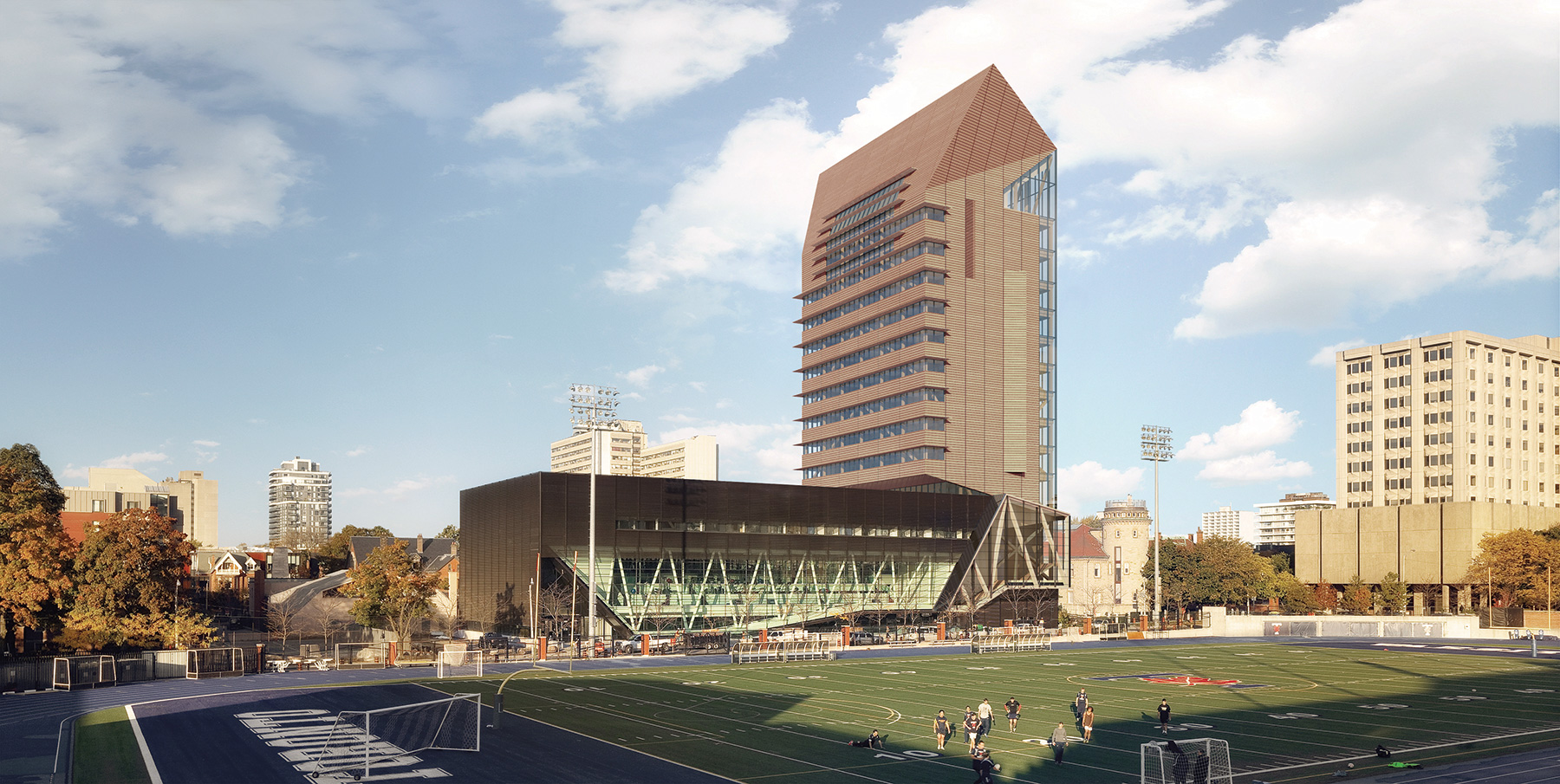
View looking northwest across Varsity Field at a rendering of the new timber tower under construction. RENDERING BY PA+MJMA ARCHITECTS
By Ammara Khan
The University of Toronto is currently in the process of constructing the tallest academic timber building in the world, predicted to be complete by mid-2026.
The new build will be located near the intersection of Devonshire Place and Bloor Street. The top five floors of the building will be home to Rotman’s specialized executive education programs. Other floors will also allow the faculty of kinesiology & physical education to “expand its work as one of the world’s top-ranked sports science programs of its kind,” according to the University of Toronto’s press release.
Patkau and MJMA were the lead architectural firms working on this project. For their work on what is billed as the Academic Wood Tower, they were awarded the Canadian Architect Award by Canadian Architect Magazine in 2019.
Roy Cloutier, a member of Patkau who works on this project, said that while it will be a record-breaking building, it will also act as “a flagship example of the University’s sustainable-building innovation programs.”
Cloutier said that the architects originally planned for the structure to be made of steel, but then proposed to switch it to mass timber, which the university was all for.
“Our goal was to make sustainable design a core, visible part of the everyday experience of the building,” said Cloutier. “What we’re hoping to show with this project is that beauty, joy, health, and more don’t need to be in competition with performance measures, as is sometimes thought. Instead, when designed with care, they can be a direct result of them.”
Cloutier also talked about carbon sequestration. “Trees absorb carbon from the atmosphere as they grow. When they’re harvested and turned into lumber, that carbon is stored in the building rather than released into the atmosphere.”
According to the Massachusetts Institute of Technology’s Climate Portal, materials such as steel and concrete produce the most emissions from construction today. They state that “both of those materials cause significant greenhouse gas emissions, because their production typically involves burning fossil fuels to create high industrial heats.”
Research shows that the timber building will offset approximately 70 per cent of the carbon emitted during the construction of the project. “This places it well below even the most stringent embodied carbon targets of the Canada Green Building Council,” said Cloutier.
Timber was selected not only to be as sustainable as possible but also to be visible and displayed in the building’s design. The building features sustainable technologies beyond the use of timber, for example, controlling how the sun hits the building. Cloutier said, “At the south facade, horizontal ribbon windows use sunshades to control the direct light in the offices, shaped to allow warmth in the winter while keeping it out during the summer.”
Harry Xu, a passionate environmentalist, student of environmental sciences, and president of the environmentalism student club Regenesis Scarborough at the University of Toronto, spoke about how they perceive this recent sustainable building project.
“Wood is a very traditional, accessible, and environmentally friendly material to use in history,” said Xu. “There are wooden historical buildings from many cultures that are still standing today.”
Despite this, they brought up some concerns in terms of the ethical factors, as well as environmental impacts.
They highlight the importance of thinking about the origins of raw materials used in construction of the tower.
“It depends where they source the materials from and how ethically, in terms of the labouring, were the materials sourced. It could be sourced from a remote location. In that case you wouldn’t necessarily destroy the local forests but could be costing the forests of other places around the world. You cannot benefit yourself at someone else’s cost.”
The University of Toronto released a press release that stated, “The tower’s timber is homegrown, originating in Western Canada.”
Xu also said, “There is no doubt that wood is a renewable material, but you really have to look at the timescale when it comes to the term ‘renewable.’ It could take centuries for a nice forest to be grown naturally.”
The sustainable Academic Wood Tower was built with some of those concerns in mind.
Cloutier said, “Instead of cutting down old-growth trees to make timber beams as was once done, now we can harvest younger farmed trees, cut them into 2x6s, then laminate those together into larger elements.”
The use of timber in architecture is not entirely new. Echoing what Xu said earlier, Cloutier shared, “It’s always been there in a sense! Many of the oldest and most loved buildings in the world are built of wood in one form or another.”
“More recently (over the past 50 years or so), the timber industry has developed a number of innovative technologies under the banner of ‘mass timber.’”
In order for the timber industry to become more sustainable, technologies like the ones used in the Academic Wood Tower have spread “over the last twenty or so years,” said Cloutier.
Not only is glue laminated timber more environmentally conscious, it also comes with technical properties.
“It’s strong, light, and dampens sounds well. Perhaps ironically, it’s also highly resistant to fire due to the char behaviour of larger timber members, as recent studies and testing have shown,” said Cloutier.
April 7th, 2024 · Comments Off on NEWS: Hot Docs cinema seeks support (Mar. 2024)
Post-pandemic economic woes mean the Bloor needs your help
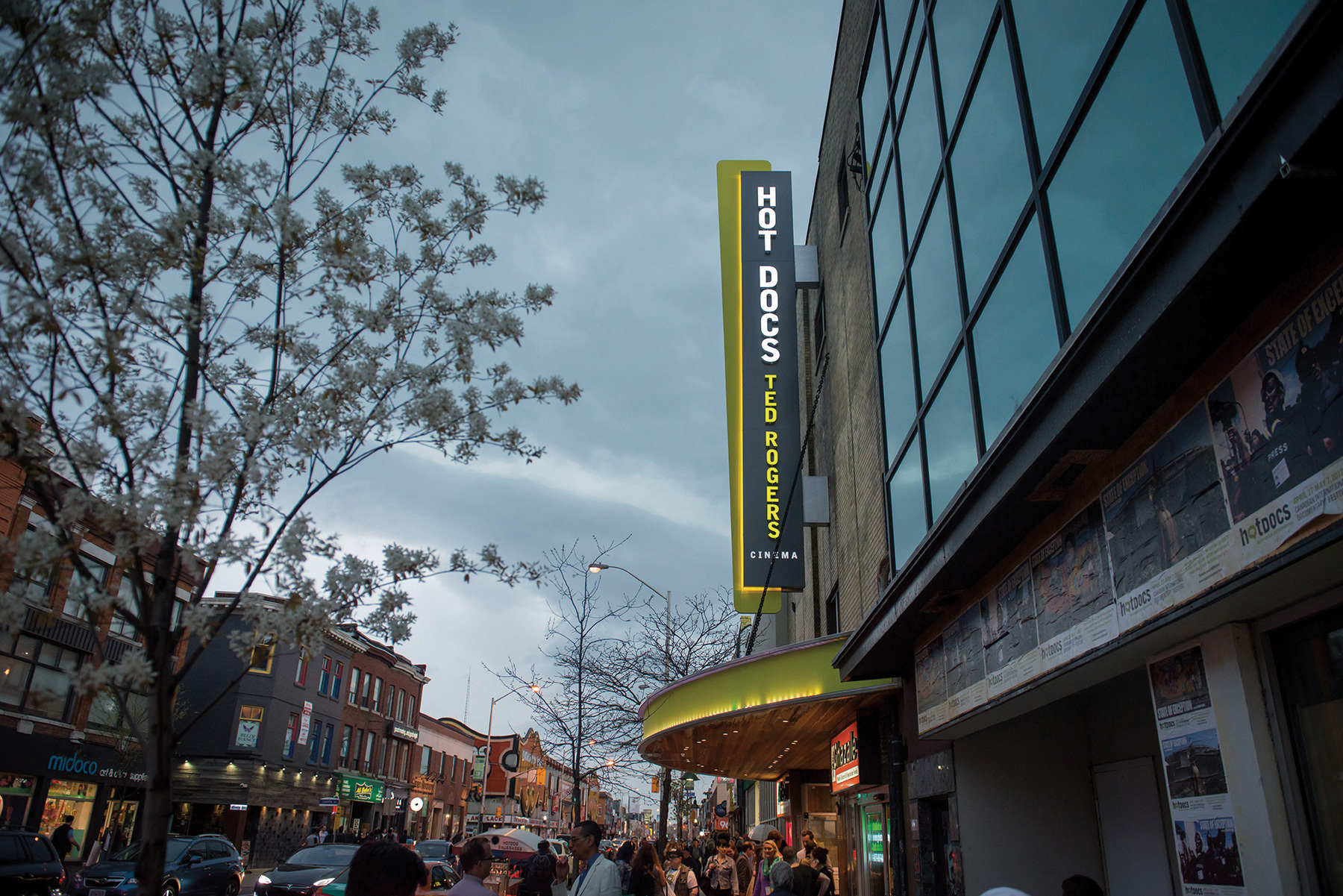
A cinema has occupied 506 Bloor St. W. continuously since 1913. COURTESY JOSEPH MICHAEL HOWARTH/HOT DOCS
By Brian Burchell
After having some record attendance of 225,000 visitors in 2019, the Hot Docs/Ted Rogers Bloor Cinema is now enduring a post-pandemic hangover, and is urgently seeking financial support to keep going.
In a release in March, Hot Docs President Marie Nelson reports that the “pandemic closure severely disrupted Hot Docs operations and its impacts are still being felt. We are currently facing a significant operational deficit that threatens our long-term sustainability.”
For more than 30 years Hot Docs has advanced the art of the documentary and has become Canada’s preeminent documentary film institution attracting global attention.
While audiences post-pandemic have started to return the pace of that return is not commensurate with the cost of operations.
While steps have been taken to reduce overheads, Nelson reports “we are quickly losing runway and urgently need direct support to our ensure our future viability.”
Though they have reached out to all levels of government for help, the organization is pleading directly with its patrons to buy a ticket package to this year’s Festival which is exhibited April 25-May 5.
In addition they are asking film goers to become a members to enjoy benefits year round. They have are offering a 25 per cent discount to new members by using a promotional code HDFest24Promo through their website www.hotdocs.ca.
April 7th, 2024 · Comments Off on NEWS: From field to wall (Mar. 2024)
Soil Soul Wholeness and the impacts on agriculture
New mural at 380 Bloor St. W. pays homage to farmers. JAMES BULLANOFF/GLEANER NEWS
By James Bullanoff
Soil Soul Wholeness, a recent mural installed in the Annex, invites those to consider the work of farmers and the impacts of large grocery chains on agriculture.
The mural, located at 380 Bloor St. W., invites viewers to consider the “well-being of land” by supporting farmers. The mural was installed in September 2023 and was designed by local artist Leeay Aikawa.
“I wanted to uplift [farmers’] voices and their fantastic role of taking care of the land and also producing local foods, so that the buyers, consumers, us, can pay more attention to what’s grown here,” said Aikawa.
Aikawa used bold colours rather than her usual earth tones to convey how farmers are akin to “soul creators” because of their ability to see the value in the soil. Her focus was to show the value of local produce.
“I didn’t want to promote people to go to big supermarkets like Walmart to do the shopping, because all those [corporations] are what’s kind of taking [the] livelihood from farmers, taking away their jobs.”
Aikawa mentioned how she drew inspiration from a variety of different artworks in the formation of her piece. The composition of the mandala—a circular symbol in Buddist and Hindu culture—in the middle of the mural and humans in the four corners is inspired by a mosaic she saw in the Vatican.
The centre ribcage with the tree seed flowing down is a reference to Aikawa’s Woven Earth Breath, a piece she created on Nov. 22, 2021, that is posted on her Instagram @leeay. This part aims to portray the “well-being of breath” from spending time in nature. She wanted to explain “something that [she] cannot explain in words.”
Melanie Ramsay, project coordinator of the Bloor-Annex BIA, said she wanted to have a work that paired with Talie Shalmon’s recent piece, across the alleyway at 378 Bloor St. W. The BIA seeks grant support every year from the City of Toronto’s Outdoor Mural and Street Art Grant to develop a new piece on walls that have been neglected.
“You’re much less likely to get those kind of lazy taggers come in and vandalize the area and the space,” said Ramsay about the location. The wall on the opposite side of this mural, on the side of Vietnam Lovely Noodle, was the “most graffitied wall in the Annex” in 2021.
In the callout for artists, the theme of the mural was “urban food systems” and it needed to align with the “greening” objectives of the BIA and touch on current issues in the city, including food security, food equity, and sustainability.
The BIA put in another application for vinyl mural printing, a process where the artist creates a digital design that is then printed on vinyl and heat-bonded to the wall. “I think it’s definitely a better product for us, because of the vandalism we see. This protects the actual brick itself,” said Ramsay.
April 7th, 2024 · Comments Off on EDITORIAL: Ford‘s actions “reflect a juvenile understanding of the role of the judiciary” (Mar. 2024)
In the wake of Premier Doug Ford’s move to politicize the Ontario judiciary by only “appointing like-minded judges” whom he says will put more people in jail, three former chief justices have criticized the move, saying that “judges do not take orders from government.”
It was revealed by the Toronto Star a month ago that Ford has appointed two former political staffers to the judicial appointments advisory committee which recommends candidates for judges and justices-of-the-peace in the Ontario Court of Justice. The ostensibly arm’s-length body now has his former deputy chief of staff as its chair. When this was revealed, Ford was unapologetic; he was not seeking the most qualified people to be judges, he wanted only the “like-minded.” Former Chief Justices Sidney Linden, Brian Lennox, and Annemarie Bonkalo have expressed a legitimate worry: “We are concerned that such a suggestion [of a “like-minded judiciary”], if not corrected, may discourage otherwise qualified candidates from applying for appointment.” In other words, if you don’t think like Doug, don’t bother.
The Federation of Ontario Law Associations (FOLA) said that Ford’s comments “reflect a juvenile understanding of the role of an independent judiciary. We would expect this sort of commentary from a MAGA [Make America Great Again] Republican, not the premier of Ontario,” said FOLA Chair Douglas Judson. We have all seen what happens south of the border where media will routinely report on whether or not the accused landed a Republican- or Democratic-appointed judge. This changes whether or not we think the process will be fair and impartial.
Ten years ago, when Doug Ford was a Toronto city councillor, he was called upon to do jury duty. He didn’t think he should have to do it, telling the Toronto Sun, “The person I convict…should not know who I am” sparking a strong rebuke from Superior Court Justice Michael Quigley about the importance of respecting the presumption of innocence and of the need to review evidence of crime before a “conviction” can be rendered. Ford seemed not to understand the process or was not prepared to accept it: The point of the courts is to determine guilt or innocence. The case ended in a mistrial as lawyers alleged that Ford had tainted the jury.
In Ford’s mind, then and now apparently, one is guilty at the point of arrest. Most people in Ontario’s jails are legally innocent. Eighty per cent of inmates are remanded in custody while they await trial or bail and have yet to be convicted of the crime they are charged with. That number is only growing with the majority of jails being over capacity.
The Conservative government has made matters worse by underfunding the courts and Legal Aid. His response is that he will build more jails. “I’m sick and tired of judges letting these people out on bail. We’re going to hire tough judges, that’s what we are doing” said Ford. It’s not clear that denying bail ultimately lowers crime and keeps people safe.
More often than not what is needed is mental health and substance abuse supports, affordable housing, and a livable income. All of which are provincial responsibilities.
If more jails are the answer then why does the United States, with one of the highest levels of incarceration rates in the western world, have so much violent crime relative to Canada?
The bombastic way that Ford expresses himself, his insidious form of populism, sets us on course for a U.S.-style partisan justice system. Ford does not care about evidence of crime, or lack thereof, he just wants to been seen to be coming down hard on it. His is hardly the kind of mind we should seek to emulate on the bench.
April 7th, 2024 · Comments Off on FORUM: University-Rosedale update from the councillor’s chair (Mar. 2024)
Budget, development planning, and safety, fill agenda
By Dianne Saxe
The 2024 budget is finally done. Thank you to the thousands of people in Ward 11 and across Toronto who participated in this year’s intensive consultations.
A $17 billion budget is challenging at the best of times. It was especially hard this year, after 13 years of kicking cans down the road, a pandemic, growth pressures, and high inflation, to finally begin to close the gap between city revenues and obligations.
Throughout the budget process, I was squarely focused on the deterioration of city infrastructure and on our lack of climate progress.
In response to my persistent questions, the mayor created a $50 million Back on Track fund for urgent repairs: $30 million for transportation and $20 million for parks. It’s a drop in the bucket, but an important one, and I’m lobbying both departments for urgent repairs in our ward.
I was also successful in squeezing into this difficult budget two new staff for Environment & Climate and nearly $1 million for extra tree planting, watering, and pruning.
Auto thefts are way up across Toronto, so we had a community town hall dedicated to the subject in February.
The federal government has promised to improve security at the Port of Montreal, where most stolen cars are shipped. Meanwhile, 53 Division of Toronto Police Services is doing more proactive night patrols and is ready to handle your questions.
Communications with constituents continue to improve, as do signups for our popular monthly newsletter.
We are also working with residents’ associations on issues such as traffic calming (speed humps), street furniture, and noise.
Do you and your neighbours want a speed hump to slow traffic on your street? A roadside bench? More bike rings? Better signage? Extra garbage cans?
Work with your resident association to propose exact locations and to collect evidence of local support so that we can put them on Transportation’s construction list.
Good news: Every metric of TTC rider satisfaction improved in January, with service up, violence down, and 130 new customer service agents throughout the system.
Ridership continues to increase, and the One Fare system has launched.
The TTC Board approved my motion to design free transit for High and Middle School school trips, a first step towards free transit for those students.
At my request, Toronto Hydro adopted an environmental policy consistent with TransformTO. This is an enormous win for the city’s net-zero goals.
Hydro is also now starting to develop criteria for connecting “non-standard” customers after I helped two constituents who converted their home into a five-unit multiplex.
The February city council approved improvements to noise bylaw enforcement, new bus and bike lanes, and automated speed enforcement through administrative monetary penalties.
Better bike lane maintenance has also been greenlit because bike lanes should be safe and passable for bikes! BikeShare rides soared again, up 47 per cent year-over-year even before we rolled out the new $5 BikeShare memberships for those in need.
Markham Street near Bloor is getting a new park as part of the Mirvish Village development. Residents have suggested naming it Honest Ed Park, Mirvish Village Park or Markham Street Park. Do you have an opinion or suggestion? Write in today and let us know!
Here’s to a safe and happy spring!
Dianne Saxe is city councillor for Ward 11, University-Rosedale.
April 7th, 2024 · Comments Off on FORUM: Privatization, sprawl, and highways, oh my (Mar. 2024)
Ford adds increased natural gas costs, and heath-care failures to the mix of misdeeds
By Jessica Bell
Premier Ford loves to say he’s getting stuff done. But who is Ford getting stuff done for, and how does it affect the rest of us? Here’s the latest roundup from Queen’s Park.
Is Highway 413 coming to a farm near you?
The Conservatives are moving ahead with building the controversial Highway 413, a $6 to $10 billion project that cuts through precious farmland and the Greenbelt.
Instead of building a highway we don’t need, let’s use the highways we’ve got.
We are calling for the removal of tolls for transport trucks on Highway 407. Environmental Defense, who is supportive of this proposal, calculates this would move 12,000 to 21,000 trucks a day off Highway 401, cutting travel time for passenger vehicles by 50 per cent.
Highway 407 is so underused you can land a plane on it in the middle of the day. Literally, a plane did land on Highway 407 in the middle of the day.
Gas prices could be on the rise.
The Conservatives have introduced Bill 165, the Keeping Energy Bills Down Act. It does quite the opposite.
The bill gives Enbridge the power to force existing customers to pay for its plan to expand gas infrastructure. That means you and I could be paying up to $600 more in our energy bills to fund Enbridge’s plan to build risky gas infrastructure and keep us hooked on gas.
Ontario needs to rapidly move away from fossil fuel use and toward energy efficiency and green energy, installing heat pumps in homes, retrofitting homes and buildings, and encouraging local electricity generation. Other cities and states are doing it, and so can we.
Sprawl 3.0. No thank you.
I kid you not, the Conservatives are once again stealthily redrawing municipal boundaries in Halton, Waterloo, Peel, York, Wellington County, and more, to approve the construction of low-density single-family homes on nearby farmland.
We are already hearing reports that some of the rezoned land is owned by PC party donors who stand to make a whole lot of money by having their land rezoned for development.
The government’s own housing affordability task force says Ontario doesn’t need to pave over more farmland to build enough homes to meet demand because there’s enough land zoned for development. Toronto and Hamilton are two cities that are moving ahead with building more duplexes, triplexes, and apartments and are well on track to meet their housing targets. We can solve our housing crisis and protect our farmland at the same time.
It costs how much to go to a family doctor?
In February, I held a press conference at Queen’s Park with former patients of the Taddle Creek Family Health Team who were suddenly left without a family doctor when their physician moved to a for-profit, executive health clinic called MDDirect. The clinic charges patients $4,995 per year just to see a family doctor.
The rise in executive medical clinics like MDDirect are a warning that we are moving to a two-tiered health care system, where those with means get better access to the care, and the rest of us are left with less.
In fact, many residents in University-Rosedale do not have a family doctor.
This is Canada. We strive to build an excellent public health care system where you get good care based on need, not on how much you earn.
The Canada Health Act is very clear. Health care providers cannot engage in extra billing or charge for medically necessary services like this.
The government should be investigating these private clinics. They should be enforcing the Canada Health Act and banning exorbitant annual fees. And the government should be investing in primary care to ensure everyone in Ontario has a family doctor they can see with their OHIP card, not their credit card.
I want to thank the Annex residents who raised this issue with me.
Jessica Bell is the MPP for University-Rosedale and the Official Opposition’s Housing Critic. She can be reached at jbell@ndp.on.ca or 416-535-7206.