April 19th, 2011 · Comments Off on Online in #TrinSpa: local candidates tap social media
By Beth Macdonell
“I heard someone call this the Seinfeld election. The election about nothing,” says James Norrie, a social media researcher and associate dean at Ryerson University. “It seems pretty apathetic out there.”
Still, Norrie believes in the power of social media. “If social media can provoke social unrest to the point that a government can fall,” he says, “it can mobilize voters.”
All the major candidates in Trinity-Spadina are using social media. They’re hoping to turn some of the apathy into engagement, albeit with slightly different strategies.
With the NDP’s Olivia Chow winning by only 3,484 votes over the Liberal’s Christine Innes in the 2008 Federal Election, how social media is used in the riding could impact who wins the race.
There are about 17 million Facebook and 4.5 million Twitter users in Canada. In urban Trinity-Spadina, Norrie says the impact of social media “is more potent because of density, population demographic, and availability of mobile devices.”

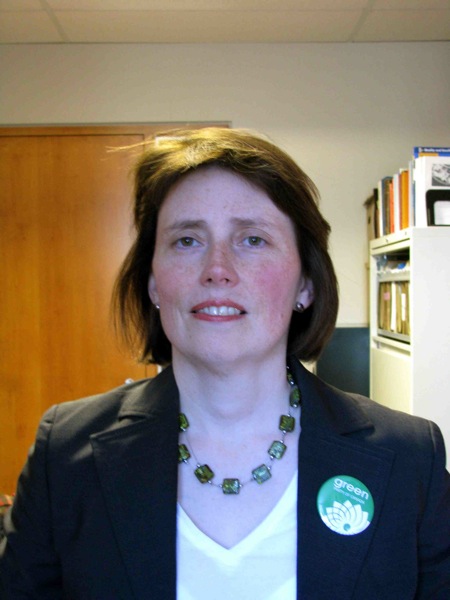
Trinity-Spadina’s Green Party candidate Rachel Barney is managing her own Facebook page as well as helping tweet throughout the campaign, but Jonathan Sas will be managing most of the social media communication. He’s an executive with the Trinity-Spadina Riding Association.
“A major strategy [of ours] is trying to engage a conversation with other candidates, not just tweeting our policies, but tweeting them at other candidates to differentiate and be vocal about where we are different,” says Sas. “We are battling two very popular candidates.”
Sas says the use of social media is integral to the Greens campaign in Trinity-Spadina. “We see a lot of wiggle room in the riding and we think social media is a key area we have traction in, where the Liberals and NDP might not.”

Chow and the NDP appear to be the most aggressive online. “It’s an integral part of our campaign,” said Joe Cressy, Chow’s campaign manager.
“Our campaign focuses on engaging with the residents wherever they are … Condos where people don’t answer the door, young professionals across the riding, people in apartments, homeowners in the north end of the riding. These [social media] tools are invaluable.”
In addition to Chow managing her Twitter feed and some Facebook updates, the NDP has also introduced online video streaming of their events, a new app for the iPhone and iPad, and a new text messaging service.

For Innes and the Liberals in Trinity-Spadina, the social media strategy is based on a philosophy akin to serving hot breakfast cereal.
“Our buzzword for social media is porridge,” says Tom Allison, campaign manager for Innes. “We want to make sure we are updating when it feels right,” he adds. “Not too hot, not too cold, just right.”
Allison also emphasized that messages should be interesting or else people will lose interest.
“Trinity-Spadina has more tech start-up companies than any other part of the country,” says Allison. It’s a very connected place.”
He says Innes is tweeting herself and helping update her Facebook page. So far, Allison says social media has been particularly helpful mobilizing volunteers. “On the first weekend of the campaign we were able to canvass one third of the riding because we used social media to alert everyone what our plan was.”

The Conservative party appears to lag behind the other parties when it comes to social media in the riding. Facebook pages have been created for the Trinity-Spadina Conservatives and their candidate Gin Siow, but a staff member will manage updates.
“It’s one of those things you need,” said Doug Lowry, Siow’s campaign manager. However, Lowry is quick to point out that social media is not the only place voters go for information and updates. “We know that there are a lot of people in Trinity-Spadina that use social media and that’s the way they communicate,” he said. “And there’s older people who like to read The Annex Gleaner, The Toronto Star, The Globe and Mail, and they don’t use it.”
Lowry said as of Tuesday, March 29, online messaging in the riding should reflect what the party tells them, “to a degree.”
“Ideally it takes on a life of it’s own and helps people take look at the party that wouldn’t have.”
“What’s really important if you look at Trinity-Spadina, is the candidates’ personal interactions,” says Norrie. ”It’s less important what the party is doing instead of how candidates are engaging with voters,” he adds. How many people the candidate is able to engage and have vote for them will be very interesting to see, he said.
Finding your Trinity-Spadina candidates online
GREEN – Rachel Barney
Website: www.trinityspadinagreens.ca
Twitter: TSGreens
Facebook: Trinity Spadina Greens, RachelBarney
Doing herself: Facebook updates, some Twitter
NDP – Olivia Chow (Incumbent)
Website: www.oliviachow.ca , www.trinityspadinandp.ca
Twitter: oliviachow
Facebook: oliviachow, Trinity-Spadina NDP
Flickr: oliviachow
YouTube: oliviachow
Doing herself: Twitter and some Facebook
LIBERAL – Christine Innes
Website: christineinnes.liberal.ca
Twitter: christine_innes
Facebook: LiberalChristineInnes
Flickr: christineinnes
YouTube: electchristineeinnes
Doing herself: Twitter, some Facebook
CONSERVATIVE – Gin Siow
Website: trinityspadina.com
Twitter: Expected soon
Facebook: GinSiow, Trinity Spadina Conservatives
Doing himself: None, managed by staff.
Tags: Liberty · News
Compiled by Emina Gamulin, Perry King, and Beth Macdonell
The Riding
Trinity-Spadina neighbourhoods include Chinatown, Little Italy, Little Portugal, Kensington Market, the Annex, Seaton Village, Harbord Village, University of Toronto, Koreatown, Queen West, King West, the West Waterfront and the Toronto Islands. The riding is one of the most rapidly changing areas in the city due to the increase in condo developments. More than 41 per cent of residents listed a language other than English or French as their mother tongue.
The Candidates
Question One: A national transportation vision
Question Two: Urban and rural Canada
Question Three: G20
Question Four: Copyright law reform
Question Five: Elder in-home care
Question Six: Canada the corporatocracy?
Question Seven: Debt and deficit
The Statistics
Population: 115,361
Immigrant population: 41%
Median age of the population: 34.9
Median income: $66,296
Home owners: 46%
Political History:
2008 Election: New Democrat
2006 Election: New Democrat
2004 Election: Liberal
Source: Statistics Canada
The Candidates

Olivia Chow
NDP candidate Olivia Chow is Trinity-Spadina’s incumbent and has been a member of Parliament since 2006. She was first elected to office in 1985 as a school trustee, and was Toronto’s first Asian female councillor. Previous to political life, she studied art and supported her career as a sculptor by working for a number of social service agencies.
Olivia and her husband, NDP Leader Jack Layton, live in Trinity-Spadina’s Chinatown with Olivia’s mother Ho Sze in a house that they transformed with a “green” renovation.
Rachel Barney
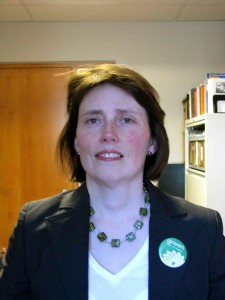
Rachel Barney, the Green Party candidate, was born and raised in downtown Toronto, attending high school and university in the riding. As a student at the University of Toronto, Barney was a member of its Governing Council, and sponsored the motion which led to U of T divesting from apartheid South Africa. She received a PhD at Princeton, and has taught at Ottawa, Harvard, and the University of Chicago. Barney now lives near Christie Pits, and teaches at U of T, as Canada Research Chair in Classical Philosophy.

Christine Innes
Born near Stratford, Ontario and living in Trinity-Spadina for 25 years, Liberal Party candidate Christine Innes is the current chief of staff to Ontario’s Minister of Aboriginal Affairs. Before that, Innes practised commercial litigation for ten years and ran a small business. A member of the Annex Residents’ Association, a founding committee member of the Bloor-Borden Farmers’ Market, and an active supporter of the Alexandra Park Community Centre, Innes competed against Olivia Chow in Trinity-Spadina during the 2008 federal election, and came in second place by a margin of roughly 3,500 votes.
Gin Siow
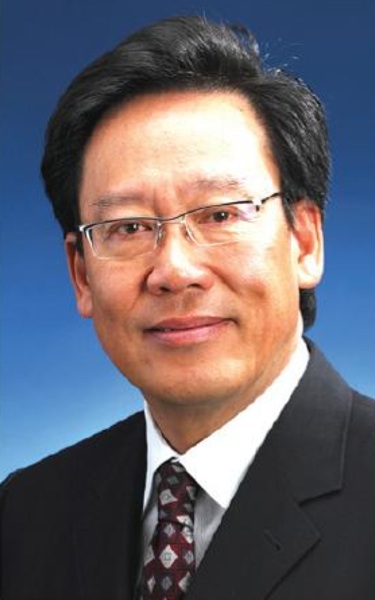
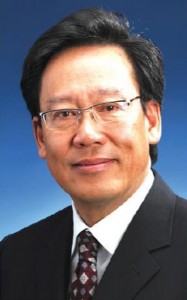
Educated in Malaysia and Singapore, Conservative candidate Gin Siow immigrated to Canada in 1982. He is the founder of the Malaysia Association of Canada. A married father of two children and co-owner of Markham Mazda, Siow was the recipient of the Outstanding Asian Canadian Community Award by the Canadian Multicultural Council in 2009. Siow ran for Ward 4 city councillor in the city of Markham last October, placing second.
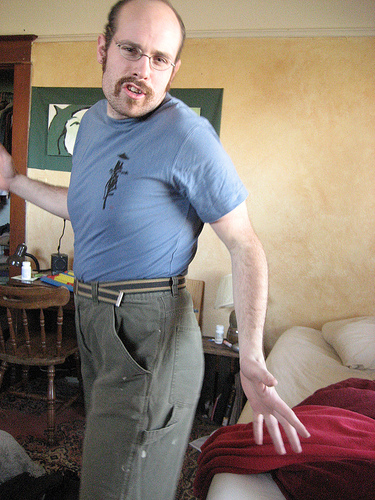
Cartoonist Chester Brown is running in Trinity-Spadina for the
Libertarian Party, but declined an interview with the
Gleaner. Nick Lin is running on behalf of the
Marxist-Leninist Party, but the
Gleaner was not able to contact him in time for this story.
The Questions and Answers
1. Please provide a national transportation vision that works together with and provides a funding structure for provincial and municipal governments.
—Astra Burka
CHOW: It’s very timely given what’s going on. The first priority would be a national public transit strategy, which I tabled in the House of Commons about a month ago, that brings together the different levels of government and the transit authority to provide long-term, predictable, and sustainable funding for public transit. We have a plan; once you have a plan you can move ahead. Canada is the only industrialized country that does not have such a plan. In the next five years there will be an 18 billion dollar gap in transit structure needs, and an average of 53 per cent of the costs are from passenger fares which is really too high. In Toronto it’s like 75 to 80 per cent, so it’s not sustainable. The vision should also have accountability measures so they can all work together, increase access of public transit, and share best practices. What’s exciting is that the legislation I came with is applauded by the Canadian municipalities and the Canadian Urban Transit Association. They’ve been asking for one for a long time. Rather than waiting I did it with the Big City Mayors’ Report.
BARNEY: The big bullet point is the Greens are deeply committed to revitalizing our rail system … we need to seriously upgrade passenger rails. As things stand now, VIA rail piggybacks on freight lines. We don’t even have a serious passenger rail system, and it doesn’t cover nearly as much of small town and rural Canada as it should. That’s a real economic, and of course, an environmental problem: it contributes to smog and all sorts of bad things. We would reinvest in a big way in our national rail system and we would very much support an increase in the gas tax transfer to municipalities to help with municipalities and regional transportation initiatives. We are very passionate about helping transportation both within cities, and from one city to another. Obviously, all those initiatives have to be collaborative with various levels of government but that shouldn’t be a problem because municipalities want that gas tax transfer money precisely to use for public transportation projects. We just need a federal government that will get onside and give them the money to do that.
INNES: First and foremost I want to tell you how committed I am to public transit both as a user of it and someone who spent a lot of mornings on streetcar tracks and watching the very long waits. This morning I was at King and Bathurst, people were waiting up to 20 minutes or longer as full streetcars passed them by. So in terms in national transportation strategy, absolutely, there needs to be some national leadership on public transit. Micheal Ignatieff and the Liberal Party last fall, when I spoke to the Federation of Canadian Municipalities, I spoke clearly about the need for a more direct partnership with the federal government and the municipalities on two key issues. Not just public transport, although that was the first priority, but also affordable housing. Details of a funding structure are something that needs to be worked out collaboratively with the all levels of government. Liberal record in terms of public transit, we are the only government that had a Minister of Cities and Infrastructures and that’s because we believe deeply in the need to better fund and better coordinate transportation. You have to work out agreements with the municipality, so in this case the City of Toronto, and there’s a provincial jurisdiction too. So, for me to say unilaterally there’s a funding structure, to me that’s not leadership. To me what leadership is, is bringing all the key players together, and work it out based on each of the key levels of government. But there has to be national leadership to direct that, and a commitment to put their money where their mouth is.
SIOW: The first thing I’d probably have to say is that transportation—basically, the provincial government looks after that, but I know that in 2009 we [the Conservative government] provided $5.5 billion dollars for infrastructure funding—four billion would the stimulus fund, one billion would be for infrastructure, the other would be for the Building Canada fund. There are many components. We’re streamlining the process of infrastructure projects and hopefully we’re getting the shovel in the ground. That’s what is going on at the federal level. Recently, I’m sure you have heard that the mayor made the announcement about the new [subway] lines. There are [infrastructure] issues, certainly, and there are improvements there that need to be done.
Back to top
2. In 2007, former mayor David Miller ran the aggressive “One Cent Now’ campaign, asking the federal government to give one cent of the GST to cities. Today, 80 per cent of Canadians live in cities. Do the feds need to rewrite how money is divided between urban and rural parts of the country?
—Beth Macdonell, contributing editor, Gleaner Community Press
CHOW: Oh, it’s more than that. The federal government must provide, again, stable, long-term funding to the amount of at least one cent of the GST, which would include public transit, housing, child care, infrastructure needs. One cent GST is approximately 6 billion dollars, I believe, so some of the problem is also structural. Toronto pays about nine billion dollars in taxes to Ontario and the federal government and gets about a billion dollars back. So we must get more back. To quote my colleague Cash for Toronto, yes, we need to get to more cash for Toronto. It needs to be enshrined in legislation infrastructure funds so its long-term and predictable. Right now every time there’s an election or political parties want to get some votes they announce some funding, it’s like the stimulus funds, they’re finished after two years, so you can’t plan the city with a stop-and-go impetus for vote-buying style. You have to be long-term because building a road, or a police station, or a community centre takes a long time; you have to plan ahead.
BARNEY: Yes, and I’ve already talked about that. I went straight there [to the federal government] talking about the gas tax transfer. The beautiful thing about that is that’s a mechanism of the authority in place. Even the Tories finally gave in and are now transferring 2.5 cents of the gas tax to municipalities. We want to see that doubled, we want to see a five cent transfer, basically doubling the amount of money that would go to municipalities, especially for revitalizing and expanding the public transportation systems. That’s absolutely key for us, it’s going to be one of my main bullet points on this campaign.
INNES: The way you phrased the question, with all due respect, is a bit divisive. I think we have enough divisions that pit rural people against urban, which I think we do not have to do. I think what we do have to do is getting more funding to municipalities. Liberals have dedicated funding from the gas tax and other forms, to get direct funding to cities. So that is something that we have put in place, and that is something that we will continue to support and hope to grow, because there has to be greater funding for our cities because, I mean, we are the engine. Our growth, our quality of life depends on it, and so absolutely, we are a fierce advocate of it for insuring funding, but I don’t like the phrasing as if it’s one or the other. It’s just striking a better balance.
SIOW: As far as I know, the federal government giving out one cent of the fuel tax money is substantial enough to support the cities, but one per cent of the GST, I doubt has been tabled. I also believe our government has been reducing the GST from 7 to 6 to 5 [per cent] and I guess the one per cent [reduction] could probably answer one of Beth’s questions. Instead of increasing our capital liability laws, and then [giving cities] the one cent, I guess the way we are doing it now is by reducing [the GST] by one per cent, it will benefit everybody, not just the 80 per cent [of Canadians] that are living in cities. I think that is a broader range that we are aiming for in Stephen Harper’s economic action plan.
Back to top
3. Should the government hold a public inquiry into the G20? If elected, how will you address the issue in Parliament?
—Beth Macdonell, contributing editor, Gleaner Community Press
CHOW: Absolutely. The report from the standing committee on public safety clearly recommended it. This report in the hearing at the House of Commons was caused by myself and my colleague Don Davies. We called for the hearing, and we called for a public inquiry. The report from the public safety committee, which is the standing committee of parliament, recommended an independent public inquiry because there are many unanswered questions: massive violations of human rights; massive amounts of money wasted on the fake lake or glow sticks; the largest arrests in Canadian history; and all of the small businesses lost millions—restaurants alone lost $83 million. I asked the question in the House of Commons several times, no other parties pushed as hard as we did for both the compensation and most important the public inquiry. In fact, Ignatieff didn’t even mention it when he was in Toronto talking about the G20. Large amounts of restaurants in Trinity-Spadina were deeply affected by the G20. Thank god I was able to manage to move the public protest zone out of Trinity Bellwoods park. Can you imagine? It’s bad enough that it was in Queens Park when the horses started charging and police started rounding people up. The kettling—I had several friends who just happened to be walking by Queen and Spadina and got rounded up in the pouring rain for hours.
BARNEY: This is an issue that is close to my heart. I am still angry about the G20, and I hope very much that everyone in Trinity-Spadina is still angry about it. I have to say, I’m a little skeptical about this Canadian tradition of always calling an inquiry and having a royal commission. Very often, it just means two years of delay, and then the findings are shelved. So I’ll go out on a limb and say I want more than an inquiry: I want Bill Blair fired, I want cops who beat up innocent protestors to go to jail, and I want small business people—whose storefronts were smashed—to get the recompense that they’re legally entitled to, that the government has been incredibly slow and obstinate about paying. I want to see things happen. I don’t think we need an inquiry, I think we know what happened. Stephen Harper imposed martial law and it went downhill from there. I think we should actually see justice done.
INNES: Absolutely. First of all, there does need to be an inquiry. It’s a ridiculous situation, and in terms of the funding that was spent on the G20, I think all of us could agree there were a lot better choices [than a] billion-and-a-half in terms of funding and the unilateral imposition on the residents of Trinity-Spadina. It was a decision made without any consultation, and our residents continue to sort of suffer from it in terms of the outcome, damages, and loss of business as a result of it. It is something I would address very early on and in fact, the Liberal party earlier this week spoke to this quite clearly in the speech that Micheal Ignatieff gave on this issue.
SIOW: I guess it is history, so it cannot be changed, so I would just say we should look forward ahead, about how we should build a better Canada together, instead of going backward. We should move on. Our priority is to make sure that everybody gets a job. We are in the process of recovery in this recession.
Back to top
4. Copyright reform is long overdue in this country. We have been called pirates by the global community. Bill C-32 is now dead and it’s back to the drawing board. Do you support the copyright reform bill? How important is the issue of piracy to your party and how do you think it should be addressed?
—Karen Bliss, music journalist, Harbord resident
CHOW: Yes we need clear legislation, we are very, very behind. We need to compensate artists, so that when people reproduce their work they get a portion of [the money], that’s a very important component. We also need to make sure that the students would not be hurt if they are studying and in need of sharing materials. But, yes, we need to, rather than suing people, we need to save the money and the lawyer fees and make sure the artists get paid. Our critic Charlie Angus has several policy components. One is fair dealing for the students, the other is for artists, so the fair dealing part is non-commercial for education proposes, the other is some kind of levy to make sure that writers, actors, singers, and songwriters all get a share, because artists are poorly paid. This is the key one. We have it in a private members Bill C-499, also with a kind of blueprint for the government. The Conservative government did a long consultation period across the country which we participated in, and we were willing to work with the government to have a copyright bill be passed in the House. But they didn’t see it as a priority, so they delayed it into bringing forth discussion or debate, so it got stuck in the committee and it didn’t come out on time. So we are working with singers, and actors, and different professional organizations representing these people.
BARNEY: That is a tough question, and it’s one that I have thought about a bit. There are competing concerns on both sides. On the one hand, it is very important that our artists, as they now get called “content producers,” get fair recompense for their work. That should be non-negotiable. Trinity-Spadina is a hub of our creative communities, and I know a lot of musicians, artists, and writers who are worried about how their work is going to be sustainable in an digital age where everything is out there. At the same time, it does seem clear that to really reap the rewards of all the new technologies out there, we have to have a bias in favour of liberalism, small ‘L’ I emphasize. It should be easy to do mash-ups and parodies, and easy for students to get access to work that they can learn from. I think it’s an incredibly difficult balancing act, and I don’t think that Bill C-32 necessarily can resolve it correctly. I don’t know how exactly to do it. We do need a lot of public deliberation and hard thinking about how to get that balance right, because I’m not sure that any country in the world has it right yet.
INNES: Copyright absolutely needs to be a priority coming back. This issue has been debated well over 10 years. Bill C-32, while not perfect, seems to be a consensus in terms of intellectual property issues that we need to get started. We’re laggards in the world on this issue. Other countries have a much better approach. It’s an economic issue and it’s an artistic issue. I would be a champion on getting something back on the table as soon as there is a new government, working to get the right balance. And I think we need to understand we are so far behind globally on this issue that we need to at least get some movement on it, and legislate some reforms, and keep working on it to ensure that the balance between users and the industry, the best balance is struck.
SIOW: Being an entrepreneur myself, I can sympathize with those who invested lots of money into it, and obviously I’m against it, and we should have a law to protect against the pirating. It’s certainly not healthy—I grew a tree and somebody is plucking the fruit, so I am against it. I am strongly in support of tougher laws against piracy. We have to put some efforts into it and, obviously, the corporations will probably demand what they feel should be done. This is an area that should be looked after, we should protect investments, and the same [protect] the artists. They spend all that time and effort, and it is their hard-earned right.
Back to top
5. Elder in-home care promises to be financially far more viable than any alternative. Is this a thought, AT ALL, in the future policies of ANY of the parties platforms?
—Walter Babiak, Albany Avenue resident
CHOW: Oh yes. Very much so. Families shouldn’t be separated because they don’t have in-home care. Some families just don’t have the loved ones to provide the support for the family member to stay at home. So a comprehensive home care program is the second phase of the Tommy Douglas medicare vision. That includes both homemaking, cleaning, shopping, these kinds of services and nursing care, plus daily support. So it’s a host of different services delivered in a comprehensive and affordable manner. I held a forum and brought together the Canadian Home Care Association, doctors who do house calls, and nurses to talk about a national home care strategy. It’s unfortunate that, just like child care, the government has promised action since 1993, and yet we still don’t have a national plan. We’ve put together one, but we need a government to make it a reality. Just giving tax credits or EI funds for relatives is not enough because sometimes they, most often the wife, are not able to collect or provide the type of nursing care that is needed. Or are not physically able to provide that kind of support, so we need a host of different people providing a host of different services, from shopping, and cleaning, to helping give a sponge bath. It actually saves money because it frees up the hospital beds, and people can be able to stay at home and it’s much more humane if couples can stay together, rather than one going to a nursing home.
BARNEY: Yes, absolutely. That is something we have detailed policies on, and it includes a “balance of care” model—trying to shift care from an institutional context to enabling people to stay in their homes, and continue to be in their communities. Walter is absolutely right, that it is more cost efficient, as well as being what people actually prefer. That is exactly the kind of thing where we think the government should be shifting funds in a big way, not necessarily taking funds away from hospitals and so on, but we need to accept that that’s not good enough anymore as a model of the national health care system. We need to start funding stuff that takes place outside the hospital, and things that can keep people out of the hospitals. This is an absolute prime example of that.
INNES: It is actually a key part of our existing Liberal platform. We announced a home care program months ago. It’s something very near and dear to my heart, particularly in relation to residents here in Trinity-Spadina. Couldn’t agree with you more about your premise about it being a much more effective method of care, and our family care plan is really gaining some strength nationally. It is a plan that’s designed for family members to have the opportunity to keep, not just elders, but anybody that needs family support at home through different initiatives, and building on that, and working towards home care. Throughout this riding, there are many, many seniors who are struggling and could absolutely benefit from a better program for home care and family care.
SIOW: If you remember the budget we had presented, Harper had presented the $840 [subsidy] for couples and $600 for singles. Because of the baby boomers, we will have a lot of retirees and a lot of seniors. It is an area where we have to look into it, and as a matter of fact, our Prime Minister has that in his agenda and it was part of the budget. I have to tell you, I am the past president of the S.E.A.S. Centre. It is a success-enhanced access services [program]. It has been [around for] 25 years, we have five offices across the GTA, and we initiated with Regent Park. We have a program where we look after seniors, and during my presidency we helped a lot of seniors move into those low-income housing projects. We helped a lot of the seniors moving into the Regent Park area, where we have all those problems right now. We had that program as a non-profit charitable organization, we were supported by three levels of government as well as affiliated with the United Way. I have done my share in the community, I have helped raise funds to build gazebos for seniors’ homes. I have parents as old as them, and I’m sure we will definitely make a better quality life for them in their communities.
Back to top
6. In the U.S., you see statements along the lines of “Wall Street owns Washington.” Not just Wall Street and the big banks, Megacorporations too. GM, BP, and now in Japan, as a proxy for the global nuclear industry, TEPCO. Monsanto in food. My question for the candidates would be: Has democracy in Canada become an oligarchy or plutocracy or corporatocracy? Are our governments and media being controlled to a dangerous degree by big banks and megacorporations? What would you do, if anything, to address this issue?
—Brian Shaughnessy
CHOW: The answer is yes. The only way we can overcome that is mass participation of the public in daily workings of the government, and a refusal to vote for people who bow down to the big pharmaceutical companies that just killed the NDP bill to send AIDS drugs to Africa because the Liberal-Conservative Senators did not approve the bill in time. They recently killed the GMO bill; another NDP bill to limit genetically modified food production. Again, there was good support from the crowd but the big corporations moved in pretty quick. The environment bill, the senate killed it also from the big lobbies from the multinationals, oil sands well, oil giants I should say. So there are many examples of how these huge companies—oh, credit card companies—we mounted a huge campaign and mounted a voluntary code of conduct and we are still getting ripped off by the big banks, the big companies that control credit card services. So small businesses get ripped off and ordinary consumers get ripped off. I can give you more examples. Cell phone and Internet fees, my God, we have one of the most expensive in the world, and fairly poor service compared to other parts of the world. All of this because, in some cases lack of competition, and government being in the pocket of these giant corporations.
BARNEY: I think the short answer is yes, even though it’s not as obvious as in the US, or not as bad here. I do think that our bias in the Green Party is very much pro-business, actually. This may not be what your questioner wants to hear, but we are big believers in free enterprise, entrepreneurship, getting markets to work, but with the way the system works, that puts us very much on the side of the small entrepreneur rather than the big entrenched business or the banks. These issues are close to our heart because we end up subsidizing those entrenched interests in various ways—we end up with a regulatory framework that favours them. Very often, those old entrenched interests are not serving the interests of society: they are polluting, and they’re stopping us making the transition we need to a green economy. This is a big worry for us. The very fact that the Tories would think they have some kind of a winning issue in corporate tax cuts in our current economic climate just tells you how distorted our political spectrum is. That’s a really lousy way to get an economy back on track coming back from a recession. In terms of what we believe in doing, we do have some strong and complicated policies on the media and ownership of the media. We want to reduce concentrations of ownership of the media, we want to beef up traditional safeguards to make sure we do have a free flow of information that isn’t too distorted by corporate interests.
INNES: I think our democracy has been seriously challenged. I wouldn’t say it fits into any of these categories now, but we are at risk and that’s why in this election it is so important, and why I am focusing on the streets and talking to people about the substantive issues. I’m finding people really understand that it’s about getting people to be engaged, and fight for the Canada that we want. I would say that our current government is really at risk of that, Liberal governments, of the past and moving forward—not a chance as long as I’m a member of a potential caucus. I will be a fierce fighter of any of that. One of my strengths is connecting with people and talking about engagement and not just in a partisan way, but actually getting involved in your community, and fighting for the shared vision we have for Canada.
I would do what I have always done and continue to do: meeting and talking with people. I’ll give you an example: often people will shy away from the political process and say they are not political. I do a lot of speaking with youth groups, et cetera, [and ask], “Is there an issue that you care about and care about deeply?” And most people do. My view is, that when people understand you actually care about an issue, you need to be political. It doesn’t mean you need to be partisan, but you need to stand up and get involved, and so I would tirelessly work to get people to be involved in their broader community and fighting for both a strong and tolerant Canada that’s very inclusive. If we talk about our vision of Canada being one that’s inclusive, and creating opportunities so people are not left behind, the megacorporations, the threats of oligarchy that you mentioned, can’t take hold.
SIOW: I certainly don’t want to make comments in relation to what is happening in the States, and obviously our Conservative government’s priority is to put the economy back. That will be our priority right now, and as far as across the border, the government has done a good job in releasing barriers in cross-border trades—cutting red tape [for] business on both sides of the borders. We certainly need huge corporations, which is why our mandate is tax reduction, corporate tax reductions. The big corporations are the ones who are creating these jobs. Obviously small business plays a very important role as well, but I have a friend who works in a huge computer firms who volunteers in this campaign. She couldn’t find a job when her company moved to the Philippines. We have to try to stop all this. Obviously, the Conservatives stopped corporate donations to parties, and they probably lost 80 per cent of their funding. Being an entrepreneur myself, the best thing that we have right now is the Economic Action Plan. As far as the Action Plan and strategy is in place, I think that should be more than enough. How influential it is I really cannot tell you. I know that there are some areas that where I can work is the lefty influence. The media is hugely influenced by lefties, so where do I go from here? As far as I’m concerned, I’m going to do my very best, just go talk to the people who are going to vote. It is my job to translate, I can speak many dialects and languages, to remove that barrier where I can communicate with [constituents] comfortably.
Back to top
7. What is your plan for fiscal control around the deficit and debt, so we don’t leave an ugly burden for our children and future generations?
—Grant, last name withheld
CHOW: Fiscal control starts with who is not paying taxes right now. We would have more money coming in, we would have more revenue, there would be less deficit. That includes corporate tax cuts for companies that then go layoff staff, to multinational oil companies that pollute our air and our environment. Smart spending means whether it’s home care so we spend less in hospital care, or we spend less if we do early childhood education and less on prisons, and if we spend more on peace development and development to lift people out of poverty. Then we spend a lot less on the war in Afghanistan, or any number of wars. Military spending, I refuse to call it defense, we are not defending Canada, we are invading others. So bringing our troops home would save some money. 18 billion spent so far. At least a billion, minimum, per year, and at least ten per cent of it goes to war fighting. And I haven’t even started on the fighter jets, and that won’t be signed for three or four more years so we can do something now, i.e. bring our troops home now. All of them. We can save another 2 billion dollars if we stop giving tax subsidies to oil companies, to the tar sands operations.
BARNEY: We do believe very strongly that we’ve got to get our debt under control. For us, with politicians, the question is how are we going to do it and why should you trust us when we say that. One reason you should trust us is that we do have a big-picture view about the future of the Canadian economy, and it involves taxing the stuff that we’re doing wrong and using it for taxes on stuff that is economically and socially useful. We’re talking about a carbon tax, we’re the party that believes in that. NDP is passionately against it, Liberals don’t want to think about it. The Tories don’t even believe in climate change, as far as I can tell. That carbon tax, the point would be to make it revenue neutral, so we would be lowering taxes on everything else. In particular, lowering payroll taxes which should make it easier for small businesses to hire people. We have a vision of what a prosperous Canada would look like in 20 years. That green economy would be one that could keep its house in order and pay its debts. We would not be subsidizing polluting industries anymore. We would not be subsidizing the auto industry and other “dinosaur” industries anymore. There are a lot of things that we would not be spending money on, and we would have new revenue streams. What can I say, we do take these debt and deficit issues very seriously, because we do not want to be a country that is at the mercy of the international banking system. We’re very concerned about Canada’s ability to set policy independently, and we’ve seen recently what happens if you don’t keep your financial house in order. You end up having to be bailed out by the international banking system. We can’t have that happen here. we’ve got to run a tight ship. That’s fine, we believe in running a tight ship, anyway.
INNES: Well, that’s why the Liberals quite frankly are very serious and couldn’t support the budget that has been put forward. The funding choices being made right now, when we have the largest deficit ever, simply cannot be sustained. So whether you take the $30 billion on fighter jets, $9 billion on the mega-prisons, or the $6 billion in corporate tax cuts for the largest corporations and banks, those are the wrong decisions right now. Liberals are saying right now about our fiscal balance in terms of continuing … look, we have to pay down the debt. I ran a small business, I understand the fiscal issues. I’m a lawyer, and I’ve run my own business. You have to take care of the debt, but you can’t take care of it at the expense of the investments in people. So we are balancing, our commitment is to continue to strike the balance, to continue to pay down the investment, while at the same time making strong economic investments in health care, family care, and education; lifelong learning. Liberals have a strong record of getting the fiscal house in order and I think people need to remember, the last time the Conservative government ever ran a balanced budget was the year the Titanic sank, 1912. I think that tells a story in of itself. It is about striking a balance, we can’t pay down the deficit without at the same time risking the supports that family and individuals needs.
SIOW: I think the key here now is our government, for the last few years, has done a tremendous job. As an entrepreneur myself, I really like the Economic Action Plan. We have plans, we have systems [in place]. We don’t tell you today this, and tomorrow say another thing. We have to work to recover job losses. We are adamant that by 2015 we are going to bring the deficit back to zero. We are on target, the unfortunate part here is who can deliver? Before even the budget came out, [Jack Layton] confirmed he was going to reject it. Come on! How can you have someone represent the country and reject things he hasn’t even seen? It is just ridiculous. What we have done here is our free trade and the Economic Action Plan. We are about to start a second phase, and if we were to continue to do our job, which we have done a tremendous job in the past, we will be able to fully recover by 2015 with no more deficit. Isn’t that a good thing that we can all enjoy?
Back to top
Tags: Liberty · News · People · General
April 11th, 2011 · Comments Off on Condo development could set height precedent in Little Portugal

The Maple Leaf industrial yard at Dundas and Manning has been operating in the neighbourhood since 1932. As soon as this fall, ground could be broken on a new mixed-use development, closing the lumber and supplies store. Perry King/Gleaner News
By Perry King
If approved, a condominium at Manning and Dundas will be the tallest building in the neighbourhood.
As early as this fall, owner Maria Da Conceicao Silva and developer Andrew Dales Consulting will be breaking ground on the new development.
“Everyone has their opinion on it. Some people don’t want to see any height increase at all,” said Elspeth Cassar, a resident of Euclid Avenue. Cassar said she would support the development if it were within the limits outlined by the city.
Fifty neighbourhood signatures were submitted to community council on Feb. 11 opposing the height variances the developer is seeking for the eight-storey (27 metre) project. The Harmonized Zoning bylaw restricts buildings to 16 metres on Dundas between Bathurst and Grace.
Cassar says local residents have a broad range of concerns, from lost daylight to density to parking. But, she says many residents see the change as inevitable. “Other than people who work at the site who are going to lose their jobs, [many people] welcome the development. I would love to see a mixed commercial-residential building. I think it would be an improvement for the neighbourhood.”
Others are less supportive. Lee Anderson, a Manning Avenue resident calls the size of the development “insane.”
“This is an established neighbourhood with an established amount of water usage, sewage usage, electrical usage, and cable-internet usage,” he said. “I understand the need to fill space in a reasonable way for density purposes, but that’s a lot.”
Kenny Conners, who manages the Café Brasiliano (849 Dundas St. W.) across the street, notes that the neighbourhood was previously changing at “about a snail’s pace. But I’ve seen, in the last couple years, a lot of new things going up.”
Conners thinks the changes are a good thing. “A lot of people say it’s bad because the Portuguese are getting pushed out a little … but in a way, we need that new blood,” he said. “Toronto ain’t the same city that it was back in the 1950’s or the 1970’s. We’re all about change.”
Plans for the north part of the project, encompassing the back alley and properties on Manning Avenue, would include a row house with eight four-story units. The south part of the project, encompassing the lumberyard, will be a 95-unit, mixed-use site with commercial space and underground parking.
The five properties listed in the applications are 854, 856, 858 Dundas Street West and 217 and 291 Manning Avenue. A preliminary city report submitted Jan. 19 says the project could be precedent setting.
“You can’t just put big buildings like this on small pieces of land,” said Councillor Mike Layton (Ward 19, Trinity-Spadina). He says that avenue studies generally recommend a 20-metre height cap to foster a “healthy density” in new developments along streets like Dundas.“[In terms of height] we still don’t know where we’re going to end up falling here, but I think any building that goes up in that neighbourhood is going to set a precedent for what’s going to happen on the street,” said Layton.
In an email to the Gleaner, area resident George Sawision said: “This is a precedent setting development that seems to be a ‘done deal’ with a re-zoning hearing scheduled regarding the ‘extra 7 metres’ that will be added to the top. It will change the area forever as other developments are waiting to see if this one is approved.”
On Feb. 16, Toronto and East York Community Council adopted the preliminary report. There have been no formal talks between the developers, locals, and the city about the property to date. Local residents have not seen the full plan from the owners, and Layton has advised residents from the Trinity Bellwoods Community Association (TCBA) to voice their opinions once they are provided with the owner’s plan.
Several other developers are eyeing the Little Portugal area for condo developments, which makes some neighbours nervous, while others embrace the change.
On Jan. 24, developers submitted applications for an eight storey, mixed-use site at 1243 Dundas St. W., west of Ossington. Near Anderson’s home on Manning between Dundas and College, 45 town homes will be built starting next year at the location of the former St. Francis of Assisi school (250 Manning Ave.) and the adjacent parking lot.
“Our street is already used as a thoroughfare for people going south in terms of car traffic. That’s going to increase tenfold. If the driveway entrance to that building is on Manning, that means people have to come all the way down from College Street to get to it. That bugs me a lot because they’re turning it into a main street, which it’s not,” said Anderson.
As for the lumberyard, a staple of the neighbourhood since it was founded in 1932, its shutdown is a major change in itself. Tony Goncalves, a manager at Maple Leaf lumber, says that the staff had met with the owner several weeks ago, who gave them “a timeline of about a couple years” for the development to take place. Employees will be relocated to other locations if they opt to remain with the company, but Goncalves is not sure when this will happen.
“We have customers who keep coming in and asking ‘Where are you going to go?’” he said. Goncalves is accepting of the prospect of change to the site, saying “the city is changing.”
TBCA chair Chris Shulgan sees the change as symbolic. “I think it’s a really interesting story because it represents the transfer of the area from an ethnic community to, for lack of a better word, a hipster community,” he said.
“It’s owned by Portuguese people, it’s the biggest and I think you can call it the mainstay of the Portuguese community along that stretch of Dundas. If it is becoming condos, it is really indicative of the direction that the community is changing.”
For information on an upcoming community council meeting, please contact councillor Layton’s office at 416-392-4009 or councillor_layton@toronto.ca.
Tags: Liberty · News
Gleaner Community Press is interviewing Federal candidates for Trinity-Spadina and Parkdale-High Park and we are seeking questions from you (besides “why are we having another election?”).
After we have received all the questions we will then make a final selection based on diversity, relevance to the local community, and “goodness” (objectively and subjectively decided by our editorial staff), dutifully record the answers, and publish them for all to read.
Some questions will be printed in our next editions, while others may be asked at an all-candidates debate. Some will not be selected at all, but think of it as good practice for when the parties come knocking on your door. You will get full question credit. We reserve the right to edit questions for spelling, grammar, punctuation, and space.
If you have an inquiry for Trinity-Spadina candidates please send it to us no later than Tuesday March 29 by midnight (technically the 30th).
If you have questions for Parkdale-High Park candidates please send them no later than Monday, April 4 at the stroke of midnight (technically the 5th).
When you send the question, please include your name, (and name of organization, if you are asking the question on behalf of a group, business, etc). Feel free to submit as many questions as you like (though we will likely only publish one). Send us your questions via
twitter,
facebook,
email, snailmail, phone or in person.
(The Gleaner is non-partisan; we do not endorse candidates, and we ask all candidates, including “fringe” candidates, the same questions.)
Thanks,
the Gleaner
Tags: Liberty · News · People · General
April 1st, 2011 · Comments Off on Brunny patrons up in arms over “totally unchill residents”

Courtesy creative commons.
By Zacchary K
While the often inebriated and occasionally violent behavior of Brunswick House (481 Bloor St. W.) patrons upsets nearby residents, the bar goers say they are no strangers themselves to getting the cold shoulder from “lame-ass” locals.
From police enforcement blitzes, neighbours telling them to “shut up already,” and female-residents-crossing-the-street-and-not-answering-their-questions-but-whatever,-it’s-not-like-they-were-that-hot-anyway, Brunny regulars say they feel oppressed by increasingly hostile neighbours who don’t like their hard partying ways.
“Come ahnnn,” said Tommy ‘The Panther’ Stevens, “come ahhnnn! Yo, what’s with these folks, making all this noise and s**t about our noise and s**t. Like they don’t know … whatever, right?”

Britney “Boobs” McGee (far right) believes that the issue leaves more questions than answers. Courtesy creative commons.
Panther-Stevens isn’t alone in his sentiment.”What?” asked/rapped fellow Brunny patron Timmy 2Gats, “This is the Brunny/ and you’re telling me that I can’t sip on my Heinies/ and holler at the honeys/ without these old-ass mummies lookin’ at me all funny? Who do you think I am? Bugs Bunny? Get sunny/ or I swear to God/ imma leave the next dummy’s nose runny.”
Overall, Brunswick fans are worried that enough public backlash could in turn lead to tighter prosecution, stricter guidelines and other totally uncool things against these super chill bros. If it comes to that, attorney, or at least law student, Patrick ‘The Suit” Donalds, said he would offer his aid to keep the establishment as is.
“Frankly I’m appalled that residents would so quickly turn on a business that has brought so much revenue to the neighbourhood. Shamelessly trying to fondle some wasted chick’s veejazzled nether regions, literally fighting over prospective one-night stands, and later puking on some stranger’s lawn are just the sort of things that make this community, this city—nay, this country—a miraculous place to live. No homo.”
Albert Dweebleman, seen here “rockin’ out” to the Black Eyed Peas “Pump It,” defends Annex residents as “cool cats, and rad.” Courtesy creative commons.
Responding to the allegations, Brunswick Avenue property owner Albert Dweebleman said: “It’s not that we don’t like to party. I like to party. I party all the time. Party here, party there. I saw The Black Eyed Peas on their second tour so I am on ‘it.’ But this kind of partying has me worried. Since when are there things to do past 10:35?”
“Annex folk are very hip, we are cool cats, and rad,” he continued. “I cannot stress enough that we are not trying to be a ‘huge drag,’ we would simply like these ‘dudes’ to recognize that they need to ‘chill out’ so they can be max-hip with our ‘dogs.’
Perhaps there could be some compromise, as Chad ‘Sex Armageddon’ D. suggests, “Like it’s cool if they don’t wanna be cool,” he explains, “Just don’t be callin’ me ‘hooligan’ that ain’t cool, don’t—” Chad stopped abruptly as the commercials ended and the UFC game came back on. “Yeah baby!” he said with a fist pump.
It’s a clash of two very different cultures, as concerned Annex citizens and crazy motherf****n’ party f****rs find themselves at hostile odds over the neighbourhood’s use. As we wait until the next weekend, questions still remain, as one Britney “Boobs” McGee wonders, “Heyyyy, what’s your naaaaaame? What issss iiiit? Huh? Oh, okay byeeeee.”
Tags: General
April 1st, 2011 · Comments Off on Harbord eatery busted for possession of tasty, tasty donuts

Police officials say they found 6,000 lbs of Krispy Kremes at the Harbord donut shop, with a total street value of $45,000. Courtesy Wiki creative commons.
By Zacchary K.
Harbord has become a hotbed of both local and national attention after Pizza GiGi (189 Harbord St.) was exposed for allegedly dealing millions in narcotics. But the shocks have not ended there, as patrons of Harbord businesses become surprised yet again by a restaurant’s exposed dark side.
“I can’t believe it,” said one local who wished to remain anonymous, “You walk by it every day, but you never think, ‘Y’know, this place is hiding something.’ And so soon after the last one? I’m at a loss for trust.”
The event the pedestrian refers to happened in late March, when investigators discovered the doughnut café (215 Harbord St.) was stocking thousands of Krispy Kreme donuts.

Concerned citizen group ‘Dough Not’ called the news “shameful.” Courtesy Creative Commons.
Disappearing from the GTA in 2004 after officials deemed them “dangerously yummy,” Krispy Kreme donuts have become a new criminal commodity. Toronto spends over 2 million in keeping Krispy Kremes, (also known as ‘Kreme,’ and ‘KK’ for short) off the streets, and a civilian group, ‘Dough Not,’ is outraged that the front had managed to operate for so long.
“It’s shameful,” said Dough Not leader Karen Stiller, “and across from a high school too? Really makes you think.”
But not all the feedback is in disgust, as bloggers, Tweets, and word on the street delight that something so strange has opened for conversation. “Ha ha,” chuckles one resident, “Kremes? I haven’t had one of those in years. Think Leno will talk about it?”
“LOL” writes one local Tweeter, “No wonder they always looked pissed when you ordered coffee.”
An official from Krispy Kreme, which are still legal stateside, said while holding a box of the addictive material in question that, “While we do not encourage the illicit trade of our product, it’s honestly your own loss. Oh, mmfh, boy these are good.”
Tags: General
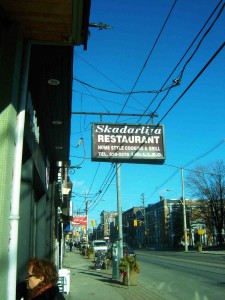
Skadarlija owner Sam Sri says he feels like the fall-guy for the neighbourhood. Photo Rebecca Payne/Gleaner News
By Rebecca Payne
The closure of Captain Jack’s and denial of a rooming house application for the Parkdale “problem spot” does not mean that some area business owners are satisfied.
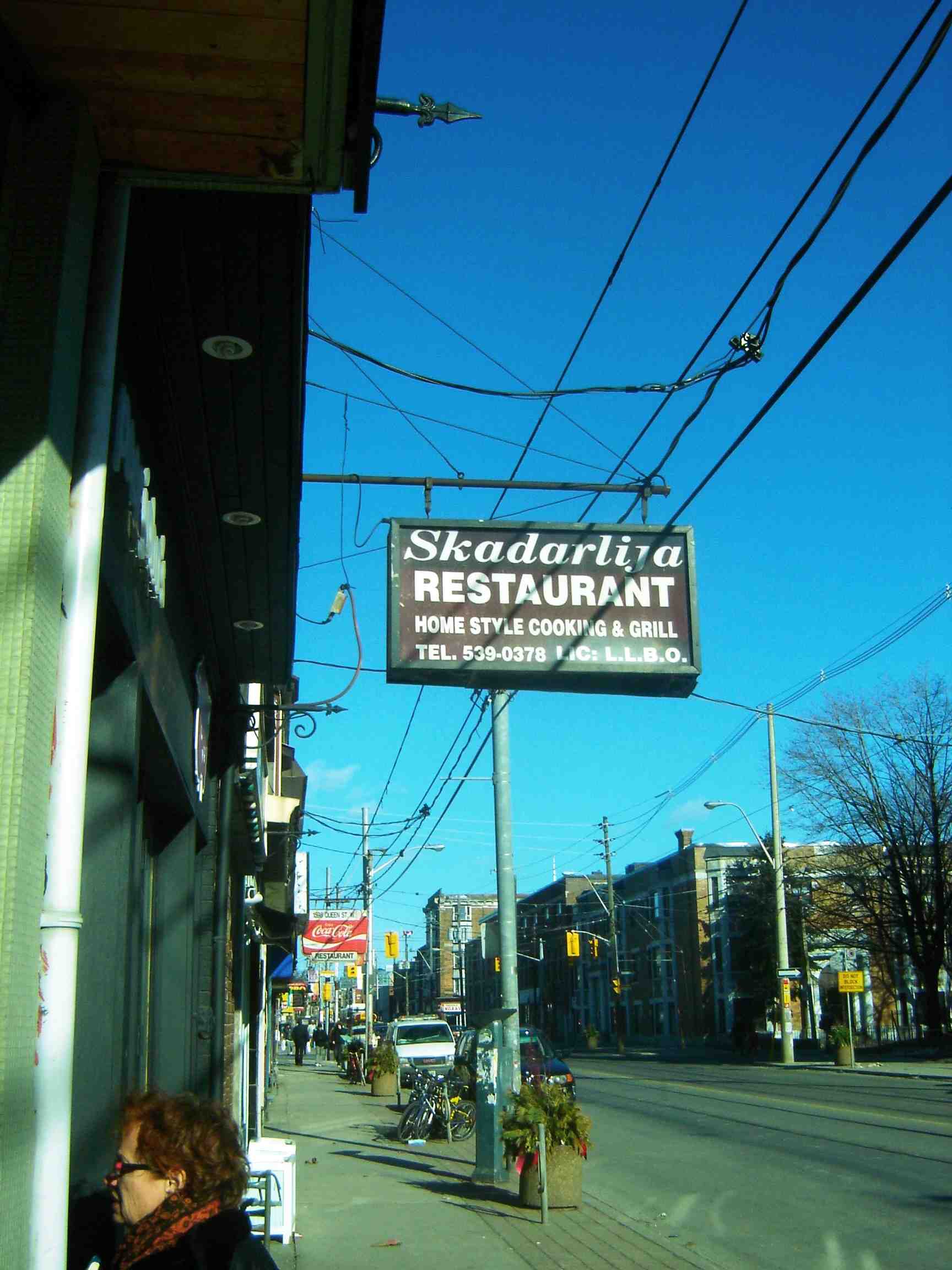
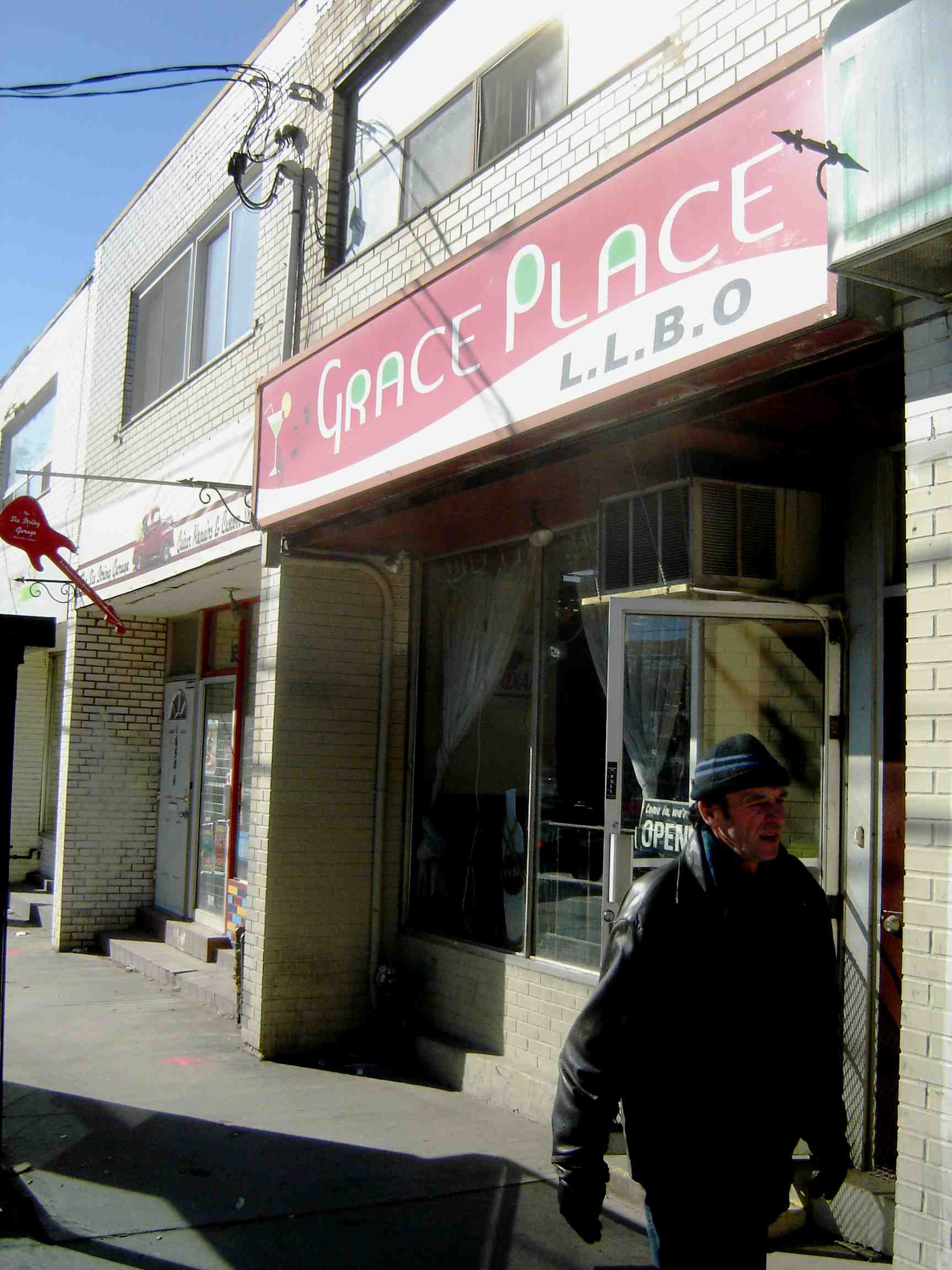
The West Parkdale Neighbours Group (WPNG) was formed exclusively to take action against three bars that members consider to be problematic: the now closed Captain Jack’s (1521 Queen St. W.), Grace Place (1656 Queen St. W.), and Skadarlija (1608 Queen St. W.). According to John Silva, founding WPNG member and owner of Poor John’s Cafe (1610 Queen St. W.), “[Scadarlija and Grace Place] continue to be a problem.”
Owners and staff at these bars deny the allegations, and feel they are being treated as scapegoats for the neighbourhood’s problems.
“I’m here about eight years, I not have any problems, now after this guy Poor John move in, he don’t like my customer. This lady next door [Feather Factory] is going with him. He talk about crack people, people peeing outside—all Queen Street people pee outside,” said Sam Sri, owner of Skadarlija.
Sri also owns a convenience store at 1521, a bar on Roncesvalles Avenue, and “a couple rooming houses.”
“Most of the people, they don’t know me … When [Silva] opened his patio I say ‘You need help, let me know.’ But all other neighbours didn’t want the patio. Somebody drink beer in the street, he call cops and say my customer. Anything happen in the street, he say my customer. There’s too many things going on in Parkdale.”
Sri also said that Silva complains when his customers smoke out front of Skadarlija. “He leave table and chair outside [on the sidewalk]. His customer smoke, it’s okay. Mine smoke, he says it’s going in his place. He against me but I say nothing. They call cops, cops keep coming, [but] they don’t do anything—nothing’s wrong inside.”
Likewise, David Zhang, an employee of Grace Place, believes that it’s not his establishment that is the problem. “I think it’s Parkdale. That’s the people. I don’t let those people come here, I don’t serve them.”
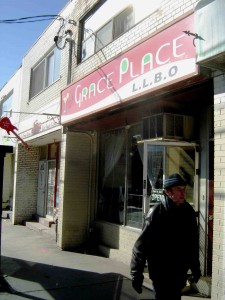
Neighbouring businesses complain that Grace Place over-serves Patrons, who then cause problems. Photo Rebecca Payne/Gleaner News
Grace Place patron David Hanuman, said that “David runs a good establishment here. He really does. He treats people well.”
But the WPNG maintain that these establishments over-serve customers, who then cause problems in the neighbourhood. Silva mentions customers urinating in doorways, vomiting on nearby properties, and starting violent fights. “For me, the ‘last straw’ occurred when two men fighting in front of Skadarlija drifted toward my property and pushed each other through my front door, resulting in $500 worth of damage,” wrote Silva in a document sent to the Gleaner.
Silva believes 11 Division is not policing the area adequately. “We feel it has to do with the police division … they don’t have a vice squad, [incidents] go to major crimes, and my sense is they really consider this a nuisance, if there’s over-serving or a fight. There are enough visits to this place, it seems to me there could have been charges laid long ago.”
Silva also mentioned last November’s throat slashing outside Grace Place. “Imagine that happening in Bloor West Village. Would that bar be open the next day? There’s something weird going on.”
Staff Sergeant Bruce Morrison, of 11 Division’s Community Response Unit, said that although 1521 has changed hands, criminal activity in the area still continues. “We’ve been dealing with [1521] for years, and as it changes hands there’s busy times and quiet times. Right now it’s in one of its quiet times, [but] people that were in the building are still in the area.”
“We still have problems with prostitution, drug use, disorderly conduct on the street, it’s still going on, it’s just not localized at 1521.”
Councillor Gord Perks (Ward 14, Parkdale-High Park) is aware of the ire some community members have for these bars. “I’ve had several meetings with the Parkdale Residents’ Association and local business owners about concerns of those bars. We’ve sat them down with city inspectors and AGCO inspectors. There has been police and AGCO presence in there. They’ve not been able to find either of those owners [of Skadarlija or Grace Place] in any violation.”
Perks said that he’s met with the owner of Skadarlija and “tried to encourage him to be a bit more proactive.”
“There are limits on how much responsibility a bar owner has for his patrons. When they’re not in his place, there’s difficulty enforcing their behaviour.”
Morrison said that police will continue to do everything they can to keep the neighbourhood safe. “We’re trying to improve the quality of life down there, one person at a time. Enforcement continues and proactive patrols continue.”
The former owners of 1521 Queen St. W., Radika “Patsy” Mahadeo and Narotam “Sharma” Misir, applied for a rooming house licence, but were denied in January. “The applicants who had applied lost possession of the property earlier this year,” said Joe Magalhaes, supervisor of investigations for Toronto and East York with Municipal Licencing and Standards (MLS). “It was the rooming house commissioner’s decision to consider the application abandoned, and that no further action was required. The current possessor has put the property up for sale.”
Magalhaes also said that the current owner of 1521 is evicting all tenants of the building, which has retail space on the first floor and residential space on the second. The relocation of the tenants is being overseen by MLS’s relocation and support worker, to make sure that “people are housed suitably, in affordable housing.” Although Magalhaes could not say how many people were being relocated, he did say that not all of the rooms were occupied.
Silva said that whatever happens next, the WPNG will be prepared to take action. “We don’t know what the future of 1521 is, but if the next owner has the same plan, for a hotel and a bar, we will be fighting that with every means that we can.”
Update: since we went to press with this story, 1521 Queen St. W. has been sold and the WPNG are currently trying to negotiate terms with the new owner.
Tags: Liberty · News · People
March 24th, 2011 · Comments Off on This year’s Junofest stacked with nominees
By Karen Bliss
After moving around the country for the past nine years, the Junos will be back in Toronto on March 27th for their 40th anniversary show. As part of the week-long celebration, JunoFest will take over downtown this weekend with 120 acts—more than 50 of them Juno nominees—playing 20 venues.
“I believe we broke a record for JunoFest for booking Juno-nominated bands,” says Jeff “JC” Cohen, co-owner of Toronto’s Collective Concerts, who was hired by the Canadian Academy of Recording Arts & Sciences (CARAS) to book the music festival. “We really focused on making it very heavy on nominees. We even got Christian and Aboriginal nominees.”
“[CARAS] told us to pick our favourite bands. We got some of them, not all of them, but we tried. They told us to book as many nominees as possible and they also told us to keep it as Toronto as you possibly can. It’s supposed to be showing off Toronto [talent], but I included Montreal because they haven’t had a Junos yet.”
Unlike Canadian Music Week or North By Northeast, JunoFest books less acts that play longer sets. “The headline act is doing 90-minutes, as opposed to the usual 40,” explains Cohen. “It’s booked less like a festival and more like a club crawl with regular nights at the venues.”
Cohen added that for the first time advance tickets are available for some of the larger shows. We’ve compiled a couple of shows to look out for in our coverage area. On the 25th, Flash Lightnin’, a Southern rock trio from Toronto, playing the Bovine Sex Club. A line up of singer songwriters will also be playing that night. Canadian music veteran Emm Gryner, Songwriter of the Year nominee Royal Wood, and acoustic pop duo Dala will be performing at The Great Hall. Also worth a listen that night are Young Empires at the Drake, Grapes of Wrath at the El Mocambo, Brett Caswell & The Marquee Rose at The Garrison, and D-Sisive, Said The Whale, and Justin Rutledge at the Horseshoe.
The festival continues on March 26, including music from Moncton singer-songwriter Julie Doiron at The Garrison, folk artist Basia Bulat at the Great Hall, indie group Dearly Beloved at the Rivoli, and country rock trio Elliott Brood at The Horseshoe.
“Being a part of Juno weekend is pretty amazing in itself,” says country artist and Juno nominee Dean Brody who plays the El Mo on the 26th, “but looking ahead to my Junofest show on Saturday night is a real bright spot because it’s post Gala Awards and the pressure of the impending award will be off and we will be ready to go. Fresh back from Australia, myself and my band will use that rockin’ 75-minute set to keep the party going. I’m really looking forward to it.”
Check the website for up-to-date venues and times. For $30, wristbands (available at ticketmaster.ca or 1-855-985-5000) grant access to all the JunoFest shows. Many are restricted to ages 19 and over. Advance tickets are available through Ticketmaster or in person at the Horseshoe, Soundscapes, and Rotate This.
Karen Bliss is an Annex-based music journalist and the co-author of Music from Far and Wide: Celebrating 40 Years of the JUNO Awards.
[Read more →]
Tags: Liberty · Arts
March 22nd, 2011 · Comments Off on Plans for Radio Parkdale to be announced at Synthesis Gala this Friday

"Parkdale Chic ~ Octopus Style (Remix)"/Image courtesy Kris Bovenizer
By Emina Gamulin
While the head of the local residents’ association jokingly refers to them as the “Politically Correct Development Group,” the newly-renamed PCDG says they will continue to do the work they’ve always done: encouraging economic and employment initiatives in Parkdale.
“The vision is to build connections among businesses, residents, and organizations that are here,” says Warren Sheffer of the non-profit he chairs. Formerly the Parkdale-Liberty Economic Development Corporation, it was rebranded as the Parkdale Community Development Group this past fall. “It was really born out of a desire to focus on Parkdale more. We really weren’t doing anything in Liberty Village.”
Living in the area 20 years ago as a single mother, executive director Cindy Goldrick say the Parkdale of yesteryear and today are very different places. One major difference is the focus on arts that has come to the area, a focus PCDG seems to share. Known for putting on events such as the Parkdale Soapbox and the Parkdale Bazaar, the organization is preparing for their second annual Synthesis Gala, held this Mar. 25.
Featuring ten collaborative, Parkdale-themed artworks, the event raises money for the Queen West Art Crawl (QWAC), which takes place every September.

Image courtesy Matt Tarini
Associate director Lanie Treen says she split the group into “two waves of creation” with visual artists interpreting performances half the time, and performers giving their take on a visual work the other half.
One example is Matt Tarini’s painting of dancers who will be performing a live show choreographed by Meagan O’Shea.
Guests will be able to see six of the ten pieces that night, which Treen says makes viewers more invested in the pieces they have chosen, giving the night a “choose your own adventure feel.”
Each collaboration will be held in a different room. Some rooms only have space for an audience of ten, giving the performances an intimate feel.
Other collaborations include cartoonist Brett Lamb (whose work can be seen in the Gleaner editorial pages) illustrating a lecture by comedy duo Deadpan Powerpoint, clown artist Shantelle Landry teaming up with ceramic artist Rich Weiss, and an a cappella performance by a 14-piece choir while collective Art Battle paint live.

Cartoonist Brett Lamb's contribution to the 2010 gala. Image courtesy Brett Lamb.
Plans for Radio Parkdale, a web-based show featuring the people and places of the neighbourhood that is “premised on the idea of connecting people,” will also be announced the night of the Gala. With the logo and layout of the site finalized, and content ready to be uploaded, the show will be podcasting by the end of April. “We’ll be populating it with content that we gathered since the last QWAC,” says Sheffer.
Both Sheffer and Goldrick stress that the show will evolve as they get more community feedback. “It will probably mutate along the way,” says Sheffer.
PCDG seeks volunteers for the show, with a special focus on youth. “We want them to tell their own stories, and their own vision of Parkdale,” says Goldrick.
After the gala, the organization will continue to focus on finding economic opportunities for the neighbourhood. As of press date, PCDG were looking for volunteer board members and had a number of paid opportunities available to those on social assistance. “We do what we can to support people, not always with money, but with resources,” says Goldrick. “We are always looking for opportunities to support the community.”
“Like” the Gleaner on Facebook to be automatically entered in a draw to win two tickets to the gala. Contest closes Thursday March 24 at noon. The Synthesis Gala Fundraiser will be held March 25, 2011 at the Pia Bouman School for Ballet and Creative Movement (6 Noble St.). Food will be provided by Belly Catering (1574 Queen St. W.) and drinks by TAG. The evening will include a silent auction. Tickets are $80 and can be purchased by calling 416-516-8301. For more information visit www.parkdaleliberty.com/synthesis.
Tags: Liberty · Arts · People
By Lindsay Tsuji
The Annex Residents’ Association has made motions to call for more bike accessibility in the Annex, but some in the city’s transportation department say the plan is unrealistic.
The bike policy put forth by the ARA calls for bike lanes on Bloor Street between Bathurst Street and Avenue Road, the construction of fixed barriers between cars and bike lanes, a reduced speed limit of 30 km/h for motorists, the removal of car parking and adding bike boxes at major intersections, amongst other things.
“We began the policy in May or June of last year with a committee of four people,” said Albert Koehl, a member of The ARA’s bike policy committee. “Our focus was acknowledging that a lot of residents in the Annex do cycle, and that it’s good for the environment, and it’s good for fitness, and good for the community.”
One of the basic themes in the policy is that it should also be safe for the people who cycle, Koehl said.
“One of the big complaints that people have is that cyclists don’t obey the rules of the road. Our view in the policy is that if cyclists feel that they are being accepted and valued in their community, than they will start to feel a part of the community and obey its rules,” said Koehl.
The Clean Air Partnership, a charity that works to improve local air quality and reduce greenhouse gases in communities, did a study of Bloor Street in the Annex in Feb. 2009. They found that only a very small percentage of merchants believe that more than 50 per cent of their customers drive to their shops. It was customers who came on foot and by bike that gave them the most business.
Andrea Garcia, director of advocacy and operations for the Toronto Cyclists Union, sees the ARA’s policy as a great long-term goal. “I think this is a great policy,” said Garcia. One of the things that has kept them from implementing bike lanes sooner is the amount of street parking, Garcia said.
“Bike infrastructure is actually the cheapest form of transportation. It’s the most cost-effective infrastructure that moves the most people per dollar,” said Garcia.
The City of Toronto has also been making moves for more bike accessibility in the city. Councillor Denzil Minnan-Wong put forward a proposal to create a connected network of cycling routes along streets such as Wellesley and Richmond.
“We’ve already started doing some of the things listed in the policy” said Daniel Egan, manager of pedestrian and cycling infrastructure with the city’s transportation services.
“Rolling stops are a provincial issue that has to do with the Highway Traffic Act so that is out of our jurisdiction.”
The only thing that would be expensive are the physically separated lanes, Egan said.
Changing the speed limit to 30 km/h between Bathurst Street and Avenue Road on Bloor Street was also raised as a concern.
Bloor Street is a major arterial roadway and these changes would not satisfy criteria to maintain the flow of traffic in the area, said Ron Hamilton, manager at traffic operations of Toronto & East York District, Transportation Services at the City of Toronto.
Council will only reduce speed limits to 30 km/h if there are traffic calming measures on the road like speed bumps, Hamilton said. “Bloor Street is one of the only major streets that go from Scarborough all the way to Etobicoke,” said Hamilton.
Hamilton added that the existing infrastructure is already faulty, given that half the lanes are allocated to parking.
“One of our recommendations was for the Annex to be part of a city-wide bike plan,” said Frank Cunningham, the ARA chair of planning and zoning. “If Bloor Street was the only east-west bike artery in the city, it would defeat the purpose. There needs to be a network of bike lanes.”
Tags: News
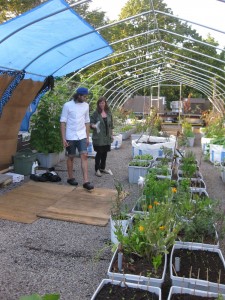
Parts and Labour's roof-top garden in Oct. 2010. The establishment wants to put a patio in. Photo courtesy of Parts and Labour
By Beth Macdonell
On March 9, The city’s Committee of Adjustment panel turned down a request by Parts and Labour (1566 Queen St. W.) to construct a roof-top patio.
Eighteen opposing community members showed up at the meeting and 68 people signed a petition submitted to the committee against an outdoor space, says Josie Kruzick, whose daughter owns a building next to Parts. Madam Gillian Burton noted the committee received many letters on the matter. Councillor Gord Perks (Ward 14, Parkdale-High Park) also sent the committee his recommendation to refuse the application.
If passed, the patio would have increased the venue’s capacity from 417 to 645 patrons. The roof-top is currently used as a garden to supply ingredients for the establishment’s restaurant, and holds some of the space’s mechanical equipment.
Those against the patio say the venue hasn’t respected neighbours and additional outdoor space will just make matters worse. “There is no proof that there will be more concern, or attention, or expertise applied to the roof-top patio than there will be to the front of the building,” says Josée Brome, a tenant living across the street.“I’ve nothing to say about what goes on inside, but I have not had a good night’s sleep on a night they’ve been open since they’ve opened.”
At decision time, committee member Robert Brown chastised the owners for not being clear in their intent. “As businessmen, you should have better answers. Would you be playing music? Will this be broadcast on the patio? No live bands?”
“My gut reaction is to refuse this application,” he continued. “I don’t think they’ve been sensitive to the neighbourhood with their existing operation … the fact that they haven’t done a noise study—listen, if you are an experienced operator you know exactly what you want to do.”
The owners say they need to ensure they get a return on their investment, but are willing to compromise with neighbours. “Obviously we’d like to be open until 2 a.m., but we are open to a bargaining process,” said Parts co-owner Jesse Girard to the committee.
“It wasn’t a decision that we didn’t expect,” co-owner Richard Lambert told the Gleaner after the meeting. “It doesn’t matter if you try for a patio on Queen East, or Parkdale, or anywhere in Toronto. People understand that people like to drink outside, but not in their area.”
The owners say there are many Parkdalians who welcome Parts and Labour, and would by happy to see a patio.
The agent and architect representing Parts told the committee that the business held a community meeting in January where they received support for the patio, and said he was surprised by the amount of opposition at the committee adjustment meeting.
“I get emails from people that support us, but they are not going to take the day off work [to come and speak]. The other people just show up. They are making themselves heard and other people aren’t,” says Lambert.
As for what’s next, Lambert says he can’t confirm if they will appeal to the Ontario Municipal Board. “Many of our patrons have told us they would enjoy an outdoor patio and we are trying to provide that.”
Tags: Liberty · News
March 10th, 2011 · Comments Off on TDSB-Onestop deal a no-go
The Toronto District School Board voted against a proposal to install advertising-based television screens in its high schools last night.
If the proposal had passed, screens would have been installed in 66 schools, displaying advertising 30 per cent of the time for at least the next seven years.
Ward 2 trustee and concerned parent Chris Glover voted against the idea, saying that it would be irresponsible, and hinder student learning.
“I don’t send my kids to school to watch advertising. There are enough distractions and they need to focus on learning.”
Glover said that trustees that were in favor of the motion asked that it be revised and then revisited in April.
Chris Bolton (Ward 10, Trinity-Spadina) could not be reached in time to comment on this story.
The revised motion would have individual schools vote on whether or not to accept the screens rather than the board voting on behalf of all the schools.
—Gurpreet Ghag
Tags: News · General