May 8th, 2015 · Comments Off on Early brewer the basis for Bloor Street’s name
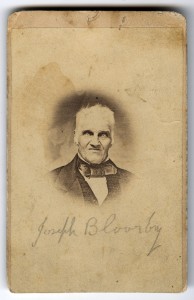
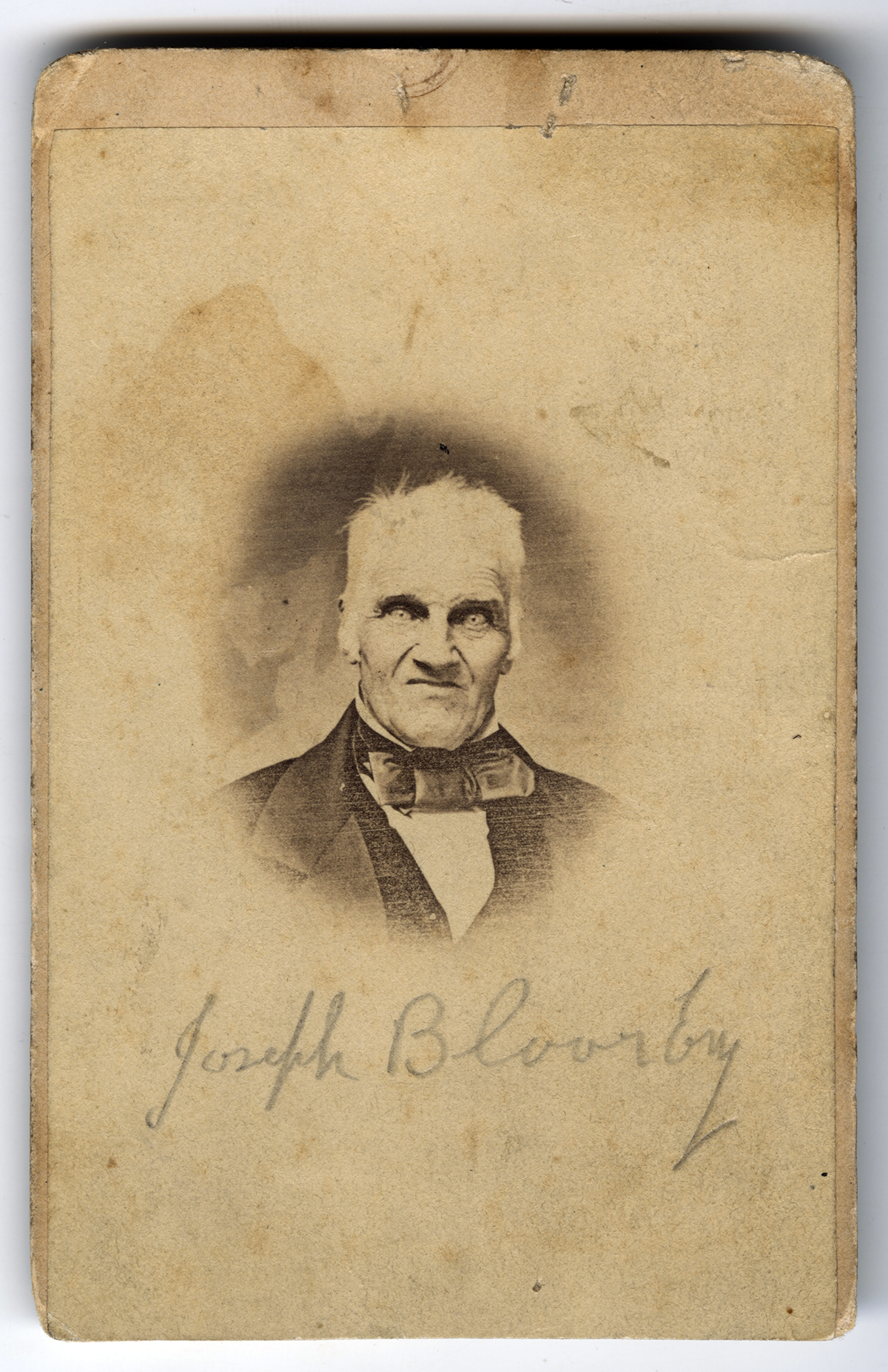
Portrait of Joseph Bloore, 1850. Unknown photographer.
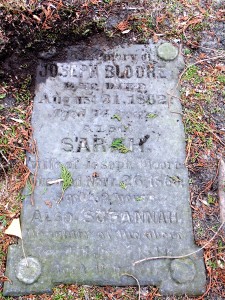
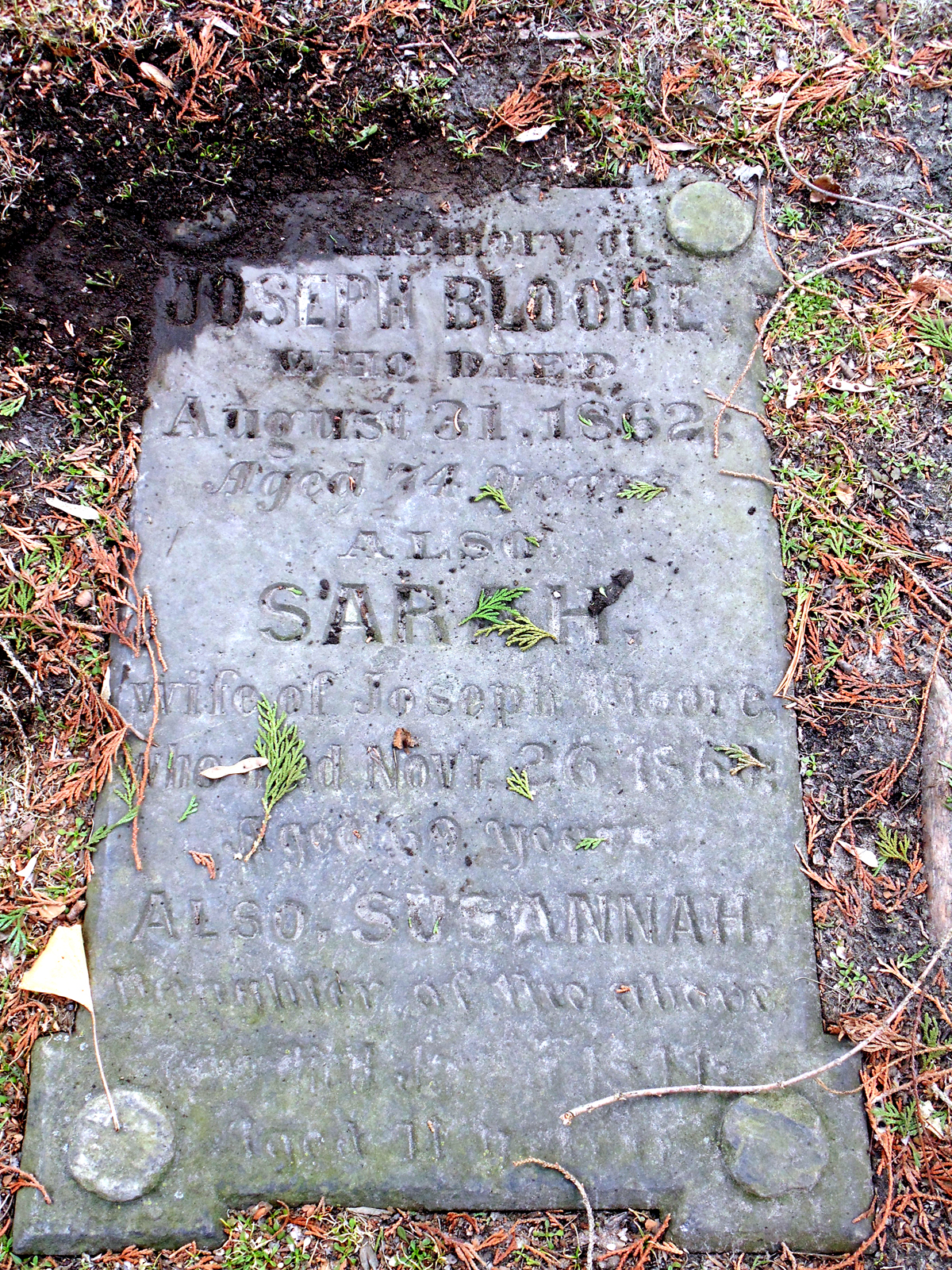
Necropolis Cemetery (200 Winchester St.)is the final resting place of Bloore, his wife Sarah, and their daughter Susannah. Photo: Brian Burchell, Gleaner News
Joseph Bloore co-founded Village of Yorkville
By Cole Burchell
Nestled among the tall trees of Rosedale Valley lies the Necropolis Cemetery, home to the peaceful resting places of Jack Layton, William Lyon Mackenzie, and another headstone that also bears a familiar name, albeit with an additional “e.” Joseph Bloore, the namesake of the bustling street we know today as Bloor Street, helped to develop and modernize the young city of York. He created places for family and community to grow; and set a model for city-building that current developers should emulate.
Born in 1779 in Staffordshire, England, he was a Methodist who immigrated in 1811 to Canada, where he quickly became a prominent figure in early Toronto.
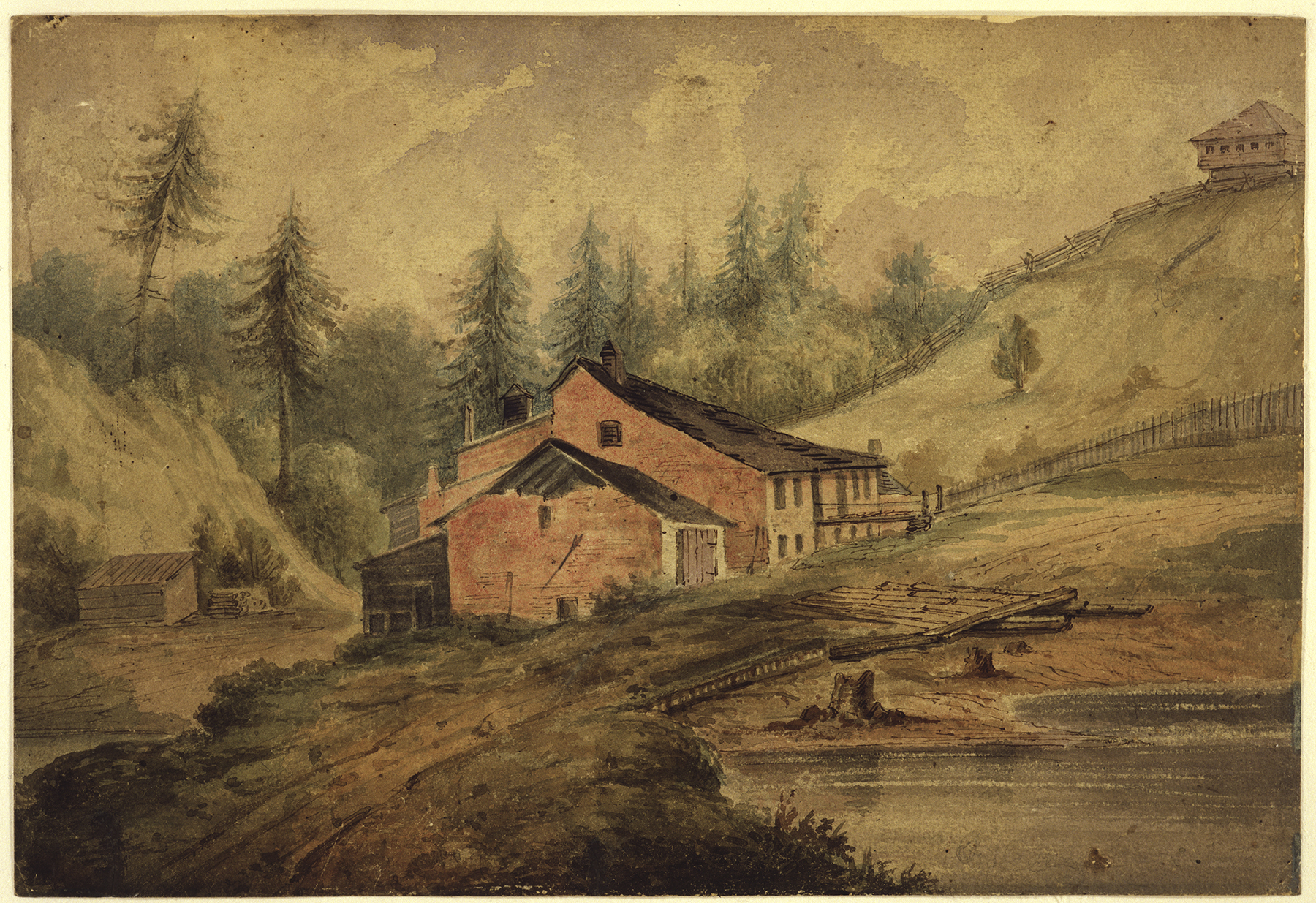
Bloore owned a hotel at 157 King St. E., known as the Farmers’ Arms Inn. Today the site of the hotel is home to the St. Lawrence Hall. In 1830, Bloore sold the hotel and built a brewery in the Rosedale Valley. The building was made completely of red brick and was powered by water from nearby Severn’s Creek that Bloore damned for use with the brewery. The subsequent pond was popular among local families for ice-skating. Bloore operated the brewery from 1830 to 1843 when it was bought by John Rose, a fellow brewer, and renamed the Castle Frank Brewery.
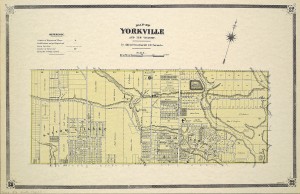
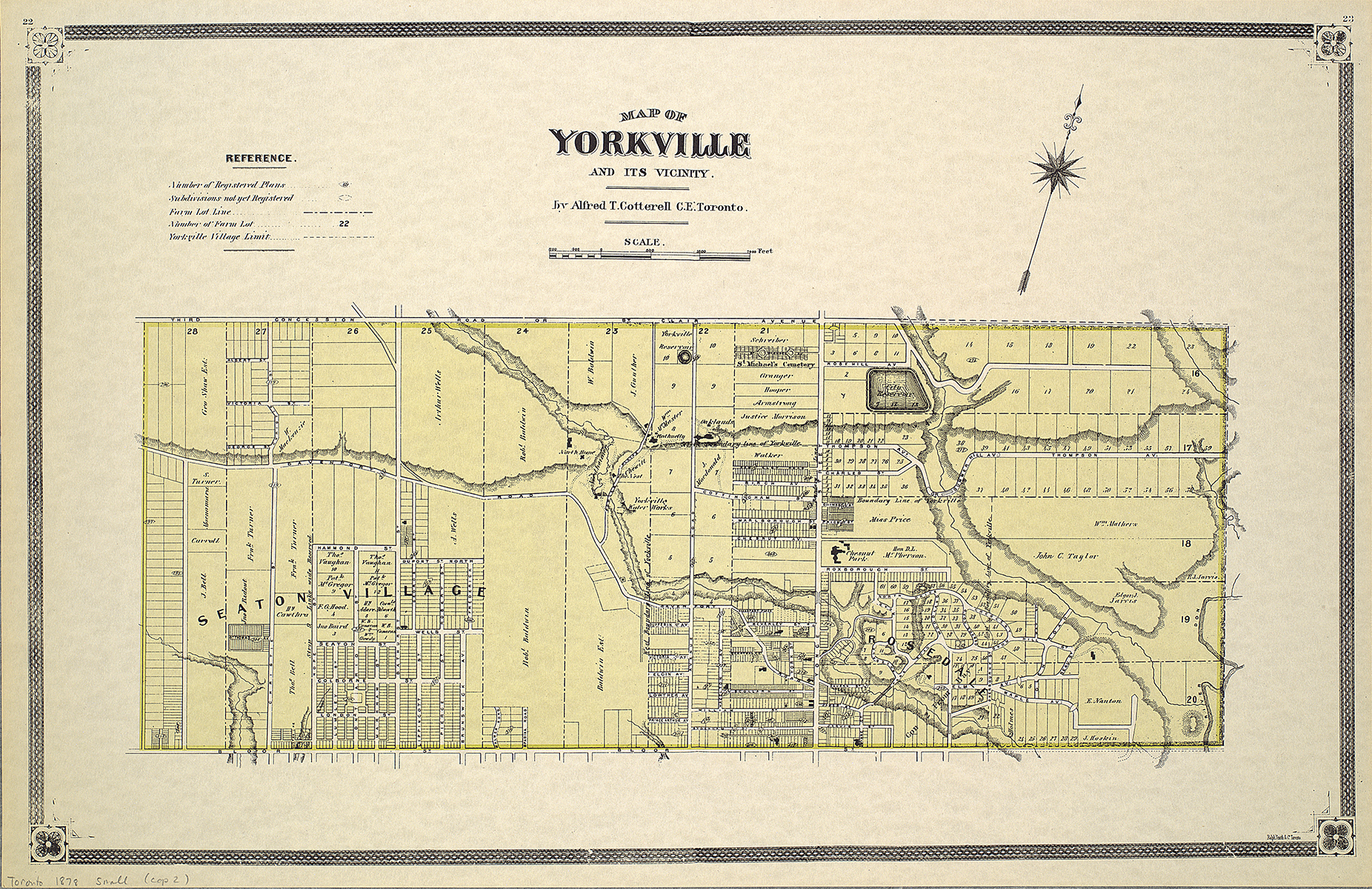
Map of Yorkville 1878. A commuter “suburb” with its own waterworks, firehall, and cemetery. Sheriff Jarvis rejected the original proposed name of Bloorville. Map by Alfred Cotterell. Courtesy Toronto Public Library – Special Collections
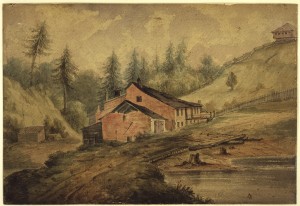
Bloore’s Brewery operated from 1830 to 1843. It was located beneath what is now the Sherbourne Street bridge just north of what was then First Concession Road, now Bloor Street. Watercolour by Richard Baigent (1865).
In the same year that he sold the hotel and built the brewery, Bloore founded Toronto’s first annexation and “commuter suburb” with Sheriff Jarvis: the Village of Yorkville. It was originally set to be named Bloorville, but Jarvis was opposed to this and so it became the name of the area now known for its high end shopping. The small community utilized its own waterworks, town hall, fire hall, and cemetery. That graveyard, located at the northwest corner of Yonge and Bloor streets, was known as York General Burying Ground, later Potter’s Field, and was Toronto’s first non-sectarian cemetery. There is no longer a field of course, but a plaque commemorating a field. The remains and the monuments moved to Mount Pleasant Cemetery and Necropolis Cemetery between 1851 and 1881.
Upon his retirement, Bloore bought a considerable portion of land on the north side of First Concession Road Line. This road was renamed three times: first St. Paul’s Road, then Sydenham Street, and finally Bloor Street as we know it today. It is unknown when, or why, the “e” was removed. At the time, he donated some of the land he had bought to a local church group in the area.
Joseph Bloore died on Aug. 31, 1862, at the age of 74. His physicality has been lost to the ages, although there exists an intimidating portrait of the man. In the photo, Bloore, his lips turned into a curmudgeonly sneer, stares out from huge white overexposed eyes with a piercing gaze.
So, the next time you walk down Bloor Street, remember its namesake, his piercing gaze, and his contribution to our city.
But please, add an “e”.
Tags: Annex · News · People
A tower of cubbyholes built to yesterday’s standards
By Terri Chu
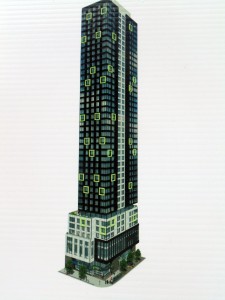
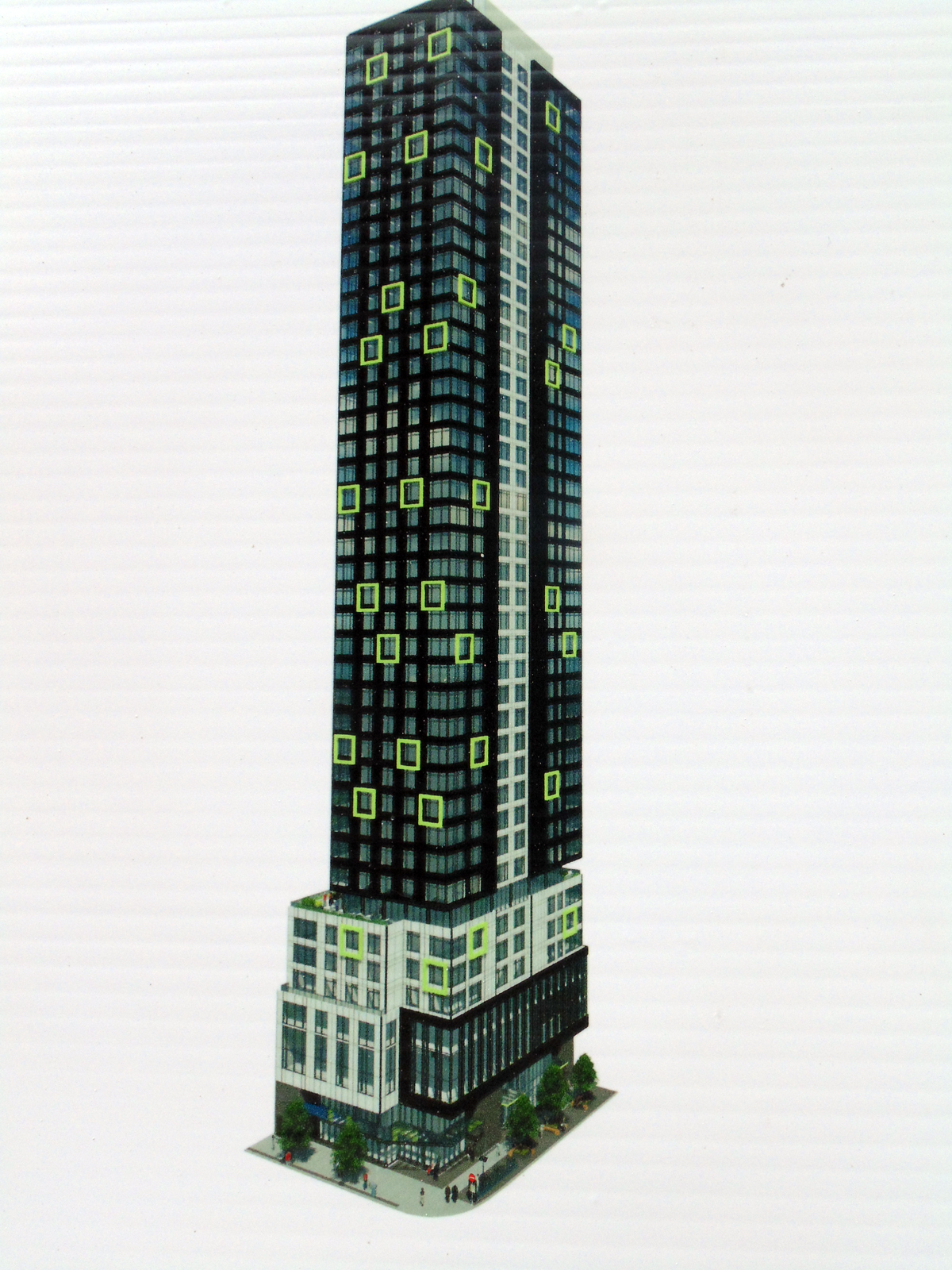
Architect’s rendering of the proposed 42-storey tower for 316 Bloor St. W. Photo courtesy 316 Bloor West Developments Ltd.
I have to admit, I’m not particularly fond of the development proposal at 316 Bloor St. W. First off, one has to ask what is the point of an 18-metre height restriction when developers think a 132-metre building proposal is fine and dandy. However, I digress. I’m more concerned about the environmental impact of their plan.
It is important to note that, in general, high density living means a lower environmental footprint. This is not some mere speculation but has actually been calculated and demonstrated based on a comparison between condo and suburban living. The big driver for this decrease is transportation energy. Having learned the craft of Life Cycle Analysis from some of the best minds in the field, I will say with confidence that the math is only as good as the assumptions we make. There is no doubt that people who live within biking/walking/transit distance to where they need to go will create far fewer emissions than people who drive SUVs to the corner store. The 316 Bloor St. proposal has 535 bike parking spaces for its projected 535 units. However, what we often don’t consider is the secondary energy use.
The plan includes units ranging in size from 275 to 644 square feet. To put that into perspective, my university dorm room was not much bigger than 275 square feet. When there’s a lack of space to enjoy yourself in your own home, entertain friends, and cook food, we tend to fill those needs outside our own space. A 30-minute visit to any condo lobby in City Place will show that the majority of groceries going up in the elevators consists of prepared food in single-use disposable containers. It is hard to blame this on anyone trying to cook in a kitchen with a footprint as a big as a tea towel. Any kind of sustainability initiative on the transportation front is made moot by a mountain of Styrofoam clamshells in the back dumpster.
A tall, narrow building design increases the surface-area to volume-ratio of the building, which results in a lot of surface area from which heat is lost. The developer answered my concerns about high levels of heat loss by assuring me that the building would be compliant with Ontario’s building code … a building code that was last updated three years ago to finally include some standards put forth in the 1980s. That’s about as reassuring as knowing a vintage car meets postwar era emission standards. From a developer in one of the most populous cities in Canada, I think it’s reasonable to ask for leadership in sustainability, not code followers. The current building code will basically allow it to leak like a sieve while everyone turns on their space heaters to keep warm. Flickering lights of late already indicate that we are under severe stress on our electricity grid, and we really don’t need another energy hog to make matters worse.
I’m all for higher density living, but I’m not convinced that this project will lead to higher levels of sustainability. By merely meeting the minimum requirements of the building code and creating units that will foster a need to eat takeout, I don’t believe this development will make our community greener in the slightest.
Sustainability means we do it right and take into account how to make the space liveable, reduce carbon (including secondary effects like buying things made elsewhere), and lessen the impact on the overall neighbourhood. If young people living in cubbyholes don’t have enough space to cook and need to eat prepared food, the local businesses will adjust to their needs. It also means an increase in the availability of those products and a decrease in the availability of goods with less packaging.
Sustainability means looking at the whole picture. The development at 316 Bloor St. W. takes a view as narrow as the building itself.
Tags: Annex · News

Gleaner correspondent gets a different view joining a nighttime patrol of the downtown core. A fender-bender, a distressed teenager causing a disturbance at home, and a search for a an elderly man suffering from dementia represent a typical shift. Photo: Brian Burchell, Gleaner News
Ride-along reveals unique perspective on policing in Toronto
By Cole Burchell
At the start of every shift, each member of the Toronto Police Service straps on a bulletproof vest before hitting the streets for a night that could bring anything. It isn’t often that the ranks of the service approve a member of the public to ride along in one of their squad cars, which they call scouts. But, one evening last month, I was lucky enough to get such an opportunity.
I rode with Sergeant Erik Epperson in a scout through the area covered by 14 Division, which includes a wide swath of downtown between Spadina Avenue and Dufferin Street, and from the lake to the Canadian Pacific rail line at Dupont Street. In addition, the division splits Parkdale with 11 Division and patrols the south side of Queen West to the lake.
It was a slow night at 14, as Sgt. Epperson gave me a guided tour of the new station on Dovercourt Road, now only two years old. I saw cell-blocks, interrogation rooms, two floors of underground garage, a parking lot equipped with its own gas pump, and a central headquarters. The state of the art building features geothermal heating and cooling, has a living green rooftop, and can generate its own electricity for weeks if necessary. Not a suspect, complainant, detainee, or police officer, I had a vantage point not often seen by the public eye.
Subsequent to the tour, the sergeant and I proceeded to the scout. The front seat, a very comfy one at that, gave a great view of the computer system placed within every car. The computer is the brain of the car, complete with a messaging service and GPS and hundreds of other features, all for the purpose of law enforcement.
After a quick explanation of the vehicle’s technology, we pulled out of the station and were on our way. Immediately, we received a call about a collision on Lakeshore Boulevard. We arrived on the scene and checked it out; it was a classic rear-ended fender bender. After everything was settled and the cars were being hooked up to tow, we took a drive over to the garage where all restorations of police vehicles in Toronto occur. The vast space housed everything from boats to mobile command units to horse-trailers.
After we got back into the cruiser a new call appeared on the car’s computer network. It was concerning a missing person, whose age was above 60, who had wandered from her seniors’ residence and hadn’t been seen since 10 a.m. that morning.
The sergeant described to me experiences on similar calls and said that sometimes those who suffer from dementia walk in a straight line, not necessarily going anywhere. On occasion, the service receives calls for seniors who have wandered right into the lake. The computer beeped, signalling that another cruiser was taking the call after being notified by dispatch.
That night we also received notice that a mentally ill man had supposedly destroyed the contents of a home; earlier that day I had seen his parents in the station asking for assistance. We arrived at the scene and Sgt. Epperson instructed me to stay in the car while he and two other officers entered the residence. After a few suspenseful moments in the car I heard a knock on the back door and was motioned inside by another officer. I was expecting to see substantial damage to the property, but when I entered everything was in near perfect order. Sgt. Epperson motioned me around the corner, and there was a large houseplant that had been uprooted from its planter. The distressed man was put safely in the back of a scout and taken to hospital for an evaluation, and the sergeant and I continued on our shift.
In between calls, Sgt. Epperson and I engaged in a lengthy conversation regarding law enforcement, its involvement with post-secondary education, and the recent stigma surrounding police forces in North America. He told me that a vast majority of recruited officers have post-secondary education, and that there is a common misbelief that most officers join the force immediately out of high school or with only a secondary diploma. It’s usually only after pursuing other opportunities that professionals change their focus to policing.
We also talked about C-51, the Conservative government’s new anti-terror legislation.
He said that in his view, which he believes is shared by most of the police service, the bill is nothing to be afraid of if you have nothing to hide. He also explained that issues of incompetence are revealed and dealt with at the recruiting level, and aspiring officers will not be inducted if the screening manager observes immaturity and incompetence. Sgt. Epperson added that the police service reflects the city’s diversity, and has officers from hundreds of different ethnic backgrounds.
After my long night in the squad car, it became clear to me that policing is a job like any other. It’s obviously more diverse and challenging, but a job nonetheless. A common misconception is that police enjoy “busting” the public. Rather, the truth lies in that police are just doing their jobs, the same as anyone else. There is still a pile of paperwork lying on their desks at the end of the day, which in many cases is the most boring part. Riding in a scout gave me a unique perspective on policing both in Toronto and in southern Ontario, one that I will carry with me for the rest of my life.
Tags: Annex · Liberty · News
May 6th, 2015 · Comments Off on

photo: Russell Lazar, Honest Ed’s
A recent sale of Honest Ed’s clever and quirky interior signs raised $2,500 for the Toronto Police Service’s 14 Division Youth Scholarship. Donor David Mirvish (right) with Gleaner publisher and scholarship coordinator Brian Burchell hold one of the signs that was auctioned off: “Free ride in a police car if you shoplift from this store”.
Tags: General
May 6th, 2015 · Comments Off on A pilot bike lane for Bloor Street
Make cycling safer in Toronto
By Joe Cressy and Albert Koehl
Many people fear change, even when research suggests they should welcome it. The same is true in Toronto where projects like bike lanes that promise benefits to our health, air, businesses, climate, and traffic circulation are nonetheless treated with some suspicion. This is part of the problem in the long-standing fight to make cycling safer in Toronto, including on Bloor Street in our neighbourhood. Fortunately, there is a safety net for such projects — a simple planning tool known as a “pilot” that not only shows people what a change might look like, but provides an opportunity to work out any unforseen problems.
In January of last year, the Annex Residents’ Association (ARA) asked then Ward 20 Councillor Adam Vaughan for a pilot bike lane on Bloor Street. The call for a pilot was supported by all five neighbouring residents’ associations (Harbord, Seaton, Palmerston, Huron-Sussex, and Christie Pits). In fact, the installation of bike lanes on Bloor Street has been part of the ARA’s cycling policy since 2011. At a public meeting in Oct. 2012 there was overwhelming support for bike lanes, as well as other safety improvements for the many area residents who get around by bicycle.
With a new city council in place as of Dec. 2014, planning has already commenced for a pilot bike lane on Bloor Street for Apr. 2016.
The case for bike lanes on Bloor Street is fairly well-known: the route is flat and unencumbered by streetcar tracks; there is a subway beneath the road; and many people continue to cycle on Bloor Street, despite the absence of cycling safety measures. These were some of the factors that were identified in a City of Toronto report two decades ago when Bloor-Danforth was identified as an ideal east-west cycling route. Since that time the case for bike lanes on Bloor Street — and across Toronto — has only become stronger.
In a 2013-14 study by Toronto Public Health (TPH) as part of its “Healthy Canada by Design” initiative, Annex residents identified bike lanes on Bloor as their top “active transportation” priority. In a number of recent reports, TPH has made it clear that the lack of safe cycling infrastructure deprives many residents, particularly motorists, of the health benefits of this enjoyable form of exercise.
In a 2012 review of cycling deaths, Ontario’s chief coroner recommended the implementation of “Complete Streets”, namely streets that can be shared safely by all road users, particularly vulnerable ones such as cyclists and pedestrians.
An earlier study by the Clean Air Partnership found that motorists bring only 10 per cent of the business to local shops — about the same amount as cyclists (even though cyclists are relegated to the risky door zone of parked cars, or squeezed perilously close to the curb during rush hour).
The same study found that parking in Green P municipal lots could make up for most of the loss of parking on Bloor Street. (Indeed, there are also hundreds of free daytime parking spots along side streets.)
Family-oriented bike parades by Bells on Bloor along Bloor Street over each of the last seven years have drawn up to 2,000 cyclists. Perhaps more importantly, residents continue to cycle along Bloor Street, despite the absence of measures to protect them. Imagine the potential for more shoppers to the area if bike lanes were actually installed.
The gist of these studies, reports, and observations is that our community has very good reason to welcome bike lanes on Bloor Street for the safety, health, environmental, and business benefits. A pilot project is an effective planning tool to move the idea towards reality while ensuring that the best design is chosen for our community.
For many years the calls for a bike lane on Bloor Street have grown louder and louder. Many high schools students at Central Technical School and University of Toronto Schools want bike lanes for a safer ride to school. Many residents want bike lanes to alleviate congestion and support healthy lifestyles. And many businesses want bike lanes because, simply put, they are good for business.
We believe the time is now to bring bike lanes to Bloor Street. And in 2016, with the support of many throughout our community, we’re looking forward to safely cycling along Bloor Street. We hope you’ll join us on that ride.
Tags: Annex · News
May 6th, 2015 · Comments Off on PortsToronto planning exercise
Four island airport expansion studies underway

A C100 series Bombardier Aircraft (seen here departing Shanghai), is the model that Porter Airlines proposes to fly out of Billy Bishop Toronto City Airport.
By Annemarie Brissenden
Torontonians attending an open house on Mar. 31 got their first look at what changes could result if jets were to begin flying in and out of the Billy Bishop Toronto City Airport (BBTCA).
PortsToronto (formerly the Toronto Port Authority) hosted the meeting to report on its Master Planning Exercise, which explored the theoretical impact the introduction of jet aircraft would have on airport vision, runways, taxiways, passenger activity, and noise, among other factors.
The results of the study indicate that air carrier slots could be increased from 202 to 242, and still remain within the estimated annual movement capacity limit detailed in the airport’s 2012 Master Plan. If hourly slots increased from 16 to 24, passengers travelling in and out of the airport would increase from 850 to 1,300, resulting in an increase from 2.7 million to 4.1 million passengers on an annual basis.
Adding jets would necessitate the relocation of a number of electronic navigational aids, and jet blast deflectors would be required at each end of the runway to mitigate the effects of jet blasts during takeoff. Ports-Toronto is also considering a road to the airport’s south field that “would tunnel under the west runway extension, providing access to potential future general aviation development and to Toronto Island when normal ferry access is unavailable”.
Some things that wouldn’t change include the length of the marine exclusion zone (although it would get slightly wider on the north and sides of its west end, and slightly wider on the south side of its east end); approach lighting from the water; and aircraft approach slopes. The study does not report on noise barriers; wind, wave, and ice considerations; or community impacts, as those areas are being reviewed under separate — yet connected — initiatives.
The Master Planning Exercise is but one of four studies that resulted from Toronto City Council’s April 2014 vote to defer making a final decision on whether to allow jets to fly in and out of the island airport. The other studies include a comprehensive environmental assessment, preliminary runway design, and a Bathurst Quay Neighbourhood Plan. PortsToronto is undertaking the first three, while the City of Toronto is managing the Bathurst Quay Plan. Each study is being developed in coordination with the others, and involves extensive public consultation and engagement.
PortsToronto representatives stress that its pursuit of these studies should be not be taken as indicative of support of, or opposition to, the Porter proposal.
But Norman Di Pasquale, chair of NoJetsTO, a group opposed to the expansion of the island airport, isn’t convinced.
“[PortsToronto] is effectively declaring war on our waterfront with [its] vision of a major jet airport,” said Di Pasquale in a statement dated Mar. 31. “The expansion plans are even worse than we feared, with a doubling of passengers to 5.5 million [a] year.”
Air Canada, which from the island airport only offers flights to and from Montreal, released a statement Apr. 2 responding to PortsToronto’s planning exercise that reiterated its opposition to jets at Billy Bishop airport. The airline has campaigned for access to more slots, 85 per cent of which are held by Porter Airlines, arguing that Air Canada’s limited access to slots prevents it from serving other short-haul markets, as demanded by its customers.
“We prefer to see a growing downtown airport focused on short-haul passengers using modern turboprop aircraft, which would be more consistent with the spirit and intent of the original tripartite agreement at Billy Bishop,” stated Derek Vanstone, the company’s vice president of corporate strategy, government, and industry affairs. “Ports-Toronto’s focus on jets is not defensible, as Billy Bishop certainly can prosper and grow as a turboprop airport.”
In a follow-up statement, Di Pasquale welcomed Air Canada’s stance.
“We are glad that one of the two tenant airlines at the island airport is taking a stance against jets,” said Di Pasquale. “NoJetsTO agrees with Air Canada that jets would violate the spirit and intent of the Tripartite Agreement.”
Billy Bishop is operated under a Tripartite Agreement between the City of Toronto, PortsToronto, and the federal government. Under the terms of the agreement, all three parties must agree to any changes before they can come into effect.
For further information on the Master Planning Exercise, or any of the four studies now underway regarding the expansion of the island airport, please see: www.portstoronto. com/PortsToronto/Proposed-Extension-of-Billy-Bishop-Toronto-City-Ai.aspx.
—with files from Samina Esha
Tags: Annex · Liberty · News
May 6th, 2015 · Comments Off on Mirvish Village sidewalk sale
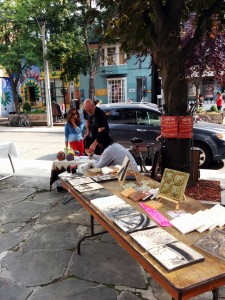
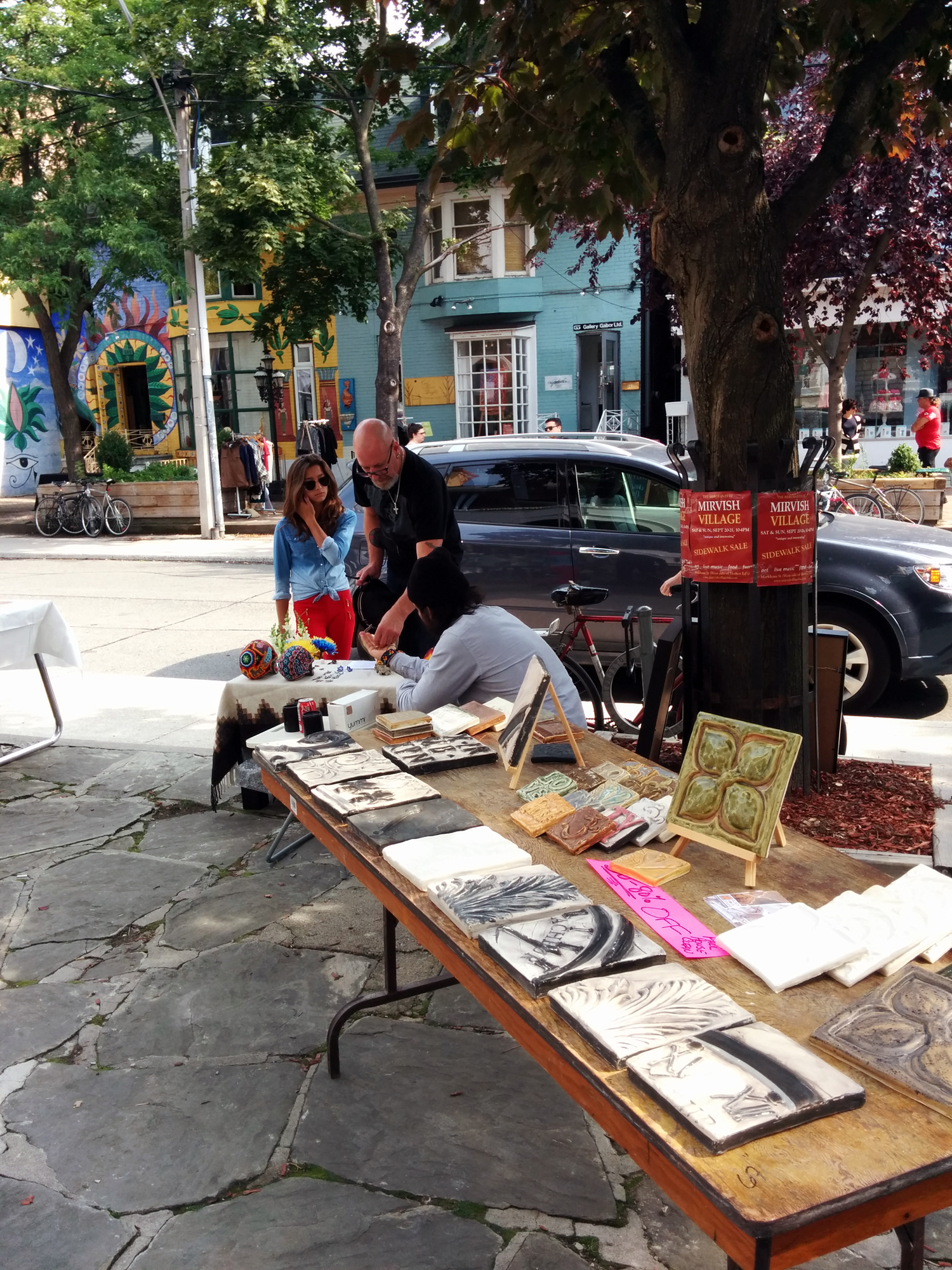
The Mirvish Village Business Improvement Area is hosting a sidewalk sale on Saturday, May 2 from 11 a.m. to 4 p.m. Vintage wares, artist’s creations, and new merchandise will all be featured, and local restaurants will offer up their tasty bites. This year’s new roster of live music will include performances from the Combo Royal, Toby Hughes’ Jazz Band, The Big Trio, Matt Simpson, and Indie Guitarist. Remax is giving away 100 free hot dogs from 12 p.m. onward, and it’s free comic book day at The Beguiling!
Tags: General
May 6th, 2015 · Comments Off on When did the Annex become downtown?
The City of Toronto’s Official Plan, enacted as of June 2006, is an all-encompassing document providing a roadmap for how, where, and when the city should develop. Its sections set out heritage policies, identify areas best suited for intensification, define the unique characteristics of individual neighbourhoods, and limit height and density where necessary. In short, the Official Plan highlights the type of neighbourhoods we want to create, and guides us away from the ones we want to avoid.
It’s a critical document.
Some estimates project that as many as 7.5 million people will be living in the Greater Toronto Area by 2025. The city is growing at a rapid pace, absorbing 50,000 newcomers every year.
And many of those newcomers are settling downtown. According to the city’s own website, downtown is at the centre of this growth. Downtown is growing four times faster than the city as a whole. It also welcomes the 250,000 people who commute into downtown by public transit on a daily basis, as well as the over 125,000 post-secondary students who are enrolled in downtown campuses.
No wonder the subway is so packed every morning.
But would it surprise you to learn that the city’s definition of downtown stretches from the lake north to the Dupont Street rail corridor, and runs east from Bathurst Street to the Rosedale Valley Road and Don River?
It certainly surprised us, when the matter came up during a community consultation meeting on the towering anorexic monstrosity proposed for 316 Bloor St. W. Does it make sense to equate the character of King and Bay streets with that of Bloor Street and Brunswick Avenue? How can we align the narrow bay and gable houses that line our leafy streets with the condominiums at the lower end of Spadina Avenue? It seems to us that the restaurants of Harbord Street have more in common with those of Ossington Avenue than the ones in the financial district.
For a place that’s often described as a city of villages, this broad definition doesn’t do justice to the diverse swath of land it covers. And it’s more than just a philosophical debate.
We wonder if equating the corners of the financial district to the corners of the Annex has led to the troubling rise of building heights, and a greater tolerance among urban planners (particularly those at the Ontario Municipal Board, which with regular and shocking aplomb seems to disregard the city’s attempts at setting its own course) for towers over turrets. Not that we’re arguing for a fortified base at Harbord Street and Spadina Avenue, but we could do with a little more respect for the quirky, historical character of our neighbourhood’s built form.
With the next provincially mandated review of the Official Plan set for 2016, it makes sense to begin having this discussion now. Maybe it’s time to break downtown into smaller parcels, classifying each with a descriptive specificity. How we label things determines how we view things, and labelling the Annex as something other than downtown might prevent developers from floating the idea of a 45-storey building at Bloor Street and Madison Avenue. It’s astonishing that the proposal has made it this far, because it just doesn’t make sense for the neighbourhood on any level.
It’s time to start defining what does.
Tags: Annex · News · Editorial
May 6th, 2015 · Comments Off on Living in a parallel universe

By Annemarie Brissenden
In apartheid South Africa, Black Beauty was banned from bookshelves.
With the words “black” and “beauty” in the title, it was seen as some kind of anti-government propaganda, even though “there are no black people in the book.” Set in nineteenth-century England “it is actually about a horse,” writes Ismé Bennie in her new book, White Schooldays.
The Harbord Village resident, who has lived in the area since 1973, began her career as a librarian in South Africa before immigrating to Canada, where she became a successful broadcaster, eventually running several specialty channels for CTV. But she always wanted to be a writer, and has collected a series of essays into a self-published memoir about growing up in South Africa during the 1940s and 50s.
The daughter of Jewish immigrants who fled the pogroms of Eastern Europe, Bennie was brought up in Vereeniging. Although her family was not particularly religious, they stuck largely with the close-knit white Jewish community that populated their neighbourhood.
Organized as a series of vignettes on different topics from the serious — how her family came to South Africa, being Jewish, and going to school — to the light-hearted — pets, food, and literary loves — White Schooldays provides a glimpse into her privileged world.
Bennie was a white child who unquestioningly accepted her segregated existence, and her descriptions read as an authentic reflection of her childhood naïveté.
After talking about how girls were required to take a domestic science class in high school that included sections on how to treat servants, she relates how “we illustrated our Dom Sci notebooks lavishly, mainly with cutouts from advertisements in US magazines.
“For my notes on handling the help, I remember my illustration came from McCall’s or Ladies’ Home Journal, and I had captioned it ‘The ideal servant.’ It was a beaming Aunt Jemima.”
In another anecdote, her mother, who didn’t drive, had to jump through several bureaucratic hoops to get permission for Daniel, her black driver, to take her to the white drive-in to see a movie.
“After the show she asked Daniel how he had enjoyed the experience. Turned out he had already seen the film in Sharpeville!” recounted Bennie.
In such moments, some additional commentary might be called for: how the Aunt Jemima character idealized slavery in the American South, or that Sharpeville was home to a large black community and the site of a massacre in 1960. However, the absence of commentary in these vignettes does help to evoke the pervasive ignorance of the context in which she was raised.
“I wasn’t exposed to anything that made me politically aware,” admitted Bennie during an interview, adding that she “wanted to put it down on paper to show what it was like.”
As Bennie grew older, political activism, however, crept into the corners of her existence.
Her university residence backed onto a main thoroughfare where “women of the Black Sash — a non-violent white women’s resistance organization — [would stand] on its sidewalks in silent vigil to protest the apartheid government’s moves to set up a separate school system for non-whites.”
And for stories set later on chronologically, Bennie narrates from a more mature, politically aware perspective.
She talks of flying back to South Africa in 1980 to visit her 80-year-old father, who was living in a Jewish nursing home. He is cared for by “black maids — black women still the caregivers of the whites, when they are young children and when they become helpless old men.”
In another section she writes of attending university:
“I see now that I was amongst the privileged, that I was living and learning in a parallel universe, and that millions of black kids were denied my kind of education. If only they had been allowed the same opportunities, South Africa would be a very different country.”
These days, Bennie is pessimistic about the future of the place she calls home.
“I’m not happy about the current state of affairs,” she said. “There’s a huge economic divide, and I can’t see any immediate resolution. There are too many insurmountables.”
Her sister lives in Johannesburg, which Bennie describes as a society built on fear, in which residents live a limited existence.
But, there are some experiences that remain positive.
“I get tremendous pleasure when I go to a restaurant or shopping mall, and it’s totally mixed these days.”
White Schooldays: Coming-of-Age in Apartheid South Africa is available as an e-book from Amazon.ca.
Tags: Annex · News · People
May 6th, 2015 · Comments Off on Assistance sought in sexual assault case dating to late 1970s
A man believed to have babysat children in the Spadina Road and Lowther Avenue during the late 1970s was arrested Mar. 25 for allegedly sexually assaulting a girl from the time she was five until she was eight years old. Police, who are withholding the name of the now 43-year-old victim, believe there may be more victims and have asked them to come forward.
Marco Marquez, 71, of Toronto, has been charged with rape, intercourse with a female under 14, and indecent assault of a female. The charges are under the Criminal Code that was in effect at the time of the alleged occurrences.
Released without bail on a promise to appear, Marquez’s first scheduled court appearance will be on May 6 at 11 a.m. at Old City Hall.
If you have any information on this case, please contact Detective Greg Forestall of 14 Division at 416-808-1405.
—Brian Burchell, Gleaner News
Tags: Annex · News · General
May 6th, 2015 · Comments Off on Hearty oatmeal cookies
Cheap, wholesome and supereasy
By Susan Oppenheim
How does it happen that an entire family and their friends become cookie people?
That would be me, my two daughters, and a favourite tenant, just as an example.
What is interesting is how very different we all are in our approaches to cookie making. I do kitchen-sink cookies, the oversized ones, big and hearty, using up any goodies I may have stashed in a cupboard, at the back of the fridge, or in my freezer. I even recycle cookies and candies people gift me; I substitute ingredients or wrap cookie dough around items and then bake them. Why people give cookies to cookie people is odd but they do. Many a shortbread has found its way into a pie crust just as many a SKOR bar or candy has become the centre of a peanut butter surprise cookie.
My elder daughter, Aura, is an aficionado of classic French recipes and attempts to be as authentic as possible on this side of the Atlantic. For her mom-and-pop specialty shop, Ambrosia Pastry in Waterloo, presentation is as important as ingredients. They have loyal clients who line up frequently for unique offerings and she tempts us all with weekly photos.
My younger daughter is a cross between a scientist and a nutritionist. She has a well-established specialty vegan and kosher cookie business called New Moon Kitchen that supplies many stores around Toronto, including Whole Foods and Costco. Also, like her sister, she is very easy on the eye and these two beautiful young entrepreneurs get loads of press, buzz, and write-ups. Eden’s cookies are extremely family-friendly. It was thrilling when after receiving some in a TIFF swag bag one year, Cher ordered directly from her.
This career move to being a cookie mogul has also affected a tenant who lived with us when she first moved to Canada from Colombia. Her name is Cookie Martinez, and she has one of those cute container storefronts at Dundas and Bathurst.
She spends summers working the street festivals, pop-up markets, and anywhere people look for true Colombian recipes and goodies.
For this month’s Gleaner recipe, I decided cookies would be a good choice in the spring weather. Whether it be for a lunch bag, a travel bag, a health club workout bag or just picnic or park food, here is my favourite drop cookie. It’s cheap, wholesome, supereasy to make, and allows for creativity.
This recipe makes a lot of cookies. I like to make them large and allow an extra two minutes of baking time, checking the colour to be a little golden not brown.
I space them well apart on the cookie sheet as they spread, and I use parchment paper rather than grease the trays. I bake them in the centre of my oven.
Here is what you can substitute:
- Butter with golden Crisco
- Vanilla with almond flavouring, lemon, rum, whatever you find in the flavouring aisles
- For the stuff part: chocolate chips, raisins, nuts (pretoasted), coconut, cranberries, just make up the measurement
Oatmeal cookies
Preheat oven to 350 degrees.
Cream together:
- 3/4 cup butter
- 3/4 cup brown sugar
- 1/2 cup white sugar
- 1 large egg
- 2 tablespoons water
- 2 teaspoons vanilla
In a separate bowl mix well together:
- 3/4 cup white flour
- 3/4 teaspoon baking soda
- 1 teaspoon cinnamon
Add creamed to dry ingredients with a food processor, mix master, by hand, whatever you have.
Add the stuff:
- 3 cups oats
- Stir in oats
- 1-1 1/2 cups “stuff”
I like either a fruity cookie or a chocolate nutty cookie.
Drop by double tablespoon on a parchment-paper-lined cookie sheet in the centre of the oven.
Bake 12-15 minutes.
Cool completely before removing from pans.
Susan can be contacted at javamama.susan@gmail.com
Tags: Annex · Food
May 6th, 2015 · Comments Off on “Vertical rooming house” rejected
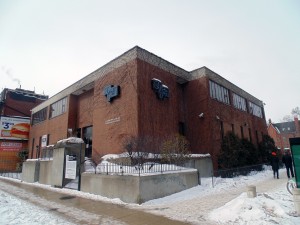
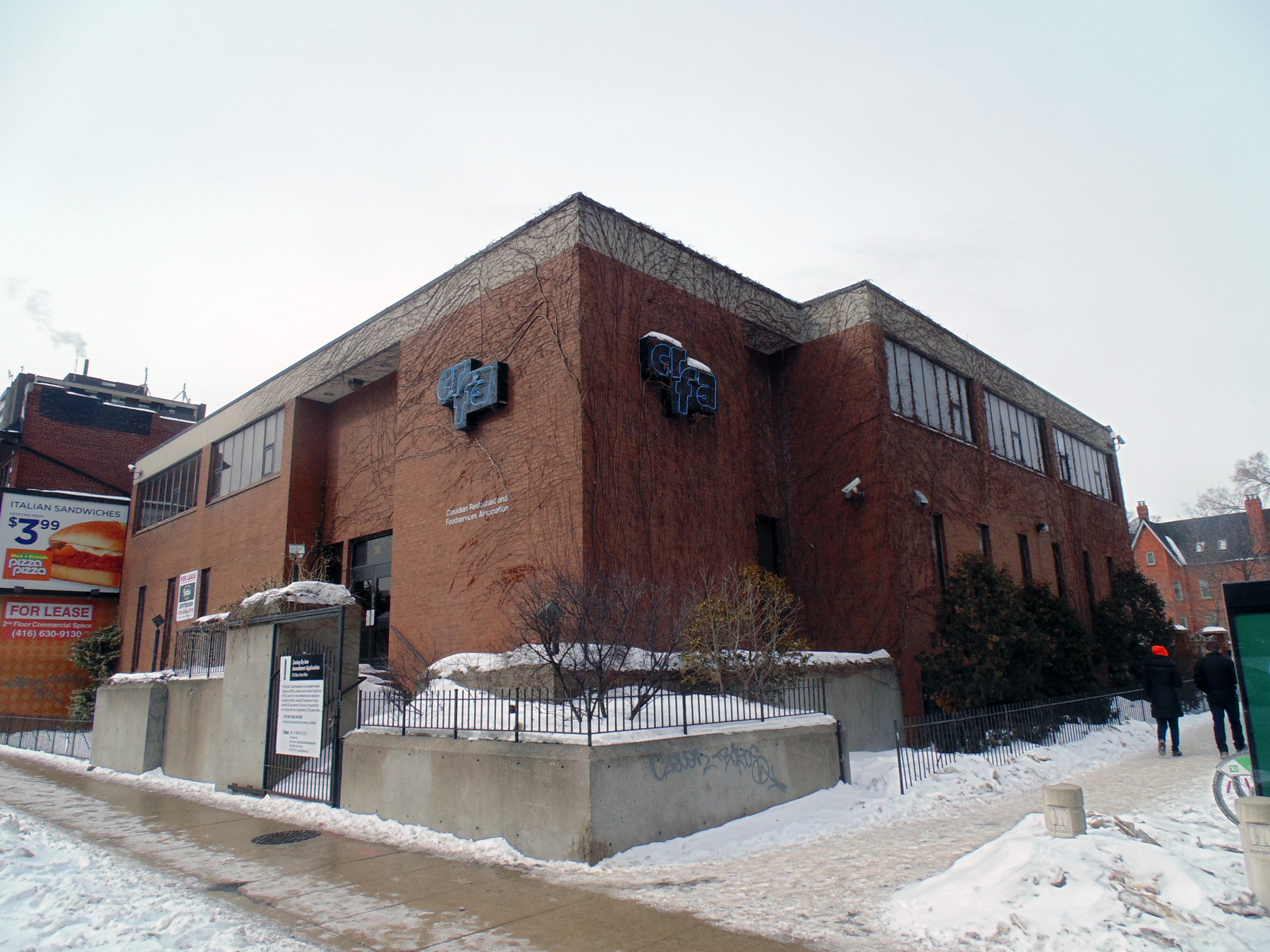
The relatively unobtrusive building currently at Madison Avenue and Bloor Street once housed the Boy Scouts of Canada and, until recently, the Restaurant Association of Canada. Photo: Brian Burchell, Gleaner News
Community members decry proposed Madison Avenue condominium
By Annemarie Brissenden
A developer’s proposal to raise a 42- to 45-storey, 535-unit condominium tower at 316 Bloor St. W. was met with jeering skepticism during a packed standing-room-only community consultation hosted by Joe Cressy (Ward 20, Trinity-Spadina) on Apr. 2.
The developer, State Building Group/Forest Hill Homes, fielded a team of representatives at the meeting. They included urban planner Peter Smith of Bousfields Inc., architect David Butterworth of Kirkor Architects & Planners, and a landscape architect from NAK Design Strategies tasked with “enhancing” Paul Martel Park in conjunction with the project. The large team endeavoured to convince Annex residents that the location at Bloor Street and Madison Avenue, with its proximity to two major transit interchanges, a high measure of walkability, and little recent development activity in the immediate area, was appropriate for intensification.
That justification, however, fell on deaf ears.
“Why does developing a neighbourhood always involve disadvantaging the stuff that’s already there?” asked a resident of 95 Prince Arthur Ave., who was also concerned that the proposed tower would overshadow the gardens on her building’s rooftop and in its courtyard.
Smith responded that unlike the “more massive slab style buildings” marking the area, the proposed slim, compact tower devoid of balconies would minimize any potential shadowing.
Butterworth, who previously worked on the Minto building at Yonge Street and Eglinton Avenue, added that the development would consist of small, compact one-bedroom and studio high-end professional units targeted at “young professional end users”. There would be a small number of parking spaces, some provisions for car sharing, and upscale amenities that might include a coffee bar or lounge.
Instead of reassuring those at the meeting, such information served only to heighten the concerns of community members, who made their feelings known during a lively question and answer session.
Tim Grant, chair of the Harbord Village Residents’ Association, was met with loud applause when he explained that local residents are “acutely sensitive to excessively high buildings. The problem is [that] 10 more buildings [will result from] this precedent, and create massive shadowing.”
“Clearly there are many issues to deal with,” said David Harrison, chair of the Annex Residents’ Association (ARA), who added that he was “astonished that no rationalization has been given for 42 storeys”. He characterized the building — “too tall [and] too dense” — as a “vertical rooming house”.
With the area set to absorb three potential student residential towers in the next decade, it’s a comment that resonated with many at the meeting.
Some fear that a condominium tower comprised largely of one-bedroom studios would not attract young, high end urban professionals as anticipated, but instead be purchased by investors who would in turn rent out the units to “transient” university students.
“With that kind of size, they are not going to stay long,” said a speaker from Robert Street. “What do they offer to [our] community?”
A St. George Street resident, who is “concerned about students renting from overseas entrepreneurs”, also struck a chord while responding to the developer’s plans for Paul Martel Park.
“Don’t offer us benefits that we already have,” he said. “I resent comments that suggest we could enhance the park.”
Named in honour of a cherished Annex resident, the small green space on Madison Avenue is near and dear to local residents. Originally a park that was dismantled to make way for the controversial Spadina Expressway, it was resurrected by the ARA under the leadership of Martel. Many of those present at the meeting volunteer time to preserve the park’s diverse ecosystem, and were not pleased with the landscape architect’s ideas, which included creating spaces for educational programming, introducing public art, and adding a performance space.
A Madison Avenue resident whose home faces the park wondered, “Why are you taking over our park?” while another speaker stated, “I’m sure Jane Jacobs is rolling in her grave.”
“This is really an investment for a lot of people, and not about creating and building neighbourhoods,” continued the St. George Street resident.
Although the developer’s representatives refused to commit to not taking their proposal to the Ontario Municipal Board, they did undertake to follow the process required by the City of Toronto regarding developments of this nature.
“We’re starting at the premise that this is unacceptable,” said Cressy, the local councillor.
He would like to see significant changes to the proposal before the planning department presents its preliminary report on the matter at a community council meeting in June.
There should be another community consultation in September, followed by a revised report delivered to community council in October or November, with the final proposal voted on by city council towards the end of the year.
Tags: General