July 31st, 2015 · Comments Off on ROM textile exhibit celebrates Tehuna dress
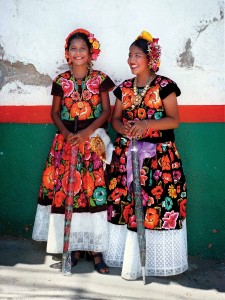
Courtesy Chloe Sayer, Royal Ontario Museum
The Royal Ontario Museum’s ¡Viva México! Clothing & Culture tracks the evolution of Mexican fashion. In a country like Mexico, where the textile arts reach back over centuries, fashion reflects history.
After the Spanish Conquest of 1521, for example, European styles influenced the distinctive clothing of the Mayan, Aztec, and other great civilizations. Frida Kahlo, born just before the Mexican revolution, was often seen in traditional Tehuana dress, as depicted at right.
Contemporary Mexican textiles, meanwhile, owe their vitality to the fusion of traditions.
The exhibit, a collaboration with PANAMANIA presented by CIBC, the arts and cultural festival of Toronto 2015 Pan Am/Parapan Games, runs until May 2016.
For further information, please visit www.rom.on.ca/ en/exhibitions-galleries/exhibit ions/viva-mexico-clothing- and-culture.
—Brian Burchell
Tags: General
July 31st, 2015 · Comments Off on This Spiderman is no hero
On May 2, near midnight, the Toronto Police Service received a call about a man wearing a Spiderman mask assaulting a boy near Augusta Avenue and Dundas Street. While wearing the superhero mask, 27-year-old Ashton Gray is alleged to have attacked a 16-year-old boy with a skateboard. It is reported to have been an unprovoked attack. The boy sustained serious injuries in the Kensington Market area incident.
Gray was apprehended on June 22 and charged with aggravated assault and assault with a weapon. He is also facing charges on outstanding matters separate from this case, including failure to comply with probation and failure to comply with recognizance.
Gray was scheduled to appear in court on July 2 at Old City Hall, but he refused to leave his jail cell for reasons unknown and so the date was moved to July 15. The purpose of the court proceeding was to give the accused and his lawyer disclosure for his case, which includes the evidence the Crown and police have to prosecute a case, namely witness statements and notes from police officers involved.
On July 15 the accused appeared in court via video. Gray was uncooperative during the proceedings, shouting and using profanity.
The judge ordered him to be remanded into custody pending a pre-trial proceeding, the date of which has not been set.
—Justine Ricketts
Tags: General
Lucky to have top professional in Canada, says producer

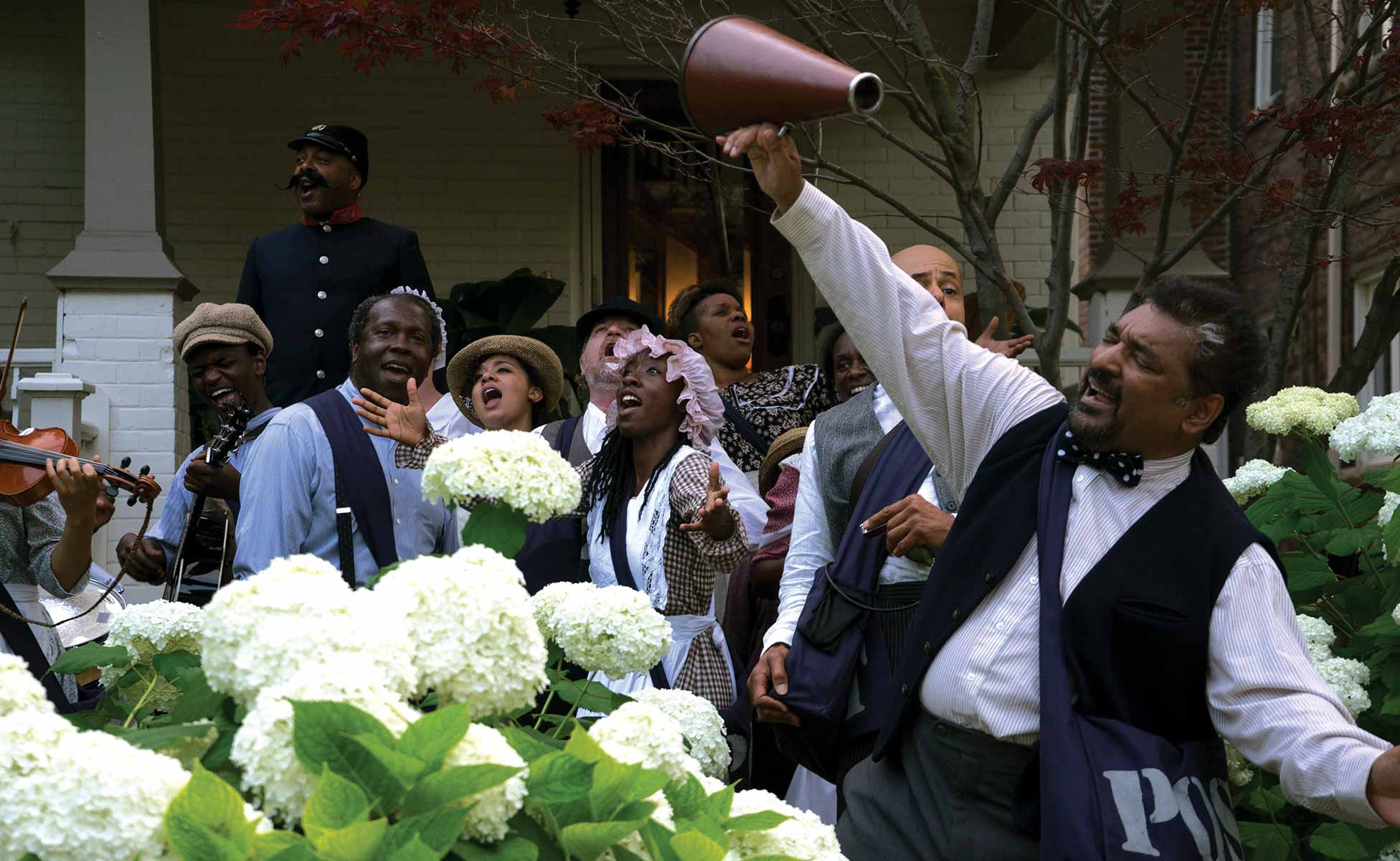
The Postman costume designer and PARA board member Kei Yano poses on Palmerston Boulevard with a borrowed production prop. Photo by Neiland Brissenden, Gleaner News
By Annemarie Brissenden
It all happened somewhat by accident.
When Kei Yano attended a meeting about a play that dramaturge David Ferry wanted to stage in the neighbourhood, it wasn’t with the intent of landing a contract.
She was there to represent the Palmerston Area Residents’ Association (PARA), where she sits on the board, and talk about logistics. But Ferry, a veteran Toronto actor, recognized the semi-retired costume designer and immediately asked her if she would consider doing The Postman.
“With a production of this budget we would normally have had to hire a talented rookie designer. Instead we have a consummate professional with an awesome skill set,” says Ferry, who worked with Yano on a variety of television sets in the 1980s and 1990s. “Having Kei on this production is to have one of the top professional costume designers in Canada.”
Yano says that from the outset she was intrigued by the production, which tells the story of Albert Jackson, Canada’s first Black postman, and is performed from porches on a series of streets in Harbord Village and the Palmerston Avenue area.
“I like the idea of doing it on the street,” she relates. “It’s intriguing, [and] gives so much more authenticity to the project.”
Dressing 17 actors with interchangeable roles for a site-specific production comes with a whole set of unusual challenges, like planning for weather and making sure the performers can move easily from porch to porch.
It’s also not linear, and while “the actors [each] have to wear one costume,” she picked certain things to identify each character.
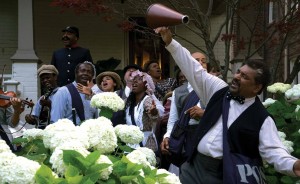
Sugith Varughese, at front in bow tie, performs as Councillor Earwax in The Postman on Palmerston Boulevard. Photo by Neiland Brissenden, Gleaner News
Sugith Varughese, who plays several key characters in the show, wears an outlandish bow tie as Councillor Earwax and then a turban as Professor Cumraswamy. In between scenes, the performers – who “have to take care of a lot of the stuff themselves” – store their props in a large mailbag that’s slung over their shoulders throughout the show.
Yano faced another challenge as well. A grassroots production does not have a large budget for costumes, so a designer has to be innovative and resourceful in her approach.
“You beg, borrow, and steal,” laughs Yano. “You have to be able to use stuff that you can get readily now.”
She does a lot of research, which she admits is one of her favourite aspects of costume design, but “part of it is saying, this is what [people wore then], and then everyone thinks it is”.
“I have found a lot of things in life are problem-solving,” says the “Annex kid” who has lived in the neighbourhood since she was three years old, attending high school at Harbord Collegiate Institute before heading off to York and Ryerson universities. She fell into costume design shortly thereafter, getting a job sewing costumes for Rudolph Nureyev’s production of Sleeping Beauty for the National Ballet of Canada. Then, “one thing led to another”.
Her 40 years in costume design included work at SCTV, E.N.G., and Littlest Hobo. “I did Littlest Hobo every summer for five years,” she says. “It was like going to summer camp; it was so much fun.” Yano also worked on Due South with Paul Gross, whom she describes as “so smart, such a bright guy”.
And attractive, she remembers. “My assistant couldn’t be in the same room and make a whole sentence.” These days, when she’s not designing costumes, she’s taking courses at Central Technical School, learning keyboard, gardening, welding, and plumbing. “I just wanted to know how things work,” she says. “It’s so much easier to handle plumbing now. I got a new fridge and figured out how to hook it up myself.”
Yano also organizes the Planet Palmerston, the street’s annual yard sale that raises money for Habitat for Humanity. “A nicer person you will not find,” says Ferry. “Our work is immeasurably enriched by having Kei with us.” For Yano, who didn’t quite anticipate having to dress so many actors, The Postman experience has been a pleasure.
“These guys are so talented,” she says. “The neighbourhood is really excited about [the production].”
Tags: Annex · Liberty · News · People
The thought of bicycling down a highway is a frightening prospect. It is dangerous, and that is why it is prohibited. Bloor Street is technically a highway too, King’s Highway No. 5 to be exact, named in 1925 for King George V. Those high hydro poles whose lights appear only to serve to illuminate third floor apartments are a requirement for “highways” such as Bloor Street. The Bloor Annex BIA (whose chair publishes this newspaper) attached decorative lights to the poles to bring some brightness down to the street. Introducing bike lanes on Bloor Street would be another step to share this roadway more equitably and more safely with the automobile.
The advocacy group Cycle Toronto, together with five residents’ associations (Seaton, Harbord Village, Annex, Palmerston, and Huron), have initiated an on-line campaign to get the city to follow through with its much mused-about plan to introduce pilot bike lanes to Bloor, presently intended for 2016. At press time, 1,615 people have signed the petition at BloorLovesBikes.ca. The Bloor Annex BIA is supporting a baseline “before and during” study of the impact of the pilot on its members. The assumption is that more bikes will bring more customers needs to be tested.
Bloor Street can be a hazardous place for cyclists, so much so that many choose alternative routes. And given the narrowness of the street, the question of getting doored is not if it will happen, but when. The odds are presently against the relatively vulnerable cyclist who dares to occupy that no man’s land between the parked car and the automobile travel lane.
It’s presently a hazardous roadway for pedestrians too, especially at rush hour. In both the morning and afternoon rush parking is prohibited in the curb lane. When there are two car-driving lanes, the left one is inevitably stop-and-go as the cars wait for those to complete left turns onto side streets. This makes the curb lane the passing lane and many cars see it as an opportunity to get ahead of the pack. This puts speeding cars and an overflowing sidewalk of pedestrians in too close for comfort proximity.
It is a misconception that all those cars that transit Bloor Street through the Annex are shoppers just looking for a place to park, so they can stop and buy something. They are just using it as a, well, a highway. According to a 2008 survey of 61 Annex area shops, restaurants, and 538 patrons, only 10 per cent of customers drove to the Bloor Annex neighbourhoods. Merchants’ perception was that 25 per cent of their customers got there by car. The survey, conducted by the Clean Air Partnership, also reported that there were 168 paid on-street parking spots (between Bathurst Street and Spadina Road) and 267 paid spaces in the off-street Green P lots. In addition, side streets offered a mixed bag of opportunities for free parking, where typically one hour is permitted during the day. These side street spaces were not counted in the survey. Of the paid spaces, even during peak periods, only 80 per cent were occupied, meaning at peak the Annex area had 86 vacant paid spaces. Eliminating parking on one side of the street would eliminate approximately 84 spots. That’s right, the Green Ps alone have the capacity to accommodate the lost spots on Bloor.
If the design simply removes parking from one side of the street, enough road width would be liberated for two bike lanes, one on the north side and one on the south. For the businesses on the side of the street where parking is removed, their customers will not be right on the curb of their shopping destination, but on the plus side the sightlines of the retail facade for those businesses will no longer be obstructed by a row of parked cars.
Bike parking will be key. This is a build it and they will come scenario, but we must be ready to accommodate them. Currently, the Annex is near the limit at peak times of being able to lock a bike, and the sidewalk can’t accommodate many more rings. Concentrated bike racks will need to be installed on side streets and public rights-of-way.
Toronto’s cyclists need a safe east-west bike route. It’s time we take some ownership of the highway to accommodate the bike. It’s really a village not a freeway. The Annex will become even more of a destination and we will all reap the benefits.
Tags: Annex · News · Editorial
July 31st, 2015 · Comments Off on Get smart on public safety
Build stronger cities
By Adam Vaughan
When it comes time to vote in October’s federal election, will this city try to make a point, or will Toronto residents make a difference? It’s an important question.
Recent elections and modern politics are increasingly reduced to ballot questions. The public debate is degraded by attack ads and propaganda masquerading as information. These messages are doing as much damage to our democratic process as policies that are not much more complex than bumper sticker slogans. Nowhere is this clearer than on the topic of public safety.
The world is a dangerous place, but that doesn’t mean Toronto can’t be safe. Much of the debate this year has been about international terrorism and Canada’s response, all the while important public safety issues are ignored. Rail safety, handguns, and the root causes behind the disappearance and deaths of close to 1,200 indigenous women all constitute threats to the safety and lives of Torontonians. We need a reality check.
Too many young people in Toronto are at risk. Instead of focusing on what new theoretical powers CSIS may or may not have, the focus should be on what we are doing to stop young people from falling between the cracks and ending up in jail instead of school. There are no letter-writing campaigns and clever tweets that are going to solve this problem. A government focused on building strong communities will and can create more resilient young people. Housing helps, youth employment programs are a must, but getting the police to act in a preventative manner is also important.
Instead, we often get a tough-on-crime approach offered to us, as if anybody is actually proposing to be “soft on crime”. What we really need is to get smart on public safety and find a responsible way to both protect the public and protect people’s civil liberties. Nowhere is this more obvious than on gun control. Living in a safe community is a right that needs to be protected.
After the tragedy in Lac-Mégantic, the Conservative government still cannot get it right on rail safety, and are still not employing enough rail safety inspectors. Moving dangerous freight by train through major cities not only puts people at risk, but ties up the lines that would be better used moving people. Toronto needs a federal partner that provides leadership on this file before the truly unimaginable happens again.
Our city is home to one of Canada’s largest Aboriginal and First Nations populations in the country. The Truth and Reconciliation Commission identified steps cities can take in partnership with First Nation governments and Parliament to correct the injustices that centuries of colonialism and decades of harmful government policies have inflicted. A good first step is a national inquiry on how and why 1,200 indigenous women have disappeared or been killed in Canada. Too many of these missing or murdered indigenous women have been lost to us in big cities like Toronto. Shelters for women trying to escape violence, and housing for students and individuals, families, and seniors, would go a long way towards protecting the vulnerable and giving the next generation a fair start in a challenging city. Together we can reconcile the past by embracing these truths, and facing the future by making this city safer for all of us.
Many of the challenges facing Toronto require a new partnership with Ottawa, but they also require a stronger partnership between government and the communities that elect politicians. This is the real change that’s needed.
It’s amazing to see how many of these challenges fall under the convenient heading of urban infrastructure. Whether it’s rail or housing, transit or jobs, building a stronger Toronto is the best way to create a safe city too.
This election we have to make the choice not to be seduced by slogans. We need to find a way to leave the battleground and embrace our common ground. This election we need to make a difference, not just a point. We need change. Toronto needs it as badly as Canada.
Adam Vaughan is the member of Parliament for Trinity-Spadina.
Tags: Annex · Liberty · News
July 31st, 2015 · Comments Off on Grading our greenspace
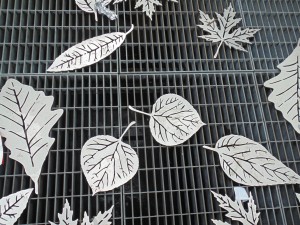
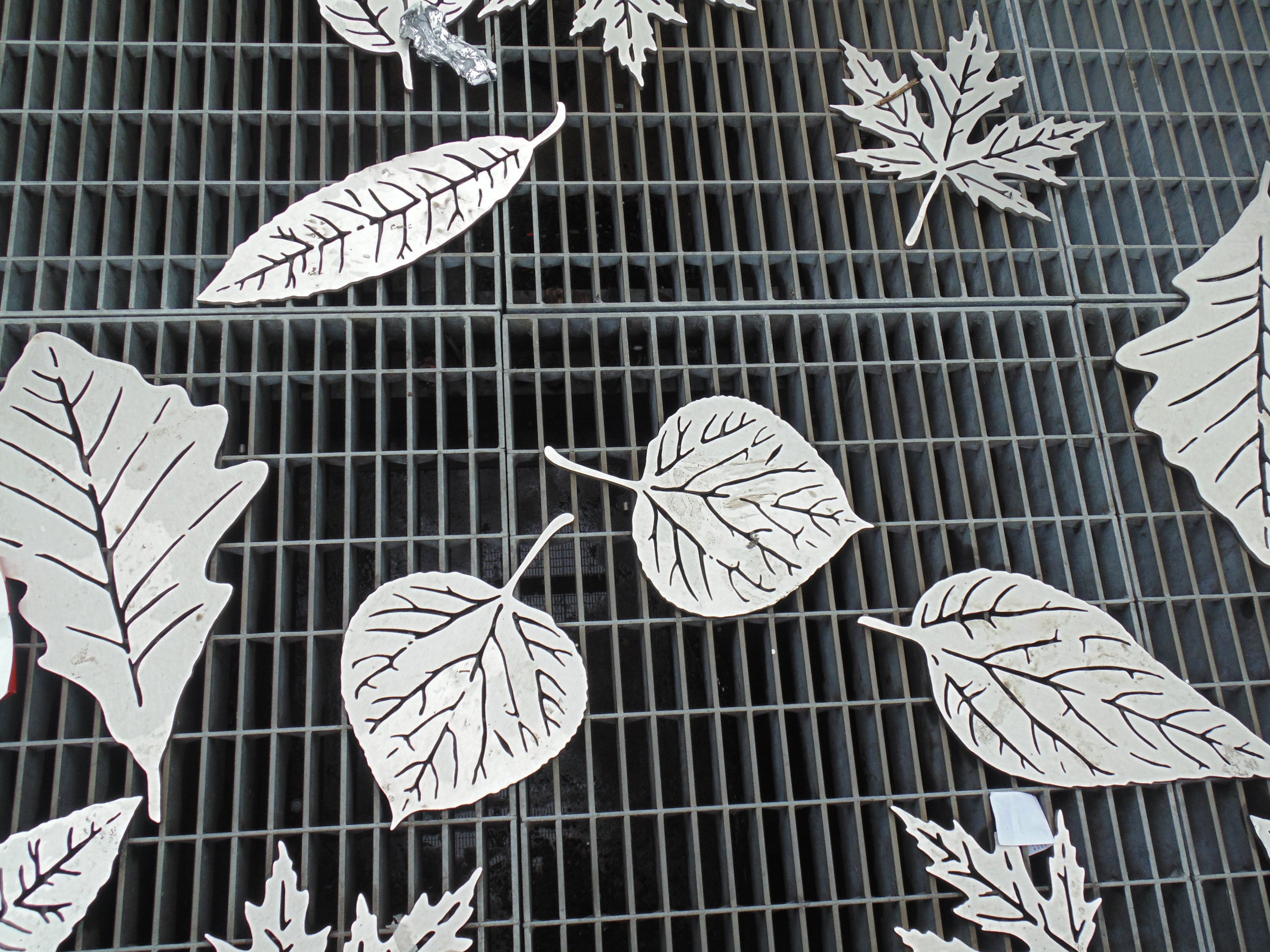
Steel leaves welded onto the Toronto Transit Commission venting grills at Matt Cohen Park add to the park’s theme of balancing nature and urban living.
Park marks
The return of summer also marks the return of Grading our Greenspace, The Annex Gleaner’s annual parks review. In this popular feature, we visit local parks and rate them on factors like amenities, cleanliness, and ambience. In part one, we rate eight parks, noting when we visited each one, and featuring our favourite overheard bon mots. Let us know what you think of our assessment by dropping us a line at gleanerpub@ gmail.com. All reviews and photographs are by Justine Ricketts.
Matt Cohen Park
Spadina Avenue and Bloor Street West
Time: 12:00 p.m.
Grade: C+ (last year C)
Reason to go: The park is conveniently located at Bloor Street and Spadina Avenue and is immediately adjacent to the western flank of University of Toronto Schools (UTS). Plaques line the pathway of the park, featuring excerpts from the work of Toronto author Matt Cohen, for whom the park was named. It is an outdoor lounge for UTS students to sit and talk. Huge domino-shaped stone seats and beautiful steel leaves bring artistry to the area. The winding pathways, tall trees, and abundance of flowers create a pleasing aesthetic. Unfortunately, on the day of this review, the smell of tobacco, the use of profanity, and litter were apparent. The loud sounds of traffic can also be heard around the park due to its close proximity to the busy drivers on Bloor Street West.
Overheard: “You’re not the boss, you’re not the manager, so give me my beer and get out of my face.”
Fact: Named in 2001 to honour the late Matt Cohen, who was a long-time resident of the Bloor-Spadina neighbourhood. In his 1999 memoir, Typing: A Life in 26 Keys, Cohen described Spadina Avenue as “the centre of the universe”.
Taddle Creek Park
Bedford Road at Lowther Avenue
Time: 9:40 a.m.
Grade: A+ (last year A)
Reason to go: The park is well maintained and it is a quiet area for people to relax and enjoy the sounds of birds chirping and children playing. There are a lot of mature trees surrounding the park with a backdrop of red brick Victorian homes that add to its visual appeal. The ground is free of litter and the metal benches are spotless. This well-constructed park is accompanied by a huge steel fountain that sits surrounded by lush greenery. The playground is equipped with multiple slides, swings, climbing bars, and a sliding pole. Often, children can be seen playing in the sandbox, with a variety of toys from beach balls to toy trucks.
Overheard: “No Granny! I can go down the slide by myself!”
Fact: The park is named after Taddle Creek, a lost river that is buried under our streets today. It once flowed south from Bloor Street, passing the University of Toronto campus and the Royal Conservatory, where it continued and formed McCaul’s pond, named after John McCaul, the first president of University of Toronto.
Huron Street Playground
Huron Street and Lowther Avenue
Time: 11:40 a.m.
Grade: B- (last year A)
Reason to go: There are not many reasons to go to this park. It is unkempt, the grass is sparse, and in its place is dirt. The park is completely fenced and is small-dog friendly, but there is already a graffiti problem on the playground equipment as well as on the storage room nearby. There are only two benches, which provide insufficient seating, and several bird carcasses were spotted on the day of this review. It’s shocking to see such a poorly maintained park in this otherwise quaint neighbourhood.
Overheard: Sounds of nearby construction.
Fact: Jane’s Club students from the University of Toronto took the initiative for renovations to the park.
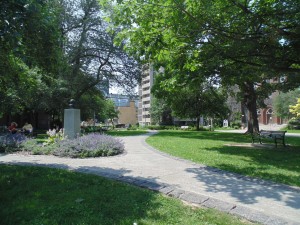
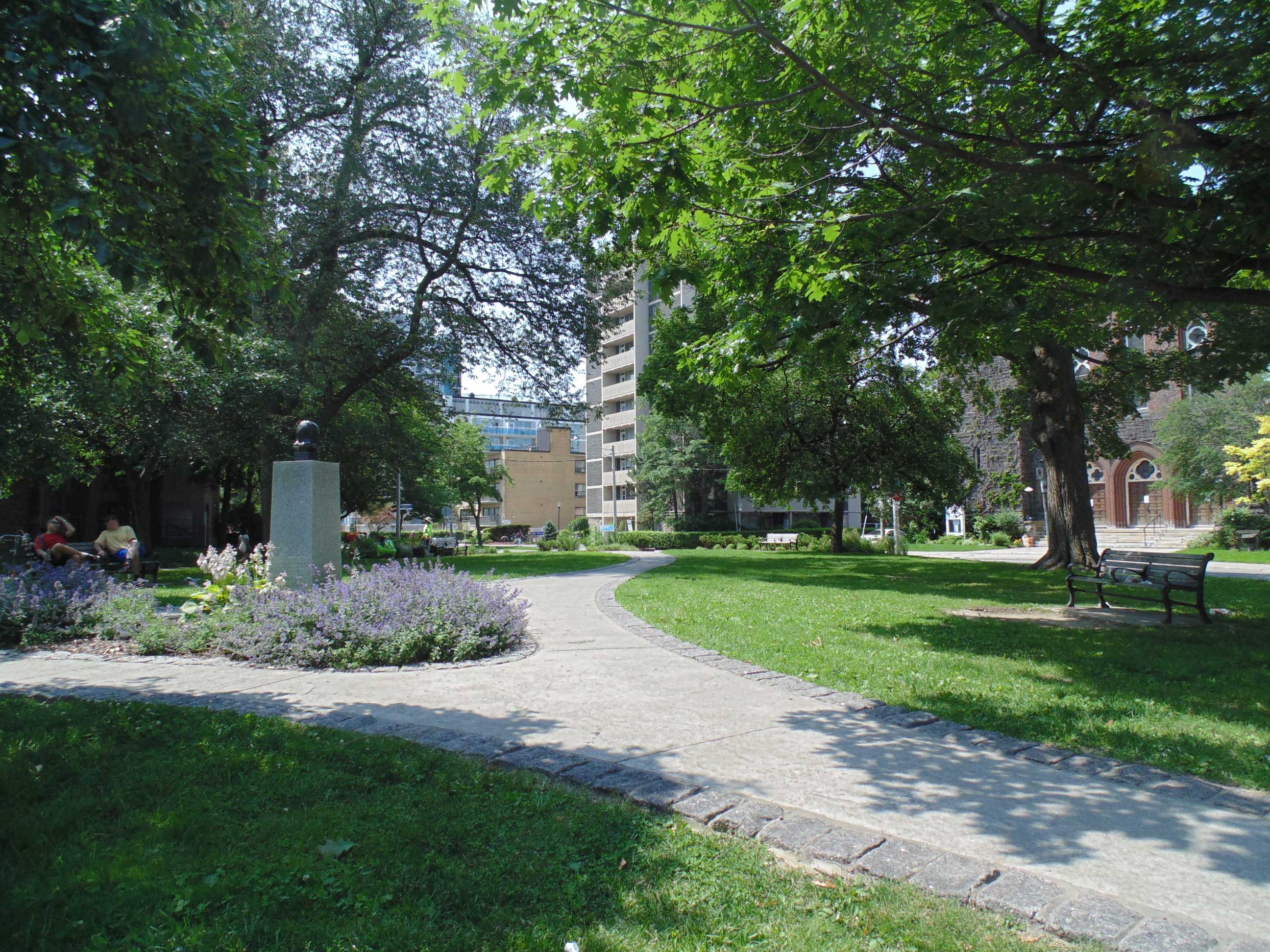
A stone border lines the pathway at Gwendolyn MacEwen Park.
Gwendolyn MacEwen Park
Between Walmer Road and Lowther Avenue
Time: 11:40 a.m.
Grade: B (last year B-)
Reason to go: Gwendolyn MacEwen Park is a nice community greenspace with a stone slab walkway and several plants along its path. A number of benches are scattered around the park with great shade provided by the tall trees overhead. There is a need for more garbage receptacles as most of the benches are covered with litter. In the centre of the park, surrounded by flowers, is a bust of Gwendolyn MacEwen, a Toronto-born author and poet; under the bust is a popular quote from her poem, Late Song.
Overheard: “Let’s bring Josh here with us next time.”
Fact: Gwendolyn MacEwen served as a writer-in-residence twice at the University of Toronto (1986 and 1987), and the park was named in honour of her memory and her contribution to literature.
Huron and Washington Park
Huron Street and Washington Avenue
Time: 12:20 p.m.
Grade: A (last year B)
Reason to go: This park is lively and welcoming. It has newly renovated playground equipment that attracts a lot of children who come and go throughout the day. The updates to the playground include slides, swings, and spring riders as well as a new rock climbing wall and balancing beam. There is also a well maintained sandbox. The playground area is completely fenced and tall trees line its perimeter. The park did have a need for more garbage receptacles in previous years but that doesn’t seem to be a problem this year. There is plenty of seating on benches, picnic tables, and a grassy hill at the south end. Overall it is a great park with a good location and a large playground and picnic area.
Overheard: “Come look, the horse has water in it!”
Fact: The Huron-Sussex Residents Organization hosts a pumpkin carving festival in the park on Halloween.
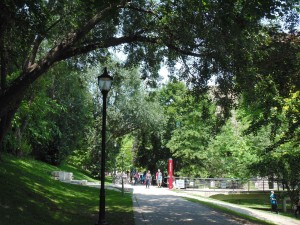
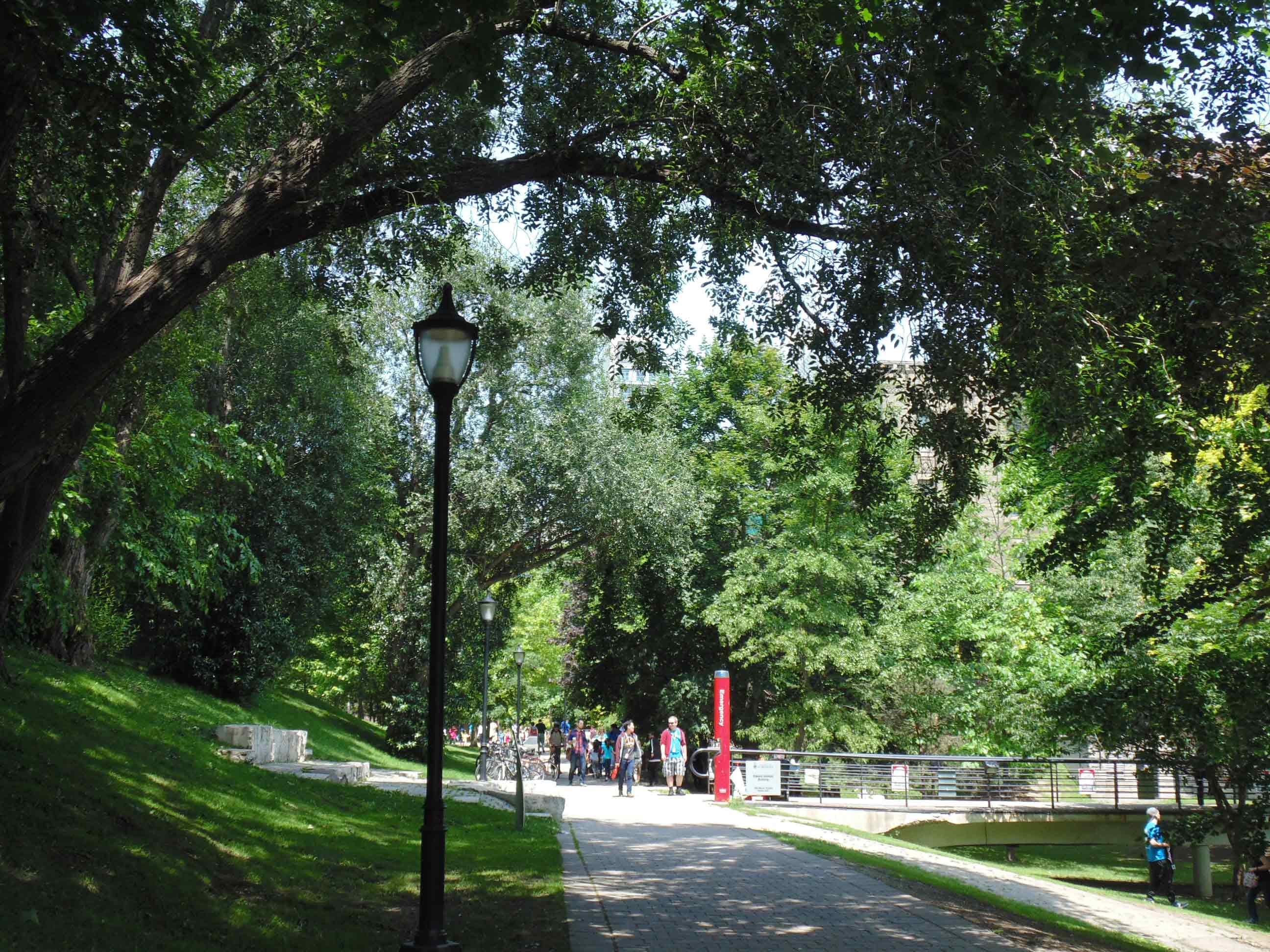
Nestled behind the ROM, Philosopher’s Walk is lush and peaceful.
Philosopher’s Walk
Bloor Street and Hoskin Avenue
Time: 12:40 p.m.
Grade: A+ (last year A+)
Reason to go: This is the most crowded and fun park visited in this year’s review. It is lively with a beautiful brick footpath and Victorian-styled lamp posts. The trees shade the walkway and make the trail seem secluded from the hustle and bustle of Bloor. The park is situated between the ROM and the Royal Conservatory of Music, and receives many visitors enjoying the sights and office workers out to have lunch. Summer camps also visit the park to play ball games and eat lunch. It is one of the best spots for a picnic or just to relax and, because of this, the park is busiest during lunch hours.
Overheard: “Let’s play sandman! Oh wait never mind, there’s no sand here.”
Fact: The winding landscape of Philosopher’s Walk was once the natural waterway of Taddle Creek and was buried in the 1880s but still flows underground today.
Aura Lee Playground
Robert Street and Sussex Avenue
Time: 12:00 p.m.
Grade: F (last year F)
Reason to go: This park has little appeal to it. On paper there are plenty of facilities including an artificial ice rink, playing field, street hockey court, tennis court, volleyball court, and ample trees and flowerbeds. Unfortunately, none of these are in working order except for the field which is padlocked and the trees that have withstood neglect. This is a prime example of the University of Toronto (U of T) and City of Toronto’s inability to work together to create something worthwhile for the community.
Overheard: The silence of a park not worth visiting.
Fact: The playground is owned by U of T while the south portion is on loan to the City of Toronto and is used as a park, also known as Robert Street playing field.
Albany Parkette
Albany Avenue, north of Bloor Street West
Time: 9:00 a.m.
Grade: B (last year B)
Reason to go: This is a well used parkette that has improved tremendously in recent years. It is right beside Bathurst subway station and attracts a lot of commuters who take short cuts along the alley that runs south of the station to the parkette. Many stop to admire the beautiful graffiti mural there. There are multiple stone tables with built-in checkered boards to play chess or checkers. There are large flowerbeds and sufficient garbage receptacles although on the day of this review there was trash strewn about. Despite the proximity to the subway station and busy Bloor Street, it is a quiet oasis.
Overheard: “Just leave the bird alone.”
Fact: Also known as Seaton Park, which was named after Lord Seaton, a former lieutenant governor of Canada.
Tags: Annex · News
July 31st, 2015 · Comments Off on Leave pre-packaging behind
Make the most of the summer garden
My favourite part of summer is about to arrive! The late summer and early autumn canning season is about to get under way. Buying local is one of the easiest ways we can lower our carbon footprint since shipped food is such a big part of it. While I prefer to buy organic and local when possible, I’ll take local over organic produce shipped a long way. Beyond just the carbon footprint of conventionally grown vegetables, the fertilizer runoff into our lakes and rivers makes the decision an easy one. Farm runoff made Toledo’s drinking water unsafe to drink last year. This is an environmental catastrophe waiting to happen if we don’t address the issue soon. Toronto’s water supply is also susceptible to the same fate.
One can scour local markets for fresh produce and, if you’re lucky, farmers will often sell “seconds” by the flat. This is produce that might be bruised, shaped oddly, or otherwise imperfect in some way. At steep discounts, this is perfect for sauces, jams, and pickles. Not only is canning a fun weekend activity, it connects children with food and goes a long way towards eating local and helps in sustainability. The investment of a weekend can get me almost an entire year’s worth of roasted pasta sauce (loose recipe below).
By making our own sauces, we save the transportation of pre-packaged goods and the packaging itself which can often amount to a lot of waste (not just the packaging we see, but also the freight packaging we don’t see). The fact that homemade sauce is tastier than anything I’ve ever found in the store is a bonus. Arguably in the making of the sauce itself, mass production is more energy-efficient than small-batch production in your own kitchen, but the crushing down of one glass jar easily undoes that efficiency. As much as we like to think we recycle glass, a lot of it gets tossed in the landfill and even the stuff that is recycled gets crushed down for a new life.
To optimize the summer growing season even more, I will keep the ends and peels of my produce in the freezer. When I peel carrots, potatoes, and the best the summer has to offer, all the scraps get kept until my next batch of stock (which I usually make in the fall and winter when the house could use the heat and humidity). The less food we waste, the greener our kitchen becomes. Food waste is a big contributor to greenhouse gases that often gets overlooked.
As we hit peak summer, enjoy the great local produce. You’ll be supporting local farmers, reducing your carbon footprint, and eating healthy and delicious food! The best stuff rarely makes it to the supermarkets since it tends not to travel or sit well. Our own Bloor Borden Farmers’ Market has a lot of great vendors (all local and some organic). By buying directly from farmers, you are supporting them and get an opportunity to ask about what goes into your food. As a bonus, Jenna the balloon lady makes balloon animals for the kids! The Bloor Borden market is open every Wednesday from 3 to 7 p.m.
Summer roasted pasta sauce (quantities only approximate)
- 4 to 5 pounds heirloom tomatoes (they’re so much sweeter)
- 1 pound summer squash
- 1 bunch carrots
- 2 onions
- 1 bulb garlic
- 1 bunch basil
- 1 hot pepper (optional)
- Olive oil
- Salt and pepper
Cut all vegetables into bite-sized pieces. If you prefer, you can skin the tomatoes but I like to leave them on for texture. Chop onion and garlic and mix with vegetables. Drizzle with enough olive oil to coat. Roast in a 350°F oven for about 1 to 1.5 hours until cooked down. Put into sterilized jars and pasteurize.
To pasteurize: Submerge 1 litre jars in boiling water for about 45 minutes. Smaller jars take a bit less time. Once filled, the air will escape the lid and when cool, create a vacuum seal.
Terri Chu is an engineer committed to practical environmentalism. This column is dedicated to helping the community reduce energy use, and help distinguish environmental truths from myths. Send questions, comments, and ideas for future columns to Terri at terri.chu@whyshouldicare.ca.
Tags: General
July 31st, 2015 · Comments Off on Aircraft program grounded in 2004
Central Tech students graduated into advanced apprenticeships
In honour of Central Technical School’s centennial, we thought we’d have a look through the Gleaner archives and pull up some of our favourite pieces. This month, we feature a story that appeared in February 2003 about the cancelling of Tech’s prestigious aircraft program. Keep an eye on our Twitter account, @GleanerNews, where we’ll post other stories that celebrate the school’s historic and storied past.
By Annemarie Brissenden
It’s a part of Toronto that is often forgotten: this city is known for building airplanes.
Starting in 1915 with a plant on Strachan Avenue, “the city proliferated with aircraft production by the time World War Two came along,” relates Paul Cabot, curator of the Toronto Aerospace Museum. Employing tens of thousands of people, the industry has produced over 11,000 airplanes.
At the centre of this was the aircraft department at Central Technical School.
“It was the only place in the British Empire that offered aircraft at the high school level,” notes former teacher Lawrence Cambion. Students, who spent their days in an aircraft hanger, had the opportunity to work on helicopters, small planes, and engines. It was an advanced technical program that enabled highly skilled graduates to progress immediately into apprenticeship or employment at companies like De Havilland, and build planes like the Curtis Canuck and the Tiger Moth.
Unfortunately, this unique program will no longer take flight.
“Only four kids signed up for the program last year,” reports school principal Rick Tarasuk, who can’t afford to keep aircraft running on such low numbers.
Edward Sedlak, technical director at the school, traces the decline to “demographics,” noting that over the past 10 years, “the student population has changed.”
However, Trustee Christine Ferreira (Ward 10, Trinity-Spadina) blames the declining level of enrolment on “outdated equipment,” admitting “we haven’t been able to keep up the level that students wanted,” because “we haven’t been able to put money into the program.”
Central Tech was built – completely funded by the citizens of Toronto – when it “became obvious,” notes the school’s website, “that if Canada were to hold its proper place in the world’s markets, a skilled labour force, backed by trained technicians, was a prime necessity.”
Ironically, not much has changed since then.
“We’re presently faced with a shortage of skills-trained people in the aviation industry,” says the Aerospace Museum’s Cabot. Rod Jones, executive director of Ontario Aerospace Council, echoes that sentiment. “We expect in four or five years’ time that there will be a shortage of aircraft maintenance people in Canada.” And that shortage will affect one of the country’s most important industries.
According to a sector study on human resources released by the Canadian Aviation Maintenance Council on Nov. 15, Canada’s aviation industry annually boasts over $20 billion in sales, with the nation’s share of this sector accounting for approximately 6 per cent of global revenues. Yet, “it will be increasingly difficult to recruit workers from its traditional foreign sources,” warns the study, and consequently “domestic sources will become increasingly important. The output from Canadian education institutions and the ability of these institutions to meet the demands of the industry will be critical to future employment growth.”
Principal Tarasuk recognizes the job demand that’s “out there for this. But for whatever reason, kids aren’t going for it.”
Don Whitewood, a volunteer at the aerospace museum, says schools need to be more proactive in promoting the trades. “All the technical programs are going down,” says Whitewood, who used to teach sheet metal as well as physics. “The government thinks all students should go to university.”
“If you took aircraft, you learned six different trades: sheet metal, engines, welding, drafting, theory of flight, and instruments,” points out Cambion. He’d like to “force kids to be exposed to it in grade 9. If they’re not exposed to it, they are not going to take it.”
After all, in the end, it will be the kids themselves that determine whether the program will be saved.
“We won’t be running unless a whole bunch of students decide to choose aircraft, “says Sedlak, “and then we’ll have to re-evaluate the whole thing.”
Tags: Annex · News
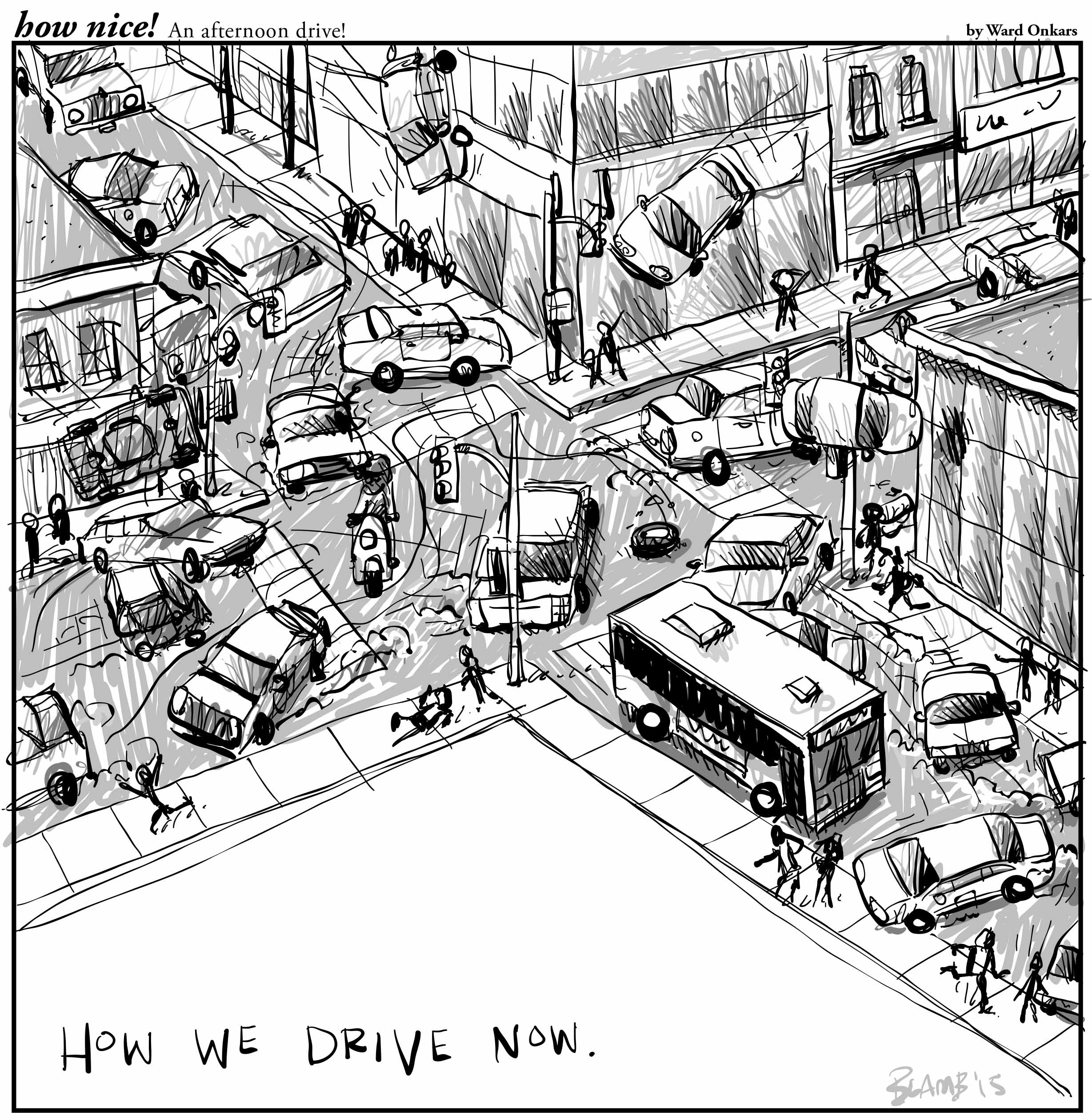
July 13th, 2015 · Comments Off on how nice! An afternoon drive!
Tags: General
July 3rd, 2015 · Comments Off on
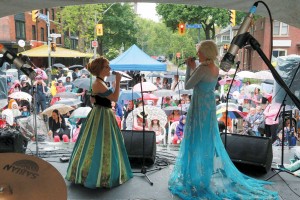
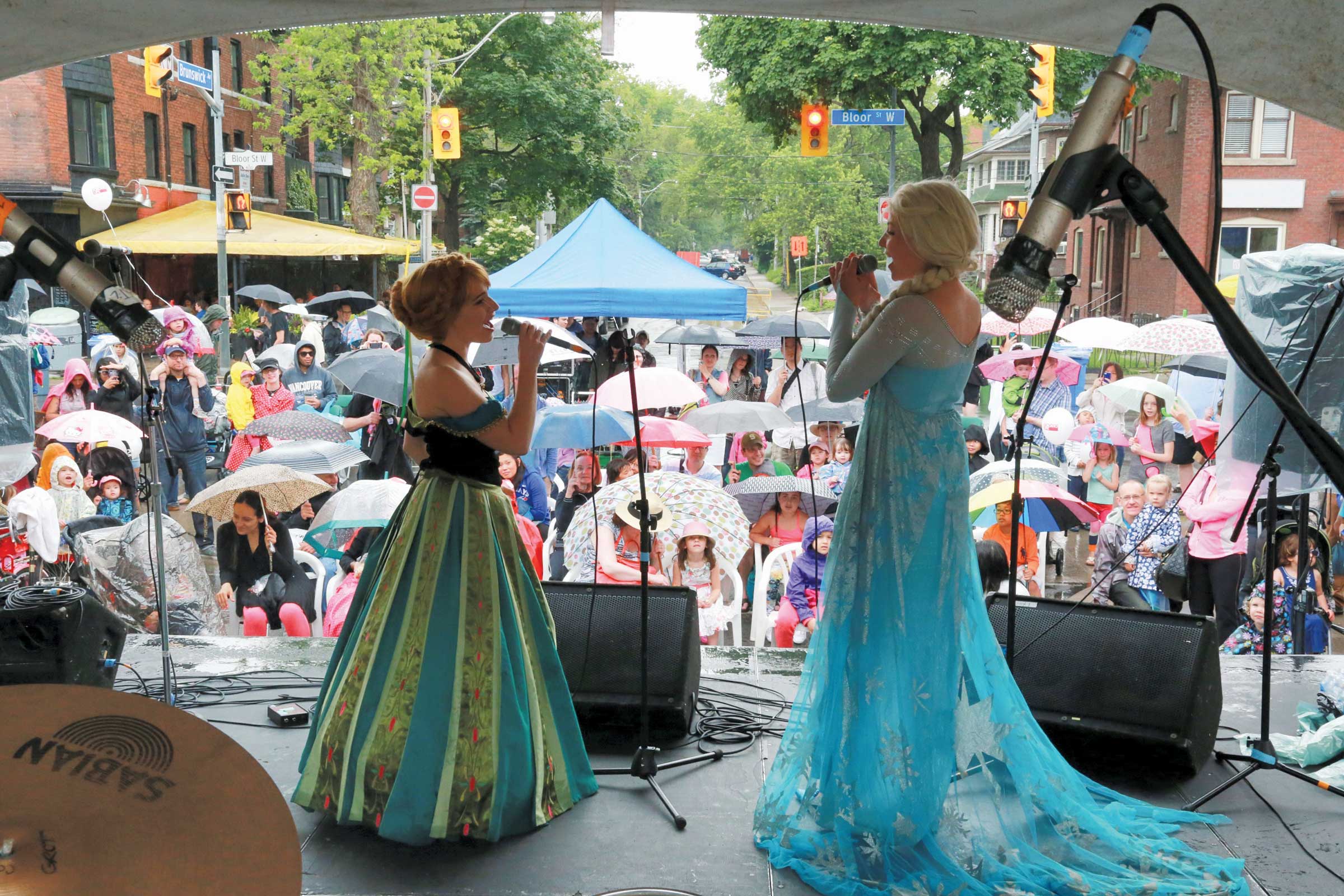
Anna and Elsa, characters from Frozen, perform their show Snow Queen at the well-attended 19th Annual Annex Family Festival on June 14. The one-day Bloor Street festival was organized by the Miles Nadal Bloor Jewish Community Centre and sponsored by the Bloor Annex BIA.
Photo by Mircea, courtesy of the MNBJCC
Tags: General
Residents and business-owners vow to battle proposed development
By Annemarie Brissenden
Kensington Market is once again preparing for battle. In what’s becoming an increasingly familiar story in this part of Toronto, an application to replace a non-residential automotive rental facility at College Street and Augusta Avenue with a mixed-use development has the area’s residents and business-owners up in arms.
“We’ll go big, as big as we did for the fight against Walmart. We’ll do the same thing again,” vowed Su Alexanian, chair of the Kensington Market Action Committee (KMAC), which famously prevented RioCan from bringing the discount big box store to Bathurst and Nassau streets.
“In the end it was the developer that backed down.”
Attendees at a community consultation meeting held May 14 were decidedly against the proposal as it stands, citing concerns about height, the sandwiching of lower rise housing between tall buildings, density, and the proposed development’s lack of harmony with the neighbourhood.
“The overwhelming response is concern about this application,” said Joe Cressy (Ward 20, Trinity-Spadina). “We had a packed house of more than 200 people [at the meeting], reflective of the diverse neighbourhood.” Among the attendees were representatives of the Kensington Business Improvement Area, KMAC, the Kensington Residents’ Association, the Habord Village Residents’ Association, the Harbord Village Business Improvement Area, and Friends of Kensington Market (FoKM).
As Dominique Russell, chair of FoKM, put it, “the community expressed its concerns fairly clearly at the public meeting. The development doesn’t complement Kensington Market.”
In its current form, the application is summarized on the City of Toronto’s planning site “as a 13- and six-storey mixed-use redevelopment. The College Street building will rise to seven storeys and provide setbacks at the upper levels as it transitions to 13 storeys, with a height of approximately 42 metres. The Augusta Avenue building will have a four-storey base, setbacks at the fifth and sixth levels, and a height of approximately 21 metres.”
Residents of the two buildings, which will be made up of 29 one-bedroom units, 135 two-bedroom units, and eight three-bedroom units, and connected by a bridge at the fifth level, will share the indoor amenity spaces. Cressy highlights several major concerns with the application. At least 10 per cent of every new development in Ward 20 should consist of at least three-bedroom units, and “the height is not in sync with the character of the neighbourhood, particularly on Augusta Avenue.”
Given the local opposition to the application, the developer’s representative, a lawyer with Goodmans, agreed to revise its proposal and attend another public meeting once the changes have been made.
Little is known about the developer itself, though rumours suggest it consists of a consortium based in Hong Kong. That lack of information, combined with open questions about the nature of how to accommodate growth itself, continues to plague the area’s residents, many of whom are wondering whether this type of density makes sense for a neighbourhood like Kensington. “Are there neighbourhoods [like ours] where we shouldn’t be putting up tall towers?” asked Russell. “Would putting up tall towers destroy the reason people come here to hang out?”
Cressy had the same question, but framed it differently. Noting that under the Official Plan, “downtown is zoned for growth,” he questioned whether downtown’s boundaries should extend north of College Street.
“There’s no designation for a neighbourhood that wants to stay the same,” explained Alexanian. “We are one of the most valued neighbourhoods in the city, in the country even, and we have nothing [with which] to protect ourselves.”
She is also concerned about the type of residents the development will attract, another recurring theme throughout the Gleaner’s coverage area. “They are talking about family-sized apartments that are 450 square feet. I’m sorry; that’s not a family apartment.”
“It seems to be really directed at small space living,” added Russell, noting that the common areas were referred to as “study spaces”. She’s quick to point out that “there’s nothing intrinsically wrong with student housing,” and that many students live in the market, but that preserving diversity is essential.
For now, community members are left to ponder these questions, as the application is currently back with the developer, who did not agree to a timeline for revising the application.
“The ball is in their court,” said Cressy.
David Bronskill of Goodman’s LLP, the developer’s representative, did not reply to an interview request.
Tags: Annex · Liberty · News
July 3rd, 2015 · Comments Off on Christie Pits renewal set to begin
Popular park will benefit from development dollars

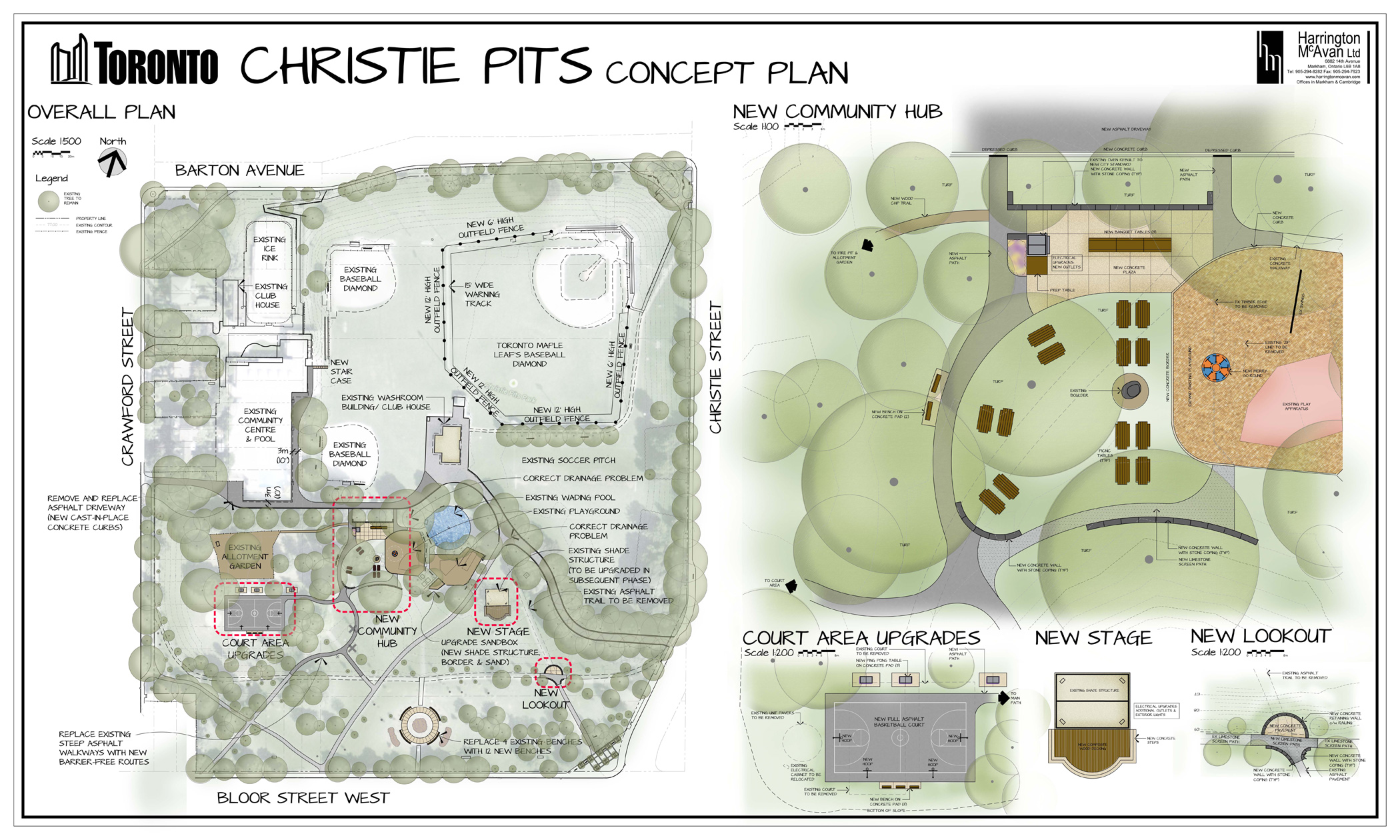
A rendering of the renewal plans for Christie Pits Park reveals improved pathways with new lookouts, a redesigned community hub and stage, and an expanded basketball court. By Harrington McAven Ltd., Courtesy of the City of Toronto
By Annemarie Brissenden and Brian Burchell
It will be a whole new ball game for Christie Pits Park when the bats start swinging next spring. A major revitalization of the park is slated to begin this summer; one that will see safety improvements, new courts, and community enhancements all installed by the time the Toronto Maple Leafs Baseball Club plays its 2016 home opener.
“Christie Pits is a large park that works well, very well, but it’s looking a little shabby and there is an opportunity for some improvements with some new amenities,” said Mike Layton (Ward 19, Trinity-Spadina), whose ward includes the park.
Known as Willowvale Park (a name that local residents never adopted) until 1983, when the City of Toronto officially renamed it Christie Pits Park, the area has a long and storied history. Despite common lore, it does not get its name from William Mellis Christie (“Mr. Christie”), who co-founded the Christie & Brown Cookie Company, but from a tanner who made his living in the area when it was still a sand and gravel quarry. It’s also been a shantytown inhabited by impoverished immigrants and those who escaped slavery along the Underground Railroad, and a waterhole for neighbourhood children, all before it became a park, and the site of the infamous Christie Pits Riots in 1933.
It is no wonder then that the park — at 8.9 hectares and filled with amenities — is due for a facelift.
A cultural hub for local residents, Christie Pits features the Alex Duff Memorial Pool, three baseball diamonds, basketball and volleyball courts, a community garden, a children’s playground and labyrinth, and an ice rink.
It is also, with its steep sloped sides, a favourite spot for tobogganing.
“Improving the pathways are a major priority,” said Layton. The paved pathways throughout the park are a safety hazard, broken in some parts and too steep in others. Their renewal also provides an opportunity to install some look-out points to the park’s bowl below.
Another safety improvement, raising better fencing for the baseball diamonds, will begin after the baseball season closes this fall.
An amalgamated basketball court is also planned, and will be installed in the area currently occupied by the volleyball court, which explained Layton, “has fallen into disuse and basketball has become very popular”.
The park’s renewal isn’t just limited to the sports amenities.
To date, event organizers for a planned performance needed to “bring their own stages”, which is inconvenient to say the least. The revitalization, however, will feature a new permanent stage that Layton said “will cement this important cultural component of the park’s use”.
A bit of retooling will update the park so that it suits contemporary tastes and uses. That, along with “the pizza oven and an enhanced community hub, are also key components of the facelift,” said Layton.
“The changes are welcome,” said Emily Reid, festival director and lead programmer of the Christie Pits Film Festival. “It shows the park is well used, and though many of the improvements are peripheral to our specific use, the lookouts will provide patrons of our event a new vantage point to view films we exhibit. We were happy with the level of consultation, and they made sure that the new stage plan would not interfere with our screen set-up.”
According to Layton, funding for the revitalization is largely provided by the city’s ten-year parks capital renewal budget, along with some Section 42 money, a provision of the The Ontario Planning Act that allows municipalities to ask developers to set aside money or land to create new parkland.
Tags: Annex · News