April 10th, 2017 · Comments Off on FORUM (APRIL 2017): San Francisco a model to follow
Building diverse and sustainable cities
By Mike Layton
Our city is changing. In some Toronto neighbourhoods, the pace of change is difficult to manage, and even more difficult to get ahead of, because it is so rapid.
Of growing concern is that the character of many communities can be overwhelmed by an influx of chain stores. The diversity of our main streets is in danger of homogenization, which will diminish their unique character — the reason we love our neighbourhoods.
[pullquote]Toronto should consider a similar strategy to grant neighbourhoods the ability to shape their communities directly, rather than leave them vulnerable to being shaped by chain stores.[/pullquote]
Walk through many neighbourhoods in Toronto and you will find the same handful of chain stores block after block. The repetition gets monotonous. We need to protect the unique character of our main streets while encouraging a diversity of retail businesses.
At Toronto City Council in April, I requested city staff look into what Toronto can do to support diversity on our retail main streets. The purpose of the strategy is not to stop new chain stores, but instead to direct it in a manner that both serves the day-to-day needs of communities and is in keeping with the character of the streetscape.
Chain stores are also referred to as “formula retail”, which can be characterized by a standardized selection of products, similar facade, and identical signage. These can be centrally owned by a multinational corporation or a brand purchased by a local franchisee. Either way, the products and appearance are largely identical.
A formula retail strategy would be based on determining the locational appropriateness for the use, and ensuring that any new formula retail complements the existing aesthetic character of a neighbourhood.
When San Francisco adopted such a strategy in 2006 it required all new chain stores to go through a process that put conditions on them, in an effort to protect the local character of the community. In some circumstances, new chain stores required approval from the municipal planning commission. Of San Francisco’s 36 neighbourhoods, only three ban formula retail entirely, while the remaining 33 require new applications to undergo a conditional use process.
San Francisco defines formula retail as a retail sales establishment that has 11 or more locations globally, including proposed locations. Formula retail also possesses two or more of the additional characteristics including a standardized selection of products, facade, signage, decor, colour scheme, staff uniforms, and a trademark or service mark.
In San Francisco, a five-fold test is used to determine appropriateness that includes consideration of the existing concentration of formula retail in the area, the availability of similar uses nearby, the compatibility of the formula retail proposal with the current architectural and aesthetic makeup of the streetscape, nearby vacancy rates, and composition of existing retail serving daily needs within walking distance of the site.
This has allowed San Francisco to retain the character of its neighbourhoods, exert some control over the type of new formula retail establishments, and maintain a vibrant and diverse streetscape that is aesthetically consistent and built on a human scale. San Francisco has been particularly successful in preserving local retail that serves the daily needs of residents, such as hardware stores, greengrocers, and independent grocery stores.
Toronto should consider a similar strategy to grant neighbourhoods the ability to shape their communities directly, rather than leave them vulnerable to being shaped by chain stores. In areas like West Queen West, Bloor Street, Little Italy, and Kensington Market the city should be doing everything it can to protect retail diversity and encourage independent small businesses.
Mike Layton is the councillor for Ward 19, Trinity-Spadina.
READ MORE BY MIKE LAYTON
FORUM: Tolls, taxes, and Toronto (February 2017)
FORUM: Seeing our neighbourhood through new eyes (December 2016)
FORUM: We can do better: Dangerous summer for Toronto pedestrians and cyclists (October 2016)
FORUM: Curious story of Christie Pits pool liner ends in extended hours at Alex Duff (August 2016)
FORUM: A tribute to a friend (June 2016)
Tags: Annex · Opinion
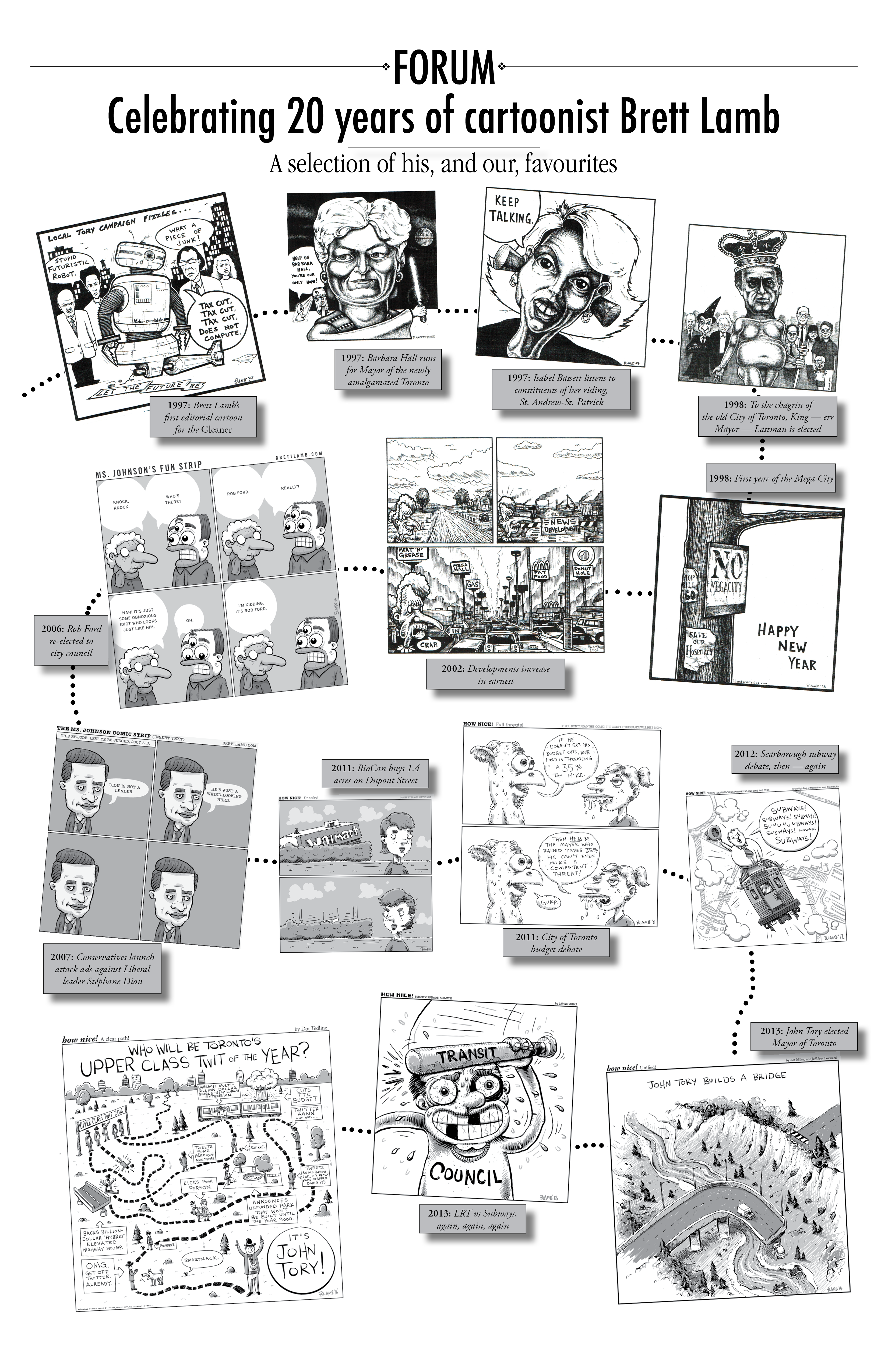
April 10th, 2017 · Comments Off on FORUM (APRIL 2017): Celebrating 20 years of cartoonist Brett Lamb
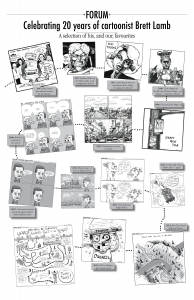
More how nice!:
EDITORIAL CARTOON (APRIL 2017): The GRAND TORY by blamb (April 2017)
EDITORIAL CARTOON: A second chance! by Brett Lamb 2037 (February 2017)
EDITORIAL CARTOON: Not really! It’s actually nice! by Stumpy the Subway (January 2017)
The stages of voting reform! by Joe Proportion (December 2016)
Previously rejected police car designs! by Designed Without Public Consultation (November 2016)
The sincerest form of flattery! by Dow Indepols (October 2016)
A warm carbon blanket! By Hock Estique (September 2016)
Tags: Annex · Editorial · Opinion
April 10th, 2017 · Comments Off on ARTS (APRIL 2017): Bloor St. Culture Corridor celebrates three years
Enhancing Toronto’s vital arts and cultural sector
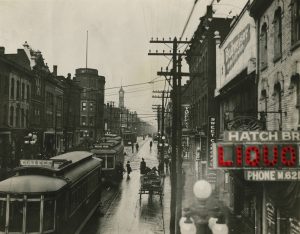
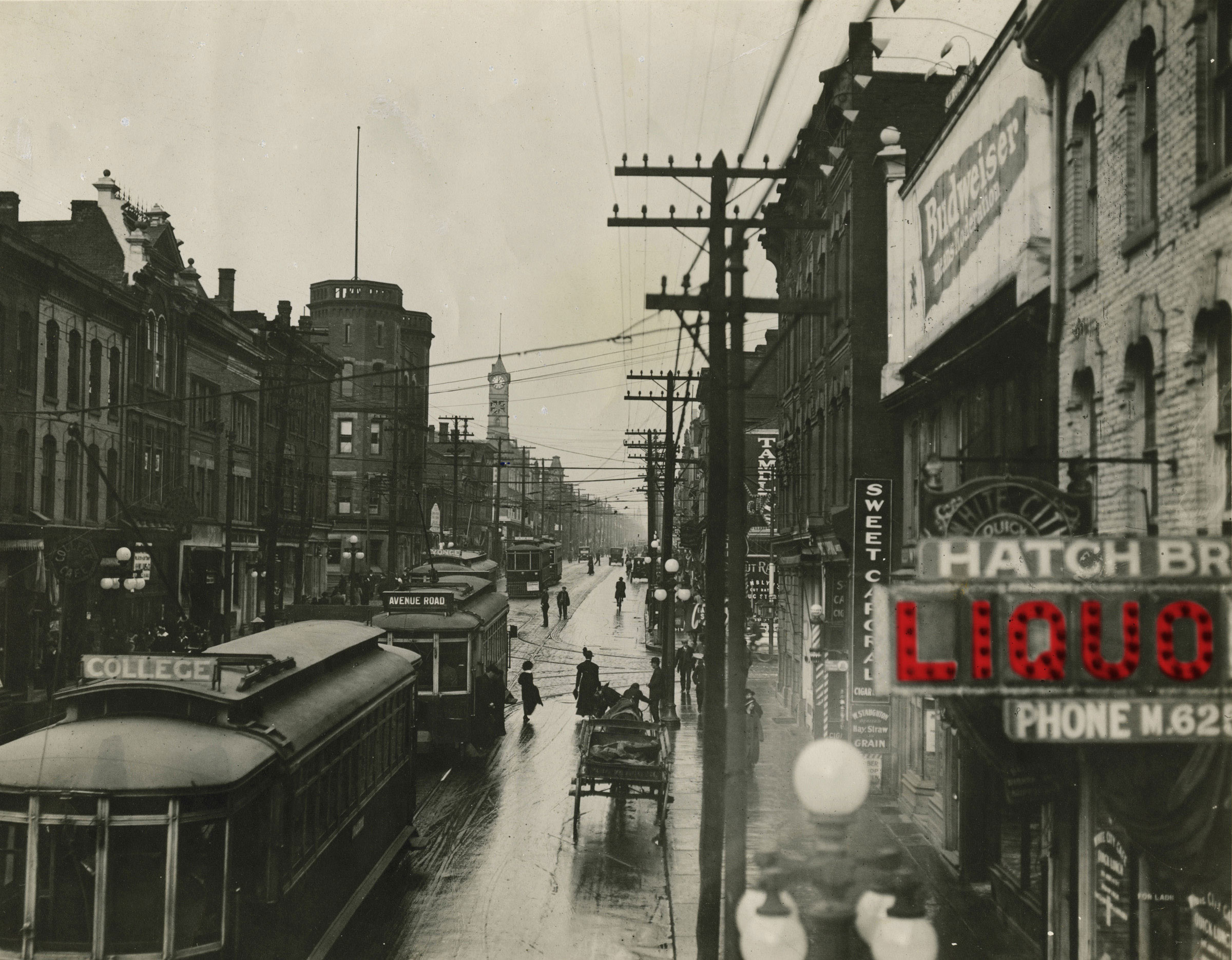
PHOTO COURTESY TORONTO REFERENCE LIBRARY: Vice and Virtue, running until April 30 at the Toronto Reference Library, examines moral reform in Toronto at the turn of the last century. When moral crusader William Holmes Howland was elected mayor in 1886, he introduced laws to curb drinking and vice. This exhibit presents articles, photos, and other media fueling the good and evil behind Toronto the Good.
By Conor McSweeny
April 2017 marks the third anniversary of the Bloor St. Culture Corridor. Beginning as a group of 12 cultural institutions on Bloor Street, it now encompasses 19 different arts and culture organizations between Yonge and Bathurst streets and offers a wide array of cultural experiences.
What a difference a few years make: we worked alongside the municipal government to have the area officially designated as a City of Toronto cultural corridor, Bloor St. Culture Corridor banners now hang from streetposts, and the logo can be seen in windows of local businesses. We even have a mobile app that provides listings for over 200 amazing arts events along the corridor every month. The Bloor St. Culture Corridor has united cultural organizations working in a multitude of disciplines from a diverse array of cultural backgrounds and languages. We plan to work with local business, arts organizations, and residents to develop and enhance the local neighbourhood and Toronto’s vital arts and culture sector along Bloor Street and across the city.
There are many exciting events taking place on the Bloor St. Culture Corridor in April. The Miles Nadal Jewish Community Centre presents Land and Cityscapes by painter Paul Peregal, from April 1 to 26. At the Al Green Theatre, Cracked: New Light on Dementia, a play that follows persons with dementia and their families, will be on from April 18 to 20. On April 27 at 8 p.m., 918 Bathurst Centre will host New Blue Emerging Dance, the official launch of 918 Bathurst’s initiative to become a new leading venue in dance creation, performance, and education in Toronto. There will be drinks, prizes, food, live entertainment, speeches, and more!
On April 12, the eclectic Quartetto Gelato will perform works written for them by Canadian composers. All during April, the Istituto Italiano di Cultura is showcasing Palimpsests and Interfaces: Architecture by Renato Rizzi and Cino Zucchi, Architects. Italian flautist Luisa Sello will also perform with the University of Toronto Symphony Orchestra at the MacMillan Theatre on April 20.
Road of Light and Hope: National Treasures at Todai-ji Temple, Nara, photographs by Miro Ito, continues at The Japan Foundation Toronto from March 15 to June 28. The Museum of Estonians Abroad will celebrate World Book Day with artist Laani Heinar, who will lead a workshop, Giving Books a New Life, on April 19 at 6 p.m. in English. Alliance Française Toronto will host an Alan Lomax tribute concert by Jayme Stone on April 28 at 8 p.m., as well as an exhibit of artifacts and short films representing Torontonians and their memory of the First World War on April 5 at 7:30 p.m.
The Hot Docs Ted Rogers Cinema will be showing Mr. Gaga, a portrait of Israeli dancer Ohad Naharin. The Hot Docs Canadian International Documentary Festival also runs from April 27 to May 7. On April 21, the University of Toronto Faculty of Music co-hosts the day-long interdisciplinary symposium Hearing Riel, with the Munk School of Global Affairs and the Canadian Opera Company.
Continuing at the ROM in April: Out of the Depths: The Blue Whale Story. Anchoring the Museums Canada 150 celebrations, this exhibition showcases one of the largest, most complete blue whale skeletons ever displayed. Other featured ROM exhibitions include the colourful Art, Honour, and Ridicule: Asafo Flags from Southern Ghana, and the multimedia installation Isaac Julien: Other Destinies.
Tafelmusik Baroque Orchestra welcomes the father/daughter team of oboist Alfredo Bernardini and violinist Cecilia Bernardini to co-lead Bach: Keeping it in the Family, a concert exploring the family genius of J.S. Bach and his eldest sons at Trinity-St. Paul’s Centre, April 5 to 9.
The Gardiner Museum is celebrating the opening of its new Community Clay Studio. On April 8 and 9 from 11 a.m. to 3 p.m., families are invited to engage with clay through hands-on art activities, tours of the new space, and wheel-throwing demonstrations at 11:30 a.m., 12:30 p.m., 1:30 p.m, and 2:30 p.m. Admission is free for visitors 18 and under every day! Vice and Virtue, a free exhibit at Toronto Reference Library’s TD Gallery, offers a look back at moral reform in Toronto the Good as it faced rapid growth and industrialization at the turn of the century.
The Weavers (Die Weber), Gerhart Hauptmann’s socialist theatre masterpiece, takes to the Randolph Centre for the Arts’ Annex Theatre stage. April Concerts at The Royal Conservatory’s Koerner Hall include Jason Moran and The Bandwagon & Alexander Brown Trio on April 1, Les Violons du Roy on April 13, and a Canadian all-star evening of chamber music with the Montrose Trio & Friends on April 28. Koerner Hall will also welcome Colombian superstars Monsieur Periné and Peruvian-Canadian singer Patricia Cano on April 19. Finally, Raoul and The Big Time perform “Down in the Delta” on April 29, with special guests.
Conor McSweeny is with 918 Bathurst Centre, one of the Bloor St. Culture Corridor’s 19 arts and cultural hubs.
Correction: The print version of this article had a typographical error in the cutline.
Tags: General
April 10th, 2017 · Comments Off on ARTS (APRIL 2017): Challenging the audience
Brandon Hackett takes the stage in Second City revue

PHOTO COURTESY PAUL AIHOSHI/FLIP PUBLICITY: Hackett’s serious demeanour obscures a seriously silly side, say his colleagues. The Annex comedian, who got his start at Victoria College, has performed with The Sketchersons and on This Hour has 22 Minutes.
By Geremy Bordonaro
Brandon Hackett is a new breed of comedian. Fiercely funny and whip-smart, the Annex resident is one of the cast members bringing some diversity to Second City. He joined the Main Stage performers in June, and is currently appearing in Everything is Great Again.
“I’m pretty willing to go silly and just let myself play around in the moment,” Hackett said. “When I started, I was a bit more self-conscious about how I wanted to sound smart. But now I am so happy to be silly, goofy, and look stupid.”
[pullquote]“It’s pretty spectacular. It’s really funny. Super political but in all the right ways”—Jeremy Stephenson, audience member[/pullquote]
He began performing sketch comedy at Victoria College in 2006, and has since been part of the award-winning sketch troupe The Sketchersons, as well as a writer/performer on CBC’s This Hour Has 22 Minutes. Hackett says his willingness to let out his more outrageous side is one of his biggest strengths as a comedian, even as he balances it with sharp wit.
“One of the things that is so great is that he’s able to carry himself with a bit of gravity. It’s a little bit rare in comedy,” said Ann Pornel, fellow cast member and long-time friend and collaborator of Hackett. “The way Brandon carries himself is, on the surface, very serious. There’s a gravity to him. You think he’s very serious. And one of the most delightful things, especially in the current show right now, is because he looks a certain way people will have assumptions and he is able to flip that and bring out his sillier side.”
During the show, there’s a scene where Pornel pulls a random audience member to serve as a pilot for a plane flying above Russian airspace. This sketch has Hackett serving as a passenger, air flight controller, and Russian military announcer, within the span of minutes, even seconds. In one show, audience member “Captain Ham”, a self-proclaimed Urban Planner, flew from Toronto…to Toronto. Hackett, sharp as he is, comments that it is nice of Captain Ham to take the passengers “out for a spin around the block”.
The Main Stage room roared with laughter when Hackett and the cast erupted in fear over the world’s politics while trapped on the TTC, or when he went into the audience posing as a heckler, announcing himself as “George”, who wants to put his dog in a dress and make-up.
“It’s pretty spectacular. It’s really funny. Super political but in all the right ways,” said Jeremy Stephenson, an audience member, after the show. “I think that a lot of today’s society needs humour in politics because it’s all shitty anyway. It’s a really fun way of poking at that. It’s really enjoyable.”
Politics plays a large part in the content of the show. However, this year the focus is a bit different because of the diversity of the cast.
“Right now, rightfully so, there is a real importance placed upon diversity and different perspectives. I think Brandon brings all of that as well as talent,” Pornel said. “A lot of the time tokenism gets thrown around the idea that certain people are only there because they are a person of colour or offer a different take on life. Brandon does provide that by being both black and queer, but he’s got the talent to back it up in spades. As a co-worker and friend, you can’t ask for anything more than what you get from Brandon.”
One of the longest, and funniest, scenes in the show comes when Hackett, Pornel, and Paloma Nunez go to a spiritual retreat and drink tea that will help them purge their negativity. During this they vent about what Hackett terms their individual “versions of failing to live up to their own cultural background”.
“I think diversity is so important in every realm but certainly in Second City,” Hackett said. “You have got more stuff to talk about. [We talk] about ways to challenge the audience, to consider their own world view, and also experiences that are outside of themselves, in order to better live in this world.”
Tags: Annex · Arts
April 10th, 2017 · Comments Off on GREENINGS (APRIL 2017): Solving the food waste problem
We need to change ingrained cultural practices
Food waste is a $31-billion problem.
Every year, roughly 40 per cent of perfectly edible food that is grown and imported is thrown away. Of that, households account for half of the problem. Discarded food usually takes the form of unwanted leftovers, imperfect food deemed unsalable, oversupply, and, worst of all, supply management (throwing away food to keep prices high).
[pullquote]“Our attitudes surrounding food need to change.”[/pullquote]
Part of the culprit is cheap food. Outside of northern areas, food doesn’t really cost that much in Canada. We often buy much more than we can eat and throw away lots of perfectly edible food. Another part of the problem is our own demand for pretty-looking food. If an apple isn’t perfectly shaped or has a slight bruise, it will often end up rejected and discarded.
Whether food looks perfect or not, it takes a lot of energy, effort, and in some cases fertilizer and pesticide to produce. Ultimately, the more we waste, the higher our greenhouse gas emissions are for food that doesn’t even make it into our stomachs.
The world watches anxiously as some of the largest producers of staples rapidly deplete groundwater resources to grow food that ultimately doesn’t get eaten. The problem is a real one and it is big. A recent study suggests that the United States, Pakistan, and India are the biggest exporters of food grown using unsustainable groundwater. When we run out of irrigation water, Malthus will be proven correct.
This is not the path we want to head towards. While it might mean lower profits for multinationals, I think it’s imperative that we look at our eating habits and find ways to cut the waste.
Reducing waste can be as simple as finding creative ways to make leftovers more appealing or consciously cooking/ordering smaller quantities. As a woman who grew up with a quintessential Chinese grandmother, this can be a challenge. If people weren’t rolling away from your dinner table, you were viewed as having failed.
Our attitudes surrounding food need to change. The surge in wealth in China has created a middle class who view it as a status symbol to be able to afford to order large quantities of food and deliberately toss it. When my parents owned a restaurant, I observed this behaviour, and, despite it not being in our economic interests, I showed my disdain for it. My mother always made me do two things at the dinner table. I had to eat every grain of rice in my bowl since a farmer worked very hard to grow, harvest, and husk it, and I had to eat all the meat I was given since an animal died for it. If we treated food with even this basic level of respect, food waste could decrease substantially.
At the household level, this problem we can all have a small impact on by looking hard at our own habits. On a systemic level, we need stronger public policies that steer us in the right direction. The University of Toronto has a Food Systems Lab that looks at this exact problem on a high level. The research they produce will hopefully inform future public policy makers on how to reduce this $31-billion problem. I suspect what they come up with likely won’t be popular since industry tends to abhor change. It will be up to us to make sure we tell our lawmakers that reducing food waste, in any capacity, is something we are willing to vote for.
We can’t keep wasting our children’s future. The food we waste now is food they won’t have the opportunity to grow when the water has run out.
Why Should I Care? is hosting a free talk on Food Waste at the Madison Avenue Pub on April 24 at 7 p.m.
Terri Chu is an engineer committed to practical environmentalism. This column is dedicated to helping the community reduce energy, and help distinguish environmental truths from myths.
READ MORE GREENINGS BY TERRI CHU:
Kellie Leitch was right (March 2017)
Feeling the carbon tax crunch? (January 2017)
A green, meaningful Christmas (December 2016)
Force the focus (November 2016)
Tags: Annex · Life
March 22nd, 2017 · Comments Off on ON OUR COVER (MARCH 2017): A supportive vigil
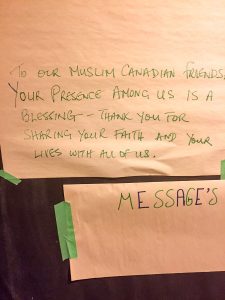
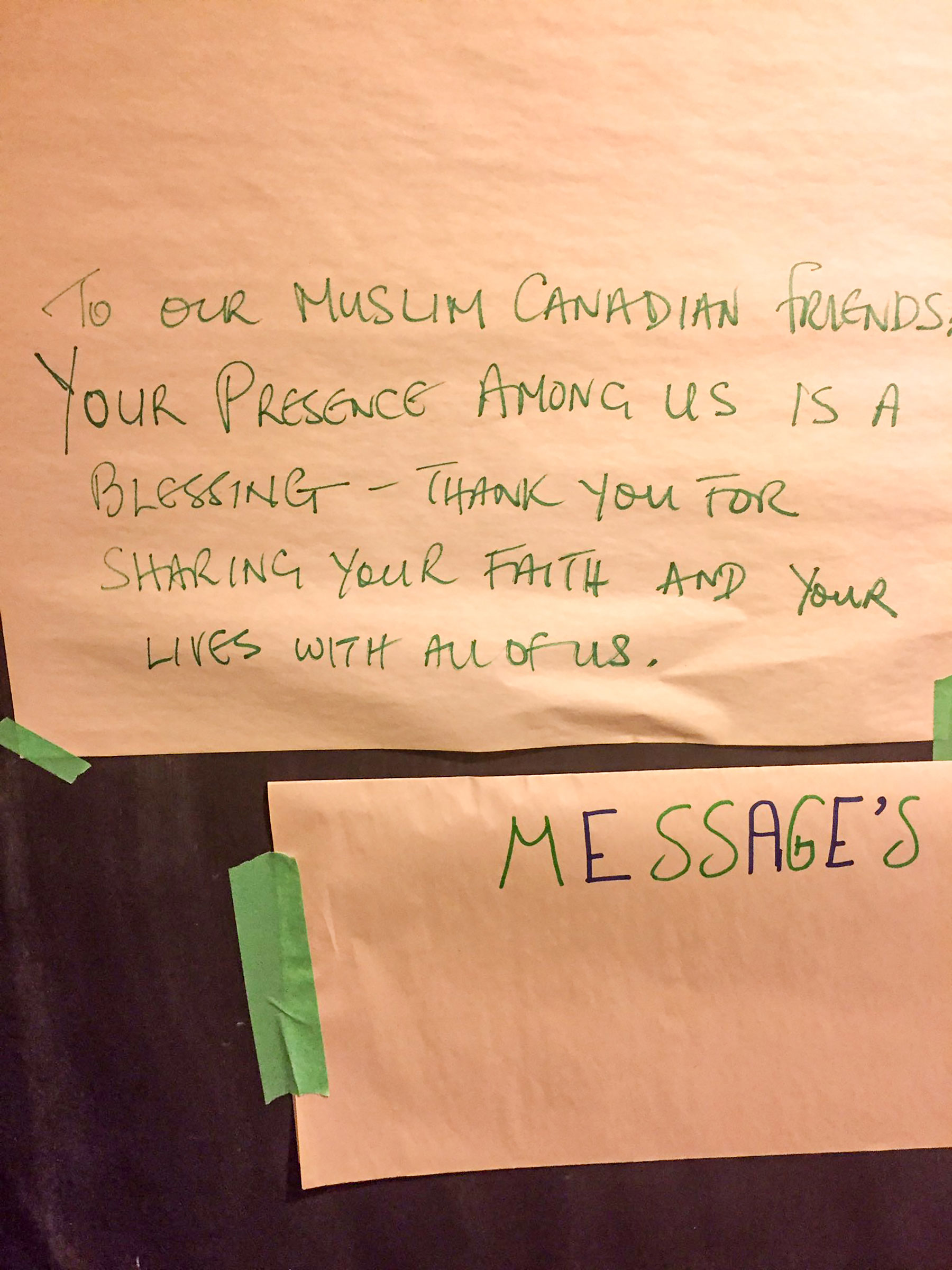
PHOTO BY MICHAEL CHACHURA/GLEANER NEWS: Fifty people gathered at the Centre for Social Innovation on Feb. 20 for a vigil in the wake of a shooting at a Quebec City mosque. Organized by Uniting Muslims and Allies for Humanity, the evening featured speakers, prayers for peace, and a message board on which participants left words of welcome and support (above). Arif Vriani (MP, Parkdale-High Park) was among the attendees. He spoke about Motion 103, which asks Parliament to denounce Islamophobia, and all other forms of religious discrimination.
Tags: Annex · News
March 22nd, 2017 · Comments Off on NEWS (MARCH 2017): Preserving culture and history
Process to designate Kensington Market underway
By Geremy Bordonaro
After a year of study and consultation, the city is going ahead with the process to designate Kensington Market a Heritage Conservation District (HCD). The decision was announced at a community consultation meeting last month.
“It’s a two-year process,” said Joe Cressy (Ward 20, Trinity-Spadina). “By this time next year, we’ll have a new Heritage Conservation District here in Kensington.”
[pullquote]“We’ve heard a whole range of passionate articulations on why this place has been so important in your lives”—Melanie Hare, partner, Urban Strategies[/pullquote]
Prior HCDs have been used primarily to maintain architectural heritage. This HCD will instead preserve the culture and history of the market. Protecting an area based on something that doesn’t have so much of a tangible presence may prove difficult, noted the councillor.
“The history and heritage of Kensington is unlike anywhere else. It’s not just physical and architectural. It’s not about a row of townhouses or unique Victorians. It’s as much about cultural and intangible heritage,” he said. “How do you seek to ensure that the intangible and the cultural continue to grow along with the architectural? That’s what the challenge is as we develop this.”
Tamara Anson-Cartwright, program manager for the city’s Heritage Preservation Services, said there is a key difference in how an HCD works that will help the community.
“With a Heritage District Plan it’s about conserving what is there as well as thinking about how change will occur in the future,” she said. “Other planning studies are all about “What will be the future?’”
Anson-Cartwright said the community was very productive.
“I thought it was excellent. It was very informing and engaging. What I appreciated was the understanding of the depth of analysis that has been done,” she said. “I’ve been with the city for two years and I think it was one of the best meetings that we have had.”
The planners involved in the designation not only actively welcome community participation; they have been counting on it ever since this process began.
“What has worked well since the first phase is that we set up a stakeholder advisory committee. They were very engaged and helped us a lot,” said Anson-Cartwright. “One of the keys for success in this second phase will be getting that type of community engagement.”
At the heart of the consultation process is a desire to protect the market, and discussions in part centered around the proposed boundaries of the market, currently Spadina Avenue, Dundas, Bathurst and College streets.
One audience member argued that those streets “provide a shield from downtown and should not be included”, while another felt that those streets “do not reflect the culture of the community”.
“We’ve heard [terms like] chaos, we’ve heard anarchy, we’ve heard evolving, we’ve heard welcoming,” said Melanie Hare, a partner with Urban Strategies, who chaired the community meeting. “We’ve heard a whole range of passionate articulations on why this place has been so important in your lives and in many different generations of families.”
The staff report formally endorsing all the HCD recommendations will be presented to the Toronto Preservation Board on April 20.
“Going forward council will formally endorse proceeding,” said Cressy. “Over the next years, we’ll develop the specific tools and regulatory provisions to forward the Heritage Conservation District. I have to tell you, now is when we’re going to roll up our sleeves and do the hard work.”
READ MORE:
FORUM: Our dynamic Kensington Market (November 2016)
CHATTER: Painted streets launch in Kensington (September 2016)
ARTS: Molly Johnson launches new jazz festival (September 2016)
CHATTER: Kensington Market consultation focuses on culture (July 2016)
NEWS: Kensington Market to become heritage district (May 2016)
Tags: Annex · News
March 22nd, 2017 · Comments Off on NEWS (MARCH 2017): City proposes steep patio fee hike
Business owners decry lack of consultation

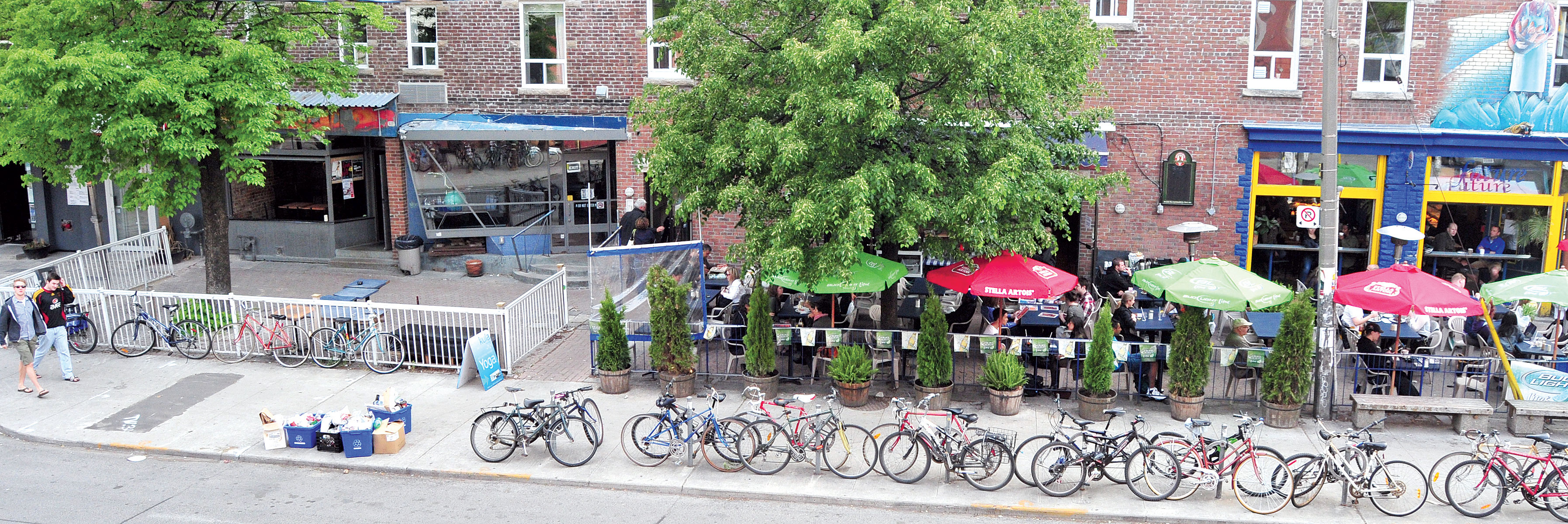
PHOTO BY MATT JAMES/GLEANER NEWS FILE PHOTO: Business owners said they weren’t consulted on the City of Toronto’s proposal to hike to patio fees. Many businesses on Bloor Street West — such as Future Bakery (above) — open a patio in the warmer months, but they are already expensive to operate and maintain.
By Sanjeev Wignarajah
The City of Toronto’s proposed one thousand per cent increase to patio fees has local bar and restaurant owners — who say they were never consulted about the increase — worried about the future of their businesses.
Most sidewalk patios are on land that is owned by the city, which charges the operators an annual per square foot rent. The city wants to standardize its rates, which are currently all over the map, a holdover from pre-amalgamation.
[pullquote]“They’re thinking they can come and take something that was $1,500 a year and turn it into $15,000 a year”—Andrew Kilgour, owner, Kilgour’s[/pullquote]
Joe Cressy (Ward 20, Trinity-Spadina) said city staff, council members, and the Municipal Licensing and Standards committee met January 30 to discuss harmonizing the patio fees.
“There was a number that was pretty quickly rejected by business owners but also by council members like myself and Mayor Tory,” he said, adding that patios bring energy and vibrancy to main streets.
“While there is and should be a rate paid for patio licences, that rate should be fair and it needs to be affordable,” Cressy said. “I expect that city staff will now go back to review what is a more appropriate and fair amount.”
Carmine Raviele and his son are the owners of Il Gatto Nero, a café bar in Little Italy at 720 College St. Raviele said he pays $1,400 per year for patio fees. He pointed out that business will suffer in the winter since patios are only operational for the spring, summer, and fall months.
“Naturally we have think what to do with it, whether to renew it or whatever,” Raviele said. “It’s hard to run a business.”
“It’s insane,” said Andrew Kilgour, who has owned Kilgour’s on Bloor Street since 1995. “I’m all in favour of user fees but they have got to be reasonable. They’re thinking they can come and take something that was $1,500 a year and turn it into $15,000 a year.”
Killian Thomson, general manager of Pauper’s Pub, also on Bloor Street, said that the city will make it very expensive for small businesses.
“Bars on the strip usually pay an exorbitant amount of rent,” Thomson said. “A typical patio fee can range from $1,400 up to $5,000 a year.”
Not only do restaurant owners pay a per-square-foot amount, they also pay for a liquor licence to serve alcohol on the patio. Antonietta Raviele, a board member of the Little Italy BIA, explained that owners pay a lot to maintain their patios, which adds to the cost of doing business.
“If I put out a wooden platform to make my patio even because the city sidewalk is so badly damaged that the tables wobble and people’s glasses fall, it would hurt them. So, I have to protect myself from that liability,” she said. “You want to put a platform in. You can’t put a platform in unless it’s pre-approved by the city and you have to pay extra for that for your yearly patio fee.”
Cressy said that the feedback he has received from restaurant owners is heartfelt.
“I think people appreciated and recognized that it’s a good thing that the consultation happened. There was never a fee that was brought to council for consideration,” he said. “In fact, they went out to the restaurant community and the patio community first.”
But local patio operators have said nobody on city staff consulted them about the increase.
The Mayor wrote in a letter statement that he, city staff, and council members will work together on the updated changes on fees and regulations:
“In my discussions with city staff, I have made it clear that I do not support excessive fees and that this review will need to balance the value of sidewalks as a city asset with many public benefits that patios bring to our communities.”
City council will vote on the proposed changes to the patio fees in the spring.
Tags: Annex · News
March 22nd, 2017 · Comments Off on CHATTER (MARCH 2017): Preliminary data on Bloor Street pilot bike lane released
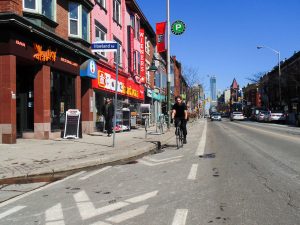
PHOTO BY BRIAN BURCHELL/GLEANER NEWS
Preliminary data on the Bloor Street Bike Lane Pilot was released in February. Separated bike lanes were installed along Bloor Street from Avenue Road to Shaw Street last August. The city has released preliminary transportation data, including a traffic volume count and a travel time study along with a public opinion poll. Data collection was done both before and after the pilot was put in. While cycling has increased by 36 per cent and 63 per cent of drivers said that they were safe around cyclists on Bloor Street, travel times for times for cars have also increased by four minutes during the morning rush-hour and eight-and-a-half minutes during the afternoon rush-hour. Most people asked about the project seem to support it, except for drivers, only a third of whom are in favour of the bike lanes. The city is studying how to improve traffic flow, and the report — which will also include information about the impact the lanes are having on local businesses — will be delivered to city council later this year.
The Bloor Annex and Korea Town BIAs and the Metcalf Foundation have sponsored a study on the economic impact of the lanes on local business and the community. The study will be completed in the fall.
—Geremy Bordonaro/Annex Gleaner
READ MORE:
CHATTER: Ground-breaking bike lanes launch on Bloor Street (August 2016)
NEWS: Bikes blessed for another season (June 2016)
FOCUS: An early advocate for bike lanes (June 2016)
NEWS: Bike lanes for Bloor Street (May 2016)
The faster we lower speeds, the more lives we save (October 2015)
Early brewer the basis for Bloor Street’s name (May 2015)
Tags: Annex · News
March 22nd, 2017 · Comments Off on CHATTER (MARCH 2017): Kensington Market workshop teaches how to respond to drug overdoses
Nearly one hundred bar and restaurant staff from Kensington Market participated in a free workshop on how to deal with drug overdoses on Feb. 27. Organized by the Kensington Market BIA and Joe Cressy (Ward 20, Trinity-Spadina), the workshop taught participants how to recognize and respond to an overdose. Queen West Central Toronto Community Health Centre led the technical aspects of the training and explained how Naloxone counter-acts the effects of opioids. Bar and restaurant owners also received overdose response kits.
—Geremy Bordonaro/Annex Gleaner
READ MORE:
EDITORIAL: Pot a remedy in opioid crises (January 2017)
CHATTER: Marijuana dispensary opens (December 2016)
NEWS: City approves safe injection sites, as council embraces a public health approach (August 2016)
Tags: Annex · News
March 22nd, 2017 · Comments Off on CHATTER (MARCH 2017): Decade rooms, formal gala, and talent shows to mark Harbord Collegiate’s 125th anniversary
Harbord Collegiate Institute is celebrating its 125th anniversary with a weekend of events for neighbours, students, and alumni April 28 to 30. On April 28, the school will host an open house featuring a museum and decade rooms. The creative-arts team will stage a variety of music and talent shows, while the Athletic Association will run a few games. The formal reunion gala will be held at the Parkview Manor on April 29, while individual class reunions will run on April 30. For further information, please visit www.harbordclub.com.
—Geremy Bordonaro/Annex Gleaner
READ MORE
News: Celebrating pink at Harbord Collegiate Institute (May 2016)
BLACK HISTORY MONTH: A long history of activism (February 2017)
Reflections on 32 years of service (August 2014)
Tags: Annex · News
March 22nd, 2017 · Comments Off on CHATTER (MARCH 2017): Nominate a community builder
The Annex Residents’ Association is launching a new award to recognize the efforts of a resident who contributed to making the community a better place. The Community Builder of the Year award will be given to a person living in the Annex who has made a significant contribution in improving heritage, education, development, or social justice in the area. Nominations are being accepted up until April 23. The prize recipient, along with all of the nominees, will be announced on April 27 during the association’s annual general meeting at Friends’ House. Nominate a candidate by emailing secretary@theara.org with the name and address of the person you are nominating, and your reason for nominating them. Please also include your own name and address.
—Geremy Bordonaro/Annex Gleaner
READ MORE:
HISTORY: Honouring those who honour history (October 2016)
LIFE: How I have made my community better (June 2016)
NEWS: HVRA recognized for historical achievements (May 2016)
Recognition for Harbord Street BIA (January 2016)
Tags: Annex · News