March 22nd, 2018 · Comments Off on NEWS: Shelter offers temporary respite (March 2018)
A tale of two residents’ associations
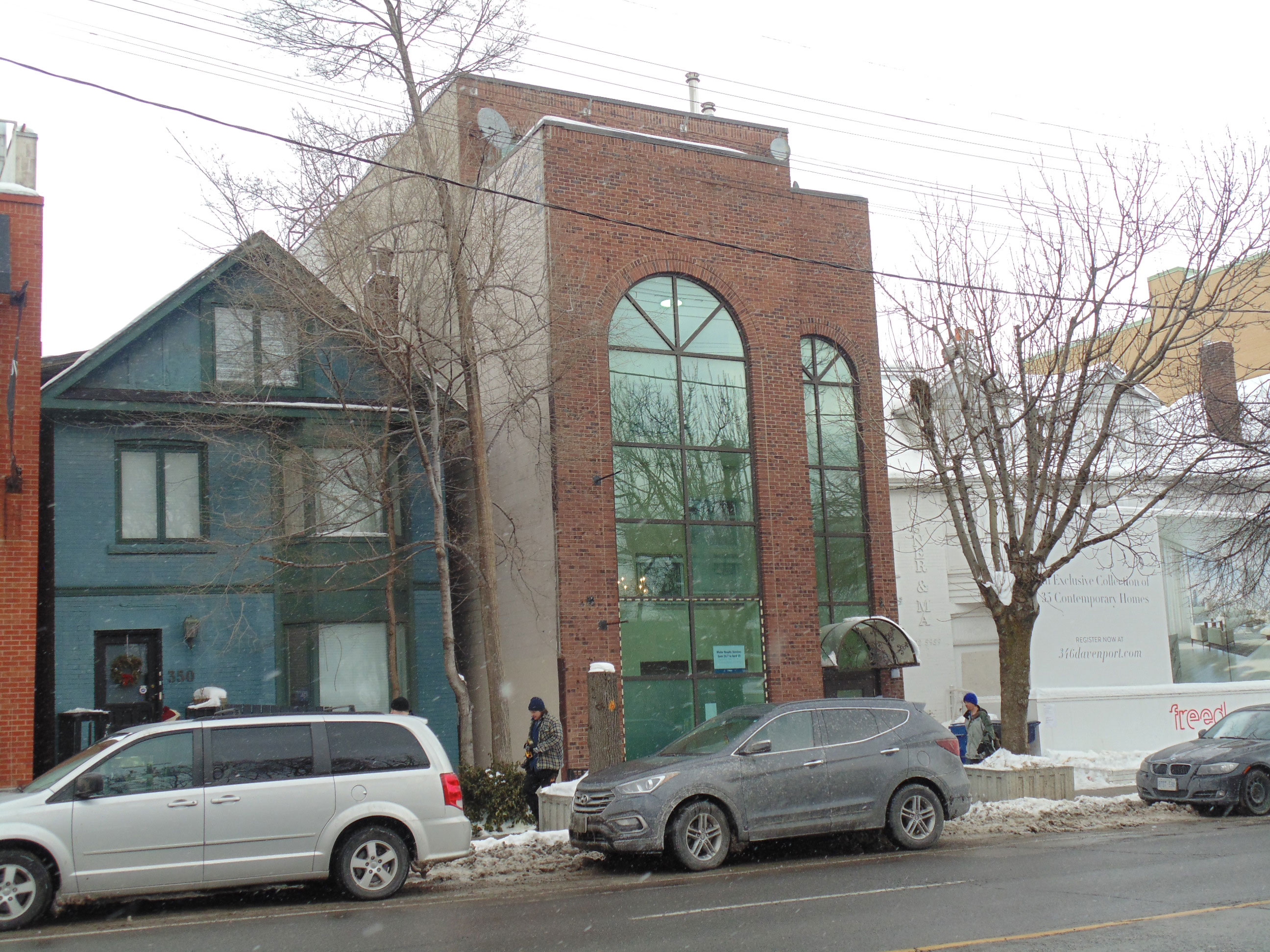
The City of Toronto opened a respite shelter at 348 Davenport Rd. in late January. The shelter will be open until April, when it city staff will decide on a permanent use for the site. BRIAN BURCHELL/GLEANER NEWS
By Geremy Bordonaro
The City of Toronto opened a winter respite drop-in shelter in late January in a commercial building that’s not far from the site of a proposed condominium development opposed by local residents like Margaret Atwood and Galen Weston.
Even though Atwood and other well-known residents of the neighbourhood like the Right Hon. Adrienne Clarkson spoke out in favour of the shelter, it was not without some controversy.
“Our general objection is that the Annex has more than its share of ‘social problem’ housing and it is time for the rest of the city to share the burden,” wrote the Davenport Triangle Residents’ Association (DATRA) in an open letter to Joe Cressy (Ward 20, Trinity-Spadina). “This seems to be a particular interest of yours, more than other councillors, so it all ends up in our back yard, strangely without objection from [the Annex Residents’ Association] or Annex residents.”
The city purchased the building after it went on sale late in 2017, but only announced its plans to open the shelter after the sale was finalized. According to the Toronto Central Healthline, the shelter — which can hold up to 80 people — will be open 24 hours until April 25, 2018, and offer winter respite for men and women over the age of 16. There are two other shelters in the neighbourhood.
“We have a history, in the Annex, of being an open, an inclusive, and a welcoming neighbourhood,” said Cressy. “Ours is a welcoming neighbourhood and it always has been. By virtue of the city’s acquisition of 348 Davenport we are able to ensure that the neighbourhood remains livable and welcoming.”
DATRA, whose initial letter led to a lot of commentary on social media, has since backtracked from its original statement.
“We have no further comment, as everything published so far is unfortunate (starting with comments by an unauthorized spokesman) and distorted by the press for the sake of their own sensationalism and to cause controversy. We are dealing with our concerns with the councillor’s office,” wrote Oliver Collins, DATRA’s secretary and treasurer, in a written statement to The Annex Gleaner.
“Unfortunately not everybody is as supportive,” Cressy said. “In explaining their opposition the Davenport Triangle Residents’ Association said that the Annex is overburdened with what they call ‘social problem housing’. I don’t believe that the people who live in our supportive, social housing and shelters are problems. I believe that they are people.”
DATRA’s opposition isn’t shared by the Annex Residents’ Association (ARA), whose boundary extends to Davenport Road, putting the shelter just on the edge of its catchment area.
“It’s very cold this winter and there are not enough places for people to find respite,” said David Harrison, ARA chair. “How can you argue with this? Some people should think before they speak.”
According to the city, there’s an urgent need to set up more homeless shelters and to find at least 1,000 new permanent beds.
“It’s necessary,” Harrison said. “It’s extraordinarily difficult for the city to find locations. As Cressy has said, they’re not going to go to the community to ask how they feel about it because no community is ever going to say that they want one.”
“In the city of Toronto we have an affordable housing crisis,” said Cressy. “Currently we have 181,000 people on the waiting list for housing. We have a shelter system that is over capacity. We do not have enough shelter spaces.”
Although the shelter is currently serving as a temporary shelter, city staff still have to decide how it will be used permanently.
“The decision of who it’s going to house — is it going to be families, refugees, women, children, or men? That will be determined over the next couple of months by our city staff based on a needs assessment,” Cressy said.
Tags: Annex · News
March 22nd, 2018 · Comments Off on NEWS: Dupont decision sets precedent (March 2018)
Ontario Municipal Board rules in favour of community

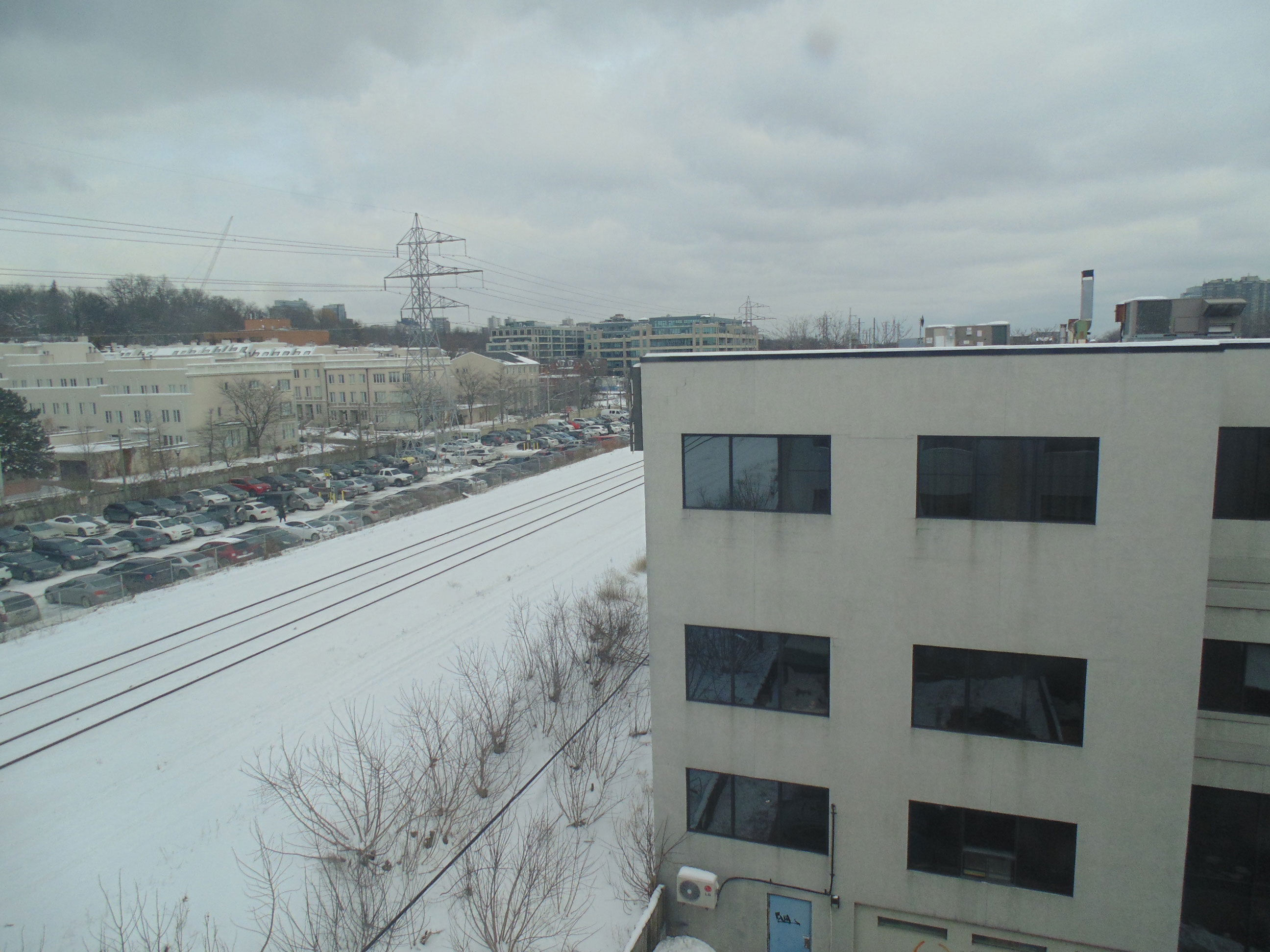
The rail Dupont rail corridor from the back of 328 Dupont St. The Ontario Municipal Board ruling on a proposed development for the site confirmed the city’s guidelines that new buildings must be built at least 20 metres from a rail line. BRIAN BURCHELL/GLEANER NEWS
By Geremy Bordonaro
The future of 328 Dupont Street is up in the air after an Ontario Municipal Board (OMB) decision placed strict limitations on a proposed development that would see three buildings rise on the site. The plan was to build a nine-storey building on the west end of the lot, which stretches to 358 Dupont Street, and two connected buildings of 19 and 17 storeys on the east side.
“It was a long fight and that all had to do with the Dupont Visioning Study and how that would work out,” said David Harrison, chair of the Annex Residents’ Association (ARA), one of many groups that opposed the development in its original form. “There was an over-enthusiasm of the desires of the planning applicant. It was a very long and complicated business but we came out on the right side.”
The Dupont Street Visioning Study was developed by the ARA, the Seaton Village Residents’ Association, and the offices of Mike Layton and Joe Cressy (Ward 19 and 20, Trinity-Spadina). The study limits the height of new buildings to nine storeys, and states that buildings must be at least 20 metres from the rail line, among other things. However the study’s planning guidelines only apply to the eastern side of the lot, and it was unclear whether the OMB would apply those guidelines to the western side.
Ultimately the OMB decided to limit the height and density according to the study.
The developer can only build two buildings on the site: the west building can remain as proposed, but must be set back per regulations governing rail lines. Only one building can rise on the east, and it must not exceed 12 storeys.
“The OMB decision speaks to the proactive and thoughtful way that [we] developed the Dupont Street Visioning Study. We developed a plan,” Cressy said. “We weren’t a community that said ‘no development.’ We were a community with residents in our two council offices that said ‘we want to see development as long as it is appropriate and safe.’”
Another major issue was that there would be only a metre of space between the buildings and the rail tracks, which cut through the Annex along Dupont Street.
National guidelines and the Dupont Street Study both say that there should be at least 20 metres between buildings and rail tracks.
“I think that it is significant that the major part of the OMB decision was to recognize the railway and to respect it,” Harrison said. “This will not just affect Dupont Street but will affect all along the railway lines.”
“The OMB decision…is a tremendous victory for the Annex community, for the city of Toronto, and for rail safety across the city,” said Cressy. “When the proposal was brought forward to build a 19- and nine-storey building, part of which is right beside the train tracks, we as a community stood up. Not just for appropriate development but for rail safety.”
The decision sets a precedent across the city that will likely carry across future OMB decisions regarding buildings next to rail lines.
“We just had a rail derailment [in this area] a year ago. The OMB’s decision to allow, instead of a 19- and a nine-storey, solely a 12-storey building, and to ensure that nothing could be built within the 20-metre rail corridor has set a citywide precedent that will ensure rail safety for our city,” Cressy said.
In the past the OMB had ruled that residential buildings could not be close to a rail corridor, but had not made a ruling on office buildings, which were included in the proposed development.
“The developer, in this case, argued that the residential units would be 20 metres back but the office units would be as close as a metre from the rail corridor,” said Cressy. “In other words their argument could be boiled down to ‘trains only crash at night.’
“Frankly, I’m glad to see that the OMB judge didn’t fall for that. Rail safety means just as much to those working there as it does to those living there.”
While this decision sets a new precedent for safety and height restrictions, it’s still unclear what will happen to the site. Only one of the proposed buildings meets the guidelines.
Freed Development, the development team behind the project, did not respond to requests for comment. Very little has been heard from either the Freed team or the owners of what happens next for the site, leaving the community to speculate on the future.
“It’s conceivable that the owner, Wynn, might just walk away from it. It remains to be seen,” Harrison said.
It’s the second time that the Wynn Group has had a development in the Annex neighbourhood overturned at the OMB. Its initial proposal to redevelop the Hotel Waverly into a private student residence was denied, although it has since gone ahead with substantial modifications.
READ MORE:
NEWS: Mixed-use, mixed feelings: Proposed development largest since Loblaws (December 2010)
NEWS (NOVEMBER 2016): OMB opened
NEWS: Trains in the night (September 2016)
ON THE COVER: Dupont rail derailment (August 2016)
EDITORIAL (SEPTEMBER 2016): Train derailment changes the conversation
NEWS: Height, density still top concerns (July 2016)
EDITORIAL CARTOON: Planning! (July 2016)
CHATTER: Annex Residents’ Association app tracks developments (April 2016)
DEVELOPINGS: Annual review reflects tension between community activism and OMB (March 2016)
NEWS: Preserving a sense of community (March 2016)
NEWS: Rail safety focus of town hall (May 2016)
Where do your LPC, NDP, and GPC candidates stand? (September 2015)
Inaction frustrates residents (May 2015) By Arthur White
Risky Rails? (February 2015) by Madeline Smith
Tags: Annex · News
March 22nd, 2018 · Comments Off on CHATTER: Cultural hub marks 10 years (March 2018)
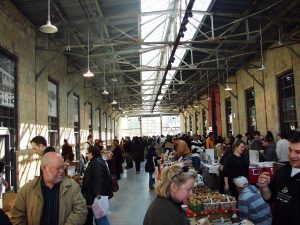
The Stop’s Farmers’ Market runs every Saturday year round from 8:00 a.m. to 12:30 p.m. at the Artscape Wychwood Barns at St. Clair Avenue West and Christie Street. It’s one of many community activities at the cultural community hub, which opened in 2008 and includes 26 artist live/work studios, 15 artist work studios, and nine non-profit arts and environmental organizations. For more information on the Barns, please visit www.artscapewychwoodbarns.ca. COURTESY ARTSCAPE
Tags: General
March 22nd, 2018 · Comments Off on CHATTER: Advocacy group launches rail safety toolkit (March 2018)
Safe Rail Communities, a local advocacy group, has drafted its Rail Emergency Preparedness Toolkit as part of its Rail Safety Improvement Program. Funded by Transport Canada, the toolkit provides residents living near rail tracks with emergency contacts in case of a train derailment.
On the morning of August 21, 2016, two cars on a Canadian Pacific (CP) freight train derailed near Dupont Street and Howland Avenue, one year after two CP trains collided in the same area. An investigation by the Transportation Safety Board of Canada found that human error on the part of the train crew, engineers, and the train conductor caused the 2016 derailment.
There have been five condominium development proposals along the Dupont rail line submitted to the City of Toronto since the 2016 derailment. Many have been denied by the city or the Ontario Municipal Board due to their proximity to the rail line.
—Ahmed Hagar, Gleaner News
READ MORE:
NEWS: Trains in the night (September 2016)
ON THE COVER: Dupont rail derailment (August 2016)
EDITORIAL (SEPTEMBER 2016): Train derailment changes the conversation
NEWS: Rail safety focus of town hall (May 2016)
Where do your LPC, NDP, and GPC candidates stand? (September 2015)
Inaction frustrates residents (May 2015) By Arthur White
Risky Rails? (February 2015) by Madeline Smith
Tags: Annex · News
March 22nd, 2018 · Comments Off on CHATTER: Bathurst cycle shop builds community team (March 2018)
Bateman’s Bicycle Company celebrated a milestone when its 2018 racing team reached 75 members. This year’s team includes 25 new and 50 returning racers.
The 10-year-old bike shop, which has three locations in the Annex, founded its cycling team in 2012 with one member. Now in its sixth year, the team has cyclists from as young as eight years to over 60 years of age from the community.
“We wanted to have a group of like-minded individuals that could go out and compete with one another, inspire each other to become better bike riders and athletes,” said Robert Bateman, the company’s president.
Team Bateman will compete in weekly local races and in competitions sponsored by the Ontario Cycling Association, riding mountain, road, and cycle cross bikes with the help of Bateman’s shop and technicians.
“I have had a lot of really, really good help,” said Bateman about running the team. “I have had a lot of ambassadors on the team step up and do a lot for the team. It’s not a one-man operation, it is everyone working together to run the team.”
Bateman would like the team to become diverse by having more young and female cyclists join and be able to take part in more provincial and national competitions in the future. Cyclists interested in joining can contact the team at info@batemansbikeco.com.
—Ahmed Hagar, Gleaner News
READ MORE:
CHATTER (APRIL 2017): Bateman’s Bikes opens new express shop on Dupont Street
ON OUR COVER (FALL 2017): CYCLING THE PITS
Tags: Annex · News
March 22nd, 2018 · Comments Off on CHATTER: Christie Pits rink renamed in honour of Sid Smith (March 2018)
An artificial rink in Christie Pits Park has been renamed after Sid Smith, the eighth captain of the Toronto Maple Leafs. The name change happened after the city received an application for the change last year from a private citizen.
The rink was officially renamed in a public skating event on January 14 with Mike Layton (Ward 19, Trinity-Spadina), City of Toronto staff, and Toronto Maple Leafs alumni.
Smith was left-winger for the Leafs from 1946 to 1958 and team captain for the 1955-56 season. He lived in the neighbourhood and would often play pick up games of shinny in his free time with his neighbours.
Smith was born in Toronto in 1925. He had a prolific career in the Ontario Hockey League, American Hockey League, and National Hockey League before retiring to coach in the 1957-58 season. Smith died at the age of 78 in 2004.
Photos adorned the rink showing off some of Smith’s most memorable moments including his three Stanley Cup wins, his seven all-Star games, and multiple trophies recognizing his exemplary skill and sportsmanship.
One notable attendee was Leaf alumnus Dick Duff, a Hockey Hall of Famer and two-time Stanley Cup winner, who was on the team while Smith was captain.
—Geremy Bordonaro, Gleaner News
READ MORE:
NEWS: Celebrating a legendary Leaf (Jan. 2018)
Tags: Annex · News
March 22nd, 2018 · Comments Off on NEWS: Bike lanes (March 2018)
A dissenter makes his case
By Annemarie Brissenden
Do bike lanes make cycling inherently safer?
That question was up for debate at January’s Grounds for Thought, which runs the last Tuesday of every month at the Green Beanery at Bloor and Bathurst streets. With free coffee on offer, Grounds for Thought is an homage to the coffee houses of old, places where dissent and unconventional ideas were not only welcomed but encouraged.
Arguing against bike lanes in the heart of the Annex, a stone’s throw away from the much-lauded Bloor Street bike lane, is certainly unconventional. So much so that not a single representative of the city’s many cycling advocacy groups appeared to speak on behalf of the lanes.
(Organizers approached cycling advocate Albert Koehl, Cycling Toronto executive director Jared Kolb, Toronto Centre for Active Transportation, Share the Road Cycling Coalition, and both local councillors. All declined. In an email to the Gleaner Koehl wrote that he “didn’t see any basis for a productive debate given [Solomon’s] position”, while Kolb said he simply had another commitment that evening.)
That left Lawrence Solomon, a national newspaper columnist and executive director of Energy Probe, on his own to make his case against bike lanes in conversation with host David Caley, an author and broadcaster.
(Caley’s preferred mode of transportation that evening was clearly a bicycle, his pant legs still bound by the unmistakable clips.)
Solomon’s case is pretty simple. Bike lanes only seem safer. In actual fact, he suggests, they do the opposite of what they are supposed to do: they lead to more accidents, greater congestion, more pavement, and because they create a false sense of security, encourage more inexperienced cyclists to take the roads, which in turn causes more accidents.
According to Solomon, the biggest problem with bike lanes like those on Bloor Street is the criss-cross that bikes and cars have to do at intersections.
A driver travelling west on Bloor Street who wants to go north will have to cut into the bike lane to turn right, criss-crossing with cyclists travelling in the same direction who want to go south and have to cut into the car lane to turn left.
“This is the single greatest cause of bicycle accidents,” said Solomon.
He added that the lanes create more congestion because they reduce the amount of road space available for traffic flow and increase pavement by offloading parking onto side streets. And, perhaps what’s most problematic, they encourage more people to use a bicycle for transit, without making sure that new cyclists have safe equipment and understand the rules of the road.
[pullquote]“There are ways to promote cycling without having cycling lanes” —Lawrence Solomon, executive director, Energy Probe[/pullquote]
Solomon supported his case with a variety of statistics from several different sources, particularly Cycling Death Review, an Ontario coroner’s report from 2012 that examined all accidental cycling deaths in Ontario from January 1, 2006, to December 31, 2010. He said the data showed that fewer than 20% of cyclists who were hospitalized in Ontario because of cycling accidents were involved in an altercation with a car. Often it’s because the cyclist is inexperienced, and hasn’t learned to navigate potholes, other cyclists, or those uniquely-Torontonian bedevillers, the streetcar tracks.
“It’s eight times riskier to switch from a motorized vehicle to a bicycle,” said Solomon, citing the Ontario coroner. “Cycling is inherently risker.”
All of that said, Solomon took great pains to make clear that he wasn’t anti-cycling.
“Everyone who wants to cycle should cycle.”
He believes that cyclists should ride in the middle of the car lane, occupying the same amount of space as a car, which he noted, “cycling advocates used to say”. He suggested that there should be better training for cyclists and better enforcement of the rules of the road.
“An educated and experienced cyclist reduces accidents by 75 per cent,” said Solomon. “Cyclists should have a similar proficiency and understanding of the rules of the road” as drivers.
Although none of the city’s cycling advocates were willing to engage formally in a friendly debate with Solomon, many in the audience were prepared to take up the cause.
Some wondered why, if bike lanes are so bad, so many European countries are building cycling infrastructure.
“Because Boris Johnson wants to make London the cycling capital of the world,” responded Solomon half-jokingly, noting more seriously that “at root there’s a desire to reduce carbon dioxide emissions”.
Others audience members criticized Solomon for cherry-picking data on cycling from the coroner’s report and not telling the whole story, even suggesting that the report recommended bike lanes as a remedy for reducing accidents.
Indeed, the report recommends that communities adopt a complete streets approach, requiring that “consideration be given to enhancing safety for all road users”. This would include the “creation of cycling networks (incorporating strategies such as connected cycling lanes, separated bike lanes, bike paths and other models appropriate to the community)” and “designated community safety zones with reduced posted maximum speeds and increased fines for speeding”.
Still other audience members questioned whether we are going to allow motor vehicles to have dominance.
“There are ways to promote cycling without having cycling lanes,” said Solomon, once again emphasizing that he’s not anti-bike.
The evening closed with a discussion of transit more generally, and Solomon explaining how amalgamation led to overcrowded subways and an archaic fare structure.
“Did you know the TTC once made money,” he asked, but that was a debate for a different day.
The next Grounds for Thought is on Tuesday, March 27 at the Green Beanery at 8.30 p.m. Shawn-Patrick Stensil, Senior Energy Analyst for Greenpeace, will consider whether the Pickering nuclear plant should be shut down with host David Caley. Admission is free.
READ MORE ON CYCLING:
CHATTER: Cyclists prey for open doors (Dec. 2017)
NEWS (Nov. 2017): Pilot project becomes permanent
NEWS: Here to stay? (Oct. 2017)
FORUM: A magical new supply of parking spots (October 2017)
EDITORIAL (FALL 2017): Bike lanes, good for business
CHATTER (MARCH 2017): Preliminary data on Bloor Street pilot bike lane released
CHATTER: Ground-breaking bike lanes launch on Bloor Street (August 2016)
NEWS: Bikes blessed for another season (June 2016)
FOCUS: An early advocate for bike lanes (June 2016)
NEWS: Bike lanes for Bloor Street (May 2016)
The faster we lower speeds, the more lives we save (October 2015)
Tags: Annex · News
March 22nd, 2018 · Comments Off on EDITORIAL: A social contract is a precious thing (March 2018)
In South Africa, Cape Town is about to run out of fresh water. Authorities predict that Day Zero — the last time water will flow from a domestic tap — will hit on July 9, 2018. Three years of drought resulting from climate change has brought a city of 4 million to the brink of crisis.
After Day Zero, water will be rationed from 200 collection stations set up across Cape Town, and residents will be permitted to collect only 25 litres of water a day, barely enough for drinking, cooking, cleaning, and flushing the toilet. As a comparison, the average American uses 300 litres day.
It’s worth noting how Capetonians have acted so far to mitigate the crisis. People have reduced their consumption to 50 litres a day, effectively delaying Day Zero — originally set at April 24 — by 11 weeks. Indeed, if the rains return in May, the reservoirs will return to normal and the city will have dodged the bullet, albeit temporarily.
But this is a deeply unequal city that is home to mansions and shantytowns alike. The impact of dwindling water supplies will depend on each individual’s resources. Already, people with means are drilling wells in their backyards to access ground water. Of course, the aquifers are not bottomless, and every litre of water taken privately arguably reduces the pool for shared use.
The biggest fear in Cape Town is that the water shortage could cause a breakdown of public order and a rise in socio-economic tensions. This is a reality in a city where the health and welfare interests of the whole are pitted against those who have grown accustomed to their sense of entitlement.
In Canada, half a world away, the City of Toronto recently tried an experiment for relieving congestion along its busiest transit route, King Street West. The pilot project limits cars and gives overflowing streetcars an express path from Jarvis to Bathurst streets. Although no reasonable person would equate this to a drought, in each case a social contract is at stake where one party feels their interests fundamentally trump that of the whole. Depending on who you ask, the King Street pilot project has either been a smashing success or the end of the world.
Al Carbone, who owns the Kit Kat Italian Bar and Grill on King Street West, definitely falls on the latter side of that camp. He sees the city’s restriction on cars as a personal affront, characterizing it as part of a “war on the car”.
Carbone has so little regard for the plan that he paid to erect a middle finger ice sculpture that’s aimed at commuters that ride the King Street streetcar, and provided identical sculptures to at least two other businesses along the strip. He sees the gesture as his own little act of road rage, something he references in interviews with a dubious sense of pride. But while some business owners have vehemently disagreed with the pilot project, most commuters have rejoiced. Travel times are down and ridership is up by 25 per cent.
In a move that echoes how it installed bike lanes on Bloor Street, the city did its own study to measure economic impact. Every retailer uses either Moneris or Paymentech to process credit or debit card transactions, and Moneris, the largest of the two, specializes in providing data about sales on specific streets.
As it turns out, the King Street businesses (in aggregate terms) have not actually been harmed by the pilot project. (Similarly, data showed that Bloor Street businesses actually benefitted from bike lanes.)
Numbers don’t lie, people do.
Don’t let the bluster — typically from people who care only for themselves — take over the debate. It’s easy to claim a right to a public resource like road space or water, but much harder to share that resource equally. At some point, though, the self-entitlement becomes self-defeating. Let’s hope it evaporates sooner rather than later.
READ MORE EDITORIALS:
EDITORIAL: Intolerance leading to Quebec’s decline (Dec. 2017)
EDITORIAL (Nov. 2017): Student safety suffers as trustees cave
EDITORIAL: Pandering to religious intolerance (October 2017)
EDITORIAL: Bike lanes, good for business (Fall 2017)
EDITORIAL: Don’t sacrifice safety for political gain (August 2017)
EDITORIAL: Thank you Mr. Asti (July 2017)
EDITORIAL: A watershed moment (June 2017)
EDITORIAL: Revoke U of T’s unchecked “licence to build” (May 2017)
EDITORIAL: Westbank’s positive precedent (April 2017)
EDITORIAL: Foreign buyers tax a necessary cliff jump (March 2017)
Tags: General
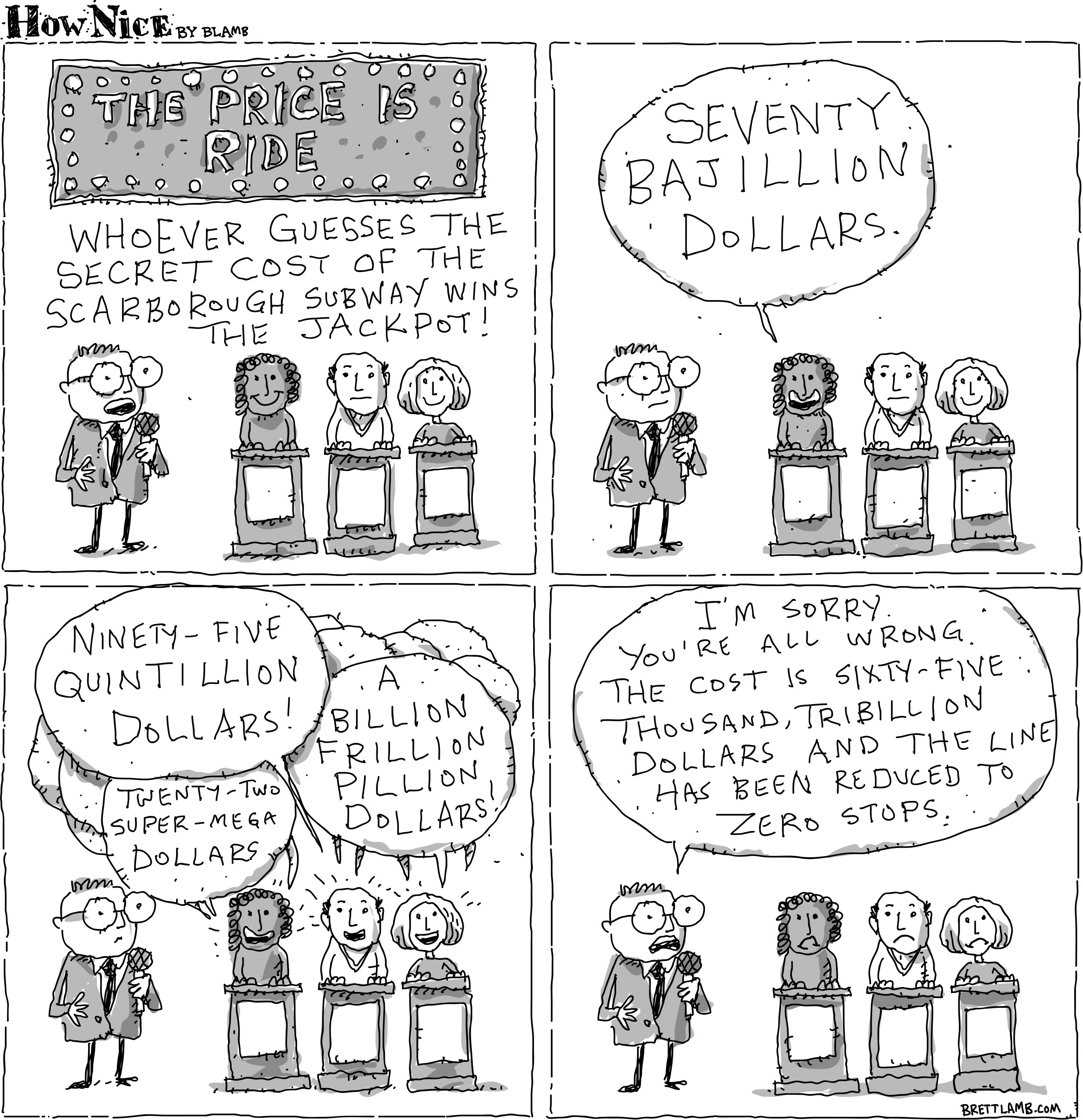
March 22nd, 2018 · Comments Off on EDITORIAL CARTOON: How nice (March 2018)
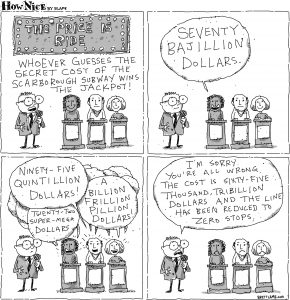
More how nice!
EDITORIAL CARTOON: How Nice (Dec. 2017)
EDITORIAL CARTOON How nice! (August 2017)
EDITORIAL CARTOON How nice! (JULY 2017)
EDITORIAL CARTOON: how nice! by blamb (June 2017)
EDITORIAL CARTOON: TCHC (May 2017)
EDITORIAL CARTOON: The Grand Tory (April 2017)
FORUM: Celebrating 20 years of cartoonist Brett Lamb (April 2017)
EDITORIAL CARTOON: A second chance! by Brett Lamb 2037 (February 2017)
EDITORIAL CARTOON: Not really! It’s actually nice! by Stumpy the Subway(January 2017)
Tags: Annex · Columns · Opinion
March 22nd, 2018 · Comments Off on FORUM: Small businesses create a liveable city (March 2018)
Provincially mandated taxes are driving out local entrepreneurs
By Joe Cressy
I spend a lot of time in this newspaper talking about the need to build a liveable city. A city that is affordable for all. A city that has the parks and services required to foster inclusive neighbourhoods. A city that takes care of the most vulnerable. And, a city that protects and supports arts and culture, because at the end of the day a city without culture would be a city missing something.
A critical component of a liveable city that has been under threat in recent years is the viability of small businesses and our vibrant main streets. I grew up in the Annex, shopping and eating along Bloor Street West. The same story can be told by residents adjacent to College Street, Queen Street, in Kensington Market, and on Roncesvalles Avenue…the list is endless. However, in recent years rising property values and the corresponding increase in provincially-regulated tax assessments are driving small businesses out of the city.
Here’s how it works.
Under the province’s tax assessment rules, commercial properties are assessed on the basis of “highest and best use”. In other words, a property’s taxes are not assessed on the basis of their actual use and sales, but rather on their potential revenue if they were to change.
Just a few examples help illustrate the problem.
401 Richmond is an arts and cultural hub providing below market rents to more than 150 tenants. It’s a dynamic place that enriches our city. However, its recent tax assessment resulted in a 109 per cent increase based on highest and best commercial use, calculated as if it rented to stores like the GAP and Starbucks.
Le Select Bistro is a French two-storey restaurant on Wellington Street. It’s independently owned and has operated for decades. The owners will soon see their taxes increase from $2,000 per month to $20,000 per month, based on a calculation that defines an 11-storey condominium as its highest and best use.
The list goes on and on: from Kensington Market grocery stores taxed on the basis that they could serve cocktails rather than tomatoes, to a local family-owned music shop on Bloor Street that is currently being taxed as if it were a condominium.
Over the last year, I have heard from many small businesses in our community that this flawed tax model is making it more and more difficult for small and independent businesses to survive. From local grocers and raw food vendors to restaurants across our ward, many have been sounding the alarm regarding the impact large and unexpected property tax increases can have on their ability to stay afloat.
Now nobody is suggesting that small businesses shouldn’t pay taxes. Taxes are at the core of our collective commitment to building a liveable city. Taxes are not a four letter word. They are the cost of city building. However, our taxation system should be fair for all, including the local businesses that make our communities and economy thrive.
In recent years I’ve worked closely with city finance staff to try and find solutions to this growing problem. I am delighted that they have come forward with a recommendation to cap annual tax increases on commercial properties in an effort to support local business across our city. The recommendation calls for a maximum possible increase of 10 per cent over the prior year’s taxes on an annual basis — rather than an undetermined, and often prohibitive, amount for some businesses.
The city’s plan is not a solution on its own. The province’s flawed model of assessing commercial properties on the basis of their supposed highest and best use needs to change.
However, as a city councillor I’m not prepared to sit and wait for that to happen while our neighbourhoods see more small businesses close down. Our new city plan will help.
At the end of the day building a liveable city requires us to imagine the city we want to live in and then implement the policies to make it a reality. For me, a liveable city is one where entrepreneurs and small businesses are successful and located in the neighbourhoods where people live.
Joe Cressy is the city councillor for Ward 20, Trinity-Spadina.
READ MORE BY JOE CRESSY:
FORUM: Looking back on 2017 in Ward 20 (Dec. 2017)
FORUM: Establishing a new Indigenous Affairs Office (Nov. 2017)
FORUM: Toronto — an artistic city (FALL 2017)
FORUM: Address affordable housing (June 2017)
FORUM: Build a neighbourhood (March 2017)
FORUM: Conserving past to enrich future (January 2017)
FORUM: Our dynamic Kensington Market (November 2016)
FORUM: A new central park for Toronto (September 2016)
Tags: Annex · Opinion
March 22nd, 2018 · Comments Off on FORUM: What kind of province do we want? (March 2018)
A case for inclusivity and fairness
By Jessica Bell
I’ve been a community organizer and an executive director of non-profits for nearly 20 years, winning real change for human rights and the environment.
In Toronto, I co-founded a transit advocacy organization, TTCriders, because Toronto needs an affordable world-class public transit system. I was inspired to start TTCriders because its mission upholds my values: my lifelong commitment to tackling climate change, to building thriving, green, people-friendly cities, and to solving poverty.
[pullquote]Under the cranes and shiny condos, people are dying on the streets because community housing is crumbling and rents are skyrocketing.[/pullquote]
We have racked up victories. We shamed the Liberal government into lowering the fare on the UP Express so Torontonians can afford to ride the train we paid to build. Government funding to the Toronto Transit Commission (TTC) has increased. And city council said yes to fare discounts for low-income riders, and two-hour fares.
It’s my experience working with people to get results that I will bring to the job as your representative at Queen’s Park. I can’t wait to get started.
Queen’s Park has so much power over our lives. It’s at Queen’s Park where I will continue to improve public transit because the New Democratic Party (NDP) will match the city’s funding contribution to the TTC so riders can have much better service.
It’s at Queen’s Park where we will improve our schools. I want my kids to get the best public education possible. That gets difficult when classrooms are overcrowded, up to 600 schools could be up for closure, and schools can’t afford to do basic repairs, like removing lead from the pipes so our kids have safe drinking water. The Ontario Government admits that many schools in our area, including Clinton Street Junior Public School and King Edward Junior and Senior Public School, are in critical condition.
Children are our future. The NDP will fix the school funding formula so schools have more resources, put a moratorium on school closures, and require local developers to pay their fair share to maintain local schools.
It’s at Queen’s Park where we can build a fair economy. Almost every new job in Ontario has been a precarious job, a casual job, or a minimum wage job since 2008. These are not jobs that let you save for a house, or children, or retirement. Yet, at 10:57 a.m. on January 2, Canada’s top 100 CEOs had already earned $49,738, which is what the rest of us, on average, make in a year. This inequality happened under a Liberal government.
The NDP stands for workplace fairness before and after elections. We will raise the minimum wage to $15, with no exemptions. We will require that temporary workers are paid the same as permanent workers, and will make it easier for workers in all sectors to choose to join a union.
It’s at Queen’s Park where we will improve health care. I lived in the United States for seven years and experienced the cruelty of private healthcare. No one should have to worry about money when they’re fighting for their lives.
Privatization and funding cuts are eroding our cherished universal health care system.
An NDP government will introduce universal pharmacare so everyone can access essential medications using their OHIP card instead of their credit card.
We’ll also increase funding to hospitals to reduce wait times and improve health care.
It’s at Queen’s Park where we must tackle Toronto’s housing crisis. Under the cranes and shiny condos, people are dying on the streets because community housing is crumbling and rents are skyrocketing — it was just reported that the average rent for a one-bedroom condo jumped 15.4 per cent last year.
Many Torontonians, including myself, have given up on homeownership, and the stability it provides, because housing prices are out of control. At the door, renters tell me again and again they hope their landlord doesn’t evict them because they can’t afford the neighbourhood anymore. I tell them that’s my experience too, and we are going to fix that issue together at Queen’s Park.
Housing is a human right. The NDP will contribute a third of the costs to community housing, and introduce strong inclusionary zoning rules, which require developers to make a portion of any new housing development affordable.
On June 7, 2018, you have a choice to make. You can choose between the Wynne Government, which has disappointed. You can choose the Conservatives, who will cut education and healthcare. Or you can choose to elect an effective local representative and the NDP, a party that stands up for us. It would be an honour to work with you.
Jessica Bell is the provincial New Democratic Party candidate for University-Rosedale.
READ MORE ON UNIVERSITY-ROSEDALE:
FORUM: Making Ontario a green leader (Jan. 2018)
FORUM: Fairness and cleaner air (Dec. 2017)
Tags: Annex · Opinion
March 22nd, 2018 · Comments Off on GREENINGS: The science of board games (March 2018)
The danger of equating pop culture with the periodic table
This neighbourhood is known for great people and I’m lucky enough to call many of them neighbours. I had the pleasure of joining some friends for dinner recently. After dinner, the gracious host pulled out a game and continued their after-dinner tradition of playing the latest trivia game they received for Christmas.
[pullquote]Once eradicated diseases are now on the rise thanks to a vocal number of people who can’t read a scientific study.[/pullquote]
As someone who lives under a rock with children more interested in Caillou than Justin Bieber, I can say definitely that I scored a near 0 in the arts and entertainment category. Though I can appreciate Adele’s pipes, I had no idea she had the bestselling single in 2015.
The science and technology category though, I more or less cleaned up. I was quick to answer that Fe is the symbol for iron and tungsten was used in the production of light bulbs. The night was thoroughly enjoyable.
I decided that I love trivia games. The word trivia itself refers to bits of information of little importance, and stems from the Latin trivium where a road would fork and often became a public gathering place where people would discuss trivial matters.
When I got home, it occurred to me that at a time when science and math literacy is through the floor, this board game essentially sends the message that knowing the Billboard 100 is of equal importance to knowing the periodic table.
The lack of science literacy has given rise to climate change deniers, so called anti-vaxxers, and homeopaths that can cause a lot of harm. The environment and our own health and well-being suffer as a result of this and here I am, partaking in this game that treats science as a trifling matter.
Despite scientific consensus, popular media still treats climate change like a controversy. It is not. Yet even for those who are willing to accept the conclusion of 97 per cent of the scientific community, people often don’t have enough scientific knowledge to combat the cherry-picked data of Fox news. Political stagnation might be in the interest of the elite, it is certainly not in the interest of human survival.
Not understanding basic functions of chemicals and scary sounding words has led to the rise of a massive anti-vaccination movement. Once eradicated diseases are now on the rise thanks to a vocal number of people who can’t read a scientific study. I firmly believe the movement would have been dead in the water if scientific literacy were higher among the general population.
The inherent contradiction in homeopathy is both amusing and baffling. Proponents of homeopathy insist that water somehow can have memory and remember the molecular structure of a drop of onion juice. Practitioners continuously dilute solutions insisting that the bottle of water, essentially just water, contains the molecular structure of whatever substance it is they are using to cure your ailments but magically forget one of the most common water contaminants — feces.
It would be funny if it weren’t so damaging. Parents are forgoing medical treatment in favour of these cures and causing real harm to their children. In some cases, children have died because of failure to treat illnesses.
While any exposure to science and facts is great, it really didn’t sit well with me that this game had put knowing scientific formulae on an equal footing as knowing lyrics to Justin Bieber’s latest song. One might be cute, while the other can lead to drug or material inventions that can save lives.
I certainly don’t expect game manufacturers to do anything about this dichotomy, so as parents, it’s our job to ensure that our children don’t think the Billboard 100 and periodic table are of equal relevance to the world.
Terri Chu is an engineer committed to practical environmentalism. This column is dedicated to helping the community reduce energy, and help distinguish environmental truths from myths.
READ MORE BY TERRI CHU:
GREENINGS: Driving fuelled by unseen subsidies (Jan. 2018)
GREENINGS: No solutions for nobody’s problem (Dec. 2017)
GREENINGS: Celebrate science not milestones (Nov. 2017)
GREENINGS: Down to the data (Oct. 2017)
GREENINGS: Reducing paper waste (Fall 2017)
GREENINGS: Taking tolls to the Gardiner and Don Valley Parkway (July 2017)
GREENINGS: Lessons from Madrid (June 2017)
GREENINGS: Thoughts on hitting the 400 benchmark (May 2017)
GREENINGS: Solving the food waste problem (April 2017)
GREENINGS: Kellie Leitch was right (March 2017)
Tags: Annex · Life · Opinion