November 2nd, 2020 · Comments Off on SPORTS: Baseball Leafs look back on the season that wasn’t (Oct. 2020)
With Christie Pits locked down, local players endured a rare summer off the diamond
Grant Tamane lays down a bunt at Christie Pits as Johnathan Solazzo (seated on cooler) looks on. After a season lost to the pandemic, the Toronto Maple Leafs hope to resume playing baseball in 2021. R.S. KONJEK/GLEANER NEWS
By R.S. Konjek
For Toronto Maple Leafs outfielder Grant Tamane, it’s been 20 years. Third baseman Johnathan Solazzo figures it to be 23 or 24.
That’s how many years it’s been since they last spent a summer without playing baseball.
“I did find myself randomly driving to Christie Pits a couple times this summer.”
—Damon Topolie, Manager
Team manager Damon Topolie tops them all. He started playing T-ball at age four, making it more than four decades since he hasn’t played organized baseball in some form.
This is the story of the Leafs’ 2020 season, the season that wasn’t.
Not long after the COVID-19 shutdown in March, the City of Toronto announced the cancellation of several longstanding events including Pride, Luminato, the Caribbean Carnival and the CNE. Most parades, cultural events, and neighbourhood festivals were cancelled.
The city also called “time” on major sporting events.
Back then, summer still felt a long ways off, but the Leafs – members of the Inter-county Baseball League (IBL) – found their season hanging in the balance.
In April, three of the league’s eight clubs suspended operations for the year. The remainder, including the Leafs, hung together to wait out the shutdown.
As spring turned to summer, the Leafs hoped that a shortened baseball season could still be played.
Taking a cue from the scene at Trinity Bellwoods Park, team owner Jack Dominico envisioned a scenario where fans at Christie Pits could be spread out using social distancing circles placed around the hillsides that surround the Leafs’ ballpark.
Players were told to stay in shape. Solazzo gathered some weights from his neighbours and assembled a homemade gym where he could work out.
“Gyms were closed and it was too cold to go out, but I was still working out, hoping and wishing for a season,” he says.
The league formulated plans for a one-month regular season, followed by a month of playoffs.
Unfortunately, the clock ran out. “It was really close,” says Topolie. “We were days away from starting a season, but municipalities would not release their parks [for organized sports]. In order to start a season we needed to start at the beginning of July, but parks were not released until the middle of the month and others at the end of July.”
On July 9, the IBL announced that it was cancelling an entire season for the first time in its 102-year history.
For the Leafs and their fans there was disappointment, but it could have been worse. Unlike other ball clubs, the Leafs do not charge admission, so they will not take the same financial hit those that rely on ticket sales to fund operations.
With a summer of Sunday afternoons unexpectedly wide open, how did the players occupy their time?
Tamane gave yoga a try, and got himself a dog.
“Being stuck at home I had a large amount of time to myself, which made me really want a dog,” he says. “I ended up building a fence in my backyard and adopting a two-year-old Husky/Shepherd mix from a rescue. She now takes up all my time, since I get to bring her to work!”
Topolie and Solazzo found ways to bring some baseball into their summer.
Topolie provided private lessons to younger players, sometimes up to a dozen sessions a week.
“I did find myself randomly driving to Christie Pits a couple times this summer,” he adds.
In August, Solazzo and teammate Marcus Knecht accepted an invitation to a home run derby organized by the IBL’s Guelph Royals. Eight different players from around the league participated in the event at Hastings Stadium in Guelph.
Accepting the invitation was “a no-brainer,” Solazzo says.
“It was awesome to see the guys, just to talk shop and see faces you haven’t seen all year.”
Although neither Leaf won the derby, Solazzo enjoyed the experience and hopes it can become an annual event.
A few swings of the bat in Guelph will go down as the only baseball action for the Toronto Maple Leafs this year, but they are already thinking about 2021.
Topolie will be back as the team’s manager and he also hopes to continue playing. Solazzo confirms that he will be ready to go.
“I am very eager to play ball in 2021,” Tamane says. “I’m just not sure if it will be baseball in the IBL or a local softball team. I live in Paris, so my commute to Bloor and Christie was getting harder and harder each year, but I do it because I love the sport and my teammates are family.”
If things return to normal in 2021, the Leafs will take to the diamond in early May.
November 2nd, 2020 · Comments Off on NEW IN BUSINESS: New restaurant opens mid-pandemic (Oct. 2020)
Entrepreneur invests in community on a wing and a prayer
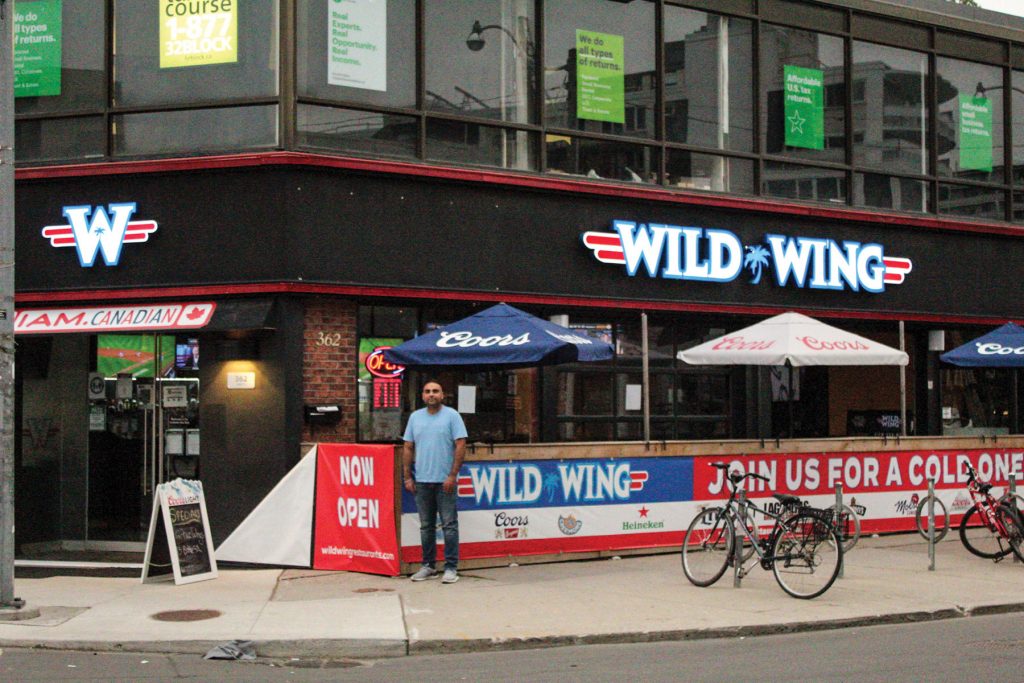
Inder Singh, owner of the new Wild Wings in the Annex, took the brave step forward of opening up a restaurant in hopes of supporting his new community. MARY AN/GLEANER NEWS
By Mary An
Braving an uncertain future for business in the pandemic, this August, Inder Singh took the bold step of opening a restaurant across from Spadina Station.
Singh is now a proud franchisee of a Wild Wing where many different varieties of chicken wings and other spreads are available from morning until night.
“We have to adapt to this new normal now, we can’t just sit back and rely on the government to do everything for us,” said Singh, in an interview with the Annex Gleaner.
Before Singh opened his restaurant in the Annex neighbourhood, the previous proprietor was evicted due to unpaid rent.
Knowing the potential risks, Singh still took the chance of opening his restaurant.
“Even if I don’t make money, at least I’m creating jobs for my employees and at least they have something to bring home to put food on their table,” he says.
Singh opened a Wild Wings restaurant in Kitchener with his brother-in-law before opening a second location in Toronto.
The pandemic forced him to make cuts to his Kitchener restaurant, but he chose to open the Toronto location to assist employees who would have otherwise lost their jobs.
“Because of COVID, business was slow. He had the option to lay me off, but instead, moved me to Toronto,” says Hardeep Singh, Manager of the Annex location of Wild Wings.
“It’s like a family here. Inder is a nice guy and is very supportive,” says Hardeep.
Some other new restaurants to Bloor St.:
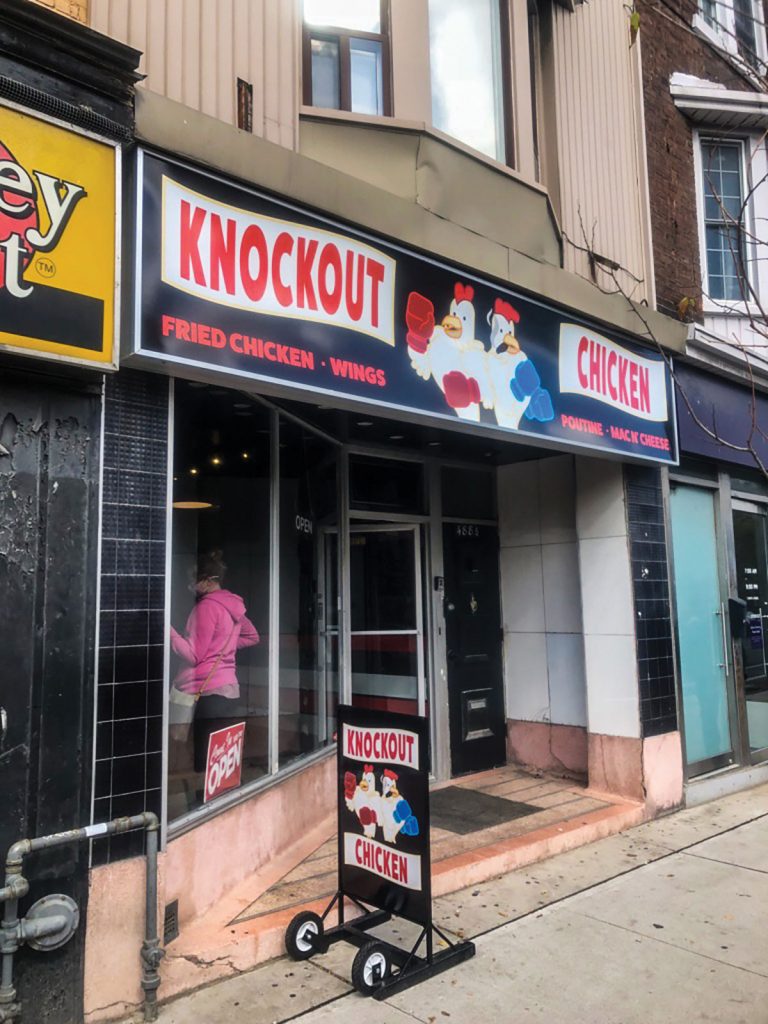
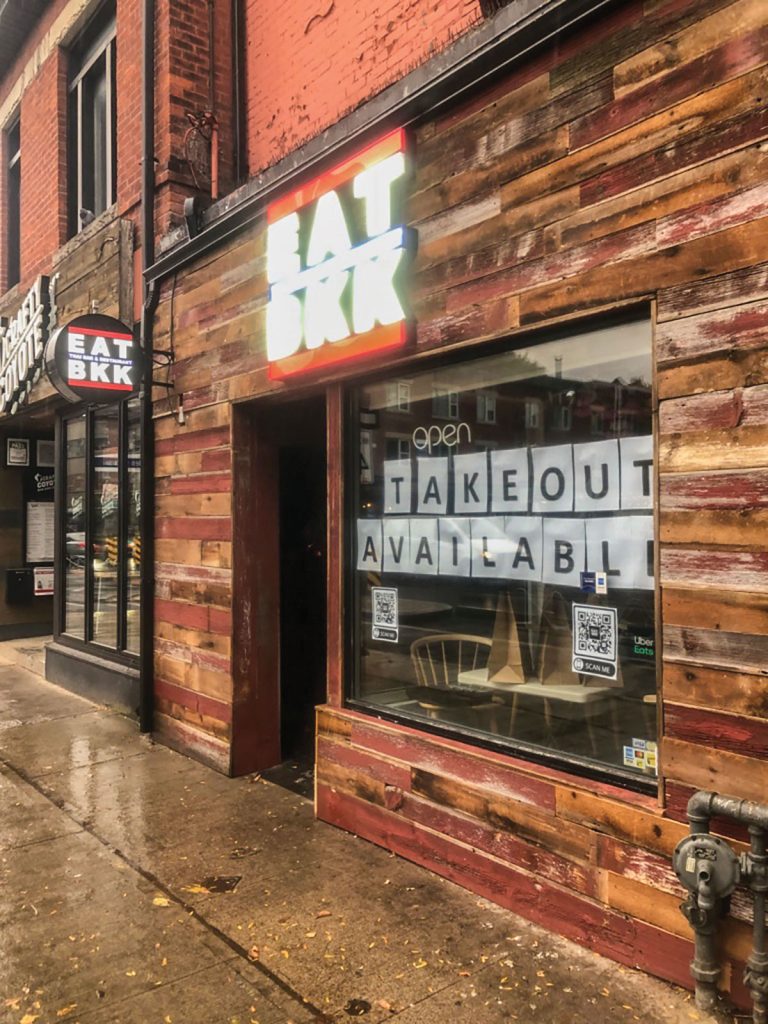
Indian Desire opened at 469 Bloor St. W. a few months ago and offers an “artistic take on traditional Indian dishes.” COURTESY INDIAN DESIRE INSTAGRAMAlso new to Bloor is Knockout Chicken at 490 Bloor St. W. The second location of this nascent chain, its first location is at 206 Augusta Ave. in Kensington Market. BRIAN BURCHELL/GLEANER NEWSEat BKK has moved its Thai street food from a spot in the Annex Food Hall to its own location at 513 Bloor St. W. BRIAN BURCHELL/GLEANER NEWSKendell Garcia and his partners saw the opportunity to open a new Scotty Bons restaurant in the Annex as the pandemic created a vacant space on Bloor Street. Scotty Bons offers a mix of the various Caribbean islands’ flavourful food, including sandwiches, roti, and poutines. Garcia, pictured above, is in front of his first restaurant location in Scarborough. The new Annex location will be located at 402 Bloor St. W. TANYA IELYSEIEVA/GLEANER NEWS
Comments Off on NEW IN BUSINESS: New restaurant opens mid-pandemic (Oct. 2020)Tags:Annex · Life
November 2nd, 2020 · Comments Off on ARTS: Global pandemic month eight: the show goes on (Oct. 2020)
Discover a wealth of Culture Corridor programming on-line
By Meribeth Deen
Remember festivals? Remember movie theatres, parties, the crush of humanity drawn to the streets because there were places to go, things to see, and people to meet? Sometimes eight months feels like forever, even though we got a dose of sunshine, could set foot into museums, and got re-acquainted with dining out.
It’s October, people, and not only are we facing ineffective patio heaters but also spiking levels of daily infection and a provincial death toll that might make you want to stay in and open up your old friend, the computer.
If there’s anything that this pandemic has taught us it’s how to use Zoom, and that artists will keep making art anyway.
So instead of hopping on a subway to be there in person, let’s have a look at Bloor St. Culture Corridor’s virtual offerings.
First stop, Hot Docs. As a Hot Docs member endless adventure is at your fingertips at any moment. Want to travel the world in search of the juiciest fruit? Watch The Fruit Hunters, by Yung Chang (Up the Yangtzee.) Want to meet the Jane Goodall of Giraffes? Her name is Anne Innis Dagg, and you can learn all about her and her journey as a woman in science in The Woman Who Loves Giraffes, by Alison Reid. Want to hang out with Noam Chomsky between debates, or chill with the Beatles in India? You can do all that, and much, much, more. A $59 “bronze” membership will get you free access to all special films and online events each month, plus a discounted rate for Curious Minds courses.
Next stop, the ROM. The museum will absolutely save the day if you’ve got a kid home from school with a cough or a sniffle. Every Tuesday at 2 p.m., ROM Kids Coordinator and Camp Director Kiron Mukherjee will go live on Instagram Live to combine his passion for children’s education with storytelling to bring to life science, history and art for you and your loved ones in the comfort of your own home. Kiron will share activities, easy at-home crafts, behind the scenes anecdotes and fun facts—all connected to the ROM collections. You can also simply browse the ROM’s collection with a continuously growing database of art and artifacts.
On October 15, uncover the little known history of Kensington Market with Vivian Felsen, brought to you by Miles Nadal JCC, The Toronto Workmen’s Circle and The Committee for Yiddish. A Toronto writer and translator, Felsen will tell the story of how she came to discover the mostly forgotten yet truly remarkable literary activity of this largely working-class, Yiddish-speaking community, and the uniqueness of its language and its writers between the years 1910 and 1950.
Between October 15 and December 3, you can sing and connect with others from the comfort of your home, with Alex Fiddes’ virtual specialty choir. As described on the Miles Nadal JCC website: Each session will include an optional live virtual social component, a live choir rehearsal session, and a taped choir session released as a YouTube video.
The live choir session will include real time discussion of the music, followed by a warm up. For the taped portion, the vocal parts have been sung and recorded by the music director and layered together, which means as you sing, you will hear all the vocal parts in the mix, similar to the real thing. You will have access to the chart, vocal tracks, and instrumental tracks, as well as the taped session so you can practice and sing as much as you like. There is no pressure to perform. You are encouraged to sing for the love of singing.
Finally, step into someone else’s shoes. The Bata Shoe Museum will be presenting Dr. Kimberly Alexander, a professor of history from the University of New Hampshire, discussing the long-term impact of 18th Century issues alongside Creative Director and Senior Curator Elizabeth Semmelhack who created the exhibition on Patriotism and the Politicization of Shoes, 1760-1780s.
So yes, the pandemic is still terrible and Halloween might be a bit of a bust this year but, Toronto’s creators are still there for you. Be there for them in return, by tuning in the way we must in 2020.
Comments Off on ARTS: Global pandemic month eight: the show goes on (Oct. 2020)Tags:Annex · Arts
September 9th, 2020 · Comments Off on ON THE COVER: Keeping an eye on our greenspace (Aug. 2020)
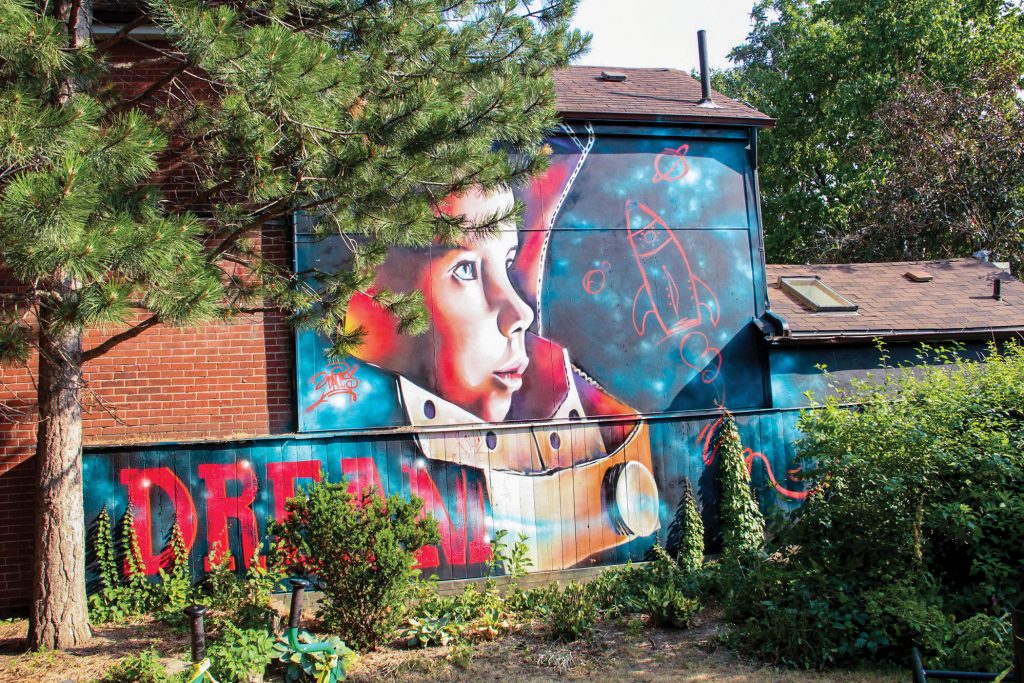
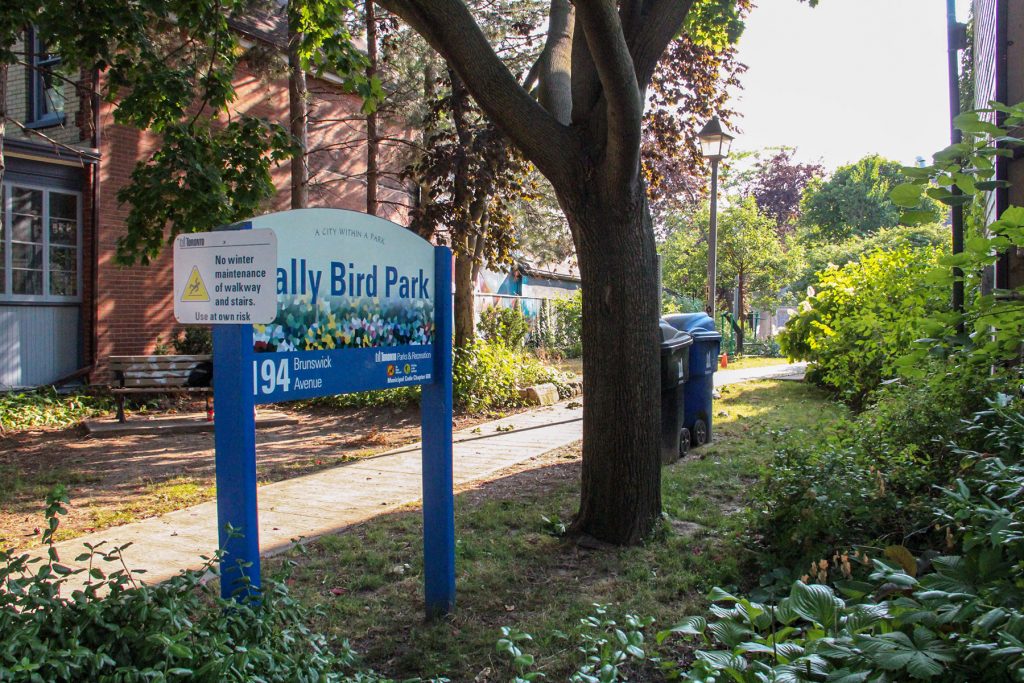
Sally Bird Park is located mid-block on Brunswick Ave. north of Harbord St. Long plagued by graffiti this mural has garnered the respect of taggers who leave it alone. See more about the area’s parks in our annual reviews.TANYA IELYSEIEVA/GLEANER NEWS
Comments Off on ON THE COVER: Keeping an eye on our greenspace (Aug. 2020)Tags:Annex · News
September 9th, 2020 · Comments Off on NEWS: U of T’s unique laneway homes (Aug. 2020)
Sustainable design was key to plan to build these and more
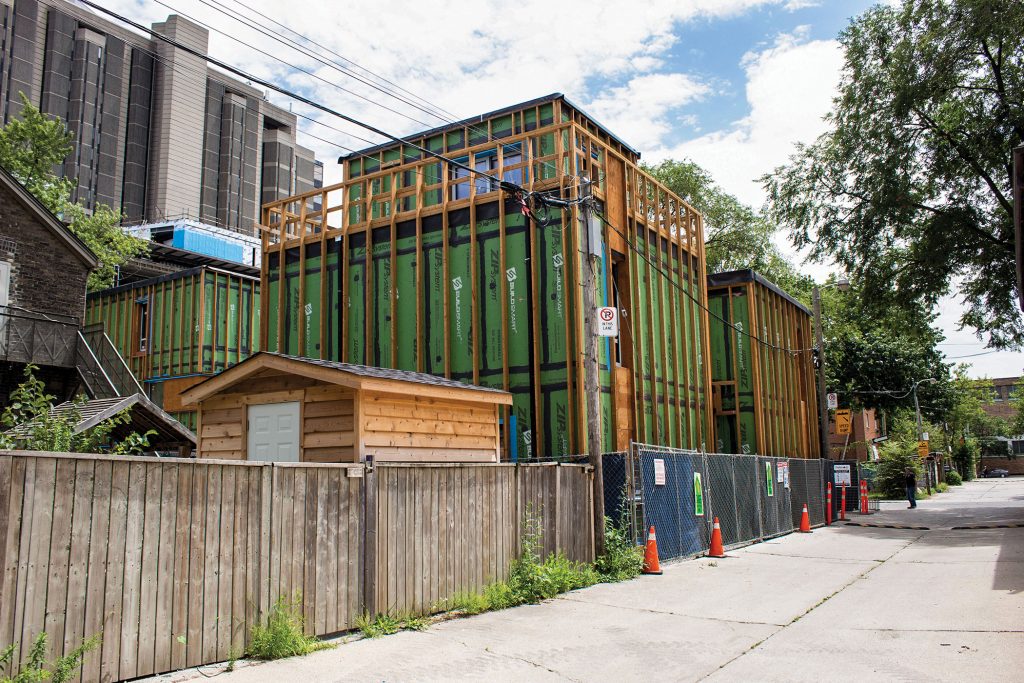
The University of Toronto has invested heavily into energy efficient laneway houses as part of a pilot project — as seen here in a laneway just east of Huron St. near Robarts Library. MARY AN/GLEANER NEWS
By Mary An
The making of University of Toronto’s pilot laneway homes located south of Sussex Avenue on Huron Street, is near completion. According to Anne Macdonald, Assistant Vice-President of Ancillary Services for the University of Toronto, they plan on getting residents for the laneway homes by this fall.
“It’s truly an experiment for us wanting to test out some ideas and see what was possible,” Macdonald said. These unique homes will be a first for the university, but not for Toronto.
Award-winning architect Brigitte Shim built her own laneway home more than 25 years ago. Shim is also a professor at the University of Toronto at John H. Daniels Faculty of Architecture, Landscape, and Design.
“We actually ran up against a lot of bureaucracy, because you couldn’t build a house behind a house, you couldn’t build a house without street frontage,” Shim said. Local planners at the time wondered about her quality of life because they thought it would negatively be affected by living in a laneway. After being approved to build in the laneway, and raising two kids in the home, Shim believes that laneway houses should be available all across Toronto.
“Everyone wants to live in the village, in the middle of the city, and laneways provide that opportunity. Our laneways are not just parking lots, but they actually become places for people to live,” Shim said.
According to thelanewayproject.ca, there are more than 2,400 laneways in Toronto. “You have all these downtown neighbourhoods, that need more people living in them. They’re not as dense as they could be, and laneway housing is one way to do that,” Shim said.
Understanding the need for density, the U of T launched a pilot laneway housing project. Teaming up with the Huron-Sussex Residents’ Association, they created a neighbourhood plan in 2014, identifying where development might occur. Six years later, the three pilot houses are almost finished, but, these are no ordinary laneway homes.
While planning these houses, the University of Toronto also considered their sustainability and energy performance.
“The goal is to be as energy efficient as possible. We were hoping for net zero, I don’t think we’ll be quite there but, we will be close,” Macdonald said. The homes will include solar panels to support this idea. It will also include a unique feature that was not originally predicted.
According to Macdonald, the three pilot homes will will be partially heated using geothermal energy. An ‘earth-tube’ will go down into the soil, where it will, “act as a moderating influence on air temperatures.” Earth-tubes were recommended by the architect of the project, as a sustainable alternative to fossil fuels because the earth is naturally warmer during winter, and cooler during summer. The integration of geothermal energy will allow for smaller, more efficient heating and cooling systems in the homes.
Earth-tubes would not have been possible if U of T hadn’t demolished a nearby house, leaving a big hole in the ground.
“It’s possible that future builds will not have that same opportunity,” Macdonald said, “but because we had it there we thought we would try it.”
Panel construction, which minimizes construction noise, is another unique feature of this development. According to Macdonald, finding a contractor who was comfortable with panel construction was, “tricky.”
“It’s essentially constructed of panels that kind of click together. They’re all pre-purchased, pre-assembled, and brought to the site…It all kind of snaps together as if it was a big Lego project, and then from there, the interior gets built,” Macdonald said.
The University of Toronto plans on building 30-40 more laneway homes after they receive feedback from the three pilot homes. According to Macdonald, it will take a year for feedback on the energy performance of the homes, and a few months for the design.
“We want them to make sense for families, because that’s who we house in the neighbourhood,” Macdonald said.
September 9th, 2020 · Comments Off on NEWS: Residents reject plans for Planetarium site (Aug. 2020)
New plans fail to quell concerns
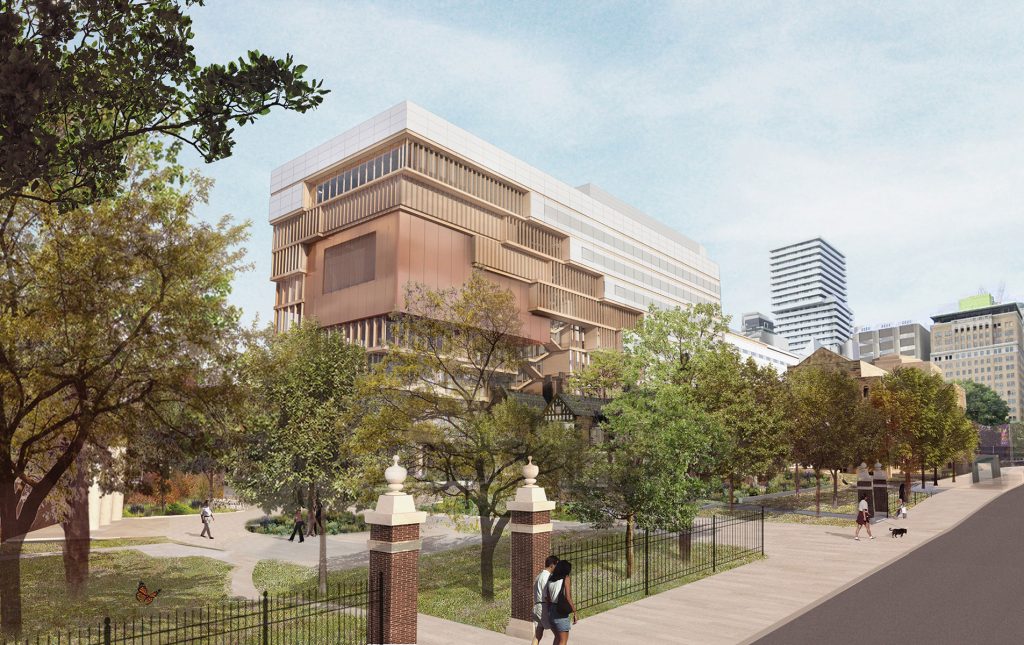
Residents and the University of Toronto continue to clash over the design of the building that will replace the planetarium. This is the latest rendering. COURTESY U OF T
By Tanya Ielyseieva
A re-vamped proposal with a scaled-down building on the site of the former McLaughlin Planetarium continues to face opposition from community groups representing local residents. A July 14 meeting was held to review the latest plans, and there, the Queen’s Park Coalition, which represents roughly 40,000 households, stated their case against the nine-story, multi-use building which they say will create an unacceptable visual impact on Queen’s Park and Philosopher’s Walk.
Designed by architects Diller Scofidio + Renfro, the proposed building will provide space for several academic departments including the Faculty of Arts and Science, the Faculty of Music, and the Faculty of Law. The development will include a recital hall, work areas, laboratories, meeting rooms, offices, and a café.
The initial consultation in June 2019 led to numerous changes in the size of the building, such as reducing the mass of the recital hall, initially conceived as a floating component that would have loomed over the stories below.
“Through this process, we have actually been able to push the recital hall further away. It still has a very sculptural presence and is elevated above Faulkner Hall with great views of the skyline, but it is enveloped by a set of overlapping adjacent window systems,” said Charles Renfro, Diller Scofidio + Renfro partner and architect. “The colour palette that we’ve chosen, not exactly the specific materials, but our palette is warm and friendly and takes cues from brick and limestone, and in the facade, you can see powder-coated aluminum, which takes a sort of brick colour.”
The updated proposal will be 43 metres and includes a mechanical penthouse, which exceeds the 18-23 metre height permission in the area.
The July 14 consultation was held to assess these revisions. Members of the Queen’s Park Coalition stated that the proposal continues to show a lack of concern for the cohesive landscape and built form of the area and fails to resolve two fundamental issues:?bulk and height.
“There’s just too much program on a too-small site hemmed in by lovely heritage buildings on three sides,” said Bronwyn Krog, a representative of the Queen’s Park Coalition. “With the front and back highly visible from two important heritage landscapes, Queen’s Park and Philosopher’s Walk. The proposal will create an unacceptable visual impact on these heritage cultural landscapes, which are a fundamental planning principle.”
Krog read a letter from Bill Greer, the architect for the Toronto Historical Board.
“The proposed structure is too high, too bulky, and an entirely inappropriate gold colour for this district. It does not fit within the heritage context of the significant historic area of the St. George campus of the university. It is also critically important to preserve all of the mature trees on the site as it will take many generations before new trees grow to an equivalent size,” reads the letter.
Sue Dexter, of the Harbord Village Residents’ Association, stressed that these are not planning issues but “living issues” which intersect with the heritage context and will be overwhelmed by the present proposal policy.
“Before approving this application, we need to get the heritage right. We all have a responsibility to generate policies for the site that reflect community priorities, conserve character, and allow for compatible development to occur. The university has 16 available sites for buildings from the 1997 master plan. There is no excuse to overbuild here and lose a heritage landscape prized by the residents of this city,” said Dexter.
According to Dan DiBartolo, Senior Planner at Heritage Preservation Services, all aspects from the demolition of the planetarium to the implementation of the landscape plan and the conservation of Faulkner Hall were looked at thoroughly.
The application is under review and the final report is set to be ready in the fall.
An anonymous spokesperson from the U of T stated, in an email to The Gleaner, that the hope is for approval to be forthcoming and for construction to begin in the spring of 2021.
“We are looking forward to creating a landmark building that will add to the city’s cultural district and offer new opportunities for public programs,” wrote the spokesperson. “We want this to be a building where the university connects with the city, and the city connects with us.”
September 9th, 2020 · Comments Off on CHATTER: “More than a farmers’ market” re-opens safely (Aug. 2020)
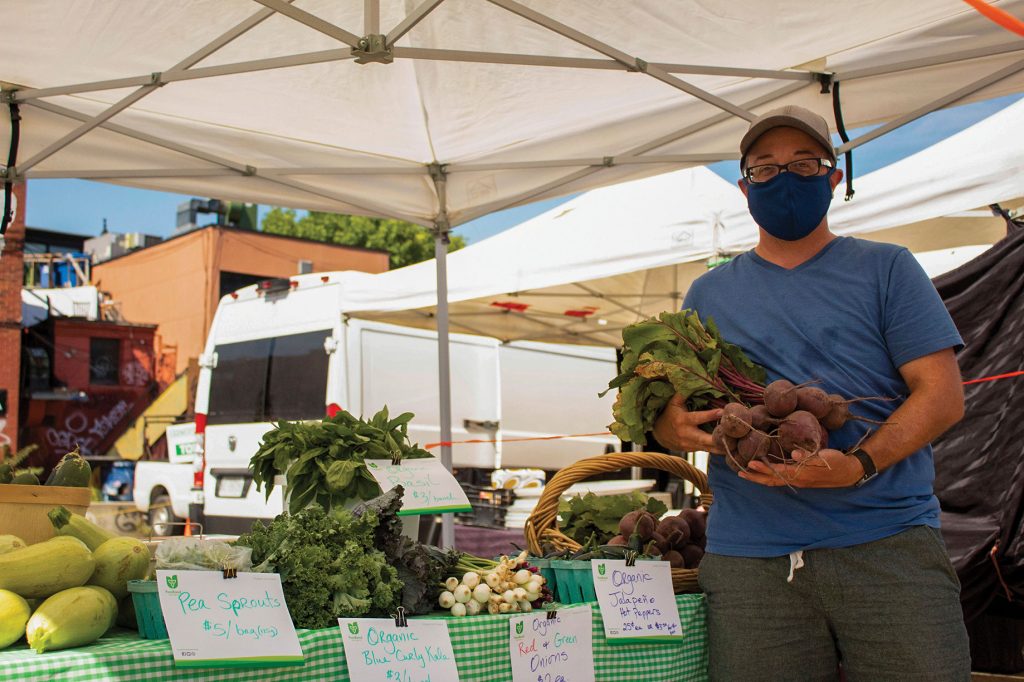
Christopher Dunbar, owner of Dunbar Organic Farm, is excited to get back into the community and to share his harvest at the farmers’ market. MARY AN/GLEANER NEWS
After a long delay, the volunteer-run Bloor and Borden farmers’ market is open and ready for another season. The market takes place Wednesdays from 3-7 p.m. It’s located in the Green P parking lot off Borden Street just south of Bloor Street.
This season, there are only seven vendors at the market, with offerings ranging from baked goods to fresh organic produce. According to Rory ‘Gus’ Sinclair, former chair of the Harbord Village Residents’ Association (HVRA), the market plans on staying open until the end of October.
There are a few changes to keep in mind when visiting the farmers’ market this summer:
Only some vendors will be accepting cash, credit cards are strongly encouraged.
All shoppers must maintain a six-foot distance from one another.
Hand sanitizer will be available for visitors.
Masks are mandatory for all shoppers.
There is also a one-way lane for shoppers to line up and enter the market. Additionally, a new online ordering system is available on the Bloor and Borden’s farmers’ market website: bloorborden.com Shoppers may now pre-order on the website and pick up their orders at the market in line.
Pre-ordering may be a blessing for shoppers, but making it happen proved challenging for some vendors.
“My biggest challenge was predicting my crop,” said Christine D’Hulster, Co-Owner of Son-in-Law Produce, in a phone interview with The Annex Gleaner. “With online ordering I have to have my product online a week before, so that’s been really challenging, to determine if the crop is going to last another week or how much I can offer.”
Baker Olivia Yetter, owner of OY’s Joys likes the new online ordering system because it helps decrease waste and determines the amount of products she has to bring.
“Without obviously any pre-sales, I would bring my goods and try to sell them. If it didn’t sell, I would take it home as a loss,” Yetter said in a phone-interview with The Gleaner.
Another change in the market this year is the community-filled atmosphere. According to Helen Goldlist, Chair of the Market Advisory Committee (MAC), the market is more than an area for local groceries, it’s also a place to build and strengthen the community. In previous years, the market’s centre square was filled with musicians, activity tables, and resting areas for community members to get together. However, this season, the farmers’ market will lack the centre square due to the coronavirus pandemic.
“I would say the community feel is different, but, the customers this year are still very supportive,” said Christopher Dunbar, owner of Dunbar Organic Farm.
D’Hulster also made many online connections with community members who showed support and appreciation for her produce.
“It’s obviously a very hard time for people and the fact that receiving our produce makes their day and brings a little bit of normalcy in their life has honestly brought tears to my eyes,” said D’Hulster.
“I think every neighbourhood should have a market because it does bring a community together. When you have a stronger community, you’ll have stronger people,” Dunbar said.
—Mary An, Gleaner News
Comments Off on CHATTER: “More than a farmers’ market” re-opens safely (Aug. 2020)Tags:Annex · News
September 9th, 2020 · Comments Off on CHATTER: Spadina Road getting new pipes (Aug. 2020)
According to the City of Toronto, each year it replaces approximately 3000 substandard water service pipes during planned construction projects. This summer they are tackling the water main beneath Spadina Road between Bloor and Dupont Streets, which is more than 130 years old.
Construction is set to proceed now that restrictions put in place due to the new coronavirus have been lifted by the Province of Ontario.
The project is a part of the Council-approved 2020 Capital Works Program to improve water distribution and reduce the risk of water main breaks.
Work starts every Monday to Friday morning at 7am and wraps up at 7pm, with after hours and weekend work taking place as required. During those hours, traffic will be reduced to one lane on Spadina Road in each direction. Sidewalk and road restrictions within the construction zone are also in effect and parking is unavailable.
The contractor is excavating the road and digging a trench to access and install the new water main, replace city-owned water service pipes that do not meet current standards, restore all areas affected by construction, and resurface the road.
The work also includes removing and replacing driveways, municipal sidewalks, and grass boulevards where necessary.
The project’s scheduled completion date is the end of December, 2020. When that happens, the city says there will be improved water service in the area as well as repairs to damaged sidewalks between Bloor Street West and Dupont Street.
—Tanya Ielyseieva, Gleaner News
Comments Off on CHATTER: Spadina Road getting new pipes (Aug. 2020)Tags:Annex · News
September 9th, 2020 · Comments Off on NEWS: Police Safety Scholarship winner (August 2020)
Harbord Collegiate student makes a difference, TPS takes notice
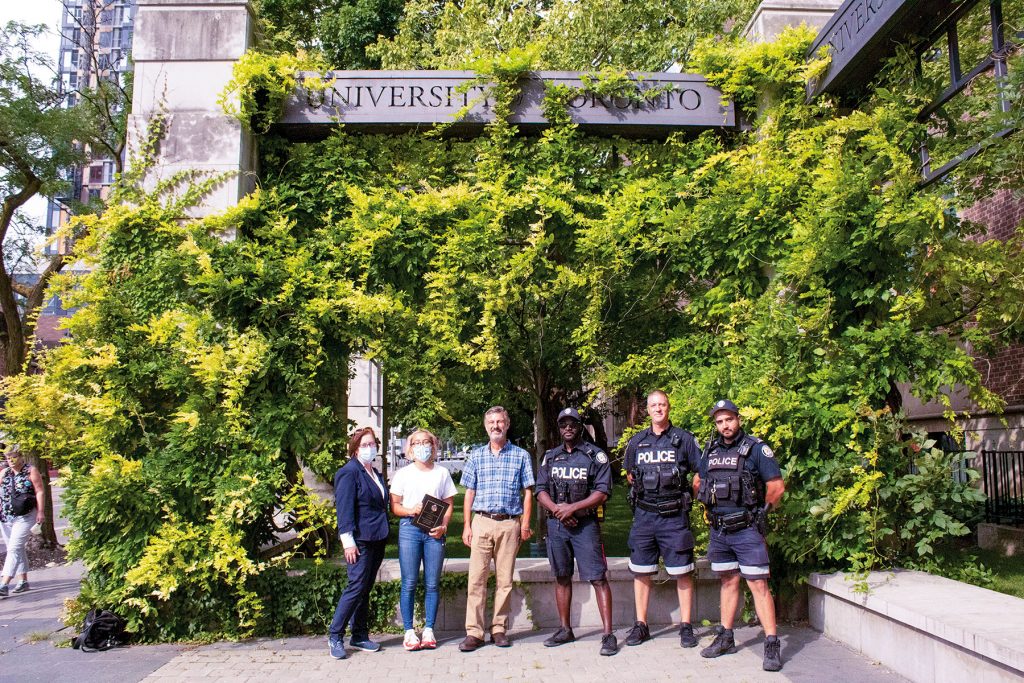
Emily Nguyen receives the Community Safety Scholarship Award from the Toronto Police. From left to right are Monica Yardley (Treasurer of the Community Police Liaison Committee), Emily Nguyen, Brian Burchell (Scholarship Chair and publisher of this newspaper), P.C. Alfred Adjei, P.C. David Shepard, and P.C. Amir Elias. MARY AN/GLEANER NEWS
By Mary An
How does one balance all of life’s demands, including school work, extracurricular activities and a personal life? Recent Harbord Collegiate Institute grad Emily Nguyen has a simple answer: prioritize. When prioritizing, remember that it’s okay to prioritize your own mental health by relaxing, too.
“I feel like I get overwhelmed, like I’m not actually being productive,” said Nguyen during a recent interview with The Annex Gleaner. “But then I have to remind myself that you don’t always have to be productive, and that’s fine too,”
Nguyen maintained an average of more than 90% in high school. She led Harbord Collegiate’s Safe Schools Committee, and is known in her school and the community beyond as being driven, helpful, hard-working and showing a great aptitude for leadership.
All of this has been recognized by the Toronto Police 14 Division Community Police Liaison Committee’s (CPLC) Community Safety Scholarship. This scholarship recognizes young adults who strive to build a healthier and safer community. The scholarship awards qualified applicants up to $4,000 towards their tuition.
Nguyen has participated in activities at her local YMCA alongside her family since she was a small child.
Martin Leung, former Aquatic Supervisor at the YMCA, says Nguyen was always tremendously helpful when it came to working with the community. She and her family were known as people who would encourage participation in activities.
“One of the communities that she and the family created is the big badminton group,” says Leung. “Every week, there’s badminton time at the centre, and she would get people involved.”
In 2018, the participation rate was lowering in one of the aquafit classes. But with Nguyen’s leadership and involvement, they managed to raise the participation rate to the maximum of 25.
“She led by example. It was almost like a party, she made a really great experience for this class,” Leung said.
Nguyen is going to study engineering at the University of Toronto.
She says she doesn’t have a set career in mind yet, because she wants to explore all engineering specialities.
“I want a lot of work experience, and to get to know the different fields and branches within engineering,” she said. “I feel as though finding something that I would really want to do is really important to me, because I don’t want to go into work dreading it every day.”
Comments Off on NEWS: Police Safety Scholarship winner (August 2020)Tags:Annex · News
In this year’s installment of evaluating park spaces within the Gleaner’s catchment area, our observers noted the impressive revival of Queen’s Park North showing what a great city can do when it focuses its imagination and resources. The neglected Euclid Avenue Park, near Koreatown, shows what happens when these resources are withheld. Compiled by Mary An, Tanya Ielyseieva, and Nicole Stoffman.
Queen’s Park North
11 Wellesley St. W.
NICOLE STOFFMAN/GLEANER NEWS
Time: 12:00pm
Grade: A- (Last year B)
Reason to go: To enjoy the new and improved park, completed in August of 2019. The clean, new paving, and graceful black and wood benches and picnic tables make Queen’s Park North an attractive, central spot for an outdoor lunch or dinner date. The upgraded King Edward VII and Highlanders of Canada plazas, now tied together by a grand walkway, are now elegant settings in which to contemplate these monuments. Even the sculpture of Canadian poet Al Purdy was improved by the addition of a new paved area at its base. Learning to identify trees, thanks to the ROM’s “Trees for Toronto” project is another great reason to while away the hours at this signature park. It was nice to see park users sharing the space with the homeless, temporarily camped out in six tents, which were given to them by charities to address dangerous overcrowding in the shelter system during the coronavirus pandemic.
Overheard: A cyclist, barreling through the park, to pedestrians, “Go ahead, I’m not going to take you out, I promise.”
Did you know: As part of the “Queen’s Park North Improvements,” over 160 new trees were planted and all are native species.
Huron Washington Parkette
420 Huron St.
TANYA IELYSEIEVA/GLEANER NEWS
Time: 2:00 p.m.
Grade: No grade (last year no grade)
Reason to go: The park is located directly behind the University of Toronto Schools (UTS). However, it was relocated to 406 Huron St. to accommodate the UTS expansion. The original park has trees and a couple of benches left. It is well shaded with a few sunny spots. There is also a kids’ playground with slides and swings, which is now closed due to the coronavirus pandemic. Due to UTS?renovations, the area is now empty and silent—perfect for anyone looking for quiet.
Overheard: The quiet sounds of birds singing.
Did you know: The University of Toronto students from the urban archeology course once excavated one-metre-square holes looking for ancient relics.
Huron Street Playground
495 Huron St.
Huron Street Playground is spacious, and welcomes kids and dogs. MARY AN/GLEANER NEWS
Time: 2 pm.
Grade: C (last year B)
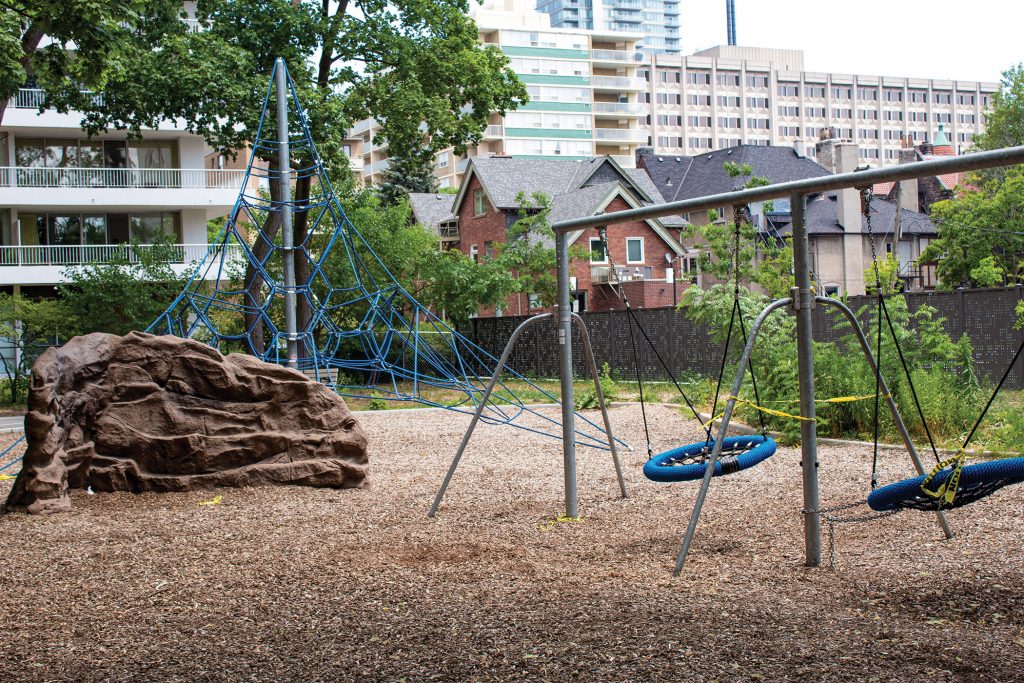
Reason to go: This park is not too far from St George station, located at Huron Street and Lowther Avenue. It does not have many playground structures, leaving only a swing set, a rope climber, a sandbox, and a small rock climber. However, it does have plenty of space, seating for picnics, and provides a quiet atmosphere for residents to relax. Due to the lack of playground equipment it would be hard to have many kids play in this space. Unlike other playgrounds, this one welcomes dogs and provides lots of shade for visitors. This playground is not as busy as others, and would be great for families who prefer to sit and relax.
Overheard: “I challenge you to a race to the top!” A child challenged one of his friends.
Did you know: FFLA, the landscape architecture firm who completed the park’s renewal in 2016, designed the park in such a way as to preserve the 40 healthy trees on site.
Taddle Creek Park
40 Bedford St.
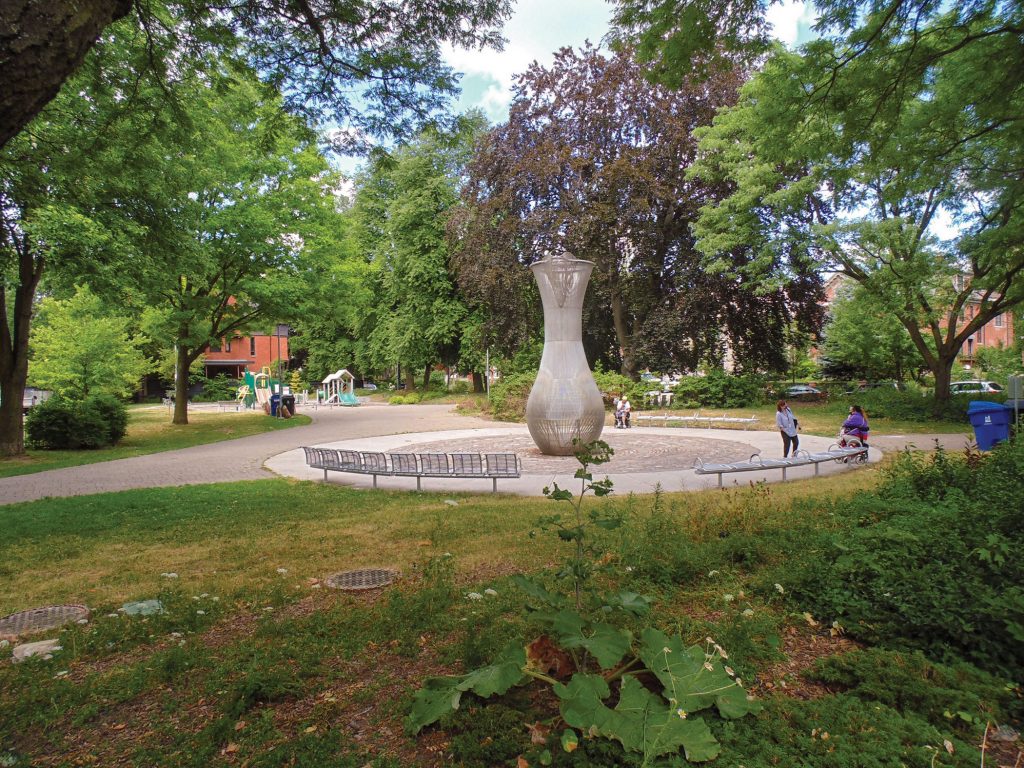
“The Vessel” by Ilan Sandler in Taddle Creek Park is made from 4 km of stainless steel rod, about the length of the former creek itself. NICOLE STOFFMAN/GLEANER NEWS
Time: 9:00pm
Grade: A- (Last year A+)
Reason to go: You live in an adjacent apartment tower, you enjoy gazing up at oversized public art, or you want to commune with an ancient copper beech tree. “The Vessel,” by Ilan Sandler, is the legacy of the $1 million dollar revitalization of this park that took place in 2011, but its scale pushes people apart instead of bringing them together around water. This was especially true since the sculpture’s water feature was turned off, due to the pandemic. The silver coating of the surrounding seating was peeling badly. A beech tree that looks like a giant elephant’s leg has its own special place at the North side of the park, and is something to behold. However, the grass and gardens needed tending and watering. A faint whiff of urine could be detected.
Overheard: “We’re trying to think of what patios are open that have full coverage. Hemingway’s is the only one I can think of.”
Did you know: Alfred Holden, a journalist with Spacing Magazine met his partner of 32 years at the fountain that used to be where “The Vessel” is now. It was a simple fountain surrounded by a flat place to sit. People would bask in the sunshine, or soak their feet to cool off. The two got to talking and have been together ever since.
Philosopher’s Walk
78 Queen’s Park Cres. W.
TANYA IELYSEIEVA/GLEANER NEWS
Time: 4:45 p.m.
Grade: A (last year A)
Reason to go: Philosopher’s Walk is located in a busy part of Toronto and connects Queen’s Park Crescent and Bloor Street. It is a hidden gem in the middle of the University of Toronto, where people can enjoy a deep breath of calm. It is surrounded by Trinity College, the Faculty of Music and Law, The Royal Ontario Museum and the Royal Conservatory of Music. The place is popular among students and faculty during the school year, which can make it crowded and loud. There are many benches for people to sit and relax and twice as many squirrels. The park is full of green spaces which makes it a great place to stroll, have a picnic, or just meditate.
Overheard: “Come back here, kid!” A mom shouting to her child who was chasing squirrels.
Did you know: The Bennett Gates at the Hoskin Street entrance to Philosopher’s Walk were installed in honour of Avie Bennett, the owner of Canadian publishing house McClelland & Stewart, who donated 75 per cent of his shares to U of T.
Village of Yorkville Park
115 Cumberland St.
MARY AN/GLEANER NEWS
Time: 1:30 pm.
Grade: B (last year A)
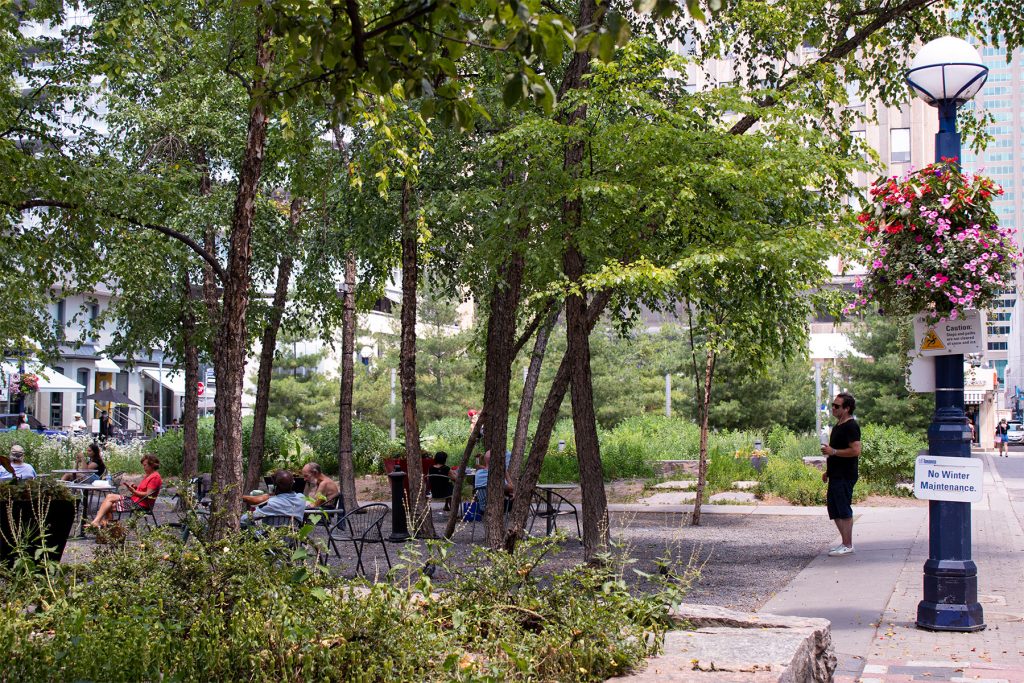
Reason to go: Being so convenient to Bay station and busy streets, this park is usually packed with adults. It’s not an ideal place for children, but is ideal for adults who are taking a break, setting up a meeting, or just want to relax after a shopping spree. The park is divided into sections, with different trees, flowers, and structures in all of them. It also has many seating areas covered with shade, but the area is usually packed throughout the day, making it hard to find seating. Though it’s in a commercial area, and you may be surrounded by other adults having different conversations, this park provides serenity in the midst of a chaotic street.
Overheard phone conversation: “Let’s talk about it. Meet me here at Yorkville Park.”
Did you know: This is no regular park: this park was made to be art, combining nature with steel to compose the juxtaposition of city life and the Canadian wildlife. The park splits into different sections, each with different trees, flowers, gardens, and metal features.
Bloor-Bedford Parkette
245 Bloor St. W.
NICOLE STOFFMAN/GLEANER NEWS
Time: 7:30pm
Grade: B (Last year B+)
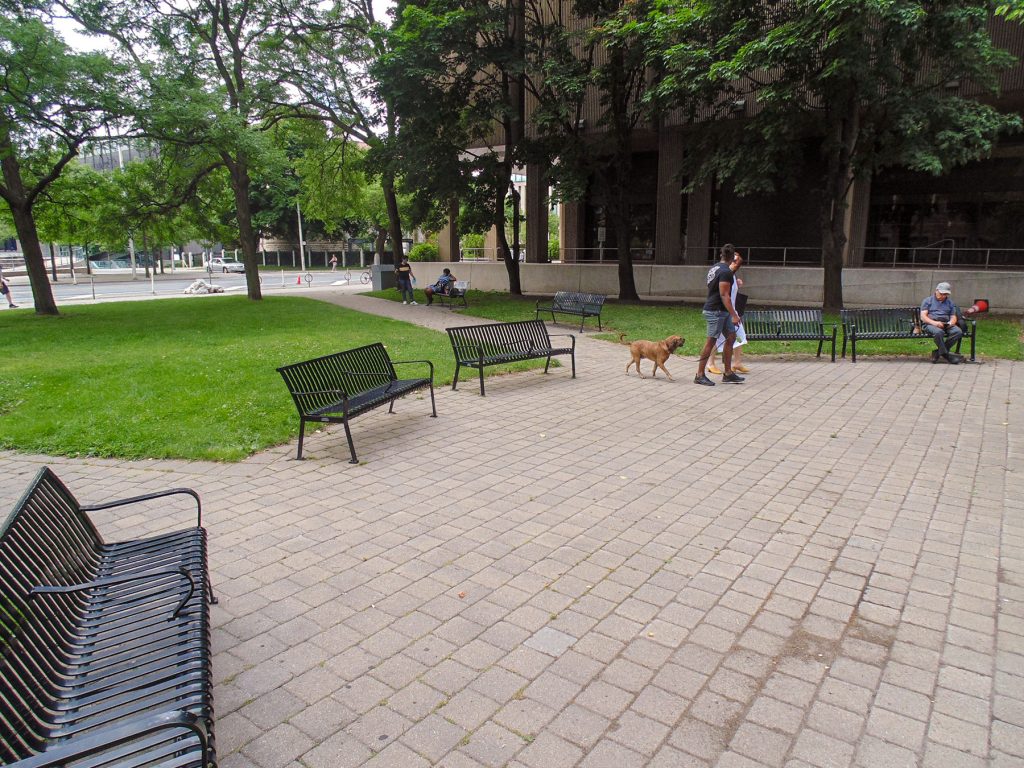
Reason to go: The parks’ elegant benches are generously spaced apart: perfect for smoking or having a private conversation. Unfortunately, an abandoned single sleeping mat with a puddle of water on it sat in the small plaza at the north end of the park. The plaza faces an attractive fence, with a less attractive parking lot beyond. Tall trees grace the parkette on either side. A simple stone bench sculpture adds some visual interest. It is dedicated to a “Beloved Administrative Colleague,” from the Faculty of Social Work to the east. One of the black benches to the west is dedicated to an “advocate of public education,” a reminder that OISE is on that side. The black benches are graceful, well maintained, and create a stylistic unity with the fence at the North end.
Overheard: The mellifluous sounds of R&B coming from the cell phone of one of three young men with masks hanging from their ears. Their conversation was continually drowned out by passing traffic and the St. George subway.
Did you know: According to a 2009 “Visioning Study” by the Toronto Planning Department, the Bloor-Bedford Parkette could “integrate a new, landmark-quality TTC entrance.” This idea should be actualized, as it would encourage more people to enjoy this open, green space.
Matt Cohen Park
393 Bloor St. W.
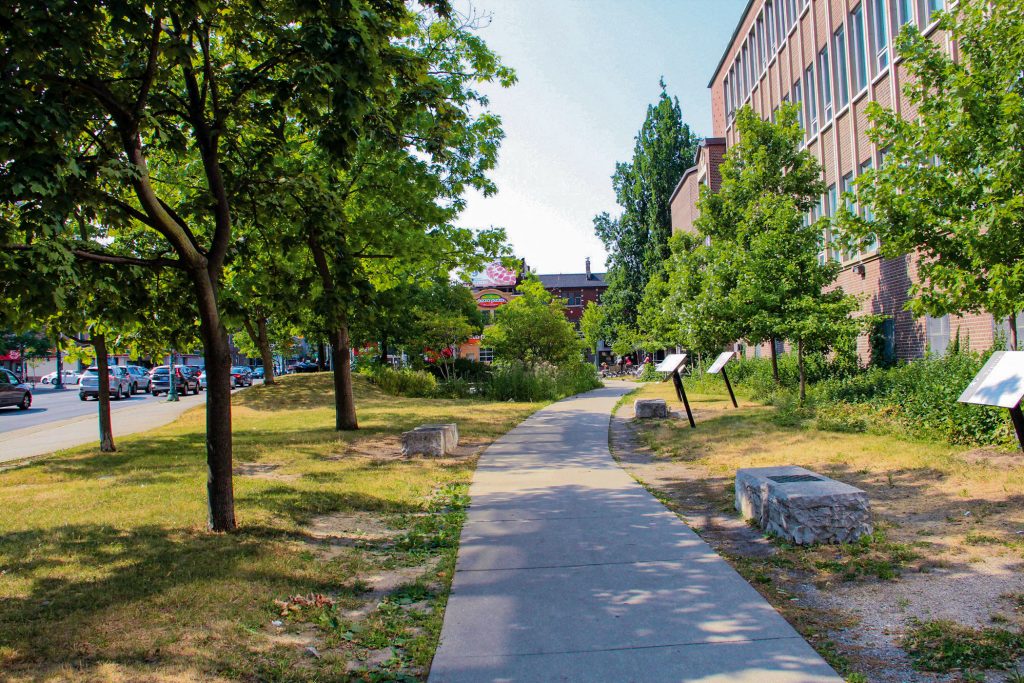
Matt Cohen Park features six commemorative plaques with Matt Cohen’s biography and excerpts of his work. TANYA IELYSEIEVA/GLEANER NEWS
Time: 2:30 p.m.
Grade: C- (last year C-)
Reason to go: Matt Cohen Park is located on one of the busiest intersections of Bloor Street West and Spadina Avenue. It makes a great space to enjoy lunch at your school or work break, or just to have a quick rest. Otherwise, there isn’t much to do. Since the park is located right at the intersection, there is not much fresh air, and the green space is minimal. The park has a lot of sitting areas for people to relax and enjoy some time off. However, the sounds of the streets might be intimidating as you can hear every car, bus, or truck. This park is not a family destination, it is more a five-minute stop on the way to it.
Overheard: “I’m looking for a police station. Can you help?”
Did you know: The park features six commemorative plaques with Matt Cohen’s biography and excerpts from his works.
Margaret Fairley Park
100 Brunswick Ave.
MARY AN/GLEANER NEWS
Time: 2:30 pm.
Grade: B (last year A+)
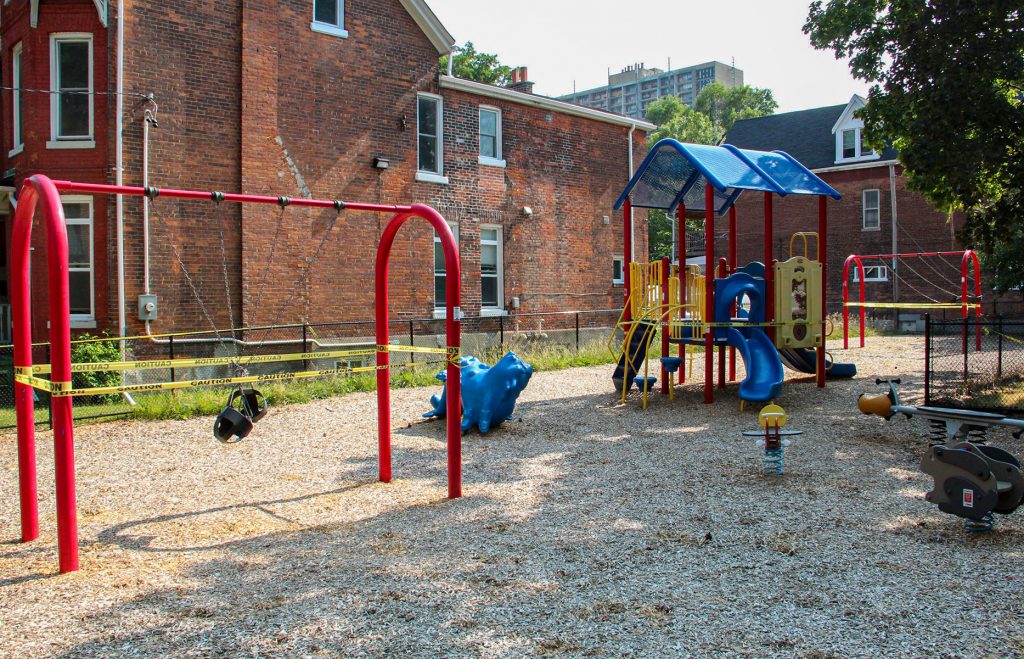
Reason to go: At the intersection of Brunswick Avenue and Ulster Street, located away from the busy streets of downtown, this park provides many fun structures and seating for everyone. There is a sandbox, a tree house, and a few climbing structures, along with a small wading pool for children. Though the swing set is still tied up due to the COVID-19 precautions, other areas of the park are open for children to use. The area is very popular with residents, therefore making it a bit crowded at times. Since the park is located in a residential area it is fairly clean, has lots of shade, and projects a calm environment. The park also has a nice rustic design, with seating from park benches to picnic tables cut directly from a slab of wood. There is also a specific area for parents and other adults to sit by the wading pool.
Overheard: “Good job buddy!” A dad said to his son who was building a sand castle.
Did you know: Margaret Adele Keeling Fairley, born in 1885, was a Canadian educator, political activist, and writer. She was the editor of the Communist Party of Canada’s booklet Canada’s Women, which helped form the National Women’s Committee. She was an editor for New Frontier Magazine, also known as Marxist Quarterly. Fairley authored The Spirit of Canadian Democracy in 1945. Fairley passed away in Toronto in 1968. The park was renamed in her honour in 1972.
Sally Bird Park
194 Brunswick Ave.
TANYA IELYSEIEVA/GLEANER NEWS
Time: 5:00 p.m.
Grade: B (last year B)
Reason to go: The park is located between two houses on Brunswick Avenue and looks more like someone’s back yard garden than a park. It is very small, and you can miss it if you don’t know where to look. The place is great for people who like to be alone with their thoughts. Sally Bird Park has a couple of benches and two sets of workout equipment, for a great outdoor activity. The park is isolated from the city’s noise and problems, and because it is so hidden, from people too. There are also not many trees or shadows.
Overheard: Someone calling for their cat, which was relaxing under a tree.
Did you know: The park is named in honour of a much-loved member of the community who was active on the Sussex Ulster Residents’ Association, the predecessor to the Harbord Village Residents’ Association.
Doctors’ Parkette
15 Brunswick Ave.
MARY AN/GLEANER NEWS
Time: 2:30 pm.
Grade: C (last year B)
Reason to go: Located at the intersection of College Street and Brunswick Avenue, this parkette is easily missed. It is very clean, has plenty of trees, and a few plants. Though it has many seating areas available to the public and beautiful luminous lighting at night, this parkette lacks shade and space for people to play. It is a busy area, so the sound of cars and honks are deafening. This parkette would be the perfect place to relax if you’re able to drown out the noise around you and don’t mind the sun beaming down on your face.
Overheard phone conversation: “I’m having lunch, I’ll just call you later.”
Did you know: The Harbord Village Residence Association held a design competition for the area where PMA Landscape Architects was asked to develop three concepts, one of which was chosen as the current design of Doctors’ Parkette.
Robert St. Park
60 Sussex Ave.
TANYA IELYSEIEVA/GLEANER NEWS
Time: 3:45 p.m.
Grade: No grade (last year D-)
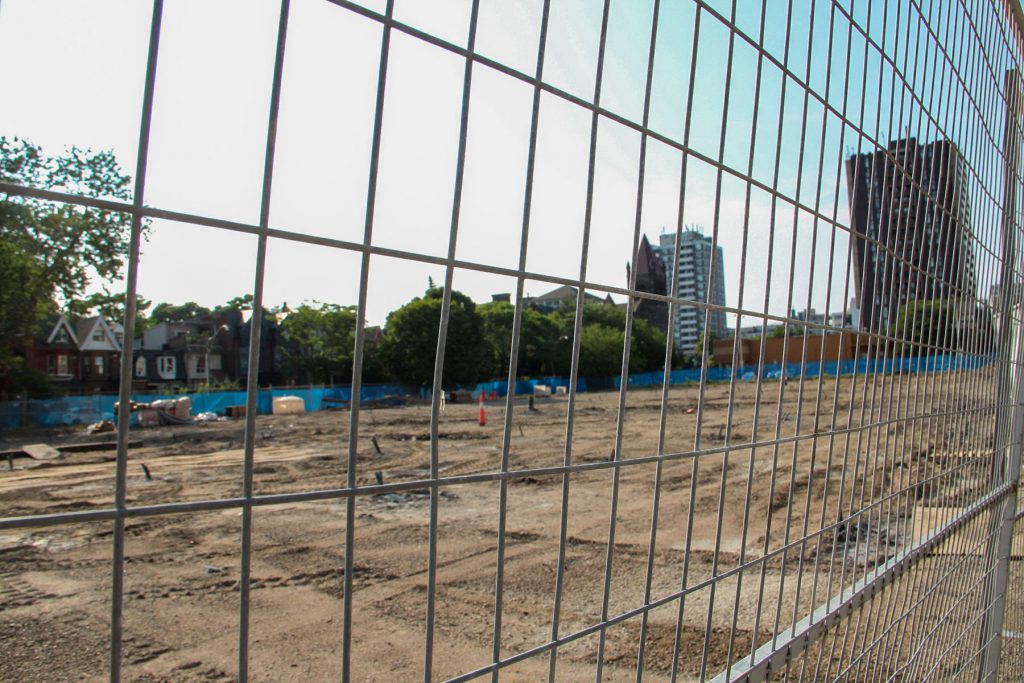
Reason to go: Through the years this park has been the lowest-rated park in the Gleaner. This year it is not even a park. Currently, the site is full of dust, dirt, and construction equipment. Robert Street Park is set to receive a geothermal system that will provide energy to university residence buildings, and later on a playing field and community green space on the corner of Robert Street and Sussex Avenue.
Overheard: People chattering about the dust from the construction.
Did you know: The Robert Street Park will be replaced with a butterfly garden, playground, climbing boulders, and seasonal plantings. There is a Gleaner article about the Robert Street park’s demolition at gleanernews. ca.
Bickford Park
400 Grace St.
The lush surroundings of old trees in Bickford Park is a reminder that Garrison Creek once flowed through the ravine. NICOLE STOFFMAN/GLEANER NEWS
Time: 6:00 p.m.
Grade: A- (last year A)
Reason to go: You want to swing in a hammock, relax with a beer on a gentle slope, have a picnic, watch your child in socially-distanced soccer camp, do some circuit training, or let your dog run freely on a bed of pebbles. Bickford Park adapts to many uses, and the lush surroundings of old trees is truly magical. The park is part of the City of Toronto’s Garrison Creek Discovery Walk. The creek once flowed through this large deep ravine, but was buried in an underground sewer in the 1880s. A broken down bench on the north end needs repair, and some crude graffiti in the men’s washroom needs to be removed. See if you can spot the Weeping Willow, a sign that the creek still flows below ground.
Overheard: “We played a round of golf in the morning, then hung out at Stakt all day.”
Did you know: Peperonata lane that borders Bickford Park to the West was so named in 2013 in honour of a red pepper roasting party, started 25 years ago by Francesco Gallé. The community event features an open fire where the peppers are roasted, and then peeled by hand by the guests, while sipping wine out of plastic cups.
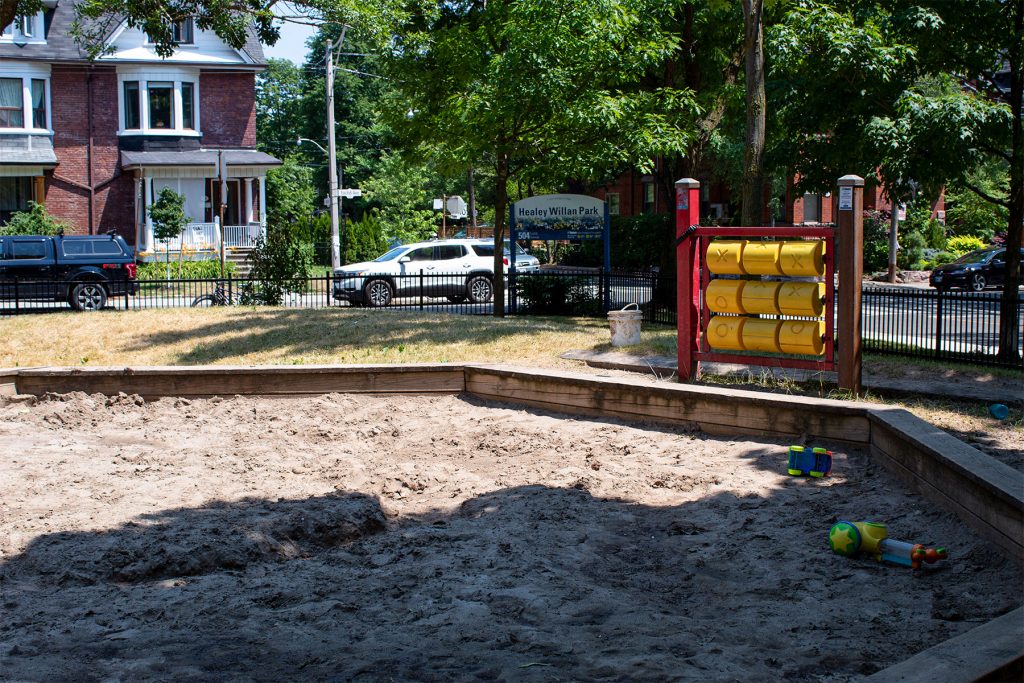
Healey Willan Park
504 Euclid Ave.
MARY AN/GLEANER NEWS
Time: 2pm.
Grade: B (last year B-)
Reason to go: Healey Willan Park is located away from the busy streets at the intersection of Ulster Street and Euclid Avenue. It has a sandbox, swing set, monkey bars, a slide, and many more playground structures. This park also has a small wading pool for the children to cool off in during the summer time. However, this park does not allow for dogs in the area. There is also plenty of shade and seating areas for everyone. Healey Willan Park has a calm and clean environment for families and other residents to relax in.
Overheard: “Hey, who wants to play tag!?” A kid said, running around in the small wading pool.
Did you know: Each year, in June, The Palmerston Area Residents’ Association (PARA) has an annual neighbourhood event: “Party in the Park.” However, due to the pandemic, this year’s event is cancelled.
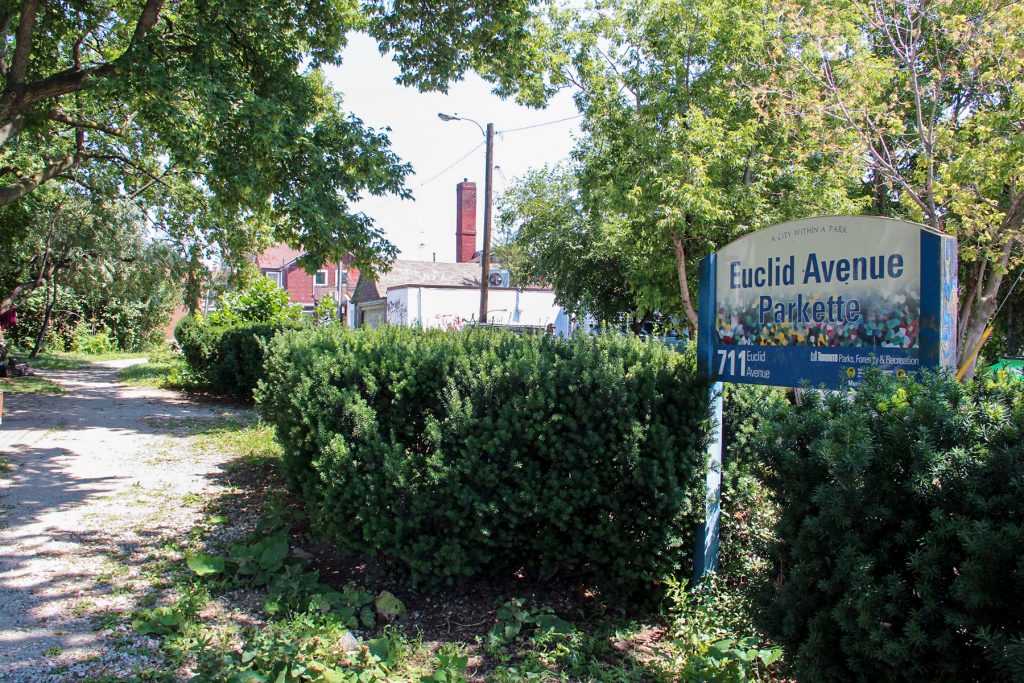
Euclid Avenue Parkette
711 Euclid Ave.
TANYA IELYSEIEVA/GLEANER NEWS
Time: 12:30 p.m.
Grade: F (last year F)
Reason to go: There are no good reasons to go to this park, so we’ll suggest that you don’t even look for one. The “parkette” is so hidden between a house and a building, that if you don’t know where to look you will not find it. The only reason you can call this place a park is because it has a sign. There are a couple of benches and lots of garbage. The park is very unkept with dead flowers and overgrown grass on either side of the small path that goes through the park. The only good thing is that this park has decent shade if you need to take a small break.
Overheard: Shirtless people talking about the heat while sharing pre-rolled cannabis.
Did you know: The location is steps to Koreatown and Bloor, where you can enjoy some of the best food in the area.
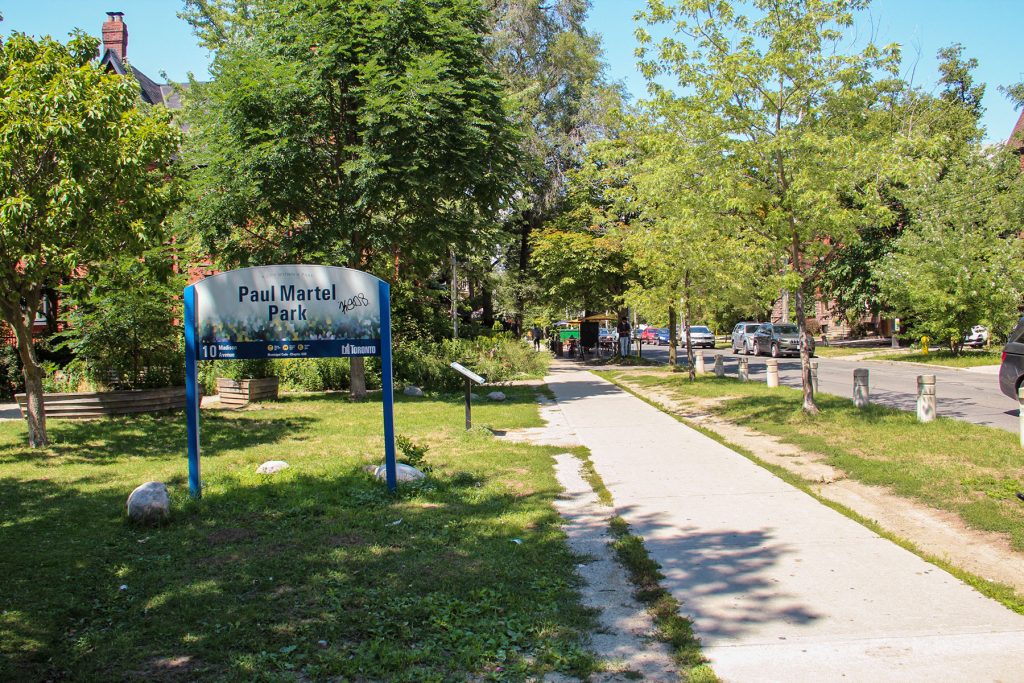
Paul Martel Park
10 Madison Ave.
TANYA IELYSEIEVA/GLEANER NEWS
Time: 1:30 p.m.
Grade: F (last year F)
Reason to go: This park is a volunteer project by the Annex Resident’s Association (ARA) and was intended to be a beautiful small community green space. However, Paul Martel Park is lacking garden maintenance and the trail through the garden is covered in litter and cigarettes. The sign at the front of the park that explains the history of the garden was vandalized, taken down, and replaced numerous times. Even though the park is located right behind the Spadina station, the garden is relatively calm. It has a few benches to sit on and the location isn’t too loud.
Overheard: A man talking on the phone while sitting under the tree.
Did you know: Previously known as Ecology Park, it was renamed Paul Martel Park in 2014, after architect Paul Martel, who spent hundreds of hours with teams of volunteer gardeners to plant the many native species of trees and flowers that one can discover in the park to this day.
Jean Sibelius Square
50 Kendal Ave.
TANYA IELYSEIEVA/GLEANER NEWS
Time: 2:45 p.m.
Grade: A+ (last year A+)
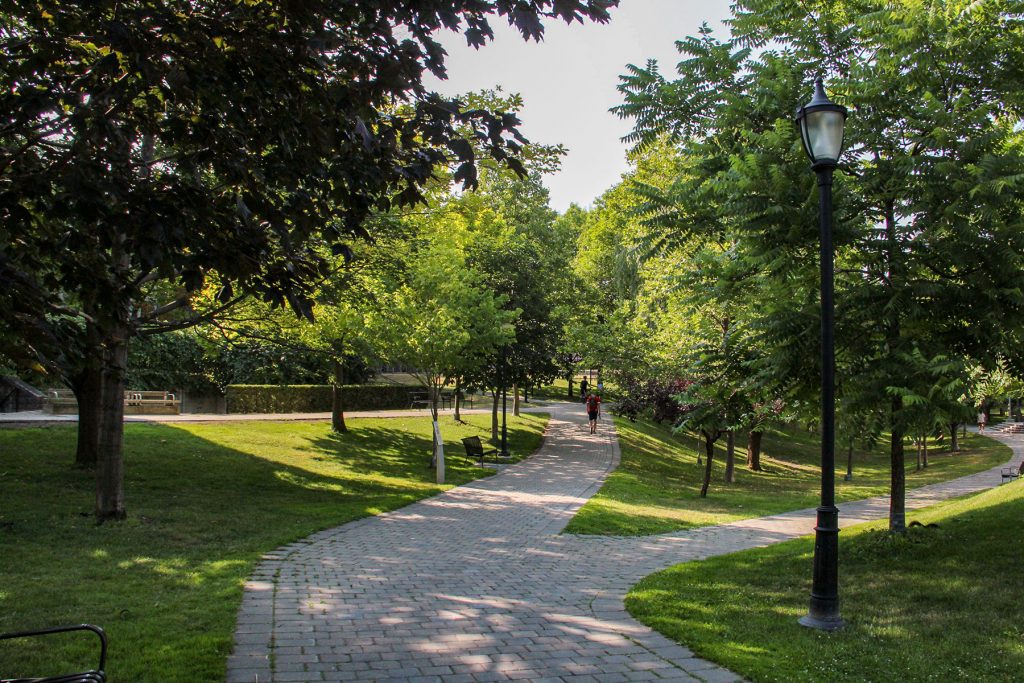
Reason to go: Jean Sibelius Square is a great place for a gathering of family or friends. It has plenty of space for a picnic or any kind of sports activity. There is a big playground which includes a climbing wall, web, and a sandpit, which makes it a perfect place for kids of any age. You can also find clean washrooms and lots of shady seating areas. This park has a lot of trees, flowers and bushes, which are all well kept. It is a beautiful, quiet park, perfect for reading a book in the shade or playing catch.
Overheard: “I hit it! I hit it! I get a point!”
Did you know: There is a statue of Finnish composer Jean Sibelius as part of a memorial presented to the city by the Finnish people of Canada on Sept. 20, 1959.
Hillcrest Park
950 Davenport Rd.
TANYA IELYSEIEVA/GLEANER NEWS
Time: 4:15 p.m.
Grade: A+ (last year A+)
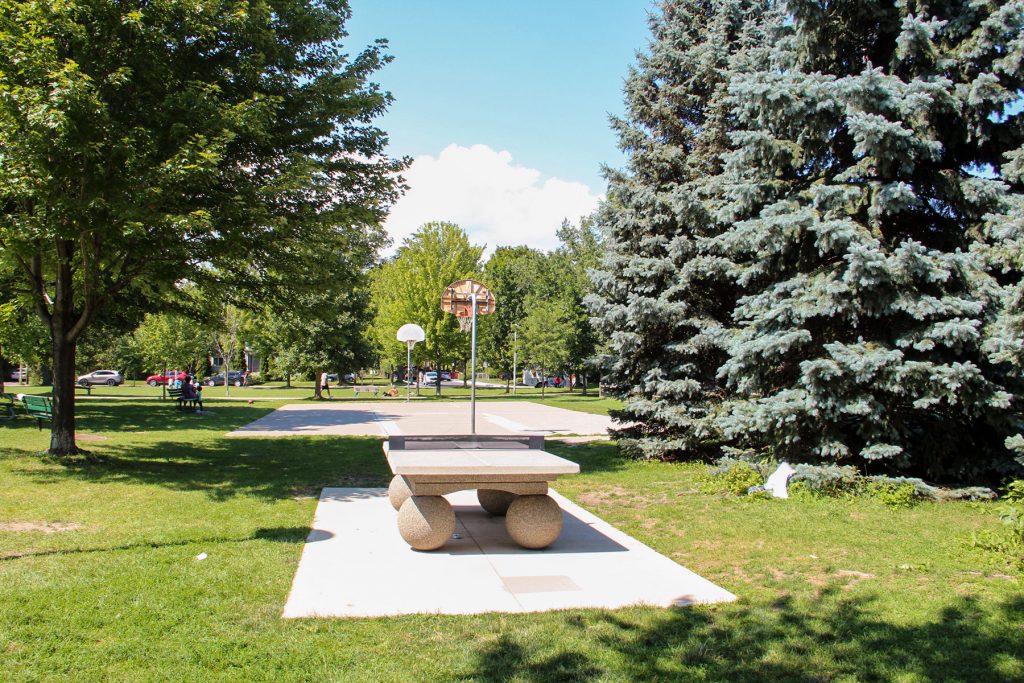
Reason to go: If you love sports and long quiet walks, then this is the park for you. This place has everything for everybody. Hillcrest park features a basketball court, a baseball field, tennis courts, a stone tennis table, and lots of open green space. There is also lots of space for kids, with a wading pool and a big playground, featuring swing sets, slides, and climbing spaces. The park is located on a hill which may be a bit of a hike and difficult to get for some people. Despite that, this is an excellent park filled with laughter and happiness.
Overheard: “Don’t splash water on me!”
Did you know: The park features the Mashkikiiaki’ing (Medicine Earth) garden, a partnership between The Stop Community Food Centre and the Na-Me-Res Native Men’s Residence to exchange knowledge about healthy living, plant medicine, and gardening.
Wychwood Barns Park
76 Wychwood Ave.
TANYA IELYSEIEVA/GLEANER NEWS
Time: 4:45 p.m.
Grade: A (last year A)
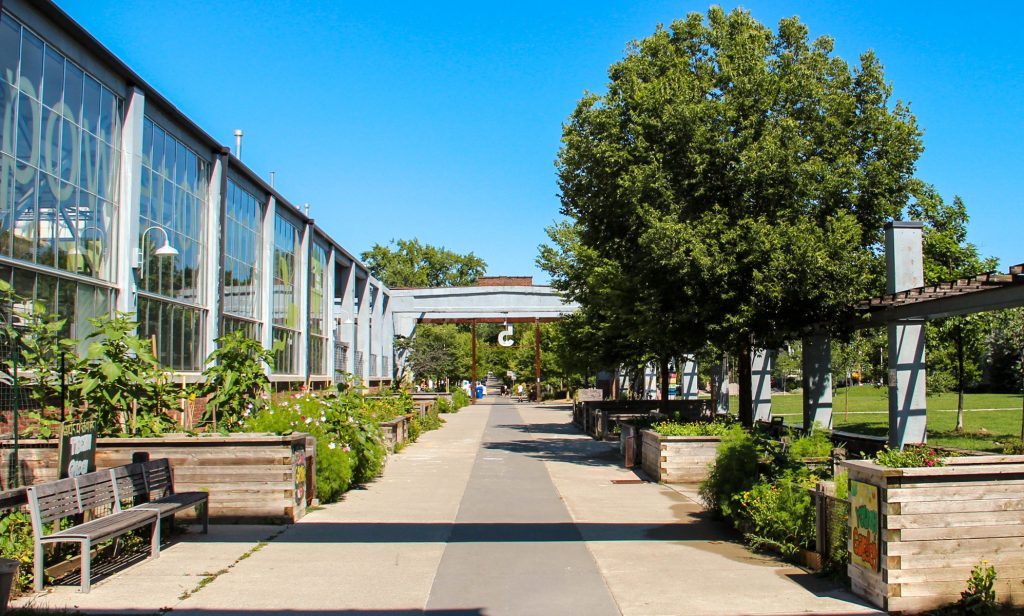
Reason to go: Wychwood Park is spacious, bright, and soothing. This is a great place to go by yourself, with friends, or to spend time with family and kids. The area is clean and has a lot of green space. There are a lot of sitting spaces in the park, where you can relax and enjoy views full of beautiful flowers and trees. It also features a kid’s playground, a beach volleyball court, and, in winter, an ice rink. The park is also home to Wychwood Barns, a community cultural hub, that includes artist work studios, non-profit arts, and environmental organizations.
Overheard: “Let’s go up that hill and have some rest.”
Did you know: The original barns were built from 1913 to 1921, and later were converted into a community centre and multi-use park.
Boswell Parkette
4 Boswell Ave.
TANYA IELYSEIEVA/GLEANER NEWS
Time: 6:15 p.m.
Grade: B (last year B)
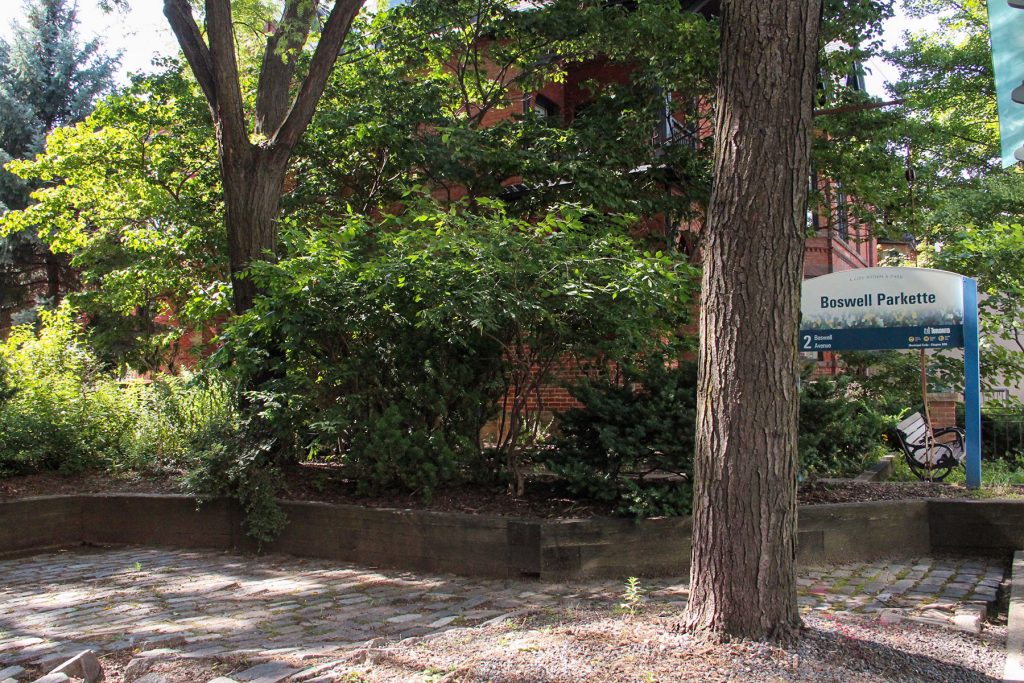
Reason to go: This parkette connects Boswell Avenue with Avenue Road, making it a shortcut and nice pathway. The Boswell Parkette is located right behind a TTC stop, which makes it a great place to have some rest while waiting for the bus to arrive. There are a lot of shady places to sit. However, the location is right next to the street, which makes it noisy due to traffic from Avenue Road. The place is best for a quick recharge.
Overheard: The sounds of traffic.
Did you know: It was created in 1973 with just three planters in an attempt to insulate residential neighbourhoods from traffic.
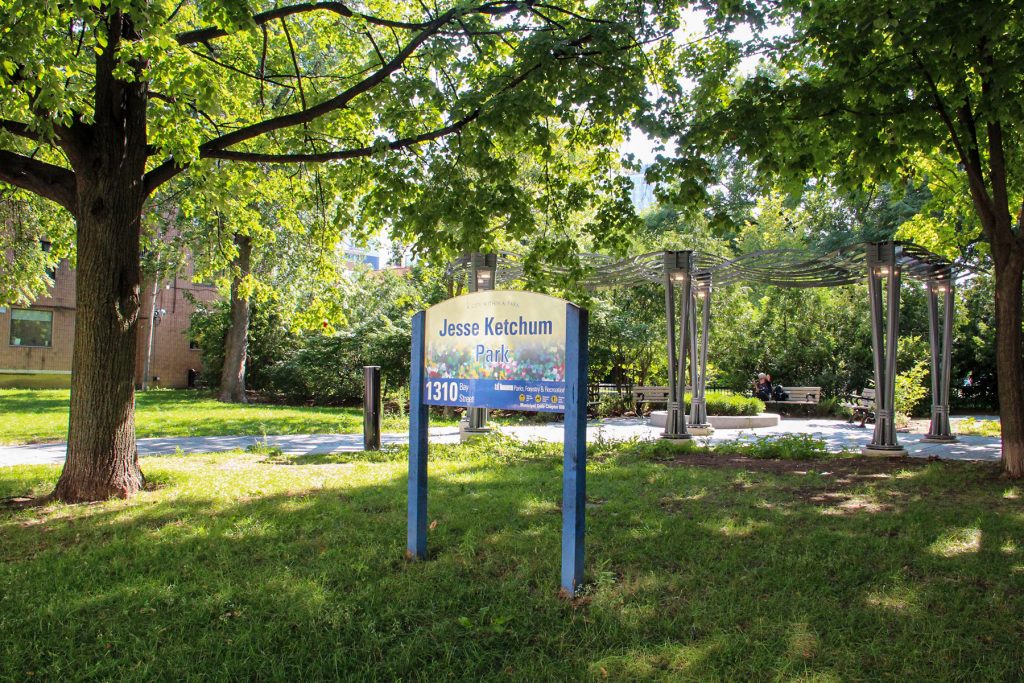
Jesse Ketchum Park
1310 Bay St.
TANYA IELYSEIEVA/GLEANER NEWS
Time: 6:30 p.m.
Grade: A (last year A)
Reason to go: The park features a lot of green space, with various trees and flowers. There are many benches located throughout. The park’s main feature is a very well-maintained soccer field, which is hardly ever empty. It is a great space for working out or a quiet walk. The park is located next to a school, so it can get a bit loud during the school semesters. Nonetheless, it is a quiet and nice place to rest.
Overheard: A mother reading a book to her son.
Did you know: The park and nearby school are both named in honour of Jesse Ketchum, a tanner who was known for his philanthropy and gave many of his properties to schools, churches, and the city.
Christie Pits Park
750 Bloor St. W.
MARY AN/GLEANER NEWS
Time: 5 p.m.
Grade: A+ (last year A+)
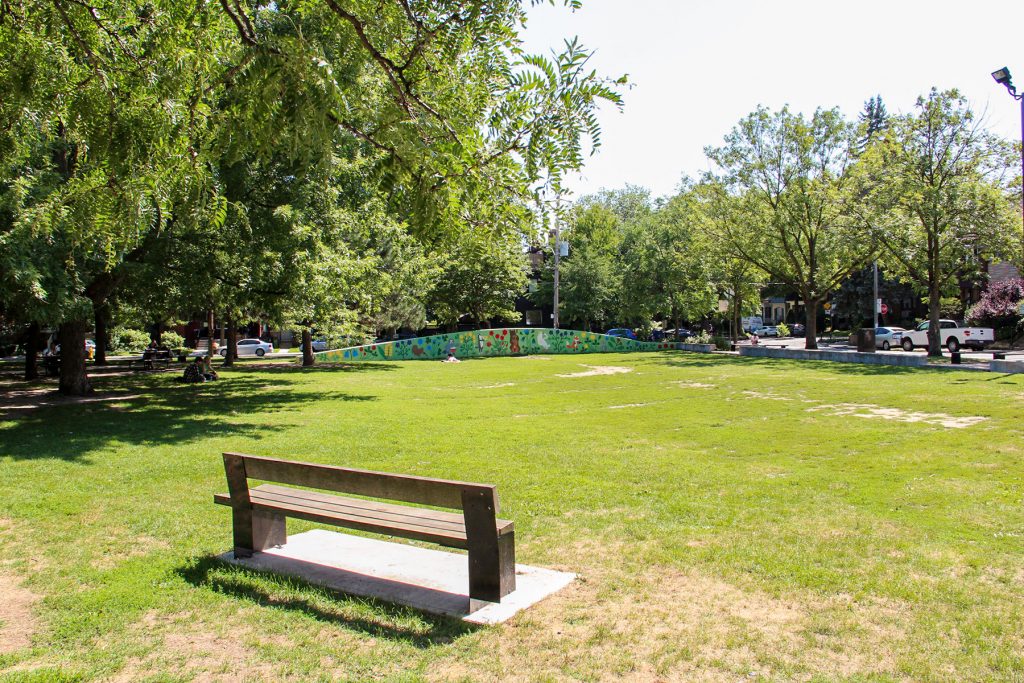
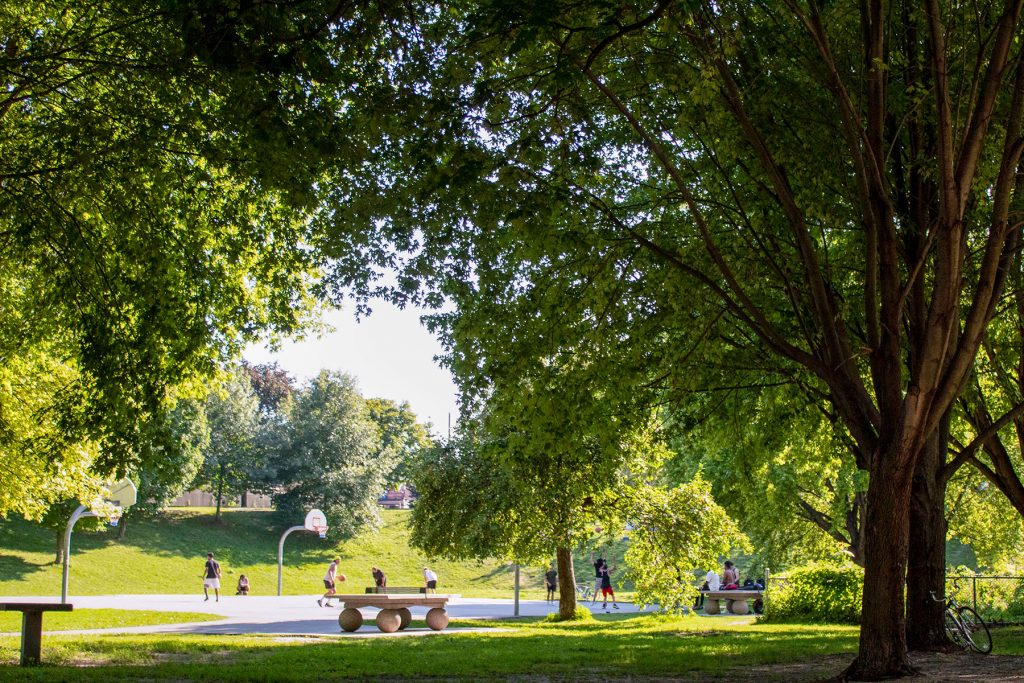
Reason to go: With over 20 acres of land, Christie Pits Park welcomes people of all ages for any season. Its vast area allows visitors to enjoy a picnic in the park, play on the playgrounds, or play any type of sport. Located near the middle of the park are a few playground structures for kids to play on, as well as a wading pool during the summer. Near the sides of the park there are areas for sports ranging from soccer, basketball, baseball, and even table tennis. These areas are all spaced out from each other with benches and picnic tables surrounding them. This park slopes into the middle, which means it would also be an ideal spot to visit during the winter for sledding.
Overheard: “Did you have a good time in the water? Next time we’ll play on the play-ground.” A mother said to her child as she wrapped her in a towel.
Did you know: In 1933, during the Great Depression, a riot broke out in the park. It lasted five hours, and luckily, no one was killed. When a predominantly Catholic baseball team won a game against a predominantly Jewish baseball team, a group of young men calling themselves the “Pit Gang” unfurled a blanket with a large Swastika symbol on it, causing members of the Jewish community and their allies to react to the situation and try to destroy it. After the riot, Mayor William James Stewart warned that anyone displaying swastika symbols could be prosecuted.
Vermont Square Park
819 Palmerston Ave.
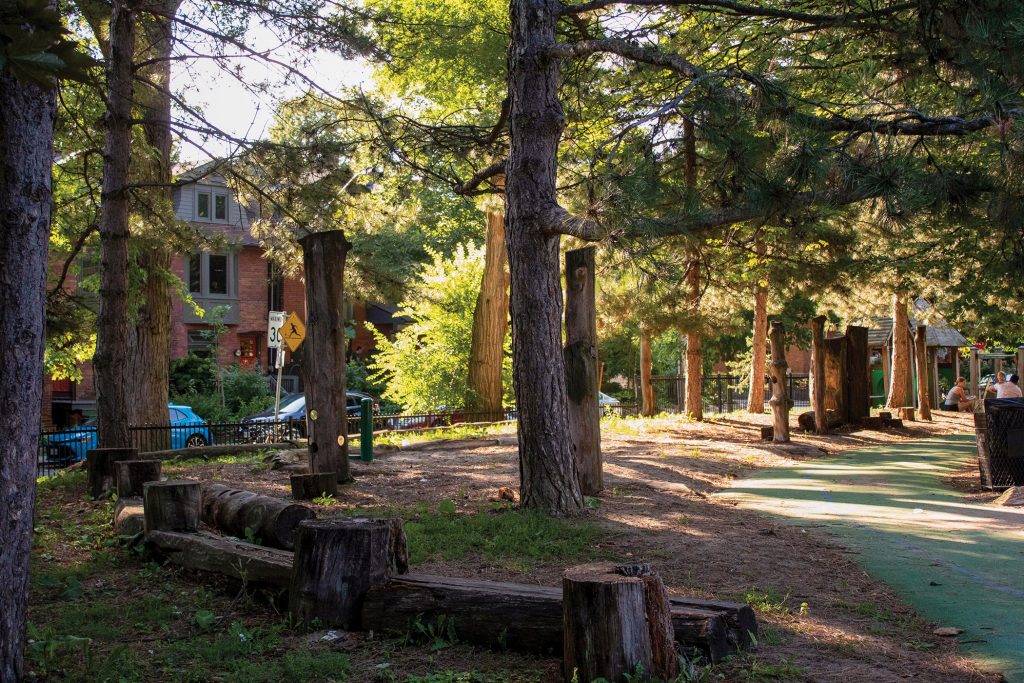
Vermont Square Park wooden landscape enriches children’s imagination, transporting them into a safe and fun forest-like world. MARY AN/GLEANER NEWS
Time: 5:30 p.m.
Grade: A (last year A-)
Reason to go: Away from the busy streets, Vermont Square Park provides separate areas for children and adults. The playground is fenced in by a beautiful wood constructed bench fence that curves around the playscape. The playground has many play sculptures and a small wading pool for children, while the field is a great place to throw a Frisbee around or enjoy a nice picnic on the ground. Respecting the residents and children in the area, visitors are asked to keep their dogs on their leashes. Surrounding signs indicate off leash times.
Overheard: “Whoever gets to the top first wins!” A kid said to his friends as he raced towards the playground.
Did you know: The armrests of the signature wood “Art Bench” that frames the playground will be filled with laser-cut artwork designed in consultation with the community.
St. Alban’s Square Park
90 Howland Ave.
MARY AN/GLEANER NEWS
Time: 6 p.m.
Grade: B (last year A)
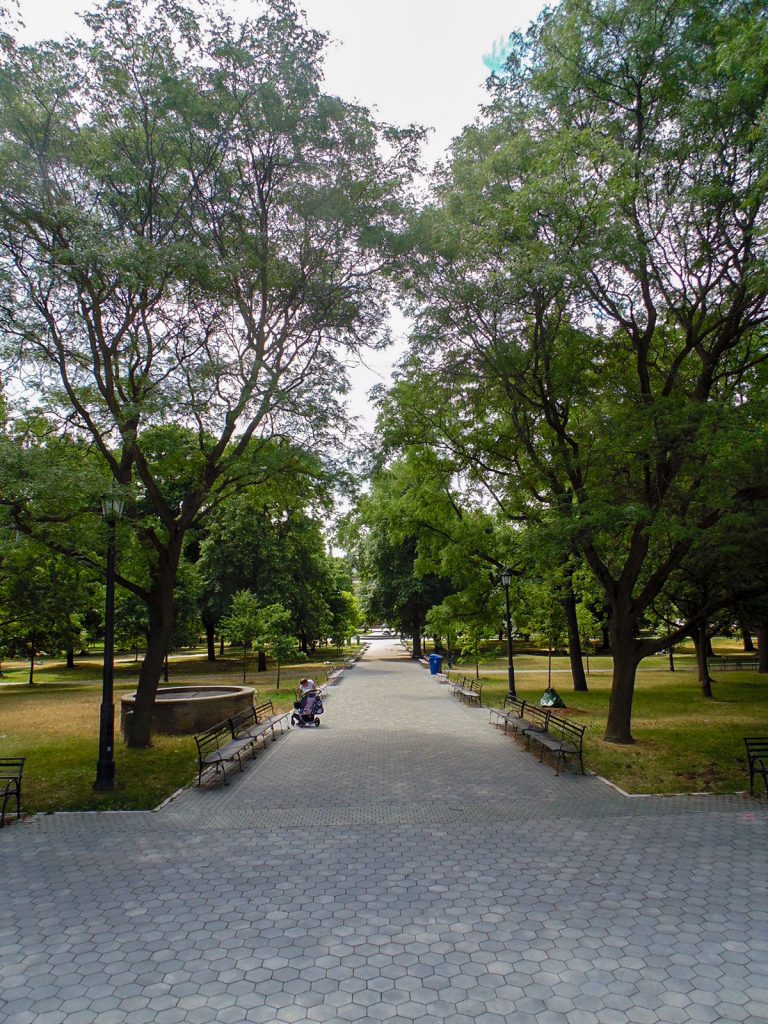
Reason to go: This park has a beautiful pathway straight down the middle surrounded by trees. While there is plenty of grass and some benches beside the trees, the park is also surrounded by roads. It has a majestic calming feel, and seems geared towards adults who want to relax on a bench away from the busy streets. There are no playground structures or any sort of activity areas, just plenty of green space.
Overheard: “Let’s lie down here.” A woman said to her friend as she put down a blanket on the grass.
Did you know: In 2008, the residents of the park underwent a small debate about allowing dogs to be off leash in the area. City councilors at the time terminated the motion, citing their belief that this park was not suited for off-leash dogs.
Gwendolyn MacEwan Park
33 Walmer Rd.
MARY AN/GLEANER NEWS
Time: 6:30 p.m.
Grade: B- (last year n/a)
Reason to go: Located in the middle of a round-about, Gwendolyn MacEwan Park is a nice place to rest while travelling. Though small, this park has some green spaces and shade surrounding the benches. It’s not an ideal place for children, or for any sport activity as it doesn’t have the space and is quite dirty. But it does allow residents to stop and relax by reading a book or connecting with someone.
Overheard: “It was great catching up with you! Let’s do it again sometime.” A woman said to her friend sitting on the bench.
Did you know: Gwendolyn Margaret MacEwan was a Canadian poet and novelist, publishing over 20 books in her lifetime. She published her first novel at 18 and wrote several radio docudramas for the CBC.
Jay Macpherson Green
255 Avenue Rd.
MARY AN/GLEANER NEWS
Time: 4 p.m.
Grade: B+ (last year A-)
Reason to go: Though next to a busy street, this park provides some peace. The park has a long pathway in the middle with tall trees surrounding it, providing some shade. Grass surrounds the pathway, welcoming residents to bring their dogs or have a small picnic. It is a very clean park but the noise from Avenue Road is off-putting.
Overheard: “Hey, let’s go through here!” A man said to his friend walking onto the pathway in the park.
Did you know:Jay Macpherson was a Canadian poet and scholar. Macpherson won the Leviston prize from Poetry magazine, and the University of Western Ontario President’s Medal. She taught English at Victoria College from 1957-1996.
Walmer Road Parkette
227 Walmer Rd.
MARY AN/GLEANER NEWS
Time: 4:15 p.m.
Grade: B+ (last year C+)
Reason to go: Nestled in the middle of a beautiful townhouse residence, this park is surrounded by beautiful flowers and greens. Though there is no grass available for young adults or children, there is a beautifully sculpted pathway that is aligned with benches and gardens. It’s in a quiet neighborhood, and is very clean, but is quite small. This park is best suited for adults who want to relax on a bench and is not suited for those who need space to conduct an activity or walk their dog.
Overheard: A man was laughing to himself as he read his novel on the bench. Did you know: Landowner Robert Baldwin named the street Walmer after the town in County Kent in which his son was born.
CORRECTION:
On page 11 of the August 2020 print issue of the Annex Gleaner, in the annual Grading our Greenspace section, Jay Macpherson was misidentified as “he”. This error was brought to our attention by Alexandra F. Johnston, professor emerita, Department of English, Victoria College, University of Toronto. The Gleaner regrets the error.
September 9th, 2020 · Comments Off on EDITORIAL: When “expert” plans look more like a gamble (Aug. 2020)
It’s a plan created by experts, and teachers need to step-up. That’s what Premier Ford and his ministers are saying about their back-to-school plan for Ontario students. The plan, which deserves some praise for permitting some two dozen school boards across the province to have their high school students take half their courses online, effectively reduces class sizes. The elementary school strategy, however, has garnered a less than enthusiastic response from school boards, teachers, parents, and – experts. Five hundred new nurses, and thirteen hundred additional custodians are being hired, but this will do nothing to reduce direct transmission between students or between students and staff. Let’s take a closer look.
Federal public officials and a panel of experts from Ontario’s pediatric hospitals have said that physical distancing must be a critical component of any back to school plan. Dr. Theresa Tam, Canada’s Chief Public Health Officer, is one. Here’s her recommendation: arrange your school environment, physically and otherwise, so that physical distancing can happen. Ensure that the number of contacts children have is minimized.
Dr. Isaac Bogoch, an infectious disease expert at the University of Toronto argues that class size matters.
“Even with 15 kids in a class, are you going to able to enforce physical distancing? Not a chance,” he says. “I think there is a lot of attention, rightly so, on trying to get these class sizes to be smaller… from a strictly epidemiological standpoint, the smaller the ratio, the better”.
The current Ontario plan sees class sizes hovering around 30, no different than pre-pandemic sizes.
Ford likes to say that Ontario’s pre-pandemic teacher student ratios were the lowest in the country. This conclusion includes early childhood educators in the equation but doesn’t make the slightest difference when we are talking about the number of people in a classroom. It’s not an educator ratio we are debating it’s a health-yardstick and that’s why one can drive a truck between Sick Kids’, “lower class sizes,” and the premier’s position.
Transportation to and from schools has seemingly not entered onto the government’s radar screen either. For students who arrive by bus, all the separating of cohorts within the school goes out the window. This is a straight-up weak link in the plan.
And what about risks for school bus drivers, many of whom are retirees? Are they among the workers, that the premier wishes would just step-up? TTC drivers get a plexiglass bubble, we’ve heard of no such plan to protect school bus drivers, or their young passengers.
It is said that children are at a lower risk of contracting the coronavirus and and have a lower likelihood of exhibiting life threatening symptoms. What about their high-risk relatives? Do the bubbles need to contract now? What’s the plan when there is a confirmed positive case in a school cohort? Does the entire cohort need to self-isolate? Their parents and grandparents too? If all this is about getting the economy going again, we need to understand the economic consequences of that scenario.
Ford needs to stop pretending this is the all the “experts’” doing. It’s a clear hedge against it failing miserably. It’s your doing Doug and it is an ill-conceived strategy. All this concerted effort to safe distance on the TTC, and in banks, grocery stores and other public areas may all be for naught if we don’t have a smart plan to keep the elementary schools from becoming a breeding ground for COVID’s explosion.