May 17th, 2022 · Comments Off on FOCUS: Annex Food Hall pivots to Asian night market (May 2022)
“Rising tides raise all boats”
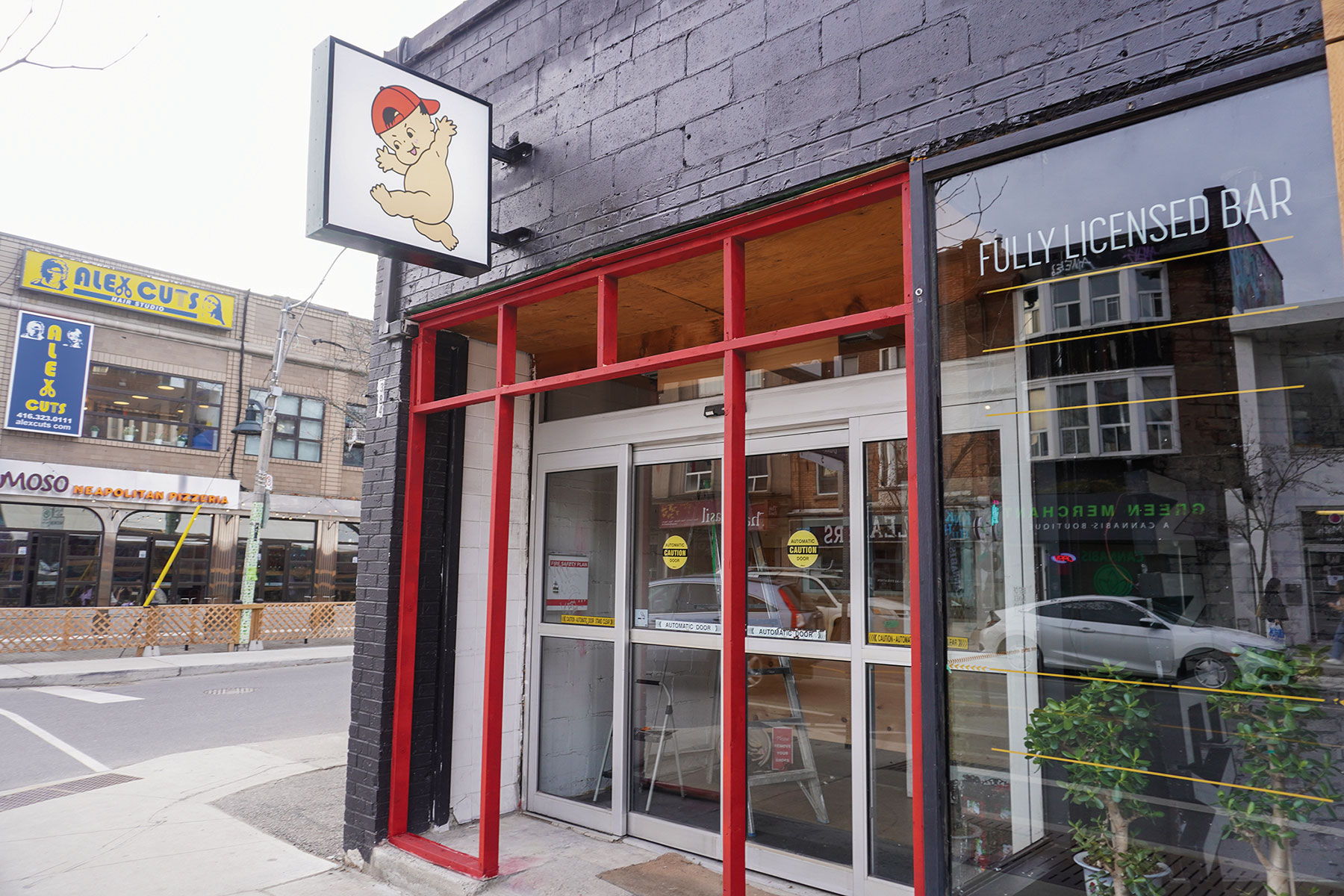
Superfresh is named after the 24-hour Korean-owned grocery store that operated out of this location for many years.
By Danielle Popov
The Annex Food Hall closed during the pandemic, but it will soon be reborn as an all Asian-owned 4,000 sq. foot night market called Superfresh.
Outside the market, a neon sign says fresh in Korean and Mandarin. Rachel Lee, a bartender at one of the new vendors, explains that “we’re not one restaurant, we’re multiple restaurants taking care of each other. At the end of the day, if one restaurant is struggling, everyone is struggling. We thought it was the best time, even with the help of the government.”
Superfresh celebrates Asian pop culture with a nostalgic twist.
Superfresh evokes an Asian night market and transports visitors to an alleyway in Korea, Northern China, Nepal or Taiwan. Featuring cuisines from different parts of Asia, the market also celebrates Asian pop culture with a nostalgic twist, from the décor to the name itself. Superfresh was Toronto’s first 24-hour Korean-owned grocery store that operated at this location for many years.
The market was cofounded by James Lee, (owner of the former Annex Food Hall), Trevor Lui (Joybird), Jae Pak and Dave Choi, and it will include Joybird Fried Chicken, Big Beef Bowl (traditional Lanzhou-style hand-pulled noodles) and Auntie’s Supply (a superette featuring snacks popular with millennials). The other vendors remain a surprise.
The night market aims to transport visitors to an alleyway in Korea, Northern China, Nepal or Taiwan.
“Rising tides raise all boats,” said owner, James Lee, about the collective decision to replace the food hall with a concept many years in the works. Lee would like Superfresh to be a cultural and community hub, as well as destination hot spot. In addition to celebrating Asian food, the market will feature a bodega, pop-ups, live DJs, and events in secret locations.
May 17th, 2022 · Comments Off on ARTS: A corridor of possibilities (May 2022)
Photography festival explores the shocking and the everyday
Vista, 2021, by Alison Galley from the Lifescapes: Through the Lens exhibit at the Dignam Gallery is part of the Scotiabank Contact Photography Festival. COURTESY ALISON GALLEY/THE DIGNAM GALLERY
By Meribeth Deen
It’s been a long winter, so you may have forgotten, but you live in a destination hot spot. The days are getting longer and warmer, so there’s no excuse not to get out there and find a little inspiration. You live in the Annex, so you don’t need to travel very far—the Bloor St. Culture Corridor is at your doorstep: museums, films, concerts, art exhibitions, theatre performances, family events, and classes.
All these opportunities represent some of Toronto’s cultural diversity, including French, Jewish, Italian, Estonian, Japanese and Indigenous.
The Scotiabank CONTACT Photography Festival takes place in May in galleries throughout the city—it’s a great time to delve into the raw realism this medium has to offer.
Presented by The Istituto Italiano di Cultura at 496 Huron St., the exhibit Surviving Humanity takes place at the Allen Lambert Galleria (Brookfield Place, 181 Bay St.) and features works by Italian photographer and journalist, Alberto Giuliana. Giuliana’s focus is on how human ingenuity might prevent our extinction from climate change, and the installation confronts a question asked by Giuliani’s children: “How will the world be when we grow up?” In the following statement, he elucidates the project.
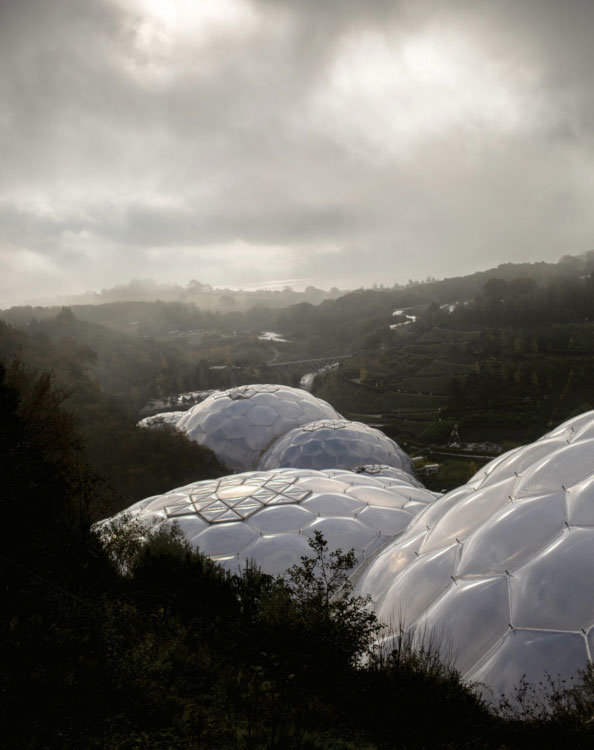
Eden Project biospheres, Cornwall, UK, 2017 by Alberto Giuliani is on display at the Allen Lambert Galleria (Brookfield Place, 181 Bay St.). COURTESY ALBERTO GIULIANI/ INSTITUTO CULTURA ITALIANO
“My life as a journalist and explorer revolved around a single goal—to find a way to defy death, and in broader sense, to learn how the massive changes facing the planet were being addressed.
“For the first time in world history, these changes were jeopardizing the survival of a large part of the population. After all, there was a prophecy for that too—humankind itself was said to face extinction.
“In pursuit of such answers, I crossed the globe…and the steps I took led to the cities of the future, havens deep in the earth’s core, safe from outside cataclysms. The things I learned, and the people I had the privilege of meeting—scientists, luminaries, astronauts, researchers, visionaries, politicians—were more than anything I could ever have imagined.”
Next stop is, Tartu College, located at 310 Bloor St. W. Organized by VEMU, Estonian Museum in Canada, the exhibit Ukrainian Frontline Photography presents photographs that document the war in Ukraine.
The exhibit includes works by Ukrainian street photographers as well as the Estonian photographer, Dmitry Kotjuh. Here is how the Bloor Street Culture Corridor website describes the photographs: “They show crushed municipal and civil buildings, vehicles, and bridges; soldiers and ordinary citizens with all kinds of weapons and Molotov cocktails; carrying the deceased ones and rescuing domestic animals; rolling suitcases on ruined streets, fire, and smoke in snowy trenches. The exhibit runs until the end of July.
The Dignam Gallery, at 23 Prince Arthur Ave. presents Lifescapes: Through the Lens, a group photography exhibition by members of the Women’s Art Association of Canada.
Who knows what other cultural gems you’ll find in the corridor just by stepping out of your house this month. If you encounter anything particularly great or inspiring, let the Gleaner know!
Comments Off on ARTS: A corridor of possibilities (May 2022)Tags:Annex · Arts
Coming up April 20 to 30 at the Women’s Art Association of Canada (WAAC) is the Barbara Feith Memorial Exhibition. Feith, who passed away on Feb. 11, 2021 was an inaugural member of the Royal Conservatory of Music and a long-time member of WAAC. In recognition of a very generous bequeath, WAAC has designated her former studio as the Barbara Feith studio for their artist-in-residence program. COURTESY WOMEN’S ART ASSOCIATION OF CANADA
Amendments to bylaw increase density in established neighbourhoods
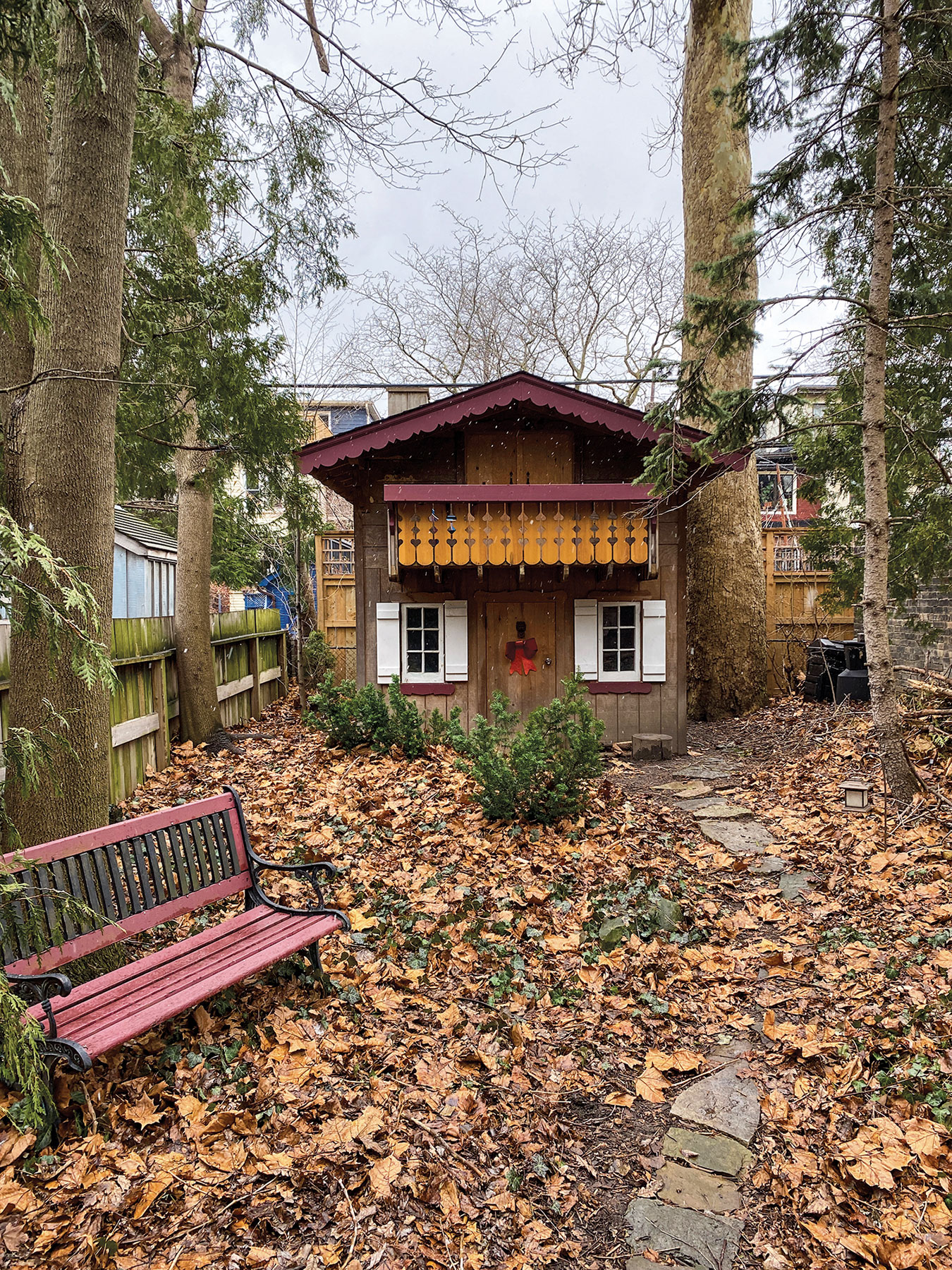
New bylaw allows backyard buildings to be residences. FOX OLIVER/GLEANER NEWS
By Joshua Snow
The City of Toronto has been talking about garden suites for years, and on Feb. 2, council agreed to a policy that allows homeowners to build a detached suite in their backyards.
Approval of the garden suites bylaw falls under the city’s Expanding Housing Options in Neighbourhoods initiative. Garden suites increase Toronto’s housing options, as they can be used as rental units.
Like laneway houses, garden suites are detached units, but they do not have to be built on a laneway, which means they provide more flexibility for homeowners. The main house provides connections for all the utilities.
However, not all houses with backyards will be eligible, because the suites cannot cover more than 40 per cent of the backyard. This requirement ensures that emergency services can easily access the unit.
Since the population of Toronto is expected to reach 3.5 million by 2030, garden suites can help address the lack of affordable housing in the city.
Initially, council members only considered garden suites to be a form of rental housing; however, they can also provide housing for family members.
In a press release, Mayor John Tory said that the “garden suites regulations approved today represent a ‘Made In Toronto’ solution with sensible regulations to protect neighbours, trees/green space and create options for multigenerational housing through ‘gentle density.’”
Amid the senior long-term care crisis this is a topic of interest among many people in Toronto.
In an interview, Councillor Mike Layton (Ward 11, University-Rosedale) explained that he supports garden suites because “multigenerational households help families who don’t want to put their parents in long-term care and gives people options. ”
But the construction of these housing units won’t be cheap. Layton estimates that each unit will cost around $400,000 to build. For a secondary house, this price could be too high for many Torontonians.
If renting the unit is an option then “it may be worth it down the line,” said Layton.
However, not everyone supports the garden suites bylaw. Following its approval, a group of homeowners launched an appeal because they feel that their privacy may be affected by this new policy.
In an email to the Gleaner, the chair of the Annex Residents’ Association (ARA), Rita Bilerman wrote that, “garden suites won’t impact our neighbourhood…they will not add much to housing supply or to housing affordability in our city.”
But Councillor Mike Layton suggests that “if it benefits them, why not let them build it?”
Garden suite vs. Laneway house
On Feb. 22, Toronto city council expanded permissions to allow the construction of garden suites on residential properties. A garden suite is a separate and detached housing unit on an existing residential property, which does not directly face a street or alley. As this area is typically where a garden would be, these housing units are referred to as garden suites.
Laneway houses have been legal since June 28, 2018, and may seem quite similar to garden suites; however, there is one key difference. A laneway house is built on a piece of land that has been severed from the original property. The original property faces the street, while the severed property faces the laneway. A garden suite, however, is not built on a severed property; the main building and the garden suite are on the same piece of land, and the main house provides the utilities for the garden suite.
Garden suites provide homeowners with a new option to support renters, without having to deal with the headache and hefty price of severing their property, or alienating their ownership of land. To minimize the initial cost and risk of investing in a second building, the city has offered a forgivable loan of up to $50,000 for eligible homeowners who rent their garden suite. While there is no minimum lot size for a garden suite, the building must not cover more than 40 per cent of the backyard. Also, the suite must be within 45 metres of the street, with a path of at least one metre wide and 2.1 metres tall to provide emergency services access to the property.
TDSB extends olive branch to neighbours whose cherished garden was razed
By Danielle Popov
Palmerston Avenue Junior Public School has been educating neighbourhood children for 133 years. Over the past 20 years, a group of neighbourhood parents showed their love for the school by tending a community garden on the property; that is, until the school’s facilities team razed it—without consulting or warning parents, many of whom had spent hundreds of hours working in the garden. Now, as spring approaches, the Parent Council and the Toronto District School Board (TDSB) have come to an agreement: they will work together on a complete overhaul of the school grounds.
The garden rebuild process has been delayed because there were preexisting plans to redesign the larger site, in particular, the part that is shared with Palmerston Community Daycare. Originally, the parents were concerned that the redesign would not include a new community garden or honour the legacy of the previous one. However, at a meeting on Sept. 6, a member of the TDSB sustainability board explained that, going forward, a garden on a TDSB property can no longer be altered without approval from senior facilities managers and the board’s team of landscape architects.
On April 5, the facilities team will present their plan to the Parent Council. It will include the location of the garden, new play structures, plantings and accessibility improvements.
“It’s really nice to see the enthusiasm,” says parent and volunteer Jesse Zuker. “Everyone—the principal [Rory Sullivan], the facilities team, and Councillor Mike Layton—[has] agreed to start work and do something amazing for the school grounds. ”
Councillor Mike Layton (Ward 11, University-Rosedale) attended Palmerston School.
“We hope to build a legacy for the community,” says Jesse. “This school hasn’t seen much invested in it, and it’s been wonderful to see all the outpouring of support. “
Michael Ormston-Holloway, a Palmerston parent and a landscape architect at firm the Planning Partnership, has offered to help prepare concept designs. He is planning on “restitching the neighbourhood by improving drop-off points along Palmerston Avenue and Euclid Avenue” and creating a classroom biosphere, with an emphasis on native plants for pollinators and migratory songbirds. His focus is on using the landscape as a teaching tool for the students.
Ormston-Holloway also plans on establishing gateways to the school, as well as revitalizing the trees on the property that will become the “forest and canopy of tomorrow.”
The next steps for the Parent Council would be to work with the TDSB and the city to explore funding opportunities and develop a shared user agreement, allowing both students and members of the public to use the grounds at different points in the day.
Lifetime Developments’ Brian Brown is also supporting the project with a community benefits contribution. This is pending a formal agreement with the City, utilizing the developer’s Section 37 contributions.
The Parent Council will launch a formal fundraising campaign in the next few months.
April 11th, 2022 · Comments Off on FOCUS: Greens tap Dianne Saxe (Spring 2022)
Saxe was Environmental Commissioner before Ford axed role
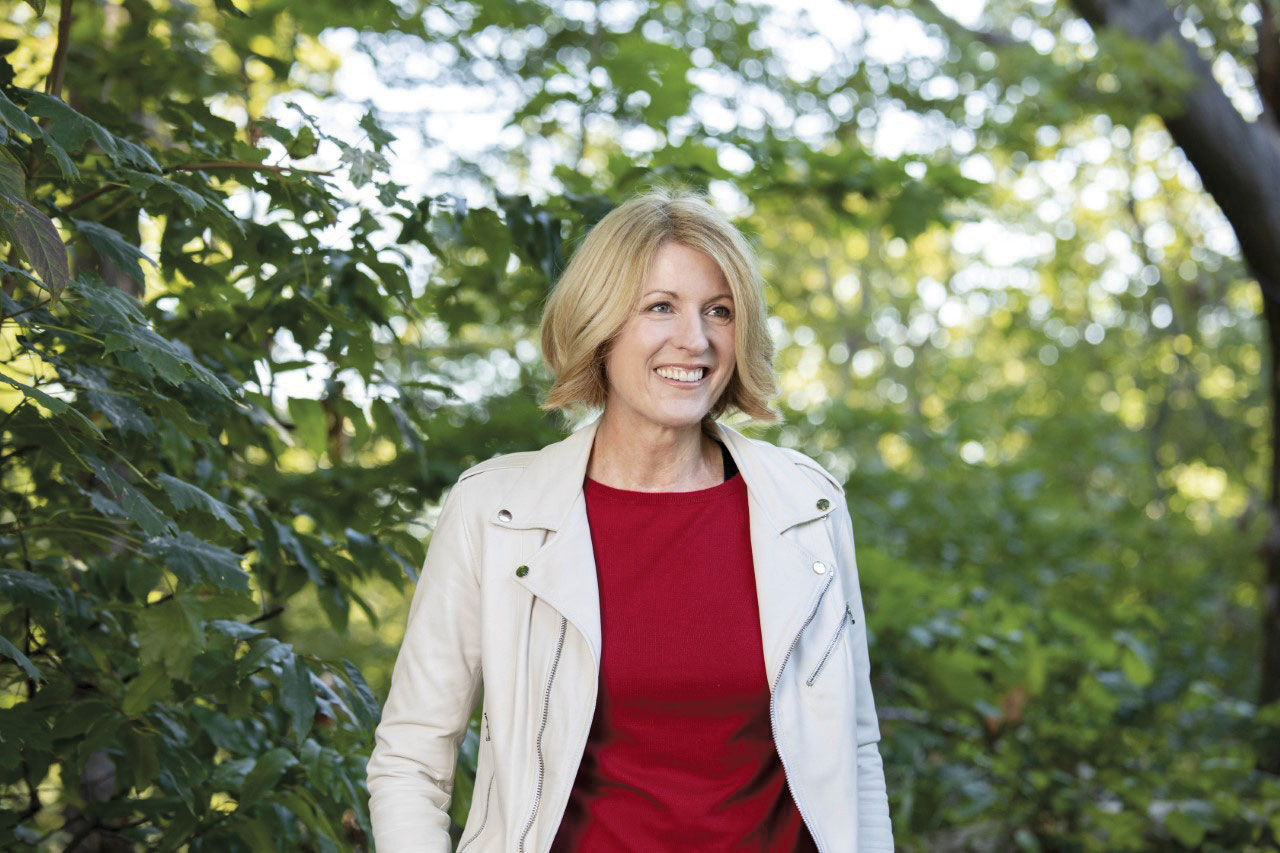
Annex resident Dianne Saxe, the last Ontario Environmental Commissioner before Doug Ford axed the role, seeks a mandate to return as an MPP. COURTESY DIANE SAXE
By Danielle Popov
Dianne Saxe hopes to return to Queen’s Park as an MPP with the Green Party of Ontario. The former provincial Environment Commissioner’s role was abolished in 2019 by the Ford government. Her plan, she says, is to push the province to tackle the climate crisis with authority.
“People talk about holding the government accountable – that’s exactly what I did as the Environmental Commissioner of Ontario,” says Saxe. “I’ve done more to hold the government accountable than any oppositional venture can do.”
Dr. Saxe was appointed as Environmental Commissioner of Ontario in 2015 to provide oversight on 17 government ministries. She also delivered 17 reports on energy, environment and climate issues to serve public issues. Dr. Saxe was an environmental lawyer for 46 years; in that time, she won Toronto’s first Environmental Lawyer of The Year, and was acknowledged as one of the world’s top 25 environmental lawyers by Best of the Best.
“I have a very thorough expertise in how government works, in how the law works, in how businesses to any scale works,” she says.
Dr. Saxe is also proud of her work representing Ontario municipalities and successfully obtaining $115 million from Stewardship Ontario over the Blue Box program (the only year that municipalities got the full 50% of what they were owed).
She also spent most of 2021 preparing and consulting the Green Party of Ontario’s Roadmap to Net-Zero, the Green Party’s climate plan to reach net-zero by 2045.
Dr. Saxe’s decision to run for the Green Party was not an easy one (she was decisively non-partisan for 45 years) but she is motivated by the belief that action towards a greener future needs to be taken.
“What we need is good public policy, and those decisions get made by people who are elected.”
Her roots with University-Rosedale run deep. She grew up in the riding, her father was an MPP, and she raised her children here.
“The people of University-Rosedale have a unique opportunity where strategic voting is not necessary, and they can vote for the future that they want, rather than against Ford. University-Rosedale hasn’t voted Conservative in 40 years.”
Saxe adds that even a single Green MP or MPP has a big impact in changing the government’s conversation.
“The impact of having elected Greens is that we create thought leadership, in exactly the same way that I did as commissioner: I couldn’t tell anyone what to do but I could lay out, authoritatively, what the facts are and what good policy should look like.”
When asked about her stance on current University-Rosedale MPP Jessica Bell, Saxe responded with, “From everything I heard, Jessica Bell is a fine person. But she hasn’t been able to move her party, and we can tell that from the green plan that they have put out. We also have a better housing plan and much better climate plan.”
“In my last report, two days before my office was abolished, I stated that the largest source for climate and environmental destruction was urban sprawl. And if you look at the NDP’s climate plan, urban sprawl isn’t even mentioned. And the Liberals don’t even have a plan.”
“I hope to change the public’s understanding of what their choices are, which is something Jessica cannot do because she is bound by party discipline, but something I can and will do.”
Dr. Saxe is intent on listening to her riding and understands that that they are intent on wanting their vote to have an impact.
“Sending me back to Queen’s Park after Doug Ford went through so much trouble to try to shut me up, and electing deputy leaders in the Green Party – that will send a message that gets heard right across the province and beyond in ways that Jessica simply can’t do.”
Comments Off on FOCUS: Greens tap Dianne Saxe (Spring 2022)Tags:Annex · News
April 11th, 2022 · Comments Off on FOCUS: Liberals bank on star power (Spring 2022)
Former Trillium CEO, Andrea Barrack, joins race for MPP
Andrea Barrack sees Doug Ford’s unwillingness to make evidence-based decisions and make tough decisions as a fundamental flaw. COURTESY ANDREA BARRACK
By Joshua Snow
Andrea Barrack, Global Head, Sustainability and Corporate Citizenship at TD Bank, and former CEO at the Trillium Foundation, is running as the Ontario Liberal Party candidate for University-Rosedale. Barrack’s motivation is her belief that she can be an effective voice for her constituents, and that the Ontario Liberals can get Doug Ford out of office.
“We have an opportunity to change the way the government serves the people of Ontario,” Barrack told the Gleaner. “I do think it’s my experience in the health care sector, the public sector, the private sector, in a variety of social, environmental, and economic roles, that kind of gives me a unique skill set to be able to do that.”
She adds that the government of Ontario is a huge enterprise, and getting things done in a large organization requires the will to build shared solutions and consensus.
“People say, well, we want better health care. Yeah, well, we do, but that’s really broad and really vague,” said Barrack, reflecting on the time she has spent knocking on the doors of potential constituents. “So we actually need to drill down on issues, to say specifically what do we mean and how would we hold ourselves accountable? And that’s the only way, in my experience, that we are able to have real change happen.”
Thinking back on her time as CEO of the Trillium Foundation, she feels that outcome-based strategies can effectively bring about change.
“What I was tasked to do as CEO was to say, well, how would we demonstrate value for the money we spent? It’s critical to be super clear about what you’re trying to do, and then measure whether you did it. Then report on it, and be transparent.”
She adds that the Ford government’s lack of transparency throughout the pandemic motivated her to run for office.
“In the beginning, every government screwed up, and that was fine. No one knew what they were doing. But now that we’re two years in, we should do better. And so when people feel like rules are arbitrary or not evidence-based or unfair or that government doesn’t care about them, that’s a problem for society. And so we need to listen to that and be cautious of that. But we also need to pay attention to the fact that the role of government is sometimes to make tough decisions. And I think what we’ve seen from Ford, quite frankly, is he doesn’t want to do that. He wants everyone to like him.”
Most importantly, though, Barrack says that her own life experience compels her to work towards building a more equitable Ontario.
“I was actually a pretty troubled kid who had an unplanned pregnancy at 16. I had that kid and I relied on social assistance, relied on childcare funded by the government so I could go to school, relied on having affordable housing when I was sort of a student,” says Barrack.
“What I worry about is that a lot of people now who do fall off course don’t have those same options. I care so much about that, and that should not happen in Ontario. We’re a rich province. We’re the smart province and so we should have a society where people can get back on track.”
–With files from Meribeth Deen
Comments Off on FOCUS: Liberals bank on star power (Spring 2022)Tags:Annex · News
April 11th, 2022 · Comments Off on CHATTER: Appeal dismissed, redevelopment of 225 Brunswick Ave. to proceed (Spring 2022)
Construction at 225 Brunswick Ave. is set to begin this spring after a lengthy appeal by the former synagogue’s neighbours.
On Dec. 17, 2021, the Toronto Local Appeal Body (TLAB) ruled in favour of developer Jeff Kopas, of Kopas Developmets Ltd., approving his plan to turn the commercial building into a seven-unit apartment building.
Over the course of two hearings last fall, TLAB heard from expert witnesses, on both sides, who spoke about land use and heritage architecture planning. The residents from Harbord Village who opposed the plan argued that it would be an “overdevelopment” in the context of the neighbourhood, and that it did not honour the building’s heritage value.
Ultimately, TLAB authorized the proposal with revisions to several variances relating to landscaping and maximum floor space.
In a statement to the Gleaner, Kopas said “it cost a great deal of money and time for all involved, and I think it could have been avoided.” He adds that his team is looking forward to finally being able to break ground on this project—one that they have already spent “countless hours over many years” planning.
Changes that were not previously approved by the Committee of Adjustment (the body that originally approved the project), cannot be made at this point; however, Kopas still wants to work with the residents going forward.
“We did promise from our very first conversations that we would work with the neighbours to try and minimize the effects of the construction. We will still honor that promise.”
But Kopas also recognizes that increased density in some of the smaller, historical neighbourhoods, like Harbord Village, can be a difficult pill to swallow.
“I acknowledge that means change…it means in some cases new houses and small, multi-unit buildings closer to our houses than we would like, and that is not easy to accept.” He believes, however, that smaller buildings are better alternatives to high rise condominiums, and he hopes that the finished project will be a positive example of what investing in the “missing middle” can do.
Residents from Harbord Village who launched the appeal did not respond to requests for comment.
April 11th, 2022 · Comments Off on CHATTER: Feeling famished? Go to Hoagie Station (Spring 2022)
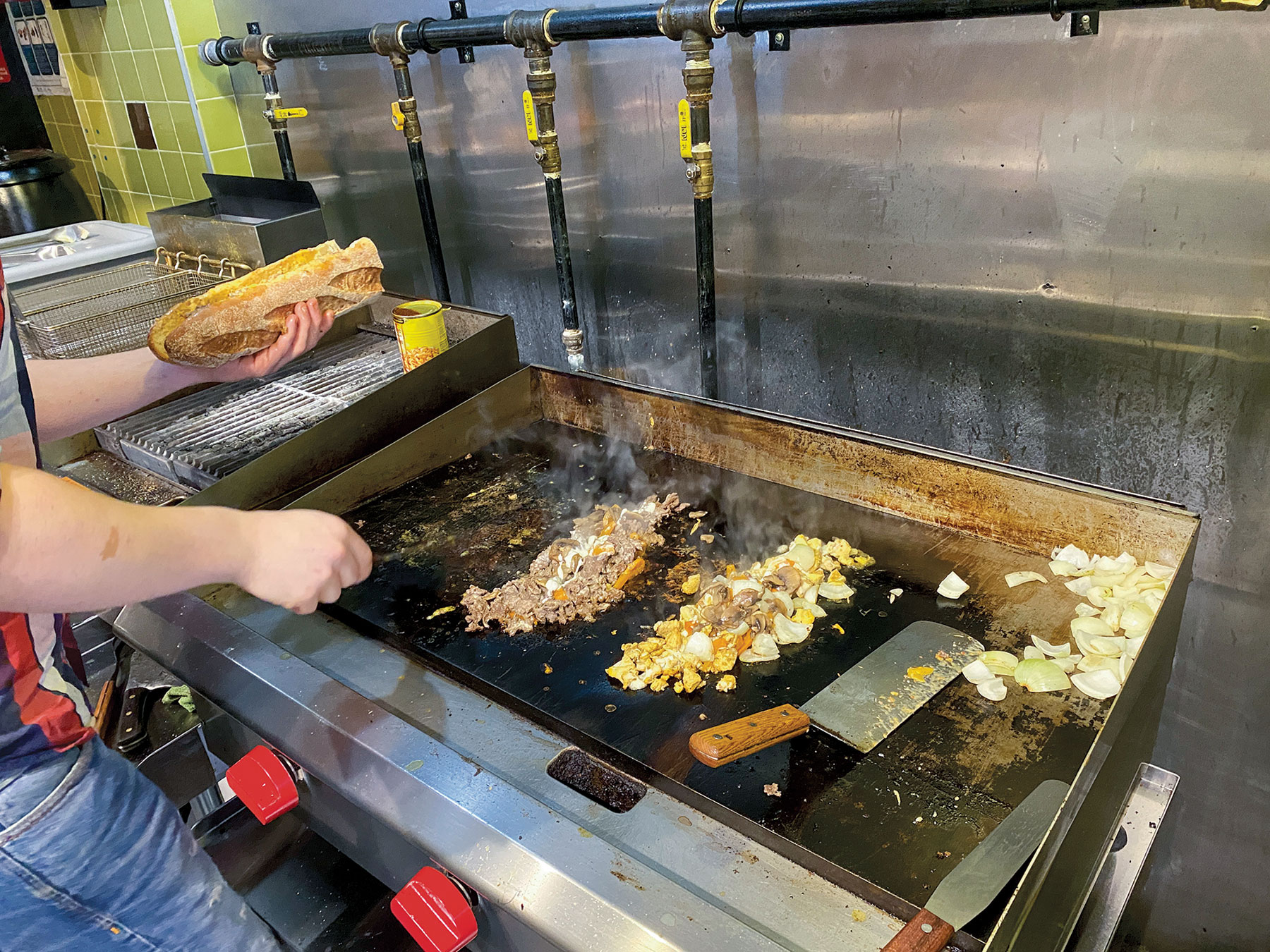
A unique and delicious mix of homemade ingredients from traditional Italian-American and Iranian cuisine makes Hoagie Station a must try. FOX OLIVER/GLEANER NEWS
If you’re looking for the biggest sandwiches in the Annex, you’ve come to the right place. Located at 495 Bloor St. W., Hoagie Station is the neighbourhood’s newest sandwich shop, and the owners have a story to tell, while serving up whopping 13-inch hoagies.
Four years ago, business partners Amin Khonsari and Shitel Barakat met while working at a sandwich shop in Richmond Hill. They had both recently immigrated to Canada, and they bonded over food, while working in two different restaurants together. One day, they decided that they could make bigger and better sandwiches, with a more personal touch; however, opening a restaurant is no easy feat. While they both had experience making food, Khonsari and Barakat didn’t have experience running a business, and they didn’t receive government support. This didn’t stop them. After years of hard work in multiple kitchens, they saved enough capital to open their own restaurant. When asked about the hardest part of this experience, Khonsari said it was “the risk. You put so much into the restaurant, and you don’t know if you’re going to get anything back, or if it was all for nothing.” The Annex seemed like the right spot for their restaurant, as it was missing a reliable sandwich place. With all their culinary experience in hand, they were ready to open Hoagie Station in February.
When asked about the secret that makes their hoagies so good, Khonsari said it all comes down to the house-made sauces and the fresh bread. Each sauce is a unique blend of flavours, from both traditional hoagies and Iranian cuisine. Different combinations of toppings make each hoagie unique, and vegetarian options are also available.
Hoagies themselves have an interesting backstory. A hoagie is an Italian American sandwich, similar to a submarine sandwich, that originated in the Philadelphia Navy Yard during World War I. When a nearby butcher saw a worker eating a big sandwich, he thought that only a “hog” could eat something that size. He then started making big sandwiches that he called “hoggies,” which later became “hoagies.”
Hoagie Station is typical of the Toronto culinary scene because it is a perfect mix of different cultural influences. The combination of Iranian and American flavours makes these hoagies stand out from the rest. From the freshly made sauces to the perfectly seasoned meat, every part of this hoagie experience is unique.
—Fox Oliver/Gleaner News
Comments Off on CHATTER: Feeling famished? Go to Hoagie Station (Spring 2022)Tags:Annex · News
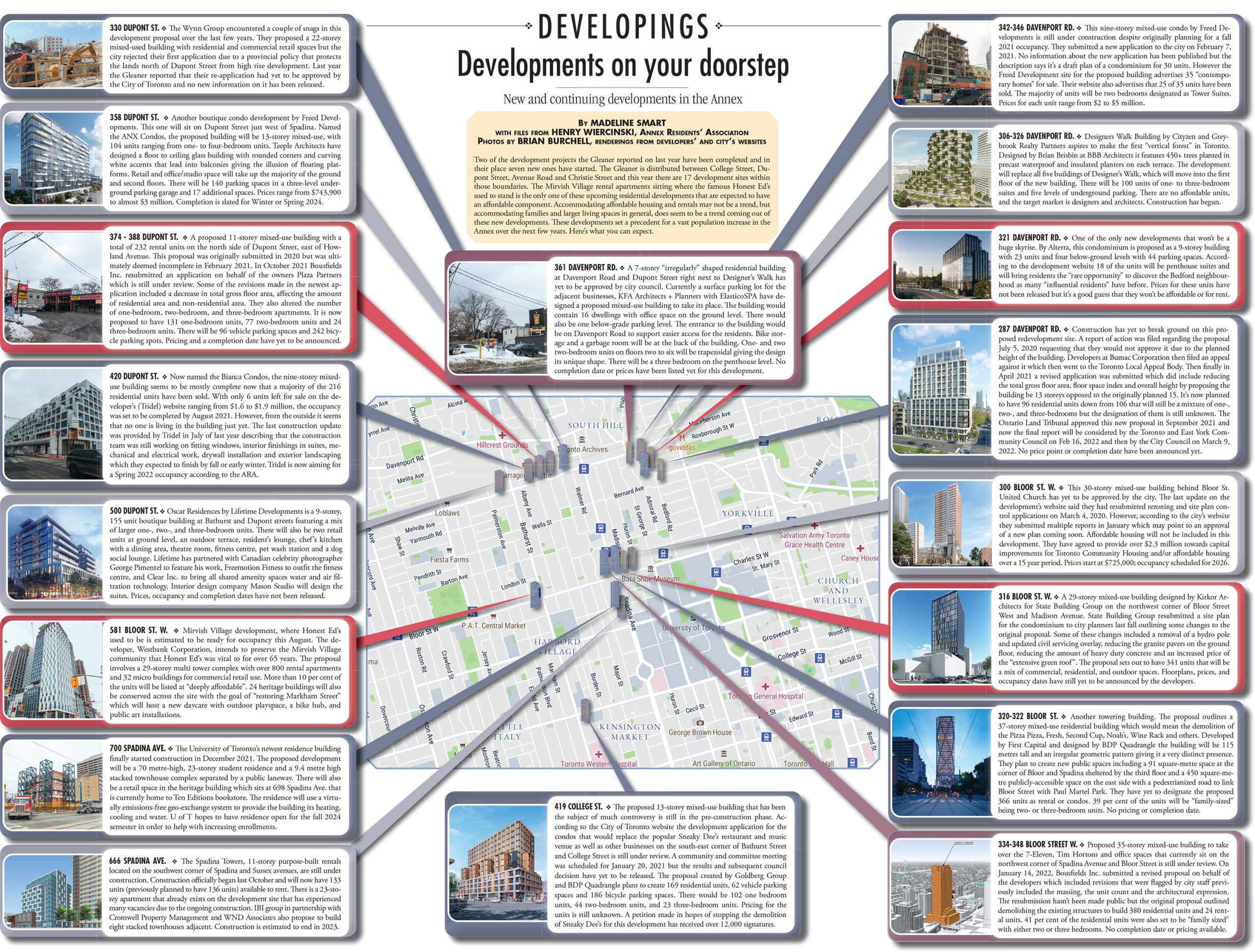
April 11th, 2022 · Comments Off on DEVELOPINGS: Developments on your doorstep (Spring 2022)
New and continuing developments in the Annex
By MADELINE SMART with files from HENRY WIERCINSKI, Annex Residents’ Association Photos by BRIAN BURCHELL, renderings from developers’ and city’s websites
Two of the development projects the Gleaner reported on last year have been completed and in their place seven new ones have started. The Gleaner is distributed between College Street, Dupont Street, Avenue Road and Christie Street and this year there are 17 development sites within those boundaries. The Mirvish Village rental apartments sitting where the famous Honest Ed’s used to stand is the only one of these upcoming residential developments that are expected to have an affordable component. Accommodating affordable housing and rentals may not be a trend, but accommodating families and larger living spaces in general, does seem to be a trend coming out of these new developments. These developments set a precedent for a vast population increase in the Annex over the next few years. Here’s what you can expect.
April 11th, 2022 · Comments Off on EDITORIAL: A conservative in name only (Spring 2022)
It’s silly season at Queen’s Park as the ruling Progressive Conservatives seek another mandate from voters this June. And it’s not beneath Doug Ford to attempt to bribe voters with their own money and ignore criticism about behaving in a fiscally reckless fashion.
Let’s rewind to the months before the last provincial election in 2018. The PCs made hay of the Liberal government’s “billion-dollar boondoggle” after they stopped construction of a gas-fired power plant to achieve political goals, costing taxpayers dearly. Doug Ford decried the salary of Hydro One CEO Mayo Schmidt, labelled him the “6-million dollar man,” and vowed to fire him. And for good measure, the PCs promised “a buck a beer.”
The beer promise of course never came to fruition, but one can expect a similar bit of candy in the weeks leading up to this vote—expect a drop in the provincially controlled portion of the gasoline tax “if you re-elect me.”
In terms of our electricity supply and distribution, Ford actually made matters much worse. Yes, he forced out the CEO, but Schmidt got a $10.7 million severance and stock options. Hydro One then had to pay a $139 million “kill fee” when an American regulator noted Ford’s interference in the planned purchase of a U.S. power company.
The Liberals rolled out their “fair hydro plan” in 2017. Once elected, the Conservatives replaced that with the Ontario electricity rebate. Forget the $6-million dollar man, Ford’s rebate is costing taxpayers $6.9 billion in subsidies for Hydro to keep rates artificially low. Of course, this is paid for by taxpayers not ratepayers, which is not fair because ratepayers enjoy the savings whether they are rich or poor. This is a regressive tax masked as a rebate; furthermore, it’s a disincentive to conserve. Since electricity is relatively cheap, there is less and less justification to pursue renewable energy generation. If a consumer is faced with buying a more expensive, yet more efficient fridge, why would they? If the efficient fridge is $300 more, but the electrical savings is just $12 per year, it makes no economic sense.
Two years of PC rule saw the subsidy grow from $4 billion to $5.6 billion, and, according to Ontario’s own financial accountability office, it will reach $6.9 billion this fiscal year. It’s ballooning in billions and Ford knows that it’s a huge problem of his own making. Traditionally, conservatives are not fans of meddling in market forces—protecting consumers from the poor economic outcomes of their choices. Ford needs to level with people about the true cost of electricity.
He is also cancelling license plate renewals which will save drivers $120 per year. If you are an affluent family with multiple vehicles your savings will multiply. This is yet another instance of regressive fiscal policy, shifting the burden from ratepayers to taxpayers. This will cost Ontario taxpayers a cool $1 billion-a-year. He is lowering tolls on provincially controlled highways, which again hurts all of us, to benefit individuals who drive on those routes.
The premier’s campaign promises then and now, and his performance over four years, reveal that we can expect more rebates which will further drain provincial coffers of funds for long-term, health care, education, child care, and a myriad of other things we expect government to do. But Doug Ford is a populist, not a conservative. He is probably less conservative than governments of other stripes have been or would be. He does not exist on the ideological spectrum at all.