July 18th, 2022 · Comments Off on EDITORIAL: Highway’s environmental impact worsens with every report (July 2022)
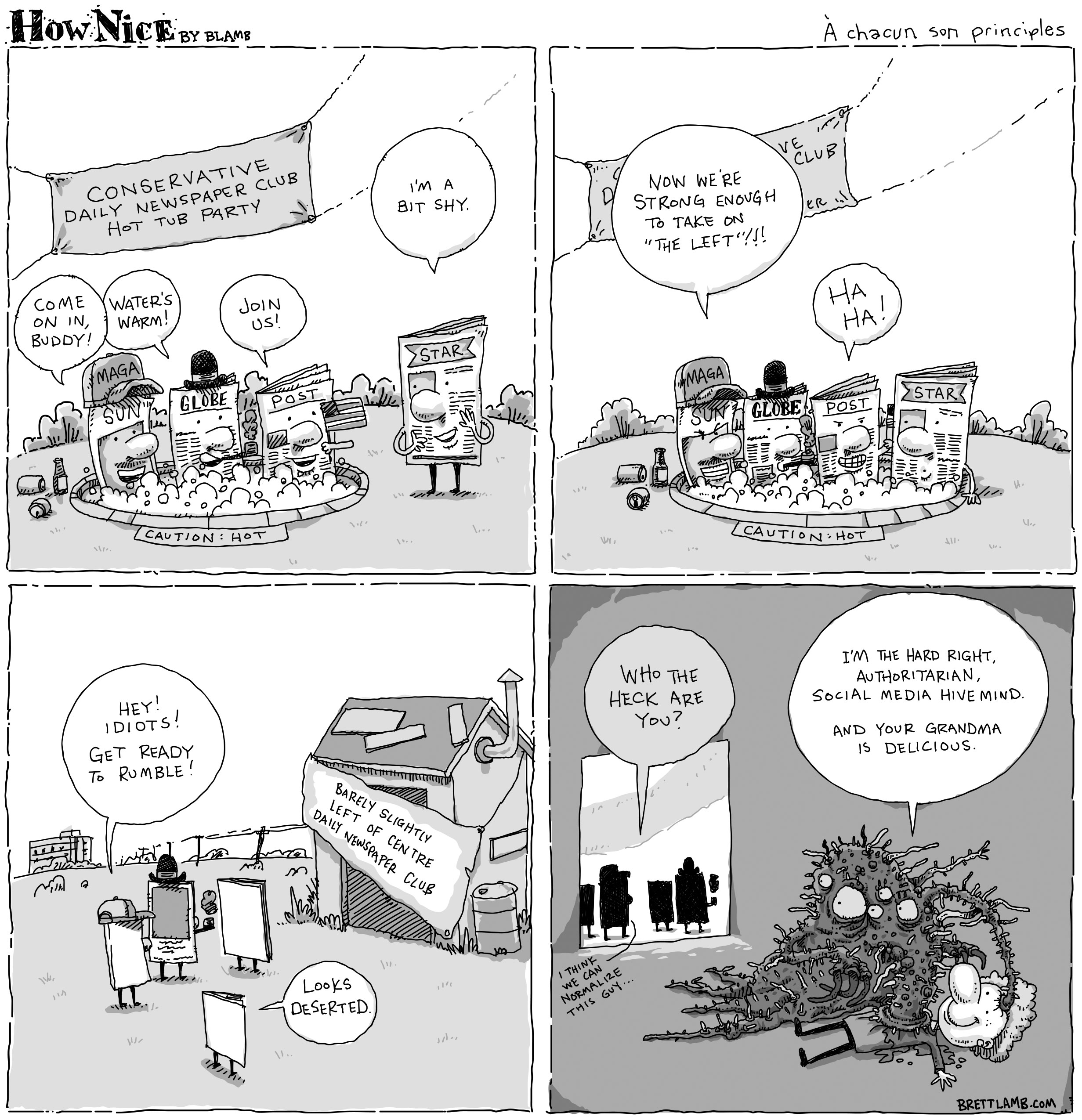
The provincial PCs handily won another majority at Queen’s Park. The progressive parties split the vote and Doug Ford walked up the middle with his “get it done” message. It’s a simple and catchy phrase that Ford could utter authentically. A key plank in their plan is building Highway 413, but it appears that getting it done might not be so simple.
Documents obtained through Freedom of Information (FOI) requests by the Toronto Star and the Narwhal reveal that the province has recently found 11 species which would be endangered by the proposed 60-kilometre highway. Highway 413 is a proposed four to six-lane highway that would connect Highway 400 in Vaughan in the east to the Mississauga-Brampton border where Highway 407 and Highway 401 intersect.
The 11 at-risk species confirmed to be living along the route of Highway 413 are: a butternut tree, a bobolink (bird), a chimney swift, a bank swallow, a rapids clubtail (rare dragonfly), a redside dace (minnow), the western chorus frog, a wood thrush, an eastern meadowlark, a barn swallow and the olive-sided flycatcher.
When we last discussed this highway on this page, only the redside dace was on the list. The FOI requests reveal that the province is doing more research using the species-at-risk databases to confirm the presence of 31 other species in this area. These findings are in the 300-page interim report prepared by the engineering consulting firms WSP and AECOM for the province at the behest of the federal government.
The Ford government weakened Ontario’s species at risk legislation in 2019. It allows the province to permit development, including its own construction, that could harm endangered species’ habitats. The developer must pay an extra fee that goes to the government ostensibly to help endangered species elsewhere. It sounds like the PCs have engineered a path to bulldoze over farmland, parts of the greenbelt, rivers, streams and wetlands, by changing the rules.
However, in late 2021, the federal Environment Minister Steven Guilbeault decided that Ottawa would subject Highway 413 to an extra layer of environmental oversight. If the province’s plan to protect species at risk isn’t satisfactory, the feds could decide to take over the project altogether, and there goes the photo-op of the Premier driving a log skidder through the enchanted forest.
The federal Impact Assessment Agency directed Ontario to outline how the province would minimize harm from the construction of Highway 413 to the western chorus frog, the red-headed woodpecker (which is suspected of being there), and the rapids clubtail, which are at-risk species. With the full head of steam Ford has built up over this proposal, it may seem unlikely that a tiny frog or a delicate dragonfly could stop him, but the federal government recently issued an emergency order effectively blocking a residential development near Montreal due to threats to the habitat of the western chorus frog.
It’s highly likely the federal government will now say that a full federal impact assessment is necessary. It’s helpful too that federal legislation is forcing the province to do due diligence and truly assess the environmental impact of its plans. The federal government will also insist that the province consult with Indigenous communities, which to date they haven’t done. Notably, most regional governments oppose the project as they feel it encourages urban sprawl without doing much to reduce commute times, but it appears that the reckless endangerment of species’ habitats may be its ultimate undoing.
July 18th, 2022 · Comments Off on FORUM: Improving our service standards takes resources (July 2022)
Layton argues we can do better as a city
By Mike Layton
Toronto residents love to spend time outdoors, and as a city, we want to encourage people to do so by ensuring our parks provide the services they need.
As the city grows, and warm weather arrives earlier in the year, we have seen the use of our parks begin earlier as well.
We need to update and winterize our facilities, build new washrooms, and work at a lightning pace to get our fountains and facilities operational as quickly as possible. Anything less is a failure of the city to meet the needs of residents.
Councillor Mike Layton
Unfortunately, current service levels simply do not meet the needs of Toronto residents.
On recent weekends, where temperatures soared to record-breaking levels, residents did not have access to drinking water because our park fountains had not yet been turned on.
Public washrooms, of which there are not enough to begin with, are also not open in many parks in early spring.
The lack of access to drinking water and washrooms limits the enjoyment of our parks and has a disproportionate effect on seniors and children, among other vulnerable populations.
As with snow clearing, equitable access to these services is necessary to provide a better quality of life. We must provide spaces where people can use washrooms with dignity and drink water from our fountains: these are essential services.
As our facilities are susceptible to freeze-thaw cycles, they must be shut down each year and reactivated in the spring once warmer weather arrives.
Many will need to be inspected and tested before being turned back on.
This is a difficult task to complete quickly in a large city without sufficient staff resources.
During my time on council, I have tried multiple times to expand our service levels by increasing resources available through the budget cycle.
Unfortunately, council has not supported my efforts to spend money on these vital services, instead choosing to keep the status quo.
We need to update and winterize our facilities, build new washrooms, and work at a lightning pace to get our fountains and facilities operational as quickly as possible. Anything less is a failure of the city to meet the needs of residents.
The mayor has now brought forward a motion to council which asks city staff to modernize park operations and procedures and conduct improvements earlier in the spring, but there are no additional funds to support this ask.
The fact is that the problem cannot be solved by simply directing staff to work harder.
Our parks staff work very hard but are stretched thin; if we are going to provide the level of service that residents are calling for, increased funding is required.
A motion I have added to the council agenda requests a staff report on service standards for park fountains and washrooms, including how much it costs to decommission and bring them back online each year.
The motion will also determine the city’s total budget for this work and how many staff are assigned to its completion.
This report will allow us to fully understand the challenges and costs of current service levels and provide us with more information as to what improved services levels would cost.
I hope to immediately make this service improvement, and I will continue to push for more resources and improved service levels to ensure that our parks are meeting the needs of Toronto residents.
Mike Layton is city councillor for Ward 11, University-Rosedale.
July 18th, 2022 · Comments Off on SPORTS: Baseball Leafs navigate a new era at Christie Pits (July 2022)
“Unfinished Business” the theme of this year’s squad
Starting pitcher Zach Sloan, seen here delivering a pitch on June 12, had a hand in two recent shutout victories for the Toronto Maple Leafs at Christie Pits. The Leafs defeated the Brantford Red Sox 14-0. R. S. KONJEK/GLEANER NEWS
By R.S. Konjek
New era. Unfinished business.
Those are the twin themes of the Toronto Maple Leafs who are in the midst of their fifty-third season of intercounty league baseball at Christie Pits.
The expanded 42-game 2022 season got underway in May with the Leafs and seven other clubs from around southern Ontario competing to see who will hoist the Dominico Cup as league champions this September.
Last fall, the Leafs fell one win short of the title, losing the deciding game of the championship series to the London Majors. Out of that defeat, the mantra of unfinished business was born.
In January, longtime owner Jack Dominico passed away. The Leafs’ iconic figurehead operated the club for over half a century, practically its entire existence. After knowing only one boss for so long, the Leafs entered a new era.
A new front office team operates the club on behalf of Dominico’s estate until a new owner or ownership group can be found.
On the baseball side of things, Damon Topolie returns as player-manager and as vice president of baseball operations, a role he previously shared with Dominico.
Ryan Eakin takes on the role of director of communications and game day operations.
“The goal right now is to make the franchise as viable as possible to a potential buyer and we are doing that through modernizing our social media platforms, YouTube broadcasts, and by [obtaining] new sponsors,” Eakin said. “All this is with the hope that we will be able to continue the tradition of Maple Leafs Baseball at Christie Pits for years to come.”
Christie Pits remains the Leafs’ home and the park itself looks much as it always has. The team on the field, however, looks very different.
The Leafs debuted crisp all-white uniforms, a departure from the various shades of blue worn by the team over the years.
The departure of several veteran bats provided opportunities for a large contingent of junior players, ranging in ages from 18 to 20, to fill the roster.
“I’ve been wanting to add some youth to the lineup for the last couple of seasons,” Topolie said. “These kids had no idea this league even existed, so I wanted them to get an idea of what is available to them as a summer option before they go away to school.”
Many of the rookies have made their presence felt right away.
Toronto native Aidan McAskie is among the team leaders in hitting, home runs, and runs batted in.
On the mound, Mississauga’s Rhys Montgomery ranks high in the number of innings pitched, strikeouts, and earned run average.
“They have all impressed me,” Topolie said. “They have competed and not looked out of place. Some of them deserve more opportunities as they may crack the lineup as future starters.”
In late June, the Leafs announced a surprise signing: former Oakland Athletics pitcher Angel Castro from the Dominican Republic.
“We needed a horse, so we’re bringing in the horse,” Topolie said.
Castro joins fellow pitcher Dustin Richardson as former major leaguers who have come to play at the Pits.
Amid all the shuffling of names, faces and roles, the Leafs have gotten off to a solid start on the field.
Approaching the midway point of the season, they are third place in the league standings and hoping to make a strong push for the championship that eluded their grasp last year. The mantra of unfinished business is never far from their minds.
Win or lose, the overseers of Jack Dominico’s legacy want to keep the tradition going.
“I’m trying my best to make sure we have a team playing every Sunday afternoon at Christie Pits,” Topolie said. “Because of the uniqueness of our park, I really need the fans and local businesses to support the team.”
With large crowds in attendance, and the Leafs off to a winning start, the days ahead look bright.
The complete Maple Leafs schedule can be found at: https://www.mapleleafsbaseball.com/stats#/team-schedule.
July 18th, 2022 · Comments Off on FOCUS: Wiener’s Home Hardware 100th anniversary a day to remember (July 2022)
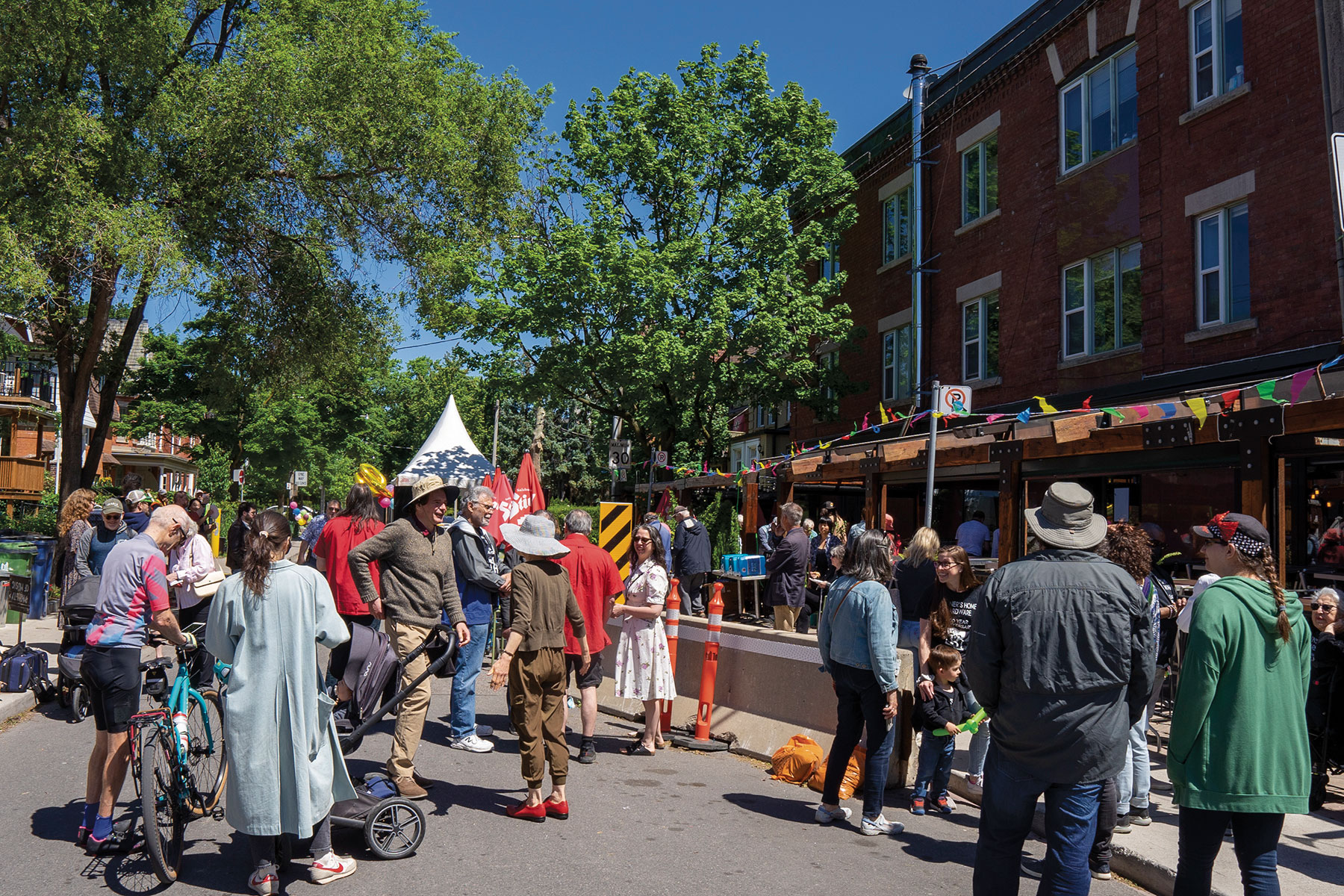
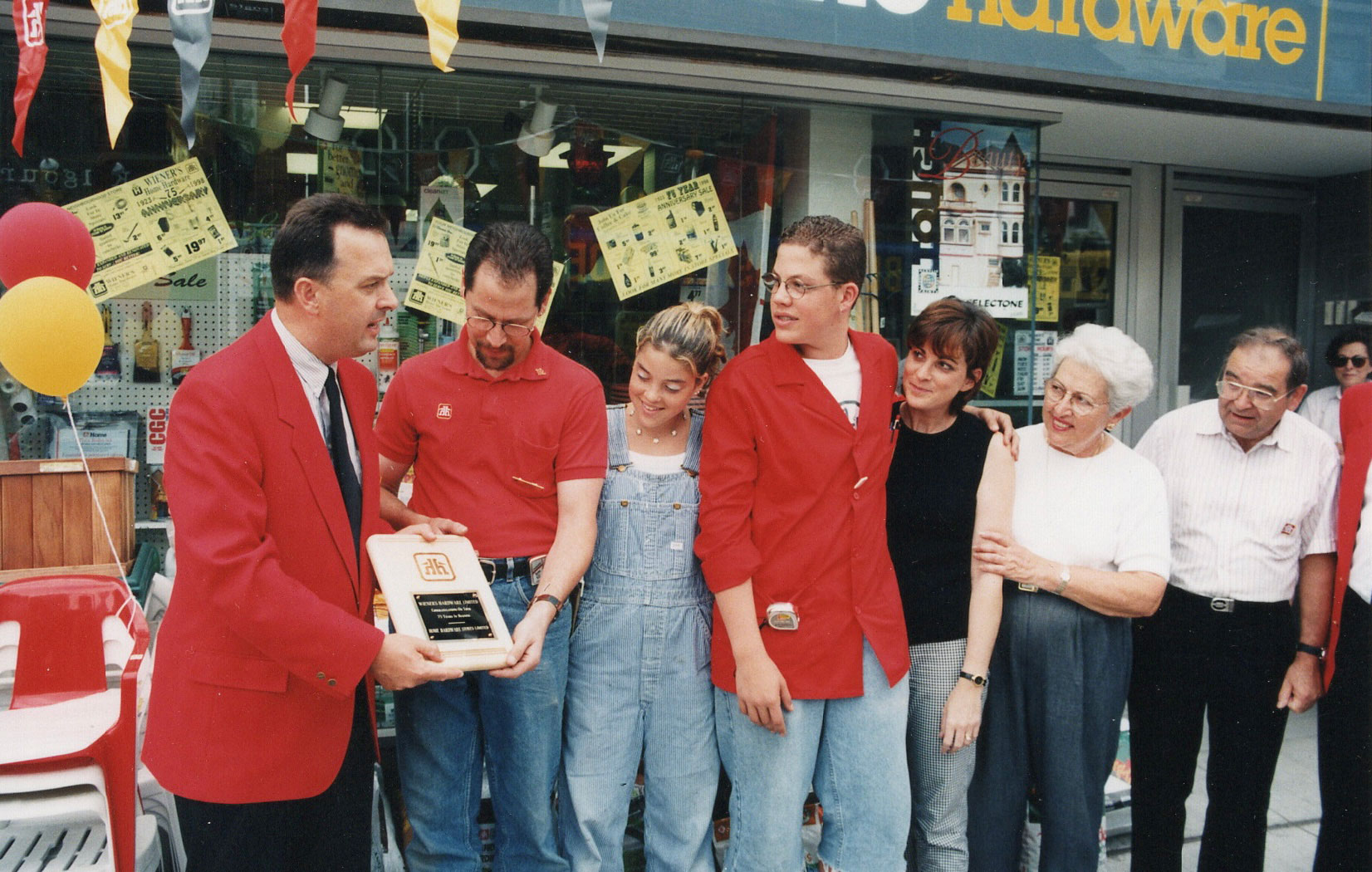
On June 18, Wiener’s Home Hardware celebrated their 100th anniversary with a block party hosted by the Bloor Annex Business Improvement Area, Annex Residents’ Association, and the Harbord Village Residents’ Association. The community enjoyed live music, food, and got a chance to learn about the history of the family-run store (pictured top-right). The block party gathered four generations of the Wiener family to celebrate (pictured above). Marty Wiener also accepted a plaque from Mayor John Tory, presented by Councillor Mike Layton, on behalf of the Wiener family commemorating the store’s contribution to the community over the past 100 years (pictured right). This celebration will surely be a day Annex residents will remember. —Fox Oliver/Gleaner News.
May 24th, 2022 · Comments Off on ON THE COVER: One hundred years of Wiener’s Hardware (Provincial Election 2022)
In 1923, Ida Wiener stands in the newly opened Wiener’s Hardware with her son Morey. One hundred years and three generations later, the family business is still going strong (Click here for full story). COURTESY WIENER’S HOME HARDWARE
May 24th, 2022 · Comments Off on FOCUS: Where do our candidates stand? (Provincial Election 2022)
Gleaner asks University-Rosedale hopefuls six key questions
When there is an election at the provincial or federal level, the Gleaner asks candidates questions about their policy positions on issues of the day. As the June election is almost upon us, their answers may help you decide how to cast your vote on June 2. (Note: the answers are in alphabetical order by candidate’s surname).
Compiled by Brian Burchell
Question 1. What will your party do to address the severe shortage of affordable rental housing in major urban areas like Toronto?
Andrea Barrack, Ontario Liberal Party:
We will establish a new Crown agency—an Ontario home building corporation— so that the government can be more of a true partner in financing and building affordable housing. Our plan will build 1.5 million new homes, including rentals. The province also has lots of public lands we can release and set criteria for what can be built. The Ford government, in contrast, has been selling these lands off to the highest bidder with no questions asked, and no criteria for how they are used.
When I was a student at the University of Guelph, I lived in family housing. The fact that it was rent-controlled allowed me to finish school. The down payment on my first home was $5,500. By today’s standards, home ownership seems like a dream.
I have an adult son now who shares a very expensive apartment above a store. He wonders if he’ll ever be able to live without a roommate.
Doug Ford’s brand is based on him being there for the little guy. But he has never been the little guy himself. Nor is he a systems guy; he’s a Band-Aid guy. His type of solution is: You need money? I’ll give you 20 bucks.
We deserve a government that features people who understand how to create change in big systems. The Ontario government is like a large corporation with a $200-billion budget. It requires a more outcomes-based focus. Many of our current systems are either broken or designed for a different time. I don’t want to put a Band-Aid on someone’s problem; I want to find the underlying problems and figure out how we can solve them.
Jessica Bell, Ontario New Democratic Party:
An NDP government will make homes affordable to rent and buy by strengthening rent control and protections for renters, curbing investor speculation and building new homes, including affordable homes, to meet the housing needs of current and future Ontarians.
Our commitments include:
Building 100,000 affordable homes and 60,000 supportive housing units over the next 10 years.
Establishing a homes first approach to end homelessness by permanently housing people in need.
Properly funding community housing and providing 310,000 portable rent supplements for people in need.
Establishing a provincial housing agency, Housing Ontario, to finance and build 250,000 affordable nonmarket houses over 10 years, including homes on public land.
Stabilizing rent and protecting renters from eviction by implementing vacancy control which puts a cap on the amount a landlord can raise the rent once a renter leaves.
Improving the Landlord and Tenant Board so the tribunal provides everyone with access to a fast and fair hearing.
Enacting an annual vacant home tax and an annual tax on domestic and foreign investors.
Dianne Saxe, Ontario Green Party:
The Greens have a detailed and widely praised housing plan that will create clean, compact, affordable communities at gpo.ca/housing. Renters need solutions such as strong rent control and stopping landlords from profiting by driving out tenants through “‘renovictions.” We need to preserve existing rental buildings by funding co-ops and community land trusts.
Increasing the supply of rental housing is critical. We will bring empty units back into use by taxing vacant homes and speculators and by cracking down on housing used to launder money. We will give everyone the right to create new units in existing buildings and make it easier and faster to build “missing middle” housing, such as tiny houses, triplexes, and walk-ups. Approvals and funding for non-profit housing providers is key. We will end wasteful parking minimums and encourage conversion of parking lots to housing.
It is vital to increase support for affordable housing. Greens commit to use public funds and land to build permanent, new, affordable rental units. We will support partnerships where non-profits manage affordable units within market-rate buildings. As well, we will make ultra low-cost housing available through well-regulated rooming houses and modular homes.
For those struggling to make rent on a monthly basis, we would ensure the province funds 50 per cent of community housing costs, doubles ODSP and provides a monthly subsidy to low-income households. Under the Green climate action plan, low-income people would receive a climate bonus and we would reduce the overall cost of living by reducing the need for personal vehicles.
Carl Qiu, Ontario Progressive Conservative Party:
We know that everyone deserves to have a place to call home in Ontario. Fifteen years ago, rental prices were manageable and homes were affordable. But after years of Liberal mismanagement, families are struggling to keep up with the soaring cost of living in our city.
Our PC Government is helping more families realize the dream of home ownership. We recognize that the biggest issue fueling the housing crisis is a shortage of housing supply. That’s why we introduced legislative, regulatory and policy changes to help boost housing supply in Ontario. It’s also why we froze rent in 2021 for most rent-controlled and nonrent-controlled residential units.
While the Liberals and NDP are more interested in saying no, we’re getting homes built so each and every Ontarian can have a roof over their head that they can afford.
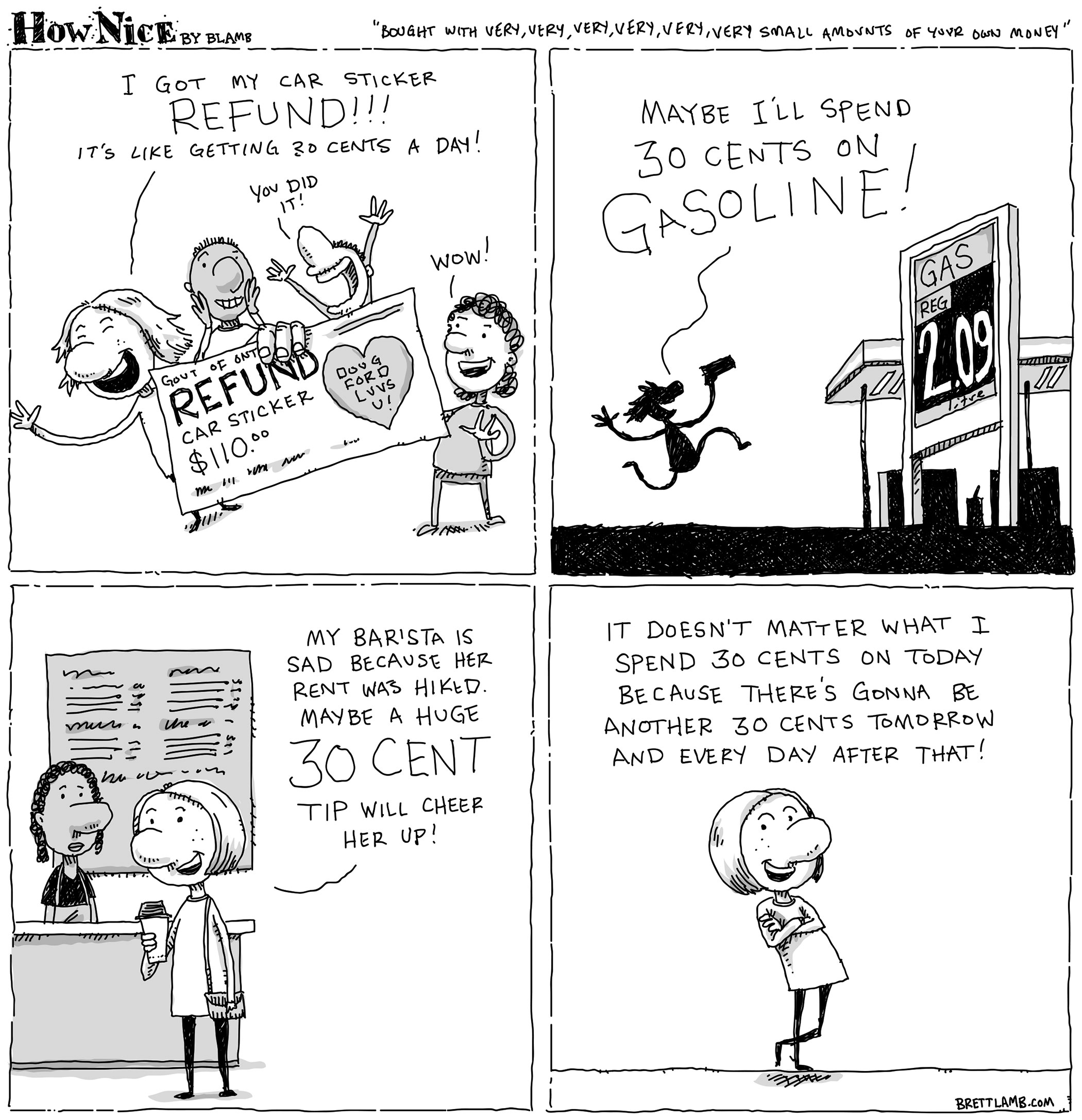
Question 2. Recently, the Ontario government eliminated the requirement that vehicle owners purchase licence plate stickers, costing provincial coffers roughly $1 billion annually. Does your party support this change, and if so, why?
Andrea Barrack, Ontario Liberal Party:
I come from small-town Ontario where there isn’t a lot of public transit; it’s a place where cars do matter. The cost of gas and driving has skyrocketed, so the licence plate renewal that’s being abolished does make a difference for many families.
Although the thinking behind it was cold and tactical, the timing of the move was shameless. The cheques came just before the writ was dropped. It was reminiscent of the Ford campaign’s buck-a-beer promise in the last election—something they couldn’t even do.
The Conservatives are good at catch phrases, but their schemes are haphazard and almost impulsive. The 413 Highway is another one. They say it is going to save people a half-hour commute, but no study has shown that. With this government, it’s always a case of ready, fire, aim. The people of Ontario deserve more than that. The sticker rebate will cost the province a billion dollars. While it was helpful to some, where else could those billion dollars have gone?
Another reason I don’t love the sticker rebate was that it fails to target the people who need it most. Three-car families with very large homes don’t need that money back. I’ve been pleased to see that quite a few people in University-Rosedale donated their rebate to my campaign. They clearly found the tactic offensive and found something better to do with the money.
Jessica Bell, Ontario New Democratic Party:
I do not support the Ontario government’s decision to eliminate the fee for licence plate stickers.
Dianne Saxe, Ontario Green Party:
The Greens are the only party that voted against this foolish vote-buying gimmick. NDP candidate Jessica Bell claims she disagreed with this gimmick, but she didn’t vote against it. Why?
There are many reasons why this gimmick is bad for Ontario. There are so many better ways to use this money. The old political parties have opened the door for the Ford Conservatives to undoubtedly use this self-imposed reduction in government revenue to justify further caps and cuts to public services, such as health care and education.
But this particular cut is especially harmful. As I documented when I was the Environmental Commissioner of Ontario, driving is already the largest cause of Ontario’s climate pollution. How could the NDP and Liberals, who claim to be serious about the climate crisis, vote for this $1.1-billion-a-year handout—encouraging driving by making it less expensive? Especially the very week that yet another damning International Panel Climate Change (IPCC) report showed that burning fossil fuels (such as gasoline) amounts to arson of our only home.
Carl Qiu, Ontario Progressive Conservative Party:
We were elected on a promise to deliver real financial relief for the people of this province, and we are the only party that has a track record of success. Unlike the Liberals and NDP, we will continue to focus relentlessly on making life more affordable. As the cost of living continues to go up, our government is cutting costs for families to make life more affordable. We believe that eliminating the fee to renew your licence plate, and refunding the cost of doing so for the past two years, is a concrete way we can put and keep more money in the pockets of hardworking Ontarians.
Question 3: We are facing a severe lack of skilled tradespeople. What will your party do to address this issue?
Andrea Barrack, Ontario Liberal Party:
We need a government that is agile and can predict the skill sets we are going to need in the future because there are shortages in so many professions and trades. We also need massive investments in college programs that adapt to our constantly changing economy and employment landscape.
People sometimes think that if they want to work in the green economy they need to be an environmental engineer. But we also need people who understand how to install a geothermal heat pump, rather than a gas furnace. There are all sorts of these niches across the economy.
In addition, we have huge swaths of foreign-trained folks who have trouble getting a foot in the job market. There are things we can do as a government to help this transition. We have inspiring examples such as a program called Windmill which provides low interest loans to immigrants while they obtain their Canadian credentials. These are models government can learn from. But it requires a government that is responsive and which plans comprehensively.
In this context, University-Rosedale really doesn’t benefit from continuously having Opposition members in Queen’s Park. This is a flagship riding and it deserves to have a member who is sitting in government to help make these decisions.
Realistically, it is highly unlikely that a Conservative will be elected in this riding. I believeit is the Liberal Party that is now in the best position to form a government.
It excites me that we had a real opportunity to rebuild the Liberal Party in Ontario from the ground up. Most of the candidates I’m running alongside have had careers and experience outside politics and can bring those skills and perspectives to government. Even if we don’t form the government after this election, we will very soon.
Jessica Bell, Ontario New Democratic Party:
A strong and skilled workforce is essential to Ontario’s prosperity. To ensure more Ontarians choose a career in the trades, an NDP government will:
Recruit more high school students for careers in the trades by establishing and improving high school trades and shop classes across Ontario, like the program at our local Central Tech.
Expand the Ontario Immigrant Nominee Program to attract more skilled immigrants to Ontario.
Implement our commitment to creating 100,000 well-paid green trades jobs as part of our green building retrofit program.
Ensure Ontario’s new transit projects have strong Canadian-content requirements and community benefits agreements so more green jobs go to Ontarians, including racialized Ontarians and women.
Dianne Saxe, Ontario Green Party:
Greens know that Canadians have a powerful desire to get involved in the new climate economy. Iron and Earth has shown that Canada’s fossil fuel workers have the skills and experience necessary to shift to the new economy and need only modest training and transitional help to do so. We would provide that training and help. We would ensure that Ontario has a quality workforce with new standards for good careers in green trades. Some of these jobs would include electric vehicle mechanics and retrofit installers. We would help small businesses upskill existing employees with training subsidies.
Other workers need more help to enter the new climate economy. Our Roadmap to Net Zero, at gpo.ca/climate, shows how, in the next four years, we would give 60,000 people the skills and experience they need by providing a year of free college courses in green trades plus a year of guaranteed work when they graduate.
Indigenous communities are eager to be leaders in this new climate economy. Aki Energy and Hammer Heads have shown how they can transition tradespeople quickly and successfully. The Roadmap to Net Zero pledges $1 billion to support Indigenous climate leadership, including these kinds of programs and Indigenous-led businesses.
Carl Qiu, Ontario Progressive Conservative Party:
Our Build Ontario plan will bring better jobs and bigger paycheques, get shovels in the ground faster on highways, hospitals and key infrastructure and keep costs down for Ontario families while keeping our economy open and strong.
Our plan includes a commitment of $1 billion annually which will fund employment and training programs, the Skilled Trades Strategy (with an additional $114.4 million over three years), three-year applied degrees and four-year degree programs at Ontario colleges and a minimum wage of $15.50 per hour which started October 1, 2022.
We’re investing in building projects that create fantastic jobs including a $158.8-billion capital plan over 10 years. This includes $20 billion in spending from 2022 to 2023 and is one of the most ambitious capital plans in Ontario’s history. Over 10 years, $25.1 billion will be spent on planning, building and improving highways, including Highway 413, the Bradford Bypass, Highway 401 and Highway 7. We will allot $61.6 billion in capital over 10 years for public transit, including expanding GO rail services to London and Bowmanville.
Our PC team will always stand with the hardworking men and women who build our province and build stronger communities every single day.
Question 4: What will your party do about the shortage of beds and staff in long-term care homes?
Andrea Barrack, Ontario Liberal Party:
The government has treated long-term care (LTC) and community work as second-class jobs compared to similar jobs in a hospital. LTC staff make less than they would make in other parts of the health-care system. That doesn’t make sense. If we are serious about wanting good care for seniors, we have to make sure the people who work in long-term care are paid an equitable wage.
Sixty per cent of long-term care is now provided by for-profit providers. We saw at the height of COVID-19 that these homes were where the majority of deaths took place. In fact, even before COVID-19 hit, we knew that seniors in for-profit long-term homes had significantly higher morbidity and mortality rates. The Liberals will eliminate for-profit facilities by 2028. Taking the profit motive out of long-term care will go a long way towards solving the problem.
It is noteworthy that for-profit providers tend to offer only part-time work so that they don’t have to provide benefits to staff. By taking away the profit motive, money that would have been profit can instead go into staffing, training and better facilities.
A lot of our Liberal policy modelling looks at the Danish system. Rather than building very large institutions, we want more homelike environments that have consistent staff and perhaps seven or eight residents in a home. They would be operated on a not-for-profit basis, potentially by community organizations or municipalities.
We also want to reduce the number of people who have to go into long-term care even though their first choice would have been to remain at home. Our party has made a commitment to ensure that 400,000 seniors get more home care so that they can stay at home longer. It doesn’t make sense from a moral or economic point of view to pay for someone to be in long-term care simply because we don’t want to pay for them to have four hours of care at home.
Jessica Bell, Ontario New Democratic Party:
Ontarians want to live at home in dignity for as long as possible and then move to a quality long-term care home only when it is necessary.
The NDP has a strong and doable plan to fix our broken home and community care system. To achieve this, we will:
Replace profit-driven corporations both in home and long-term care with municipal and not-for-profit ownership that provides public delivery of home and community care.
Establish provincial standards for home and community care services
Establish a caregiver benefit program to provide $400 a month to family caregivers.
Build 50,000 new and modern beds by 2030.
Ensure that long-term home and community care reflects a variety of languages, food and cultural practices. Our local Mon Sheong Home for the Aged and Rose of Sharon are two excellent examples of culturally appropriate care.
Recruit 10,000 new personal support workers (PSW).
Improve the working conditions of all frontline home and long-term care workers—from PSWs to nurses to cleaners—by increasing investment in the sector, raising wages, making it easier to join a union and mandating permanent jobs with benefits.
Dianne Saxe, Ontario Green Party:
If nothing else, this pandemic has shown that we must change how we care for elderly people.
Long-term care homes require adequate staffing. This should be a no-brainer. Greens will ensure that there is at least one nurse practitioner for every 120 residents. An appropriate mix of nurses, nurse practitioners and personal support workers is vital, along with professional development opportunities in the areas of geriatric care, dementia, and palliative/end of life care. PSWs and nurses must be brought back into the profession with respectful, full-time positions. The cap on nurses’ salaries must be repealed.
Let’s think about how our elderly family members experience their day. We believe each resident should receive at least four hours of nursing and personal care every day which would include access to a registered nurse and a registered practical nurse. They should also have at least one hour per day with other health professionals, such as dieticians, physiotherapists, occupational therapists and social workers. It’s the least we can do. Most people would rather age at home. We will help them do it.
We will amend the building code so that new housing is suitable for aging in place and streamline the approvals process for cohousing and coliving. We will improve home care and provide team coordinators, so seniors have more choice and a continuum of care. Reducing air pollution and increasing physical activity (safer places for walking and biking) will help people stay healthy and out of long-term care.
Carl Qiu, Ontario Progressive Conservative Party: For decades long-term care was neglected by governments of all stripes, and the pandemic showed the impact that this has had on the system. No one got it right…but we made the commitment to finally address the situation. We introduced the Fixing Long-Term Care Act into law which will mean that every resident is entitled to four hours of daily direct care. We strengthened the Residents’ Bill of Rights, implemented an annual survey, doubled the fines on convictions for offences and doubled the number of inspectors.
We are addressing the staffing crisis with a record $4.9-billion investment. This is for training and hiring 27,000 staff including PSWs, nurses and doctors—staff the system desperately needs after years of neglect.
We are building 30,000 new beds to cut the waiting list dramatically. For 15 years the Liberals and NDP said no when it came to investing in long-term care. The Liberals only built 611 long-term care beds from 2011 to 2018. The NDP’s plan shows that they would cut funding to long-term care from the historic levels our PC government raised it to. Our government has far exceeded their proposed increase of 30 per cent and is investing that money in the system sooner.
Question 5: Will your party commit to reducing the province’s greenhouse gas emissions by 60 per cent from 2005 levels by 2030? What will you do to meet these targets and how will you assure Ontarians that they will be met?
Andrea Barrack, Ontario Liberal Party:
We are committed to cutting industrial pollution by at least 50 per cent by 2030. Our goal is to reach net zero by 2050. This is an ambitious and pragmatic approach. We need to move faster to a low carbon economy, but if we don’t work with industry to help them reduce their carbon emissions, we are not going to get there.
The Liberal platform includes retaining 30 per cent of our land for conservation by 2030. Ontario has great carbon capture from our marshes and forests—they literally pull carbon out of the air. But we need to make sure this land is protected. Right now, only 10 per cent of these vital lands is protected.
Overall, the primary tool we have is the carbon tax. Governments can solve collective-action problems by setting regulations that create an even playing field across industries. When industries are certain that they have a stable government partner, they know it is worth investing in appropriate technology needed to reduce their emissions in the long term.
Unfortunately, the NDP is proposing we go back to a cap-and-trade model. But that would just put everything back in disarray. Another new NDP cap-and-trade system would put Ontario through its fourth carbon pricing model in four years.
Stable policy and comprehensive planning are at the heart of the Liberal platform.
Consider how our platform contrasts with the Ford campaign slogan: Get It Done. Get what done? They lack an overall vision.
The Conservatives are attracted to episodic things, like rebates for vehicle registration fees. Or another highway. Or creating more for-profit, long-term beds for seniors in case there’s another pandemic. With the Ford government, it’s one Band-Aid solution after another—a collection of very episodic, siloed, politically tactical measures.
The Liberal vision is to grow our economy in a way that is more inclusive and sustainable: investing in our young people so they can succeed in the future. It is about growing the talents and efforts of Ontarians so they can get ahead and contribute to the fabric of their community.
Jessica Bell, Ontario New Democratic Party:
An NDP government will execute our Green New Democratic Deal platform to reduce the province’s greenhouse gas emissions by at least 50 per cent from 2005 levels by 2030 and reach net zero by 2050. These targets are consistent with the Intergovernmental Panel on Climate Change (IPCC) and the most ambitious aspects of the Paris Agreement. We’ll enshrine our greenhouse gas reduction targets into law and use a carbon budgeting process to ensure we reach them by consulting with climate scientists, workers, industry and other experts.
Our plan includes:
A carbon pricing system for big emitters to generate $30 billion in revenue for green investment from 2022 to 2026.
Changing our transportation system: passing road safety legislation to make it easier and safer to walk and cycle; heavily investing in municipal and regional transit operations to ensure everyone can quickly get to their destination at an affordable price; implementing a zero-emissions electric vehicle strategy which includes transitioning to only selling and manufacturing electric vehicles in Ontario by 2035; providing incentives to purchase electric vehicles; and changing the building code to ensure Ontario has the infrastructure needed so it’s easy to charge electric vehicles.
Changing our buildings by establishing a world-leading retrofit program which will generate over 100,000 new permanent jobs. We will require all newly built buildings to conform to net-zero standards and change urban planning rules to make it easier for people to walk, cycle or take public transit to their destination. We will increase density in existing neighbourhoods and curb urban sprawl.
Changing the electricity supply by achieving zero emissions by 2030. Our plan includes expanding hydro capacity, increasing intermittent renewables including wind and solar power, creating more grid-scale storage, increasing rooftop solar capacity on buildings, and developing grid interconnection with Quebec and Manitoba to enable electricity imports of hydro power.
Dianne Saxe, Ontario Green Party:
Greens’ Roadmap to Net Zero is a plan for the rest of the century and it is the only way to protect the climate and the planet we call home. Our priorities are to crush climate pollution, restore water and nature and succeed together.
Other parties rely heavily on planting trees, as if those trees will survive 100 years of worsening fires, floods, droughts, pests and storms. The Green Roadmap shows how Ontario can make effective changes in many sectors to cut emissions in half by 2030 and get to net zero by 2045.
This new climate economy will clean up the air, keep billions in Ontario’s economy and create hundreds of thousands of jobs. We will end fossil fuel subsidies and move to 60 per cent renewable energy by 2030. Like other provinces, we’ll adopt zero emission vehicle standards and position Ontario at the forefront of the electric vehicle revolution, from mining to manufacturing. Incentives for green building retrofits will create good jobs, reduce climate pollution and help people save money by saving energy.
The Roadmap shows how we will track, achieve and pay for this transformation. First, we will stop sprawl and new highways which are the largest contributors to Ontario’s climate pollution. The NDP sponsored the bill to remove the tolls on Highways 412 and 418. We don’t need or want new mega-highways. We will provide cash incentives up to $10,000 for buying a fully electric vehicle and $1,000 for an e-bike or used electric vehicle.
Carl Qiu, Ontario Progressive Conservative Party: We should all be working together to ensure we support both a healthy environment and a healthy economy. Despite what the Liberals and the NDP say, we know it is possible to do both. In fact, under the leadership of Premier Doug Ford, we are the only province in this country that is on target to meet its Paris Agreement targets. Ontario is also doing better than Michigan, New York and even Australia and Brazil. We continue to make progress on the commitments outlined in the Made-in-Ontario Environment Plan:
Increasing renewable content in gasoline and developing Ontario’s first low-carbon hydrogen strategy
Implementing a new, enhanced, heavy-duty vehicle emissions reduction program and ensuring large, industrial emitters are accountable for their greenhouse gas emissions through our federally approved program
Finishing the job of phasing out coal which was first started under a PC government.
We are protecting Ontario’s environment by investing $20 million in the Greenlands Conservation Partnership to expand protected areas and $30 million in the protection and restoration of important wetlands. We have launched consultations that could lead to the largest expansion of the Greenbelt since its creation.
Our government will continue to do what we have always done since we formed government—protect our province’s land, air and water for now and for future generations.
Question 6: If elected, would your government restore the size of the membership of Toronto City Council?
Andrea Barrack, Ontario Liberal Party:
What happened to Toronto was a typical Ford move. He only targeted Toronto. It was clearly a childish vendetta. He was unhappy with Mayor Tory and some of the councillors, so he decided to stick his finger in their eye. Ford’s handlers would have us believe he has matured and “grown into the job” over the last few months, but nobody should fall for this line.
We really do have to reimagine the province’s deal with cities. We must ensure that cities have the autonomy they need to fulfill their very important function. And we need to restore some of the lost autonomy to our cities so they can manage their own affairs.
If a city chooses to change the number of council seats, that should be its decision.
Municipal budgets were hit hard during the pandemic. We need to review municipal fiscal sustainability and consider uploading responsibility for critical infrastructure, such as bridges or roads, to the province.
We need to create a plan across Ontario that includes all municipalities. The complex problems Ontario faces can only be solved in partnership with the federal government and cities.
Jessica Bell, Ontario New Democratic Party:
An NDP government will not dictate how Toronto City Council runs its democratic elections.
We will repeal provincial Bill 105. Bill 105 forced Toronto to abandon its 47-ward model by requiring the city to align its wards with provincial and federal ridings. It also banned ranked ballot voting at the municipal level. Repealing Bill 105 will enable Toronto to return to a 47-ward model.
Dianne Saxe, Ontario Green Party:
As great cities go, Toronto has minimal authority to implement its goals and provide a good life for its residents. Ford disrespectfully interfered in the middle of the last municipal election by cutting the size of council. This is only one of many examples of this problem.
Greens would increase Toronto’s authority to act and raise the revenue it needs. We are the only party that stands firmly on recognizing Toronto as a charter city, while requiring it to accelerate implementation of TransformTO.
We would assist Toronto and other municipalities financially by funding 50 per cent of shelter and community housing costs while allowing the municipalities to maintain management control.
We would restore the 50 per cent provincial cost-share for transit operations and support electrification of municipal transit.
The substantial incremental costs and revenue losses associated with the COVID-19 pandemic need to be offset and cuts to cost-sharing agreements need to be avoided. Creation of a dedicated $2-billion per year Climate Adaptation Fund will provide much needed funding for retrofitting and infrastructure costs.
We would consult council and residents as to whether current ward sizes are too large and whether it would be better for the people of Toronto to have more council members.
Carl Qiu, Ontario Progressive Conservative Party:
Our PC Government will continue to work with Toronto City Council and all municipalities to Get it Done for the people of Ontario.
May 24th, 2022 · Comments Off on NEWS: Wiener’s Home Hardware celebrates a century of service (Provincial Election 2022)
The venerable institution remains in the Wiener family
Marty Wiener accepts his plaque celebrating 75 years in the business in 1997, surrounded by the Wiener family. COURTESY WIENER’S HOME HARDWARE
By Fox Oliver
What’s the secret to keeping a family retail business running for a century? Marty Wiener is the one to ask, as his family’s business, Wiener’s Home Hardware (432 Bloor St. W.) has been open for one hundred years and has been run by three generations of the Wiener family. As he approaches retirement and gets ready to sell the business to his daughter Melanie, Marty has taken time to reflect on the changes he’s seen on Bloor Street over the decades and the key to his success in managing the business through it all—consideration and attention to detail.
Hyman and Ida Weiner founded Wiener’s Hardware in 1922. While Hyman was doing plumbing installations in the neighbourhood, Ida ran the store. As their business grew, so did their family. Hyman’s youngest son, Gerry Wiener, started working at the store after high school and eventually took over the business in the early 1960s. He joined a new cooperative, known as Home Hardware, and changed the name of the business to Wiener’s Home Hardware. Gerry married and raised a family, just like his parents had done years before.
Marty Wiener, Gerry’s oldest son, began working weekends and summers in the store in 1968, when he was 13. After graduating from university in 1977 with a degree in microbiology and genetics, Marty began working full time at Wiener’s. In 1998, Marty expanded the store into the building next door, just in time for its 75th anniversary.
Marty says that the biggest change he’s seen in the over 54 years he has worked at Wiener’s is that streets dense with retail stores have turned into areas packed with restaurants. This has made it more difficult to draw customers into the store during the day, he says. Marty adds that there has also been a change in the customers. Many people are just as sociable and friendly as they were 50 years ago, but there are more customers who “want what they want, when they want [it], and how they want it.” While he says he can meet their demands, the tone of the interactions has changed, and not necessarily for the better.
After working full time at Wiener’s for seven years, Melanie is excited to finally take over the business. She’ll be the first woman to run the business since her great-grandmother. Melanie says she plans to keep the core values of customer service the same but intends to give the store a greater online presence to adapt to changes in modern retail. Melanie first remembers going to Wiener’s on her days off school as a kid and would have fun running around the store and helping her dad at work. Now she shares the same special experience with her own five-year-old daughter, carrying the family tradition forward yet another generation.
Canadian journalist and author Stuart McLean wrote a piece describing his visits to Wiener’s titled Hardware Stores Have All the Answers. McLean wrote: “Going for hardware is like going for water at the village well. No matter when you go, there is always someone there with something to say, and sooner or later everyone you know drops by.”
Toronto poet Dennis Lee also wrote a poem about Wiener’s called A Trip to the Hardware, which playfully describes just how committed the staff are to ensuring the best possible service for their many customers.
With all the dedicated staff and customers of Wiener’s in mind, the Bloor Annex Business Improvement Area (BIA), Annex Residents’ Association, and Harbord Village Residents’ Association are hosting a block party to celebrate Wiener’s 100th anniversary. On June 18, a portion of Howland Ave. will be closed for a ceremony marking the exact day that Wiener’s Hardware first opened 100 years ago. Brian Burchell, head of the Bloor Annex BIA, said that this block party and ceremony will express the community’s gratitude to the Wiener family for keeping their treasured institution alive for so many years.
Come join the community in celebrating 100 years of Wiener’s Home Hardware and the welcoming environment they’ve provided ever since June 18, 1922. You might even learn a thing or two about the Annex’s rich history.
Comments Off on NEWS: Wiener’s Home Hardware celebrates a century of service (Provincial Election 2022)Tags:Annex · News
May 24th, 2022 · Comments Off on NEWS: Candidates clash over climate platforms (Provincial Election 2022)
PC candidate a no show, parties unite in opposition to Ford
By Carly Penrose
Only three of the University-Rosedale candidates running in the Ontario election this spring were present for the University-Rosedale All Candidates Provinical Election Debate held Tuesday, May 10.
Andrea Barrack for the Liberals, Jessica Bell, incumbent MPP for the NDP, and Dianne Saxe of the Green Party debated questions from the audience. Progressive Conservative candidate Carl Qiu was not present. One of the moderators, Rory Gus Sinclair, said organizers made multiple attempts to invite Qiu but received no response.
Topics covered were wide-ranging, but major themes included climate change, housing policy, and health care in Ontario.
The event was held over zoom and was organized by a collective of community organizations including residents’ associations and business improvement areas. At its peak, the event was attended by 85 community members.
Climate
A major focus of the debate was the transition to clean and renewable energy. Ontario is one of the only provinces where emissions have increased since 2017.
All three candidates pointed to Ford’s plan to increase investments in natural gas, which experts say could increase Ontario’s emissions by 300 to 400 per cent over the next decade. “It’s a totally stupid policy,” said Saxe.
Both Bell and Barrack were strongly opposed to expanding the gas grid and advocated for moving away from fossil fuels. They mainly support carbon pricing, active transportation, fewer cars on the road, and retrofitting buildings for energy efficiency.
Saxe was critical of the other parties’ climate plans, saying “the Liberal plan is about an eighth the size of what we need, the NDP plan financing doesn’t make sense.”
The Green’s plan, said Saxe, does acknowledge the importance of reforming the transportation and building industries, but goes further because it includes a legally binding climate budget that would stipulate a set amount of carbon emissions that the province could not exceed.
Saxe also said that Greens plan to increase carbon prices to $300 per tonne by 2032 to disincentivize large polluters. This would amount to a 600 per cent increase in carbon prices compared to the current federal rate which is at $50 per tonne.
Affordable Housing
All candidates expressed a need for increased housing supply and government policies that would make living in Ontario more affordable.
Bell, who said “the NDP is the working people’s party,” advocated for increasing the minimum wage to $20 per hour.
She also advocated for building homes on public lands and for government-run housing. “It is absolutely vital that the government get back into the operation of building affordable homes,” said Bell.
Barrack agreed that the minimum wage should be increased, though the Liberal plan involves an increase to $16 per hour, with region-specific wage rates based on the cost of living.
The Liberal’s plan, said Barrack, includes a promise to build “1.5 million new homes in the next 10 years,” including “138,000 new, deeply affordable homes” with supportive housing and units for Indigenous peoples.
The Green Party is also calling for “100,000 new, deeply affordable homes plus 60,000 supportive homes and 22,000 indigenous owned and run units specifically for indigenous people,” said Saxe.
Saxe said reliance on fossil fuels is driving up the cost of living and that increased efficiency, promised by the Green Party, would significantly reduce living costs. She also pointed to the Green Party’s promise to double ODSP rates, if elected.
Health Care
Barrack, who spent 10 years working in community health care, said the Liberals “will ensure that we have an additional 15 funded community health centers.” She said this would increase patient access to a primary care doctor and a team of professionals, while “building community cohesion.”
Bell said Ontario has the lowest per capita health-care funding of any province in Canada and that an NDP government would change that.
She added that more needs to be done to attract and retain medical professionals and family doctors in the province.
Saxe advocated for community-based wellness hubs and patient-centered care with an increased focus on mental health support. She said the climate crisis is a major cause of health problems, so decarbonization would also reduce health-care costs in the long term.
Bell also promised an NDP government would repeal Bill 124 which limits possible salary increases for public sector employees, including nurses and other health-care workers, to one per cent per year.
Other issues such as improvements to long-term care (less privatization), maintaining, but not increasing, nuclear energy facilities, and electoral reform, were largely points of agreement among the candidates.
All three candidates had progressive policies and presented themselves in opposition to the Ford government. This stance would appeal to voters in the riding since they have not voted Progressive Conservative since 1995.
May 24th, 2022 · Comments Off on CHATTER: Inaugural Artisan Studio Tour lands on Harbord St. (Provincial Election 2022)
Are you ready to take a stroll along Harbord Street? On June 4, the Harbord St. Artisan Studio Tour will kick off with an array of artisans out on the sidewalks between Borden Street and Sussex Mews.
The self-guided walking tour will take place between 11 a.m. and 5 p.m. and will feature artists, restaurants, and musicians. Tables will be set up outside the artisan studios to display their artwork. Expect to see brilliant clay sculptures from Clay Design, unique pieces from the Rock Store, and abstract art from Spence Gallery. A soon-to-open studio for a glassblower is located at 150 Harbord Street. Students from Central Technical School will display their work, and there will be street art venues, musicians and childrens’ face painters. Restaurants will be preparing special food, including Harbord Bakery, a local favourite.
This event is being hosted by the Harbord Village Residents’ Association (HVRA), the Harbord Street BIA, as well as Wright Real Estate. Harbord Street BIA chair, Neil Wright, explained that this event is being held to “kick-start the economy” of the area after closures due to COVID-19. Wright said that the neighbourhood has always been a creative hub, but recently he’s noticed an influx of artisan stores to the area. After seeing the success of the annual Great Harbord Street Pumpkin Festival, an event hosted by the HVRA the day after Halloween, he wanted to see a similar community gathering in the spring to celebrate these artisans and welcome the warm weather.
—Fox Oliver/Gleaner News
Comments Off on CHATTER: Inaugural Artisan Studio Tour lands on Harbord St. (Provincial Election 2022)Tags:Annex · News
May 24th, 2022 · Comments Off on CHATTER: Juxtapose is helping Ukrainians with patron support (Provincial Election 2022)
Annex gift shop Juxtapose has begun selling gift bags to help provide aid to those in Ukraine. FOX OLIVER/GLEANER NEWS
As conflict rages on between Russia and Ukraine, Annex business Juxtapose is doing their part to help Ukraine.
For years, Juxtapose, a gift shop and boutique located at 430 Bloor St. W., has been offering a gift-wrapping service to raise money for charities. Customers can bring in gifts purchased elsewhere and staff at Juxtapose will wrap them for a fee based on their size. The proceeds from this gift-wrapping service are donated to a charity, which changes every year. Past charities included Operation Smile, Second Harvest Canada, Women in Motion, and Black Lives Matter Foundation.
Following Russia’s invasion of Ukraine on February 24, Juxtapose decided to donate their charitable funds to the Canada-Ukraine Foundation (CUF). However, this year they are stepping up their fundraising tactics. Since the start of April, Juxtapose has been selling gift bags to customers, and one hundred per cent of the proceeds from these sales are donated to the CUF. These gift bags contain various odds and ends from the store such as soap, candles, jewelry and reusable tote bags. This campaign will run until all the bags are sold, and while prices for the gift bags range from $5 to $45, Juxtapose is also happy to pass on any additional donations from customers directly to the CUF.
Founded in 1994, the CUF provides commercial, technical, and humanitarian assistance to Ukraine. Even before the war, donations of medicine, food, and hygienic kits were vital for those who lived in martyred cities in Ukraine. Now, the CUF is depending on donations more than ever to assist Ukrainians who have been displaced and endangered by the war, including over 14 million refugees, according to the United Nations, who have been displaced by the conflict.
With this in mind, Juxtapose continues their charity campaign for the CUF and invites shoppers to visit the store and purchase their very own bag of goodies.
—Fox Oliver/Gleaner News
Comments Off on CHATTER: Juxtapose is helping Ukrainians with patron support (Provincial Election 2022)Tags:Annex · News