January 24th, 2023 · Comments Off on ON THE COVER: New mural in the Annex (Jan. 2023)
BIA sponsors art on frequently tagged space
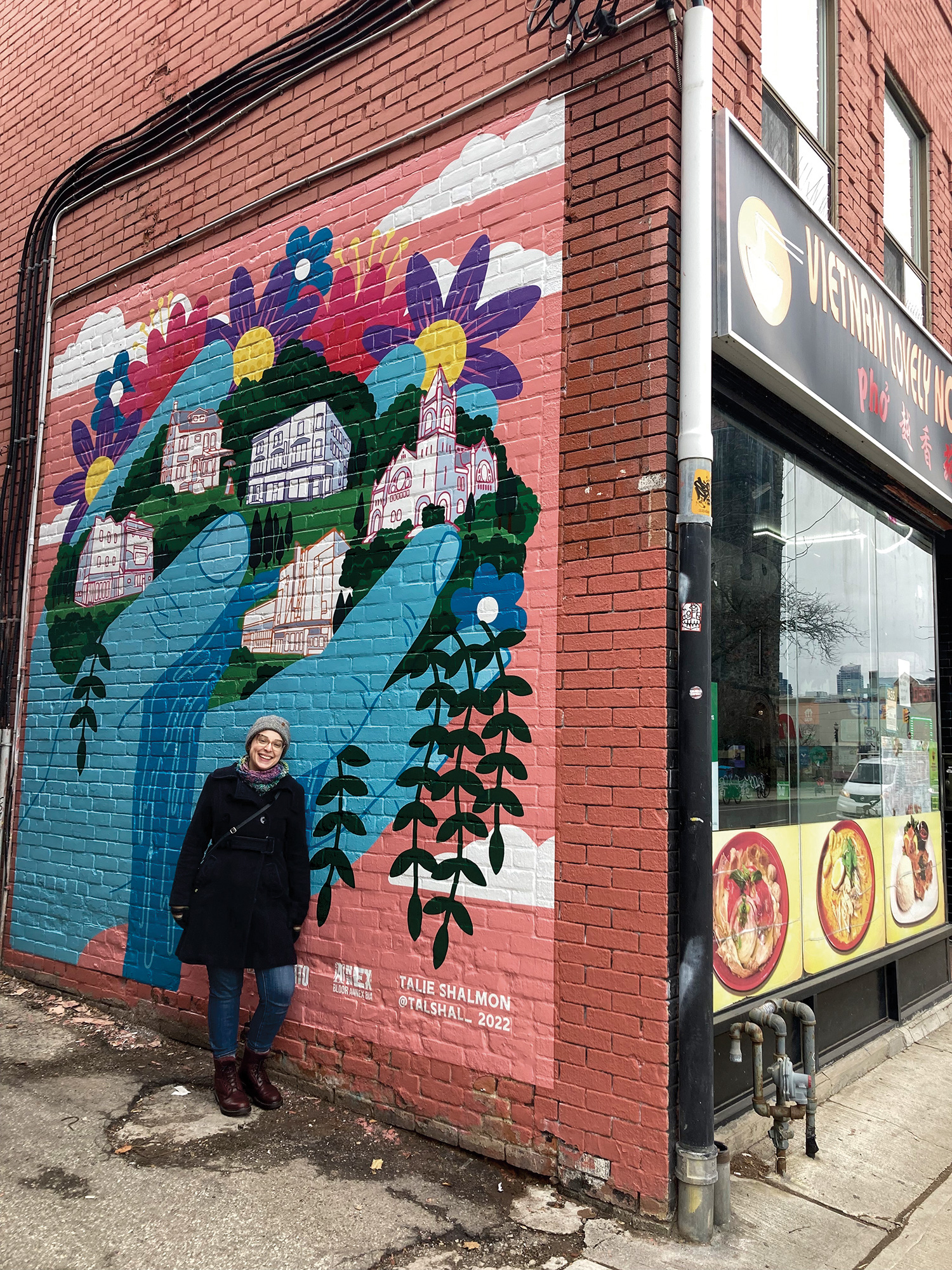
Local artist Talie Shalmon stands proud with her new City of the Future mural. COURTESY MELANIE RAMSAY/BLOOR ANNEX BIA
By Hailey Alexander
In the mural, City of the Future, the city is held lovingly by a blue hand. It is rich with green space and flowers bloom above it. This image, gracing the brick wall at 378 Bloor St. W., is the latest touch of artistic flare to hit the Annex and was designed by local artist Talie Shalmon. The mural was installed on Nov. 30.
“This concept expresses the idea that we, as a community, are responsible for building and shaping our community and have the power to grow it in positive ways,” wrote Shalmon in her mural proposal, adding that, being “holders” of the city, it is society’s joint responsibility to keep things beautiful. Accordingly, Shalmon has used bright colours to reflect the creativity, vibrancy, and values of the Annex. It includes an array of local landmarks like the Hot Docs Cinema and Trinity-St. Paul’s Church. “It presents an optimistic view of the future and emphasizes the importance of our connection to nature,” Shalmon says. She hopes that her mural will “catch the eyes of passersby,” and bring both joy and inspiration to their day.
Shalmon drew inspiration from her desire to make the city more human-centred, inclusive, and sustainable. Being a longtime resident of the Annex, she expresses her familiarity with the community and says she is honoured to contribute her artwork to the area in which she was raised. Shalmon describes her vision for the future as “a city that is built for growing community, fostering creativity, and that is affordable and livable for everyone who wishes to reside here.” Alongside those values, Shalmon cares deeply about the environment and encourages efforts to protect it. With these two themes in mind she produced a cheerful work of art that adds life to a formerly under-utilized alleyway.
Melanie Ramsay, project coordinator of the Bloor-Annex BIA, says she is proud of this new addition to the community. The BIA seeks grant support every year from the City of Toronto’s Outdoor Mural and Street Art Grant to develop a new piece. “We found it has a positive effect on reducing the amount of graffiti on the main street,” says Ramsay about the annual contribution of art to the neighbourhoods walls. The wall where this latest mural was painted, on the side of Vietnam Lovely Noodle, was the “most graffitied wall in the Annex” as of 2021.
2022’s street art project called for “a lot of problem-solving” around the materials used.
The team worked with a new application known as vinyl mural printing in order to overcome logistical issues they faced when getting paint on the wall. As Ramsay describes, Shalmon painted her mural by hand before digitizing it, then the team printed her design on vinyl and heat-bonded it to the wall which helped the vinyl take on the building’s brick texture.
Shalmon says that this method of mural creation did not allow for her to interact with the public as much as traditional mural paint would, so she is keen to hear feedback from the community.
January 24th, 2023 · Comments Off on NEWS: Women’s shinny takes off at Christie Pits (Jan. 2023)
Popularity has grown immensely
Last month’s cover of the Gleaner featured organized women’s hockey from the 1890s at the University of Toronto. Today, women are continuing the tradition pictured here in Christie Pits. FOX OLIVER/GLEANER NEWS
By Fox Oliver
Bring your sticks! Women’s shinny is back this winter at Sid Smith Ice Rink and more than 20 other public rinks around the city.
Christie Pits’ Sid Smith Rink, built in 1978, opened along with most of Toronto’s other public ice rinks on Nov. 26. The time slots for free skating and shinny include games specifically for women and transgender folk (aged 18 or older) on Saturday mornings from 10 a.m to 12 p.m. and on Monday nights from 7 p.m. to 8:30 p.m.
Liz Dewdney, an advocate for women’s shinny on Toronto’s rinks, says she remembers when she first started playing shinny nine years ago. At the time, she says, there were three rinks in the area near Christie Pits that held weekly women’s shinny games. They all hosted games on the same night of the week, creating a situation where the number of players at any given game tended to be low.
Nine years later, Dewdney says the number of players attending these games has grown immensely, and so has the number of rinks that support these games. Women increasingly start playing hockey at younger ages, so these games are showing a greater diversity of age and skill level on the ice.
This community is open to shinny players of all skill levels and is welcoming to beginner and intermediate players.
Dewdney runs the Facebook group Toronto Women and Trans Shinny which facilitates player communication and the coordination of games. This group encourages people of a variety of genders, including those who identify as nonbinary, to participate.
Mackenzie Saliani, a staff member at Sid Smith, says he has also noticed a change in the popularity of the women’s shinny sessions and a very positive response from the players.
“In 2018, there were a maximum of 10 players [attending a shinny game] at once. Now, I see 30 to 40 people on some days,” says Saliani.
Dewdney says the marketing for these shinny games isn’t deliberate enough when welcoming transgender people. “The banner [above the rink] is good for letting people know that the shinny games are happening, but could be more inclusive,” she says.
A full schedule of activities at local rinks is the City of Toronto’s website.
Now that the winter has kicked off, the shinny games in Christie Pits are bustling, and the community is looking for more players. Why don’t you join them?
Comments Off on NEWS: Women’s shinny takes off at Christie Pits (Jan. 2023)Tags:Annex · News
January 24th, 2023 · Comments Off on NEWS: Awards recognize volunteers (Jan. 2023)
MPP Bell lauds community achievers in University-Rosedale
Personal support workers from the St George Care Community worked tirelessly throughout the pandemic to ensure quality care for each of their residents. These PSWs were some of the real heroes during the COVID-19 pandemic and stand beside MPP Jessica Bell (at right). COURTESY MPP JESSICA BELL’S OFFICE
By Fox Oliver
Cecil Community Centre hosted nearly 80 guests on Nov. 22 to honour community advocates who make the University-Rosedale riding a better place to live. MPP Jessica Bell (University-Rosedale) lead the award dinner for the first time since 2019 alongside Norm Di Pasquale, an outgoing TCDSB trustee, and offered awards to many individuals and groups including a movie planner, a lawyer, and a cycling advocate.
Emily Reid, founder of the Toronto Outdoor Picture Show (TOPS), was one of the winners. Reid founded TOPS 12 years ago with the goal of creating “a unique experience within the city to appreciate cinema.” TOPS’s most well-known program is the Christie Pits Film Festival, an event where movies are screened on a large outdoor screen in the park. This event has seen attendance of up to 2000 people in a single night.
In response to receiving the award, Reid said she was “truly honoured and touched to be included with other important members of the community, such as health care and cycling safety workers.” Operating a charitable organization that runs only through grants and pay-what-you-can donations can be a difficult task, she said, but receiving this award was “refreshing,” and has motivated her to keep doing what she’s been doing for the enjoyment of those around her.
The health care workers from the St. George Care Community (225 St. George St.) were recognized for being COVID-19 heroes. The Avenue Road Food Bank was recognized for community leadership. Their mission isn’t just about “helping with food, but helping people get a leg up to feed themselves.”
The Kensington Market Community Land Trust was recognized for housing advocacy. The Chinatown Business Improvement Area was recognized for community leadership, including their work to keep small businesses alive during the pandemic by installing surveillance cameras for community safety. Helen Lee was awarded for being a seniors’ advocate, and the Palmerston Green Committee and its members for being environmental advocates. Samantha Van Clieaf advocated for safe streets, and Ada Chan for legal justice. The Toronto Community for Better Child Care was recognized for being an education advocate and community members were thanked for their work that is “essential in achieving $10 per day child care.” Cycle Toronto was recognized for being an advocate for safe streets, and Liz Zuz for newcomer inclusion.
The last attendee to receive an award was Sally McLean. She gave some simple advice from her time spent volunteering while in retirement: “Pick a place you wish to spend time and work there.” With these words of wisdom, she has enjoyed working in her community at the organization Sistering. Her work proves there is no age limit to helping those in need.
January 24th, 2023 · Comments Off on FOCUS: Bloor Street BIA parkettes win prestigious design award
Architectural association praises conversion of asphalt lots to “dynamic green public amenities”
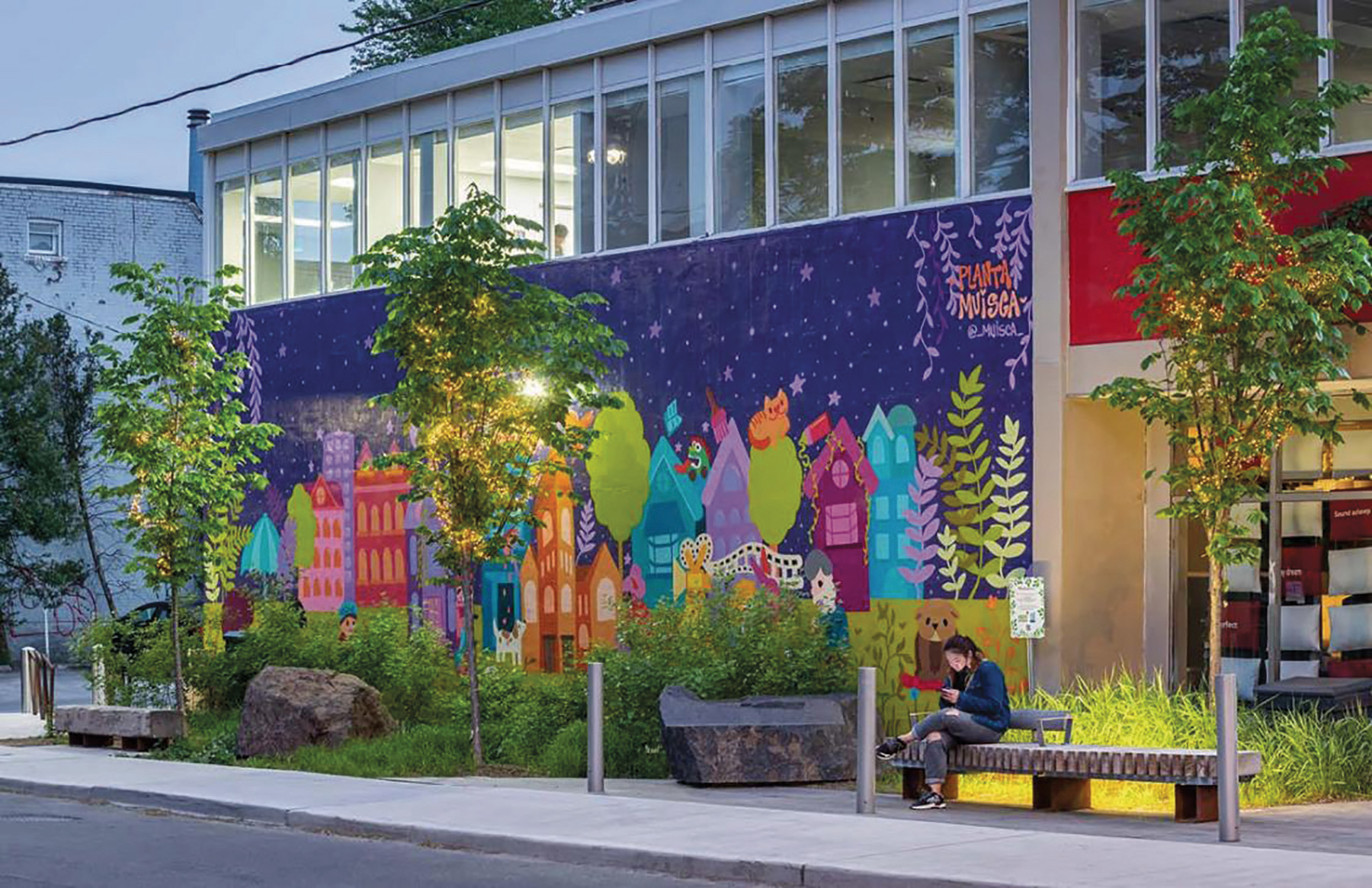
Major Street parkette with artist Daniela Rocha’s mural in the background. COURTESY DTAH
By Hailey Alexander
The Canadian Society of Landscape Architects (CSLA) has presented the designer of Bloor-Annex Business Improvement Area (BIA) parkettes with a National Award of Excellence. The landscape architectural firm DTAH designed these public spaces at Robert Street, Major Street, Brunswick Avenue, and Howland Avenue.
CSLA states that their awards of excellence honour distinctive design, ground-breaking research, sustainable landscape management, and more.
DTAH earned the Small-Scale Public Landscapes Award of Excellence thanks to DTAH’s James Roche, landscape architect hired by the Bloor-Annex BIA. CSLA states in their assessment that Roche’s designs “highlight what makes the Bloor-Annex such a unique space in the city,” adding that these spaces provide space for contemplation and “rest in Toronto’s bustling downtown.”
Over several years, Roche developed design concepts with the BIA and the City of Toronto, then worked through the construction with contractors. Between the residential north side and south side of Bloor, there is an urban corridor showcasing a “dynamic and multicultural stretch of the city,” as he put it.
This project, says DTAH, has converted overlooked and disused city-owned land into “dynamic green public amenities.”
These parkettes complement the Bloor-Annex area while respecting community needs and supporting sustainability. Colourful murals erected by the BIA now cover formerly barren walls, and unique wooden decking replaces old asphalt lots. Developers salvaged wooden beams from the demolition of a nearby landmark, Honest Ed’s, to create custom wooden benches. Local artist Robert Cram utilized quarry cut-offs to design special granite seating. All these features involve ecological creativity.
The Bloor-Annex BIA’s parkettes also brought 43 new trees to Bloor with pollinator gardens blooming through all three seasons. In addition to the beauty it brings, this fresh greenery provides habitats for Toronto’s birds, bees, and butterflies. Neighbourhood pets are no stranger to these green spaces, either.
Brian Burchell, of the Bloor-Annex BIA (and publisher of this newspaper), who alongside a board of management, led the 2019 Bloor Street revitalization project. He says he is extremely proud of the positive response their work has received.
“It’s a completely unique use of public space within our commercial mandate,” says Burchell. “We were going for a village feel, making welcome public space.”
This project was funded by the Bloor-Annex BIA and the City of Toronto’s economic development and culture division. Business and property owners within the city-mandated BIA boundaries contributed a large portion of the funds to create these functional spaces while the city’s planning division provided additional contributions.
A friendly university student was happy to share her thoughts when asked for her opinion. “This area is peaceful and nice even though it’s near the centre of the city,” said Yorbanka. “It’s busier further downtown, so I like it here.” Whenever she finds time, she says, she sits by one of the parkettes, accompanied by her music and a book.
January 24th, 2023 · Comments Off on EDITORIAL: We care Mr. Tory (Jan. 2023)
In 2018, and during our last municipal election, Doug Ford’s Conservatives slashed the size of city council in half to 26. This created outsized wards that are too big to manage and a population that feels disconnected from elected representatives. Burned out councillors are also a symptom, and we’ve seen a few—Joe Cressy and Mike Layton, for example, just walked away. Voter turnout is down to 30 per cent of eligible voters casting ballots, and the province under Doug Ford continues to further erode the power and relevance of local government in Ontario.
Most recently, with Bill 3 and Bill 39, the province handed some mayors super powers to veto council decisions and enact new bylaws with the support of just eight sitting councillors (a minority of the council). The fact that the mayor, acting with just one third of councillors, has the power to overrule the majority of the elected representatives makes a mockery of our democracy. City Solicitor Wendy Walberg told councillors recently that she knows of no other democracy in the world with a similar minority-rule provision.
In a representative democracy, we elect people to advocate for our interests and neighbourhoods, and to maintain our sense of community. When their authority is eroded, without debate or consultation, our power is eroded too. We have had two recent elections, one provincial and one municipal, and neither Mr. Ford nor Mr. Tory mentioned the plans they had up their sleeves.
When the provincial government announced its plan to confer “strong mayor” powers on Toronto and Ottawa, it handed Tory veto power over some housing legislation which city council could overrule with enough votes. Ottawa’s mayor said he did not need the powers and would refuse to use them. Our mayor quietly went to Queen’s Park and asked for more. He did not consult his colleagues on council whose power he sought for himself. He did not tell the public. Neither did Mr. Ford. Politics can make unlikely bedfellows.
It’s a rather unfamiliar look for our mayor, who for eight years, appeared to be a reasonable consensus builder: Mr. Moderation. Something has changed. He still says he will seek consensus and would like not to use his “big stick.” But the whole dynamic had changed: a police officer may not have to unholster their firearm, but the fact that they could, changes the interaction; the threat it could be used is always there. He is already using those powers, even while not invoking them.
Tory seems shocked at the uproar over this unbridled grab for power at the expense of a majority of city councillors. He says, “nobody cares.” All five of Toronto’s former living mayors have come out in opposition to the change. City council voted to ask the province to repeal the bill. Councillors clearly care, but Tory dismissed this as nothing but “political theatre.” Some new councillors spoke eloquently during the debate. Ausma Malik said the “fundamentally undemocratic new power flies in the face of what so many of [us] came here to do.”
Lily Cheng said it is “easier, perhaps faster, to impose your will on people than to listen and lead by winning people with your vision,” but “democracy is messy, because we as people are messy. It forces us to debate, to wrestle and sometimes compromise. This keeps us humble.”
There are no checks on the power the province has bequeathed to the mayor. Tory says he plans to retire in four years, and if so, he may never have to face the electorate again. The “strong mayor” powers are billed as a response to the housing crisis, but unlike measures already in place, such as our pandemic response, there’s no end date or plan to limit the scope of its application. The housing crisis is a Trojan horse within which the power grab enters the arena. According to Ford, this is a model for municipalities across Ontario. It’s of little comfort that Tory says he will use his power sparingly; that may be true, but what about the next mayor, or the one after that? Laws should be evaluated on how they may be used, not on how elected officials tell us they will use them.
This one-third rule is glaringly undemocratic – and needs to be repealed.
January 24th, 2023 · Comments Off on FORUM: His villainy was his lack of transparency (Jan. 2023)
Our just “trust me” mayor has betrayed democracy
By Sue Dexter
“What I can’t support is change being rammed down our throats without a single second of public consultation.” John Tory after the province slashes council in half, 2018.
“Trust me.” John Tory on receiving unprecedented minority rule powers, after no public consultation, 2022.
In politics, “trust me” might be the ballot question. In a democracy, it is a request that should not need to be made.
In the past six months, the mayor of Toronto has abandoned the centuries-old foundation of constitutional democracy: majority rule which is 50 per cent, plus one.
In the process of strengthening his office to “deal with housing,” Tory has talked himself into becoming the province’s guy on council. Councillors can still debate and vote, they can express the wishes of residents, but the mayor can kill any matter he judges to be in the provincial interest with one-third plus one minority and the stroke of his pen.
What happened to him? What has happened to us?
The ‘Emergency’
Act one: Mid-election 2018, Premier Ford announces he is cutting council in half, from 48 councillors to 24. The mayor says the move was a complete surprise—the only notice he had was a 50-second musing in a long-forgotten meeting.
A feisty Tory came out fighting: “It is my job to stand up for the people of Toronto, all the people of Toronto, whether they voted for me or not. And I firmly believe that one of my fundamental responsibilities is to protect the democracy which binds our society together. The bedrock of that democracy is fair process, that the people always have an opportunity to be heard by their government.”
Buried in the mayor’s reaction was something that would later appear prophetic: “Like many people in the city I believe we need a discussion about the role of the mayor, as well as a discussion about the size of council and other issues including term limits.”
The mayor expressed frustrations in an interview with the Toronto Star’s David Rider: “I think people right now, they think that I have the authority to do a whole lot of things, and in fact, I have authority to do very little.”
Clearly changes to his office were on the mayor’s shopping list as early as 2018, but in the years that followed, the need for consultation on changing that role or engaging the public in discussion was lost.
Act two: the hidden agenda
On July 21, 2022, an astounded council reacts to a Toronto Star report that the newly-elected provincial government was planning to give additional powers to the Toronto mayor.
Councillors Matlow and Perks wished to have council reject the change in governance until after consultations had taken place. Councillor McKelvie persuaded council that it was better to request that the province simply hold back on its plans, while adding items to be included in negotiations on the change. McKelvie said, “We saw what happened in 2018. We took that all the way to the Supreme Court and we lost….If he (Ford) wants to do this and we are not able to stop it, then let’s…be consulted.”
Although he himself had had governance changes on his wish list for at least four years, Mayor Tory said nothing in that debate.
The civic election that followed was characterized by rope-a-dope photo-op campaign by the mayor. He reluctantly agreed to appear in two all-candidate debates. On August 10, with council disbanded for the election, the province brought forward Bill 3, which gave the mayor a veto, but retained a two-thirds override from council. When asked, the mayor said he supported strong mayor powers. He provided no detail, but gave assurances the additional powers would not change the way he conducted business at city hall.
Clearly, he was not satisfied; the province had not gone far enough. Unbeknownst to anyone, during the campaign he had gone to Queen’s Park to request additional unprecedented powers for his office. The public would not know the extent of it until after the new council was elected.
Act three: the policy blitzkrieg
Increasingly, through a string of bills, the activist Ford government has involved itself first in details and then wholesale change of governance, with no consultation or public input. Measured debate has little chance to survive against such a chaotic backdrop.
Bill 103: On the day after the civic election, the province announced major changes to a wide range of existing policies including heritage, green standards, and fees for infrastructure upgrades necessitated by development. The bill threatens the city’s rental replacement bylaw which protects tenants from eviction by allowing their right of return.
But that was not the end of it.
“Trust me.”
Three weeks later, the province made public one last bombshell: Bill 39. This minority-rule legislation, with no time or application limits, allows the mayor to declare a victory even if two-thirds of council vote against him “if the head of council is of the opinion that a bylaw could potentially advance a prescribed provincial priority.” Tory has become the in-house provincial watchdog.
Sometime during the election, at a photo-op in a parking lot, the mayor disclosed that he himself had asked for the unprecedented power. Now that there was a fuss, he promised only to use it “if necessary” to get housing done.
To explain the mayor’s embrace of extraordinary powers, the blogosphere points to his frustrations in July 2021 when he withdrew his plan to extend rooming house licensing and regulation to the suburbs, rather than test it with a vote. But that may only be part of the story: remember the video from four years ago, at a time of crisis, when Tory went on the record wanting changes to the mayor’s powers.
Despite his earlier devotion to consultation, he has provided no details about how his thinking evolved, how the office will be changed, or how the request arose. What quid pro quos might there have been? Was he promised money for the budget shortfall, or is that no one’s business but his? Should his thinking not have been disclosed to voters? The John Tory of 2018 would have trusted the electorate with the decision.
In the weeks since becoming the strong mayor, he has come down with his own avalanche of changes to planning, zoning, and housing, and he has also diminished the role of council. He has:
appointed a city manager without seeking council approval
formed a striking committee which unilaterally shortened the time for public consultation on the budget from 30-14 days
refused to support the call of a majority of councillors to hold a special meeting so the representatives of the electors of Toronto could express an opinion on the minority powers legislation before it was enacted by the province into law
brought back, as his first item of business, the rooming house legislation with only the dates changed
There are pivotal votes ahead, which cannot be suppressed, on a number of policy initiatives by the province.
Where will Tory be on the conversion of Ontario Place into a giant spa with a parking lot for 11,000 cars? Where will he sit on the Metrolinx plan to destroy historic gardens at Osgoode Hall? Is there any issue on which the “trust me” mayor will lead the opposition to a provincial scheme or is he now hobbled by the deal he struck to ensure council does not pass any legislation that goes against provincial interests? It is true he brought the motion to council against the passage of Bill 23, but his was a constrained voice and hardly a description for leadership—the kind of leadership he gave four years ago in the fight against the cuts to council.
How will the rest of council respond to their reduced capacity? Will they bother to oppose knowing the mayor now holds a whip hand? And, probably most importantly, how will the residents of the city respond if their voice is seen to carry no weight? Will the number of people voting in elections fall even further?
Dec. 15, 2022: City council had its first discussion of minority powers. It voted 17-8 on a Councillor Morley motion to ask the Ford government to repeal the minority powers act. It voted 14-11 on a Councillor Matlow motion that asked Tory not to exercise any power less than a 50 per cent plus one majority. It voted 25-5 on a Councillor Bravo motion upholding majority rule on council.
Mayor Tory voted against all three motions. As a strong mayor, he could veto any of the motions.
Let the games begin.
Sue Dexter is a member of the Harbord Village Residents’ Association.
January 24th, 2023 · Comments Off on FORUM: Turbulent time to take a seat (Jan. 2023)
Governance, climate, and road safety goals emerge as priorities
By Dianne Saxe
Thank you all for selecting me as your city councillor. I would like to thank the Gleaner for inviting me to regularly update residents on what is happening in Ward 11 and at city council.
The city government has only about nine per cent of the power and resources of the provincial and federal governments. What we do have is the largest and most visible impact on people’s daily lives. The task of being your councillor is endlessly challenging and fascinating, and I am grateful for the opportunity.
Since commencing the new term on Nov. 15, the mayor and council have been hard at work coping with the onslaught of provincial changes to our city. Bills 3, 109, 23, and 39 have all created major upheavals and damage. In many cases, the full consequences are not yet known.
On Nov. 24, council voted unanimously to oppose Bill 23 which will cost the city hundreds of millions of dollars a year and reduce our ability to protect liveability, affordability, and sustainability. In December, most councillors also voted to oppose Bill 39, the minority-rule, strong mayor powers that were not disclosed during the election campaign. Unfortunately, I was one of only nine councillors who voted to refer Bill 39 to executive committee; only that way would members of the public have had a chance to be heard about this massive change to our municipal government.
Despite this blizzard of changes, we made real progress on Dec. 14, the first council meeting where new business was permitted. After many years of failed efforts, this council passed a bylaw to authorize and regulate rooming houses across the entire city. This should lead to a significant increase in the availability of lower cost, single-room-occupancy dwellings across Toronto and compliance with fire codes, building codes, and similar tenant protections. This significant response to the housing crisis is long overdue.
In another important vote, council directed staff to prepare a plan for significant intensification of housing across the city. I successfully amended this motion to include climate goals and other zoning changes that will promote 15-minute neighborhoods. These were key pieces of my campaign platform, and I am proud to see progress on them so soon.
I have also been able to accelerate progress on road safety, especially for walkers and cyclists. For example:
City staff have begun updating the 311 app to make it more user-friendly for walkers and cyclists.
Vision Zero improvements to several intersections are now scheduled for this summer. Others are already in place; for example, the intersection at Davenport and Dupont now includes a bike light and advance light for pedestrians.
I have had multiple communications with Transportation about improving winter maintenance of bike lanes. Some improvements have occurred, for example, around Queens Park.
The TTC has agreed to my request that they preserve bike lanes across the Bloor-Yonge intersection while they construct their new subway platform.
My first stand-alone member’s motion directed Transportation staff to report in March on how to improve cyclists’ safety when passing the many construction sites along the Bloor bike lanes.
I am looking forward to sitting on the Infrastructure and Environment Committee, the Toronto and Region Conservation Authority, Project Green, and the Toronto Atmospheric Fund board of directors. I am also pleased to chair the city’s Francophone Liaison Committee.
The new strong mayor powers will mean significant changes to this year’s budget process. These changes include a more dominant role for the mayor, and less time for public input. The mayor will propose his budget on Jan. 10, and it must be approved no later than Feb. 14. I encourage everyone interested to submit comments in writing (by Jan. 18) or in person on Jan. 17. Please reach out to my office for any assistance.
December is a time of celebration and service for many. As a long-time volunteer in University-Rosedale, I would like to thank the organizations that hosted me last month, including Church of St. Stephen-in-the-Fields (and the wonderful Reverend Maggie), the Avenue Road Food Bank (Church of the Messiah), St. Peter’s Church’s Out of the Cold, the Fort York Food Bank, and the Scott Mission.
With the whirlwind of provincial bills, plus some technical difficulties, we had a slow start answering some constituent emails. Please accept my apologies if we have been late in getting back to you, and please get back in touch at councillor_saxe@toronto.ca. My constituency staff are looking forward to assisting you. Sign up for updates or submit a comment at www.diannesaxe.ca. Our new website will be launched in January with a calendar, development updates, and contact information.
Best wishes for the new year!
Dianne Saxe is city councillor for Ward 11, University-Rosedale.
Comments Off on FORUM: Turbulent time to take a seat (Jan. 2023)Tags:Annex · Opinion
January 24th, 2023 · Comments Off on FORUM: Toronto has a homelessness crisis (Jan. 2023)
Governments must come together to address it
By Jessica Bell
On Dec. 8, I stood with Reverend Maggie Helwig, Bishop Andrew Asbil of the Archdiocese of Toronto, and over 100 local residents to observe the installation of a cage around the Panhandler Jesus statue outside the Church of Saint Stephen-in-the-Fields on College St.
This was a symbolic act designed to draw attention to a crisis just metres away—the city is threatening to evict the encampment outside St. Stephen’s. The cage was placed on the Jesus statue to draw attention to the city’s criminalization of homeless people.
Homelessness is a complex social issue that demands a coordinated response from all levels of government, agencies, institutions, and civil society. It requires a range of measures, from increasing social assistance rates to providing comprehensive mental health care to people who can’t cope. What we also know is, we’re not going to solve homelessness without finding permanent homes for people in need.
In Toronto in 2022 there’s far too few dignified, safe and affordable homes available. Shelters are at capacity most nights. There’s no permanent supportive housing available—this is housing that comes with mental health care, meals, and other services to help people who are struggling. Many of the hotels that were used by the city for temporary housing during the pandemic are ending their leases. The wait list for community housing—where people pay a maximum of one third of their income toward their rent—is over a decade long. With the average rent for a one-bedroom apartment in Toronto at a record high of $2279, the private housing market is frankly hostile to low and moderate-income people.
In 2021, the auditor general said the Ford government “has no plan to reduce or prevent homelessness.” Since then, the government has cut more municipal funding to shelters, banned municipalities from collecting developer fees earmarked for affordable housing, and made it easier to evict tenants. The provincial government is making homelessness worse.
The vast majority of residents understand that ignoring, harassing, fining, confiscating belongings, and jailing unhoused people only makes life harder for people living hard lives. I understand this too.
Everyone should be able to live in a home they can afford and that meets their needs. That’s why we are calling on the government to release a plan to reduce and prevent homelessness this winter and end homelessness by 2025.
This plan should include buying, building, and financing the construction of affordable and supportive housing on public and private land, quickly assembling homes on parking lots, and expanding the scope of the Housing Now program which builds mixed-income housing near TTC stations. Funding for community housing needs to be increased, along with funding for shelters to provide emergency housing and mental health care. To help people find a home they can afford, social assistance rates need to be doubled, and strong rent controls must be implemented across Ontario in order to stabilize rent.
I want to recognize the hard work of residents in our area who are using their power to help people in need. Maggie Helwig and the team at St. Stephen’s are showing up for encampment residents. The staff and volunteers at the Scott Mission run a shelter while raising capital and operating funds to build 109 permanently affordable homes on their site. The Kensington Land Trust works with the city to buy up buildings to convert them into non-market community housing.
There are so many more people I could name. They deserve our support. They are an inspiration of what dedicated, kind, and empowered people can accomplish every day.
We are in a crisis, and all of us, especially governments, need to act accordingly. I take heart in knowing many of us already are.
Jessica Bell is the MPP for University-Rosedale and the Official Opposition’s Housing Critic. She can be reached at jbell@ndp.on.ca or 416-535-7206.
January 24th, 2023 · Comments Off on FROM THE ARCHIVES (Jan. 2023)
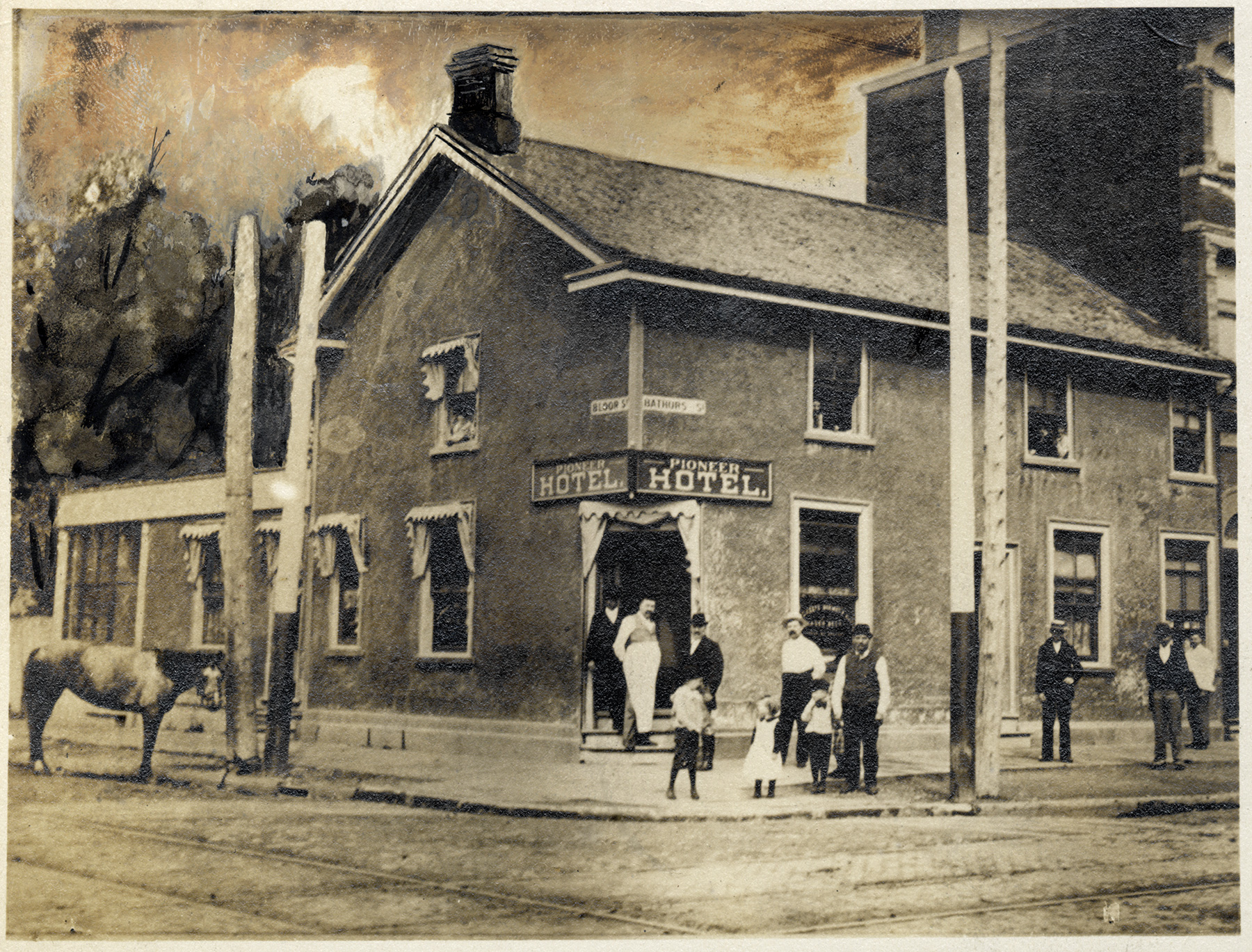
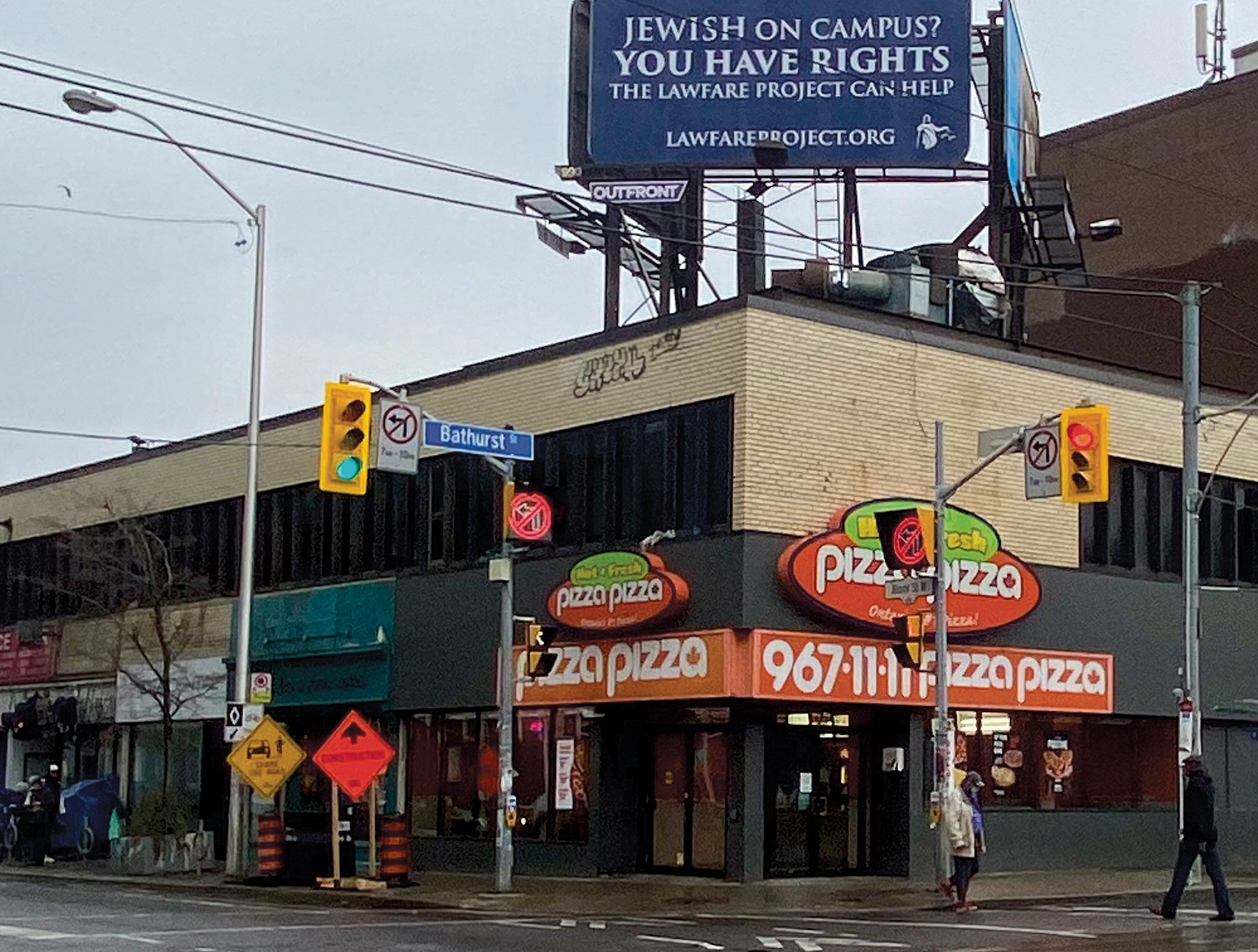
BEFORE: Pioneer Hotel, circa 1890. Northwest corner Bloor and Bathurst. Courtesy Toronto Public Library, The Baldwin CollectionNOW: Pizza Pizza, January 2023. Northwest corner Bloor and Bathurst. Brian Burchell/Gleaner News
Comments Off on FROM THE ARCHIVES (Jan. 2023)Tags:Annex · Archives
December 13th, 2022 · Comments Off on ON THE COVER: A Ladies Hockey Team (Dec. 2022)
The University of Toronto in the early 20th century, as depicted by Brian McFarlane on the jacket sleeve of his book, “Proud Past, Bright Future: One Hundred Years of Canadian Women’s Hockey.” As this photograph taken as early as 1910 shows, Hockey has been enjoyed by both men and women for over a century.
December 13th, 2022 · Comments Off on NEWS: Wychwood library celebrated (Dec. 2022)
Historic building reopens with new features
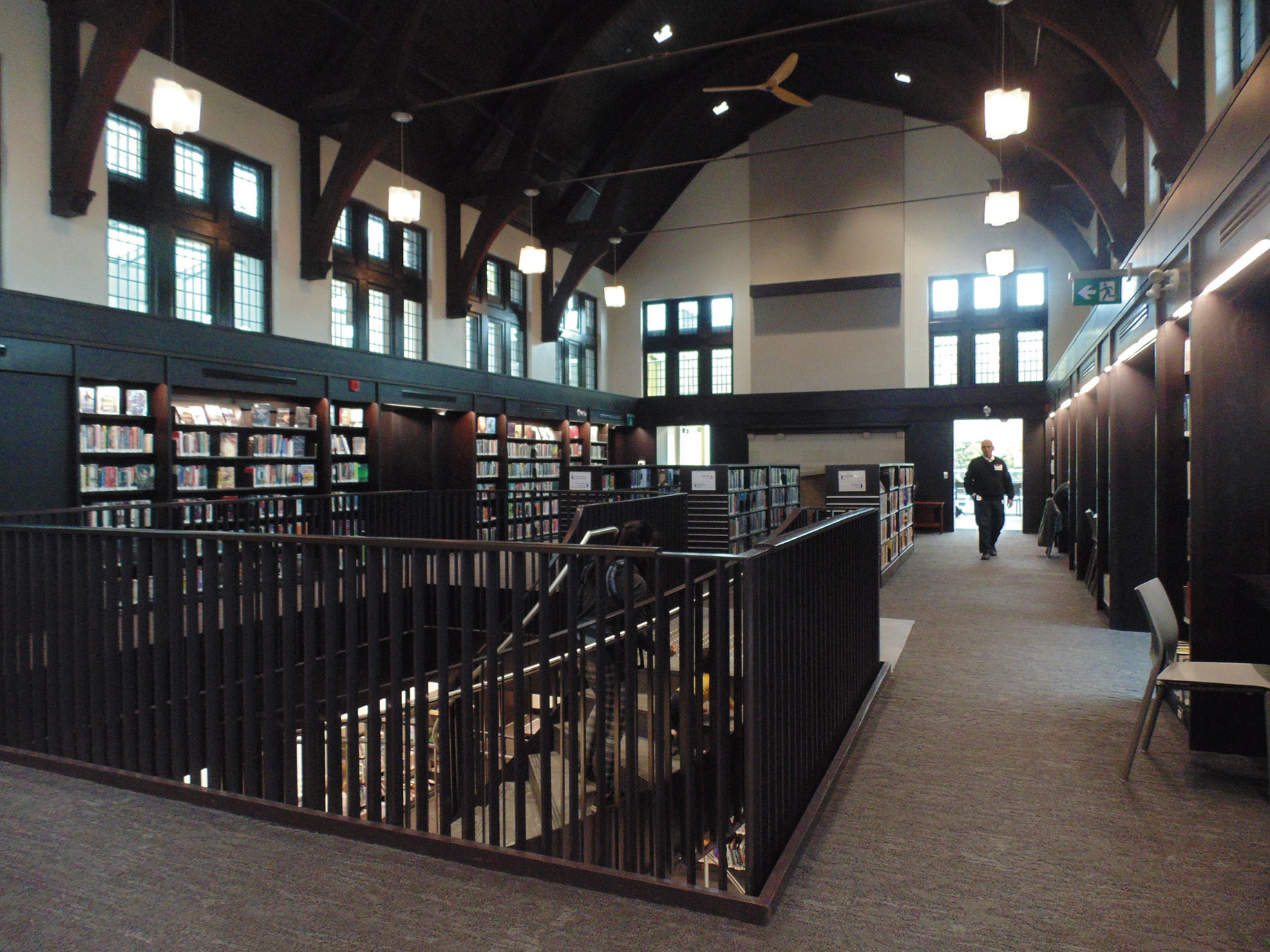
Wychwood library’s original building keeps its old charm with modern improvements. HAILEY ALEXANDER/GLEANER NEWS
By Fox Oliver
On Oct. 3, community members gathered for a ceremony to celebrate the official reopening of the Wychwood Public Library following four years of renovation.
Ojibwe Elder Whabagoon offered songs, spoke of the importance of honouring your surroundings, and expressed her gratitude to those who made the renovation possible.
Councillor Josh Matlow (Ward 12) commended Wychwood Library for being an important community hub for over 100 years and stressed the importance of libraries within the community, saying that “we (local politicians and community members) don’t only want to support libraries. We have to.”
The renovations, led by Shoalts and Zaback Architects, involved the preservation of the original library and the construction of a new addition which increased the size of the library from 6,381 square feet to 17,000 square feet.
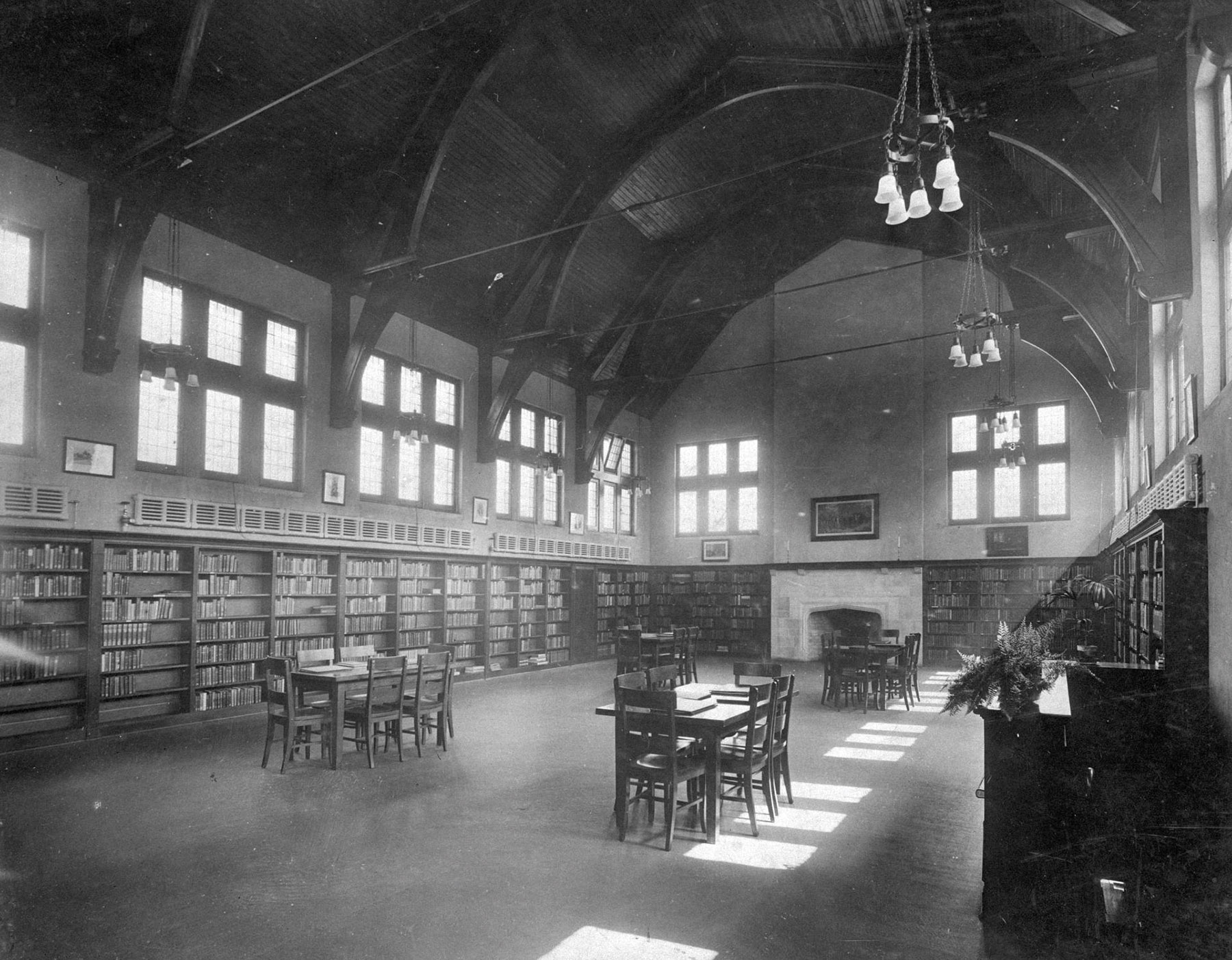
The original library, built in 1916 with funds from the Carnegie Corporation, was designated a heritage property in 1976.
Wychwood Library in 1916.
Architect Gerry Shoalts believes the renovated library succeeds in delivering both a historic building and a contemporary one. Within the building, a modern skylight brightens the exposed walls of the original library. The refurbished great hall still gives an air of history while being outfitted with modern technology.
This isn’t the first time the Wychwood Branch has undergone renovations.
In 1978, Toronto architect Phillip H. Carter designed an addition which Shoalts and Zaback decided to demolish to make way for the new renovation. In 2019, project architect Eric Riddel said the decision to demolish was not taken lightly, but that the newly constructed space intends to draw in new library-goers and make them feel at home.
Prior to the completion of the renovations, library services manager Sarah Bradley said that Toronto Public Library’s (TPL’s) goals were “to see an accessible, flexible, welcoming, open space.” Improving “barrier-free access,” and creating unique areas for children, teens, adults, and the elderly were also some of the features that TPL prioritized. In community consultations before the renovations, community members expressed their wish for more spaces where they could escape to find peace and quiet.
The interactive KidsStop Early Literacy Centre, seniors’ area, quiet study rooms, accessible computers, and universal washrooms included in the renovated library all contribute to the library’s usability. They also demonstrate TPL’s ability to follow through with the community’s needs and their own goals. The library boasts a collection size of 34,500 books, as well as CDs, DVDs, computers, and printers.
An outdoor balcony, green roof, lounge seating, two fireplaces (which remain unlit for the safety of the books), and live edge tables made from Norway maple trees that were once beside the library are also new additions to the building. A glass exterior faces Bathurst Street and Melgund Road letting natural light into the “urban living room.”
The lawn on the east side of the library will reopen in the summer of 2023 as a lawn bowling green that will be used by the Wells Hill Lawn Bowling Club.
December 13th, 2022 · Comments Off on CHATTER: Tranzac Holiday Gift Fair (Dec. 2022)
The Tranzac Club Holiday Gift Fair is back in full form this year every weekend from Dec 3 – 18. COURTESY SARAH GREENE
This year, the Tranzac Club is hosting their annual Holiday Gift Fair from 12:00 p.m. to 6:00 p.m. at 292 Brunswick Avenue every weekend between Dec. 3 and Dec. 18. Every Sunday and Saturday leading up to Christmas Eve, the Tranzac fair will feature original gifts crafted by local artists and artisans. At this month-long market, there will be something for everyone.
Although the fair has been running since 2017 under its current name, this event is a long-standing tradition. Sarah Greene, who books events at the Tranzac and occasionally bartends at the club, says the Tranzac Holiday Gift Fair was known as the Artisans’ Gift Fair for about ten years. Prior to the Artisan’s Gift Fair, there was an annual craft fair dating back to the 90s. So, depending on how you look at it, this holiday market has been around for a long time.
Expect to see hand-knit clothing, children’s toys, bath and body care products, jewelry, ornaments, greeting cards, upcycled clothing, accessories, candles, and much more. The variety of items will change every day. Some of this year’s novel vendors include a tarot reader on Dec. 3, the Odyssey Box Studio on the weekend of Dec. 3, and Lyre Gallery on the weekend of Dec. 7. Sheileen’s Sweet Salutations and Grandma Betty’s Baking will sell delicious sweets while the Tranzac Club will have sandwiches, soup, tea, coffee, and beer for sale. Tranzac board members and volunteers will be running a Tranzac Vintage Flea & White Elephant Table each Saturday. “We’re also going to be joined by a vintage pop-up on Sunday, Dec. 4 in the Living Room,” said Greene.
This fair is cherished by many community members. “We get, on average, 400 or so visitors a day,” said Greene. Tranzac neighbours are excited to see their local holiday market return in full swing this year since the 2020 fair was cancelled and the 2021 fair operated on a smaller scale. There is no room for disappointment at this year’s long-awaited holiday fair. As Greene says, it’s “a really sweet holiday tradition that people look forward to.”
—Hailey Alexander/Gleaner News
Comments Off on CHATTER: Tranzac Holiday Gift Fair (Dec. 2022)Tags:Annex · News