August 14th, 2014 · Comments Off on Reflections on 32 years of service
Making sure the vulnerable are not forgotten
By Rosario Marchese
It all started at Harbord Collegiate. That’s where I met my lifelong friend Joe Pantalone, who would pull me into the NDP and later persuade me to run for public office.
My father was a construction worker, and my mother worked at home, raising me and my brothers while caring for our house on Shaw Street. “Left” and “Right” meant nothing to them. The only thing that mattered was the day-to-day struggle of keeping a roof over our heads and ensuring a better future for the kids. This was the political sensibility I grew up with.
The NDP was full of energetic and engaged young people who wanted to change the world, and who loved to debate political theories and policies. I loved those debates too, and my love of the debate would remain my greatest joy at Queen’s Park.
But above the debates and the idealism, I saw that the NDP was the party that would fight for people like my Mom and Dad. This was the party that made sure working people and the vulnerable would not be forgotten.
This is the perspective I tried to maintain during my 24 years representing the people of Trinity-Spadina as their MPP.
Trinity-Spadina is a very different place today than it was when I first became an MPP. Its growth and success have been exciting to observe, and should be celebrated. But it is also clear this success is leaving many people behind.
For example, the condo boom has radically changed the nature of home ownership and tenancy, but our laws have not kept up. Condo owners and tenants need new protections.
And while growth and development have increased the overall supply of housing in Trinity-Spadina, this has not translated into affordable housing.
Ensuring that Toronto can remain an inclusive place that all of us can call home is one of the city’s greatest challenges. It is critical that the province get back into the business of providing affordable housing.
Trinity-Spadina’s success has also created new incentives for powerful private interests to threaten the long-term public good.
I have seen how developers routinely ignore local communities and ask the OMB to overrule democratically-enacted planning rules. And I have seen how well-connected private interests covet our waterfront in order to build Ferris Wheels, mega-casinos, and expanded runways for jets.
This has raised the stakes dramatically when it comes to local politics.
Happily, a new generation of engaged and energetic young people is standing up to defend the public interest when it comes to planning and development, our waterfront, transit, housing, social justice, and the environment.
This gives me incredible hope. For while I am disappointed in the results of the last election, I believe the health of our democracies depends not so much on politicians like me, but on the willingness of engaged communities to organize and create movements to hold politicians and governments accountable.
Engaged communities ensure that elite interests do not squeeze out the public interest. Engaged communities revitalize politics and political parties. Engaged communities ensure that we do not forget the needs of the marginalized, the vulnerable and working people like my Mom and Dad.
Engaged communities are what make Trinity-Spadina the best riding in Ontario.
It has been an honour to serve you, the people of Trinity-Spadina, for 32 years as your school trustee and your Member of Provincial Parliament.
Thank you!
Rosario
Tags: General
August 14th, 2014 · Comments Off on The collateral damage of changing demographics
Kathleen Wynne’s June 12th election win represents many things. Political affiliation aside, we celebrate the first woman to be elected premier of Ontario. We also celebrate the first openly gay woman to be elected premier in Canada. These are critical milestones at a time when we recognize the need for leaders—corporate, governmental, or otherwise—to reflect the diversity of those that they lead and represent.
These things are indeed worthy of celebration. It’s especially gratifying given that Wynne had to fight an election she didn’t want and rightfully believe the province didn’t need.
It was an election determined by New Democrat Party leader Andrea Horwath, who, despite losing, seems to exhibit no recognition of how her actions have alienated much of her base. Indeed, her party may have returned the same number of seats to the legislature, but it comes at great cost. She’s no longer a partner in a minority government, and, as we have seen here in Trinity-Spadina, the party has also lost some of its most experienced and accomplished members of provincial parliament.
In a stunning defeat, much loved incumbent Rosario Marchese, who has served this riding for just under 25 years, lost his seat to the Liberal newcomer Han Dong. With Dong taking 46% of the votes to Marchese’s 31%, it was hardly a horserace, and, with great respect to Dong, doesn’t reflect the work Marchese has done for Trinity-Spadina over the years. Some of that work includes tabling a bill to curb the Ontario Municipal Board’s power over development in Toronto, working to reform the Condominiums Act, and defending the waterfront. A great debater in the legislature who has lived on Shaw Street for most of his life, Marchese has a gracious mien that is well-known on our streets. Thus, some of the votes that went to Dong reflect the area’s disenchantment with the leadership of the NDP, and can’t be viewed as an indictment of Marchese’s long and dedicated service.
The result, however, reflects something else: the changing demographics of Trinity-Spadina. We observed this in the last election, where Marchese beat the Liberal candidate by approximately 1,100 votes, with his share of the vote representing 42% to Sarah Thomson’s 40%. We are no longer a riding predominantly made up of the NDP’s traditional base. Increasingly mixed in with our students, artists, immigrants, and low-income families are condominium dwellers, urban up-and-comers, traditional business people, and the young denizens of the Entertainment District.
This has to be encouraging for Adam Vaughan, who’s the Liberal candidate seeking to represent Trinity-Spadina in Ottawa. And it’s no wonder that NDP candidate Joe Cressy, Olivia Chow’s golden boy, is running such a disciplined campaign. He has an uphill battle.
In fact, both gentlemen, the clear front-runners in the race, have a lot in common. They are both running to bring an urban agenda to Ottawa, and they both have deep roots in our community. Either would do well.
Our concern, however, is that, no matter who wins, they don’t forget to represent the needs of all of our community, not just those we have had the pleasure of recently welcoming into our neighbourhoods. We want to make sure that in our zeal for progress, we don’t leave anyone behind. That’s the real issue in this by-election: how do we address the changing demographics of Trinity-Spadina while still honouring its rich, diverse, and humble origins? That’s the question you should be asking each candidate. And the one whose answer satisfies you the most?
That’s the candidate deserving of your vote.
Tags: General
August 14th, 2014 · Comments Off on Marchese loses to Liberals
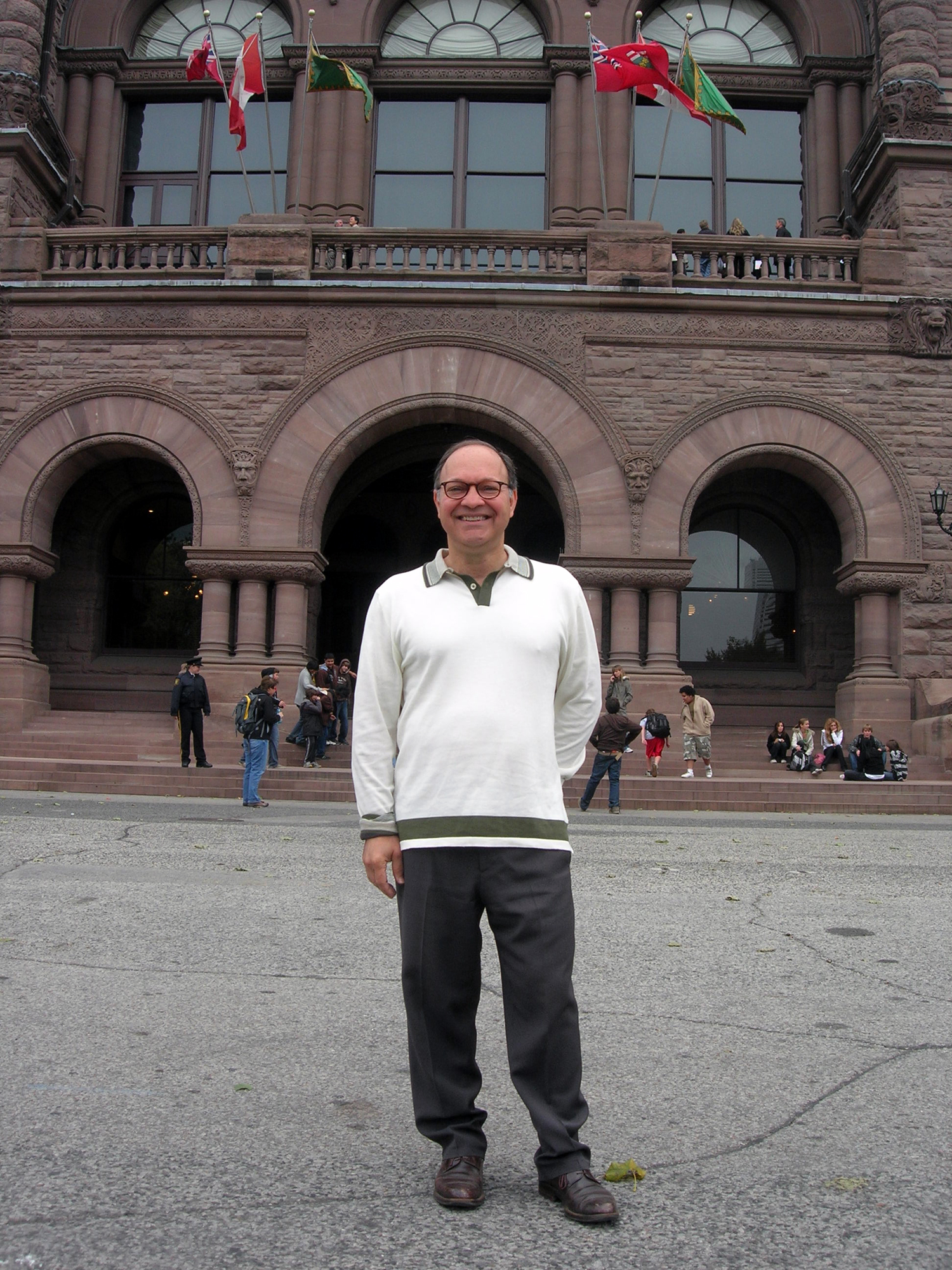
Long serving Trinity-Spadina MPP Rosario Marchese plans to retire from politics. He is pictured here standing in front of the Ontario Legislature in June 2007.
New MPP, Han Dong, has lived in Trinity-Spadina for 13 years
By Brian Burchell and Annemarie Brissenden
In an unexpected upset, long-standing NDP Member of Provincial Parliament Rosario Marchese lost his seat to Han Dong in the June 12 provincial election.
“It’s been an honour to represent Trinity-Spadina for 24 great years as your MPP,” said Marchese via his Twitter feed the following day. “Thank you! Congratulations to @VoteHanDong on his election.”
Dong, a relative newcomer who ran on behalf of the provincial Liberal party, helped Premier Kathleen Wynne form a majority government by capturing 24,812 votes compared to the 16,380 won by Marchese. Trailing well behind were the Progressive Conservative candidate Roberta Scott with 7,522 votes, and Green Party candidate Tim Grant, who received 3,776 votes.
Marchese has represented the riding since 1999, and is widely respected as a hard-working veteran of provincial politics. He has been active in his opposition to the Ontario Muncipal Board’s conduct in local planning decision appeals, opposed the plan for jets landing at the Billy Bishop Airport, and has promoted reforms to the Condominium Act.
Social media lit up with commentary as soon as the stunning upset hit the airwaves.
“Very sorry to see Rosario Marchese defeated in Trinity-Spadina. We need Condo act reform. Current act loaded to developers,” said Daniel of @DanFmTo, while Aly Pang of @AlyPang posted, “I hope Rosario Marchese doesn’t take the loss personally. I just couldn’t vote for Horwath and her opportunism.” Laurie Miller of @mill333 echoed many posters when she tweeted, “Thank [you] Rosario Marchese for all your years of service.”
The day after the election, Dong also honoured his predecessor by tweeting out: “Thank u @RMarcheseNDP 4 serving our community last 24 yrs. Hope to meet soon 2 share ur experience & advice to better serve.”
Dong, 37, brings a different perspective to the riding that he has lived in for over 13 years.
He was 13 when he arrived in Toronto with his family from Mainland China, and attended high school at Jarvis Collegiate Institute before going on to study economics and political science at the University of Toronto.
In the community, Han Dong has served as a key advisor to the Canada Shanghai Business Association, and volunteered with the Philippine Independence Day Council, the Toronto International Dragon Boat Race Festival, as well as numerous Trinity-Spadina seniors’ resource centres.
Before his involvement in government, Han was a marketing director for Chianti Foods, where he was responsible for the planning, development, and implementation of all of its marketing strategies, communications, and public relations activities.
Han and his partner Sophie are raising their children in Trinity-Spadina, where they attend local public schools.
Tags: General
August 14th, 2014 · Comments Off on Running on the urban agenda
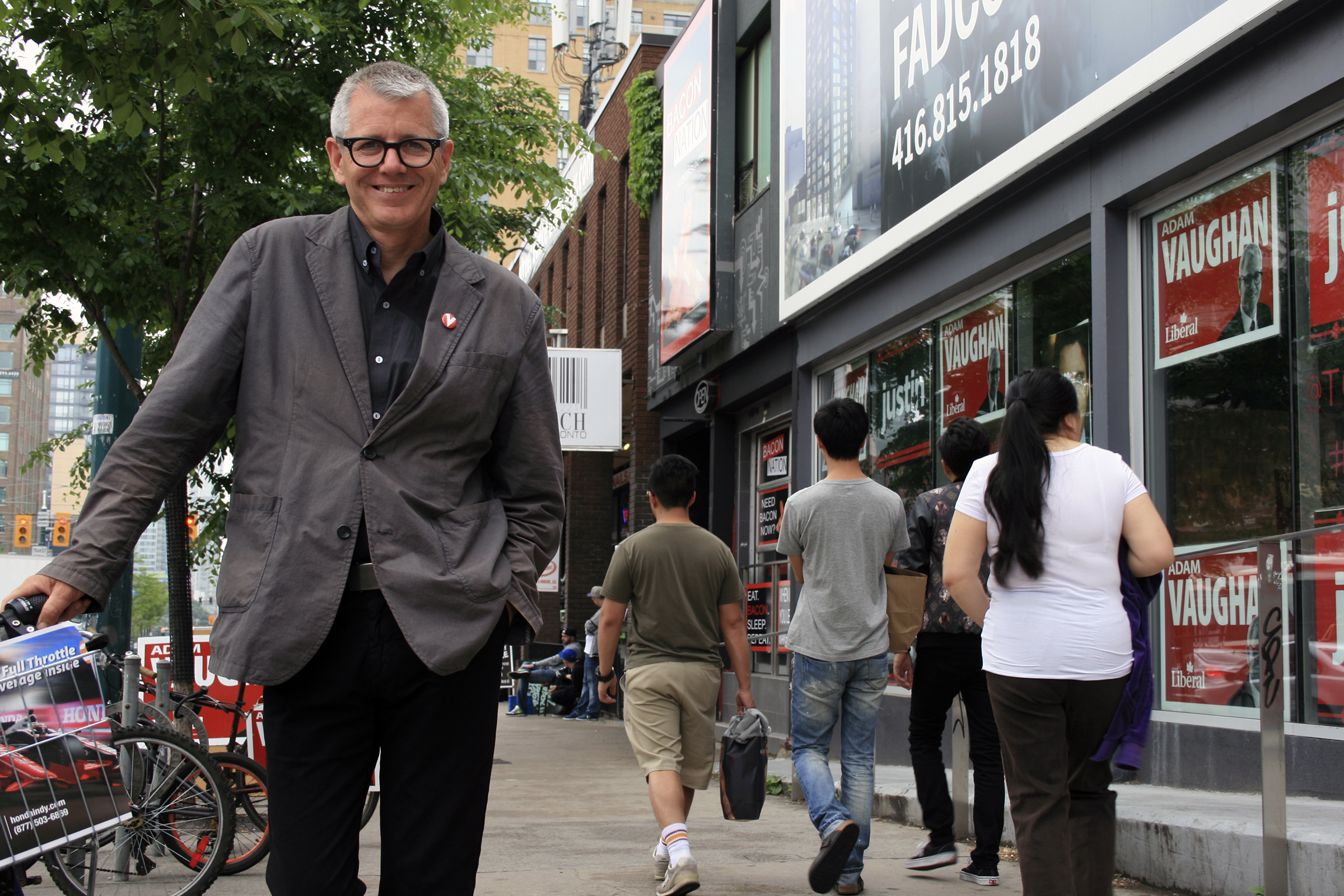
Adam Vaughn, who is running in the Trinity-Spadina by-election on June 30, poses in front of his campaign office on Spadina Avenue, in the midst of what Jane Jacobs, who had a profound influence on Vaughan, would term the “ballet of the sidewalk.”
Vaughan driven by urgent need to bring practical experience to federal politics
By Annemarie Brissenden
Adam Vaughan spoke his first words in French at 45 Walmer Rd. in the Annex, where he was a young student at the Institute of Child Study.
“One day I ran away and hid in Sibelius Park, and it was decided I needed more structure, so I went to Hillcrest after that,” recalled Vaughan, during an exclusive interview with the Gleaner.
In the wide-ranging conversation, the Liberal candidate, who is running to become Trinity-Spadina’s member of parliament, stressed his long history in the riding, and the drive that’s fuelled by his commitment to an urban agenda. He also talked about some of the people, two women in particular, who have guided him over the years.
“Everyone talks about my Dad in politics,” said Vaughan. “But my mother was a very big influence in my life. And my mother said if you go into politics, it ought to be for a reason.”
For Vaughan, it’s delivering on a workable urban agenda “that delivers results quickly, because the city needs help now.” And his understanding of what cities need to thrive comes from Jane Jacobs.
“She’s been a profound influence all my life on a whole range of thinking,” explained Vaughan, who invoked Jacobs repeatedly throughout the interview. He was attracted to the Liberal Party, in part, because it “is now starting to think and act in some of the ways that Jane Jacobs talked about.”
Ultimately, however, Vaughan’s decision to run was based on his recognition that the city doesn’t just need a strong partner in Ottawa, it needs a strong partner that understands the nuances of how municipalities function.
“The number of times you end up making speeches from the floor of council, or in front of community meetings about if we only had Ottawa,” said Vaughan. But, you also “have to know how cities require that help to be delivered.”
“There’s lots of theory and lots of good intention [in Ottawa and Queen’s Park],” he explained, “but there isn’t practical experience.”
Vaughan is troubled, for example, by the positions some with less experience have taken on the proposed island airport expansion, which he views as about more than just jets. He wants to reform the Port Authority and make it a public agency that, like Waterfront Toronto, is accountable to the community. He also wants to have federal status granted to a bird sanctuary located at the end of the runway that’s a critical stop for migratory songbirds, because, he said, these are “things that can be done [federally] to protect the balance of the waterfront.”
According to Vaughan, the Toronto District School Board’s attempt to bring a championship field to Central Technical School is another instance of a lack of understanding and respect for the city’s processes.
“[The school board] signed a memorandum of understanding before they even came to talk to the neighbourhood,” explained Vaughan. “You don’t build things quickly in Toronto. It’s a tough and very complex building environment. But when you choose not to collaborate with people, you create problems.”
It’s that sense of collaboration that he hopes to bring to Ottawa, as he pushes forward on his urban agenda, focused in large part on Toronto’s housing crisis.
“Toronto is home to the largest collection of children living in poverty in the country. If you don’t have a housing agenda, you are not housing kids properly, and if you don’t house kids properly, that extrapolates out into a really, really volatile social situation.”
Vaughan stresses, though, that the urban agenda is about more than “hard infrastructure. It’s also the stuff that cities create, as Jane Jacobs said, by simply coming into existence.”
At the heart of “that stuff” is culture, the “heart and soul of what we do in Trinity-Spadina.” It is also a critical driver of the riding’s local economy.
“Culture is a great thing from a nationalist pride perspective,” he added, “but as a fundamental building block to this neighbourhood, it has got to be spoken to as part of an integrated urban agenda, because it is that fundamental to how you build a city.”
Despite so many important files on his desk, Vaughan is confident that the constituency office is in good hands following his resignation. All but one of his staff remains in place at City Hall, and an interim councillor will be appointed shortly to represent the ward at the last two city council meetings before the municipal election in October.
He’s chosen not to pick a successor, as “the ward seat belongs to the neighbourhoods,” and will deliver “a full and comprehensive briefing, and leave behind every single file for the next councillor, regardless of who they are.”
And if he doesn’t win the seat?
“Then I am out of politics. I will have to find a job.”
But he is “intent on getting to Ottawa, and intent on building a national housing strategy.
“I have been working towards that for 25 years.”
Tags: General
July 16th, 2014 · Comments Off on Fridge failure a sign of the times
Market forces replace not repair
The other night our fridge made a strange popping sound before the compressor mysteriously shut off. My initial reaction was to start looking for a new fridge.
We live in a world so full of consumption and of constantly replacing old things with new, that I nearly forgot that there existed such a thing as a refrigerator repair person.
This mindset is fueled largely by TV ads constantly telling us to buy new stuff.
Our clothes are barely six months old yet the sin of being out of fashion necessitates a new shirt to replace the perfectly good one on your back right now.
Though my grandmother once taught me to sew on buttons, it’s a skill long out of practice and nearly forgotten (as evidenced by my jacket that’s still missing a button after four months of hanging in the front room as a reminder).
Once upon a time, we called a repair man (I say man because the reality of that era is that they were almost exclusively men) when the TV broke. The man would come over with parts and usually replace the component that wasn’t working.
In recent years, I have known people who replaced perfectly functional television sets because a newer model had come out.
Our mindsets have changed over the decades and so has our environmental impact. Where we once valued resources, local labour seems to be the most expensive constraint to our decision-making.
Resources are sucked out of the ground irresponsibly, and indentured and/or child labour provides us with the rest of the formula required for cheap goods.
Let’s not bother pretending that the person who put together that $5 T-shirt got paid a living wage.
Growing up in the Wal-Mart mentality of “cheaper is better”, I never understood the value of higher quality goods until I was able to make my own purchasing decisions as an adult.
One winter, after parting ways with my worn-out Hush Puppies, I started looking for a new pair of higher quality boots. Failing to understand the value of quality, I balked at purchasing the only pair of boots that actually met all of my boot criteria at about four times the cost of my last pair. Thankfully, I had a boyfriend who, sick of shopping, encouraged me to take the plunge (this was no doubt for his benefit rather than mine).
Not knowing where all the heat vents were in the new house, I made the mistake of storing the boots too close to one. The soles cracked and were no longer waterproof.
Upset that my really expensive boots barely lasted a winter, I took them into Nick’s Shoe Repair on Dupont near Davenport.
No doubt a victim of ageism, Nick took a look at me and said that it would be cheaper to buy new boots than to repair them. As I pulled my boots out of the bag, he smiled approvingly at their quality and agreed to repair them.
Sure enough, the repair cost me as much as my Hush Puppies. Five years later (this past winter) after wearing the heel down, wearing the sole down, and bursting a seam (I don’t know why I thought two pairs of wool socks in my boots would be a good idea), I brought them back to Nick.
Fifty dollars later I have a new heel, a re-glued sole, a fixed seam, and a polishing that makes them look better than new.
This lesson was hard to learn as a starving student but when we buy quality, our things last longer and often turn out cheaper in the long run.
Without a doubt, our carbon footprint is lower when we buy fewer things and repairing goods supports local businesses who depend on a service economy.
I hope the more people understand about the carbon footprint and resource depletion of clothes, electronics, and other consumer goods, the more we’ll be willing to repair rather than replace. Though this might pose a problem for the average fashionista, rejecting those social norms is good for both our sanity and our planet.
Spending money because some beauty magazines say so seems like a waste of perfectly good cash.
Terri Chu is an engineer committed to practical environmentalism. This column is dedicated to helping the community reduce energy use, and help distinguish environmental truths from myths. Send questions, comments, and ideas for future columns to Terri at terri.chu@whyshouldi care.ca.
Tags: General
July 16th, 2014 · Comments Off on Shade, pools, and gardens, all with a link to the Liberty’s past
Local parks offer place to cool down, run a dog, wade in water
For the first part of this year’s Grading our Greenspace, our annual park review, writers visited 10 parks?(more to come next month) to grade them on a variety of factors, including amenities, cleanliness, and ambiance. Do you agree with our assessment? Send your thoughts to gleanerpub@gmail.com.
By Chantilly Post, Sameera Raja, and Brian Burchell
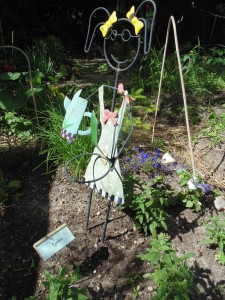
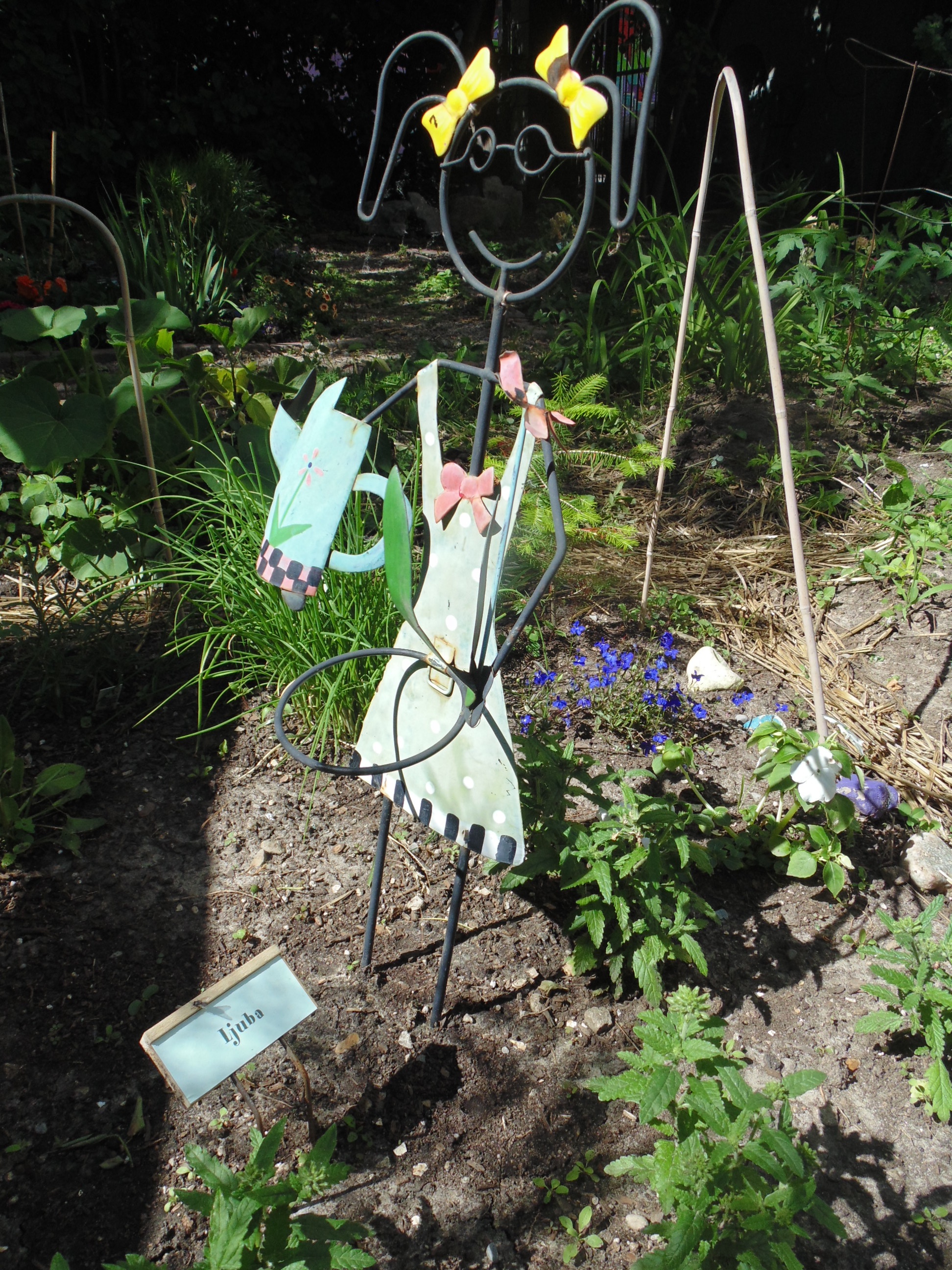
This wired woman, a creative scarecrow of sorts, protects tomato plants in this truly inventive urban garden in the Alex Wilson Park. Brian Burchell/Gleaner News
Alexandra Park
East side of Bathurst Street, between Dundas and Carr streets
Visited: Saturday, 3:00 p.m.
Grade: A (Last year: A)
Attractions: Loads of recreational options, two baseball diamonds, basketball court, large inviting outdoor swimming pool, splash pad, and skateboard park. Plenty of shade.
Notable: Just south of Scadding Court Community Centre, which has its own indoor pool, a public library, community garden, and daycare.
Overheard: “Mom, mom, look the pool is open can we go can we go?”
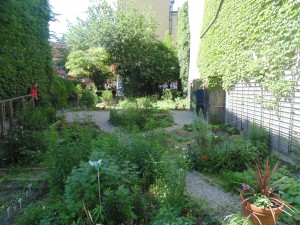
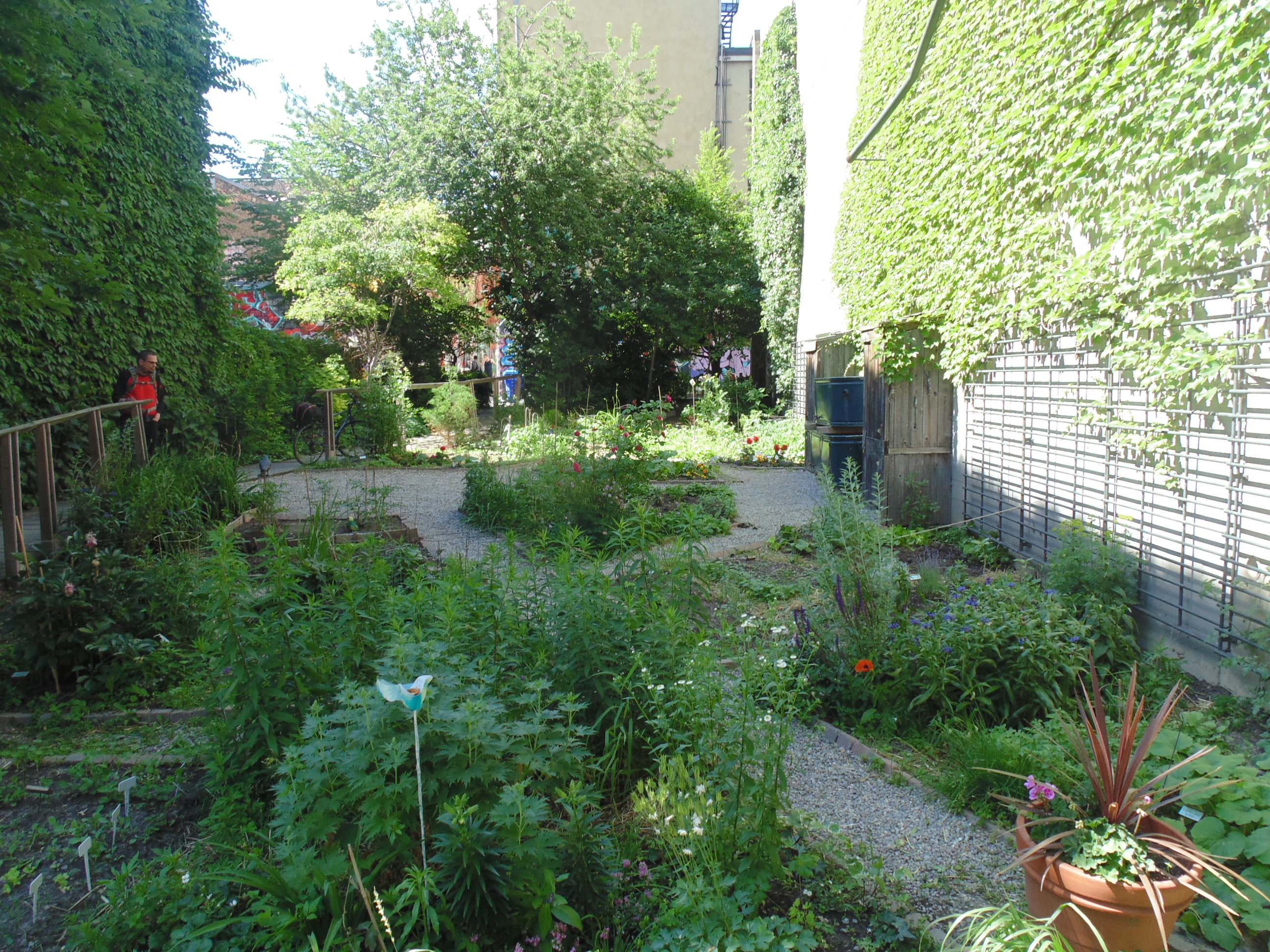
Alex Wilson Community Garden signals that residents are not clients of the city but citizens, and they take ownership and they care. This park exhibits the pride and ownership.Brian Burchell/Gleaner News
Alex Wilson Community Garden
Richmond Street West between Portland and Maud streets
Visited: Saturday, 3:45 p.m.
Grade: B (Last year: B)
Attractions: Unique community garden, where local residents plant and care for their own flowers and vegetables. An inventive, sustainable irrigation system diverts water from the roof of the building to the east. Nestled in between two multi-storey buildings whose ivy-covered walls face the park, the garden features a meandering wooden walkway that connects a graffiti-covered alleyway with Richmond Street West.
Concerns: No garbage or recycling receptacles. High bushes enclose the north end, potentially a hiding spot for criminals preying on those that use the park as a thoroughfare.
Notable: The garden is named in memory of Alex Wilson, a landscape designer and community activist who died in 1993. During his life he was an advocate for using indigenous plants and organic methods. This garden reflects those values.
Overheard: “I used to have a plot here, I grew peppers, but the f—-ing crack heads ate them at night…enough of that. I’m going to smoke a joint, so please don’t take my picture.”
The Grange
South of Dundas Street West between McCaul and Beverly streets
Visited: Saturday, 2:45 pm
Grade: A (Last year: A)
Attractions: Splash pad, decent playground for children, park benches aplenty occupied by couples, families, and six possibly homeless people each sound asleep. An impressive forest of chestnut trees provides ample shade, but a few open spots exist and accommodate sunbathers. An outdoor ice rink in the winter. It even has its own website: http://grangeparktoronto.ca.
Concerns: Washrooms present, but have been locked for decades, which is regrettable (Be brave! Open the bathrooms and you get to A+!).
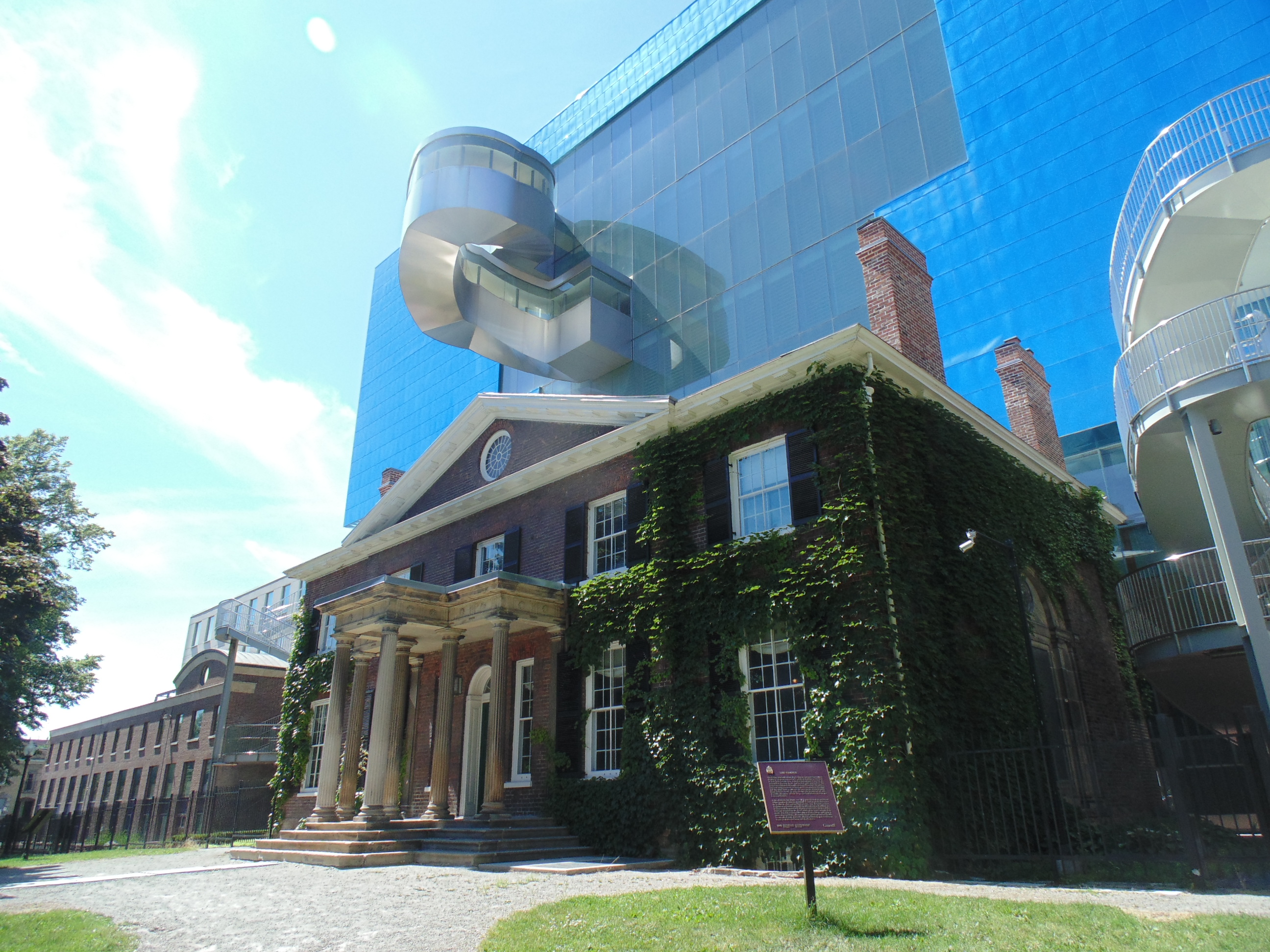
Notable: Bequeathed by the Boulton family to the AGO in 1910, and then to the City of Toronto by the Art Gallery of Ontario in 1911. The original residence sits at the southern flank to the AGO, and has recently been redeveloped.
Overheard: Father to five-year-old daughter who had stopped in her tracks, “What’s wrong Margaret?” Margaret replies with hands on hips, “Two things Dad, I want a lollypop and I don’t want to leave this park.”
Randy Padmore Park
Between Denison and Augusta avenues, just north of Queen Street West
Visited: Saturday, 4:00 pm
Grade: C (Last year: A)
Attractions: Functional playground set, two benches, picnic table. Waste receptacles at east entrance.
Concerns: A break from the concrete jungle, but needs updating. No waste receptacles at west entrance, and the ground is littered there as a result. Not enough shade and zero landscaping within the park itself. Nightlight in centre of park is broken.
Notable: Formerly the Carr Street Parkette, it was officially renamed to honour Arthur Randolph Padmore. Padmore, who died in 2009, was a dedicated youth worker and community organizer in the local Atkinson Housing Co-Op.
Overheard: From Mom and young daughter passing through on this hot and sunny Saturday: “Mom can I stop and play on the slide?” to which her Mom replied, “No honey, there is too much sun.”
Trinity Bellwoods Park
Between Dundas Street West and Queen Street West at Strachan Avenue
Visited: Saturday, 12:30 pm
Grade: A (Last year: A)
Attractions: A local favourite that features lots of space to lounge and for community festivals. Fully equipped with three baseball diamonds, off-leash area for dogs, tennis courts, children’s playground, and a dry rink. A great place to run, the park is also a lovely social environment for you and your friends, with even the possibility of meeting new friends on a sunny summer afternoon.
Concerns: Police are cracking down on illegal alcohol consumption, so keep your picnics dry, unless you want to pay a hefty fine.
Notable: Offering a picturesque view of the CN Tower this park is a great tourist destination. Summertime also brings possible freebies in the park; some days you can snag free samples from product promoters roaming through.
Osler Playground
On Argyle Street just west of Ossington Avenue
Visited: Saturday, 1:30 pm
Grade: Grade: B (Last year: A)
Attractions: Quaint and quiet, with lots of shade, the park’s flourishing trees and the well-shaded benches provide a cool breeze and relaxing break from the busyness of Ossington Avenue. It has a wading pool that’s open from 12 to 6 pm in the summer, playground, small field area, and a few grassy lounging areas.
Concerns: Grassy areas of grass could use some care.
Notable: Although located on Argyle Street, there are no socks in evidence.
Stanley Park
King Street West, between Stafford and Walnut streets
Visited: Saturday, 2:00 pm
Grade: A (Last year: A)
Attractions: The perfect in-the-city getaway, Stanley Park is a great place for a pit stop to or from work, or even to eat your lunch on your break. A favourite spot for dog owners, the park has a gated off-leash area, as well as tennis courts, an outdoor pool, and a baseball diamond. And that’s just the south side! Across the road on the north side is a children’s playground and grass space equipped with benches for picnics and birthday parties.
Notable: Shares its name with Vancouver’s first park, which dates to 1886.
Bellevue Square Park
Approximately one block north of Dundas Street West just west of Augusta Avenue
Visited: Wednesday, 3:55 pm
Grade: C (Last year: B-)
Attractions: Located in the heart of Toronto’s Kensington Market, Bellevue Square features a fountain, wading pool, and a statue of Canadian actor Al Waxman. The park is hub of activity that showcases the market’s diversity and charm, and its green space provides an area for much-needed relaxation during the summer months. Although family friendly, the park generally attracts young adults from the densely populated area.
Concerns: The washrooms appear to be permanently locked.
Notable: During the Upper Canada Rebellion, George Taylor Denison, who originally owned much of the market, used the area as a parade ground for volunteer cavalry troop.
Overheard: “I come here after performing at the café, sometimes with friends. It’s pretty nice.”
McCaul-Orde Park
Corner of McCaul and Orde streets
Visited: Wednesday, 4:50 pm
Grade: C+ (Last year: C+)
Attractions: Two benches and a small bit of green relief from the concrete and pavement of the surrounding neighbourhood.
Notable: The park is located close to Orde St. Junior Public School, whose open third floor space was created in the early part of the 20th century for children with tuberculosis.
Sonya’s Park
Oxford Street, between Augusta and Spadina avenues
Visited: Wednesday, 6:10 pm
Grade: B (Last year: B)
Attractions: Undergoing a redesign led by St. Stephen’s Community House, this park is bordered by several flower and plant beds and features a small children’s playground.
Notable: Named for Sonya Lunansky, who built the Augusta Fruit Market out of a small shop that she opened in the 1930s.
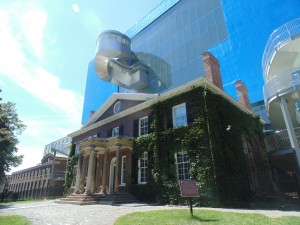
Making no attempt to emulate the past, the Art Gallery of Ontario stands in stack juxtaposition to the original Grange estate residence. The result is somewhere awe-inspiring like a space ship landing on the 19th century Toronto.Brian Burchell/Gleaner News
Tags: General
July 16th, 2014 · Comments Off on Reflections on 32 years of service
Making sure the vulnerable are not forgotten
By Rosario Marchese
It all started at Harbord Collegiate. That’s where I met my lifelong friend Joe Pantalone, who would pull me into the NDP and later persuade me to run for public office.
My father was a construction worker, and my mother worked at home, raising me and my brothers while caring for our house on Shaw Street. “Left” and “Right” meant nothing to them. The only thing that mattered was the day-to-day struggle of keeping a roof over our heads and ensuring a better future for the kids. This was the political sensibility I grew up with.
The NDP was full of energetic and engaged young people who wanted to change the world, and who loved to debate political theories and policies. I loved those debates too, and my love of the debate would remain my greatest joy at Queen’s Park.
But above the debates and the idealism, I saw that the NDP was the party that would fight for people like my Mom and Dad. This was the party that made sure working people and the vulnerable would not be forgotten.
This is the perspective I tried to maintain during my 24 years representing the people of Trinity-Spadina as their MPP.
Trinity-Spadina is a very different place today than it was when I first became an MPP. Its growth and success have been exciting to observe, and should be celebrated. But it is also clear this success is leaving many people behind.
For example, the condo boom has radically changed the nature of home ownership and tenancy, but our laws have not kept up. Condo owners and tenants need new protections.
And while growth and development have increased the overall supply of housing in Trinity-Spadina, this has not translated into affordable housing.
Ensuring that Toronto can remain an inclusive place that all of us can call home is one of the city’s greatest challenges. It is critical that the province get back into the business of providing affordable housing.
Trinity-Spadina’s success has also created new incentives for powerful private interests to threaten the long-term public good.
I have seen how developers routinely ignore local communities and ask the OMB to overrule democratically-enacted planning rules. And I have seen how well-connected private interests covet our waterfront in order to build Ferris Wheels, mega-casinos, and expanded runways for jets.
This has raised the stakes dramatically when it comes to local politics.
Happily, a new generation of engaged and energetic young people is standing up to defend the public interest when it comes to planning and development, our waterfront, transit, housing, social justice, and the environment.
This gives me incredible hope. For while I am disappointed in the results of the last election, I believe the health of our democracies depends not so much on politicians like me, but on the willingness of engaged communities to organize and create movements to hold politicians and governments accountable.
Engaged communities ensure that elite interests do not squeeze out the public interest. Engaged communities revitalize politics and political parties. Engaged communities ensure that we do not forget the needs of the marginalized, the vulnerable and working people like my Mom and Dad.
Engaged communities are what make Trinity-Spadina the best riding in Ontario.
It has been an honour to serve you, the people of Trinity-Spadina, for 32 years as your school trustee and your Member of Provincial Parliament.
Thank you!
Rosario
Tags: General
July 16th, 2014 · Comments Off on Students win safety scholarships
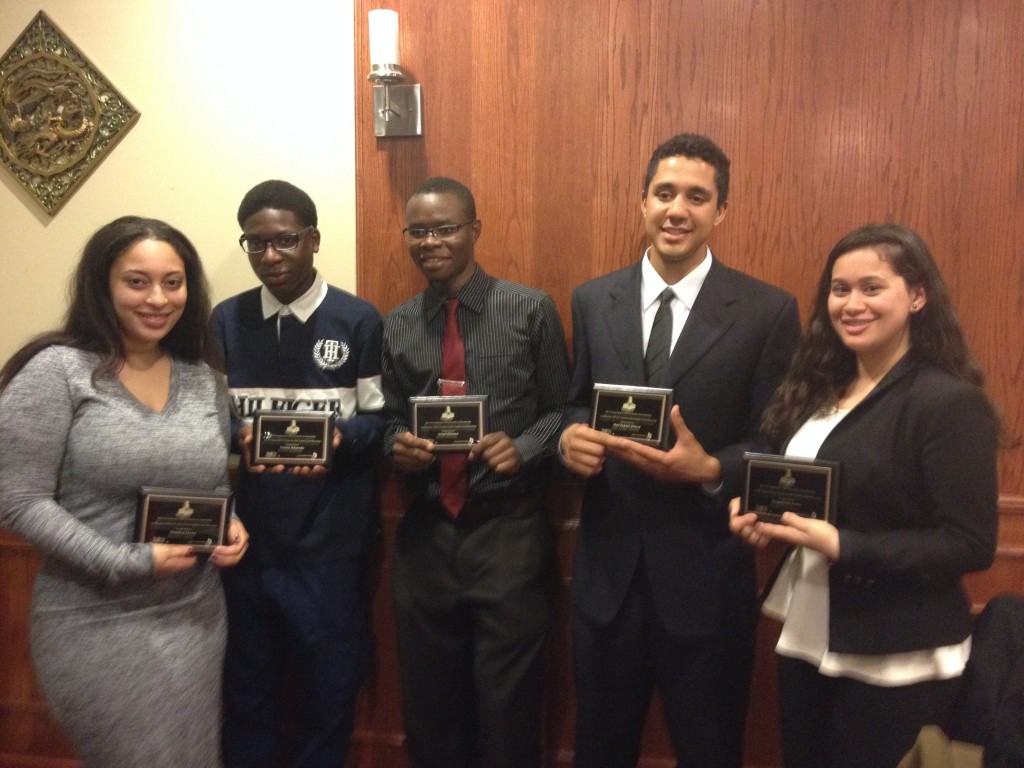
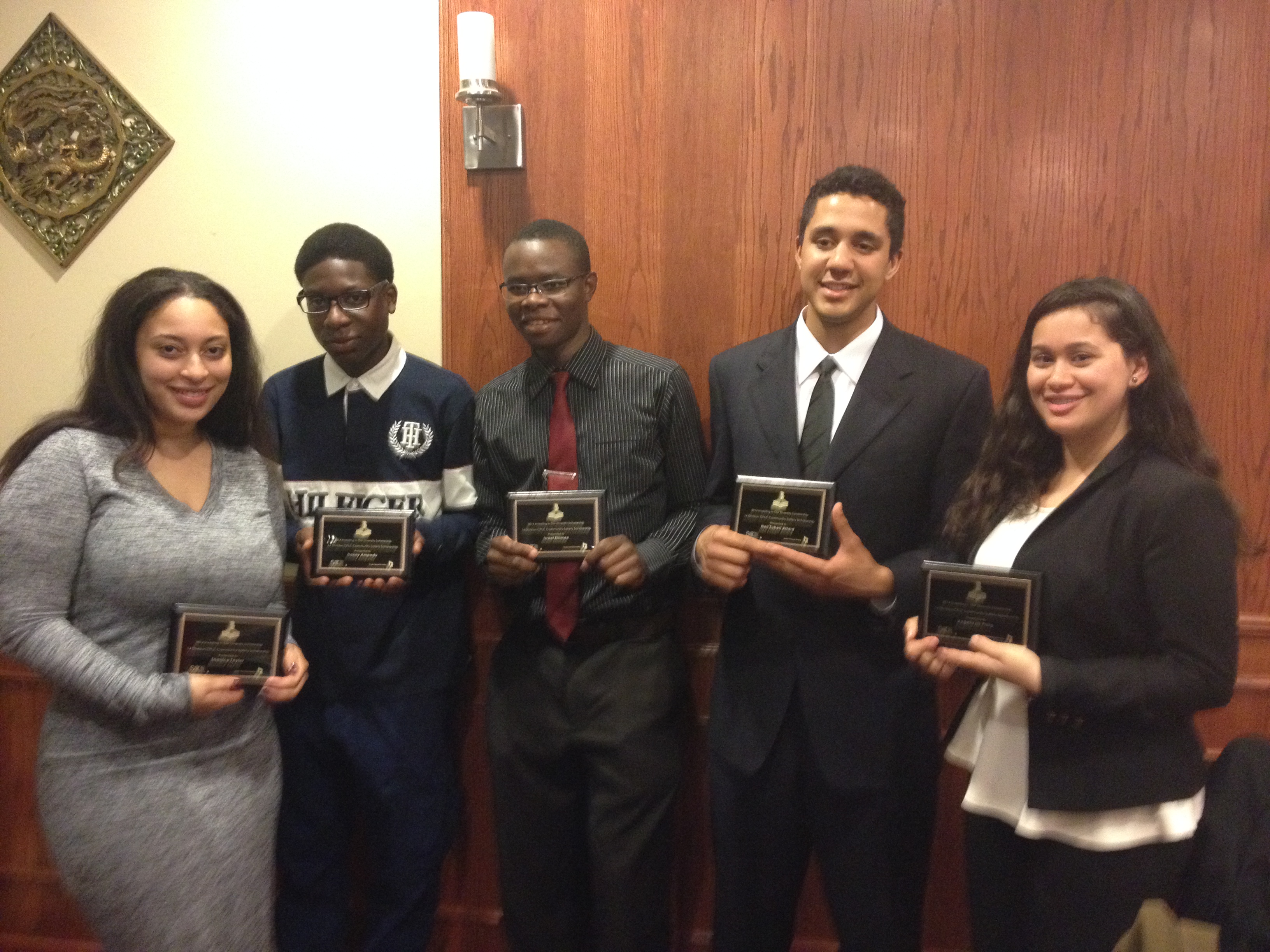
Scholarship winners pose with their plaques at the May 29th award ceremony in Chinatown. From left to right are Shanice Taylor, Danny Ampandu, Israel Ehimen, Zuberi Attard, and Angelina Pinto.
Police partner with community to make post-secondary education possible
By Gleaner Staff
Five local high school students received a scholarship last month from the Community Police Liaison Committee (CPLC) of the Toronto Police Service’s 14 Division.
Started in 2010, the CPLC Community Safety Scholarship awards each student $4,000 towards their post-secondary education, money that local universities, including the University of Toronto, York University, the Ontario College of Art and Design, George Brown College, as well Ryerson University, Humber College and Seneca College, will match in the second year of a recipient’s program.
“This is a life changing opportunity for these kids, who have faced real adversity and have rallied against that, and made real contributions to make their neighbourhoods safer places,” said CPLC scholarship coordinator Brian Burchell, who also publishes this paper.
The scholarship winners demonstrate financial need and an ability to succeed in a post-secondary academic environment. They have also volunteered in the community, and explain in their application how their contributions have made their community safer.
The scholarship is “a welcome opportunity to help young people who themselves are helping other young people,” said Staff Sergeant James Hogan of 14 Division. “Much of our work involves trying to repair damaged lives and communities, so to be able to assist the scholarship winners in building healthier communities is gratifying.”
No police budget monies contribute to the fund. Last year, donations from business improvement areas, the Canadian National Exhibition, foundations, individual businesses, and rank and file police officers brought in over $20,000.
An additional $20,000 was raised at a gala benefit at the Revival nightclub on College Street.
The scholarship is part of Investing in Our Diversity, a larger umbrella scholarship program that is administered by the Scadding Court Community Centre (SCCC), which Burchell credits for making everything possible.
The program is “unique in that it recognizes contributions of young people to their communities and supports their goals for academic and professional success,” said Areej Hasso, the SCCC’s director of development. “The matching scholarship opportunity through our academic partners is also integral, as financial supports are carried forward into the recipients’ second year of studies.”
This year’s winners, Shanice Taylor, Danny Ampandu, Israel Ehimen, Zuberi Attard and Angelina Pinto, were chosen from a large applicant pool evaluated by a committee consisting of police officers and volunteers.
A grade twelve student at Marshall McLuhan Catholic Secondary School, Shanice Taylor hopes to enroll in the law clerk diploma program at the Humber College Institute of Technology and Advanced Learning. An active and valued member of the community, she volunteers at the Macaulay Child Development Centre, and has organized a breakfast program for students. Shanice, who is inspired her mom’s strength in dealing with a disability brought on by a stroke, dreams of achieving a career in the field of law.
Similarly inspired to soar academically by a parent, Danny Ampadu attended Central Technical School where he improved his average grades by 20 per cent after his father passed away from cancer. Active in his school’s social justice groups, he has participated in the Me to We campaign, volunteered for Free the Children, and contributed to the revitalization of Lawrence Heights. The first person in his family to pursue a post-secondary degree, Danny will study law and business at Ryerson University.
Israel Ehimen is, like Danny, highly involved at his high school. Arriving on his own to Canada as a refugee from Nigeria in January 2012, Israel attends Central Commerce Collegiate. He supports himself, yet still gives to his community through his church. Israel wants to study engineering at university.
Also a student of Central Commerce Collegiate, Zuberi Attard organized clothing and food drives to create opportunities for diverse and marginalized students at his school, and joined the Policy Leadership Lab. He delivers harm reduction workshops for youth, and works as a peer educator at St. Stephen’s Community House. He plans to study political science when starts at Carleton University in the fall.
Angelina Pinto shares Zuberi’s leadership skills. As student council president at St. Mary’s Catholic Secondary School, she worked with a team of students to stage the school’s biggest event, which was aimed at highlighting diversity and included Rebuilding the Philippines One Brick at a Time, which raised funds following Typhoon Haiyan. Angelina plans to study criminology at Ryerson University.
Tags: General
June 25th, 2014 · Comments Off on
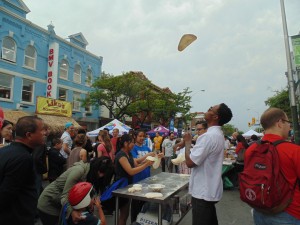
Tayo Jacob, of Neopolitan Pizzeria (386 Bloor St. W.), showed an engaged audience how to toss and knead pizza dough. The 18th annual Annex Festival on Bloor took place on June 8th and was filled with live music, specialty food vendors, and activities for all ages. The well-attended event drew 20,000 participants this year. Chantilly Post/Gleaner News
Tags: General
Essex Jr. and Sr. beloved by parents, teachers, and students
By Susan Stewart
Looking for a school for your children is always nerve-wracking. We wanted a well-rounded school, strong academically as well as in the arts, where leadership and good social skills are nurtured. We were surprised to find how much Essex Jr. and Sr. Public School offered. The school felt very friendly when we walked in. Ms. Hutchison, a grade seven teacher, agrees. “Essex has a really warm feeling—the warmest feeling of any school I’ve been in. I think it is because we are small.”
The small size may be one reason why the academic scores are so good. Ms. Hutchison claims that the smaller population allows staff to be aware of each student’s strengths and weaknesses, which is beneficial for their academic performance. “With small classes everyone’s voice gets heard. For the first time in my teaching career I can have discussion circles where each student can express their views. This doesn’t always happen in larger classes.”
“Next year, Essex will be following a full rotary schedule for grades seven and eight, thus allowing teachers to specialize their instruction,” says Jim Stathopoulos, the principal, who was once a student at the school. “This is crucial. If a teacher is focusing solely on mathematics they have the time to hone their lessons and meet the needs of all learners.”
Education Quality and Accountability Office scores at Essex are higher than we thought. The school has two special education classrooms which participate in the EQAO assessment. These students have had amazing successes, of which the school is very proud, even though they are cognitively three to four years behind their peers. Scores are between 80 and 90 once their results are removed.
Jim Stathopoulos, became principal at Essex last year after winning one of Canada’s Outstanding Principal of the Year awards. He says: “We have amazing teachers who are passionate about kids. Teachers share best practice with one another at regular professional learning sessions throughout the year. They are encouraged to take risks and to do things differently to ensure student success.” My daughter came home laughing because the principal was wearing her classmate Thomas’s small T-shirt. Thomas explains: “The principal is a Leafs fan and I am a huge Montreal Canadiens fan so we made a bet over who would win the first game of the year. I won so he had to wear my Habs’ jersey for a whole day. It was very small on him and he looked silly. I thought it was brave of him.” Mr. Stathopoulos remarked, “I do a lot of fun stuff with the kids because I don’t want them to worry about coming in to the principal’s office.”
Our daughter is thrilled about the tap dancing class, and there is also jazz, swing, drama, and music. Ms. da Costa, the drama and dance teacher, was a professional music theatre performer and actress. She says: “Tap dance lets students stomp and laugh and have a lot of fun. Essex is the only school in the city that offers tap.” She leads the Essex Glee Team, which won four awards at the Show Choir Canada Competition.
We were delighted to see that students are exposed to a wide variety of performances, including Ballet Creole, and Second City with a piece on anti-bullying. And Essex has hired a new music teacher who brings a lot of excitement to the program.
I wish I had been taught the critical thinking and problem-solving skills that Essex students are learning. Mr. Stathopoulos explains, “Ten years from now who knows what jobs are going to be out there. We want our kids to be thinkers. So we give the students different types of problems and scenarios that provide them with the ability to solve problems. School is not just about academics. We want students to have the skills to be good people.”
Essex has a lot of sports including basketball, ultimate frisbee, track and field, cross country, badminton, and softball, as well as glee, chess, drama, tap, and knitting clubs. There is also an active students council.
We are pleased that regular and special ed students share some non-academic activities such as music and phys ed. For our daughter, differences are normal. The principal says, “Putting yourself in someone else’s shoes is an extremely important skill that with practice kids learn. When children are comfortable with differences, which comes from the integration of the regular and special ed students, children have more empathy. Kids learn best from one another.”
For us, the school’s success is reflected in our daughter’s words: “I love the Essex. It is amazing. This is the best year of school ever.”
Tags: General
June 25th, 2014 · Comments Off on We are citizens–not just consumers
How to encourage reduced consumption of electricity
One of the best methods of learning about yourself is for sure to travel.
Given the intense carbon footprint of flying, air travel for me is restricted for work (for either myself or my partner, and the other sometimes goes along), or infrequent family gatherings.
This year’s only flight took place recently to Cuba where my partner does research with the University of Havana. The great thing about being away from the tourist beaches is that I get to spend a lot of time with locals learning about their culture.
I made a discovery about their electricity grid worth sharing and learning from.
I’ve been an advocate for higher electricity prices for a long time now.
I also realize this is pure political suicide—electricity pricing to reflect the true cost is a mere fantasy for those who don’t like downloading the cost of our lifestyle to our kids.
Increasing costs to decrease consumption also disproportionately affects lower income families. It seems Cuba might have an answer for us.
Relying on oil imports is a very expensive way to generate electricity, so in addition to the new solar farms, Cuba relies heavily on discouraging flippant consumption while making sure baseline needs are affordably met.
Before the much talked about Time of Use pricing strategy, Ontario had tiered pricing. For about 10 per cent of consumers, it still does. The first 600kwh are charged at 8.6 cents while anything above that is charged at 10.1 cents—hardly enough difference to worry about.
Contrast that to Havana’s electricity pricing starting at 9 Cuban cents per kwh from 0-100 kwh to 5 pesos for anything over 5,000 kwh with 9 tiers in between.
The increase in price is gradual in the lower brackets and increases exponentially in the upper ones.
One of the grad students spoke about keeping his electricity bill around 50 cents (Cdn), while another, a lover of air conditioning, forks out the equivalent of $12 Cdn each month. (Though this seems insignificant, I should probably mention that most Cubans earn a base salary that ranges from $20 to $30 each month.)
Given the necessity of electricity and the incredible cost to society to generate and distribute it (not to mention long-term health and climate considerations), it makes sense to have pricing increase as hogs use more power. Rather than a blanket rate increase that will hit low income families hard, aggressive tiered pricing allows basic needs to be met while luxuries (such as endless electronic devices, air conditioning, and big screen TVs) will be appropriately priced to operate. As much as I love my neighbours in the Annex, the constant hum of air conditioners on cool nights makes me wish we had a better mechanism to encourage people to open windows and turn those things off!
Although tiered pricing won’t do anything to change when electricity is used, a University of Waterloo study shows that our mere pennies price differential on our Time of Use scheme doesn’t either.
As Ontario’s electricity infrastructure faces the dual challenges of age and of reaching its capacity, I hope citizens like us will take a more conciliatory approach towards fixing it.
It’s no longer good enough to just keep generating stations out of our backyards, we have to put forth and accept solutions that might cost us more because at some point, something has to give.
We can no longer simply accept hollow promises of lower electricity prices without answering the question of how the new infrastructure will be paid for.
We are citizens, not just consumers. It’s time we acted accordingly when it comes to our electricity grid.
Terri Chu is an engineer committed to practical environmentalism. This column is dedicated to helping the community reduce energy use, and help distinguish environmental truths from myths. Send comments to Terri at terri. chu@whyshouldicare.ca.
Tags: General
June 25th, 2014 · Comments Off on Police educate on eve of enforcement
Trinity Bellwoods Park is primary target
By Samina Esha
After a brutal winter we all look forward to the hot summer days with bright sun and chilled beers. In recent years, Trinity Bellwoods Park has become one of Toronto’s favourite warm weather drinking spots and it has taken on a life of its own.
A recent community meeting held at the Trinity Bellwoods Community Centre became an open forum for discussing strategies to stop alcohol use in the park along with the park preservation. Staff Sgt. James Hogan of 14 Division says the community meeting was meant to be about education and awareness.
“Drinking in a public park ultimately leads to selfish and uncontrollable behaviour, followed by noise and loitering, which is just disturbing others,” said Hogan. “This meeting was part of an ongoing effort to promote awareness and education before the summer. We wanted to start a discussion about what respectful park use looks like, along with listening to the output of the community.”
Located at the focal point of the inner city neighbourhood, this 14.6-hectare park on Queen Street West at Strachan Avenue was once home to Trinty College. The park sits above the now-buried Garrison Creek and contains eight tennis courts, two volleyball courts, an artificial ice rink, an off-leash area for dogs, a picnic area, a wading pool, and a children’s playground. The picturesque park area spans the entire length of the neighbourhood with Trinity Community Recreation Centre located on the southwest section of the park.
People sipping beer and wine are a common sight at the park in the summer among mothers walking with their children in strollers, cyclists, and dog walkers.
“It’s funny because some people think the city bylaws don’t apply in the park. I am not sure how they came to that conclusion. Some said social media implies that you can bring all the booze you want and drink in the park. Not true,” said Staff Sgt. Hogan.This is the second year that such a meeting has been held for public awareness. Although the numbers for public drinking have gone down, some people are still oblivious to the law.
“I was at the park last Tuesday and a young couple was out with a six pack of beer and they genuinely thought that they are legally allowed to drink in this park. So, to prevent such scenarios we are preparing pamphlets to make people aware of the situation,” added Hogan.
Last year’s meeting held by the park, community, police, and Ward 19 Councillor Mike Layton, became a huge discussion point and an example for park drinking.
Part of the story leading up to the meeting had been a fairly new strategy by police called “Project Green Glasses”, which was described as an upcoming crackdown on park drinking in the western half of downtown, particularly in Trinity Bellwoods, Christie Pits, Dufferin Grove, and Alexandra parks. In Toronto, drinking in public can earn one up to a $125 fine, which is part of the Liquor Licence Act (LLA). Staff Sgt. Hogan mentioned that, under the City of Toronto’s park by-law, consuming, serving, or selling liquor in a park without a permit can result in a steep fine of $360. More police and by-law officers will be patrolling the parks.
Thursday night’s meeting focused more on park conservation than on open drinking, with issues varying from public safety to noise control to tree preservation.
According to Eamon McGrath’s comment on Trinity Bellwoods Community Association’s website, “The notion of punishing people for consuming–and enjoying–alcohol in a public place, particularly in a city where most of its residents do not have the luxury of having a private outdoor area to consume it, is ridiculous and absurd.”
“Overall we want parks to be a welcoming place for everyone and hopefully not to be handing out tickets for drinking,” said Hogan.
Tags: General