January 15th, 2016 · Comments Off on A warm welcome for new arrivals
Preparations underway to settle Syrian refugees

Chrystia Freeland (MP, University-Rosedale) addresses a packed town hall on refugees at the Miles Nadal Jewish Community Centre on Dec. 23. Many local groups are privately sponsoring Syrian refugees, who are expected to start settling in the Annex in the coming months. Courtesy Benjamin Bergen
By Summer Reid and Annemarie Brissenden
As waves of Syrian refugees continue to arrive at Toronto Pearson International Airport to great fanfare, grassroots organizations from the Annex are anxiously waiting to welcome the families they have sponsored as they continue to raise money and prepare for the new arrivals.
“The enthusiasm and the contributions have been pretty overwhelming,” said Emily Gilbert, a member of Palmerston Welcomes Refugees (PWR), a group of neighbours who united to sponsor a Syrian family.
The Palmerston neighbours have already exceeded their goal to sponsor one family and are well on their way to raising enough money to sponsor a second from Syria.
Students at Palmerston Avenue Junior Public School were part of the team and made cards, collected coins, and hosted bake and T-shirt sales, all to raise money for the cause.
Over $75,500 of their initial goal of $92,800 has been raised, reported fellow group member Monica Gupta, and PWR expects the first family to arrive some time in the coming weeks.
Another local group, the Major Street Refugee Initiative, is close to reaching its goal of $50,000, and will host additional fundraising events this month to close the gap.
The preparations aren’t solely limited to fundraising, however.
LoveArabic, an organization based out of the Centre for Social Innovation’s Bathurst Street location, has come up with a novel idea to help ease the communication barrier between Canadian and Syrian families: a video blog to be launched in February that will teach followers Arabic phrases in the Syrian dialect.
“Rania and I discussed the idea together and we knew it would be something we could do well,” explained LoveArabic’s Waleed Nassar, who co-founded the organization with his wife Rania Zaki.
The couple and their two children moved to Canada from Egypt in 2012, and Zaki — a teacher in the Toronto District School Board — has organized Arabic language and culture classes since 2014.
Nassar added that “it would also be a way to thank all of the Canadian families who are involved in privately sponsoring refugee families.”
Private sponsorship is uniquely Canadian.
“We are the only country in the world that has private sponsorship,” said Alexandra Kotyk, project manager for Lifeline Syria, at a December town hall on refugees organized by Chrystia Freeland (MP, University-Rosedale). The program dates to 1979, when Canadians privately sponsored 35,000 refugees from Vietnam, Cambodia, and Laos. “This is the best thing that private Canadians can do again.”
The town hall was an opportunity for community groups to share resources, get guidance from settlement experts like Kotyk and Huda Bukhari, the executive director of the Arab Community Centre of Toronto, and hear from Mohammed Aboura, who recently arrived from Syria courtesy of private sponsorship.
“It’s not easy to start your life over from scratch,” related Aboura, who loves poutine, sings “Oh Canada” in English and French, and canvassed for Freeland during the last election.
Some of the biggest challenges facing refugees include finding housing for large families, resuming one’s education without transcripts and similar records, recovering from trauma, and finding the appropriate medical care.
It’s also important, agreed Kotyk, Bukhari, and Aboura, to give families the space to make their own decisions.
Bukhari explained that “sponsorship expectations are not always the same as expectations from families themselves. Sometimes sponsors get offended if families give away donated furniture to buy their very own, for example.”
It is all part of the natural process of moving on, stressed Kotyk, urging sponsors to reach out to organizations like hers if there are settlement issues.
“Syrians are a very proud people,” noted Aboura. “We thank you for your help, but want to get back on our feet as soon as possible.”
Some sponsors spoke about at-risk refugees from other countries, particularly Iraq, whose applications haven’t yet been processed, and asked whether the delay is because they are “Iraqi, not Syrian”.
The Syrian settlement program is “not intended to give the impression that it’s causing delay for other streams,” responded Arif Virani (MP, Parkdale-High Park), Parliamentary Secretary for Immigration.
He added that Syrian refugees are being settled in Canada in addition to those streams that were already, and continue to be, in process, undertaking to review the files of those who were at the meeting.
It was a reminder that Syrians are not the only group of people who need support.
“There are issues that we need to address at home,” said PWR’s Gilbert. “It would be great to see some of this enthusiasm around the issues to do with First Nations, for example.”
Tags: Annex · Liberty · News · People
January 15th, 2016 · Comments Off on More radical course change required
The newly minted Minister of Finance, Bill Morneau, wasted no time in announcing rules further restricting the Canadian Mortgage and Housing Corporation’s (CMHC) ability to “backstop” loans to homebuyers. Effective Feb. 15, 2016, purchasers of homes whose purchase price exceeds $500,000 will be required to put at least 10 per cent down, which is up 5 per cent from what it was under the previous Conservative government. This is the federal government’s latest attempt to dampen a housing market that is widely seen as vulnerable to a radical readjustment, especially in the event of an increase in interest rates.
The initiative pays lip service to the problem of a grossly inflated real estate market that some believe the previous government had a big hand in creating. The new 10 per cent down payment requirement is misleading as it applies only to that portion of the purchase price over $500,000. For example, when purchasing a $700,000 property, the buyer must put down 5 per cent on the first $500,000 of the price and 10 per cent on the remainder — effectively only 6.4 per cent overall.
The CMHC is a federal government vehicle that allows homebuyers to enter the residential real estate market by guaranteeing that the banks will be paid in the event that a loan defaults. Initiated in the 1940s, it accommodated a post-war housing boom, and many of the homes built with CMHC-backed mortgages still stand today.
It can be observed now, however, that CMHC policies, taken together with historically low interest rates, have not only failed to regulate the real estate market effectively, but served to overstimulate home prices, making home ownership in Toronto inaccessible to most, a situation entirely contrary to the agency’s raison d’être.
In 2006, the then newly-elected government of Stephen Harper introduced, through the CMHC, the now infamous mortgage instrument consisting of zero down and 40-year amortization. This created a market imbalance wherein the buyer pool was radically expanded. It also had a more pernicious impact that will be harder to counter: it created a culture of debt. Indeed, CMHC policies removed the fear of debt and created a market where neither buyers nor banks (because the government guarantees the debt) have much skin in the game. This policy was unfair and remains so to those who have real cash in hand, so a buyer with a 20 per cent or more down payment pays the same mortgage rate as a buyer with a 5 per cent down payment. Perhaps paradoxically, the person with the larger down payment will require an on-site physical appraisal of the property, whereas one with a CMHC-insured mortgage typically does not.
In last month’s Focus on Homes section the average price for a house in the Annex was a little over $2 million. Out of 13 properties, only two were priced at less than $1 million. If you own one of these insanely priced Toronto homes, you have access to an incredible amount of cash in the form of home equity loans. According to the Accredited Association of Mortgage Professionals, 2.15 million people have home equity lines of credit. Borrowing against home equity can be done at a much lower rate than using a credit card, but it basically converts your principal residence into an ATM. One’s ability to service this debt, and the underlying mortgage, would be severely hampered by an increase in interest rates and so the problem of increased and disproportionate valuation is made manifestly worse with home equity loans.
Morneau’s intervention follows others that the previous government instituted in recent years. According to the Toronto Real Estate Board, house sales in the 416 area increased by 8.8 per cent in 2015, while inflation was at 1 per cent over the same period. The real estate market is becoming increasingly surreal while the economy struggles.
Morneau describes his approach as nuanced, but we would call it paltry, and perhaps an admission that there is no gentle way to get this under control. The ship is headed for the rocks, and a more radical course change is required.
Tags: Annex · Liberty · News · Editorial
January 15th, 2016 · Comments Off on
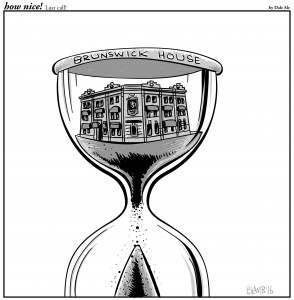
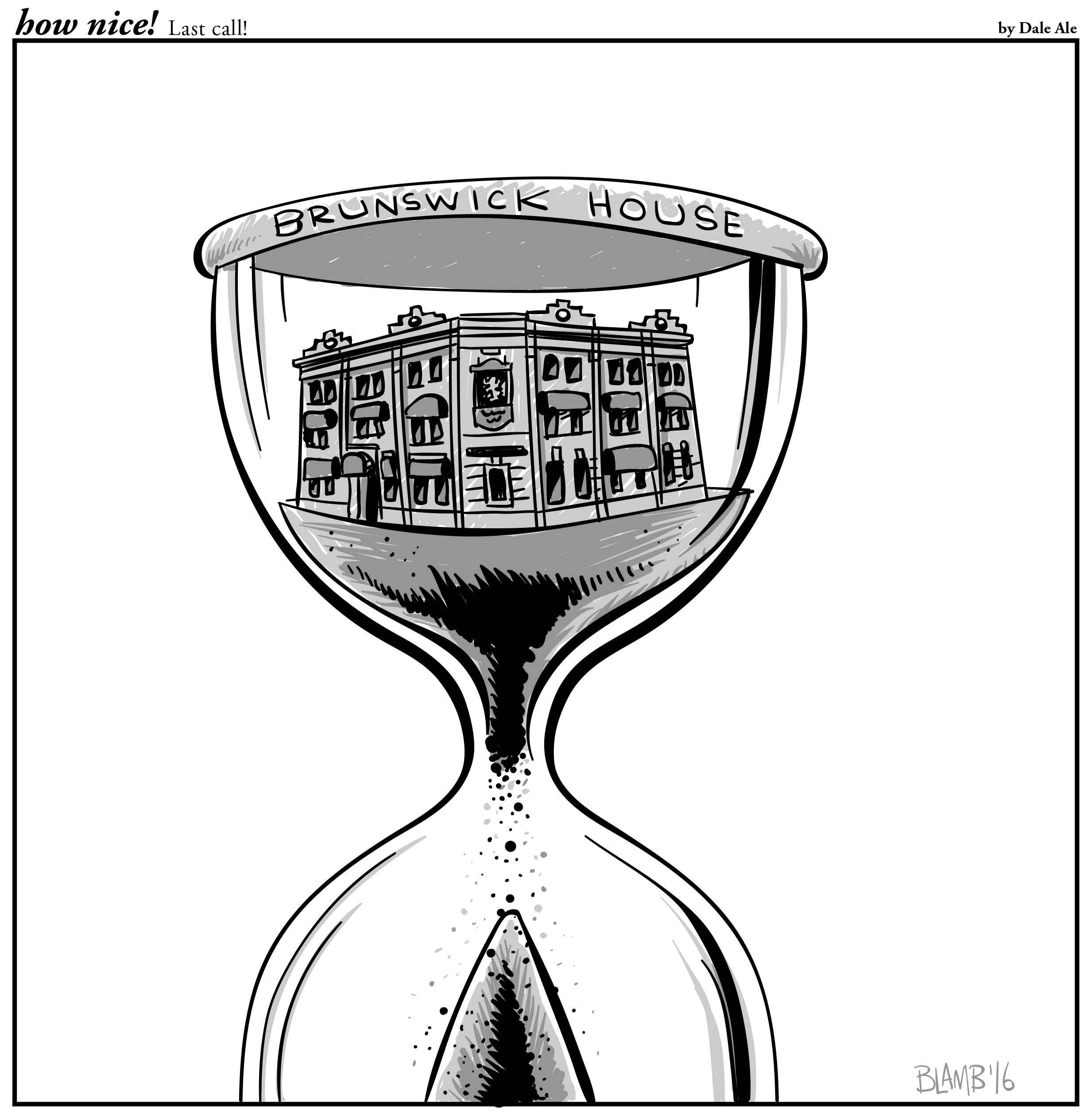
Brett Lamb
Tags: General
January 15th, 2016 · Comments Off on Letters to the Editor
Harris Huron alum

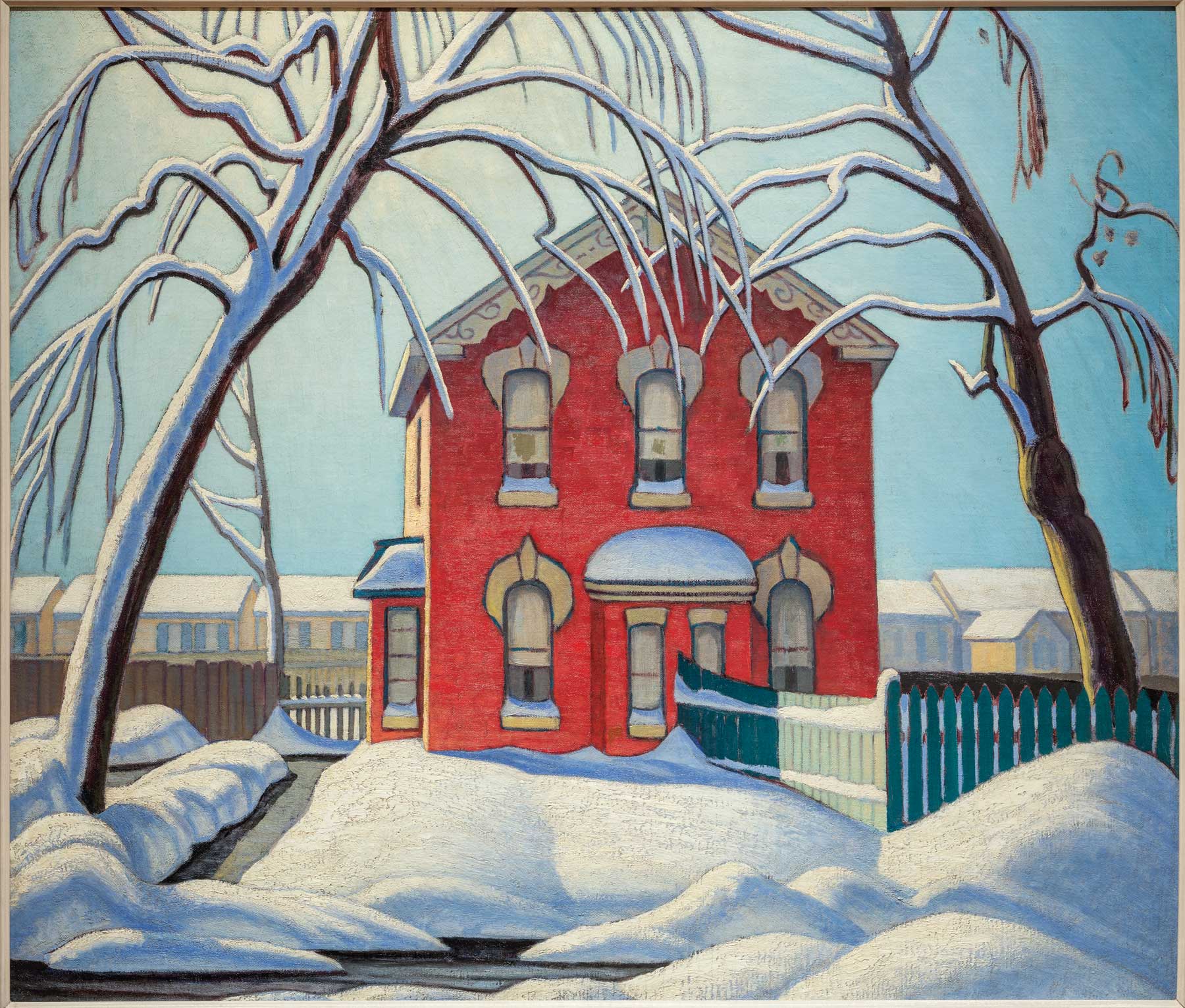
Red House, Winter by Lawren Harris. Courtesy Hart House
Re: Red House, Winter by Lawren Harris (December 2015 Cover)
Thanks Gleaner for that lovely Lawren Harris cover. In addition to the local ties and contributions mentioned in the article, Harris was also an alumnus of local Huron Street Public School.
Happy New Year,
—Simon Wright
Sales Representative
Wright Real Estate Ltd., Brokerage
Filming Harris in the Annex
Re: Red House, Winter by Lawren Harris (December 2015 Cover)
We filmed last Wednesday at the University of Toronto, and I saw your Gleaner outside the Arbor Room. The cover of your issue looks absolutely beautiful!!
You have hooked into a local story, as Harris lived on St. George Street, went to Huron Street Public School and St. Andrew’s College (when it was in a house in Rosedale), and attended U of T, though only for one term — his math professor noticed the drawings in Harris’s notebooks and suggested that he leave to attend art school (that math prof deserves a posthumous Order of Canada for changing the course of Canadian art).
How Harris’s paintings have come to define our sense of place and time…the winter season. So very fine choice!!
One note: Lawren S. Harris didn’t teach at Central Technical School. I believe his son, Lawren P. Harris, attended Central Technical School and taught at Northern Secondary School. He may have taught at Central Tech as well, but I am not sure.
—Nancy Lang
White Pine Pictures
Editors’ Note: Anecdotal evidence suggests that Harris pater taught in Tech’s art department, but we are prepared to be wrong. Please email us at gleanereditor@gmail.com if you can help us solve this or any other local conundrum.
Tags: Annex · Liberty · News · Arts
January 15th, 2016 · Comments Off on Happy New Year from a new Dad with a new perspective
Meeting the prohibitive cost of child care first-hand

Mike Layton and wife Brett Tryon with their new baby Phoebe Layton, whose arrival has made the councillor more committed than ever to making the city affordable for families. Courtesy Hugh Campbell
By Mike Layton
It’s 5 a.m., it’s dark, and I just changed my baby’s diaper. Why won’t she go back to sleep? Is she hungry? She’s been fed. Maybe gassy? She’s been burped. What do I do now?
Phoebe just celebrated her one-month birthday and our lives have already completely changed.
We changed our home. We moved out my wife’s art studio to accommodate the nursery. We changed our eating habits. There are no more complex meals cooked late at night after evening public meetings. Simply leaving the house has become an elaborate affair.
One of the most significant changes for me has been my perspective on how the City of Toronto (and other levels of government) provides (or doesn’t provide) services that support families. I was always sympathetic to the needs of parents, but I am now beginning to have first-hand experience in the matter.
Health care, child care, recreation programming, and accessibility are just a few that I’ve been confronted with recently. More than ever I am thankful to live in a country with universal health care. The cost of a birth alone would have buried my family in debt. I’m sure pediatrician costs would have been equally as financially devastating.
Fortunately, my wife is able to take parental leave for 12 months (sadly the life of an elected official is not as accommodating for new parents), but after that we will be hit with a new monthly expense, almost as large as our monthly mortgage payments: child care.
In 2014 David Macdonald and Martha Friendly wrote a telling report for the Canadian Centre for Policy Alternatives called The Parent Trap: Child Care Fees in Canada’s Big Cities.
Infant care provided by the city costs $107 a day (and it’s going up in the 2016 budget), which at $2,140 a month amounts to over $25,000 a year. In Quebec, it’s just over $7 a day, or $150 per month and $1,800 per year. That means we pay $23,000 more a year in Toronto for infant care than they do in Montreal or Quebec City.
The city does provide around 25,000 subsidized spaces but there are also over 17,000 children on the waiting list for the subsidy. Once subsidies and other forms of care are accounted for, the average infant care cost in Toronto amounts to $1,676 per month — still an incredible amount compared to Quebec’s $150 per month, or even Winnipeg’s $651 per month.
Both the Harper and the Trudeau governments are committed to the Universal Child Care Benefit rather than helping to provide affordable child care. Their $160 monthly cheque covers about 1.5 days of monthly child care costs. That’s merely a drop in the bucket that does little to help families pay for child care.
My family is fortunate enough that with changes to our spending and our mortgage we can make the cost of child care work. It will be tight, but we can make it work. But what do other families do? What if we had two kids in child care? What about single parents? What about those still paying off their student loans?
As kids get older, while some things get easier and less expensive, other things get harder. My nieces will miss swimming classes at the community centre this season because my sister couldn’t get online fast enough to register them — the classes seemed to fill up in minutes. There just aren’t enough spaces offered.
Pushing a stroller through uncleared snow and around improperly placed recycling bins reminds me of a slalom course. We’re often forced onto the street to find a clear path. We don’t own a car, so subway accessibility is key but Christie station doesn’t have elevators yet.
While kids now travel for free on the Toronto Transit Commission (TTC), too many stations and streetcars are inaccessible. Rather than increase property taxes more our last and current mayors are turning to user fee increases. Child care, TTC fares, swimming lessons, dance classes, sports field rates, and much more will go up for families in 2016.
We can make life more affordable in Toronto for everyone if we commit to increasing property tax rates just a bit more: at approximately $1,000 per year lower than the average, ours are the lowest in the region.
Each 1 per cent property tax rate increase is about $27 a year for the average household but brings in over $26 million in revenue to the city. Using taxes helps us to share the costs of public services like child care and transit, but sadly our mayor isn’t willing to go this route and is turning to user fees and transit fare increases — so individuals will continue to pay much more or services will be cut.
Throughout January we will be debating the 2016 city budget and I plan to make affordability and accessibility for families a huge part of the conversation. This is something we need to make an issue of at all levels of government, so that by the time Phoebe’s generation has children, we have made life better for her family and everyone else’s.
Read the Centre for Policy Alternatives’ paper on child care at www.policyalternatives.ca under the section on publications by the National Office.
Mike Layton is the city councillor for Ward 19, Trinity-Spadina.
Tags: Annex · Liberty · News · People
January 15th, 2016 · Comments Off on Creating growth through the arts
Bloor St. Culture Corridor participates in strategy consultations

The Royal Conservatory of Music’s executive director of the performing arts, Mervon Mehta, supports the Ontario government’s open approach to developing a cultural strategy for the province. Courtesy of the Royal Conservatory of Music
By Heather Kelly
The diverse arts organizations that make up the Bloor St. Culture Corridor are playing an active role in setting the province’s cultural priorities by participating in a series of town halls and online forums, and by responding to requests for comment. The consultation process was driven by the Ontario government, which is developing its first-ever culture strategy, a set of principles that will guide the province’s future arts investments.
“The culture industry is such a critical part of the riding,” said Han Dong (MPP, Trinity-Spadina). “I want to ensure we have our say in the creation of the culture strategy, and that everyone has a chance to give input.”
The 19 arts and cultural organizations from Bay to Bathurst streets that make up the Bloor St. Culture Corridor educate, inspire, and entertain more than three million people annually, generating approximately $630 million for the area each year.
It’s a trend that is borne out across the city: 70 per cent of Torontonians regularly attend, volunteer, or donate to the arts. Four times more tourists come to Toronto for culture than for sports, and overnight culture tourists outspend other visitors by two to one. Arts and culture contribute more than $11 billion to Toronto’s gross domestic product each year.
“People often don’t realize the huge role that the culture sector has,” said Dong. “It is an important part of downtown living. The Annex is a good example — walk along Bloor Street and there is so much flavour there.”
A collaborative partnership formed in 2014 to highlight the cluster of arts and culture destinations on Bloor Street West and promote their events year round, the wide range of Bloor St. Culture Corridor organizations — which include the Native Canadian Centre of Toronto, the Bloor Hot Docs Cinema, and the Gardiner Museum, among others — represent nearly all of the priorities defined in the culture strategy discussion paper.
At the heart of that strategy is an understanding, as stated in the Ontario Culture Strategy discussion paper, that “culture shapes and profoundly enriches our lives and communities. Engagement in cultural activities strengthens empathy, cross-cultural understanding, and sense of community.”
Or, as Dong put it, “You cannot have a harmonious and productive society without culture as a fundamental aspect.”
The proposed guiding principles include creativity and innovation; quality of life and economic development; diversity and inclusiveness; respect for First Nations, Métis, and Inuit peoples; public value and accountability; informing investment in the arts and cultural industries, libraries, museums, cultural heritage, arts and music education, cultural diversity, digital content, youth engagement; and, fostering a sustainable culture sector.
Members of the Bloor St. Culture Corridor said they participated in the consultations to show support for the process, network with the province’s other culture producers, and remind the province of the contributions their organizations make to Ontario’s arts industry.
Mervon Mehta, The Royal Conservatory of Music’s executive director of performing arts, went to a town hall “to show support for the open and inclusive process, to make sure that support for music education was on the agenda, to ensure our voices were represented, and to support the sector”.
“I was particularly interested in discovering what fresh ideas colleagues across all the arts are discussing,” said Tim Crouch, marketing manager at Tafelmusik, who added he also hoped for a better dialogue with the provincial government.
Finally, the executive director of Alliance Française de Toronto, Thierry Lasserre, said, “It is always important to be part of public meetings to inform, get informed, and meet colleagues and officials.”
The Ontario government will release its report based on the public consultations some time this year. In 2014-15, the Ministry of Tourism, Culture and Sport, which oversees the province’s arts and culture investment, spent approximately $800 million on culture.
“The arts engage our senses, inspire our imaginations, and challenge our minds,” states the discussion paper on cultural strategy. “They animate our communities and help make Ontario the place we want to live.”
For further information on the Bloor St. Cultural Corridor and Ontario’s cultural strategy, please see www.bloorstculturecorridor.com and www.ontario.ca/page/ontarios-culture-strategy respectively.
Heather Kelly is the Founder/Director of the Bloor St. Culture Corridor, the Director of Marketing, Performing Arts at The Royal Conservatory of Music, and CEO of HKC Marketing.
Tags: Annex · Liberty · Arts
January 15th, 2016 · Comments Off on The power of labelling
An environmental case for less meat on the table

In Australia, labelling for egg cartons must state if the eggs come from caged hens. Photo by Terri Chu
By Terri Chu
With the holidays behind us and some of us going vegetarian until we recover from the gluttony, it is a good time to reflect on the environmental and social impact of the meat on our table.
As the environmental atrocities related to our food chain become better known, there are organizations working in ad hoc ways to educate people on those offences. California has popularized “meatless Mondays” in an attempt to reduce (way too high) meat consumption, as it is far more environmentally damaging to feed the world on meat than on vegetables (or insects). Would it be too much to ask to see both levels of government confront big agriculture?
In the 1990s, the Chrétien Liberals boldly took on big tobacco, requiring that companies include grotesque images on cigarette packages. History would prove this to be an enterprising move and countries around the world have since adopted a similar approach in an effort to curb smoking. This was when Canada took decisive actions beyond smiling words. Canada became a world leader and can do so again. Given the amount of information we already have about animal cruelty in commercial meat farming, I think poignant reminders will go a long way toward curbing our consumption of animal products.
If we brought food labelling in line with cigarette labelling, meat consumption (and the carbon emissions that go with it) would likely plummet. Imagine your next pack of bacon with an image of pigs in cages and the text “This pig was raised in cages that produce xx amount of carbon per pound”. Since some dieticians believe Canadians eat about three times more meat than the average daily recommendation, this could also have a good side effect for the public health care bill.
A friend and I were grocery shopping in Tasmania. She took a look at the cheap eggs on offer, spotted the word “caged” and said “that’s why they’re so cheap”, and moved on past them.
Caged eggs in Australia must be labelled as such (not just without the words “organic” or “free range” or “natural”…whatever that means).
Egg producers are aggressively advertising lately and a friend pointed out the conspicuous lack of hens in the photos. Why aren’t there pictures of hens? It doesn’t take a genius to figure out that they are mostly in battery cages in conditions we would rather be blind towards. A disclaimer stating “These eggs were laid by hens in battery cages” on the packaging could do a lot for how we treat our cheap food.
Labels paralleling cigarette packaging would certainly be a salient reminder of the cost of cheap food. There would still also be a market for cheap food, but my hope is that it would shift demand towards small, more humane farmers who let their pigs roam free.
Please don’t mistake me for a hog-hugging, vegan hippie. I believe meat substitutes are often more environmentally (and health) harming than eating meat in some cases, as substitutes that resemble animal products are often made from petrochemicals. I have yet to see a good environmental (let alone health) case for them.
As we learned with cigarettes, consumer information is half the battle. When the consumers are informed, they make different decisions than when they aren’t. The federal and provincial Liberals really do have an opportunity to work together and stand up to big agriculture and help Canadians make more informed food and environmental choices. Meeting our Paris Agreement obligations means more than just going after big polluters; Canadians also need to know the impact of their shopping decisions if they are to contribute meaningfully.
Terri Chu is an engineer committed to practical environmentalism. This column is dedicated to helping the community reduce energy, and to help distinguish environmental truths from myths. Send questions, comments, and ideas for future columns to terri.chu@ whyshouldIcare.ca.
Tags: Annex · Liberty · News · Food
January 15th, 2016 · Comments Off on Harbord’s history a mystery
Was the street named for a tireless English abolitionist?
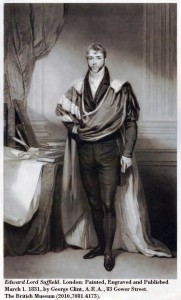
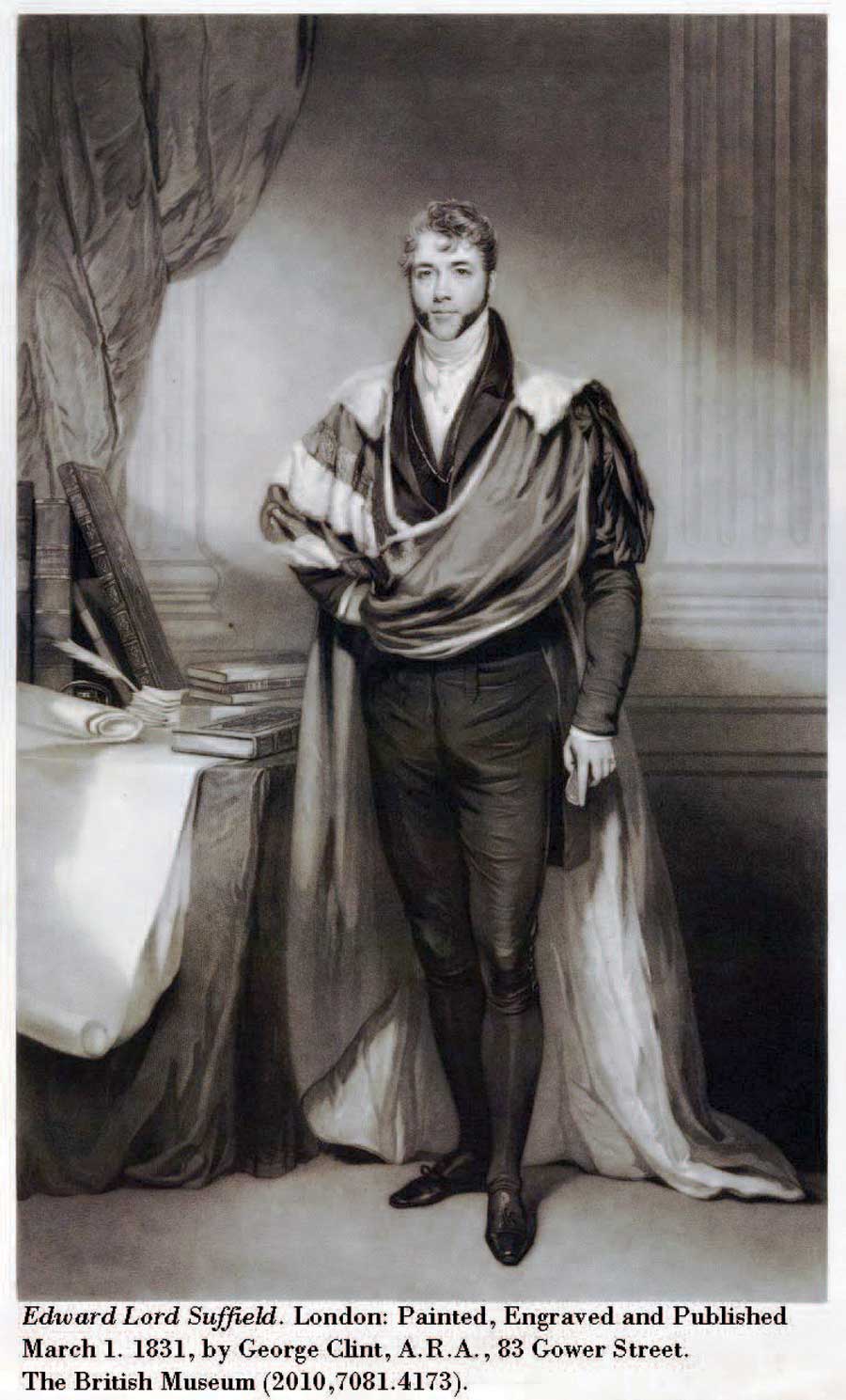
Painting by George Clint from the British Museum courtesy of Wendy Smith.
By Annemarie Brissenden
Harbord Street may have been named for an early nineteenth-century advocate of parliamentary reform and tireless crusader to end slavery, says a past board member of the Harbord Village Residents’ Association.
“I started asking the question a few years ago,” explains Wendy Smith. “I’ve lived in Harbord Village for almost 20 years, but nobody knew about [how the street got its name]. It’s really been a mystery.”
A mystery, but an irresistible one for the amateur historian, who after approximately three years, has come to theorize that Harbord Street is named for Edward Harbord, the 3rd Lord Suffield.
Suffield was born in England in 1781. A second son who gained financial independence through an advantageous marriage, he represented Shaftesbury in the House of Commons, becoming a member of the House of Lords when he succeeded his elder brother in the barony. A self-described liberal who was a Whig, Suffield made his mark as a member of a parliamentary committee investigating “the condition and treatment of slaves”. He was the only abolitionist on a committee that mostly comprised owners of plantations in the West Indies, and came close to collapse during the committee hearings.
Suffield’s role in getting the Slavery Abolition Act of 1833 passed, relates Smith, cannot be understated. She quotes one of his contemporaries, who said “his voice, single as it often was, could not but be listened to.”
The abolitionist never visited Toronto, but Smith believes many on this side of the pond would have been aware of him, including the heads of the Crookshank, Denison, and Baldwin families, prominent landowners who also were active in the politics of the day.
“I like to imagine them in front of the fireplace in one of their homes, brandies in hand, talking over things,” says Smith. Things like what to name the “ramrod straight street” south of Bloor Street that traversed their adjacent properties.
She argues that the abolition movement was regularly chronicled in the newspapers and memoirs of the day, and many British abolitionists moved to Canada bringing with them their stories.
Among them was author Susanna Moodie, who in England knew the secretary of the abolitionist movement, and became very good friends with Robert Baldwin after her arrival in Upper Canada. Perhaps Smith’s most exciting — and recent — discovery is that in 1834, Suffield sponsored the immigration of a group of farm labourers to Upper Canada. A decade later, in 1854, Harbord Street had its name.
Smith is still developing her theory; she hopes to travel to England to find the records of those who resettled here, perhaps uncovering a more conclusive connection.
“It’s a splendid piece of research,” says David Raymont, the president of the York Pioneer and Historical Society. Known as the York Pioneers, the city’s oldest heritage group was founded in 1869 by a group of men — many of whom where veterans of the War of 1812 — who could remember when Toronto was still called the Town of York.
Smith, a member and former board member, presented her theory at the society’s December meeting.
The avid student of Toronto’s early history, as well as the history of Upper Canada, won a Heritage Toronto Award of Excellence (Media) in 2014 for the Toronto Park Lot Project: an interactive online map with clickable layers that allows users to uncover how history and geography intersect.
“It’s important going forward to know where we came from,” says Smith. “As I have learned [more and more], I am just astonished at how profoundly ignorant I have been all my life about the place I live.”
“There’s so much to be learned about the development of this city,” adds Raymont. “People who did things didn’t keep records or share why they did things, and that disconnects us from the roots and concepts of people who shaped it.”
Wendy Smith will present Edward Harbord, 3rd Lord Suffield, at the Palmerston Branch of the Toronto Public Library on May 26 at 7 p.m. To learn more about the Park Lot Project, please visit http://wendysmithtoronto.com/parklotproject/.
To learn more about the York Pioneer and Historical Society, please visit www.yorkpioneers.org.
This article has been updated since it was originally posted: 1844 was corrected to 1854, and Edward Suffied, 3rd Lord Suffield, was corrected to Edward Harbord, 3rd Lord Suffield. The Gleaner regrets the error.
Tags: Annex · News · People
December 5th, 2015 · Comments Off on A red house in winter
Group of Seven member Lawren Harris, who painted Red House, Winter, shown on this year’s holiday cover, not only has many links to the Annex, but to this issue as well. He attended the University of Toronto, taught visual art for a time at the Central Technical School, and painted several depictions of the Ward before the First World War. His time in Toronto’s first immigrant neighbourhood — what some called a slum — is recounted in The Ward, which was reviewed in a previous issue, and features in our Year in Review.
Part of Hart House’s permanent collection at U of T, Red House, Winter (Oil on canvas, 88 x 103 cm) “fuses Harris’s early, post-war subject matter — derelict buildings in Toronto — with his increasingly abstract impulses, as well as his long-standing interest in what he romanticized as the Great White North,” writes Elizabeth Went in A Story of Canadian Art: As Told by the Hart House Collection. “The acquisition of this work was no doubt a clear response to the growing backlash against the Group of Seven, founded on the notion that they were self-indulgent painters unconcerned with everyday Canadian life. It also, however, fulfilled a very practical need: it filled a gap in the collection, both in terms of Harris’s work, and in terms of depictions of Toronto.”
The Gleaner wishes to thank Rebecca Gimmi and Marsya Maharani from the Justina M. Barnicke Gallery at the University of Toronto Art Centre for their help in producing this cover.
—Annemarie Brissenden/Gleaner News
Tags: General
December 5th, 2015 · 1 Comment
Imagine an alternate reality where everyone speaks in quotes from Star Wars films. That’s the world Annex residents Mark McIntyre and Andrew Chapman — who describe it as “every fanboy’s fantasy” — have created in their upcoming film, Bar Wars, a live-action short that follows Chapman as he tries to pick up women. Most of the action takes place in the “Lab”, the Labyrinth Lounge on Brunswick Avenue.
“Girls and Star Wars quotes. They usually don’t go together, but in our movie they do,” said McIntyre, who in the film coaches Chapman on what and what not to do.
Chapman and McIntyre, who also run Kessel Run Studios, through which they help actors create tapes and scene-studies to send to casting directors, drew on their close network for support in making Bar Wars.
“We are so lucky to have so many talented friends,” added Chapman, explaining that their friends made up the entire cast and crew for the film, which was shot entirely in the neighbourhood.
“It’s almost like a little love letter to the Annex,” said Chapman.
The film, also an homage that celebrates the latest instalment of the science fiction franchise Star Wars: The Force Awakens, will be released Dec. 14 via YouTube, and on www.facebook.com/KesselRunStudios.
—Summer Reid/Gleaner News
Tags: Annex · News
December 5th, 2015 · Comments Off on Man charged with sexually assaulting patient
An alternative medicine practitioner has been charged with sexually assaulting a patient at his independently-owned Natural Healings Health Solutions clinic on Bloor Street West.
A 22-year-old woman has alleged that 53-year-old Mark Lennard assaulted her while receiving treatment at the clinic for back pain. He was arrested on Nov. 9, charged with two counts of sexual assault, and is scheduled to appear in court on Dec. 16 at Old City Hall. Toronto Police Service (TPS) officers have reason to believe that there may be more victims. If you have any knowledge regarding this or any other incidents, please call the TPS at 416-808-1400, or Toronto Crime Stoppers at 416-222-8477.
—Corrina King/Gleaner News
Tags: General
December 5th, 2015 · Comments Off on Tentative deal for UTS
Private school to renew lease for 50 years
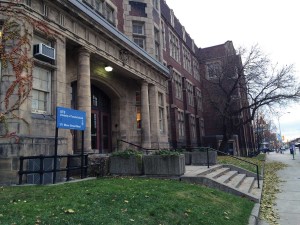
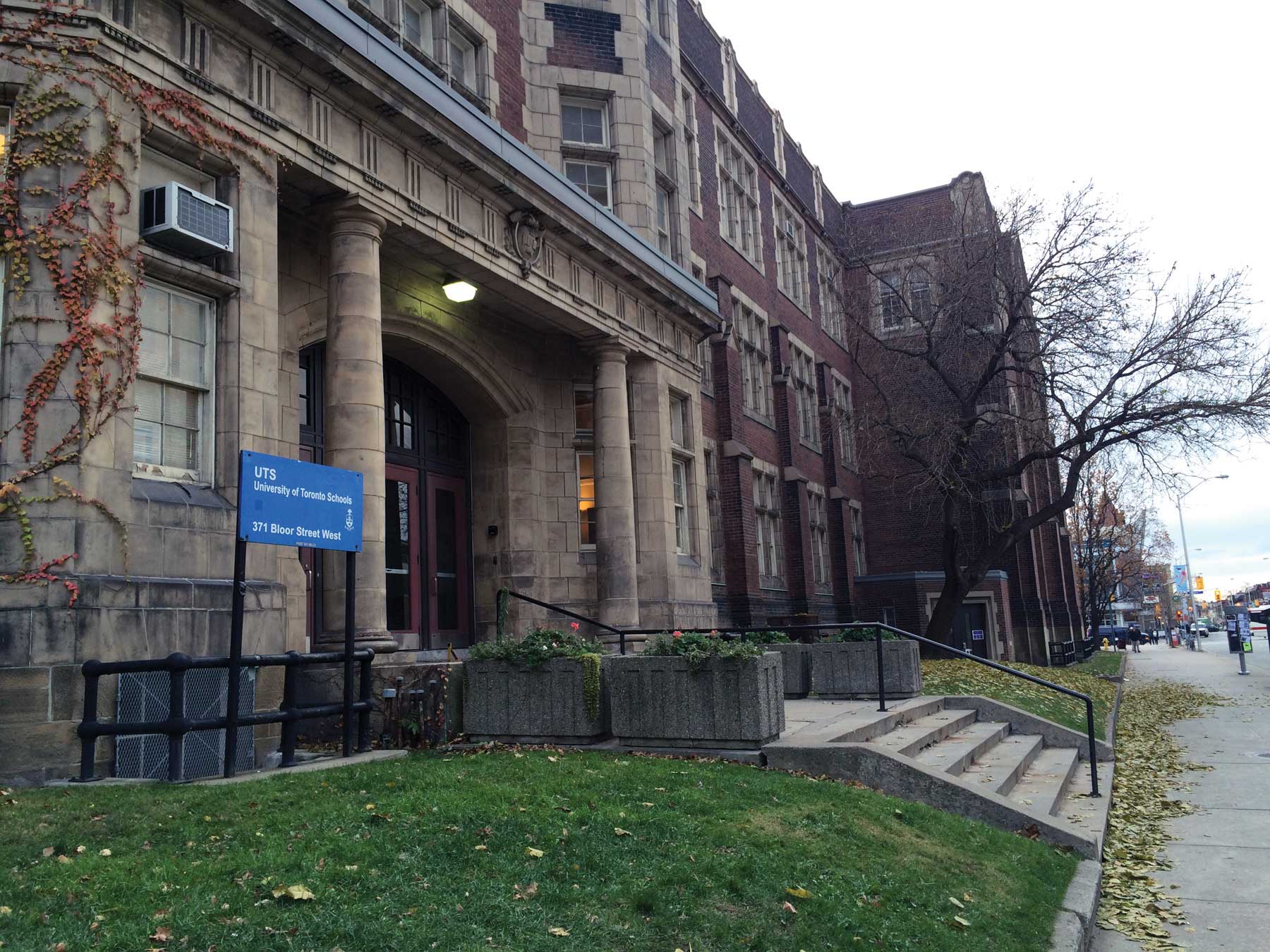
Parents and students are relieved that UTS will remain in the Bloor Street building it has called home since 1910 well into the foreseeable future. The lease also includes provisions for physical improvements to the building, heritage restoration, and the addition of a multi-use auditorium. Marielle Torrefranca, Gleaner News
By Marielle Torrefranca
The University of Toronto Schools (UTS), an independent high school for high achievers, is staving off eviction after reaching a 50-year lease renewal agreement with the University of Toronto.
The deal is still dependent on the approval of U of T’s governing council and is expected to be discussed further on Dec. 15, said Jim Fleck, chair of UTS’s board of directors.
The lease includes provisions for physical improvements to the 105-year-old building, heritage restoration, and a new 700-seat multi-use auditorium. UTS would also contribute $1.5 million to the redevelopment of the university’s Robert Street playing field into an open air athletic field, said Scott Mabury, U of T’s vice-president, university operations.
While UTS would pay construction and operating costs, U of T would retain ownership of the land and is still actively planning to develop the rest of the site.
“The amount of work to date is more notional, so we can work at a project agreement [to] ensure the partnership and decision making moving forward,” said Mabury, explaining that these plans are still in their infancy and there has been very little work on detail.
“I can’t tell you what it’s going to look like yet, because nobody knows,” he added.
Fleck, who noted that they’ve still to find an architect, said that if the deal is finalized, the next step would be to lay out the construction plans. Depending on fundraising and building permits, redevelopments could start as soon as the summer of 2017.
“Whatever we do will respect the neighbourhood,” said Fleck. “I think we’ve always got along with everyone there and the surroundings [and we] hope to retain that positive relationship.”
This renewal is a change of course for the university. In 2011, U of T rejected a $48-million proposal to refurbish the affiliated high school and gave UTS a 10-year eviction notice, stating it would need to be out of its current location by 2021.
At that time, funding UTS was perceived as too big a financial burden for the university, said Fleck. “It’s certainly not part of their core strategy to help a high school.”
But UTS has now shown it can survive on its own, and the past three years of developing strategies and creating relationships with different parts of the university have been fruitful.
He explained that the school’s significant tuition fees ($23,590 for the 2015-16 academic year, with an enrolment fee of $2,500) provide the capital it needs to operate.
“We’re running a positive operation that is not in deficit,” said Fleck. “So we then sort of initiated a new conversation with the university – not only on the basis that we can support ourselves, but that we can make a major contribution to the mission of the university.”
For U of T, it was a matter of considering the value of the space occupied by UTS, and having shared access to the new and improved facilities was a large component of the conversation.
“We are receiving cash and receiving assets we will have access to, like the auditorium,” Mabury said. “I believe that both sides think we’ve come up with a pretty good fit.”
UTS has been calling the building on 371 Bloor St. W. home since 1910.
In light of the eviction notice in 2011, the board underwent an extensive search, but it was unable to find a viable alternate location, said Fleck.
UTS’s current location is one of the school’s key assets, said Ramona Rea, whose daughter Emily graduated last year.
In addition to being close to both major subway lines, being located on a university campus is appropriate for a university preparatory school, said Rea.
“Being on the university campus also brings that extra element of being amongst other kids that are at a higher academic level,” she said. “Having access to the [U of T] libraries is a big benefit.”
“[Emily] loved it,” Rea said of her daughter, who is now in her second year of a business program at McGill University. “I feel it was a great educational experience for her and she has just recently expressed the same thing — that she feels very well prepared for university.”
Notable UTS alumni include Mayor John Tory, former immigration minister Chris Alexander, and Olympian Laurie Graham.
Tags: Annex · News