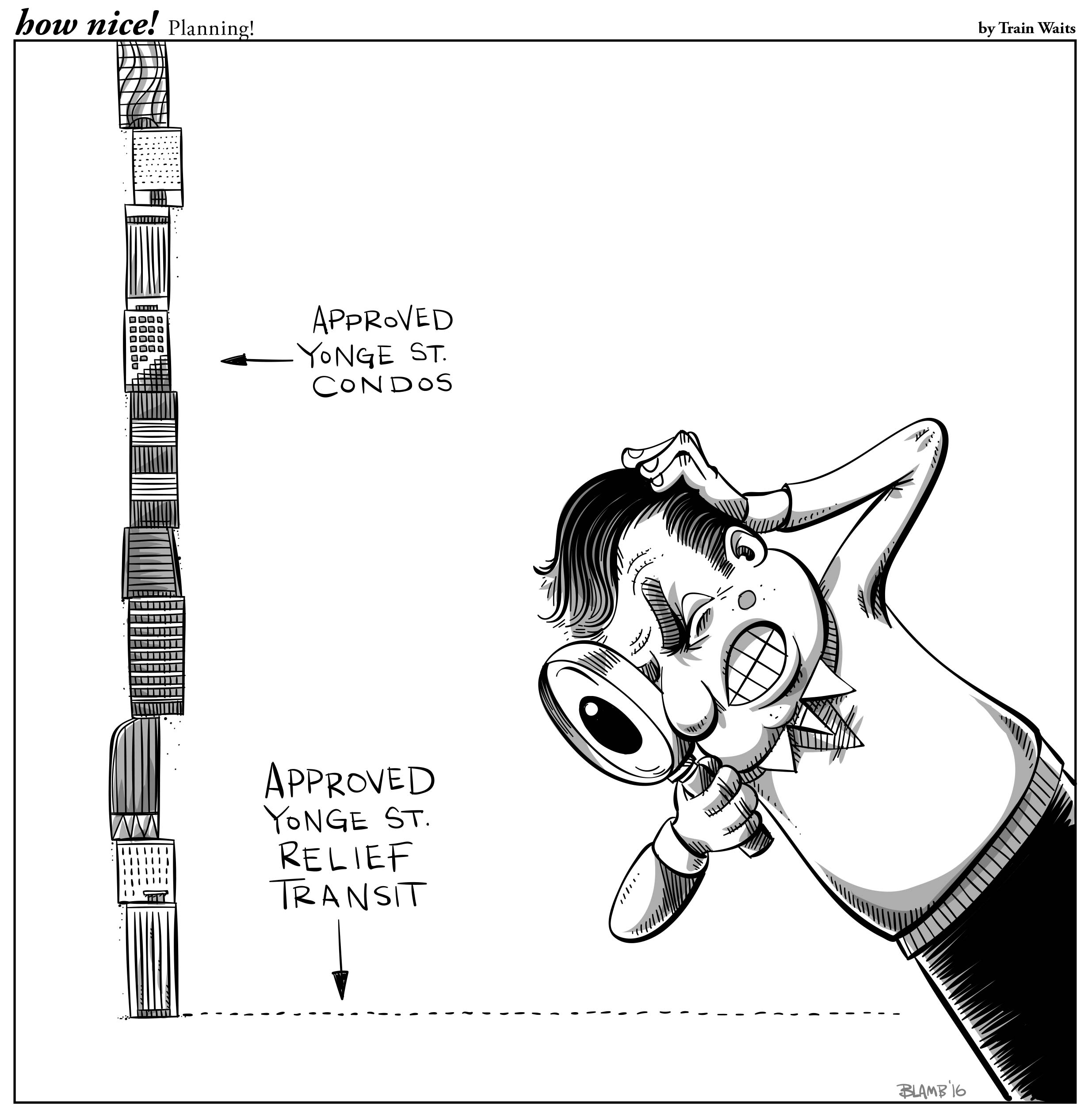
September 15th, 2016 · Comments Off on EDITORIAL (SEPTEMBER 2016): Train derailment changes the conversation
The August 21 twin train derailment on the Canadian Pacific Railway (CPR) line at Dupont Street is a reminder of just how much of a potential disaster is ticking away on our doorstep. It adds urgency to what is no longer a theoretical conversation.
The two CPR freight trains failed to execute a safe pass of one another when heading in opposite directions. Two westbound locomotives came off the tracks along with several of the rail cars from the eastbound train that were hit behind the engines. What if those cars were carrying hazardous material? What if that material was released and combusted, what is the loss of life predicted? What would be the property damage?
This issue of rail safety has long been a concern for area residents as trains became longer and the cargo they carry increasingly hazardous in nature. No one consulted Annex residents, or residents in any city or town in the country for that matter, as the materials on these trains shifted from logs, coal, and grain into stuff that explodes like ethanol, propane, and volatile crude oil.
[pullquote]We need to be mindful of the danger in our midst and to mitigate against it with greater urgency[/pullquote]
Just about every day we hear about public hearings, disputes, and protests about this pipeline and that pipeline, and the many regulatory hurdles any proposal must overcome before anything comes to pass. But with train transport they did it in an almost as-of-right fashion.
In 1979, not that long ago, a CPR train derailment in Mississauga caused rail cars carrying propane to rupture and, when combined with substances including chlorine and caustic soda leaked from other cars, the mixture exploded into a fireball that shot 5,000 feet in the air.
Over 200,000 residents were relocated in the largest peacetime evacuation in history until 2005 when New Orleans was cleared in response to Hurricane Katrina. Surprisingly, there was no loss of life associated with the Mississauga incident. Mississauga is a much more populous place today and if one were to apply that accident as a template over today’s Mississauga the results likely would be different.
The 2013 rail disaster at Lac-Mégantic, Quebec, has more resonance for us as it is more recent, involved the loss of 47 lives, and devastated a small town. Moreover, what is chilling is the fact that those rail cars carrying the bakken crude oil that proved to be so volatile came through the Annex on the CPR line only days earlier.
It’s helpful to be reminded that main line rail derailments are down overall across the country, and that things are getting incrementally better. Despite this, we need to be mindful of the danger in our midst and to mitigate against it with greater urgency.
It’s a difficult thing managing risk as risk is everywhere of course and it’s all relative but somehow the juxtaposition of the Lac-Mégantic disaster and the recent Dupont Street derailment has changed the perception of risk assessment. The August 21 Annex derailment reminds us that accidents will happen. No amount of additional training, improved infrastructure, or system changes is going to change that fact. Re-routing trains carrying hazardous material around major urban centres mitigates that risk since the consequences of an accident are predictably less.
Our local Member of Parliament, Chrystia Freeland, who is also the Minister of International Trade, campaigned on rail safety — both a local and national issue — during the recent election. She brings a personal perspective to the federal level, as the home that she shares with her husband and three children looks out over these very tracks. It may be time for her to walk the walk on this issue from her seat at the cabinet table.
READ MORE:
NEWS: Trains in the night (September 2016)
ON THE COVER: Dupont rail derailment (August 2016)
NEWS: Rail safety focus of town hall (May 2016)
FORUM: Where do your LPC, NDP, and GPC candidates stand? (September 2015)
NEWS: Inaction frustrates residents (May 2015)
NEWS: Risky Rails? (February 2015)
Tags: Annex · Editorial
September 15th, 2016 · 1 Comment
Building up will allow us to create the sizable park downtown needs
By Joe Cressy
A central park in downtown Toronto. It’s an old idea whose time has come. Now, all we need is a little creativity, political will, and a commitment from Toronto City Council to invest significant money to make it happen. Let’s get it done.
Last month I was pleased to join Mayor Tory in announcing our intention to deck the rail corridor between Bathurst Street and Blue Jays Way to build a new 21-acre signature park. That’s the size of Christie Pits. Or, put another way, 16 full-size football fields.
This will be a new central park for all of Toronto.
Now, why is such a new signature park in downtown Toronto needed? Well, it starts with livability. Public spaces — parks and community facilities — make our neighbourhoods livable. For residents and families in downtown, parkland is not only critical, it is desperately needed.
Over the next 25 years the population of downtown Toronto is expected to double to nearly 500,000 people. And in the local neighbourhood where Rail Deck Park will be located, the population has already grown from 945 people in 1996 to 50,000 residents today. Those are simply astounding numbers. Unfortunately, the development of new parkland has not kept pace with this growth.
[pullquote]Decking the rail corridor, just like building the new Bentway Park under the Gardiner, is the type of thinking we need.[/pullquote]
The reality for many downtown residents, especially those living in condo towers, is that the park becomes your backyard. The local community centre becomes your play room. It’s these public spaces that make our neighbourhoods livable and our city great.
It should be stated explicitly that a new central park in downtown will not be just for downtowners. It will be a new central destination for all of Toronto.
Now decking the rail corridor — literally building a structure in the air for a park — will not be easy, but it is possible. Cities around the world have proven that it can be done. Millennium Park in Chicago, Federation Square in Melbourne, and Hudson Yards in New York have already shown us the way.
As our city continues to grow, we have to be more creative about how we create public spaces and parks. There simply are not 21 acres of land waiting to be bought or assembled in downtown Toronto. The only way we can create new signature public spaces is by thinking outside the box. Decking the rail corridor, just like building the new Bentway Park under the Gardiner, is the type of new thinking we need.
Since I announced our Rail Deck Park plan last month the overwhelming response has been positive, but also understandably skeptical. How much will it cost? Will it happen in my lifetime? Will city council really vote to spend significant money for a park in downtown? These questions have been asked again and again.
Let’s be clear, building this park will require a significant investment, but in the context of the cost of land in downtown Toronto, it is an effective use of public funds. The City of Toronto collects funds from developers to acquire parkland. These funds — under Section 42 of the Planning Act — can only be spent on one thing, buying parkland. In downtown Toronto the going cost of one acre of land is in the $50 to $70 million range. By purchasing the air rights over the rail corridor and building above it, we can significantly reduce that per acre cost. Moreover, it allows us to develop the type of large signature park we need.
That’s not to say this is cheap. Anything but. But for too long big ideas in Toronto have fallen on the floor of a nickel and diming city hall. In this case, Mayor Tory and I have teamed up to make this project a reality. Together, we intend to build the political support at city hall and funding support from the provincial and federal governments to make it happen.
Rail Deck Park won’t happen overnight. It will take years. But it is bold. It is ambitious. And it is exactly the type of big thinking Toronto is ready for.
Rail Deck Park is about planning for the future needs of our city. Let’s get it done.
Joe Cressy is the councillor for Ward 20, Trinity-Spadina.
READ MORE
NEWS: Green sanctuaries in the heart of the city (June 2016)
NEWS: City seeking street greening opportunities (February 2016)
READ MORE BY JOE CRESSY:
FORUM: Building a livable city (July 2016)
FORUM: Bike lanes on Bloor Street (May 2016)
FORUM: Untapped potential (February 2016)
Tags: Annex · Columns · Opinion
September 15th, 2016 · Comments Off on FORUM (SEPTEMBER 2016): Inclusive prosperity
Supporting an open society by embracing global trade and immigration
By Chrystia Freeland
When it comes to issues of trade, we are living in a complicated time. In many countries in the western industrialized world there is a tremendous popular backlash against international trade and immigration. We are not immune to these forces in Canada, but we do have a strong national cross-party consensus around what we call the open society: a diverse multicultural society that is open to immigration and plugged into the global economy.
So how did we get to that consensus and what can we do to maintain it?
For our government, this consensus actually starts with economic policy at home.
Our first priority is to support our middle class and the people who are striving to join it, because we believe that a strong and prosperous middle class is the key to supporting the open society.
What have we done about it?
[pullquote]We pay a lot of attention to embracing and integrating all those who settle here.[/pullquote]
We introduced a new tax-free benefit paid to Canadian families with children, the Canada Child Benefit. The Canada Child Benefit is targeted to provide more tax-free help to families who need it, and it’s generous enough to provide a guaranteed annual income for Canada’s most in-need children.
We also cut taxes on middle class incomes, and we paid for that by increasing taxes on top earners; we know income inequality is real and we think it’s the job of government to lean against it. And we made changes to the Canada Pension Plan that will significantly increase the retirement incomes of middle class Canadians in the future.
For me this focus on supporting the middle class is directly connected to the two pillars of the open society: being open to the global economy and being open to immigrants and immigration. More than 50 per cent of people living in our city are foreign born, and our immigration policy enjoys a lot of public support.
Why is that?
In Canada, we pay a lot of attention to embracing and integrating all those who settle here. A central part of that process is a policy that was put in place by Pierre Elliot Trudeau: the policy of multiculturalism. We believe that our diversity is our strength. We’re not strong in spite of our diversity; we’re stronger because of it.
Being open to the global economy, the other pillar of an open society, means building a trade policy that is centred around supporting middle class jobs and incomes. It’s also vitally important for us to understand there are legitimate reasons why people might be concerned about trade agreements and to focus on addressing those concerns.
One way we’re doing that is by focusing a lot of our trade policy on small- and medium-sized businesses. The technology-driven globalized economy makes it possible for even very small companies to be part of the global economy from day one, and it’s important that we build agreements and trading relationships that communicate and embrace that reality.
We also need to address the very legitimate concerns that people have around the ability of democratically-elected governments to regulate areas like labour rights, the environment, and the public sector.
The Canadian and European Union Comprehensive Economic and Trade Agreement (CETA) is a new approach that targets those very areas by enshrining the rights of governments to regulate, and makes arbitration more transparent and independent. That’s a big part of what makes CETA a better, more progressive trade agreement.
In 1945 an Austrian immigrant to the United Kingdom named Karl Popper warned that: “If we are not prepared to defend a tolerant society against the onslaught of the intolerant, then the tolerant will be destroyed and tolerance with them.”
I believe that while history doesn’t repeat itself, it does rhyme. Once again, the open society is under threat, and those of us who believe in it must work together in its defence.
We, as Canadians, with a really strong partnership between government, business, and civil society, can remain an open society at home and be a very powerful and welcome voice for it around the world.
Chrystia Freeland is the Minister of International Trade and the Member of Parliament for University-Rosedale.
READ MORE BY CHRYSTIA FREELAND
FORUM (December 2015): Getting down to work
FORUM (SEPTEMBER 2015): Ensure capitalist democracy delivers for everyone
Tags: Annex · Opinion
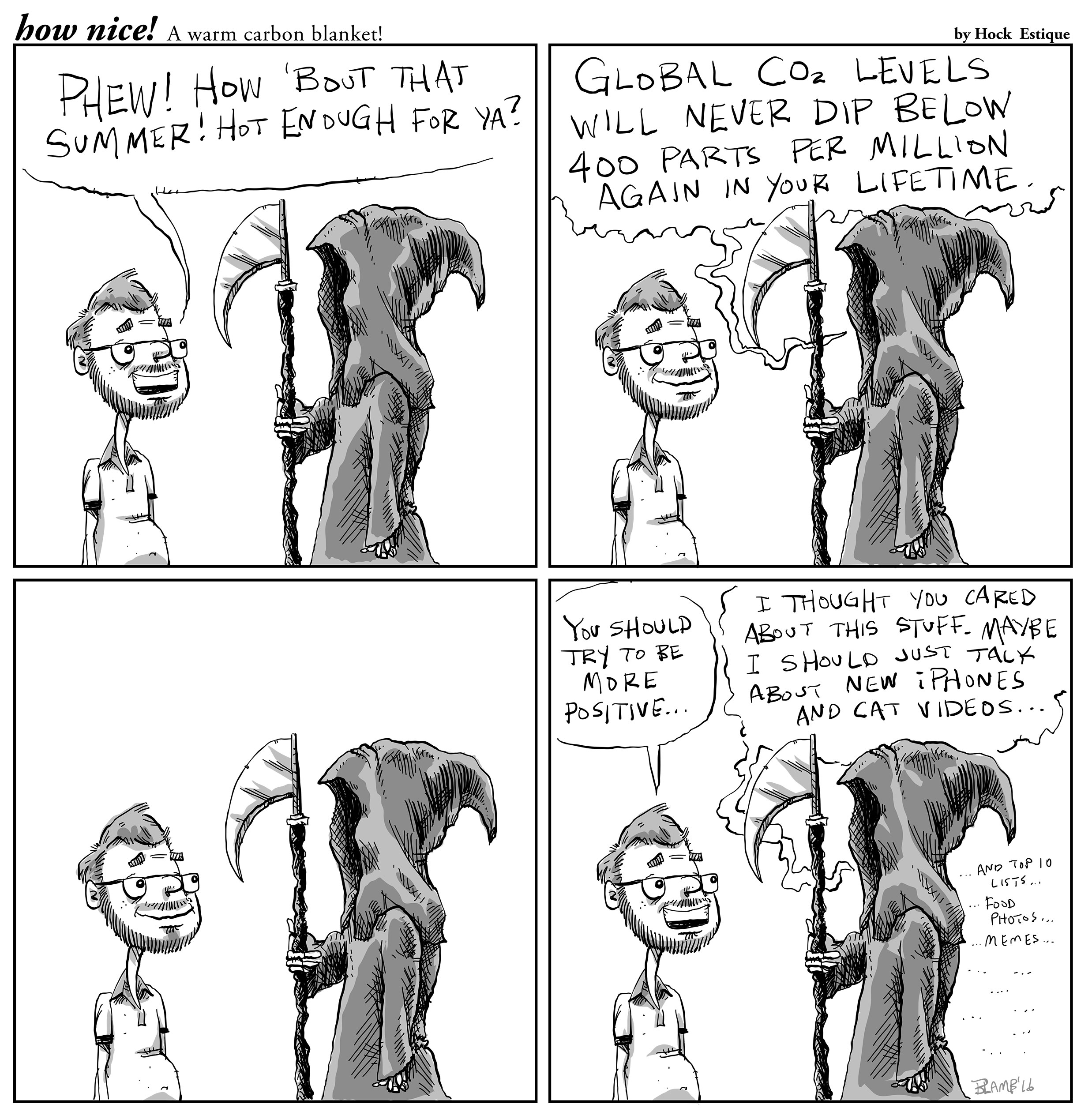
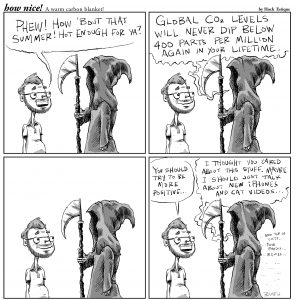
September 15th, 2016 · Comments Off on EDITORIAL CARTOON (SEPTEBER 2016): A warm carbon blanket! By Hock Estique
MORE how nice!:
A clear path! by Dot Tedline (August 2016)
Planning! by Train Waits (July 2016)
Water, water, everywhere! by W.H. Consin (June 2016)
How to meet your quota! by Otto Mobile (May 2016)
A carpet of green! by Don Mower (April 2016)
Tags: Annex · Editorial
September 15th, 2016 · 2 Comments
Bohemian Embassy tribute honours founder Don Cullen
By Annemarie Brissenden
At one time, it was one of the few places in Toronto where you could be a little bit different. It was a launching ground for some of Canada’s most legendary cultural icons, like Margaret Atwood and Lorne Michaels. It was even an ersatz university for some. There was never anything like it before nor has there ever been anything like it since. And later this month, a group of artists will gather together at the Yorkville branch of the Toronto Public Library to play tribute to the Bohemian Embassy and its founder Don Cullen.
Founded in 1960 on St. Nicholas Street, the Bohemian Embassy was a coffee house whose four incarnations also included stints at Rochdale College (an experimental university on Bloor Street that ran from 1968 to 1975), Harbourfront, and Queen Street West in the early 1990s.
“I got the idea from a friend who had a house that was dedicated to the arts,” said Cullen, an actor and writer who worked for many years at the CBC. “He had a huge classical music collection, and had people over every night for coffee.”
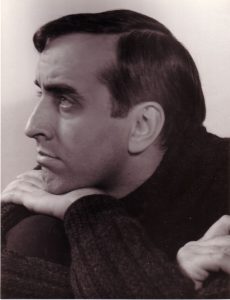
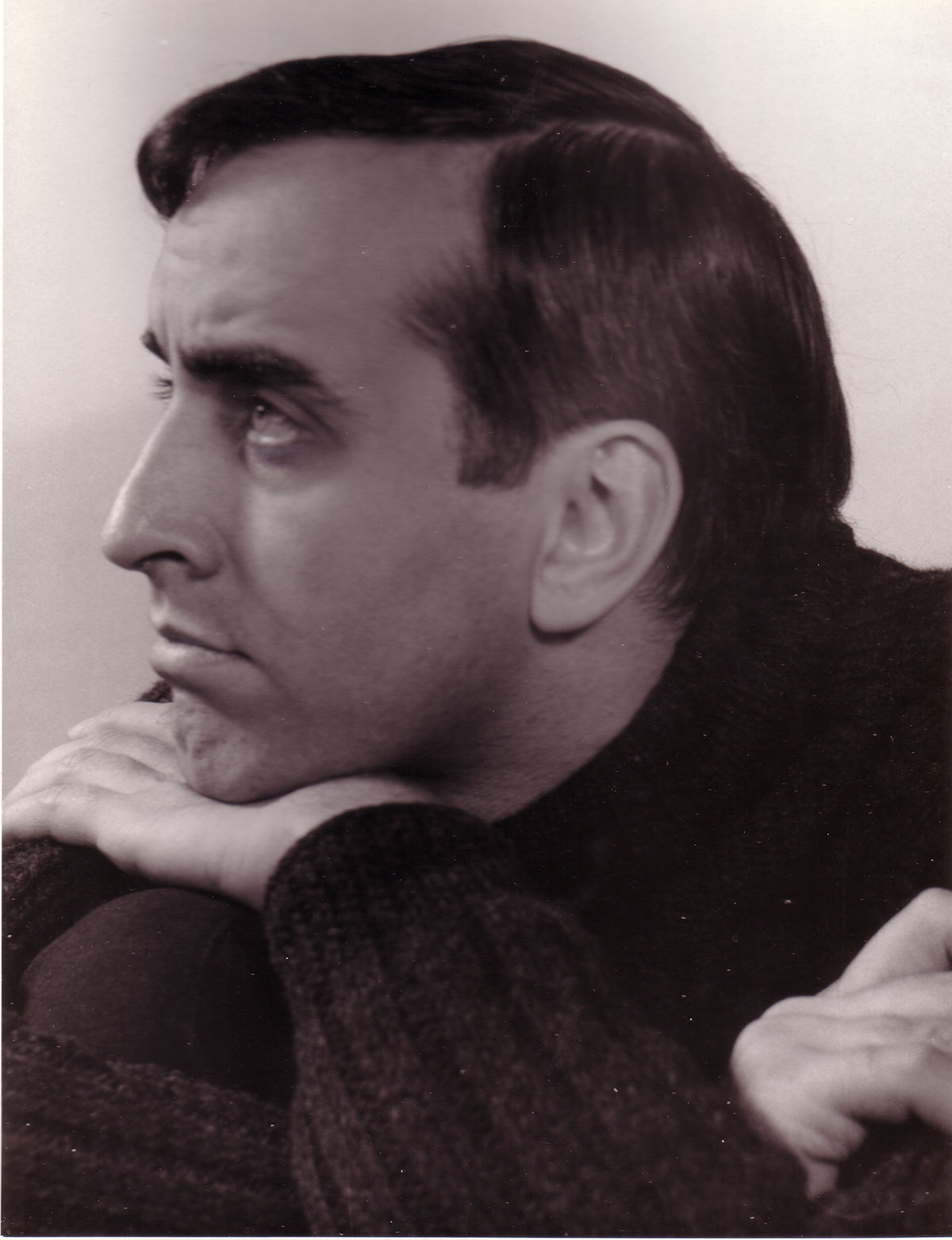
PHOTO COURTESY DON CULLEN: When founding the Bohemian Embassy, Don Cullen (pictured) was influenced by the coffee houses of 18th-century London attended by people like Samuel Johnson, James Boswell, Oliver Goldsmith, Henry Purcell, and John Locke.
The name came to him from a throwaway comment of a colleague, who had described an apartment a group of friends were sharing as a bohemian embassy.
“It was something she tossed off, but I thought it was a great name for coffee house.”
With a wide interest in the arts and other intellectual pursuits, Cullen had always admired the coffee houses of 18th-century London that were attended by people like Samuel Johnson, James Boswell, Oliver Goldsmith, Henry Purcell, and John Locke.
Although there were other coffee houses in the city at the time, each only had one focus, usually music. What Cullen wanted was something that would be home to a variety of performances, including sketch comedy, drama, poetry, and, of course, music.
“A lot of people might see it as folk music, but it was more than that,” said David Woodhead, a musician with the Perth County Conspiracy who played the Embassy during its fourth incarnation in the 90s. “There was quite a lot of variety in the types of entertainment: comedy, spoken word…a magician, an Elizabethan lute player. Gwendolyn MacEwen and Milton Acorn would show up.”
Linda Goldman, who is organizing the tribute, characterized Cullen as “a Toronto treasure [who] gave a lot of people their careers, [and a] venue for their start”.
[pullquote]“It was a wonderful university, because you could learn so much from the other performers”—Chick Roberts, musician[/pullquote]
She met Cullen a few years ago, and learned of what she termed “his monumental role in the city’s literary, theatrical, and musical scene”. Many of the singers she adored as a teenager in the 1960s — Gordon Lightfoot, Ian and Sylvia — got their start or played at the Bohemian.
“We were large enough that we could pay people,” said Cullen. “Gordie [Lightfoot] worked for $15 a night. Mind you, coffee was 10 cents then.”
Cullen also listed Margaret Atwood, MacEwen, and Al Purdy, “now a statue in Queen’s Park”.
“I’m pretty certain that Irving Layton showed up,” said singer Joanne Crabtree, who like Woodhead will perform at the tribute. “This venue was a lot more than a folk club; it became a magnet for a lot of young people escaping from the burbs.”
Actor and singer Chick Roberts described it as a “wonderful university, because you could learn so much from the other performers.”
“I wanted a cross-section of different things,” said Cullen, who added that English coffee houses were sometimes “referred to as penny universities”.
Everyone is quick to point out that while the diversity contributed to the Bohemian’s uniqueness, it was really Cullen’s role as a mentor figure that made the place what it was.
“Don bent over backwards to give you a venue to play,” said Woodhead, describing how he brought a kind of nurturing to it. “He always seemed glad to see you, hear you.”
Roberts said it was a “place where you could try songs and experiment. You could do anything, plays no other theatre in Toronto would try.”
“The Bohemian Embassy was for me like having a child,” said Cullen. “You want it to work to be important and fun and hopefully worthwhile. And it was. So I feel good about it.”
The Yorkville branch of the Toronto Public Library (22 Yorkville Ave.) hosts Remembering the Bohemian Embassy on Sept. 23 from 6 to 9 p.m. in the program room.
READ MORE:
ARTS: Unveiling literary history (September 2015)
ARTS: Chiarandini’s hippies on canvas (May 2015)
ARTS: Laugh-out-loud funny, cringingly frank, desperately tender (February 2015)
Tags: Annex · Arts
September 15th, 2016 · Comments Off on ARTS (SEPTEMBER 2016): Molly Johnson launches new jazz festival
Kensington Market to host an “insane roster of amazing musicians”
By Annemarie Brissenden
Although Kensington Market has a long history of incubating musical talent, it hasn’t been home to a live musical festival that perhaps best embodies the area, whose Victorian homes, improvised stalls mixed between long-standing businesses, and quirky culture unite into a syncopated rhythm that is very much its own.
Until now.
The Kensington Market Jazz Festival (KMJF), running Sept. 16 to 18, will feature over 100 artists performing at nine venues throughout the market. Complemented by art, fashion, and film pop-ups, as well as fundraisers to support local charities, the jazz festival is decidedly a homegrown showcase for local talent.
“The festival is primarily built around local talent,” said Mika Bareket, a board member of the Kensington Market BIA, one of the KMJF’s sponsors. She owns Good Egg and lives in the neighbourhood. “Some [of the performers] are people who live in the neighbourhood that I didn’t realize were musicians.”
Among the performers are Don Thompson, Joe Sealy, Dave Young, and Jane Bunnett, all of whom are Order of Canada members, as well as Carol Welsman, Sophie Milman, and Alex Pangman.
The festival is the dream child of singer-songwriter and longtime market denizen Molly Johnson.
“Molly came in like a light; so enthusiastic and so organized,” said Bareket. “Music has a rich tradition in Kensington, but jazz has a more subtle sound that tends to get drowned out by the DJs and drums” of other festivals like Pedestrian Sundays.
“I’ve loads of very talented friends looking for places to play,” said Johnson, who is organizing the festival in partnership with musical artist Genevieve Marentette. “We have an insane roster of amazing musicians, and I want to stress how important it is for people to come out and support live music.”
“You don’t hear live music enough,” agreed self-described “proud sponsor” of the festival Tom Mihalik of Tom’s Place. “Musicians don’t have enough opportunities to showcase their talent.”
He’s spent years trying to convince Johnson to perform in his store one afternoon. “When she said yes, I didn’t realize she had bigger ideas,” Mihalik laughed. His store is also a festival venue, and will feature artists introduced by the daughter of Oscar Peterson.
Just like Seaton Village’s Open Tuning festival, KMJF will feature big names alongside up-and-comers, perhaps even launching some musicians from the Youth Arcade Studio on Augusta Avenue.
“We’re going to showcase some of the so many talented young musicians throughout Toronto,” said Madoka Murata, who is curating the youth stage. Murata has taught music for 40 years, and owns a music school, Discovery through the Arts.
She became involved at Johnson’s behest, but is an active promoter of the importance of music in a child’s development.
“I believe the arts should be used to create human beings,” she said. “It stimulates so many different parts of the brain.”
Many of the organizers are keen for the festival to become an annual tradition.
Mihalik believes it’s “fantastic for the market. We can display all our talent that lives in Toronto”.
“I hope it becomes an annual tradition,” said the BIA’s Bareket. “I’m excited to see this on an ongoing basis.”
The Kensington Market Jazz Festival runs Sept. 16 to 18 at various venues throughout the market. Cover charges, which are cash only, range from $10 to $25. Performances at Tom’s Place will be free, and two events are pay-what-you-can.
READ MORE:
ARTS: Connecting neighbours through music (May 2016)
CHATTER: Kensington Market consultation focuses on culture (July 2016)
NEWS: Kensington Market to become heritage district (May 2016)
Tags: Annex
September 15th, 2016 · Comments Off on SPORTS (SEPTEMBER 2016): Late summer blues
Leafs’ playoff run thrills the Pits

PHOTO BY R.S. KONJEK/GLEANER NEWS: Pitcher Marek Deska of the Toronto Maple Leafs winds up during playoff action at Christie Pits last month.
By R.S. Konjek
Stepability. Grindertude.
These are not actual words, but they well describe the Toronto Maple Leafs baseball club, which took its fans on a rollicking romp through the 2016 Intercounty Baseball post-season.
It was an unexpected trip. All summer long on the parched slopes of Christie Pits, we watched the Leafs play. They would win one, then lose one. Win another, and then lose another. Inconsistency was their only constant.
They were biding their time, and turned that bounce-back approach into a winning formula for the playoffs.
[pullquote]
Toronto falls short in championship series, but the future looks bright.[/pullquote]
The post-season Leafs — who stepped it up and played each game like grinders — were there all along, hidden in plain sight like the Zodiac Killer. I see you, Ted Cruz.
During their playoff run through August and September, they knocked out two higher-ranked teams and played for the league championship. Most impressive about that is that the club lost several players as the post-season got under way. Players departed for college or for other reasons, leaving both the bench and the bullpen short.
Marek Deska was one of four pitchers who carried the burden of starting, relieving, and closing out games.
“We just took it one game at a time and did our best to give our team a chance to win,” he said. “Many of us were pitching on short rest which was frustrating at times, but we managed and pulled off a pretty good playoff run.”
“Everybody had to step up,” echoed Leafs first baseman Jon Waltenbury.
Toronto faced the Brantford Red Sox in the quarterfinals.
The Sox sought revenge after being eliminated by the Leafs in the 2015 playoffs. This year’s quarterfinal went the full seven games and dragged on for over two weeks because of rain delays. Deska credited the rainouts for saving his arm and those of his fellow starters, Justin Cicatello, Brett van Pelt, and Mike Wagner.
Game seven in Brantford was a low-scoring nail-biter. The Leafs came back to win 4-2 in 10 innings. Designated hitter Sean Mattson drove in the winning run that sent the Leafs to the semifinals.
Toronto’s semifinal opponents were the London Majors, the league’s top ranked team.
The Majors won the first two games of the series, and it looked as if they would enjoy a calm, dignified procession to the championship.
“London was a grind,” Deska said. “The driving and getting home late took a toll on the entire team.”
The Leafs grabbed a late win in game three, won a wild game four, and battled the Majors all the way to another game seven.
“It was brutal,” said Leafs third baseman Johnathan Solazzo. “Being down 2-0 right off the start with all the drama that happened…but the way we won game seven and to be a part of that [left me] speechless.”
The drama Solazzo referred to was an incident he was involved in during game four at Christie Pits. Midway through the game, a London baserunner slid hard into Solazzo at third. Both players jumped up and stood eye to eye, challenging one another. Words were exchanged, which led to shoving, and both teams spilled out onto the field. No punches were thrown, but the Majors claimed that a racial slur was directed toward one of their players during the skirmish.
The game was delayed for an hour as London protested the incident. They eventually returned to the field and the Leafs won that heated affair.
The series came down to a deciding match on the road. There, it was outfielder Grant Tamane’s turn to play the hero. Tamane hit a game-winning home run in the ninth inning to stun London and punch Toronto’s ticket to the championship series.
In the finals, Toronto faced the league’s two-time defending champions, the Barrie Baycats.
The Leafs battled hard, but they fell short. The Baycats were able to score late in four straight games, and they swept the Leafs for their third straight title.
It was Toronto’s first championship series appearance since 2007, and the team continues on an upward trajectory.
Could they win it all next year?
“We just need a few more arms to even out the workload on our staff, and we’ve got to be tighter on defence,” Waltenbury said.
Deska agrees.
“We’ve got the right mix of guys and the right mindset. Even though Barrie beat us in four games, we had an opportunity to win every single one of those games.”
The 2016 Leafs came within four games of winning another title. Fans can take heart over the coming winter that those four wins — and a championship — might be within reach next year.
The Maple Leafs will return in May 2017 for their 49th season of baseball at Christie Pits.
READ MORE:
SPORTS: Baseball Leafs head to the playoffs with high hopes (August 2016)
SPORTS: Christie comebacks and walk-offs (July 2016)
SPORTS: Leafs ahead 3-1 after first four games of the season (June 2016)
SPORTS: The bats are back at Christie Pits (May 2016)
NEWS: Second phase of park revitalization to begin (May 2016)
NEWS: Christie Pits renewal set to begin (July 2015)
Tags: Annex · Sports
August 26th, 2016 · Comments Off on ON THE COVER (AUGUST 2016): DUPONT DERAILMENT

PHOTO COURTESY ARLYN MCADOREY: A Canadian Pacific Railway locomotive derailed near Howland Avenue and Dupont Street on Aug. 21 after two of its freight trains collided, the cause of which remains unknown. Posting on Twitter shortly after the derailment, Transport Canada said that its rail and dangerous goods specialists were on site, and that a minister’s observer had examined the scene. The Transportation Safety Board of Canada has also announced that the derailment is under investigation. The Gleaner will follow up in the September edition.
READ MORE:
NEWS: Rail safety focus of town hall (May 2016)
Where do your LPC, NDP, and GPC candidates stand? (September 2015)
Inaction frustrates residents (May 2015)
Risky Rails? (February 2015)
Tags: Annex · News
August 26th, 2016 · Comments Off on NEWS (AUGUST 2016): Tall tower before OMB, as city battles back with block study
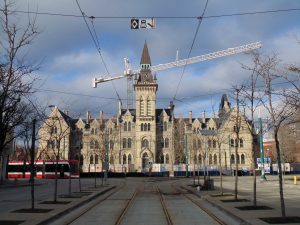
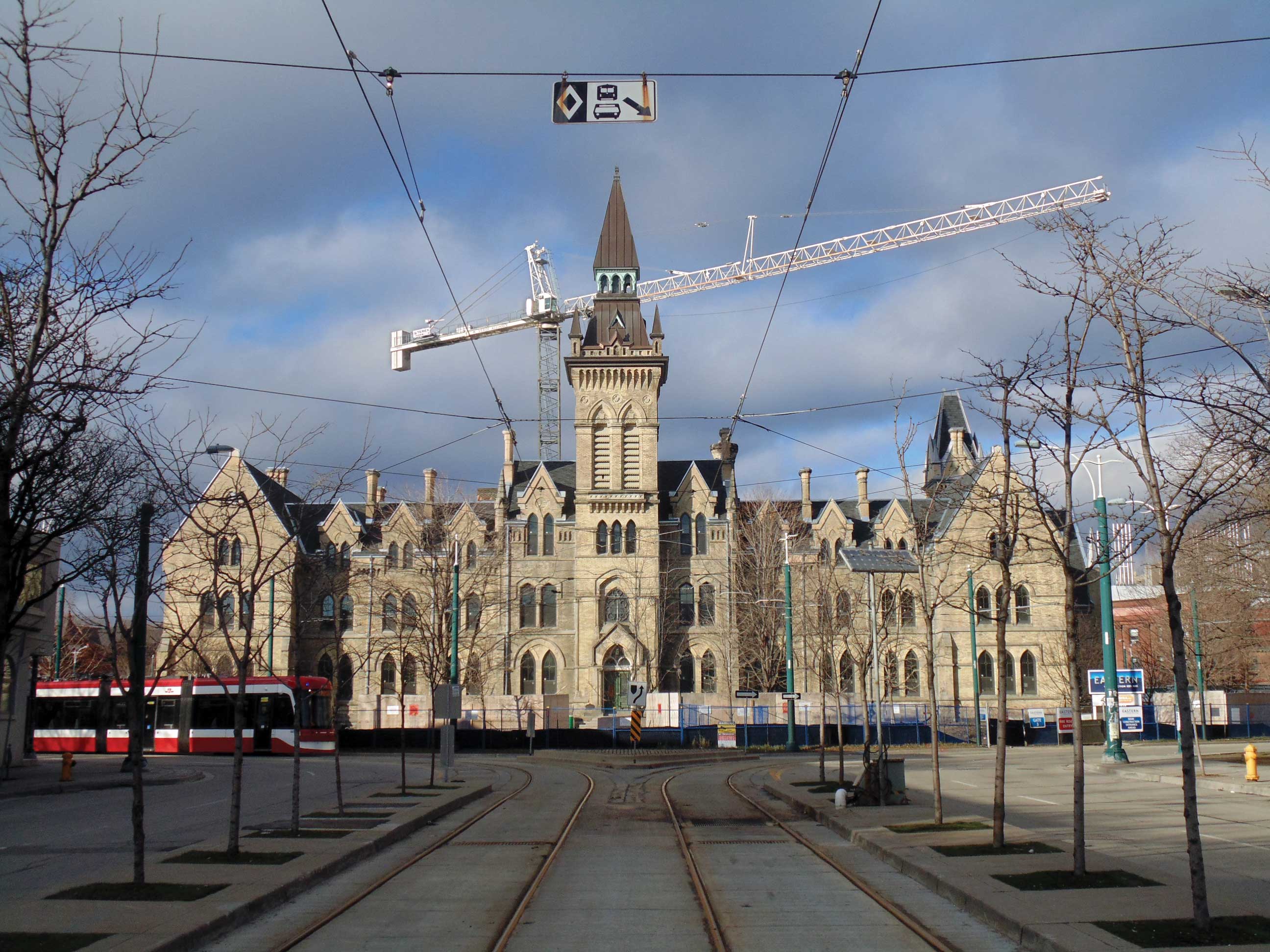
PHOTO BY BRIAN BURCHELL/GLEANER NEWS FILE PHOTO: City of Toronto senior planner Barry Brooks said that one aim of the Bloor Corridor/Annex Block Study is to “protect the significant view of the historical building (above) at 1 Spadina Cres. We are trying not to distract from the spire of that building.”
By Annemarie Brissenden
The city has responded to a developer’s application to build what many have termed a “vertical rooming house” at 316 Bloor St. W. with a development of its own: the Bloor Corridor/Annex Block Study.
“Two applications led us to believe that there is a certain amount of development pressure in the Annex,” explained Barry Brooks, a senior planner with the City of Toronto’s Community Planning Division.
Brian Burchell, chair of the Bloor-Annex BIA (who also publishes this newspaper), said he recognizes the “need to have a plan [like this] and funnel developer applications through it. Otherwise the city’s playing catch up.”
The study, presented at a well-attended community meeting in late June, was initiated out of Joe Cressy’s (Ward 20, Trinity-Spadina) office with input from several local residents’ associations.
The hope is it will lead to an Official Plan amendment that will strengthen the Bloor Corridor Visioning Study — which sets out a road map for Bloor Street West between Avenue Road and Bathurst Street that incorporates guidelines for land use, built form, transportation, community services, etc. — with more detailed guidelines relating to tall building heights, green space, separation between buildings, and laneways.
It also aims to protect the historical vista of the former home of Knox College at 1 Spadina Cres., stating that “buildings should not be built to a height that would detract from the silhouette of [the heritage] building, as viewed from College Street.
“In an area like Bloor Street, where we are experiencing a lot of development pressure, initiating plans like this is critical,” added Cressy, “so we are not constantly at the whim of developers”.
He characterized the application of 316 Bloor West Toronto Developments Ltd. to build a 42-storey mixed-use building at the northwest corner of Bloor Street West and Madison Avenue as “aggressive” and “out of context with the city’s plans for the neighbourhood [as detailed] in the Bloor Corridor Visioning Study”.
Current zoning allows for buildings to reach a height of 18 metres; the applicant’s proposed tower would stretch to 132 metres and consist largely of one-bedroom and studio units.
[pullquote]“It’s the density. We’d like to see a mix of units, so we can get families moving in as well”—Edward Leman, ARA[/pullquote]
The city’s preliminary report on the application characterized the overall density and massing of the proposed development as “excessive” and noted “this density and this form is clearly not representative of the norm for this area”.
The developer has appealed directly to the Ontario Municipal Board (OMB).
“We’re strongly opposed,” said Edward Leman. He’s the co-chair of the planning and zoning committee of the Annex Residents’ Association, which along with the city is a party at the OMB for this file. “We didn’t want a massive dense student residence in the Annex.”
Although Burchell countered that “I don’t think it’s reasonable for residents to be concerned about the prospect of student housing when they move in next to the University of Toronto,” he did acknowledge that “it is important to get the right balance. Height and density do matter.”
For Leman, that’s exactly the point.
“It’s the density. [It would be different] if it was a 12- or 10-storey building. We’d like to see a mix of units, so we can get families moving in as well.”
“Intensification along the subway makes sense for the city as a whole,” said Burchell, “but it has to be managed properly. The developer [of 316 Bloor St. W.] has failed to engage the community meaningfully with respect to its plans.”
“It’s cynical the way the developer did it,” said Leman. “They didn’t formally consult with the councillor, and held a disappointing pro forma community meeting” in April of 2015.
Burchell noted that there has been a marked difference in approach between 316 Bloor West Toronto Developments Ltd. and Westbank Projects Corp., which is developing a large parcel of land that includes Honest Ed’s and Mirvish Village at Bloor and Bathurst streets.
“The BIA has witnessed in the last three years two applications that bookend our territory: Westbank and 316 Bloor. The two developers could not be more different with respect to the level of engagement with the city and community. It’s striking.
“I prefer Westbank with respect to its approach.”
The Bloor Corridor/Annex Block Study is expected to go before community council in October, and Toronto City Council in November.
READ MORE:
NEWS: “Vertical rooming house” rejected (May 2015)
Catching up with history (May 2014)
Tags: Annex · News
August 26th, 2016 · Comments Off on NEWS (AUGUST 2016): U of T committee tasked with responding to Truth and Reconciliation Commission delivers interim report
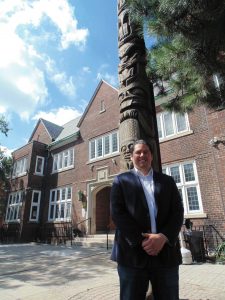
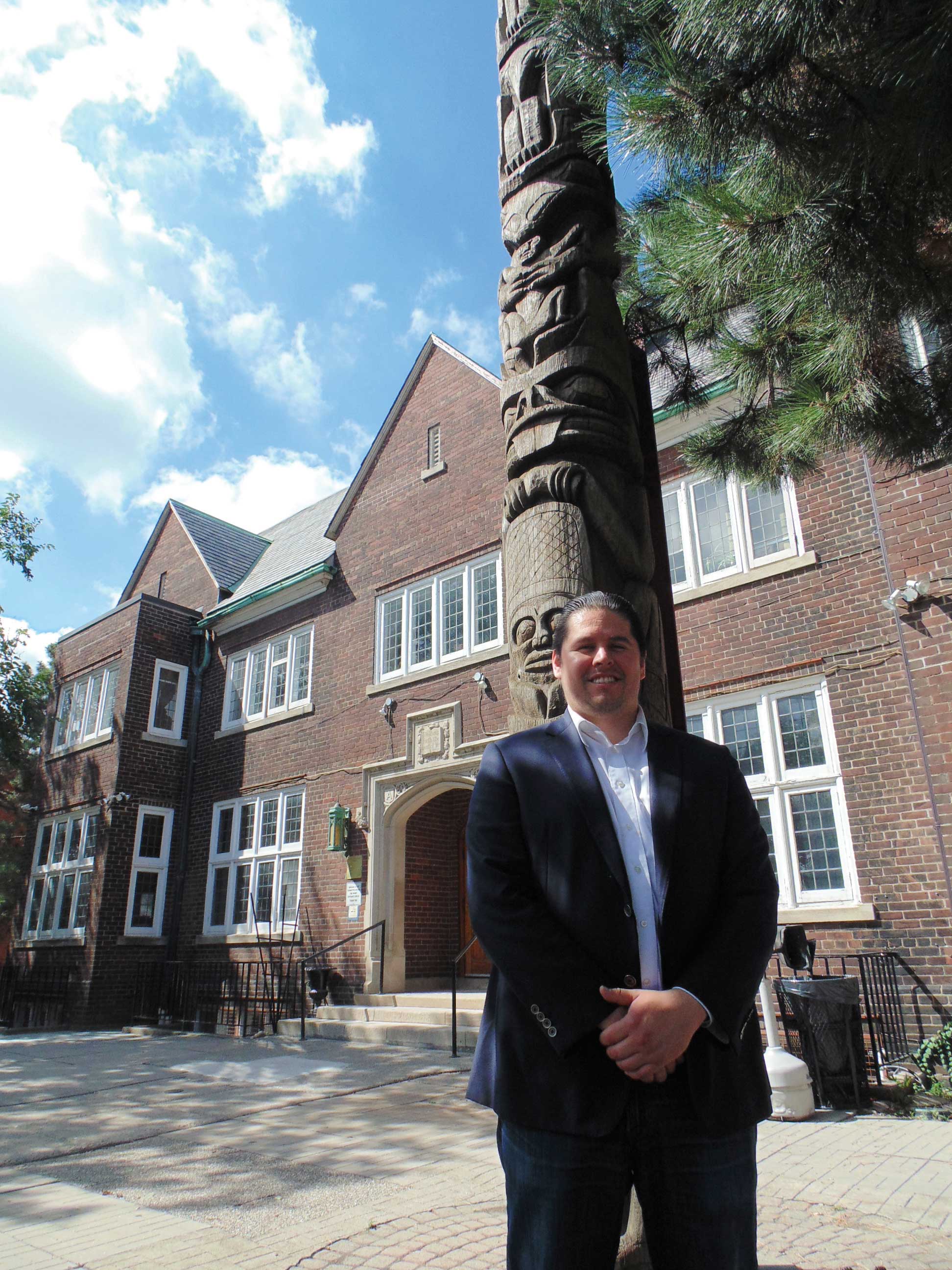
PHOTO BY BRIAN BURCHELL/GLEANER NEWS: The manager of cultural programming at the Native Canadian Centre of Toronto, Michael Etherington (above), suggests that introducing Indigenous teaching techniques to U of T could prompt “a complete paradigm shift” in which educators “take a step back and rethink our entire education system from the foundation upwards”.
By Annemarie Brissenden and Clarrie Feinstein
The University of Toronto (U of T) steering committee mandated with prioritizing the institution’s response to the Truth and Reconciliation Commission of Canada (TRC) released its Interim Report last month, just as the Native Students’ Association launched a petition to implement a mandatory Indigenous studies credit across all levels of education at the university.
The TRC has a mandate to inform all Canadians of the impact Indian Residential Schools continues to have on those placed in these institutions. Dating to the 1870s, the government-funded, church-run schools were set up, as the TRC’s website notes, “to eliminate parental involvement in the intellectual, cultural, and spiritual development” of more 150,000 Aboriginal children. The commission is part of the Indian Residential Schools Settlement Agreement that resulted when former residential school students took the federal government and churches to court. It is the largest class-action settlement in Canadian history.
Jonathan Hamilton-Diabo, the director of Aboriginal Student Services at First Nations House and the coordinator of the Council for Aboriginal Initiatives, co-chairs the Steering Committee for the U of T Response to the Truth and Reconciliation Commission of Canada with Professor Stephen J. Toope, director of the Munk School of Global Affairs. The rest of the committee includes staff, faculty, and students, as well as well two Indigenous Elders, Traditional Teacher Lee Maracle and Elder in Residence Andrew Wesley. The university’s president Meric Gertler and vice president and provost Cheryl Regehr established the committee in January of this year, following the TRC’s release of its final report, which included 94 calls to action, among them many education-related reforms.
These include eliminating education gaps between Aboriginal and non-Aboriginal Canadians; developing culturally appropriate curricula; establishing senior-level positions in government dedicated to developing Aboriginal content in education; integrating Indigenous knowledge and teaching methods into post-secondary classrooms; and requiring all law students to take a course in Aboriginal peoples and the law.
The committee did not make any initial recommendations in its interim report, but did summarize its primary achievements since January. It has developed an inventory of existing Indigenous-themed programs and initiatives across the university, and established five working groups that will focus on five areas: Indigenous curriculum; Indigenous students; Indigenous faculty and staff; Indigenous co-curricular educations; and Indigenous research ethics and community relationships. The working groups — some of which will be voluntarily guided by an Indigenous elder — must report by mid-October, in time for the committee to complete and submit its final report to the U of T by December 31.
The report comes just as the university’s Native Students’ Association has raised a petition asking U of T to support the implementation of a mandatory Indigenous studies credit across all of levels of education. The association, which has been working on this for two years and recently met with both the Minister of Aboriginal Affairs and the Premier of Ontario’s office, has to date received 1,545 signatures in support of its petition.
In Canada, two universities — the University of Winnipeg and Lakehead University in Thunder Bay — have adopted this approach and, starting in September, will require all undergraduates to complete a three-credit course in Indigenous culture or history in order to attain a degree.
[pullquote]“Indigenous education is a way of life, which is hard to distill in a classroom setting”—Michael Etherington, NCCT[/pullquote]
However, Michael Etherington, the manager of cultural programming at the Native Canadian Centre of Toronto, believes implementing such an initiative will not be without its challenges.
“What will be difficult is how Indigenous teachings and practices will be incorporated into a methodology,” he said. “There are 50 to 60 groups within Indigenous communities. How can they all be represented to make it fully inclusive? Indigenous education is a way of life, which is hard to distill in a classroom setting.”
Etherington added that any curriculum must be grounded in historical events, which are key to understanding how Indigenous communities got to where they are today.
And, Etherington noted, while the U of T represents academic rigour and excellence, it is also endemic of traditional Western values that are in conflict with Indigenous teachings. “These academic institutions perpetuated certain stereotypes and perspectives on Indigenous people for a long time,” he explained. “The university can go down two avenues. The first is a process of revaluation, which is to revise a few practices, alter a couple of courses, etc. The second is to have a complete paradigm shift and to take a step back and rethink our entire education system from the foundation upwards.”
The committee’s interim report suggests that a paradigm shift is not on the horizon for the university; rather, its focus is more on engaging with Indigenous students, alumni, faculty, and staff, as well as including “where appropriate” Indigenous content into the curriculum.
It has acknowledged that three assumptions will underpin its final report: the recommendations will be forward-thinking and action-oriented with tangible goals that are well defined; that the university should graduate more Indigenous students and be “worthy” in every respect of these students; and that reconciliation is a long-term and continuous process.
Tags: Annex · News
August 26th, 2016 · Comments Off on CHATTER (AUGUST 2016): Ground-breaking bike lanes launch on Bloor Street
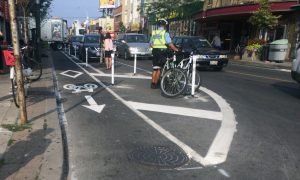
PHOTO BY SUMMER REID/GLEANER NEWS: The Bloor Street pilot bike lane project was launched on Aug. 12.
The Annex’s cycling community celebrated the unveiling of the Bloor Street pilot bike lane project on Aug. 12.
Speaking at the unveiling, Mike Layton (Ward 19, Trinity-Spadina) noted that talks of a Bloor Street bike lane date to 40 years ago, when cyclists were taking to the streets even though the city had no bike lanes.
“It’s amazing to see the transformation already underway,” said Jared Kolb, executive director of Cycle Toronto, adding that he hopes the pilot lanes will be extended further east and west on Bloor Street to make streets safer for Toronto’s “most vulnerable road users”.
The City of Toronto has partnered Miovision, the Metcalf Foundation, the University of Toronto, and the Bloor-Annex and Koreatown BIAs to conduct a study that will demonstrate the impact such bike lanes have on Bloor Street. This data when collected will include over 4,800 hours of video footage from Bloor Street, monitoring bike, vehicle, and pedestrian traffic along the street.
“For far too long, cycling infrastructure and bike lanes has been controversial. It’s been divisive,” said Joe Cressy (Ward 20, Trinity-Spadina), adding that reducing local vehicle traffic by adding bike lanes is the only way to reduce congestion on city streets.
Challenging the existing paradigm that places bikes in conflict with cars, the councillor argued that both can exist harmoniously in Toronto.
“If you can put a bike lane on Bloor [Street] and make it work, you can put a bike lane on any street and make it work.”
—Summer Reid/Gleaner News
READ MORE:
NEWS: Bikes blessed for another season (June 2016)
FOCUS: An early advocate for bike lanes (June 2016)
NEWS: Bike lanes for Bloor Street (May 2016)
The faster we lower speeds, the more lives we save (October 2015)
Early brewer the basis for Bloor Street’s name (May 2015)
Tags: Annex · News
August 26th, 2016 · Comments Off on CHATTER (AUGUST 2016): Dome on track
After being shut for close to four years, the Central Technical School field is set to reopen in time for the start of the school year, said Matthew Raizenne, president and CEO of Razor Management Inc., which is installing and will operate a new field and athletic facility at the site.
It’s a project that has been subject to much controversy, but a mediated settlement between the Toronto District School Board, Razor, and local residents was reached last year has allowed work on the site to progress. The school’s new field will be made from artificial turf enclosed with a 400-metre rubberized running track. For approximately six months a year, Razor will raise a dome no larger than 44.2 metres long by 65.5 metres wide by 18 metres high (significantly smaller than what was originally proposed) over the field, keeping it available for use in the winter months. Central Tech will have access to the field and athletic facility during school hours, but Razor will operate programming and rent out the facility to the public for the rest of the time and during the summer months.
—Summer Reid/Gleaner News
READ MORE ABOUT CENTRAL TECH FIELD:
NEWS: New landscaping for Lennox Street (June 2016)
NEWS: Central Tech field renewal back on track (May 2016)
LETTERS: HVRA still on board for CTS plan (March 2016)
EDITORIAL: Ship to wreck (February 2016)
Construction halted at Central Tech: Student athletes launch online petition by Marielle Torrefranca (February 2016)
Agreement reached for Central Tech field (April 2015) by Annemarie Brissenden
To dome or not to dome, that is the question (February 2015) by Terri Chu
Editorial: Mobs don’t rule, nor do pawns (February 2015)
Dome plan inches closer (February 2015) by Brian Burchell
School board appeals ruling and loses, again (October 2014) by Brian Burchell
Editorial: A strategy run amok (September 2014)
Dome plan quashed by courts (September 2014) by Brian Burchell
Raucous meeting on CTS field (April 2014) by Annemarie Brissenden
READ MORE ABOUT CENTRAL TECH:
Central Tech alumni return to mark school’s centennial (November 2015) by Annemarie Brissenden
Central Tech celebrates 100 years (July 2015) by Annemarie Brissenden
Aircraft program grounded in 2004 (July 2015) by Annemarie Brissenden
Tags: Annex · News