
A Japanese forger demonstrates a craft with a rich history
By Rose Haberer
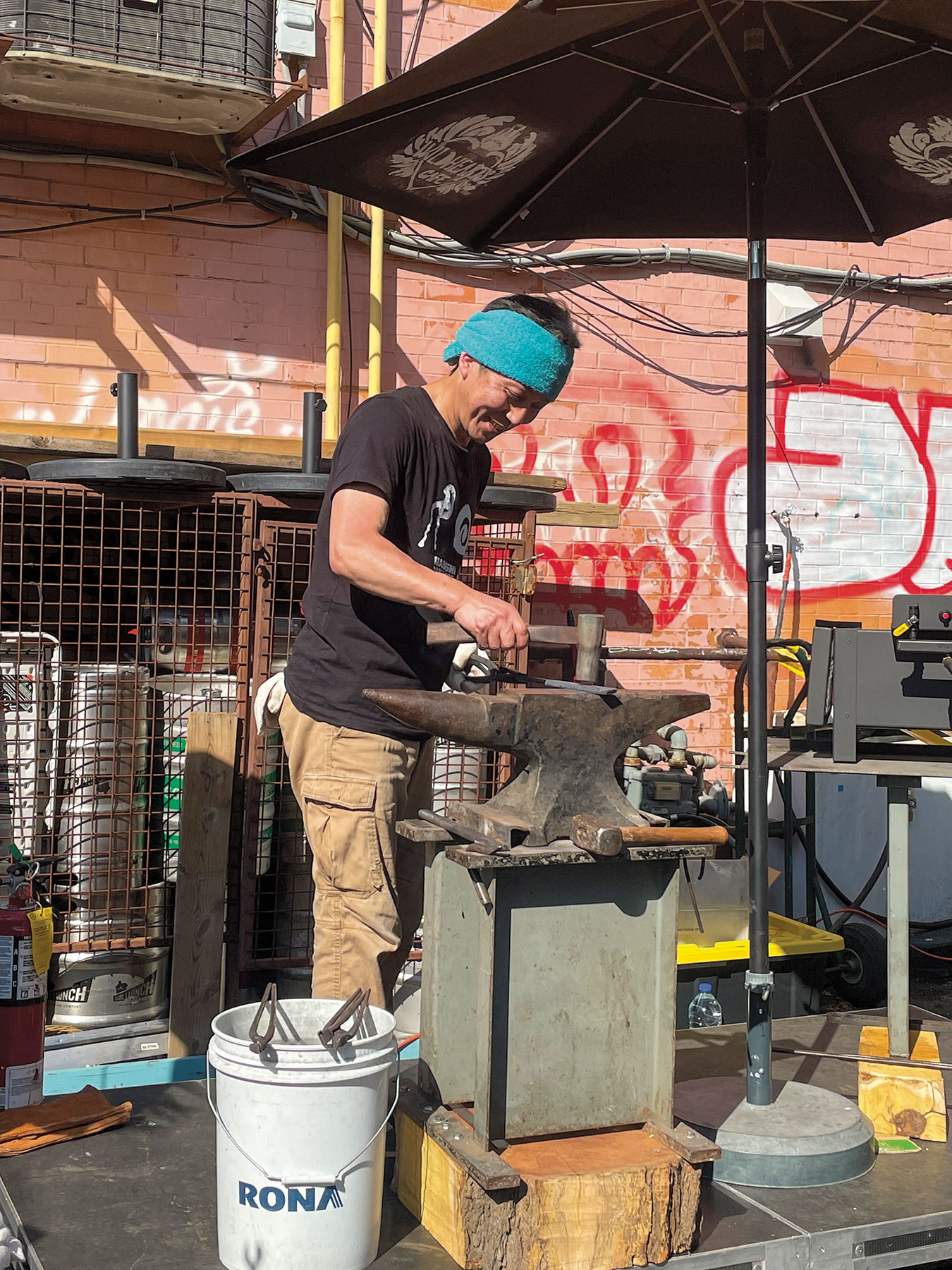
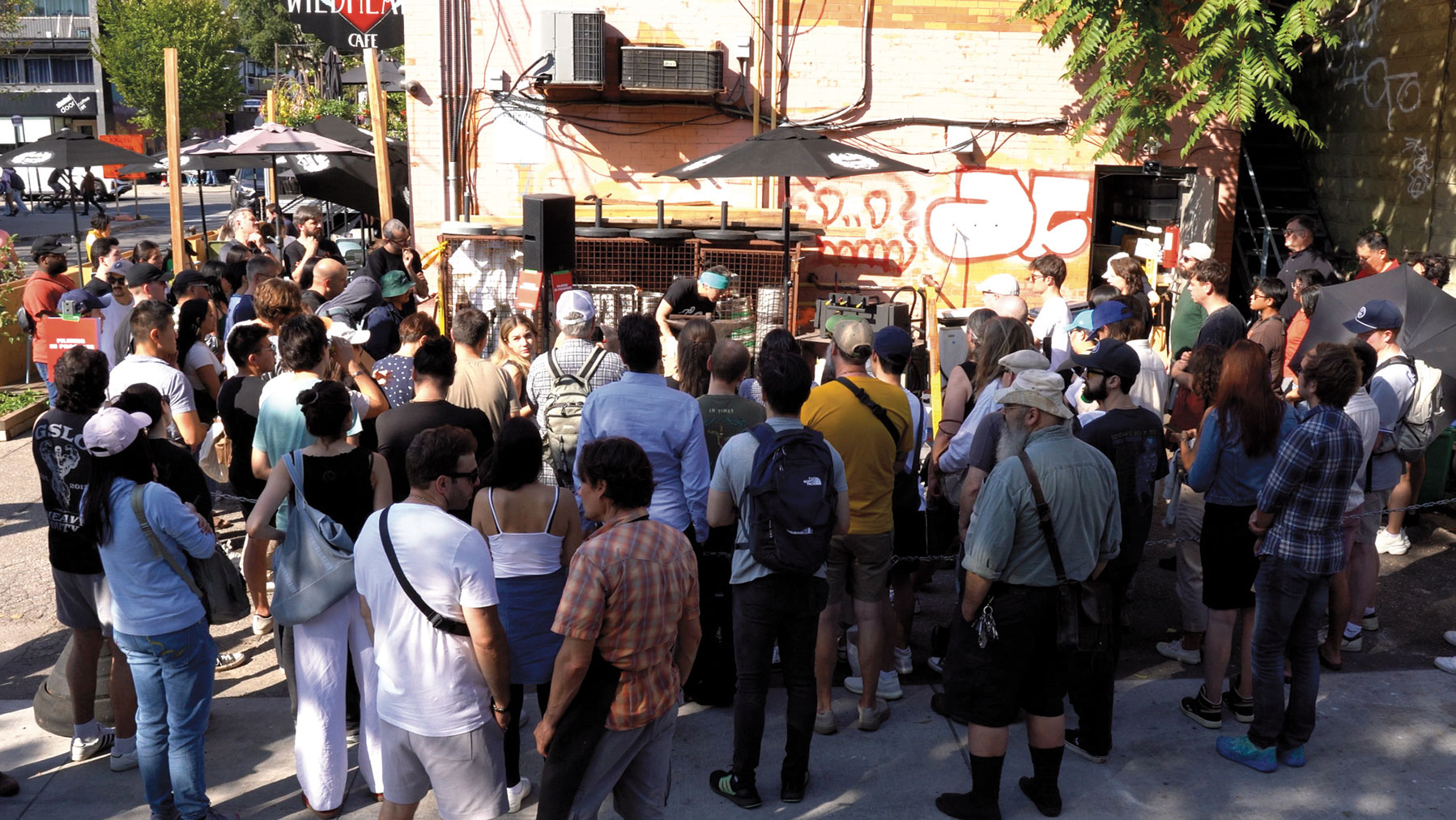
Sparks flew on Oct. 4, when master blacksmith Masashi Yamamoto, one of Japan’s premier knifemakers, performed a live forging demonstration in Toronto’s Annex at Knifewear (517 Bloor St. W.). Knife enthusiasts and curious passersby gathered to witness the spectacle.
Japanese knifemaking carries a rich history which can be traced back to the country’s ancient swordsmithing traditions.
During the Edo period (1603-1868), as the demand for swords declined, blacksmiths redirected their skills towards kitchen knives, applying the same forging and tempering techniques used for samurai swords.
Over time, these knives evolved into highly specialized tools for precise culinary tasks.
The knowledge, techniques, and traditions were passed down through generations, preserving Japan’s renowned standards of craftsmanship.
Yamamoto, renowned for his exceptionally sharp blades and his careful attention to detail, hails from blacksmithing royalty—his family has practiced the craft for 13 generations and they own the esteemed knife company Yoshikane Homano.
Yamamoto began his training, alongside his brother, under the guidance of his grandfather and uncle, learning the traditional techniques that shaped his family’s legacy. At 36, Yamamoto struck out on his own, beginning his own forge.
With a focus on preserving the time-honoured traditions of Japanese craftsmanship while integrating scientific methods to refine and adapt the process, he opened his workshop in 2013.
A guiding philosophy in Japanese blacksmithing is shokunin kishitsu, the spirit of the master craftsman, which is cultivated through years of disciplined practice and dedication.
“Shokunin kishitsu is the outcome of putting into practice what has been passed down through generations,” said Yamamoto, via a translator, when asked how he interprets this ethos.
Traditions shape the distinctive qualities of Yamamoto’s knives. He explained that Japan’s humid climate leads to rapid food spoilage, compelling early knifemakers to adapt their techniques.
“We make knives so sharp that when they cut ingredients, they won’t go bad as quickly,” He added.
An awareness of the environment and a focus on efficiency are integral to all of his work. He explained that “steel was once a scarce resource in Japan, though very useful,” which led him to carefully consider how to produce knives with minimum waste and maximum efficiency.
What makes Yamamoto’s craftsmanship truly unique is the meticulous tailoring of each knife to its purpose. Even knives made from the same steel are forged differently depending on their use, ensuring optimal performance. Certain parts of his process, such as proprietary heat treatment techniques, remain closely guarded secrets, giving his blades unmatched durability.
It is fitting that Yamamoto’s demonstration was held at Knifewear, a retailer renowned for its high-quality handcrafted products. Since 2022, Knifewear has carried exclusive lines of Yamamoto’s knives, including the Kokuen and Kaijin series.
Kaijin knives use VS1 steel for exceptional hardness and edge retention, while Kokuen knives use SLD steel for a balance of durability and sharpness.
Throughout the event, many bustled into Knifewear hoping to purchase a knife by Yamamoto and to be one of the select few to have their knives engraved by the great blacksmith.
But how does Yamamoto view his knives? As tools or as works of art? For him, the beauty comes from the blade’s functionality.
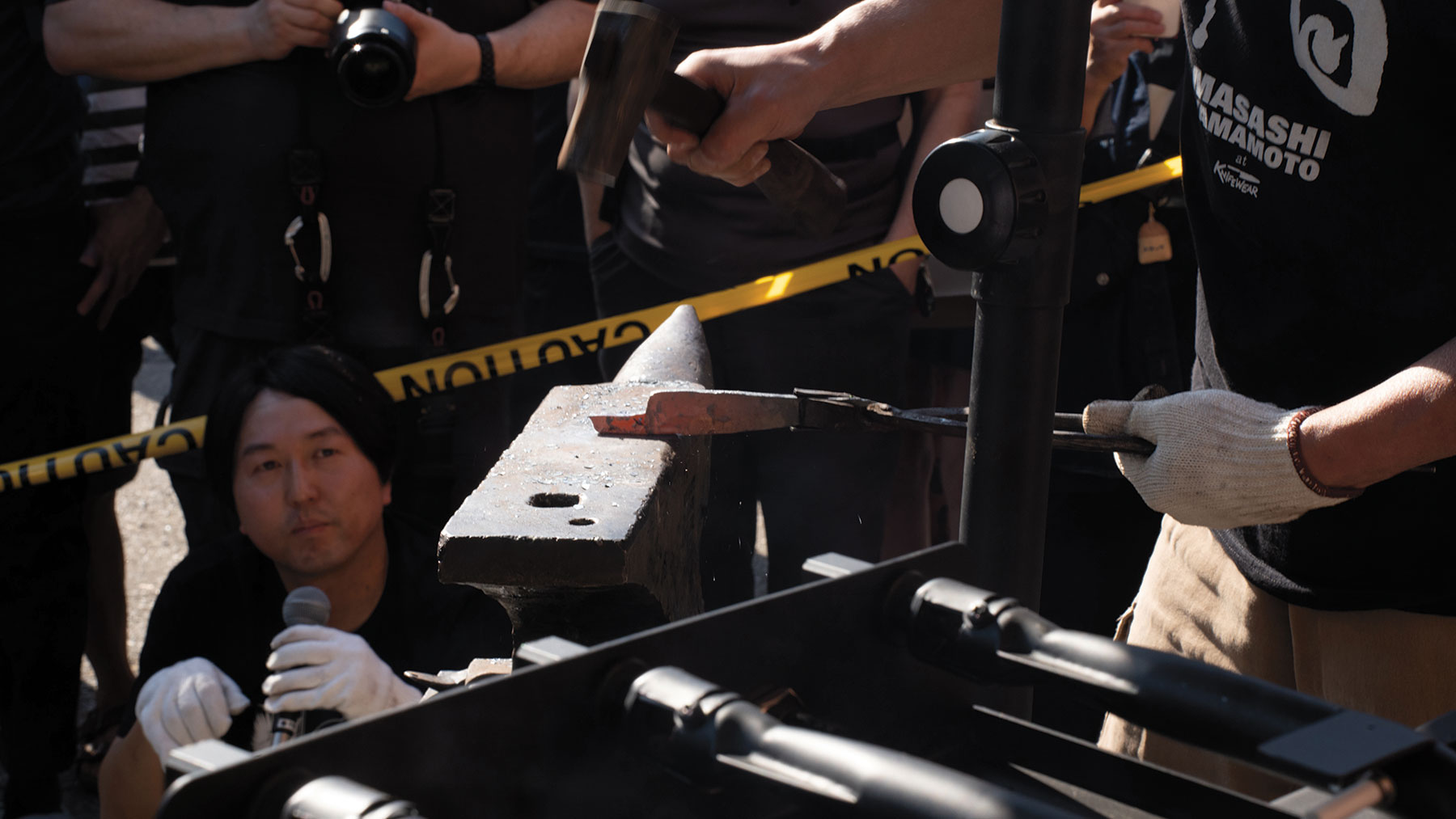
“If you’re trying to make the knife functional for the users, without thinking about making it beautiful, it will become really beautiful,” he explained.
Referring back to shokunin kishitsu, he explained that his teachers taught him that the spirit of the craftsman is infused in the knife through the maker’s intentions.
Since the knives are handmade, users can feel the presence of a human touch in the final product, which is often absent in machine-made knives.
Though Japan’s blacksmithing history runs deep, younger generations began turning away from the forge.
Yet, amid a surge of international fascination with Japanese knives, many Japanese youth turned to the anvil, reviving a centuries-old art. Knifewear’s brand communications lead, Nathan Gureau, highlighted this during the event:
“When Knifewear opened 20 years ago, the art of blacksmithing was dying out,” Gureau said, addressing the crowd. “It’s because of folks like you that there’s been a massive surge in business for makers like Masashi-san, allowing them to continue their work, and sparking a renewed interest in knifemaking among younger generations in Japan.
Global enthusiasm has breathed new life into the knifemaking craft, allowing it to not only survive, but thrive.