
The riot at Christie Pits on Aug. 16, 1933

The September 2025 edition of the Gleaner featured a photo of a counter-protester holding a placard that read “Christie Pits Nazi-Free since ‘33.” This person was protesting against the anti-immigration rally held near the park on September 13. Not every reader will understand the significance of the reference to the events of 1933. We are republishing our story from the summer of 2023 which chronicles that event.
By Fox Oliver
In the 1930s, Toronto was predominantly British and anti-Semitism was commonplace and permeated all neighbourhoods in the city.
In an already difficult depression-era city, Jews had an even more difficult life. They were routinely excluded from high-paying jobs, from attending universities, and from buying homes in certain neighbourhoods. Many Canadians used Jews as scapegoats for the cause of the ongoing economic depression.
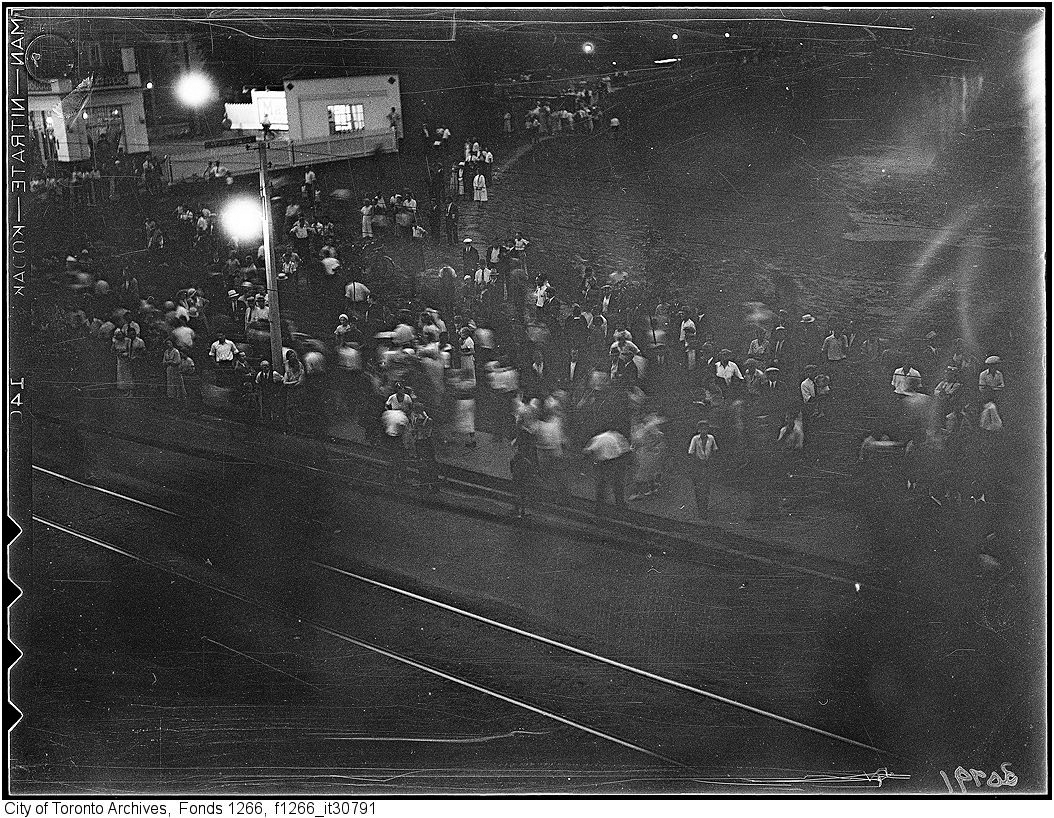
COURTESY THE CITY OF TORONTO ARCHIVES, Globe and Mail fonds, Fonds 1266, Item 30791
Newspapers in Toronto, such as the Toronto Daily Star, reported on Hitler’s rise to power and the atrocities committed in Nazi Germany in great detail.
“Torontonians probably knew more about what was occurring to Jews in Germany during those fateful months than most Berliners. For the Jews of Toronto, the swastika immediately became a symbol of persecution, torture, and death,” wrote historian Cyril H. Levitt in The Riot at Christie Pits.
Swastika clubs, groups of Toronto youth flaunting the swastika began to form in Toronto.
One swastika club told the Toronto Evening Telegram that “[w]e, the members of the Swastika Club do hereby declare that we are in no way connected with any political or racial organization.”
Another told The Globe that the club was an “orderly and strictly legal campaign to clean up the beaches.”
However, it was clear these “clubs” were a way for Toronto youth to spread anti-Semitic hate throughout the city under the masquerade of do-gooding. “Secretiveness about the club’s organization masked its real purpose, which was to capitalize on the dissatisfaction of the Beaches’ residents…in order to organize a Nazi movement in Canada,” wrote historian David Rome in Clouds over the Thirties. Swastika clubs regularly harassed and initiated needless violence against Toronto Jews in the summer of 1933.
On Aug. 16, 1933, during a baseball game in Christie Pits (Willowvale Park until 1983) tensions were high, and thousands of people gathered on the hills to watch the game.
As the game ended, members of swastika clubs flew a large swastika flag across the baseball diamond and yelled cries of “Hail Hitler.” This sparked outrage and violence, and a large brawl in the park broke out.
Italians and other persecuted minorities fought alongside the Jews against the swastika clubs and other Anglo-Canadians for control of the swastika flag, which was eventually torn to shreds.
“An unusually large number of mounted men and constables were stationed nearby,” reported the Toronto Evening Telegram, suggesting police were prepared for the riot.
However, it was only at 8:45 p.m., an hour after the first blows were struck, and nearly three hours after the game had started, that mounted police arrived at the park.
Even then, the brawl raged on through the night and only ended the following morning.
Police were harshly criticized by many, including the Toronto Daily Star, for their lack of preparation, slow response time, and apparent disregard of warnings of expected violence.
The Toronto Daily Star reported that over 10,000 people were involved in the riot, and although rioters used baseball bats, lead pipes, and other improvised weapons, no one was killed.
The one person convicted for their involvement in the Christie Pits Riot received a sentence of either two months in prison or a $50 fine.
Following the riot, Toronto mayor William James Stewart outlawed displays of the swastika, making this one of Canada’s first policies prohibiting hate speech.
READ MORE:
- ON THE COVER: Nazi-free since ’33 (Sept. 2025)
- NEWS: Remembering the race riot (Summer 2023)
- ON THE COVER (Summer 2023)
- NEWS: Pits Riot: A teaching moment (Summer 2023)