
St. George Street home has many stories to tell
By Michael Mastromatteo
This is the first in a series of columns speculating on the lived history of various houses in the Annex. Imagine that the “walls” of these homes secretly absorb some of the actions and experience of those living within. If we accept that the “listening walls” witness the lives and actions of its occupants, we can ruminate about the stories they might tell.
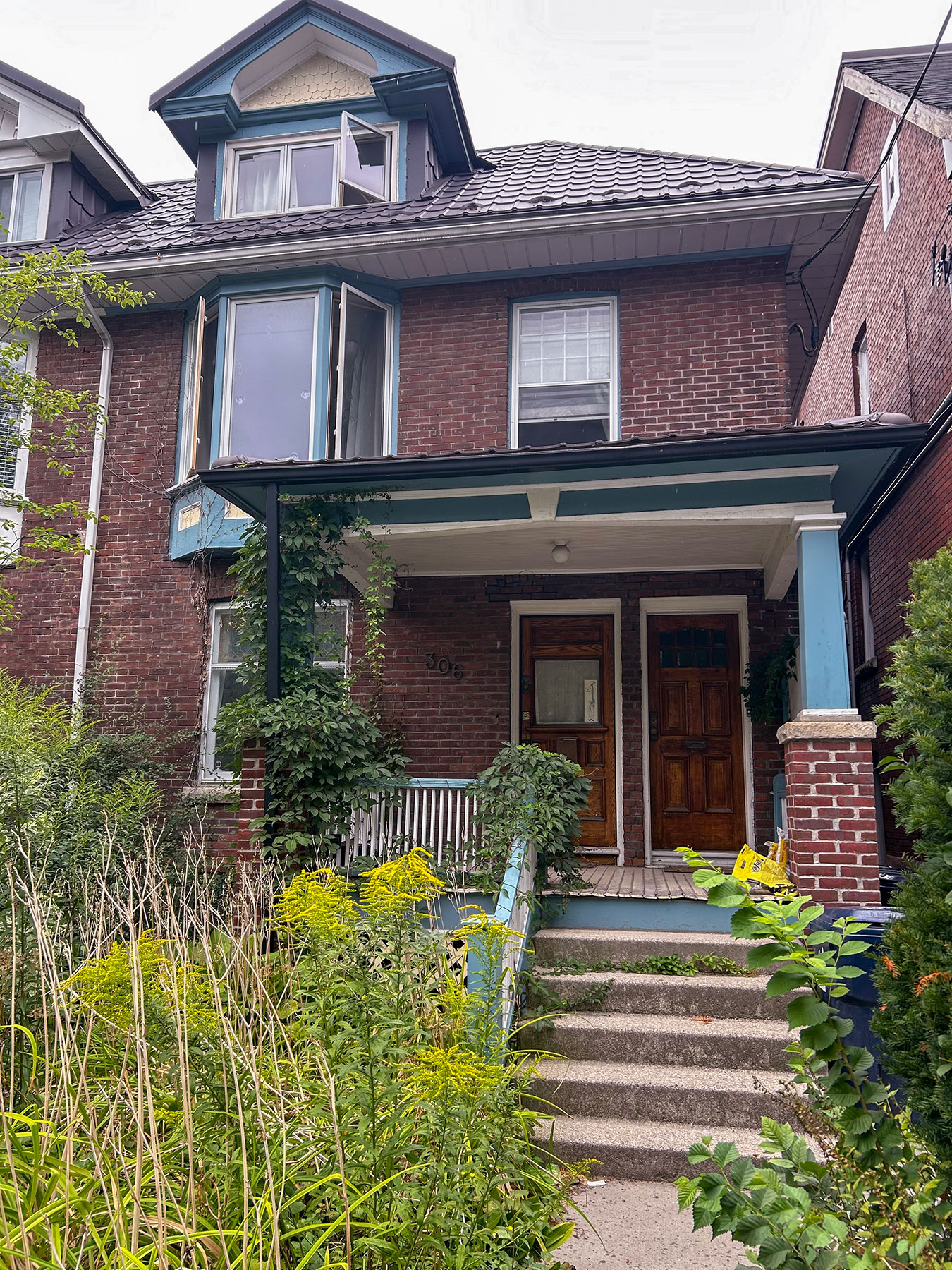
The house at number 306 doesn’t stand out among its St. George Street neighbours. Nestled on the west side of the street a few doors south of Dupont, the semi-detached, 115-year-old home is tall, symmetrical and stately.
But while the home blends in well with its neighbours on the outside, it has a history all its own.
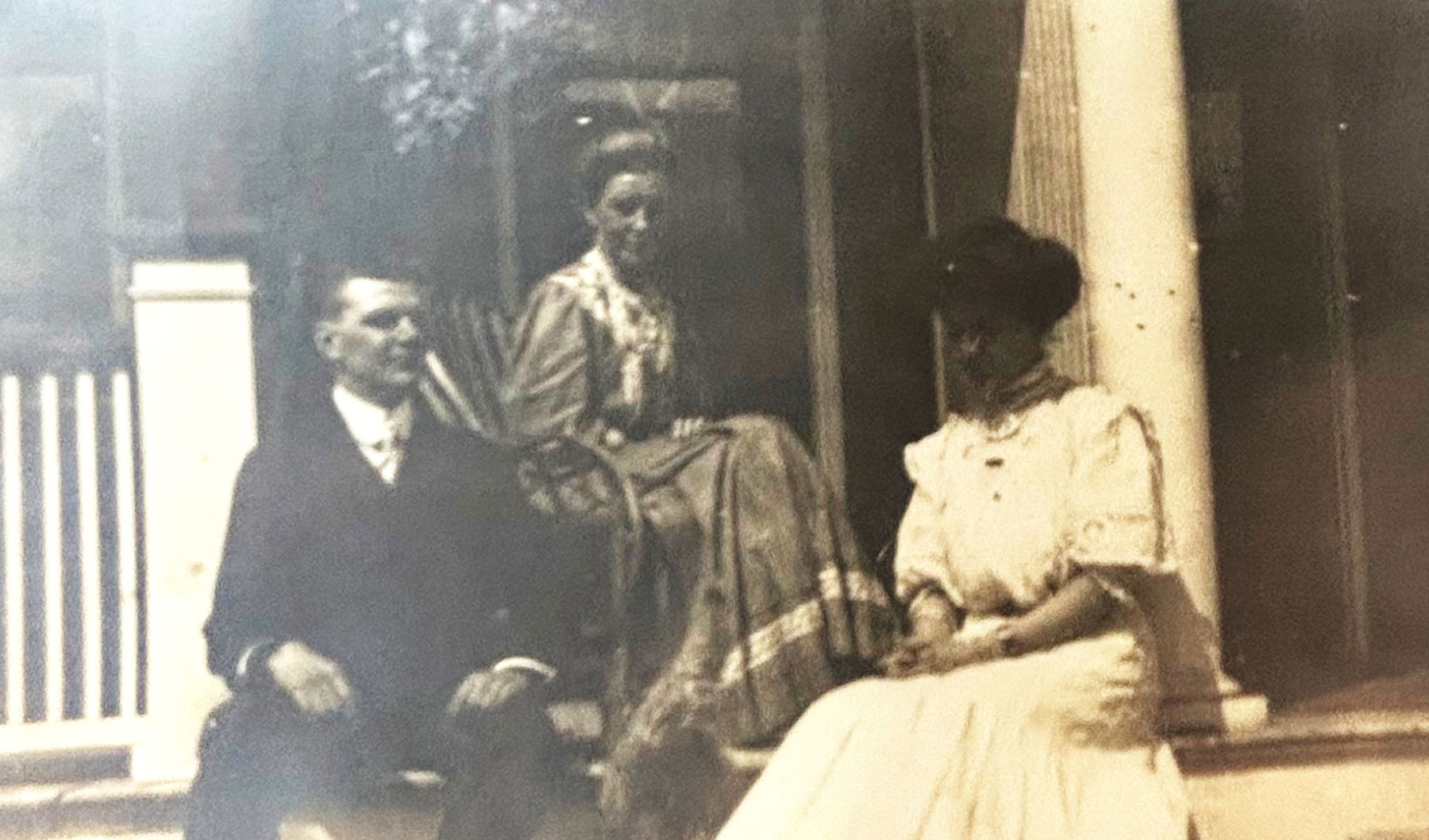
The first occupant was “agent” Henry J. Hollinrake who resided at 306 with his wife from 1908 to about 1912.
The social columns in the newspapers of the day recorded the Hollinrakes’ frequent receptions for well-heeled friends and neighbours.
A Toronto Globe and Mail news report from Nov. 6, 1912 heralded the beginning of the Durie era at 306 St. George.
The story reads: “The inaugural meeting of the Canadian Society for the Prevention of Cruelty to Animals was held Nov. 5 at the residence of the president, Mrs. [Anna] Durie, 306 St. George St.”
Anna Durie was certainly energetic and civic minded, but the sprightly spirit would not last. The atmosphere within the home undoubtedly changed after Anna’s son, William Arthur Peel Durie, left his position as a clerk at the Royal Bank to join the Canadian army in the First World War.
Durie was killed in action on Dec. 29, 1917 near the small village of Lens, France.
A telegraph addressed to Mrs. Anna Durie of 306 St. George Street arrived on Jan. 11, 1918. It read: “Regret to confirm Captain William [Arthur] Durie officially reported killed Dec twenty ninth nineteen seventeen. Have asked England for circumstances death report copy.”
Devastated by William’s death, Anna and her sister’s misery clouded the atmosphere for the next 12 years; however, Anna eventually succeeded in having her son’s body exhumed from a cemetery in England and reburied in St. James Cemetery in Toronto.
One can imagine that the gloomy atmosphere at 306 St. George Street lifted in the 1930s. The parade of owner/occupants included: real estate agent Alex Sutherland, insurance salesman Huson Coon, insurance adjustor Neville Howard McDermott, and dentist Charles Collard. They all no doubt experienced the regular highs and lows of life in Toronto during the Great Depression. That they were all gainfully employed suggests more good times than bad.
The 1940s brought a new raft of occupants to number 306.
Perhaps the most intriguing resident at this time was lawyer and civil engineer William B. Raymond, who purchased the home in 1944.
Born in Welland around 1858, Raymond achieved notoriety in the 1880s for his work in the construction of the Welland Canal.
He later earned his law degree and practiced with the firm Raymond and Honsberger until his death in 1945. He was survived by his wife Alexis Cromer Raymond who remained at 306 St. George Street for another 14 years.
Photographer and “rooming house operator” Pauline Rinas moved into the well-worn home in 1960.
Her time there coincided with the conversion of 306 St. George into a rooming house, a fate common to many Annex homes between 1950 and 1980. After that, gentrification restored value and appeal to many older homes.
A Toronto Star news report from June 4, 1974 reveals some of Rinas’s safety and property value concerns. T
he newspaper reported a meeting of disgruntled Huron and St. George Street homeowners objecting to the establishment of homes for “disturbed children” in the area.
“The place is becoming a slum,” Rinas said. “It’s impossible to get decent people to rent rooms.”
However, “decent people” continued to find their way there. One of the more recent occupants of number 306 was Vera Cudjoe who resided there for a short time in 1970.
The Trinidadian native arrived in Canada 10 years earlier and toiled as a nurse at the Toronto General Hospital until she acted on a dream.
In 1973, Cudjoe founded Black Theatre Canada which opened the door to a flourishing of acting and stage production opportunities for Black actors, playwrights, and producers.
Although the organization ceased operations in 1988, it marked a milestone in the diversification of theatre in Toronto and across Canada.
We’ll close our examination of 306 St. George Street and its lore with the thoughts of Dr. Anthony Strelzow, a Toronto-born orthodontist who now practices in Vancouver and Whitehorse.
Strelzow owned the property from 1983 until 1986, during which time he undertook several renovations, including removal of the stairs to the servants’ quarters.
Although he has owned and lived in a number of houses since 306 St. George, Strelzow has special regard for the old Annex home and for the stories it harbours.
Describing one of his upgrading projects, Strelzow told the Gleaner that “While removing some of the original lath and plaster…we stumbled across a single page of a newspaper hidden in the vacant stud spaces. We spent an evening reading and imagining the times gone by. There was no date on the paper fragment we found, but it had a horse and buggy feel to the various ads and snippets of stories we could read. When we finally closed the stairwell, I placed a full Toronto Star newspaper in the stud wall with my and my wife’s names on it, wishing whoever finds the buried treasure a warm hello. I wonder if anyone has discovered this treasure?”