March 9th, 2016 · Comments Off on GREENINGS: Don’t fall prey to marketing
Make informed choices when buying green
By Terri Chu
One great thing about living in the Annex is that there are lots of places to buy green products. (Though losing Grassroots means there are not a lot of places to refill shampoo bottles.) I find myself taking this for granted and not always carefully reading the labels on products I buy, trusting that they have been sourced by stores that share the same ethical values that I do.
[pullquote]Global demand for palm oil is the leading cause of rainforest deforestation in Indonesia and Malaysia.[/pullquote]
Accommodating a friend’s dietary choices, I bought a vegan baking block made by Earth Balance to make pastry. I didn’t look carefully, and the word vegan satisfied me at the time as a low impact product with an environmentally sounding company name. When I got the product home, I realized it was made with mostly palm oil. I was immediately sick to my stomach. If my friend was choosing to go vegan for ethical rather than health reasons, well, I would have done less damage to the environment and harmed fewer animals by baking with a stick of lard. At least that way, only one animal would have died in the process, and if it was lard from my friend’s organic farm, it was an animal that was treated well while it lived.
According to the United Nations Environment Programme, global demand for palm oil is the leading cause of rainforest deforestation in Indonesia and Malaysia, home to the critically endangered orangutan. A quick Google search for “orangutan” and “palm oil” will lead to images of orangutans burned alive in a bid to clear land for plantations. The slash and burn method of land clearing contributed to last year’s Indonesian forest fire crisis that saw 19 people killed and half a million people treated for respiratory illnesses (though it did not receive a lot of media coverage).
Orangutan habitat is disappearing at a rate of about 300 soccer fields every hour thanks to the demand for plantations.
Indonesia is doing what it can to curb the slash and burn practice but policing is near impossible for a stretched government where corruption is high. With palm oil so cheap to produce and the trees so lucrative to grow, most people take their chances in bettering their own situations rather than thinking about the climate as a whole. It’s hard to blame the subsistence farmer. For our part, we can at least decrease the demand and by extension the profitability of burning rainforest land in favour of palm oil plantations.
To add insult to injury, the fires last year cost the Indonesian government about $16 billion while the value of the palm oil plantations is estimated to be $8 billion. The Indonesian public is subsidizing hefty profits for a few, thanks to the demand we place on an unsustainable product.
Palm oil lurks in so many products. It is often called just plain old vegetable oil, although sterate, stearyl, sodium lauryl sulphate, and sodium laureth sulphate are among its many other monikers. It won’t be possible to bring our consumption to zero, but making a point to read the ingredient list or even writing to manufacturers of your favourite products could alleviate demand even that little bit.
The lesson for me out of this was not just to accept a pretty green label as being green. The products we choose to buy (or not to buy) have an impact on the environment. Everything from the obvious (Keurig coffee pods anyone?) to the more completely green washed Fiji water has environmental consequences.
Those of us lucky enough to be able to afford to make purchasing decisions based on environmental or ethical reasons shouldn’t be duped by good marketing.
We have to think about the entire life cycle of the products we buy, and not be fooled by the green packaging.
Terri Chu is an engineer committed to practical environmentalism. This column is dedicated to helping the community reduce energy, and help distinguish environmental truths from myths. Send questions, comments, and ideas for future columns to terri.chu@whyshouldIcare.ca.
Also by Terri Chu:
Reduce, reuse, then recycle (February 2016)
The power of labelling (January 2016)
Tags: Annex · Opinion
February 2nd, 2016 · 1 Comment
Student athletes launch online petition
By Marielle Torrefranca
In the latest of a saga of hurdles, construction of Central Technical School’s $7-million sports facility has been stopped until further notice, said Razor Management Inc. (RMI).
According to a Razor news release, the work stoppage comes after the company received a three-year retroactive tax bill of $505,000 for its stadium at Monarch Park Collegiate Institute, plus approximately $200,000 a year moving forward for each of its facilities. The bill was allegedly received 38 days before its due date at the end of January.
[pullquote]“We are being bullied by the city on the tax issue”—Matthew Raizenne, Razor[/pullquote]
The Monarch Park Stadium and unfinished Central Tech sports facility are projects resulting from Razor’s partnership with the Toronto District School Board (TDSB). With the tax bills, Razor said it’s unable to support the funding of both locations.
“We let the TDSB know in October that we had serious concerns about what was happening at Monarch Park,” said Matthew Raizenne, president of Razor Management.
According to a news release from Razor, TDSB trustees ignored a senior staff report recommending a tax exemption for its affiliated championship field partners, since the projects primarily benefit TDSB students.
The news release states that similar tax exemptions have been granted to city partners, such as Maple Leaf Sports and Entertainment’s Lamport Stadium, and Field Recreation Inc.’s field at Lakeshore Collegiate.
“It’s politically targeted in our beliefs,” said Raizenne. “We’re trying to get to the bottom of it.”
However, the TDSB said the tax bill shouldn’t have come as a surprise.
“It’s important to note the agreement between the TDSB and Razor Management states that RMI is responsible for payment of any of taxes assessed by the property,” said Ryan Bird, media relations for the TDSB.
The Municipal Property Assessment Corporation (MPAC), which administers property assessments in Ontario, emailed Monarch Park Stadium in February, saying the City of Toronto had asked MPAC to update its records and review the tax status on the new structures at Monarch Park. This included Monarch Park Stadium.
“It’s just normal procedure,” said Darlene Rich, media relations specialist for MPAC of assessment. “That’s not anything other than normal.”
“You can’t automatically compare other properties that appear to be similar,” she said. “They all have their individual agreements with the property owner, for instance, with the TDSB. Agreements that one company has could be completely different than the other.”
The cost of the bill is set by the city, however. Razor has the option to request an appeal for a property reassessment through MPAC, but the company has not done so, said Rich.
The TDSB is also willing to provide Razor with non-monetary support in a reassessment appeal, said Bird.
“We’re trying to figure out who from the city has the impact to assess us,” said Raizenne, adding Razor filed Freedom of Information requests in mid-January, but has yet to receive the information it had requested.
The company also reached out to the mayor’s office late last month, requesting clarity on the city’s alleged assessment request and the tax bill.
“We believe we are being bullied by the City of Toronto on the tax issue,” Raizenne wrote in an email to the mayor’s office. “The city has come down on only us and there is no justified reason for this.”
A representative from the Mayor’s office responded, saying MPAC is a corporation independent from the City of Toronto whose role is to assess the value of all property in the province, and that there is “no picking and choosing.”
“It was always agreed and understood from the beginning that Razor Management was responsible for paying any commercial taxes that would apply to the site,” said Joe Cressy (Ward 20, Trinity-Spadina). “It’s the TDSB’s land and it’s up to the TDSB whether to exempt those taxes.”
“In our city, businesses should pay commercial taxes. I think that’s fair and only fair for all businesses, but that amount of tax should be fair and taken into account the implied services of the project.”
While the crux of this issue is commercial tax, this project has now seen years of obstacles since its proposal in the spring of 2013.
After mediation by the Ontario Municipal Board last spring, the original construction plan was scaled back due to opposition from residents. The compromise included a smaller dome covering only the field during winter months and allowing community use of the turf during evenings and weekends.
“That resolution and that agreement is what I am committed to honouring and making sure it goes forward,” said Cressy.
However, with construction at a standstill, the field will not be open in time for Central Tech’s spring athletics season, much to the dismay of students and the school’s athletic teams.
A group of student athletes have started an online petition that includes a letter to TDSB trustees and Education Minister Liz Sandals.
“We are asking you, after nearly three years, to please get on with it,” reads the letter, “and if you don’t want to have a great facility at Central Tech and you do not want to be our ‘champions’ to get the project through the finish line, and would prefer to let the site sit empty, just do us all a favour and let us know now, so that we can transfer to other schools or other school boards [that] value sport and athletics and are willing to stand up for their students’ interests and well-being.”
At press time, the petition had received over 600 signatures.
“We appreciate that both students and staff and the community want this field finished,” said Bird. “And we don’t want them to wait any longer either…. We want to see this field finished.”
Both the Mayor’s office and Cressy expressed concern over students having access to recreational space. While Razor shared the same sentiment, it was adamant about its cause.
“We are 100 per cent committed to the project,” said Raizenne. “We just asked the school board for assistance and to be treated equally and not to be discriminated against. But we’re 100 per cent committed and we’re hopeful that a resolution can be found imminently.”
READ MORE ABOUT CENTRAL TECH FIELD:
Editorial: Ship to wreck (February 2016)
Agreement reached for Central Tech field (April 2015) by Annemarie Brissenden
To dome or not to dome, that is the question (February 2015) by Terri Chu
Editorial: Mobs don’t rule, nor do pawns (February 2015)
Dome plan inches closer (February 2015) by Brian Burchell
School board appeals ruling and loses, again (October 2014) by Brian Burchell
Editorial: A strategy run amok (September 2014)
Dome plan quashed by courts (September 2014) by Brian Burchell
Raucous meeting on CTS field (April 2014) by Annemarie Brissenden
READ MORE ABOUT CENTRAL TECH:
Central Tech alumni return to mark school’s centennial (November 2015) by Annemarie Brissenden
Central Tech celebrates 100 years (July 2015) by Annemarie Brissenden
Aircraft program grounded in 2004 (July 2015) by Annemarie Brissenden
Tags: Annex · News · General
February 2nd, 2016 · Comments Off on Sprott House opens new home for LGBTQ2S youth
Specialized facility meets urgent need
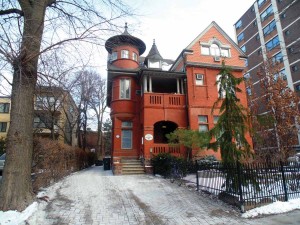
YMCA Sprott House provides transitional housing for 25 LGBTQ2S youth.
CORRINA KING/GLEANER?NEWS
By Summer Reid
Homeless lesbian, gay, bisexual, transgender, queer, and two-spirited (LGBTQ2S) youth finally have a place to sleep without intimidation and harassment.
YMCA Sprott House (21 Walmer Rd.) this month began providing transitional housing for 25 homeless LGBTQ2S youth, aged 16 to 24.
“It’s another step forward for us as a city, as we pursue greater equality — not tolerance, not acceptance — but real equality,” said Joe Cressy (Ward 20, Trinity-Spadina) at the facility’s opening on Jan. 14.
Cressy explained that Sprott House will not, on its own, be able to tackle the challenges that these populations in Toronto face, but it will provide them with a safe haven. Approximately 2,000 homeless youth sleep on Toronto’s streets on any given night, and of these, one in five identify as LGBTQ2S.
“Those statistics are simply unacceptable,” said Diane Sinhuber, chair of the board of directors at the YMCA of Greater Toronto. “The YMCA of Greater Toronto has long understood that there is a pressing need for transitional housing facilities dedicated to serving LGBTQ2S young people.”
LGBTQ2S youth are more vulnerable to mental health concerns, an elevated risk of physical and sexual exploitation, substance use, and suicide, explained Dr. Alex Abramovich, a post-doctoral researcher at the Centre for Addiction and Mental Health. And without specialized programs, LGBTQ2S youth have nowhere to go.
“Focused responses including specialized housing programs, like the YMCA Sprott House, are absolutely critical to meeting this population’s needs and to providing inclusive, affirming, and safe spaces,” said Abramovich.
That’s why the YMCA is dedicated to providing youth with a positive and safe space to live. The facility’s staff will all be very accepting and provide a wide range of support to help these youth transition into adulthood.
“The YMCA believes, with great conviction, that all young people deserve a chance to live healthy and prosperous lives,” said Sinhuber.
Sprott House’s director, Kate Miller, said that LGBTQ2S youth have been asking for a specialized facility for a long time.“These youth are experts on their own lives, and we are responding to something that they have clearly identified as a need.”
Mayor John Tory, who also attended the opening, vowed that this facility would stand as a symbol of how the city works together for the greater good, and said he was proud of how open and accepting of the facility the Annex community has been.
“Not only did the neighbours in this area react without a sense of apprehension, or any other kind of thing,” he said, “they came forward to say they wanted to help make this happen. They wanted to make friends with people here; they wanted to be partners and real neighbours; that is the true spirit of Toronto.”
That openness is in direct contrast to the reception facing the Yonge Street Mission (YSM), which announced last November that it would be moving to a newly renovated 24,000-square-foot space on Spadina Avenue just north of Dundas Street West. Many members of the Chinatown Business Improvement Area have said they believe that the YSM would increase the presence of street youth in the area, and intimidate their customers, especially the elderly. Business owners and residents of Chinatown signed a petition to send to Tory asking him to stop the YSM’s move into the area.
“Annexians are often and quite wrongly accused of being the archetypical NIMBYists, resistant to change and obstructive to new developments either physical or social,” said David Harrison, chair of the Annex Residents’ Association. “However, we firmly believe that there should be a home and a place for everyone. And, in this way, the Annex is inclusive, creative, caring, and generous.
Tags: Annex · News · General
February 2nd, 2016 · Comments Off on FORUM: Province tables sexual assault act
Legislation aimed at being more responsive to survivors
By Han Dong
Recently, the Select Committee on Sexual Violence and Harassment submitted its final report to the Legislative Assembly of Ontario. I am privileged to have been a member of this all-party, non-partisan committee of the Legislature. The recommendations that came out of this committee were developed through the testimonies of those who came forward with personal stories and firsthand experiences. These will help establish a foundation for future action.
[pullquote]The government recently announced a $2.25-million fund to challenge rape culture through artistic projects.[/pullquote]
I am proud of the leadership of Premier Wynne on ending the culture of sexual violence. I also want to thank the Honourable Tracy MacCharles, the Minister Responsible for Women’s Issues, for her tireless work on the Sexual Violence Action Plan.
The legislation, if passed, would help deliver on commitments in “It’s Never Okay”, the government’s groundbreaking action plan to stop sexual violence and harassment.
If passed, the Sexual Violence and Harassment Action Plan Act would make workplaces, campuses, and communities safer and more responsive to the needs of survivors and complaints about sexual violence and harassment.
The act would:
- Require every publicly assisted college and university and private career college to have a stand-alone sexual violence policy and to review it — with student involvement — at least once every three years;
- Enhance requirements for sexual harassment prevention programs and create specific employer duties to protect workers, including a duty to ensure that incidents and complaints are appropriately investigated;
- Remove the limitation period for all civil proceedings based on sexual assault — and, in certain cases, sexual misconduct or assault — so that survivors can bring their civil claims forward whenever they choose to do so;
- Eliminate the limitation period for survivors of sexual assault and domestic violence to make a compensation application to the Criminal Injuries Compensation Board; and,
- Shorten the time it takes to end a tenancy agreement for people experiencing sexual or domestic violence, to make it easier for survivors to flee abuse.
The Ontario government is supporting these priorities through a broad action plan that includes increased and stabilized funding to community-based sexual assault centres and hospital-based sexual assault and domestic violence treatment centres.
The government is also running a province-wide public education campaign to promote a shift in attitudes and behaviours, and recently announced a $2.25-million Creative Engagement Fund to challenge rape culture through artistic projects.
As your MPP, I would like to hear your comments and suggestions regarding the Sexual Violence Action Plan, or the work of the Select Committee on Sexual Violence and Harassment. I welcome you to visit my website for more information on the Action Plan, and other provincial programs and services.
Han Dong is the Member of Provincial Parliament for Trinity-Spadina. He can be contacted via 416.603.9664 or hdong.mpp.co@liberal.ola.org. His website is www.handong.onmpp.ca.
Tags: General
February 2nd, 2016 · Comments Off on EDITORIAL: Ship to wreck
Razor Management Inc., which operates the existing athletic facility at Monarch Park Collegiate Institute and is installing a similar field at Central Technical School, announced this month that it had received an unexpected retroactive municipal tax bill of $505,000 relating to the Monarch Park facility. It has also been informed that it will face similar levies at Central Tech once that field is up and running.
It’s a bill that will make operating the site untenable for Razor, and as a result, Razor has said it will cease construction at Central Tech, be forced to eliminate youth programming at Monarch Park, and increase the rates for private users by 78 per cent.
In a January news release, Razor claims that the Toronto District School Board (TDSB) has ignored a senior staff report recommending a tax exemption for all “championship field partners as the projects were built primarily for the benefit of students”. The company further claims that no other private operator currently providing services to the school board has ever received a tax bill. Yet, the school board has not come to Razor’s defence, and seems prepared to let them wither.
The TDSB’s plan to contract the operation of the field to a private operator has long been a contentious one. The previous condition of the field and track at Central Tech was poor, and soil tests suggest that the field was contaminated. There’s little room in the TDSB budget for site maintenance, and nothing whatsoever for soil remediation.
And so the TDSB touted its partnership with Razor as a panacea: the tainted soil would be removed, the track rebuilt, low maintenance artificial turf installed, and an inflatable dome puffed up during the winter months. The school board has access to the entire facility during school hours, the community gets some free access during the weekends (as well as sponsorship of a community swim program), and the space is available for rent during the rest of the time. The TDSB would be on the hook for $0 and only has to give away access to the site in the off-season and after-hours periods.
However, the City of Toronto and the Harbord Village Residents’ Association (HVRA) opposed the plan. Although they had a philosophical beef with the proposal — arguing what they claimed was public land being effectively ceded to a private party — they also were not content with the level of community access, as well as concerned about the visual impact of the giant dome, the merits of artificial turf, and the impact on parking and traffic from new users coming from outside the community.
However, the interested parties — including the TDSB, the HVRA, the city, and Razor — reached a mediated settlement at the Ontario Municipal Board. The terms included a smaller dome, increased community access, and setting up a working group that would address any local concerns on a case-by-case basis.
It appears, however, that opponents of the deal, after conceding the battle, never gave up the war.
A city official (it’s not clear who) appears to have requested a property tax review of Razor’s operations at Monarch Park and Central Tech, leading to the assessment and tax bill. It seems someone would prefer to see Razor fail under the weight of the tax burden, and the TDSB hasn’t yet stepped up to the plate with a ringing endorsement of its partner in delivering a state-of-the-art athletics facility to its students.
To say that this is a cutthroat strategy is an understatement: the opponents of this plan seem intent on ensuring that everybody loses if they can’t win. It’s a scorched earth policy whose biggest victims are the ones the board is supposed to serve: the students. After three years without a field at Central Tech, it looks like they won’t get one anytime soon. And it looks like some will graduate never even having seen anything but a locked fence.
READ MORE ABOUT CENTRAL TECH FIELD:
Construction halted at Central Tech: Student athletes launch online petition by Marielle Torrefranca (February 2016)
Agreement reached for Central Tech field (April 2015) by Annemarie Brissenden
To dome or not to dome, that is the question (February 2015) by Terri Chu
Editorial: Mobs don’t rule, nor do pawns (February 2015)
Dome plan inches closer (February 2015) by Brian Burchell
School board appeals ruling and loses, again (October 2014) by Brian Burchell
Editorial: A strategy run amok (September 2014)
Dome plan quashed by courts (September 2014) by Brian Burchell
Raucous meeting on CTS field (April 2014) by Annemarie Brissenden
READ MORE ABOUT CENTRAL TECH:
Central Tech alumni return to mark school’s centennial (November 2015) by Annemarie Brissenden
Central Tech celebrates 100 years (July 2015) by Annemarie Brissenden
Aircraft program grounded in 2004 (July 2015) by Annemarie Brissenden
Tags: General
February 2nd, 2016 · Comments Off on Operating budget $67 million short
Cancelled car tax could have made up difference for Toronto
By Annemarie Brissenden
The City of Toronto’s proposed tax-supported operating budget for 2016 rings in at just over $10 billion, but what’s remarkable is what it doesn’t include.
Among the things it doesn’t include are much-needed Toronto Community Housing Corporation (TCHC) money, $25 per capita for the arts (a target set in 2003 that has yet to be met; it was to bring Toronto’s cultural spending in line with Montreal’s, which now spends $55 per capita on the arts), funding for an additional 57 paramedics, money for early Sunday morning service on the Toronto Transit Commission (TTC), funding to increase the number of long-term care nurses who are dedicated to helping people stay in their homes, and money to enhance the Toronto Public Library service offerings with youth hubs, WiFi expansion, and digital innovation.
And all that’s before tackling the city’s capital projects that remain unfunded to the tune of $22.3 billion: the TCHC state of good repair backlog, the George Street revitalization, Lower Don flood protection, and a downtown relief line for the TTC.
Taken together, it’s a basket of necessary items that would not only enhance municipal programming, but also haul Toronto into the 21st century.
“We don’t have the resources to maintain the city we have, let alone the resources to build the city we want,” said Joe Cressy (Ward 20, Trinity-Spadina) at a budget consultation he co-sponsored with Mike Layton (Ward 19, Trinity-Spadina) at the Centre for Social Innovation on Jan. 25. “We have $22 billion in projects we need that aren’t funded, and $67 million in programs we need that aren’t in the budget.”
The shortfalls also highlight just how much impact the city and its services has on our daily lives.
“Municipal governments are probably the most important governments that you deal with in your daily life,” said Layton. “Just about every part of your life is touched by the budget.”
“It is critical,” agreed Cressy. “The context of our city is that we are a growing city…with an increasing demand on infrastructure and services, and our budget is not keeping pace.”
Josie La Vita, the executive director for financial planning for the City of Toronto, explained that unlike previous years, city staff delivered a budget without recommending a property tax rate increase, choosing instead to highlight budget pressures and ask for direction on strategic priorities and “where we should put our limited resources”.
She noted the “goal is not to impact [current] service levels”, and, except for the TTC and the Toronto Police Service (TPS), “almost all city operations came in lower than last year”.
At just over $1.8 and $1.1 billion respectively, the TTC and the TPS represent the largest line items in the budget, something that many in attendance at the meeting questioned.
“Why do police come out every time a paramedic does,” wondered one person, suggesting that first responders might be better coordinated.
Another suggested that police, transportation, and technology are three areas where money is not being spent in ways that we want, and asked, “do we want these three sectors to be as big as they are?”
As to transit, a meeting attendee argued that “we have massively reduced what’s going into the TTC, and haven’t yet met a single monthly ridership target.”
Cressy explained that transit is a particularly pernicious challenge for the city.
“We are the only city in the world that doesn’t get national or state/provincial funding [for transit] on a consistent basis,” he said. “That’s not just a quality of life issue or an environmental issue; it’s an economic issue. We lose $6 billion annually in productivity in the Greater Toronto Area because of gridlock.”
Layton and Cressy believe the city needs to consider a higher property tax increase, pointing out that Toronto property owners pay an average of $3,170, the least amount in property tax compared to the average of $4,182 for the Greater Toronto and Hamilton Area and Ottawa municipalities.
The councillors also suggested that it’s time to explore additional sources of revenue, including adding a sales and/or income tax, which they say is done in other world-class cities. A sales tax in particular would reduce the reliance on people who live in Toronto, and broaden it to include people who visit and work in the city, but live elsewhere.
Cressy added that the much-lamented Vehicle Registration Tax, which was cancelled under the Ford administration, would have brought in $67 million, and made up the shortfall in the operating budget.
READ MORE:
Happy New Year from a new Dad with a new perspective (January 2016) by Mike Layton
Tags: General
February 2nd, 2016 · Comments Off on How nice! How to meet your quota!
Tags: General
February 2nd, 2016 · Comments Off on U of T art museums unite under new name
Two of the University of Toronto’s distinguished art galleries have merged to create one of the largest university-based art museums in the country. The Art Museum at the University of Toronto — previously the Justina M. Barnicke Gallery and the University of Toronto Art Centre — is also the second-largest museum-standard visual art museum and collection in the city, and will continue to occupy two close physical spaces at Hart House and University College. Sarah Robayo Sheridan has curated the art museum’s inaugural exhibition Showroom, which will showcase a diverse range of work from 48 artists all portraying the influence of lifestyle marketing on the cityscape.

Skyline (2013) by Lauren Woodcock is one of the works featured in Showroom, the inaugural exhibition of the newly launched Art Museum at the University of Toronto.
COURTESY LAURA WOODCOCK AND MKG127
The museum will also host public programs, including two performance series on Feb. 6 and March 5, a curatorial tour on Feb. 11, and a panel discussion featuring Toronto artists on Feb. 24.
—Summer Reid/Gleaner News
Tags: Annex · News · Arts · General
February 2nd, 2016 · Comments Off on Police seek help identifying sexual assault suspects
A 23-year-old woman was walking in the Spadina Avenue and College Street area on Dec. 30, 2015, around 3 p.m. when a man pulled her into an alcove and sexually assaulted her. The Toronto Police Service (TPS) is seeking assistance in identifying the late 20s to early 30s suspect, who is described as approximately five feet seven inches tall weighing 140 pounds with an olive complexion, black hair, brown eyes, and dark features. On the afternoon of the assault, the suspect was wearing a blue track jacket with wide white stripes down the sleeves and a blue symbol on the left chest area. He wore two rings on his right hand and a ring on his left pinky finger.
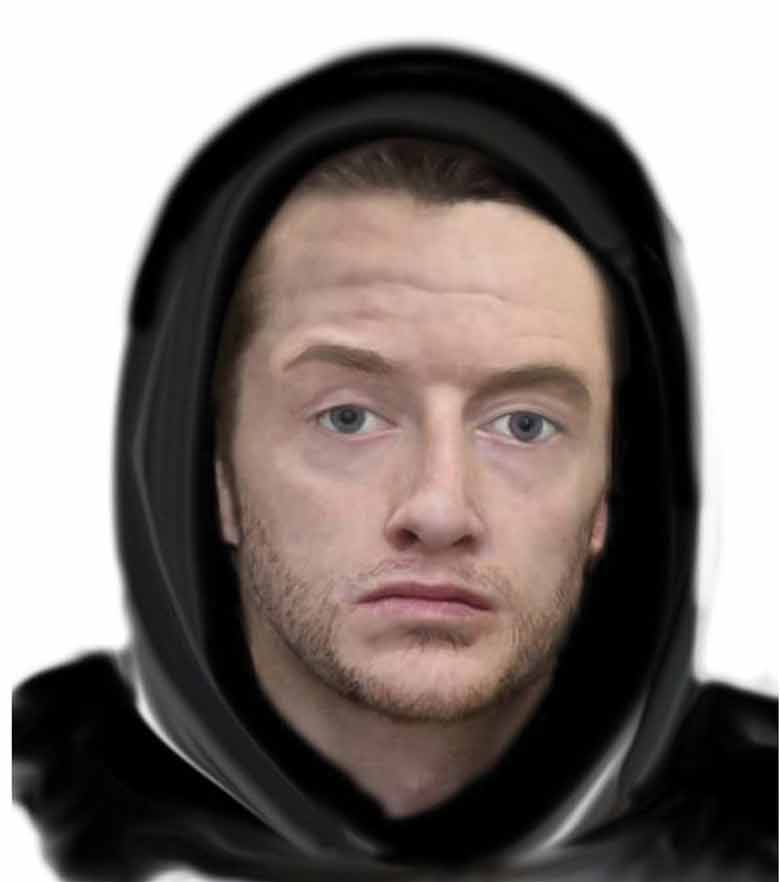
The Toronto Police Service has also requested assistance in identifying a man involved in an early morning sexual assault on Jan. 9, 2016. A woman was walking through an alley near Harbord and Bathurst streets when an unknown man approached her from behind and sexually assaulted her. She escaped from her attacker. The assailant is described as between 20 and 30 years old, approximately five feet nine inches to five feet ten inches tall with a slim build. He was unshaven, had short brown hair, and was wearing a dark hooded jacket or sweater.
A composite sketch of the man alleged to have been involved in a sexual assault at Harbord and Bathurst streets on Jan. 9.
COURTESY?TORONTO?POLICE?SERVICE
If you have any information regarding these assaults or any other crimes, please contact the TPS at 416-808-7474, or leave an anonymous tip at 416-222-8477.
—Summer Reid/Gleaner News
Tags: Annex · News
February 2nd, 2016 · Comments Off on Spadina club sues police
The Comfort Zone has filed a $23-million lawsuit against the Toronto Police Service (TPS) and former police chief Bill Blair, alleging the parties abused their powers to put the Spadina Avenue after-hours club out of business. After discovering that a 26-year-old man had been seen at the club just hours before his death as a result of a drug overdose, the TPS launched Project White Rabbit, an undercover raid that resulted in the seizure of $35,000 and various drugs valued at $33,000, as well as charges against 33 patrons and five staff. The lawsuit claims that police destroyed video surveillance equipment, and kept patrons and staff handcuffed for up to five hours. Since then, the lawsuit claims, the TPS has raided the club over 50 times, harassing staff and patrons. None of these allegations have been proven in court. It’s the second time the Comfort Zone has pursued a legal claim of this nature; in 2009, it launched a similar lawsuit against then councillor Adam Vaughan, claiming it had been the victim of a systematic harassment campaign aimed at shutting the club down.
—Summer Reid/Gleaner News
Tags: Annex · News
February 2nd, 2016 · Comments Off on City seeking street greening opportunities
Harbord Village plan targets laneways, parkettes
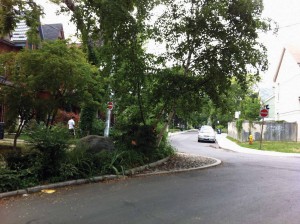
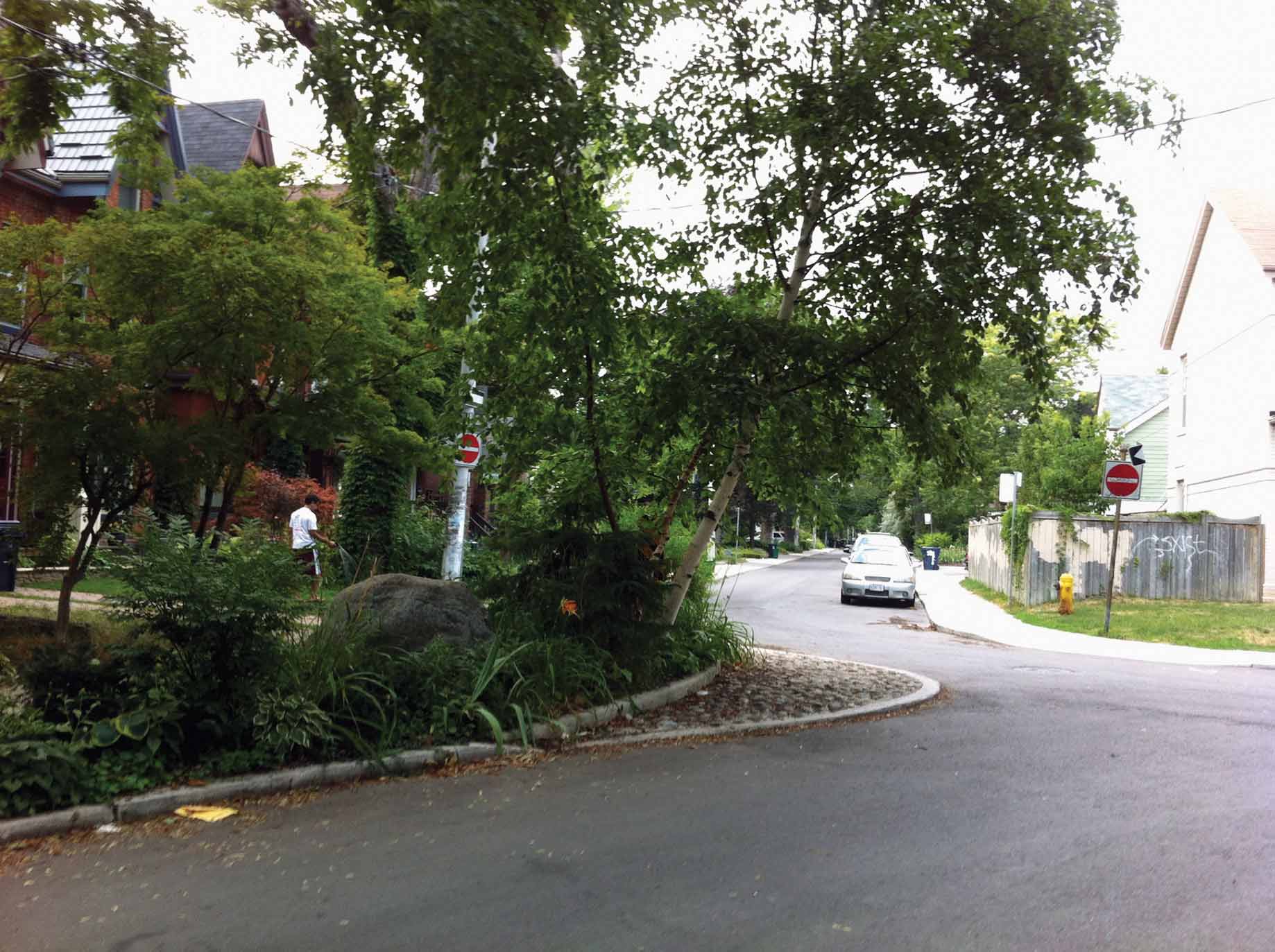
In-ground pinchpoint planters, like the one on Robert Street shown above, act as a curb extension, provide an immovable barrier that discourages drivers from making illegal manoeuvres, and are not subject to the graffiti found on their above-ground counterparts.
COURTESY SUSAN DEXTER
By Marielle Torrefranca
Harbord Village is aiming to get a whole lot greener.
Joe Cressy (Ward 20, Trinity-Spadina) and the Harbord Village Residents’ Association (HVRA), a community-led volunteer organization, have released a joint Green Master Plan, which outlines a series of actions to create urban green spaces in the public realm.
The 16-page document identifies five greening opportunities: using unoccupied paved flankings and corners for trees, bike parking, or seating; encouraging residents to introduce plants into their laneways; opting for in-ground pinchpoint planters instead of above-ground concrete planters; securing under-used neighbourhood space for parkettes; and improving tree planting and maintenance.
“The general philosophy of the plan is easy,” said Susan Dexter, an HVRA board member. “When you look out of your window and you see concrete, could it be planted? Is it wasted space?”
The plan is two-fold, explained Cressy. On one hand, there are the initiatives that have a longer timeline due to bureaucratic procedures, such as greening city-owned flankings and obtaining park space. On the other hand, community-led projects can begin right away.
“We’re seeking to seize the opportunity for greening immediately,” said Cressy.
An example of this is the endeavour to turn laneways into corridors of greenery. Currently, Croft Laneway (just east of Bathurst Street) and Sussex Mews (just west of Spadina Avenue) have been selected as pilot projects.
The HVRA plans to encourage neighbours to bring plants into their laneways, whether that be through placing plant containers along building walls, hanging flowering baskets, or introducing vining along fences and walls.
“[People] want our laneways to feel safe and comfortable and have some identity and character,” said Jane Perdue, who sits on a three-person committee overseeing the laneway project.
According to the report, Harbord Village has more than 25 laneways that can be used as alternative routes for pedestrians and cyclists. However, popular routes are targets for graffiti and vandalism.
To avoid drawing the attention of vandals in the future, the greening style will be kept “rustic”, said Perdue.
“We’re looking at a lot of found material — urns, or containers made out of bricks or fragmented stone,” she said. “We don’t want to make it too precious…we don’t want to be a target [for vandalism].”
Pinchpoint planters (concrete plant containers that perform traffic functions) are also subject to graffiti, so one of the HVRA’s initiatives is to use in-ground pinchpoints instead. According to the report, above-ground pinchpoint planters do not sufficiently slow motorists, as drivers can still dodge around them, and while most of them carry traffic signage, some of them face the incorrect direction on the street.
Their in-ground counterparts act more as a curb extension, and provide an immovable barrier — discouraging drivers from making illegal manoeuvres, while still allowing space for emergency services. The absence of the concrete container also means the absence of surfaces to vandalize.
This is not solely a community-run initiative, however, so the HVRA would need to coordinate with the city for roadwork and construction.
Similarly, the endeavours to green city-owned flankings and corners, improve tree planting and maintenance on main streets, and acquire more public park space, also require coordination with the city.
The HVRA is looking to secure under-used, vacant, or derelict spots in the neighbourhood and turn them into green community parkettes.
“The Bloor Street BIA, independent of us, had located many of the same corners as being potential green space,” said Dexter. “It seems like the constellations have all just lined up, and we’re in a position where we can make transformational change in the neighbourhood.”
This transformational change may not be limited to the planting of trees and scenic landscapes. The HVRA aims to cultivate the ecosystem health within an urban development through its greening initiatives.
Planting trees can also benefit the climate by mitigating the Urban Heat Island Effect; vegetation can absorb the sun’s energy, therefore making areas cooler and reducing power demand, said Dexter, who even performed her own experiment with a household thermometer.
“There [can be] a 10-degree difference,” she said. “From Harbord and Robert streets, I walked south, and by the time I got a little way into the houses, there was a marked difference in temperature.”
However, the association’s self-starting moxie may not be enough to pay the bills on its own.
“In some cases we won’t need additional funding,” said Cressy. “In other cases, we’re having early conversations with community foundations for support.”
While there is no certain timeline yet, Dexter said their next steps include going through council processes.
The link to the Harbord Village Green Plan is available through the HVRA’s website, www.harbordvillage.com.
READ MORE:
Untapped potential: Animating our local laneways (February 2016) by Joe Cressy
Incubating micro-retail: Laneways untapped realm of urban design (December 2015) by Annemarie Brissenden
Tags: Annex · General
February 2nd, 2016 · Comments Off on FORUM: Untapped potential
Animating our local laneways
By Joe Cressy
Downtown communities like ours face unique challenges and countless opportunities. Almost every day, in conversations at our local coffee shops, in public meetings, and as we connect with our neighbours, we look for ways to work together to build our communities. We look for opportunities to enhance our parks, support our neighbours, and to create new public spaces.
Tucked away near the places we live, work, and play are spaces that can often be forgotten. Places that we can, together, creatively transform to help us enhance our vibrant neighbourhoods: laneways.
[pullquote]We can turn a barrier into a gateway, create new fronts from old backs, and make liability into an asset[/pullquote]
Our laneways offer opportunities at every turn. Some are owned by the City of Toronto, others are private — often, however, they are concrete, dark, and characterized by very little greenery and activity. In downtown alone, we have kilometres and kilometres of space that can be transformed to enhance livability in our neighbourhoods.
Together with local communities, we have been working on three exciting projects to transform these forgotten landscapes. We are looking to enhance our green space, increase housing affordability, and increase the public art and animation of our streets.
In collaboration with the Harbord Village Residents’ Association (HVRA), we have created the Harbord Village Green Plan — a local, comprehensive vision to transform the laneways in the community. The resident-driven plan identifies opportunities to expand and enhance green spaces throughout the neighbourhood, but zeroes in on laneways as a key priority to enhance our green space. Thanks to hard-working community volunteers, there is a solid foundation from which to grow green infrastructure. Croft Laneway has already been the subject of a pilot project by the HVRA to formalize laneway greening. Moving forward, we will work hard on laneway planting, adding green elements, introducing vining, and creating other opportunities to restore and foster ecosystem health.
In the Huron-Sussex neighbourhood, Evergreen and the University of Toronto are working on a pilot project to explore laneway housing in Toronto. The Huron-Sussex Neighbourhood Plan, developed with the Huron Sussex Residents’ Organization and the University of Toronto, envisions dozens of new laneway houses over the coming decades. It’s a vision to provide family-size housing opportunities as part of a plan for broader intensification. Infill development like laneway housing can add density and a more diverse population to the neighbourhood, while the creation of a “living laneway” will connect streets, blocks, and open spaces with a shared street focused on promoting pedestrian priority and green spaces.
A central hub for homegrown arts and culture within our city, Queen West has a distinct reputation for innovation and creative production. Rush Lane, which runs parallel to Queen Street, is a veritable art gallery of street art, murals, and graffiti. You likely already know the lane as the backdrop for Rick Mercer’s weekly ‘rant’. This stretch of Queen Street West itself is included in a designated Heritage Conservation District, yet the surrounding areas continue to change. As the broader neighbourhood evolves, new opportunities to build on the area’s defining creative identity must be recognized and supported. In collaboration with local stakeholders, we are pursuing opportunities to increase the functional capacity of this public right of way beyond simple garbage collection and deliveries. We can turn a barrier into a gateway, create new fronts from old backs, and make liability into an asset. By working together in the community, we can enhance pedestrian-oriented public space, drawing even more visitors to local business, and increase much-needed community amenities and connections in the heart of downtown.
As we grow as a city, we need to ensure that we are building neighbourhoods, and laneways certainly have a role to play in helping this along. Through our partnerships on exciting laneway projects, and our work to invest in all our social infrastructure, we continue to march forward to doing just that.
Joe Cressy is the councillor for Ward 20, Trinity-Spadina.
READ MORE:
City seeking street greening opportunities: Harbord Village plan targets laneways, parkettes (February 2016) by Marielle Torrefranca
Incubating micro-retail: Laneways untapped realm of urban design (December 2015) by Annemarie Brissenden
Tags: Annex · Columns · Opinion