October 12th, 2017 · Comments Off on EDITORIAL (FALL 2017): Bike lanes, good for business
When confronted with the question of whether or not to support the city’s pilot bike lanes on Bloor Street, the Bloor Annex and Korea Town Business Improvement Areas (BIAs) commissioned a study on the economic impact of the bike lanes. The comprehensive evaluation yielded clear results and also found a discrepancy between the attitudes of merchants and the positive impact the lanes appeared to have on their bottom lines.
[pullquote]The comprehensive evaluation yielded clear results and also found a discrepancy between the attitudes of merchants and the positive impact the lanes appeared to have on their bottom lines.[/pullquote]
The Toronto Centre for Active Transportation (TCAT) worked with the University of Toronto to do a baseline analysis (pre-bike lane) in 2015, a post installation assessment in 2016, and another in 2017. They also established a control group on Danforth Avenue, which has no bike lanes, to account for other influences not attributable to dividing up the street for cars and bikes. According to Joe Cressy (Ward 20, Trinity-Spadina), no one has ever implemented a more comprehensive study of a bike lane in North America.
The two major issues for merchants were the availability of parking spots and sales.
The pilot bike lanes cost 160 on-street parking spots, representing about 10 per cent of available transient parking. Many merchants reported in the baseline surveys that this loss would harm their businesses. It turns out these fear were misguided at many levels. Most customers don’t drive a car to shop on Bloor Street. Before the bike lanes were installed only 8 per cent of visitors reported they arrived by car. Curiously, that percentage went up slightly to 9 per cent for 2016 and 2017. Of this small group of shoppers, 92 per cent reported that finding parking was “easy or very easy” before the bike lanes were installed. Once the bike lanes were in place in 2016, this number dropped to 51 per cent, then bounced back to 86 per cent in 2017.
Sales went up over the study period, as did the number of shoppers.
According to the Bloor-Annex merchants themselves, during the baseline 50 per cent of weekdays had 100 or more customers per day. A year later it went up to 55 per cent, and by this spring it rose to 65 per cent. That’s a 30 per cent increase from the merchant self-reports. Visitors report a commensurate pattern: 48 per cent said they spent $100 or more monthly, before the lanes. In 2016 that group increased to 59 per cent and by 2017 it grew further to 65 per cent of respondents. There was also economic growth in the Danforth Avenue control area, so it’s important not to draw direct causal connections. However, it can be said with some confidence that business is better, and not suffering as a result of the bike lanes.
Business owners themselves have not been quick to embrace the bike lanes. It appears likely that some of them as individuals have had more negative travel experiences than their customers. At the beginning of the study 49 per cent of owners reported that they drove to work. By the third study period that number had not changed. The transportation challenges endured by the owners are not felt by over 90 per cent of their customers who walk, cycle, or take transit.
The BIAs wanted to take the emotion out of the question of whether or not bike lanes are good for business. It’s easy to be swayed by anecdotal reports and to heeding the loudest voice. There are plenty of strongly held views and those who are unaccustomed to embracing evidence-based policy.
It’s time to look at the numbers, which point to the conclusion that bike lanes are good for business.
Brian Burchell, the publisher of this newspaper, is also the chair of the Bloor Annex BIA.
READ MORE
EDITORIAL: Don’t sacrifice safety for political gain (August 2017)
EDITORIAL: Thank you Mr. Asti (July 2017)
EDITORIAL: A watershed moment (June 2017)
EDITORIAL: Revoke U of T’s unchecked “licence to build” (May 2017)
EDITORIAL: Westbank’s positive precedent (April 2017)
EDITORIAL: Foreign buyers tax a necessary cliff jump (March 2017)
Tags: Annex · Editorial
October 12th, 2017 · Comments Off on FORUM (FALL 2017): Toronto — an artistic city
Home to nearly 25,000 working artists
By Joe Cressy
Cities are more than bricks and mortar and places where people live. Great cities are vibrant and dynamic. And, great cities contribute to this by investing in arts and culture, not because they are a nice to have but because they make our cities livable.
Toronto, and downtown in particular, has a long and proud history as a cultural hub. The old cafés of Yorkville, the independent theatre movement, the musical corridor stretching down Spadina, film festivals large and small, and a literary sector that has woven tales of Toronto into our collective history. This proud history lives on.
Today 174,000 Torontonians work in the culture sector, including nearly 25,000 working artists who call Toronto home. As a side note, Ward 20 has the largest number of resident artists of any municipal ward in all of Canada. It’s a fact to be proud of. These artists build skills for the new economy, and bring tourists to our neighbourhoods and our local businesses. They give us joy, and they challenge us to think differently. To put it simply, arts and culture matter.
However, while Toronto may be a cultural city, as we continue to grow, the artistic sector is facing challenges. On the funding side the City of Toronto has made a commitment to fund arts and culture at a rate of $25 per capita. It’s a figure that looks good on paper, until you realize that in Montreal it is $55, in Vancouver $47, and in Calgary $42. If we aspire to continue as a world-class cultural city, we need to step up.
Like other successful North American cities, many of our downtown cultural organizations are also struggling under the weight of rising property values and the corresponding tax assessments. Bookstores just can’t compete on Bloor Street where rents as high as $20,000 per month make it easier to sell pints than novels. Music venues like the Silver Dollar on Spadina can’t compete when owners would make more selling to a condo developer than leasing to a historic venue. And everyone knows the example of 401 Richmond, arguably Toronto’s leading arts and cultural hub, which cannot afford to continue providing low market rents when the Province of Ontario assesses its tax rate on the basis of highest and best use — as a Gap and Starbucks — rather than its current use as a creative and community hub.
While I don’t think anyone could argue that you can take the arts out of Torontonians, if we don’t do more, we risk taking much of the arts out of the city. In our community we’ve been working hard with many leading art and cultural institutions to counteract these trends.
On Spadina Avenue, we’ve partnered with the soon-to-reopen El Mocambo on the Spadina Rock Walk, a new series of public art installations that will celebrate Spadina’s incredible musical history. From the Silver Dollar to the El Mo to Grossman’s, Spadina has long been home to a burgeoning music scene. We want to commemorate that history.
On Bloor Street, we’re working with the Bloor Street Cultural Corridor to promote this uniquely Toronto cultural district. With 19 partner organizations including French, Jewish, Italian, Estonian, Japanese, and Aboriginal arts and cultural institutions, this corridor reflects the diversity of city.
In King-Spadina we are working hard on a new policy to protect existing cultural organizations by mandating that any new development must incorporate existing cultural spaces into their projects. Our experience with the Silver Dollar, where we were able to mandate that the venue be fully rebuilt (including heritage attributes like the sign, stage, and bar) into the new development, shows that this is possible when you fight for it.
Perhaps most importantly, we’re also working hard to get the Province of Ontario to establish a new property tax sub-class in Toronto specifically for community and cultural hubs to ensure that we incentivize these organizations by taxing them based on their current use.
Taken together, these new measures will help to commemorate, support, and protect arts and culture in our city. Are they enough? Absolutely not.
At the end of the day investing in arts and culture builds a stronger economy and more livable city, and that requires the city to step up its funding.
But, it’s clear that culture lives in Toronto and, with a bit more work, will continue to thrive.
Joe Cressy is the councillor for Ward 20, Trinity-Spadina.
READ MORE BY JOE CRESSY
FORUM: Address affordable housing (June 2017)
FORUM: Build a neighbourhood (March 2017)
FORUM: Conserving past to enrich future (January 2017)
FORUM: Our dynamic Kensington Market (November 2016)
FORUM: A new central park for Toronto (September 2016)
Tags: Annex · Opinion
October 12th, 2017 · Comments Off on HISTORY (FALL 2017): Inspiring the spine
Heritage Toronto unveils Joseph Bloore plaque
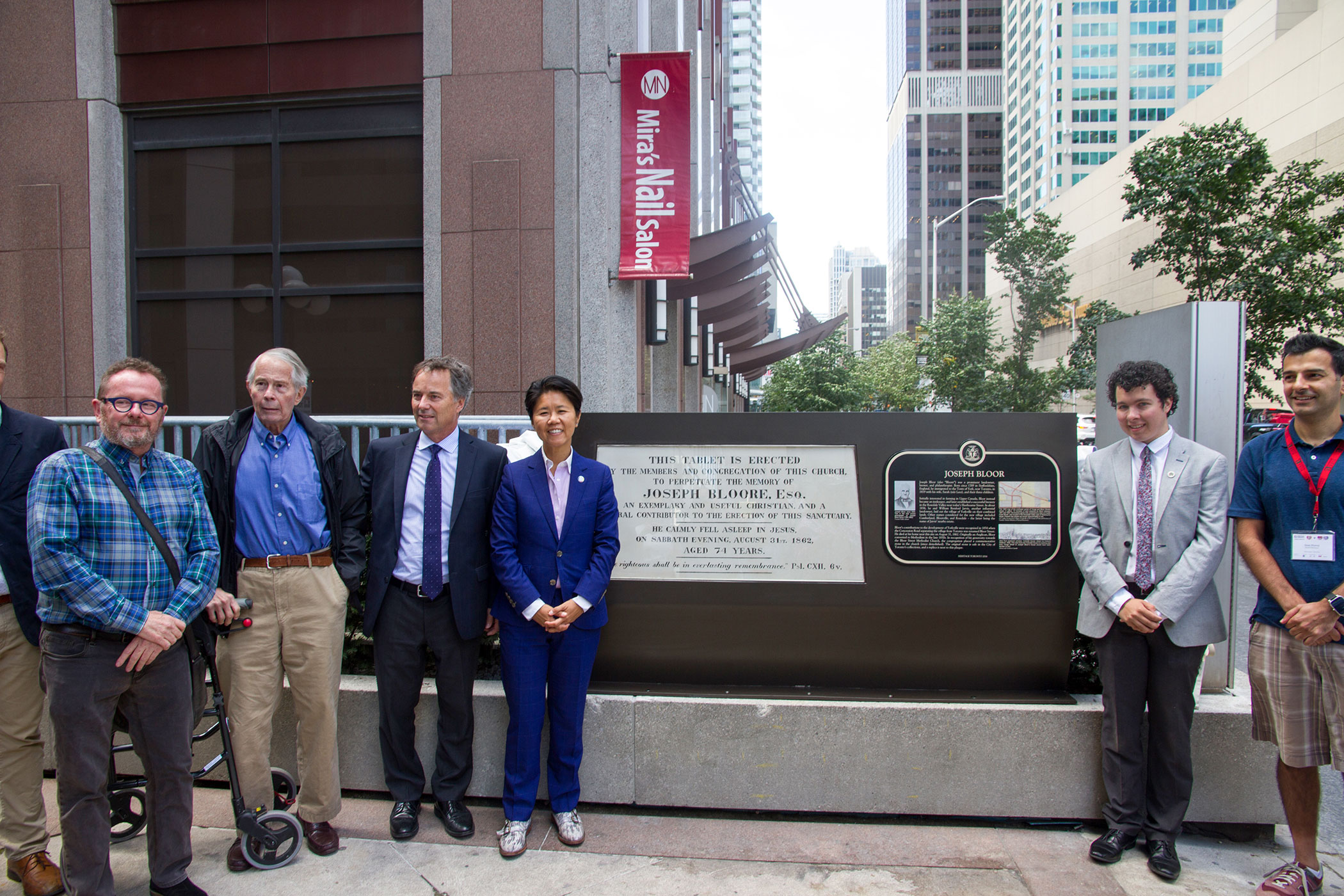
PICTURE BY GEREMY BORDONARO/GLEANER NEWS: Approximately 100 people gathered at 117 Bloor St. E. on Aug. 31 to celebrate the unveiling of a plaque dedicated to Joseph Bloore. The plaque, located close to the site of Bloore’s home, includes a part of a previous one dedicated to the inspiration for Bloor Street and text by Heritage Toronto. It took more than seven years to create this new plaque, which may never have been unveiled if not for the passion and enthusiasm of local residents.
READ MORE
Remembering Sir William Howland (Fall 2017)
Harbord’s history a mystery (January 2016)
Early brewer the basis for Bloor Street’s name (May 2015)
Tags: Annex · History
October 12th, 2017 · Comments Off on ARTS (FALL 2017): Exhibitions, concerts, films, talks
Plus a spooktacular October weekend

PICTURE COURTESY BLOOR ST. CULTURAL CORRIDOR: The Toronto Jewish Film Society presents The Human Resources Manager on October 15. Adapted from a novel by A.B. Yehoshua, it tells the story of an HR manager who reluctantly takes home the body of a Romanian worker after she is killed in a suicide bombing in Israel.
By Heather Kelly
Art & Architecture Exhibitions
The Istituto Italiano di Cultura presents With New Eyes: Architecture for Toronto by Francesco and Aldo Piccaluga Architects, and opening on October 19, the Gardiner Museum presents Steven Heinemann: Culture and Nature. Gardiner Museum Executive Director & CEO Kelvin Browne and curator Rachel Gotlieb lead an intimate discussion with the artist on Tuesday, October 17.
[pullquote]Learn more about the music you love at the conservatory’s music appreciation classes.[/pullquote]
Alliance Française opens a new exhibition called Outcomes from the Edge, and at the Miles Nadal JCC, textile artist Sharon Epstein displays Jewish Chuppahs or “canopies” in the exhibition Blessings. Continuing exhibitions include an Eiko Ishioka Poster Exhibition on view at the Japan Foundation, Building a Community: Estonian Architects in Post-War Toronto on view at the Museum of Estonians Abroad, and the ROM explores the connections between family photographs, migration, and identity with the original ROM exhibition The Family Camera until Sunday, October 29.
On the Big Screen
Alliance Française continues its Movie Thursday series, the Miles Nadal JCC presents darkly comic Israeli drama The Human Resources Manager, introduced by Adam Nayman, October 15, and the Bata Shoe Museum hosts a special screening of the short film 40 Years of Goth Shoes, October 19, including a Q&A with producer Liisa Ladouceur.
Hot Docs Ted Rogers Cinema’s Podcast Festival features Intercepted with Naomi Klein, Desmond Cole and Narcy, The Nod with guests Sarah Hagi and Vicky Mochama, Another Round, Canadaland with guest Daniel Dale, Washington correspondent for The Toronto Star, and more, October 12-15. Doc Soup returns with a group of improbable heroes and their inspiring plight to make high quality healthcare available to everyone in Bending the Arc, October 4-5.
Catch a Concert
Tafelmusik’s new music director Elisa Citterio leads a grand tour across baroque Italy, from Vivaldi’s Autumn to Fontana’s sonatas, Steffani’s dramatic suites to Locatelli’s energetic concertos, in “Elisa’s Italian Adventure,” October 11-15 at Jeanne Lamon Hall, Trinity-St. Paul’s Centre.
Soundstreams’ 35th season opens with Northern Encounters on October 16 at Koerner Hall, where the Lapland Chamber Orchestra performs music by Jean Sibelius, Harry Somers, and Claude Vivier, with dance by powerhouse choreographer Michael Greyeyes, the world premiere of Soundstreams’ 35th Anniversary Fanfare by Canadian Anna Pidgorna, and gems by Stravinsky and Debussy.

PICTURE COURTESY BLOOR ST. CULTURAL CORRIDOR: Legendary Chilean music ensemble Inti-Illimani teams up with poet, songwriter and activist Nano Stern to celebrate their 50th anniversary at Koerner Hall on October 27. Evocative of Chile’s unique culture voice, the ensemble has inspired artists like Peter Gabriel, Sting, and Bruce Springsteen.
Chamber music takes centre stage at the University of Toronto Faculty of Music, with Enrico Elisi’s From Public Stage to Private Parlour: An Introduction to Rarely Performed Piano Works from Rossini’s Years of Silence on October 2; the New Orford String Quartet performing Gellman, Ravel, and Tchaikovsky on October 5; and the Toronto Symphony’s Joseph Johnson with the Gryphon Trio’s James Parker on October 30. The U of T’s free Thursdays at Noon concert series will feature the Toronto Symphony’s Jonathan Crow and Joseph Johnson on October 19, and Musical Chairs II featuring Elizabeth McDonald, Giles Tomkins, Achilles Liarmakopoulos, and Kathryn Tremills on October 26.
As the Royal Conservatory of Music’s concert season begins, the Miles Electric Band comes to Koerner Hall on October 14, Flamenco Legends by Javier Limón: The Paco de Lucía Project performs on October 21 (in a related event, the documentary film, Flight of the Guitar: Dreaming of Paco de Lucía, will be screened at the Hot Docs Ted Rogers Cinema on October 24), and renowned Chilean band Inti-Illimani celebrates its 50th anniversary on October 27.
The Istituto Italiano di Cultura will present Giovanna d’Arco in a new production by Teatro Regio di Parma, on October 5 at the Alliance Française Spadina Theatre. And the 918 Bathurst Centre for Culture, Arts, Media and Education is partnering with the Music Gallery to bring X Avant Festival concerts to 918 Bathurst starting October 11, and Teo Milea’s Piano Soundscapes will be there on October 29. On October 27, the Estonian girls choir Elis from Pärnu will be performing a PWYC concert at 7 p.m. at Tartu College.
Take in a Talk
The ROM feeds curious minds on October 3, when spectacular finds unearthed from an undisturbed burial site are the focus of ROM Speaks: The Griffin Warrior of Pylos. On October 17 is ROM Speaks: Ways of Knowing – Archaeology for the 21st Century, and on Tuesday, October 24, iconic visual and performance artist Kent Monkman is at ROM Speaks: Art & Identity.
At the Royal Conservatory of Music you can learn more about the music you love at Music appreciation classes offered in mornings, afternoons, or evenings. Alliance Française presents four talks this month: Literary Encounter – The Search for Heinrich Schlögel: Music and Post Cards on October 4; A History of Beauty on October 18; Political Feelings: Moving Society on October 25; and Discussion with the writer Sylvain Prudhomme on October 24.
At the Miles Nadal JCC, daytime adult cultural talks include a three-part art lecture series: Modigliani Unmasked with Osnat Lipa beginning October 16; Jewish Folk Tales That Have Become Operas with Dr. Joseph Gilbert on October 19; and Honouring the Past, Imaging the Future: The Legacy of Honest Ed with Bill Gladstone on October 26.
Fundraising Events
Three fundraising events take place at local cultural organizations this month. On October 1, the museum of Estonians Abroad and their partners present Northern Spirit: Estonian Fashion and Design Experience, a fundraising fashion event with fashion shows at 2 p.m. and 7 p.m. at Tartu College. The Gardiner Museum sees the 25th anniversary of its Empty Bowls fundraiser on October 12 with delicious soup by some of the city’s top chefs and attendees choose a ceramic bowl to take home, all in support of Anishnawbe Health Toronto. The Randolph Centre for the Arts presents the Encore Gala, on October 23, to celebrate 25 years of educating and preparing artists for a career — and life — in the performing arts industry. The evening will feature a silent auction, casino, cabaret performances, and a gala concert with appearances by alumni, current students, and friends, with special musical guests.
Halloween Fun
The ROM invites adults to come dressed in Halloween costumes to party with fellow ghouls and ghosts at Friday Night Live: Wicked on Friday, October 27. The Bata Shoe Museum is planning a “spooktacular” weekend of family fun activities on October 28 and 29, where kids in costumes get in free. Alliance Française presents a film for children, A Monster in Paris on October 29 at 2 p.m.
Tags: Annex · Arts
October 12th, 2017 · Comments Off on ARTS (FALL 2017): Swimming the English Channel
Former Gleaner writer publishes novel
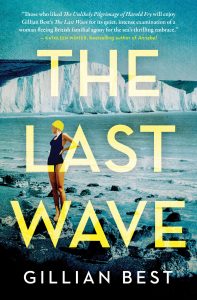
Former Gleaner writer Gillian Best has published her debut novel.
The Last Wave (House of Anansi Press) tells the story of Martha, a woman who has swum the English Channel ten times. As she navigates complex relationships with husband, children, and close friends, the sea remains the one constant in Martha’s life.
[pullquote]“As she navigates complex relationships with husband, children, and close friends, the sea remains the one constant in Martha’s life.”[/pullquote]
Kathleen Winter, who wrote Annabel, praises The Last Wave for its “quiet, intense examination of a woman fleeing British familial agony for the sea’s thrilling embrace”. Tanis Rideout, who wrote Above all Things, says that it “shows us that in life, as in swimming the channel, we aren’t defined by one decision, but rather the decisions we must make over and over again with each stroke”.
Best, herself a swimmer and seaside enthusiast, was chosen by CBC Books as one of 17 Writers to Watch in 2017. She was shortlisted for Wasafiri’s New Writing Prize (2015), long-listed for the Write-Idea Short Story Prize (2014), and shortlisted for the Bridport Prize International Creative Writing Competition (short story, 2013).
In 2003, she won the Bronwen Wallace Award for Short Fiction for “Seamus & Lloyd”, which we serialized and published in three parts from January to March 2014. It was illustrated by our editorial cartoonist, Brett Lamb. At the time, Best was a regular contributor to the Gleaner, writing book reviews for our Spine Finds column.
Originally from Waterloo, Best lives in Bristol in the United Kingdom.
She studied her Masters in Professional Writing in Falmouth, and later received her PhD in Creative Writing and English Literature from the University of Glasgow.
—Annemarie Brissenden
Tags: Annex · Arts
October 12th, 2017 · Comments Off on GREENINGS (FALL 2017): Reducing paper waste
We need to plant more than we harvest
As we turn our attention to going back to school, it’s nice to reflect on the ways we can reduce the waste that we generate during the school year.
According to one survey, the average school in the United States uses about 2,000 sheets of paper per day. One can probably assume numbers in Canada are very similar. Canadians are also responsible for hacking up more pristine forests than any other country on the planet, according to a 2014 Forest Watch Canada study.
When I was a child, technology was supposed to move us towards a paperless society. Instead, consumption increased as it got easier and cheaper to print stuff out. According to the Paperless Project, a grassroots coalition of companies working to change how organizations work with paper and electronic content, the last twenty years have seen a staggering 126 per cent growth in paper use.
Pulp and paper is an important industry in Canada for sure, but we really need to diversify away from being drawers of water and hewers of wood. In Alberta and Ontario, the industry saw 14 and 13 per cent growth respectively from 2014 to 2015. And for all that activity, in 2014 we saw 717,000 hectares harvested compared to 399,000 hectares replanted. It certainly brings into question our reputation as environmental stewards. Combine the intentional harvesting along with forest fires in recent years, and Canada is quickly losing a major resource that is also an important carbon sink. Last year’s Fort McMurray fires saw a loss of 590,000 hectares (1.5 million acres) while this year’s BC forest fires have so far resulted in an estimated 845,000 hectares of loss. Protecting our forest needs to be a high priority, both from an environmental standpoint and a resource management standpoint. Canada has a lot of forest, but if the cod fisheries in the 1990s taught us anything, it too can collapse.
Arguably Canada is one of the few places left in the world where sustainable forestry is possible. There should be no excuse for having such a disparity between the area that is harvested and the amount that is replanted.
Companies doing the harvesting should be mandated to plant more than they take. This responsibility should not fall on teenagers looking for volunteer work during their summers. That’s called socializing costs while privatizing profits. Resources are shared among Canadians, not just a select few. This is an industry that generates tens of billions of dollars in sales with a tiny fraction spent on environmental protection.
It is high time that we recognize that companies can’t simply extract without putting back into the environment and mitigating harm. We have a deep history of resource extraction that is viewed as a god-given right. It is time to start shifting those views as we embrace a role of moving from extractors to protectors. Those who protect resources from harm shouldn’t be labelled “activist” as though they come from the fringes of society. We have normalized doing harm and vilified protecting the very things that give us life.
And as we wait for governments to act, we should remember to do our own part in reducing the demand for pulp and paper products. Granted, between using paper and plastic, my heart bleeds less when a paper plate is discarded. I have a reasonable expectation that unlike the plastic, evidence of the paper plate won’t last longer than humanity’s remaining time on earth.
But, we should still strive for zero waste. Paper can only be recycled so many times and new pulp always needs to be added into the recycled material. Food-contaminated paper can’t be recycled at all, so those pizza boxes you diligently break down into the blue box? Yep. Landfill. Don’t let the recycling labels fool you. A pizza box will ruin a perfectly good batch of recycled fibre.
For those with school-aged children, reduction can mean anything from replacing brown paper bags to replacing napkins with small washable towels. In my home, I chase runny noses around with little bum wipes that go straight into the laundry. They’re small, convenient, and I’m not throwing out a tissue for every little bit of snot that comes dripping down.
Individual reduction will only do so much, but it’s still important that we do it. Governments must act, and we must lead the way.
Terri Chu is an engineer committed to practical environmentalism. This column is dedicated to helping the community reduce energy, and help distinguish environmental truths from myths.
READ MORE GREENINGS BY TERRI CHU:
Taking tolls to the Gardiner and Don Valley Parkway (July 2017)
Lessons from Madrid (June 2017)
Thoughts on hitting the 400 benchmark (May 2017)
Solving the food waste problem (April 2017)
Kellie Leitch was right (March 2017)
Tags: Annex · Life
September 13th, 2017 · Comments Off on ON THE COVER (AUGUST 2017): Setting up for a new season

PHOTO BY GEREMY BORDONARO/GLEANER NEWS: The University of Toronto’s Varsity Blues Football team practices drills and plays scrimmage games during an open practice on Aug. 17. The team welcomed community members to the morning event, which provided a glimpse of collegiate football and included and a meet-and-greet session with the athletes. The season starts on Sept. 4.
Tags: Annex · News
September 13th, 2017 · Comments Off on NEWS (AUGUST 2017): Expanding the city’s cycling network
Study proposes to use laneways as bike lanes
By Geremy Bordonaro
Could Toronto’s network of laneways be integrated into the city’s cycling infrastructure? A recently launched study may answer that question.
Sponsored by the Laneway Project, Laneways as Bikeways explores whether laneways could be converted into bikes lanes.
“We know there’s the ten-year bicycle plan and there’s going to be a lot of proper infrastructure being put in place on our roads. But in the interim we’ve still got this truncated bike network in our city. How can we help alleviate that?” asked Michelle Senayah, co-founder and director of the Laneway Project. The non-profit organization, which in the past has advocated for laneway housing, is dedicated to transforming unused laneways into friendly, multi-use community spaces.
A survey has been distributed to residents, cyclists, and community groups asking whether they see a use for laneways in the city’s cycling network, and what potential issues might be involved. And some concerns — safety, obstacles, and lighting — have already been raised.
“Part of what we’re asking in this study is what role do people see laneways playing, if any,” said Senayah, who believes the study is a new and unique way to think about bike networks. “Do they see them as shortcuts? Do they see them as alternate routes to places like Bloor Street? Or do they see them more as recreational spaces to move through at their own speed?”
While she believes converting laneways to bike lanes could help the city introduce more cycling paths sooner, Senayah stressed that this shouldn’t be a long-term solution.
“We’re not claiming that laneways are going to replace cycle lanes,” she said. “But there is that potential, in the short- to medium-term, for laneways to provide a safety upgrade in Toronto’s cycling network.”
The Laneway Project is working on the study with the Community Bicycle Network.
“Laneways are an untapped source of potential. They’re getting a lot of attention these days. And in a big city like Toronto they’re relatively unobscured and unobstructed,” said Adrian Currie, chair. “There’s a lot of possibility for positive use. They don’t have to be just these dead spaces between the roads anymore.”
He says that he, like many cyclists, already uses the laneways. But he thinks upgrading the laneways could make cycling safer in the city.
“We think there is some possibility. People take laneways as they are now. It’s not a stretch,” he said. “I know I take laneways to avoid Bloor Street or Spadina Road. As a shortcut I’ll take a laneway or two. We’re looking at it as a complement to the bike network.”
However, there are those who are skeptical of the feasibility of using the laneways for bike riders.
“I can tell you the lanes in Harbord Village probably won’t work,” said Gus Sinclair, chair of the Harbord Village Residents’ Association. “They’re kind of quirky. They come to T-joints. They’re not contiguous. Some of them don’t go from one place to another. I’d be hard-pressed to point to many laneways that would get you to where you need to go in Harbord Village.”
Sinclair thinks that it would be much safer for cyclists to stick to the main roads and bike lanes while the city continues to introduce more safe routes.
The study is but the latest in a long line of initiatives that active transportation groups like the bicycle network have taken to improve the city’s cycling infrastructure. But Currie believes the city is evolving in its approach to transportation.
“I think this is all part and parcel in a push for Toronto to become more cycling-inclusive. We’re trying to become more of a twenty-first-century city, less dependent on cars and gas. So let’s see those Bloor Street bike lanes stay in and have some added laneways to support them.”
READ MORE
ON THE COVER: Putting the city’s laneways to work (January 2017)
NEWS: Laneway living (January 2017)
Incubating micro-retail: Laneways untapped realm of urban design (December 2015)
Tags: General
September 13th, 2017 · Comments Off on NEWS (AUGUST 2017): Palmerston goes green
Residents’ association follows model set by Harbord Village
By Emilie Jones
The Palmerston Area Residents’ Association (PARA) unveiled its plan to go green at a public meeting in early August. The association, which has been developing the plan with the office of Mike Layton (Ward 19, Trinity-Spadina), was looking for ideas and feedback from the neighbourhood.
“Everything hinges on this meeting,” said Rachel Singer, a summer intern with the councillor’s office who has been on the file with fellow intern Francesca Campos. “The plan is completely created by the community; we are just here to support.”
PARA chair Paul MacLean described the meeting as an opportunity “to inform people what the interns have been doing. They have been a real boost throughout the summer, which is the energy that was needed. We want to do more than just brainstorm.”
In developing the plan, PARA is following the path laid by the Harbord Village Residents’ Association (HVRA), which released its Green Master Plan in February of last year, and the Bloor Annex BIA, which has developed its own plan for greening Bloor Street.
The HVRA’s Sue Dexter was on hand to give PARA some guidance on how best to proceed.
“My advice is that you want to build yourself in the city infrastructure, working and collaborating with them,” she said. “It is a little piece of a big problem. You want to focus, specialize in one thing, and go away with it.”
The focus of the meeting was on collaboration, as representatives from different organizations — Community Resilience to Extreme Weather, PARA, HVRA, and Layton’s office — gave presentations and answered questions.
Residents then participated in activities that helped determine their priorities for the neighbourhood. In dot-mocracy, for example, people used stickers to demonstrate the level of importance of various issues.
The idea, explained Rachel Singer, is to have the neighbourhood develop the plan it wants, rather than the city dictate to the neighbourhood.
“This is your plan. It represents your community. It is your voice,” she said.
Some of the themes that emerged included storm-management, pinch-point planters, identifying school areas that could be used as community greenspace, and tree planting. After working in groups, the residents came together to give some general and initial feedback on the themes, as well as show their support for the initiative overall.
“People might ask why a green plan,” said Frumie Diamond, the PARA board member responsible for green space and beautification. “It’s a great way to identify strengths and opportunities in the neighbourhood.”
She added that Mike Layton’s support is a big help.
“When you have a plan and people behind you, it allows us to have input when the city is putting in infrastructure. It allows us to have a seat at the table to get what we need.”
“I appreciate the idea of beautifying the neighbourhood and turning that into working with Layton into greening the neighbourhood,” agreed Becky, a local resident.
Although the meeting sparked discussion and brainstorming, it will take more than that to bring the green plan to fruition.
“This is a promising start,” said Singer, noting that such meetings are important, because “the hardest part is getting people involved”.
“Communications are necessary for this to be successful,” said Breanne, another resident. “How we are communicating and why the project is important must be communicated, we need to build partnerships. I am interested in how [the plan] can relate to our small neighbourhood which we all love so much.”
Meghan, another neighbour, echoed those thoughts. “It is already a green neighbourhood, with foliage and trees. Building on it to make it sustainable can be really valuable.”
The hope is to have a first draft of the plan ready for a public meeting this fall.
Tags: General
September 13th, 2017 · Comments Off on CHATTER (AUGUST 2017): Don Watterson dies at 71
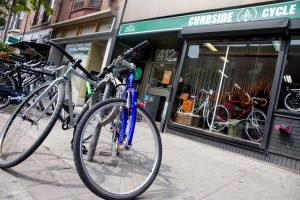
PHOTO BY GEREMY?BORDONARO/GLEANER NEWS
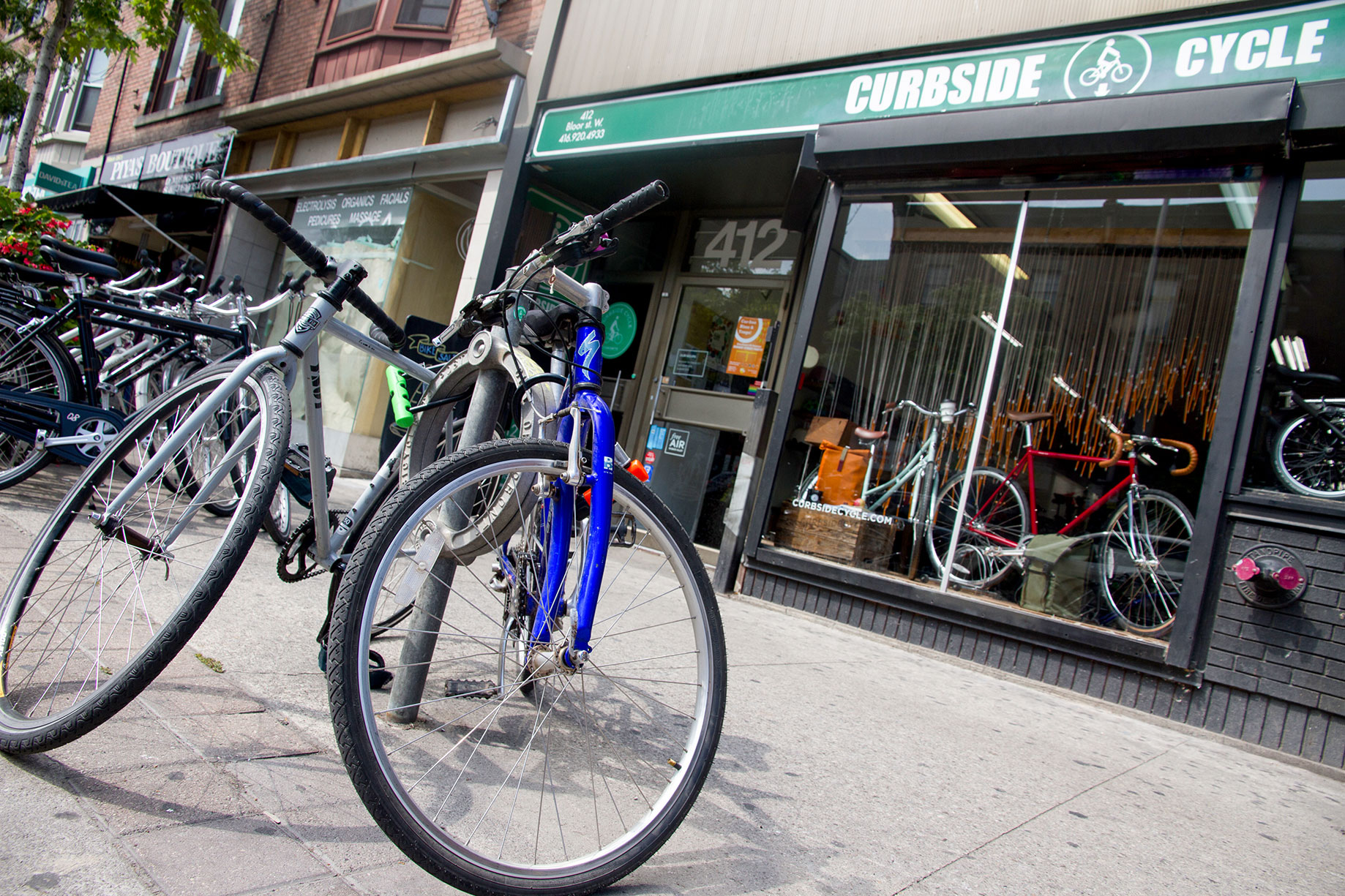
The founder and owner of Bloor Street retailer Curbside Cycle died of an apparent heart attack on August 16. He was 71 years old.
Don Watterson launched Curbside in 1991 as a tent on the side of a curb (hence the name) near Bloor Street and Brunswick Avenue, not far from its current storefront at 412 Bloor St. W. He was also heavily involved in Bells on Bloor, which advocates for bike lanes on Bloor Street, and was instrumental in making Toronto more accessible for cyclists.
Like his advocacy work, cycling in the city is at the heart of his shop. As a result, Curbside’s focus has always been on bikes that people use primarily to get around the city, rather than bikes for recreation (mountain bikes) or sport (racing bikes).
His entrepreneurial spirit enabled him to break from a rigid pre-existing supply chain structure and import city bikes directly from Europe, establishing Fourth Floor Distribution to distribute European city bikes across a Canada-wide network. According to their website, “it remains the case that bike stores tend to be run by males, often really grumpy males, and only sell products that are designed for other males, many of whom can also be quite grumpy. So while we dream of sharing our vision of city bikes with retailers across North America, it’s going to take a while to convince them.”
A recent visit to Curbside Cycle found not one grumpy staffer but rather a mechanic with a smile, eager to get a flat fixed on the spot to get the rider back on her way.
Watterson would have been proud.
—Brian Burchell/Gleaner News
Tags: Annex · News
September 13th, 2017 · Comments Off on CHATTER (AUGUST 2017): New after-school club launches at Central Tech Stadium
Central Tech Stadium is introducing a new after-school program. Open to children from schools within a 15 to 20 minute walk of the stadium, the CTS After School Club is a physical adventure program in which students will participate in sports at the stadium, activities in local parks, and excursions throughout the Annex. Participating children will be picked up from their school. The program, which begins in September, runs from the minute the school bell sounds until 6 p.m.
—Geremy Bordonaro/Annex Gleaner
Tags: Annex · News
September 13th, 2017 · Comments Off on CHATTER (AUGUST 2017): Celebrate the season in Harbord Village
This year’s Harbord Village Fall Fair will take place at Margaret Fairley Park on Sept. 10 from noon to 6 p.m. The block-busting party, say the organizers, will include live music, games for children, and a feast of food. There will also be a silent auction, as well as a selection of beer and wine. It’s hosted by the Harbord Village Residents’ Association, which is still looking for volunteers.
For further information, please visit www.harbordvillage.com.
—Geremy Bordonaro/Annex Gleaner
Tags: Annex · News