August 9th, 2026 · Comments Off on LIFE: At Knifewear it cuts both ways (May 2026)
I almost parted ways with my savoured sushi knife
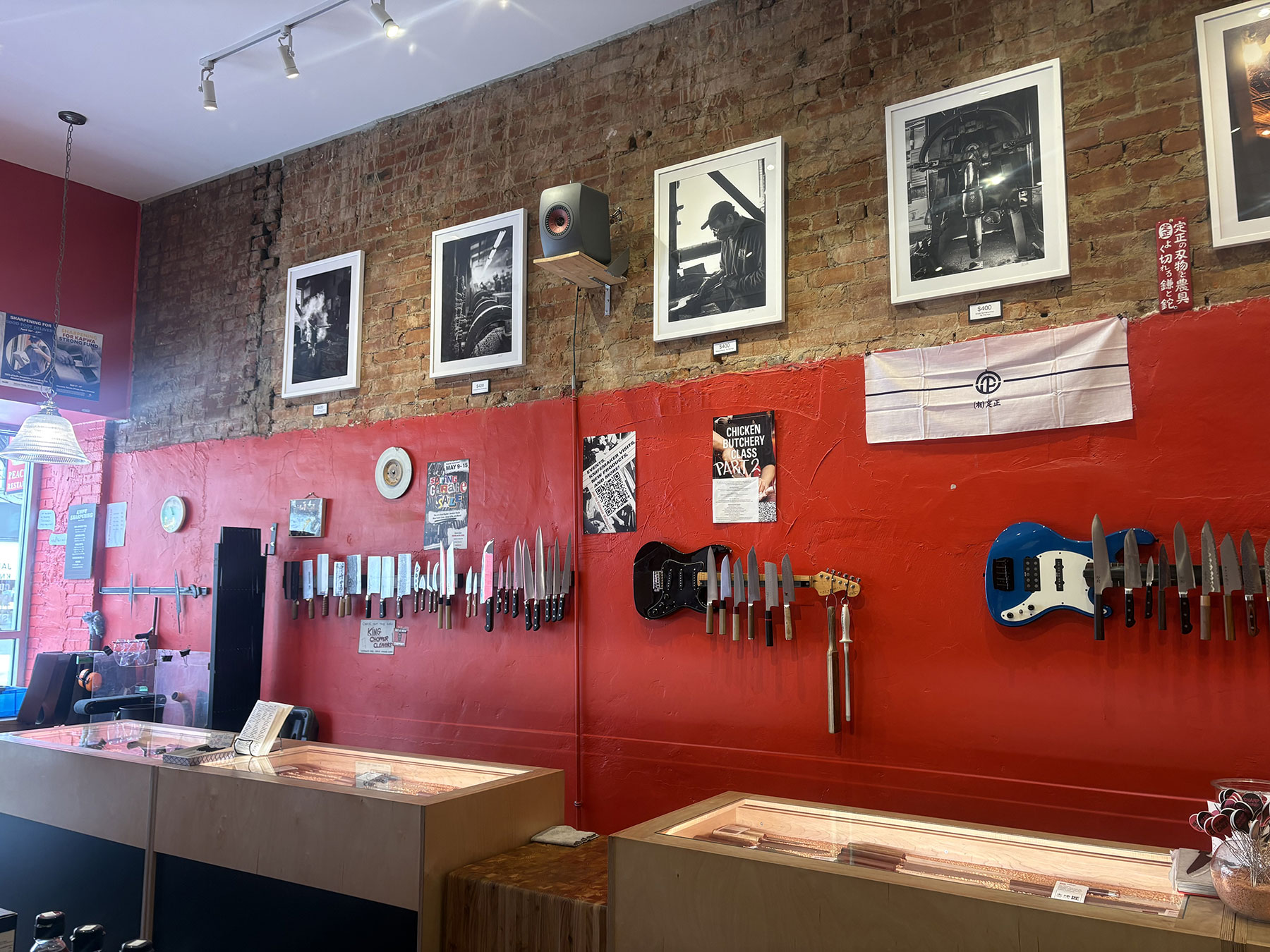
An inside look at the impressive product line at Knifewear. BRIAN BURCHELL/GLEANER NEWS
By Howard Pressburger
Like most of you, every morning when I wake up, after I do my calisthenics and take my blood pressure, I thank my lucky stars I live in the Annex. Also, like most of you, if I didn’t have to visit my in-laws, I’d probably never leave the neighbourhood. But surprisingly enough, there are some stores and services here that I’ve never taken advantage of. (Not just the waxing bars and psychiatrists.) Until recently, I had never visited Knifewear, the store for Japanese knives located at 517 Bloor St. W.
If you’ve been reading my articles, you know that once upon a time I learned how to make sushi from an authentic Japanese Itamae. And although I never worked professionally, I did spend years treating my friends to some pretty darn good nigiri, maki, uramaki, and temaki (and occasionally sashimi when I ran out of rice). But those days are long behind me; I hung my makisu over my bathroom window and turned my hangiri into a shadow box for a Ramones record. I tucked my sushi knife back into its box and put it away in hopes of using it again, but alas that has never happened.
A few weeks ago, I noticed a sign taped to the window of Knifewear. They were taking trade-ins of Japanese knives towards the purchase of a new one. Even with an emotional attachment to my sushi knife, I felt I could let it go to find a new home with someone who could care for it as I once did. In return, I’d get myself a new chef’s knife that I could use every day that would fill the hole left in my heart by my dear sushi knife. It was just a figurative hole,by the way.
So I took my knife, and a deep breath, and walked into Knifewear. I always feel uneasy going to a place for the first time, especially when it’s unfamiliar and I lack confidence in my knowledge about their stock and trade; I felt the same way the first time I went to the Vatican. But immediately I was greeted with a hearty “Hey, Howard,” which also may have happened the first time I went to the Vatican. This was Brian who has been coming to the hardware store for a while and is one of the special breed of people in our community who remembers my name and can recognize me when I’m not wearing my signature red and black uniform. He seemed genuinely happy, and maybe a bit surprised, to see me in his place of work. As he was about to teach a course on knife skills, he passed me on to Binh-An to help with my trade-in.
Since I had the original box, and the engraving on the knife blade was in excellent condition, the first step was to figure out who made it. It turns out my knife is from the Sakon Shiraume collection by Hokiyama cutlery. Binh-An explained that there are different knife companies, different forgers, and different sharpeners. It was almost overwhelming to discover the storied and complex history of traditional designs and methods behind Japanese knives. Different regions have their own styles and techniques, traditions, and lineages of knives and knife makers, in some cases going back hundreds of years. It was almost too much to take in, but it was fascinating and elucidating all the same. Unfortunately, my particular knife was not on the list of ones they were taking during this promotion, mainly because it is almost 30 years old. This wasn’t a knock against its name or quality; it’s similar to how some music stores specialize in new guitars and others in vintage guitars.
Nevertheless, they were kind enough to hone my knife and bring the blade back to its original razor-sharp edge which didn’t take much because Japanese knives hold their edge much longer, and I had kept mine in excellent shape.
They have many, many knives of all shapes, sizes, and prices. They have a wide range of knife and kitchen accessories. They offer sharpening services, various courses, and even knife-centric t-shirts (hence the name). The staff are excellent, inviting, and very knowledgeable. I had the chance to gain some insight from Kuma who explained the process of making a knife and how Eastern and Western knives differ. And Maddie gave me the history of this Canadian company and its founder, Kevin.
Knifewear is worth a visit, whether you’re a seasoned chef or just knife-curious.
Howard Pressburger is manager of Wiener’s Home Hardware, the beloved and essential retail institution established in 1922.
April 8th, 2026 · Comments Off on ON THE COVER (Apr. 2026)
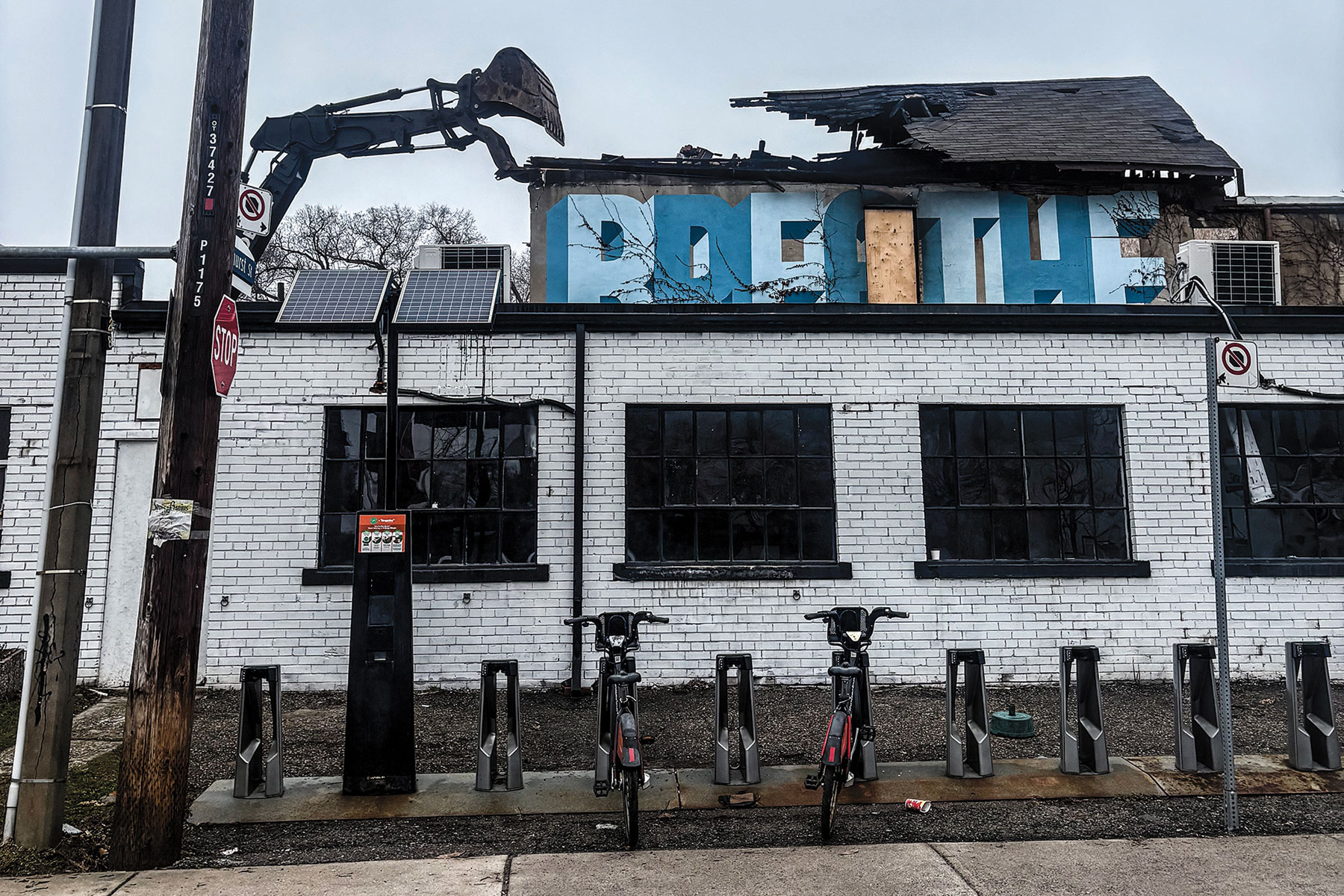
Last month our “If the walls could talk” column chronicled a home at 1177 Bathurst St. which housed families for 120 years. Just days later it was demolished. BRIAN BURCHELL/GLEANER NEWS
April 8th, 2026 · Comments Off on FOCUS: Candidates queried (Apr. 2026)
Where the parties stand on key questions
Compiled by Brian Burchell
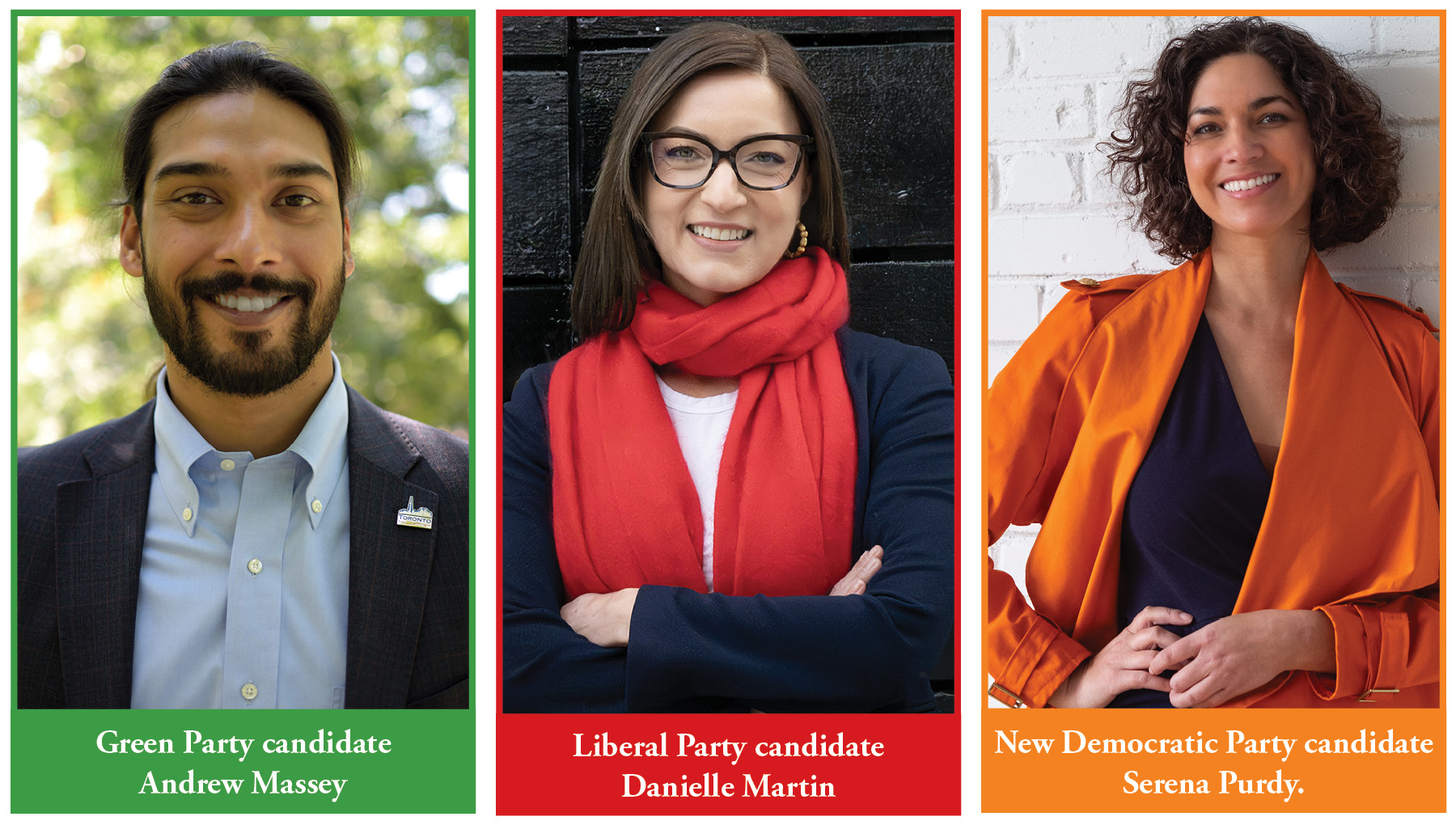
Every election, at the municipal, provincial, and federal level, the Gleaner asks a common set of questions of each major candidate seeking your vote, and we publish their replies. The Conservative party did not reply to repeated attempts by the Gleaner to reach out; in fact, they refused to even confirm the identity of their candidate. This is one of three federal by-elections taking place in Canada. The results will determine whether the governing Liberal party attains majority party status. The by-election is scheduled for April 13. The Gleaner does not endorse candidates, but we do encourage readers to be informed and to vote.
Question 1: The province of Ontario is forcing its will on Toronto in a myriad of ways: trying to take out bike lanes; eliminating speed cameras in school zones; banning the requirement for green roofing on new commercial buildings; and expropriating Billy Bishop Airport to allow jets to land. As the MP for University-Rosedale, how will you advocate for Toronto’s basic agency?
Green Party candidate Andrew Massey (Massey): No federal MP can stop Doug Ford from bullying municipalities, but they can absolutely stand up for Toronto. As the Green MP for University-Rosedale, I will always prioritize Toronto’s basic agency.
I will force parliamentary scrutiny on any federal co-operation with Ontario’s municipal interference. Using the parliamentary platform, I will publicly organize MPs, MPPs, councillors, and residents around the basic principle of Toronto’s self-determination.
On Billy Bishop specifically, I would demand that the federal government refuse any change to the airport’s governance without Toronto’s consent. The current Tripartite Agreement legally prevents Ontario from imposing jets on Billy Bishop without federal co-operation. Ottawa is not a bystander here, but a gatekeeper and an accomplice
As MP, I will pressure the Minister of Transport to refuse any amendments without Toronto’s consent, and I will directly oppose using federal approval, leases, or agencies to bypass the city.
In the end, this is not just about the bike lanes, green roofs, or Billy Bishop. This is more fundamental. It’s about how legacy parties exploit our broken electoral system and use false power to impose their will on non-consenting citizens. In my view, it’s unacceptable. Toronto can, and will, make its own choices going forward.
Liberal Party candidate Danielle Martin (Martin): University-Rosedale reflects the very best of Canada—people from around the world, from every walk of life, building a community defined by diversity, compassion, and opportunity. But the challenges people are feeling across the country are also felt acutely by people in our city, from the rising cost of living and the threats to our economy, to increasing demands on our public services and lack of affordable housing.
Together, alongside Mark Carney, and the other strong Liberal MPs across Toronto, I will leverage my experience as a family physician and university leader, to support real action through measures that make life more affordable and lean into our values in a time of great uncertainty.
I will also work to ensure people are able to engage on policies that matter to them at every level of government. Having lived and worked in downtown Toronto my whole life, I understand the need for our city to have agency and for our residents to be able to influence decisions that affect us.
We must protect and grow opportunities for residents to have a say at every level and work collaboratively across all levels of government to support residents and advance good public policy.
NDP candidate Serna Purdy (Purdy): We must protect our democracy. Right now, our governments are ramming through major decisions that change the face of the city of Toronto and the daily lives of the people who live here without involving us. They call it “cutting red tape.” Our voices are not red tape, and our rights aren’t a bureaucratic inconvenience.
The V-Dem Institute’s Democracy Report 2026 indicates that Canada’s democracy has been slowly sliding backwards over the past decade. As a community leader, health policy scholar, and resident of University-Rosedale, I’ve seen how our voices are being muted, and I know the consequences for our communities when that happens.
As MP, I will protect our democracy by collaborating across governments and advocating for cities to have direct access to funding to build for themselves. I will work with provincial, municipal, and community leaders, organizations, and residents to defend evidence-based policies and democratic processes that protect local autonomy.
Toronto is a global city whose residents deserve to shape their own future and to have a meaningful role in shaping infrastructure, housing, and climate programs. As MP, I will stand against government overreach that undermines local decision-making, public safety, and climate action.
Question 2: While the economic threats from the United States are existential, the long-term impacts of climate change beg larger questions. What measures will you personally advocate for to tackle climate change and combat its catastrophic impacts?
Purdy: Climate change isn’t tomorrow’s problem; today it affects our health, infrastructure, and economy. As MP, I will advocate for bold, science-based action that matches the scale of the crisis.
I will push for accelerated federal investments in clean energy, intercity and regional transit, and a nationwide building retrofit strategy to cut emissions and create good jobs. I will support stronger national standards to phase out fossil fuels responsibly, end oil and gas subsidies, and ensure a just transition for workers and communities.
I will oppose a shift from a healthcare economy to a military economy. Expanding dependence on arms exports deepens economic reliance on the U.S. Beyond the human toll, war devastates ecosystems and pollutes land and water for generations. I will support foreign and defence policies that prioritize sovereignty, diplomacy, conflict prevention, and international co-operation.
As extreme weather events such as heat waves, dangerously low temperature, wildfires, floods, and storms intensify, I will champion investment in disaster mitigation and climate adaptation.
Finally, I will advocate for enforceable, transparent emissions targets aligned with evidence, innovation, and our international commitments.
Massey: Climate is an “everything” issue. It impacts affordability, public health, infrastructure, even democracy itself. And let’s be clear on what “existential” means. Tariffs and economic posturing can be negotiated and mitigated. But there’s only one Earth, and its immune system is presently trying to kill us. You cannot “trade deal” your way out of that.
Addressing heat waves, flooding, wildfire smoke, and infrastructure failure will only get harder and more expensive with time. These are not choices. They are consequences that we must face collectively, one way or another.
We must adopt a “war footing” mindset and be “elbows up” about our very survival. As an MP, I will advocate for ending all fossil fuel subsidies and stopping all new pipeline and LNG expansion. I will also fight for better flood and smoke protections, heat-resilient housing, and adaptive infrastructure like green roofs and increasing the urban tree canopy. I will advocate for enforcing “polluter pays” laws that are already in place.
I will also advocate for electoral reform, which is absolutely a climate issue. For too long, our strategic voting has rewarded the broken climate promises of legacy parties with false majorities. Let’s get proportional representation and hold politicians accountable.
Martin: Climate action is a moral responsibility, economic necessity, and healthcare imperative. The World Health Organization has recognized climate change as the number one threat to health in our time, and as a family physician, I understand we must take action to fight climate change, drive down emissions, and invest in building the sustainable economy of the future.
As your MP, I would be an advocate for the public policies necessary to ensure our city can withstand the effects of climate change. That includes mitigating the health threats of forest fires, extreme heat, floods, and more.
Our new Liberal government is strengthening Canada’s industrial pricing system to reduce emissions while spurring investment in clean technologies. At the same time, we are modernizing our energy grid to sustainably support key economic sectors, ensuring they have what they need to sustainably grow our economy.
Locally, partnerships with both municipal representatives and leaders in the housing, healthcare, and other key sectors will be needed to ensure our city is resilient in the face of current and future climate threats.
Question 3: The lack of affordable housing is a national problem that it is acutely felt in University-Rosedale. The province is threatening to eliminate inclusionary zoning requirements for new builds. What federal measures would your party take to address this crisis?
Martin: Canada is facing a generational housing crisis which requires generational investment. Rents are unaffordable, home ownership is out of reach, and for decades Canada has not been building enough new housing to meet the needs of our population. I also know housing is not just an affordability issue—it is a health issue. When families are worried about paying rent, or worse—sleeping on the streets—their mental and physical health suffers.
I’m proud to be part of a team that has put forward the most ambitious housing plan in a generation. This includes establishing Build Canada Homes which will leverage public and private sector investment to build affordable housing at scale.
This will help tackle homelessness by expanding transitional and supportive housing in partnership with provinces, territories, municipalities, and Indigenous communities. It will also build deeply affordable community and co-op housing for low-income households, while working with private and non-profit builders to increase the supply of affordable homes.
This focus of Mark Carney’s platform is a key reason why I’m proud to join this team, and alongside other Liberal MPs, I hope to be an advocate for ensuring appropriate investments are made to address the housing crisis in Toronto.
Purdy: We can end the housing crisis in our lifetime.
As a community leader and chair of Friends of Kensington Market, I have advocated for years to regulate short-term rentals, to support tenants facing eviction, and to advance inclusionary zoning to protect affordability and community stability.
As MP, I will continue that fight. New builds too often lack sufficient purpose-built, family-sized and accessible homes, while unchecked financialization by private equity has made housing volatile and out of reach. We need solutions equal to the problem.
I will advocate for building truly affordable homes at scale through federal investment in non-profit, co-op, and community land trust housing. In line with the report Out of Reach, issued by the senate committee on banking, commerce and the economy, I will support co-ordinated action across all levels of government, increased productivity through modular and factory-built housing, and targeted supports for small and medium-scale builds. I will fight for stronger measures to curb financialization and to hold the government accountable to the promises it is already falling far short on.
Homes are for people, not profit.
We have lost too many neighbours. People should be able to afford to live and stay in the communities they call home.
Massey: Legacy parties created this crisis by treating housing as a commodity instead of a basic human right. If we want affordable communities, we need a federal government that stops subsidizing speculation, starts building non-market housing, and respects Toronto’s right to shape its own neighbourhoods.
First, the Green Party would declare housing affordability a national emergency and massively expand non-market options like co-ops, public housing, and deeply affordable rental housing. We will restore the Canada Mortgage and Housing Corporation’s (CMHC) mandate to directly finance and develop these housing options, as it did from the 1940s to the 1990s, with long-term, low-interest loans to non-profits, collectives, and public housing agencies.
Second, we will crack down on runaway speculation and financialization. Homes are not financial assets first, and the Green Party will enact stronger incentives against flipping, vacancy, and corporate rental monopolies. We will also ban foreign ownership of residential property and end corporate ownership of single-family homes.
Third, the Green Party will attach federal funding to real affordability conditions. If Ontario eliminates inclusionary zoning, federal Greens will work directly with cities and tie housing and infrastructure dollars to actual affordable units, not just total unit counts.
Question 4: Though inflation has been curtailed, prices remain high, making the cost of living overwhelming for many. How will your party deal with the high cost of goods and services?
Purdy: The goal is simple: shop local, grow local, and support Canadians. By building a more self-reliant and co-ordinated national economy, we can stabilize prices, protect jobs, and reduce the cost pressures families are facing today.
During the previous federal election, I spoke about the need for non-tariff responses to the American trade war and revisited wartime responses that helped Canadians make it through some of the toughest times that we’ve faced.
As MP, I will commit to strengthening our sovereignty, not deepening our dependence on the U.S. I will advocate for breaking down interprovincial trade barriers so Canadian goods, services, and workers can move more freely across the country. I will support measures to expand national production capacity, shorten supply chains, and strengthen local manufacturing and food systems so we are less exposed to global shocks.
I stand firmly with workers and small business owners who are bearing the brunt of high costs and uncertain markets. That means investing in Canadian industry, procurement strategies that prioritize domestic suppliers, and policies that keep value in our communities.
Massey: This is not just about inflation and the high cost of living. Those are symptoms of a deeper problem. This is about economic justice for all Canadians.
The Green Party will lower the cost of essentials, confront corporate power, and restore tax fairness. Our fully costed platform goes beyond tackling high prices and directly addresses the root causes of our cost-of-living crisis.
First, the tens of billions in continued subsidies to already profitable fossil fuel companies are unjustifiable and unjust to Canadians. The Green Party will use those funds to directly subsidize Canadians with a basic income (a.k.a., a guaranteed liveable income.)
Second, we will lower the cost of essentials through non-market housing, affordable public transit expansion, free tuition, universal pharmacare, and increased energy efficiency. We will also take on concentrated corporate power by regulating grocery and telecom prices.
Third, we will restore tax fairness by eliminating all federal income tax on earnings under $40,000 so working people can keep more of what they’ve earned. At the same time, we will close corporate tax loopholes and make sure profitable corporations pay their fair share.
In a place like Canada, poverty is a policy choice. Let’s choose a better way.
Martin: I have been hearing affordability concerns loud and clear as I have knocked on doors across University-Rosedale during this campaign. This government is, and must be, focused on what we can control by building a stronger economy at home to make life more affordable.
Through new partnerships, and by leaning into our economic strengths, Mark Carney and our Liberal team are working to create good career opportunities with higher wages. But we also understand that some of these payoffs will take time to be felt—and Canadians need support right now.
Important Liberal measures like the PSW tax credit, Canada Groceries and Essentials Benefit, the Canada Child Benefit, and the Canada Dental Plan are helping keep costs down for tens of thousands of people in University-Rosedale and putting millions of dollars back into their pockets.
Question 5: The dual pandemics of mental health crises and opioid addiction, compounded in many cases by homelessness, are evident everyday on Bloor Street. Clearly an all-hands response is required. How will you advocate for a response from the federal government?
Martin: All Canadians deserve to be treated with dignity and have access to lifesaving care. The crisis of unsafe drugs on our streets, compounded by a lack of affordable housing and an uncoordinated set of mental health services, is leaving vulnerable people of all ages in an untenable situation in our city.
The response requires participation from all levels of government; the problem is multifaceted and won’t be solved with one single policy change or investment.
In addition to the very significant investments underway on affordable housing, I was encouraged by recent Liberal measures like the Youth Mental Health Fund, the Canada Suicide Crisis Helpline (9-8-8), and support for projects like Dunn House which provides stable housing and wraparound supports for those with the most complex needs.
There is of course a lot more to do to ensure we have adequate support for people living with mental illness and substance use disorders. This includes a health workforce strategy, prevention among young people, and solutions to deal with the toxic drug supply. I will be a strong advocate for the many-layered interventions required to address this crisis.
Massey: This is a convergence of crises in public health, housing, and human dignity. It is an acute manifestation of the economic injustice faced by far too many Canadians. The Green Party’s platform is designed to address the root causes of these and deliver economic justice, but I acknowledge that this crisis is unfolding daily before our very eyes. Immediate action is needed.
As MP, I would call on the government to release emergency federal funding for frontline mental health and addiction services in University-Rosedale. We need to hire widely and have people on the ground to provide help and compassionate support when and where it is needed the most. This must be tackled before it spirals into a policing issue.
Furthermore, I would use the Office of the MP to convene frontline providers, local hospitals, city agencies, residents, and community advocates to identify urgent gaps in care and push Ottawa to address them in real time. We cannot wait for more lengthy and expensive studies to delay action and find new people to blame. The crisis will not wait, and people’s lives are at risk every day. With political will, we can do this right away. No more waiting.
Purdy: The overlapping crises of mental health, opioid addiction, and homelessness clearly fall into the federal responsibility for public health. We need sustained, co-ordinated federal leadership, not short-sighted austerity and denial of responsibility. Harm reduction not only saves lives, but it also protects our limited emergency services, guards against increased disease, and reduces the burden on frontline workers and community organizations.
During the pandemic, as chair of two community non-profits, I worked with federal, provincial, and municipal agencies and organizations to coordinate low- and no-barrier vaccine clinics that reached thousands of residents in University–Rosedale, including many who would otherwise have been missed. I also helped organize rallies with MPP Jessica Bell in support of the Kensington Market Overdose Prevention Site.
As MP, I will continue to advocate for stable federal funding for harm reduction services, housing-first approaches, and community-based mental health care. I will also push to fully integrate mental health into the Canada Health Act, aligning Canada with countries like Australia, the U.K., and Sweden, where mental health is treated as essential care within universal health systems.
We need to reconnect federal policymaking with community realities. Our neighbours’ lives depend on it.
April 8th, 2026 · Comments Off on IF THESE WALLS COULD TALK: 74 Vermont Ave. is one of the oldest on the block (Apr. 2026)
Old artifacts keep the past alive at Vermont Avenue home
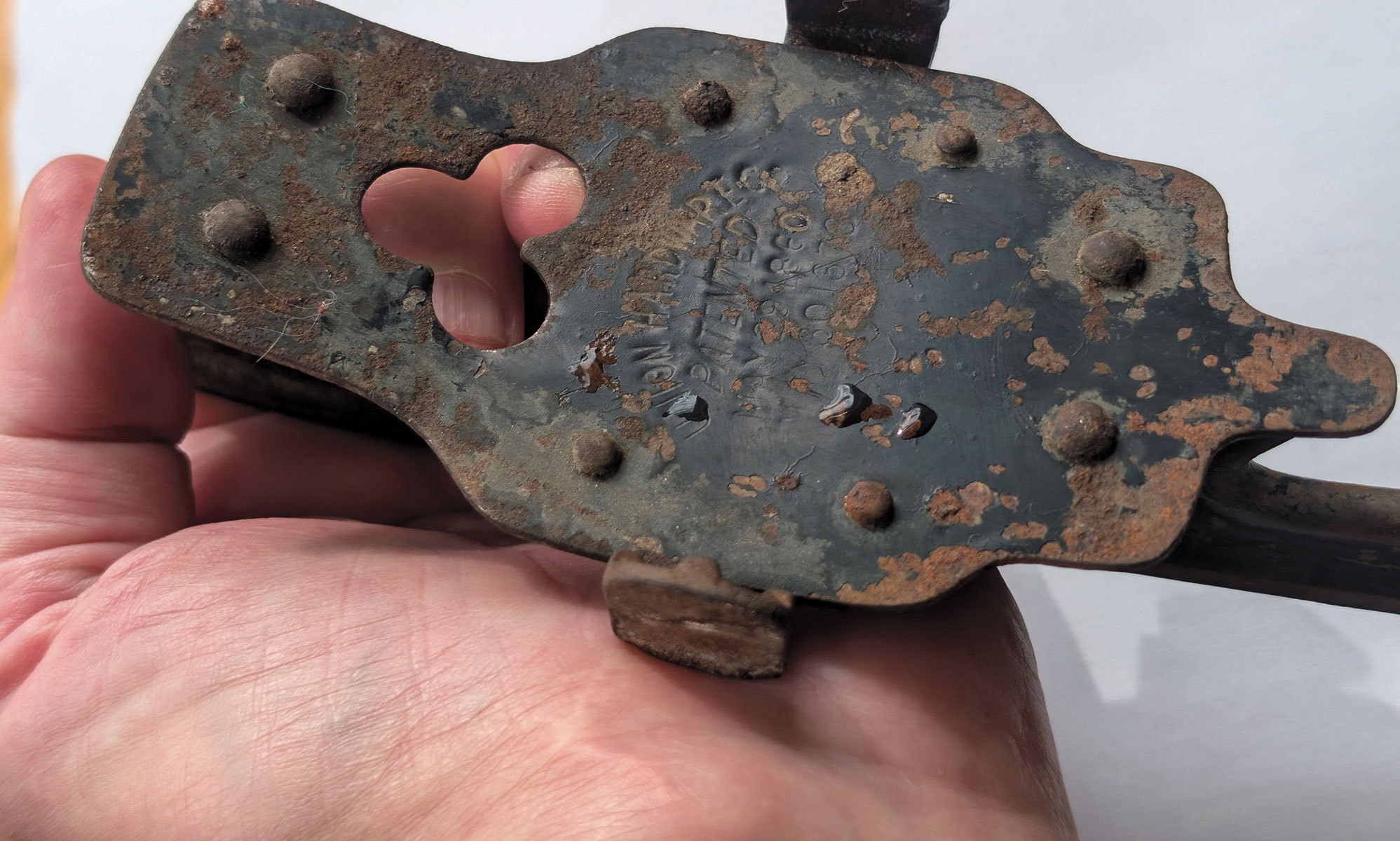
An old strap-on skate was found during renovations. MIKE MASTROMATTEO/GLEANER NEWS
By Mike Mastromatteo
The house at 74 Vermont Ave. in the west Annex looks somewhat newer than its immediate neighbours. Despite its fresh and tidy frontage however, the house is one of the oldest structures on the block.
It was built in the late 1880s with a narrow two-storey bay and gable configuration. The 1891 census suggests that labourer George Roberts was the first resident. Other early owner/occupants came from the large Granner family—brothers Samuel, Alfred, Harry, John and William, some married and some still on the hunt.
The Granner brothers had an eclectic range of skills. In addition to labourer, one was a baker, another a plasterer, one a “baggageman” and yet another a piano maker.
The eldest brother, Samuel Granner, was also described as “a gold beater,” while brother Alfred (married to Margaret) worked as a “driver” of some kind. The youngest, John Granner, worked as a “shipper.” John was married to Annie, and the couple had a daughter born in 1909, whose name was recorded illegibly on the 1911 census record.
The Granners must have brought a spirit of energy and enterprise to the home, but sorrow would ensue. Samuel Granner passed away on Jan. 3, 1916. Further sorrow struck just 10 months later. On Nov. 3, 1917, The Toronto Daily carried a short obituary for nine-month-old Thomas Granner, son of Alfred and Margaret.
After the Granner ownership, 74 Vermont passed to compositor/printer Benjamin Bugden from 1920-1923, followed by Frederick Stephens, a salesman at EE Wallace Company, a supplier of butter and eggs at 377 Manning Ave.
From 1925 to 1933, the home belonged to Edmond Elliott, identified in municipal records as both an engineer and a mechanic at Ford Motors. Edmond and wife Janet had a son John Archibald, born in 1917, and daughter Mary Lucy, born in 1919. In 1931, they took in a lodger, 32-year-old tool and die maker, John Crawford.
Arthur Shellamore, an inspector at Acme Farmers Dairy located at Walmer Rd. and Macpherson Ave., occupied the home from 1935-37, while a William Moss lived there from 1939 to 1944.
It appears William Moss’s wife Ellen remained a tenant at 74 Vermont until about 1955. She passed away in the spring of 1967, but by that time, ownership had passed to her son Albert, a truck driver with Loblaws.
Albert Moss and the 74 Vermont home would be immortalized—in a very modest way—via a brief news item from July 12, 1943. That day’s issue of The Globe and Mail mentions “rifleman” Albert Moss of 74 Vermont Avenue as one of several Canadian soldiers who escorted German prisoners of war back to Europe. Curiously enough, the words “… A. Moss, rifleman, 74 Vermont avenue” are the very last words of the entire article.
Between 1970 and 1982, the property was owned (respectively) by Danny Moore, Guiseppe Guzzo, Adelino Vieria and Robert Taylor (not the actor).
As an early indication of the growing value of Annex area homes, The Globe and Mail of March 29, 1980, published a real estate ad listing the house for sale for $59,500.
This brings us to present-day owner Alan Davis who has a keen interest in local history, and in particular, the lives and experiences of those who occupied his home over the last several decades.
In his own research, Davis discovered that the Seaton Village land near his property was once part of a massive 100-acre tract of farmland granted by the Crown. While the village was laid out in the 1850s, it remained largely farmland for several decades. For this reason, Davis suspects some of the earliest occupants of the home were humble orchard workers.
When Davis purchased the property in 1983, the house was covered by wooden clapboard and “insulbrick,” insulation and tarpaper. While renovating the house, Davis unearthed several mementoes left by previous owners such as a strap-on ice skate hidden in one of the nooks and crannies. Manufactured by the Union Hardware Company of Philadelphia, the skate dates to 1860. In keeping with the theme of this series, we asked Davis what inspired him to explore this very local history.
“People say that Toronto is changing fast, but I like to reflect that the pace of change over the last 130 plus years has been equally fast throughout this entire period. To remember that this neighbourhood was rural in the 1880s is tough to believe and people who have lived here have seen enormous changes,” he said.
“Just think about what we take for granted now. A warm home—for most people anyway—clean water and sanitary living conditions, a safe neighbourhood, much longer and healthier lifespans. People sometimes complain but we need to keep this in perspective. We are lucky to live here.”
April 7th, 2026 · Comments Off on NEWS: Kensington Natural Café and Bakery closes (Apr. 2026)
Retiring owner Quang Dieu leaves a beloved legacy
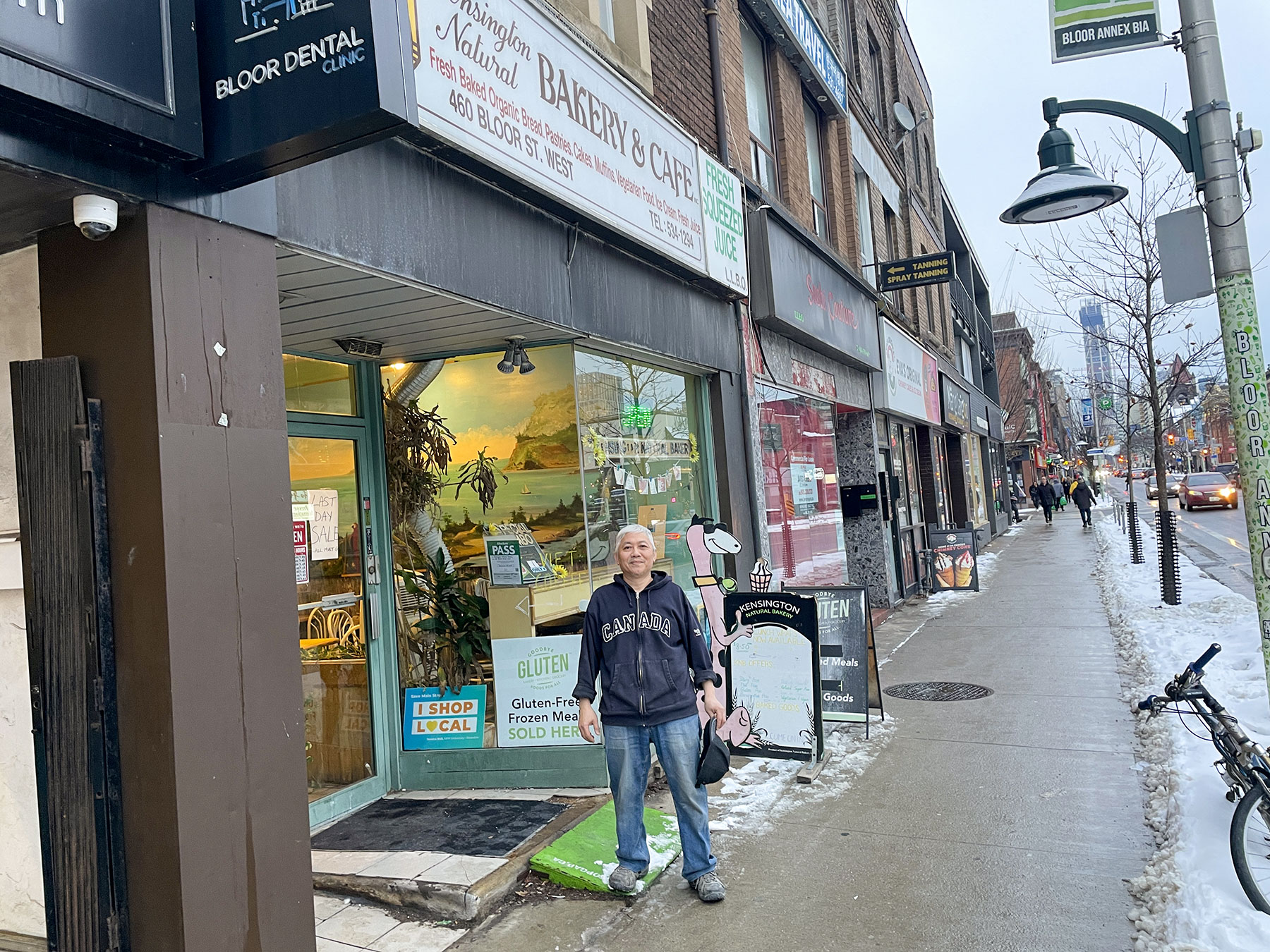
After 40 years, proprietor Quang Dieu retires. COURTESY ALBERT KOEHL
By Albert Koehl
The Annex is a great place to live, in part because of local merchants like Quang Dieu. For four decades, including the last three at 460 Bloor Street W. in the Annex, Quang owned and operated the Kensington Natural Bakery and Café.
The bakery, which officially closed its doors on Dec. 31, specialized in products for consumers with particular food needs or interests or dietary restrictions. Quang’s institutional customers included daycares and health-food stores. Gluten-free, organic, keto, vegan, nut-free, and dairy-free were among the offerings that attracted residents from the Annex and beyond.
Quang’s skills as a baker date back to his youth in Hanoi, Vietnam. Quang had been a lathe operator in a bicycle factory when he realized he could make more money from baked goods. With the support of his family, he opened a small bakery. His customers often brought their own ingredients, which Quang then worked into finished products. But his success as a baker was short-lived. The fact that Quang’s father was born in China made the family untrustworthy in the eyes of the Vietnamese regime which was at war with China (a supporter of the brutal Pol Pot regime in Cambodia).
Quang’s family, including his nine siblings, fled Vietnam in crowded boats, hence the “boat people” title that was ascribed to them and the hundreds of thousands of other refugees. Quang’s family spent a year in a refugee camp in Hong Kong before Canada allowed them to emigrate here.
Once in Toronto, Quang quickly got to work as an employee of a Kensington Market bakery. His modest earnings were converted into savings. After only two years, he managed to put aside about $15,000. Among his economies was his mode of transportation: an old bicycle that he had repaired. His plan was to open a laundromat. Instead, he and a business partner started a bakery located in Kensington Market.
By the time the bakery was moved to the Annex in 1991, Quang was the sole owner. The original name of the bakery was retained. Customers at his store knew precisely what they were buying—with carefully listed ingredients—at easily affordable prices. Quang even offered an assortment of vegetarian meals to be enjoyed in the shop or as take-out.
Customers at Quang’s bakery never had to worry about consuming unrecognizable, unpronounceable ingredients or putting on extra weight. His cookies, for example, were only slightly sweetened with maple syrup. He also used honey, barley malt syrup, or berries as sweeteners. Anyone looking for refined sugar or corn syrup would be disappointed.
Quang’s long hours, often alone in the back of the shop where the ovens were located, likely contributed to his energy as a conversationalist. When my wife approached him in 2014 during the municipal election about putting up one of my signs, the exchange took over an hour. She felt triumphant when Quang eventually agreed. On her return a few days later, she found the bakery’s windows crowded with other election signs. Quang’s assistant told her that they let every candidate put up a sign.
The heavy demands of the bakery convinced Quang’s three sons that they should pursue different careers. None of them are interested in taking over the bakery. Quang nonetheless hopes that an individual will step forward to take over the bakery and the lease.
In reflecting on Quang’s contribution to the neighbourhood, Ian Wright, who has known Quang for years, noted that: “The uniqueness of his shop reflected his character and gave a glimpse into the richness of the community around it.”
Quang’s bakery may now be gone, but his place will hopefully be taken by someone with a similarly compelling history who seeks to achieve their ambitions and dreams while offering valuable products.
Albert Koehl was a customer at Kensington Natural Bakery and Café for over 20 years, consuming an estimated 4,160 sugarless cookies.
Comments Off on NEWS: Kensington Natural Café and Bakery closes (Apr. 2026)Tags:Annex · News
April 7th, 2026 · Comments Off on CHATTER: F for Flamenco Festival returns (Apr. 2026)
The third annual F for Flamenco Festival is coming to the Randolph Theatre April 11-19. COURTESY OF FABCOLLAB
Gala performance planned for Randolph Theatre on April 17
By Brian Burchell
Toronto’s flamenco scene takes centre stage this spring as the F for Flamenco Festival returns for its third year, transforming venues across the city into vibrant hubs of Spanish music and dance such as the Randolph Theatre at 736 Bathurst St.
From April 11–19, internationally acclaimed flamenco artists from Spain will join leading Canadian performers for a week of intimate concerts, major stage productions, and collaborative performances that highlight Toronto’s growing reputation as a hub for flamenco in North America.
Now in its third year, the festival has rapidly grown into one of Canada’s leading flamenco events, drawing artists from Spain and across North America to collaborate with Toronto’s vibrant flamenco community. The Randolph Theatre venue, near Bloor and Bathurst, puts this at the doorstep for Annex residents.
Highlights this year include an all-women flamenco gala featuring internationally acclaimed artists from Spain and Canada, Ali Flamenco Dance Company’s interdisciplinary dance production ALCHEMY, and a new series of intimate performances at Drom Taberna at 458 Queen St. W.
For more information please visit fabcollab.ca.
Comments Off on CHATTER: F for Flamenco Festival returns (Apr. 2026)Tags:Annex · News · Arts
In his letter to the editor (Re: Poilievre endorses Trump’s actions), reader Niall McDonagh was dismayed by the Annex Gleaner’s liberal-leaning criticism of Trump and refers to [the publication] as an “asswipe brochure.” This is unacceptable. While the terms might occasionally overlap in a casual conversation, calling a neighborhood tabloid a “brochure” is a bit like calling a newspaper a greeting card; they serve entirely different means. A brochure is fundamentally a marketing tool; it is a static, polished, and promotional document designed to “sell” a specific product, service, or destination to an outsider. In contrast, a neighborhood tabloid is a periodic, editorial publication focused on community journalism, local news, and ongoing social discourse. While a brochure is meant to be kept as a reference for a single entity, a tabloid is meant to be read and recycled, containing a high volume of diverse, time-sensitive content like crime reports, school board updates, and classified ads.
—Yours, Henny MacDonald
Comments Off on LETTER TO THE EDITOR (Apr. 2026)Tags:Annex · Letters · Opinion
April 7th, 2026 · Comments Off on EDITORIAL: The man who will never be mayor struggles to be premier (Apr. 2026)
The province is trying to take away the land on which Billy Bishop Airport operates in order to force the city to allow jets to operate there. It’s a rash move that only underscores the premier’s fixation with all things Toronto.
It was particularly tone deaf of the premier to give a press conference at the Island airport just hours after two Air Canada pilots were killed at LaGuardia Airport when their jet collided with a firetruck on the runway. His decision to proceed with the announcement speaks volumes about the premier who is a “Get-R-Done” kind of leader: tactless, rash, politically expedient.
He has declared the airport site a “special economic zone.” This means the province would not have to do an environmental impact assessment. The special economic zone designation was supposed to be used to get roads into the Ring of Fire for resource extraction, not as a bully tool to force a major change on Toronto’s waterfront without due consideration and consultation.
Apparently, Ford’s jet dreams stem from a poll showing that Toronto residents are clamouring for this move. He has yet to produce this poll, and he has certainly not done any kind of feasibility study. He is more working off of “vibes.”
The bulk of new jet flights would be to the U.S. at a time when the federal government is urging more trade and travel overseas, not to the States. The jets that can land at Billy Bishop would not have the range for transatlantic routes. Billy Bishop is a postage-stamp- sized airport with no significant hangar space and no parking for airline patrons. The potential for a LaGuardia-type tragedy is far greater in a smaller space. Then there is the heavily used harbour and waterfront. The new aircraft would be very close to new residential towers and ferry traffic, to say nothing of the noise and pollution.
Doug Ford’s grand ideas for what Toronto should be doing while ignoring the needs of the province makes one wonder what he has up his sleeve. There seems to always be an end game that is not directly related to stated goals.
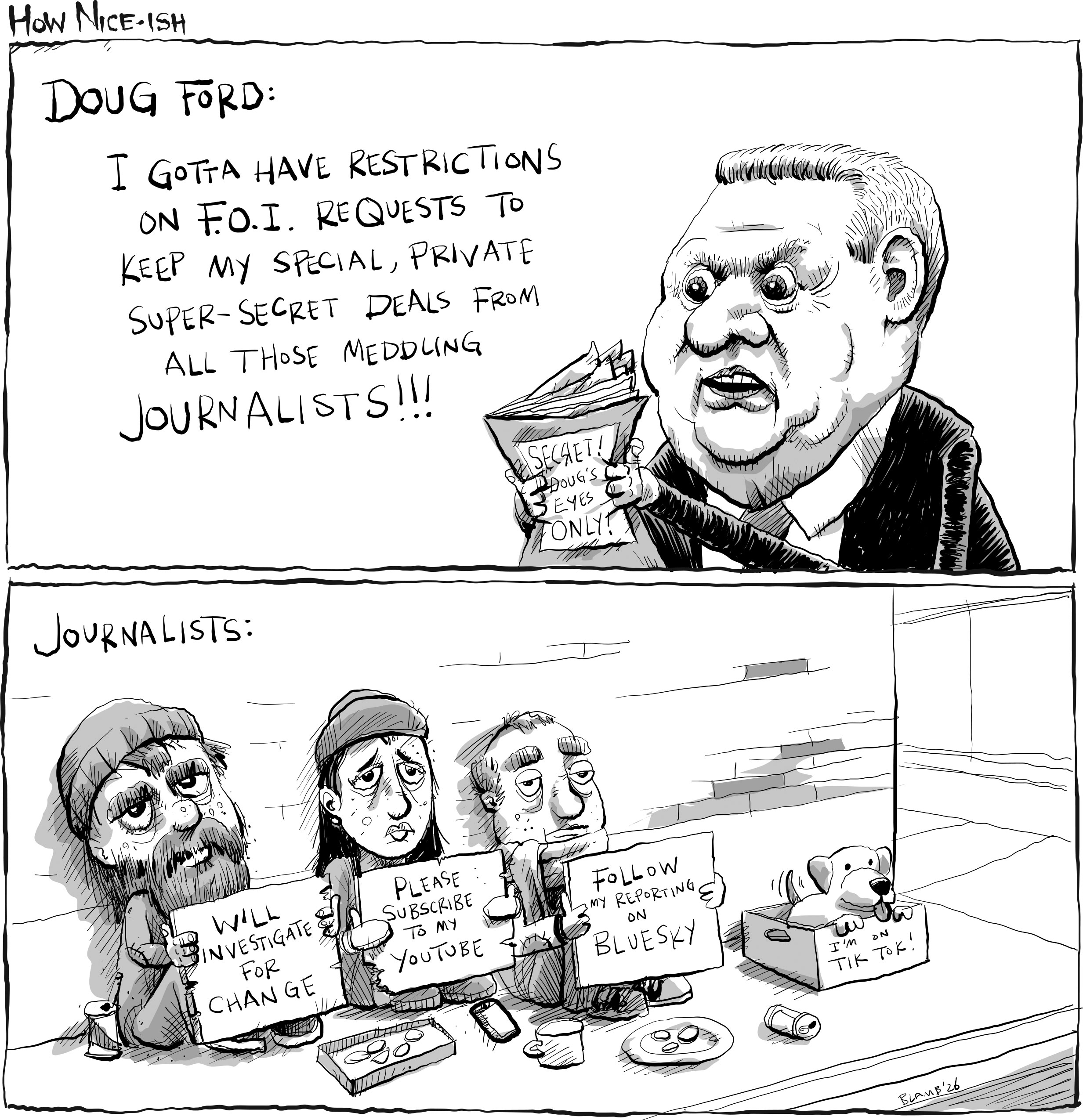
Removing selected parcels of the Greenbelt from protection was not about solving the housing crisis. No expert thought this was a sensible move due to the lack of basic infrastructure. It was an opportunity to benefit specific developers who would buy the farmland cheap and then make millions when development restrictions were lifted. The RCMP still has Ford under criminal investigation for that scheme.
Closing the Ontario Science Centre in the middle of the night was not to “protect the children” from a potentially collapsing roof; it was to build a new science centre on the Exhibition grounds which would require a parking garage, the same parking garage that the province has promised to build for the new luxury spa that will be built on the site of the former Ontario Place.
Ford has placed the Toronto school boards under provincial supervision. He is giving an obscene paycheque to the supervisor who is unqualified but a friend of the Conservative Party. This does not improve the educational experience. This move also appears to be about selling off school lands to developers while the market is depressed. Selling off school properties or closing schools with low enrolment was prohibited by the province until it got into the driver’s seat.
Ford has mused about his disdain for the residents of the island. He also suggested he would build a new island in Lake Ontario for a grand convention centre on the scale he said of “shock and awe”. Maybe our little Trump is suggesting evicting the 600 island residents and displacing the treasured city park with a new convention centre. Is this his end game?
Ford is also meddling in Ottawa where he is trying to get the Carney government to amend the Criminal Code to allow everyone to carry pepper spray so we can attack one another should we feel threatened. He is not dealing with the $500-billion provincial debt, health care, education, or the housing crises. These are true provincial responsibilities. Be a premier, or at least try to be one.
April 7th, 2026 · Comments Off on FORUM: A report from the road (Apr. 2026)
Crime, faith, parks, and a better 311 experience
By Dianne Saxe
As we move into spring, I’ve been hearing from many neighbours about what’s on their minds—community safety, the state of city services, and how we keep University-Rosedale a welcoming and liveable place for everyone. I wanted to share a few updates on how we’re responding.
Some residents have raised concerns about recent home break-ins. I have been in regular contact with Toronto Police, and I hosted a community meeting to hear directly from Toronto Police with nearly 300 residents in attendance. Officers are actively investigating and have already made a number of arrests. They also offered practical advice—like reinforcing doors and windows—and emphasized how important it is to report suspicious activity right away. Staying informed and looking out for one another continues to make a real difference, and I’m grateful to everyone who has taken the time to stay engaged on this issue.
Just as important is staying connected as a community. University-Rosedale has always been a place where people from many backgrounds live side by side, and maintaining that sense of respect and belonging matters. With the recent rise in discriminatory acts of violence across the GTA, I recently co-hosted an interfaith meeting with Reverend Wendell Gibbs of First Baptist Church, bringing together local clergy to talk about how we can strengthen relationships and reduce hate. These conversations are thoughtful, sometimes challenging, and always worthwhile. We’ll be continuing that work with upcoming events, including an interfaith planting and a “One Toronto” walk in early May. I hope you’ll consider joining us.
I also know how much it matters that the city delivers on everyday services. After years of pushing for improvements, we’re starting to see progress with 311. Service requests are being tracked more closely, and a new public dashboard will soon make it easier for residents to see how the city is responding. It’s a behind-the-scenes change, but one that should lead to more reliable follow-up and greater transparency. When people take the time to report an issue, they should be able to see that it’s being addressed.
Of course, there’s still plenty to do. Pothole repair season is underway after a tough winter, and crews are working across the city to catch up. Please continue to report larger issues to 311—it really does help ensure they’re prioritized appropriately. At the TTC, where I chair the audit and risk management committee, we’re focused on improving safety, reliability, and the accuracy of real-time information so riders can better plan their trips. Small improvements in communication can make a big difference in daily commutes.
Looking ahead, there are some important planning conversations underway. A draft Chinatown planning framework is coming forward, which is an important step in setting a vision for the future of the neighbourhood. I will continue working with community members and city staff to find practical ways forward.
There’s also good news. Bike Share Toronto continues to grow, with record ridership and further expansion planned, including in our ward.
More people are choosing active transportation, and the city is working to keep up with that demand. Council has also supported strengthening protections for smaller trees—an important step in preserving our urban canopy and the green spaces that make our neighbourhoods more liveable.
In addition, there is strong support for addressing abuse of accessible parking permits, helping ensure these spaces are available for those who truly need them.
Finally, the revitalization of Queen’s Park North is moving ahead. This is an exciting opportunity to enhance one of our most important public spaces.
The project has received strong support and is being refined based on feedback from both experts and the community, including added environmental safeguards.
Done well, this will be a space that serves residents for generations to come.
As always, I hope to see you out in the neighbourhood. Please save the date for our Environment Day at Central Tech on May 10, and our Spring Spectacular and sapling giveaway at Christie Pits on May 17.
University-Rosedale is a special place, and it’s the people here who make it that way. Thank you for staying engaged, sharing your concerns, and continuing to look out for one another.
Dianne Saxe is city councillor for Ward 11, University-Rosedale.
April 7th, 2026 · Comments Off on FORUM: Schools struggle under Ford’s supervisor czar (Apr. 2026)
Province handed top $350,000-job to a totally unqualified person
By Jessica Bell
Last year, the Ford government put eight school boards including the Toronto District School Board (TDSB) and the Toronto Catholic District School Board (TCDSB) under provincial supervision to address so-called financial mismanagement.
Oversight of the TDSB was taken from elected school board trustees and handed to a supervisor, Rohit Gupta—a finance professional with no direct experience in the classroom. Mr. Gupta earns $350,000 a year.
Have our schools improved since the takeover? No. It’s become worse.
The supervisor has created a climate of decision-making chaos for parents at the TDSB.
The official way for a parent to raise an issue is to first go to the teacher, then the principal, then the superintendent, and then the trustee. With the trustee removed, it’s become a bit wild west.
The school community, including our office, regularly reaches out to the supervisor, but he rarely responds.
Parents on the special education advisory committee and the parent youth advisory committee use their influence to raise issues with TDSB leadership.
Our office has resorted to repeated phone calls and letters to get a meeting with Ministry of Education officials about the need for renovations at Kensington School. It felt out of place to raise a local issue with staff responsible for overseeing 4316 schools, but there is nowhere else for us to go.
After public outcry, the TDSB has now established a Family Support Office, tasked with responding to parent enquiries. We don’t know how effective this new office will be.
The TDSB’s financial troubles remain. Ontario is solely responsible for funding school boards and has failed to provide enough money to boards to pay the salaries and deliver the programs they are legally required to provide. By bringing in a supervisor, the government is pretending to fix a problem entirely of their own making.
The supervisor is making drastic decisions with no notice or public say. Even learning about these decisions is challenging. The supervisor’s decisions are buried deep in the bowels of the TDSB’s website, sometimes months after the decision has been made.
I don’t dislike all the supervisor’s decisions, just most of them. Reinstating Barry Sketchley as principal of Rosedale School of the Arts was a populist move, but the cuts are terrible.
The supervisor has increased class sizes for special education, resulting in Beverley school in Baldwin Village losing a teacher, and Lucy McCormick Senior School in the Junction losing two teachers.
Kids who attend these schools need extra care. They cannot cope in a regular school. Many children have serious developmental issues, including Down’s syndrome, autism, and complex medical conditions. Parents describe these schools as lifelines.
The supervisor has removed the maximum class cap of 32 kids for Grades 4 to 8, meaning very large classes are coming to some classrooms in September.
Class sizes are already very large. I interviewed teachers at King Edward School to get an understanding of what’s going on in our schools, and it’s not great. Some classes have 33 students in classes with not enough desks or chairs. There is just one educational assistant for the entire school. This is typical, not exceptional.
We keep seeing signs that the Ford government “supervised” TDSB and TCDSB plan to sell off schools to developers. The TDSB has directed Eastdale Collegiate Institute and Heydon Park Secondary School to shut off enrollment for incoming students in Grade 9 and beyond, prompting fears of closure.
Toronto City Council currently opposes the inclusion of school properties in housing redevelopment plans and in mid-December directed city staff to exclude them from its Avenues Policy, which is designed to encourage new mid-rise housing.
The province-led TDSB and the TCDSB are now going to the Ontario Land Tribunal (OLT) to contest the city’s move to protect school properties from development. This is another u-turn for the Ford government who had previously prohibited such closures but now that they are in direct charge of the boards, they see a development opportunity.Selling a property for development is a foolish choice in a city growing as quickly as ours, because odds are, we will eventually need these school properties again. Surplus properties should be offered to other school boards or the city to keep the land public, not sold off in a one-off fire sale.
My goal is to ensure every one of these kids can reach their full potential in safe and welcoming classrooms. We need well-run, accountable, and democratic school boards, and more highly qualified educators in the classroom, not cuts and poor decisions from up high.
I will continue to advocate with parents, students, and educators to protect and improve our public school system. Please contact our office if you have a story that you would like me to raise with the Conservative government, or if you need assistance.
Jessica Bell is the MPP for University-Rosedale and the Shadow Minister for Finance and the Treasury Board. You can reach her office at jbell-co@ndp.on.ca or 416-535-7206.
April 7th, 2026 · Comments Off on LIFE: A tale of two bookstores (Apr. 2026)
Bloor Street is blessed with two diverse options
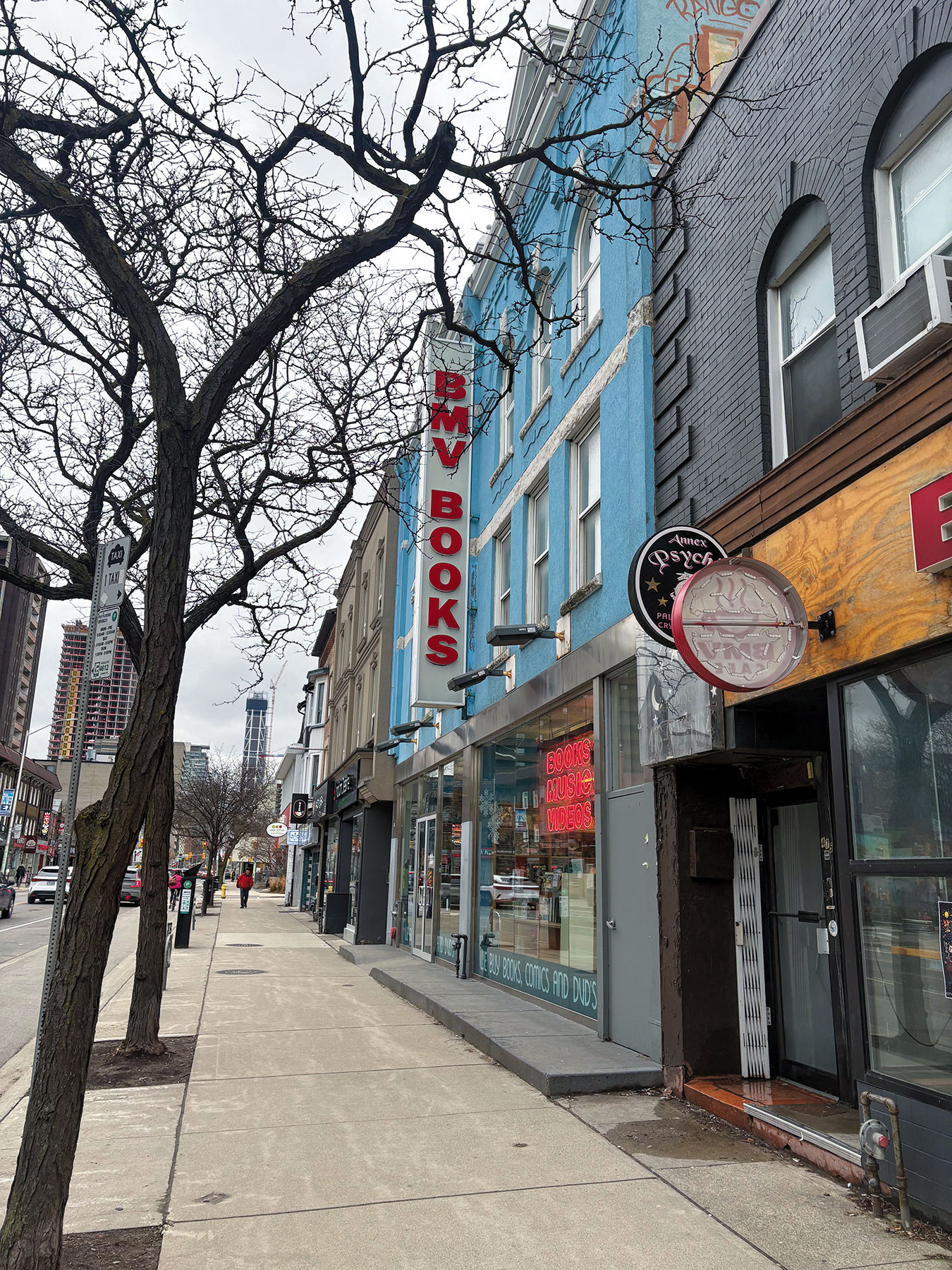
BMV Books at 471 Bloor St. W. BRIAN BURCHELL/GLEANER NEWS
By Howard Pressburger
Do you remember when you learned to read? Was it Fun With Dick and Jane? Dr. Seuss, or P.D. Eastman? Maybe a coffee-table book about Liberace? No matter what, you probably learned to read from a book: a real, honest-to-goodness, printed-on-paper, held-in-your- hand, book. A book doesn’t require batteries or uploading. It’s tactile, and it makes a real sound when you turn the page. It may even have a musty aroma. Books are anachronistic. They take up space, and when you move, you probably have regrets, but like me, you can’t live without them.
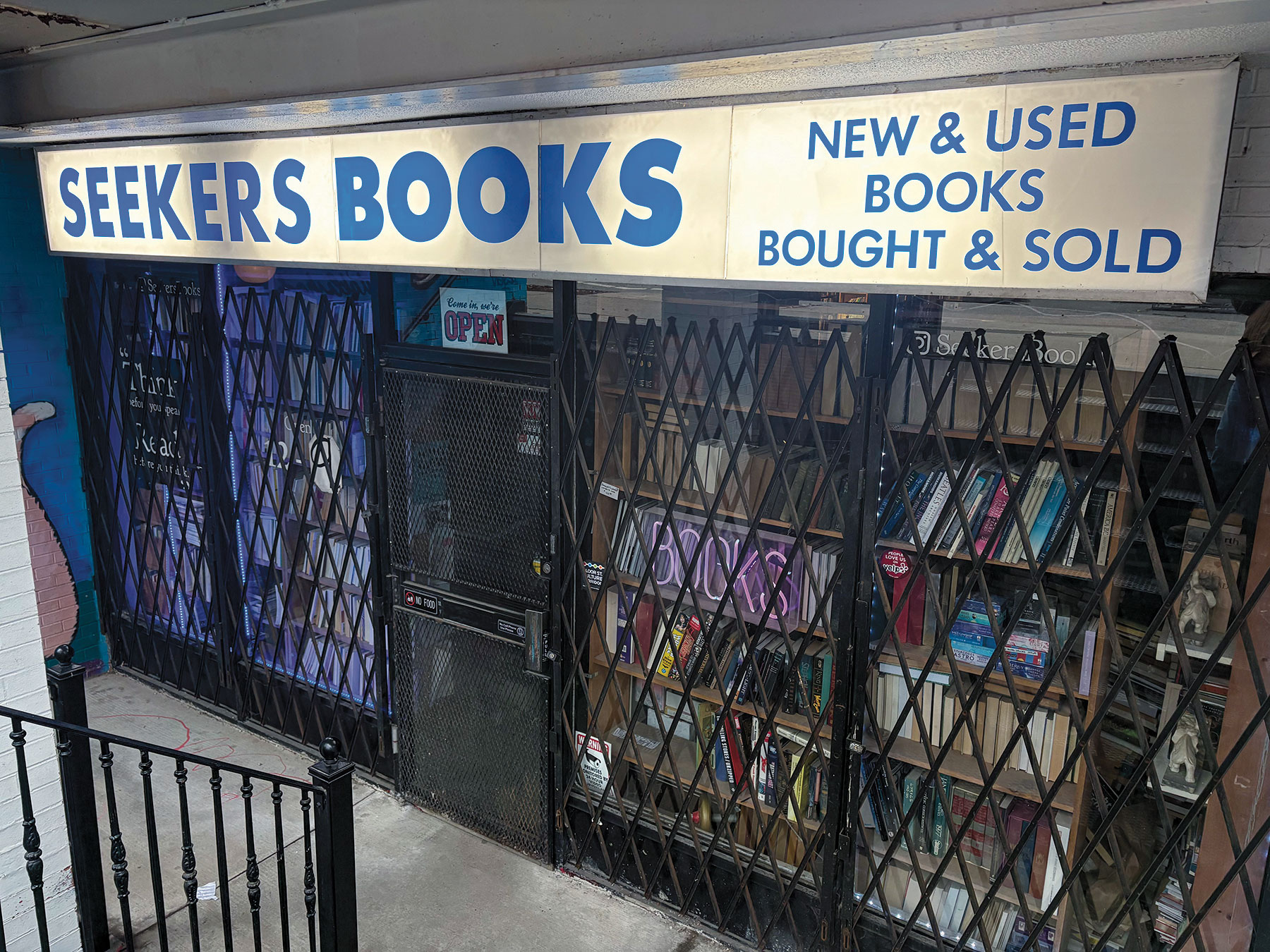
Fortunately, there are a couple of great places in the Annex to keep you supplied; there are “two households, both alike in dignity.” Not the Montagues and the Capulets, but BMV and Seekers Books. BMV, located at 471 Bloor St. W., occupies the space that was once the Hungarian Castle restaurant, while Seekers is hidden under the stairs below Mezcalero at 509 Bloor St. W., around the corner from Wildhearts Café (see my previous article). BMV is like an inviting, magical castle, replete with helpful stewards. Seekers is like a monastic cell, where a learned man can help you make sense of the world.
As far as bookstores as a concept, I really feel that the Annex BMV is the perfect example. The store is bright and open, with large front windows, high ceilings, and a central staircase that is wide and inviting. The space is festooned in different colours and merchandised in such a way that there seems to be a surprise at every turn, such as hidden staircases. It’s everything an inviting bookstore is meant to be, without having to resort to inspirational hand towels.
Seekers Books at 509 Bloor St. W. BRIAN BURCHELL/GLEANER NEWS
Seekers personifies the proper Toronto used bookstore. It’s all business; no fluff. It’s organized, compact, and shoehorned into an old basement. But that’s the charm. The best used bookstores are all repurposed buildings and spaces: old insurances offices, warehouses, small factories, and even an abattoir. And I don’t know if it was my teenage brashness, but I found that the older, bearded, perpetual English literature grad student never thought much of me. Sitting at the checkout table—which was always an old, ornate desk, recovered from the office of the building’s original owner—the man in charge would dispense judgment on me and my high school chums who went downtown to exercise our intellectual muscle. Always humbled, we would return to our suburban wasteland armed with poetry, prose, and reference works we would use to impress our classmates. Alas, always a Pyrrhic victory, since the highest point of intellectualism was the profoundness of the lyrics of Bruce Springsteen.
This is just a long-winded way to say that Patrick, who is the current owner of Seekers, is nothing like those curmudgeonly clerks of my past. Patrick is the real thing; he wants people to read; he wants to help people read; and he wants to help people read books that will enhance their lives. Patrick personifies Seekers Books. He is the most recent in a long line of caretakers of this store. Visiting the location in his youth, he became absorbed by the magic. Years later, he became the owner. He may or may not know how that happened, but in addition to an economic transaction, I believe there was some form of psychic transaction as well. Somehow the store’s entire collection, both past and present, resides in Patrick’s mind. Whenever I’m looking for a specific book, I always visit Seekers first. If he’s got it, Patrick knows exactly where it is (don’t reshelve things in the wrong place as there may be a minotaur ready to brutally correct you). If he doesn’t have it, he knows the last time he had it, and at least a physical description of the person who bought it. He’s always willing to discuss books, literature, philosophy, and the other lively arts, with an arid sense of humour.
BMV is where I go when I don’t know what I want. It’s definitely a destination in the neighbourhood when I want some light entertainment, or if I’m looking for a gift. It’s also my second stop, after Seekers, when I’m looking for a specific title, although that miracle has only happened once. When I recently purchased a random book from BMV, the person on cash, smiling and engaging, even though he had a beard and may have been a grad student, said the following: “If you’re looking for something specific, you probably won’t find it here, but it’s an adventure nevertheless.”
No glooming places, this morning will they bring, The sun with no sorrow, may show his head, Go hence to have more talk of these things, Some shall be pardoned, but all will be read. For never shall we have far to go, To find books, like Juliet and Romeo.
Howard Pressburger is manager of Wiener’s Home Hardware, the beloved retail institution established in 1922.